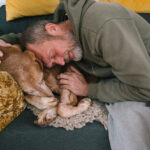
You’re scratching your dog behind the ears, and suddenly it starts nibbling your hand or your arm with its front teeth, very gently, like a corn cob. It doesn’t hurt, it’s a little ticklish, and it can be surprising. Veterinarians and behaviorists agree: it’s not a bite. It’s a message.
In short
- What it is: gentle nibbling with the front teeth, sometimes called “cobbing.”
- What it usually means: affection, grooming, an invitation to play or a way to reconnect.
- When to pay attention: if it starts suddenly, gets more intense or comes with other changes.
- The difference with a bite: no pressure, no tension, a relaxed body.
“Cobbing”: a very dog way of saying something
The behavior has a nickname among dog trainers: “cobbing,” because a dog nibbling with its front teeth looks like someone eating corn on the cob. According to certified behavior consultant Debby McMullen, writing in the Whole Dog Journal, dogs do it to people, to other animals in the house, to themselves and even to their toys, and it is usually good news.
What your dog is telling you
- “I like you”: many dogs nibble a hand or an arm during greetings or while being scratched in a favorite spot. It’s a sign of affection and relaxation.
- “Let me take care of you”: dogs groom the members of their group with their front teeth. Your sleeve or your hair may get the same treatment.
- “Let’s play”: between dogs, gentle nibbles often invite play, with grunts, snuffles and a goofy grin.
- “Calm down”: a dog may briefly nibble a housemate that seems annoyed, as a way to defuse tension.
- Habit or comfort: puppies nibble to soothe teething pain, and some keep the habit because it calms them. Some breeds, like Dobermans, are known to “cob” blankets or pillows to self-soothe.
When it’s worth a closer look
The same consultant points out three situations that deserve attention:
- Boredom: a dog that lacks exercise or mental stimulation may nibble more, including objects. More walks, sniffing time and training games usually help.
- Stress: if the nibbling starts suddenly, becomes more intense or follows a change in routine, look for the source of the stress.
- Pain or illness: a dog that doesn’t feel well may nibble more than usual. When in doubt, see your vet.
Nibble or bite?
A nibble is light, repetitive and comes from a relaxed dog: soft eyes, loose body, wagging tail. A warning or a bite is different: a stiff body, a fixed stare, lips pulled back, a growl, and real pressure. If the nibbling becomes too strong or bothers you, calmly stop the interaction and redirect your dog to a toy, without punishing it.
The limit
Every dog has its own language: context matters more than the gesture itself. With young children, supervise: even an affectionate nibble can scare or hurt a small child.
Dogs have other ways of showing their feelings, like getting overexcited when you come home. And their well-being also depends on what’s in the bowl, as a vet explains about a practice more and more owners adopt.
Front teeth, a relaxed body and a dog who just wants to be close to you. That’s the message.