It’s barely an inch long, it looks like a tuft of fur shaved off a Persian cat, and right now, in the middle of fall cleanup season, it’s sitting in yards across the southern half of the country: on the oak, on the fence rail, in the leaf pile, sometimes on the patio cushion you’re about to lean against. Children pet it. Adults brush it off a sleeve with a bare hand. And emergency rooms from Texas to the Carolinas know exactly what happens next, because this harmless-looking puffball carries the most painful sting of any caterpillar in the United States.
Meet the asp, also called the puss caterpillar: the larva of the southern flannel moth, a teardrop-shaped, silky-haired creature usually tan to gray, about 1 to 1.5 inches long. Entomologists note it’s most abundant in fall, exactly when yards fill up with people raking, pruning and hauling firewood.
Why the fluff is a trap
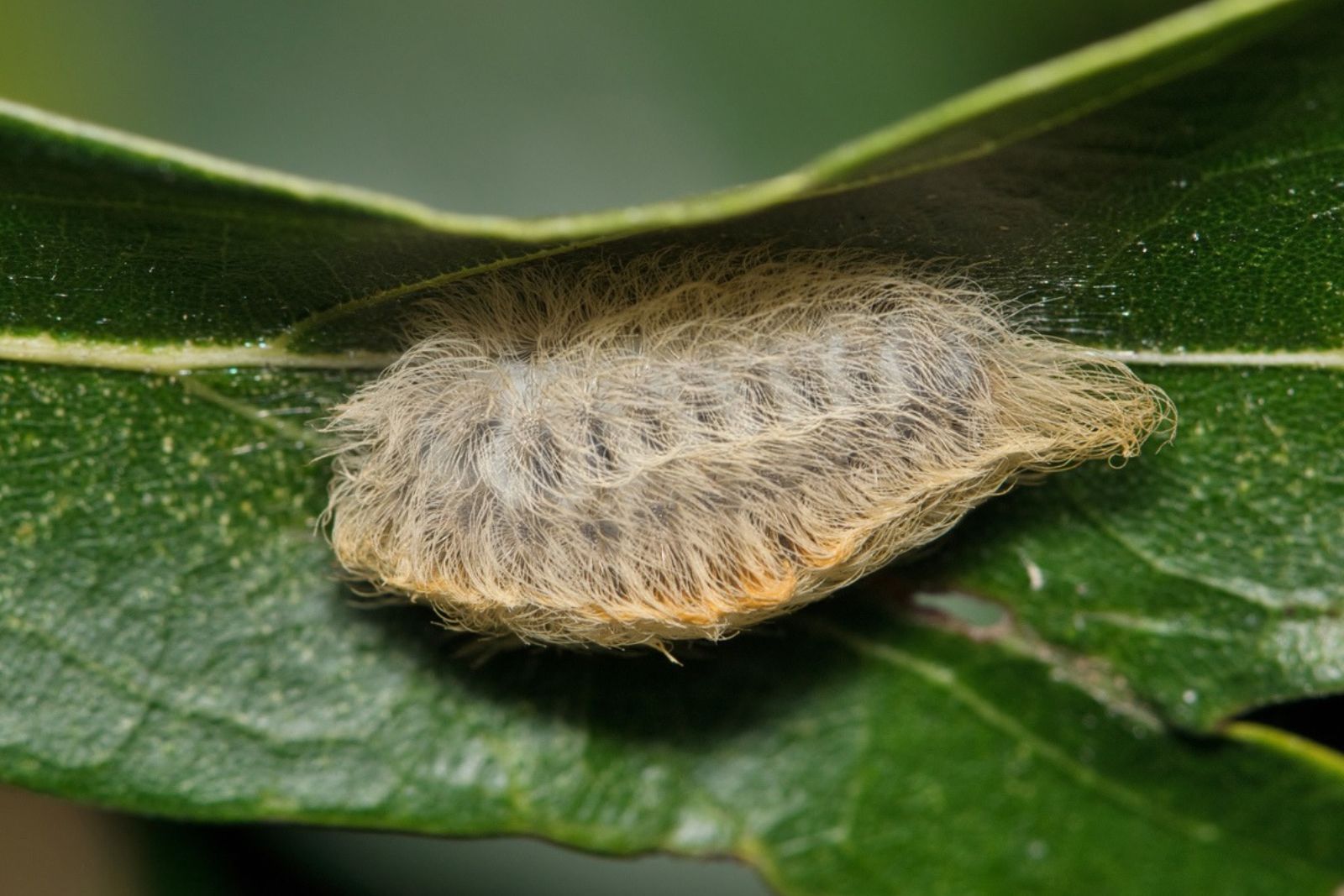
That inviting coat is the weapon. Hidden beneath the soft hairs are rows of venomous spines connected to poison glands; brush against them and the spines break off in your skin and inject venom. The pain is immediate, intense and radiating, routinely described as worse than a wasp or fire ant, often with a tell-tale grid of blood-red dots where the spines landed, and in stronger reactions nausea, headache, swollen lymph nodes or, rarely, respiratory distress, with children the most vulnerable. And proximity alone carries risk, because you don’t have to reach for an asp for an asp to reach you: Texas A&M’s specialists warn they can drop from trees, which is why they advise against sitting under infested oaks and elms, and why stings happen to people who never saw the caterpillar: it was on the rail they gripped, the cushion they leaned on, the leaf pile they scooped bare-handed.
The one move that matters
Everything about handling an asp compresses into a single rule: hands off, always, no exceptions. Not to pet it, not to flick it away with a finger, not to pick it up dead, because the spines sting on contact whether the caterpillar is alive or not. The whole household follows one protocol: look before you grab (branches, rails, cushions, the top of the leaf pile), wear gloves and long sleeves for fall cleanup, shake out anything that’s been sitting outside, and teach kids the short version, “fuzzy caterpillar, don’t touch,” which pediatric ERs would dearly love every family to know. Need it gone from a doorway or play area? Move it with a stick, a dustpan or a gloved hand onto a shrub away from traffic. It isn’t aggressive and won’t chase anyone; it just cannot be touched.
If the sting already happened
Act in this order: press adhesive tape, duct tape works, onto the site and peel it off, repeating with fresh strips, the method Texas A&M recommends to pull the embedded spines out; wash with soap and water; ice the area; and take an oral antihistamine for the burn and itch. Seek medical care promptly for young children, stings near the eyes, severe spreading pain, or any breathing trouble or allergy-type reaction. Then finish the inspection the sting started, since the asp shares its fall habitat with the season’s other quiet hazards, from tick nurseries in the same leaf litter to snakes testing the gap under the door.
One inch of fur, one iron rule. Look first, gloves on, and let the prettiest caterpillar in the yard stay exactly where it is: untouched.