
Bamboo got where it is on one promise: nothing else grows a privacy screen that fast. People plant it knowing the warnings, the running roots under the neighbor’s lawn, the barriers, the yearly fight, because the speed seemed to have no rival. It turns out it does. There’s a tree that matches and even beats bamboo’s pace, stays exactly where you plant it, and does something bamboo will essentially never do in your lifetime: it flowers, spectacularly.
The tree is the paulownia, sold as the empress tree or princess tree, and its speed is not a nursery legend: it ranks among the fastest-growing trees in the world, capable of 10 to 20 feet in its first year. Where mature bamboo spreads by rhizome, the paulownia is simply a tree with ordinary tree roots: no runners surfacing across the property line, no root barrier trenching, no annual containment campaign.
Speed, size, and the flowers bamboo can’t offer
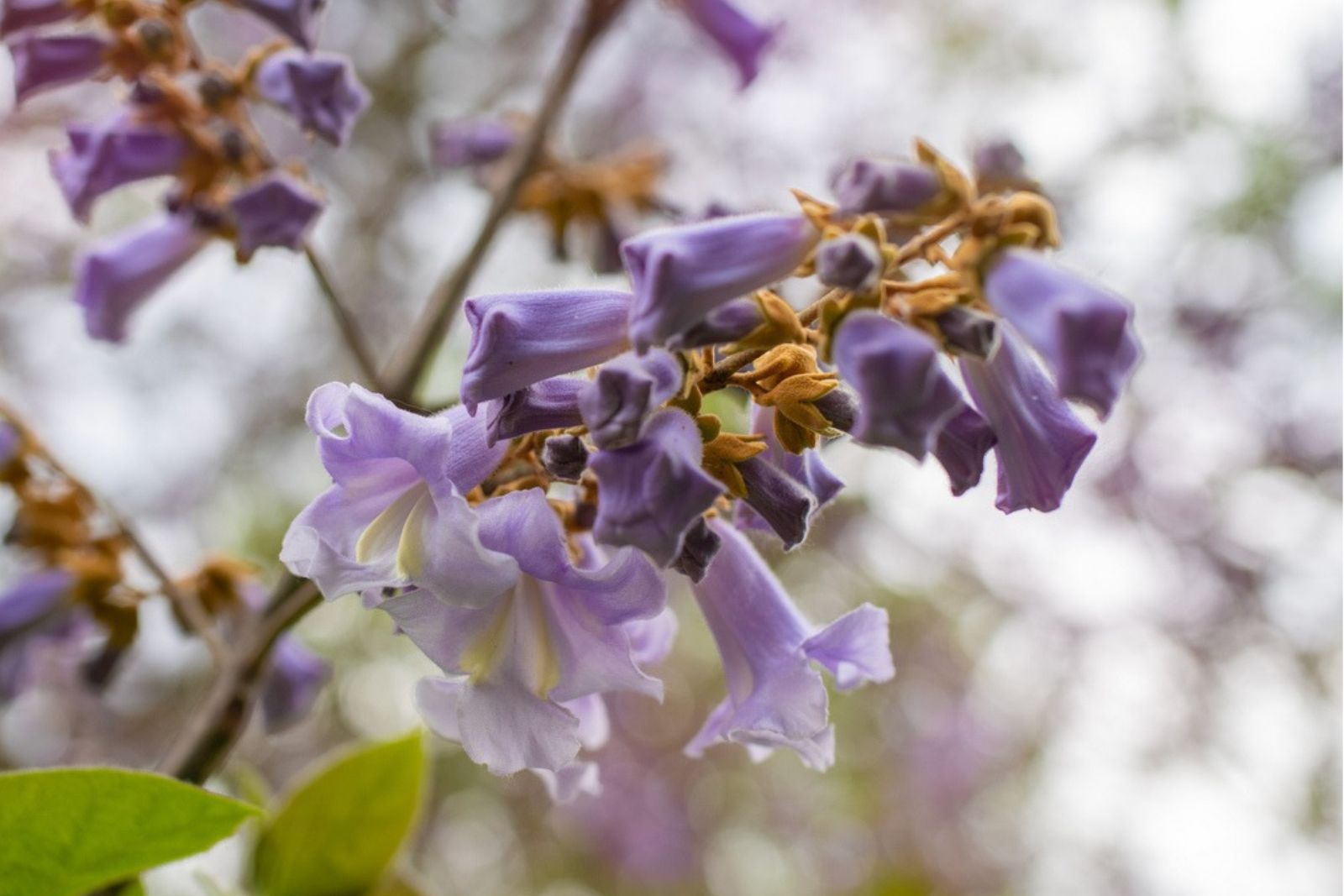
The numbers explain the nursery buzz. Growth of up to six feet a year even in ordinary conditions, far more in good soil, carries a sapling to screening height in two to three seasons; left to run, the tree matures around 30 to 50 feet with a broad crown of enormous, almost tropical leaves that cast dense shade. And then there’s spring: before the leaves, the branches load up with upright clusters of lavender, foxglove-shaped blooms, lightly honey-scented, a flowering display from a plant category, fast screens, that usually offers none. Managed hard, it does the opposite trick too: cut nearly to the ground every few years (“coppiced”), it regrows as a giant-leaved privacy shrub rather than a tree.
The honest fine print, before you dig
No fast plant is free of trade-offs, and the paulownia has three to weigh. First and most important, the classic species, Paulownia tomentosa, seeds prolifically and is flagged for invasiveness; it’s listed as invasive in parts of the eastern U.S. The responsible buy, and what good nurseries now steer customers to, is a low-seed or sterile hybrid cultivar (the Empress Splendor type crosses of P. fortunei and P. elongata), and a check of your state’s invasive list before ordering. Second, it’s deciduous: magnificent screen from spring to fall, bare branches in winter, where bamboo and conifers hold their wall year-round. Third, speed is borrowed strength: the wood is relatively brittle in storms, the leaf drop is prodigious, and like all fast growers it should be planted well clear of pipes, patios and foundations.
Planting the rival, right now
Fall is a fine moment to plant one: a sunny spot, any decent drained soil (it’s famously unfussy), generous water the first summer, and distance, at least 25 feet from the house and hard structures. For a screen, stagger several at 10 to 15 feet and let the crowns merge. Then respect its one scheduling rule, the same one that governs the rest of the fall pruning calendar: shape it in late winter, not now. And whatever you do, keep the mulch flat and off the trunk; a tree this fast still dies the slow volcano death like any other.
Bamboo’s speed, a tree’s manners, and three weeks of lavender every spring. Ask the nursery for the sterile cultivar, give it room, and let the rivalry begin.


