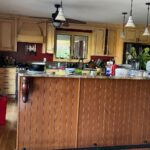
Her cabinets were not broken. They were solid wood, soft-close, built better than most new cabinets you can buy today. The granite was still perfect. The Brazilian cherry floors still shined. But every person who walked in told her the same thing without saying it. The room felt dark. The room felt old. The room felt like somebody else’s house.
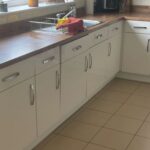
So she called a painter. One color. Sherwin-Williams Extra White. No new counters, no new floors, no tear-out. And her kitchen stopped being a 2005 problem.
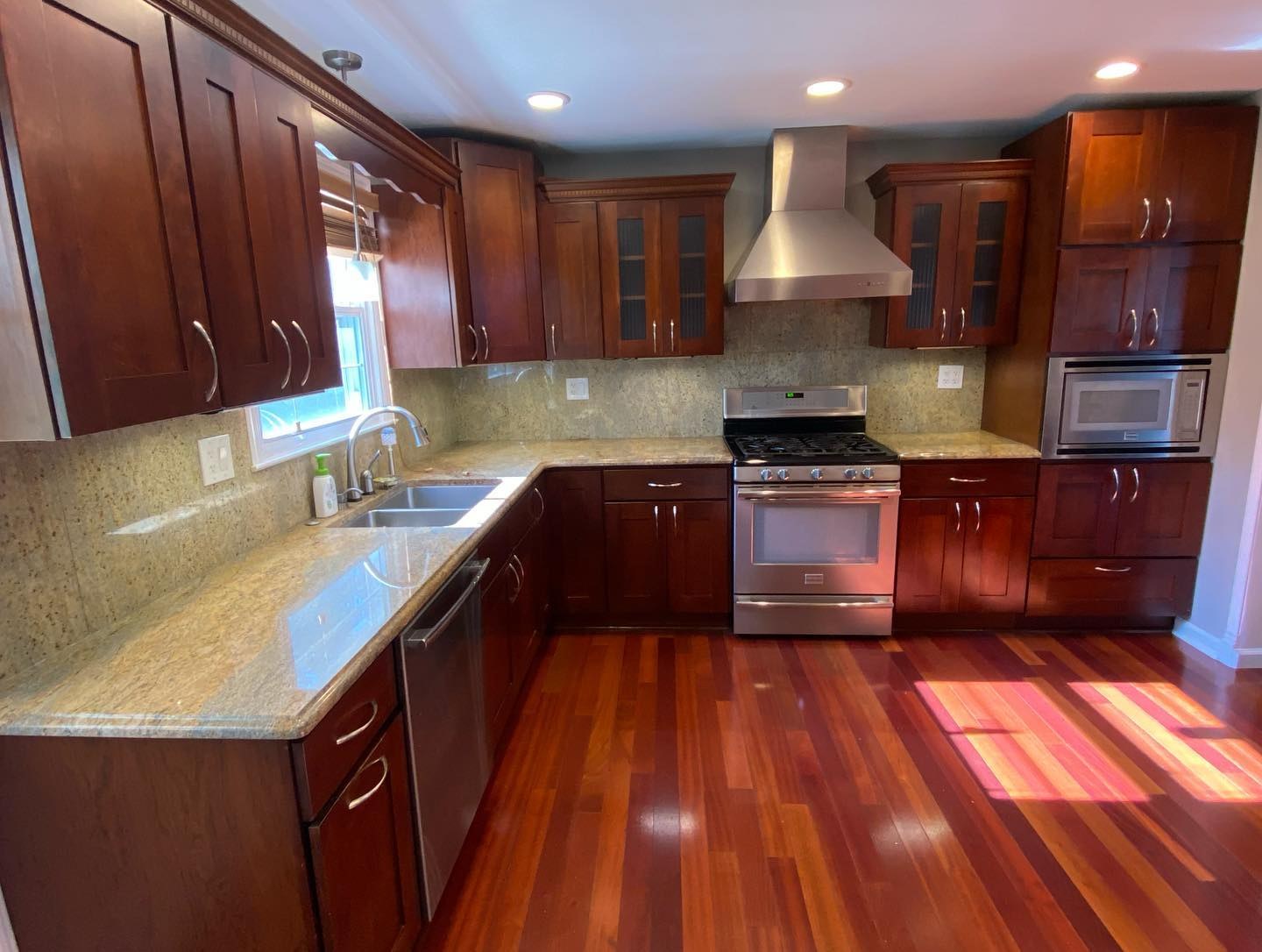
The cherry wood kitchen was the trophy of its decade
In 2005, this was the kitchen people saved for. Cherry cabinets, granite counters, stainless appliances, matching hardwood floors. A full cherry kitchen could cost more than a car. Builders put it in model homes. HGTV reveals ran on it. If you had cherry, you had arrived.
Twenty years later, that same package is the first thing agents flag when a house hits the market. Not because the wood went bad. Because the room reads dark in listing photos, and dark kitchens get skipped in the scroll.
Why cherry suddenly stopped working
Three things flipped at once.
Light became the kitchen’s most valued feature. Cherry wood absorbs light instead of bouncing it, so a room that felt cozy in 2005 reads like a cave now.
The warm color cycle ended. When the country moved to grays, greiges, and true whites, cherry got stranded. It clashes with almost every current paint color on the fan deck.
And the Brazilian cherry floors became the quiet problem. The floors cost thousands to replace. The cabinets are cheaper to update. So the cabinets have to carry the whole room.
One color, nothing else touched
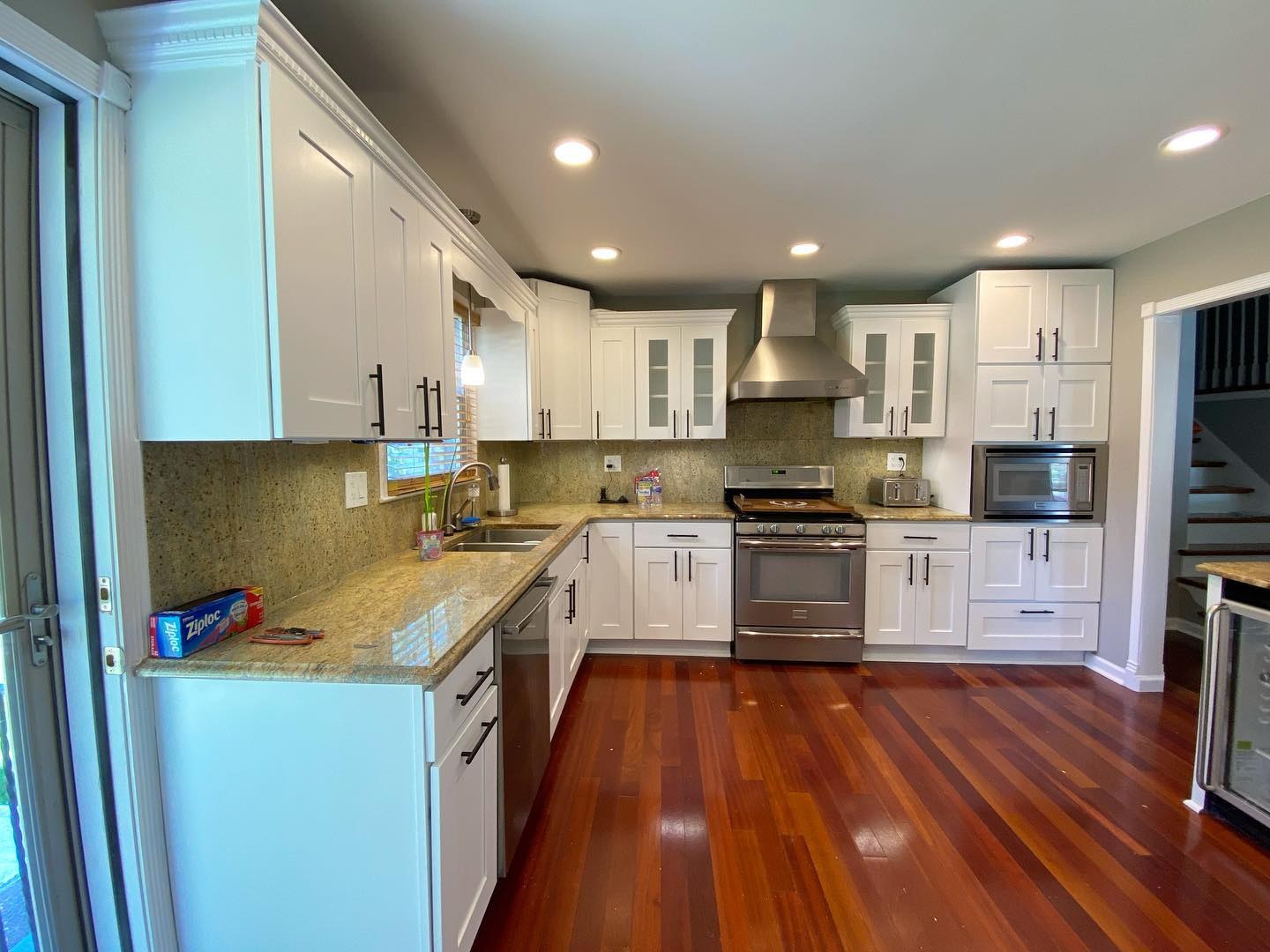
Sherwin-Williams Extra White is a clean, true white. No warm cream undertone, no cool blue cast. It sits beside the gold and tan in the granite without fighting it, and above the red cherry floors without clashing. That balance is why the room works.
The hardware swap did half the lifting. The old brushed nickel curved pulls read dated the second the cabinets went white. Matte black bar pulls land the whole room in 2026, and they cost less than a hundred dollars for the entire kitchen.
Side by side, the room is unrecognizable
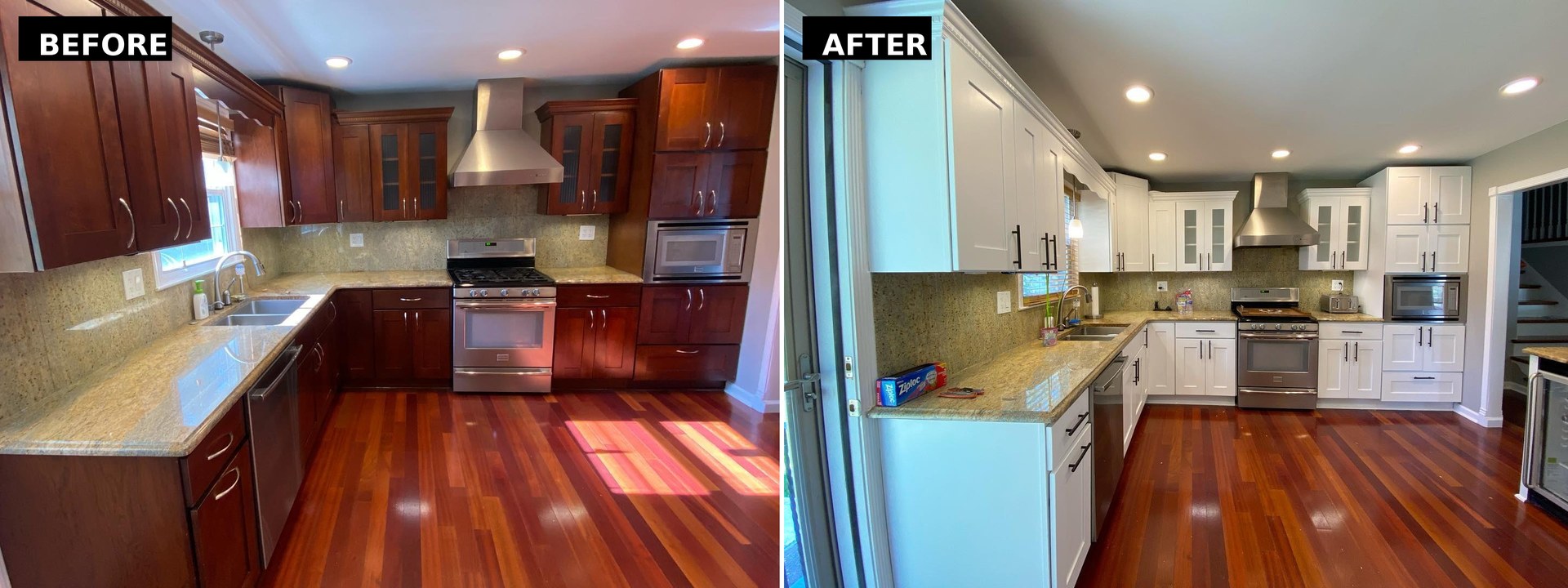
Look at the window above the sink. Same window, same light coming in. On the left, the cherry pulls the light into itself. On the right, the white bounces that same light across the ceiling, down the counters, back across the floor. Nothing changed except the color on the doors.
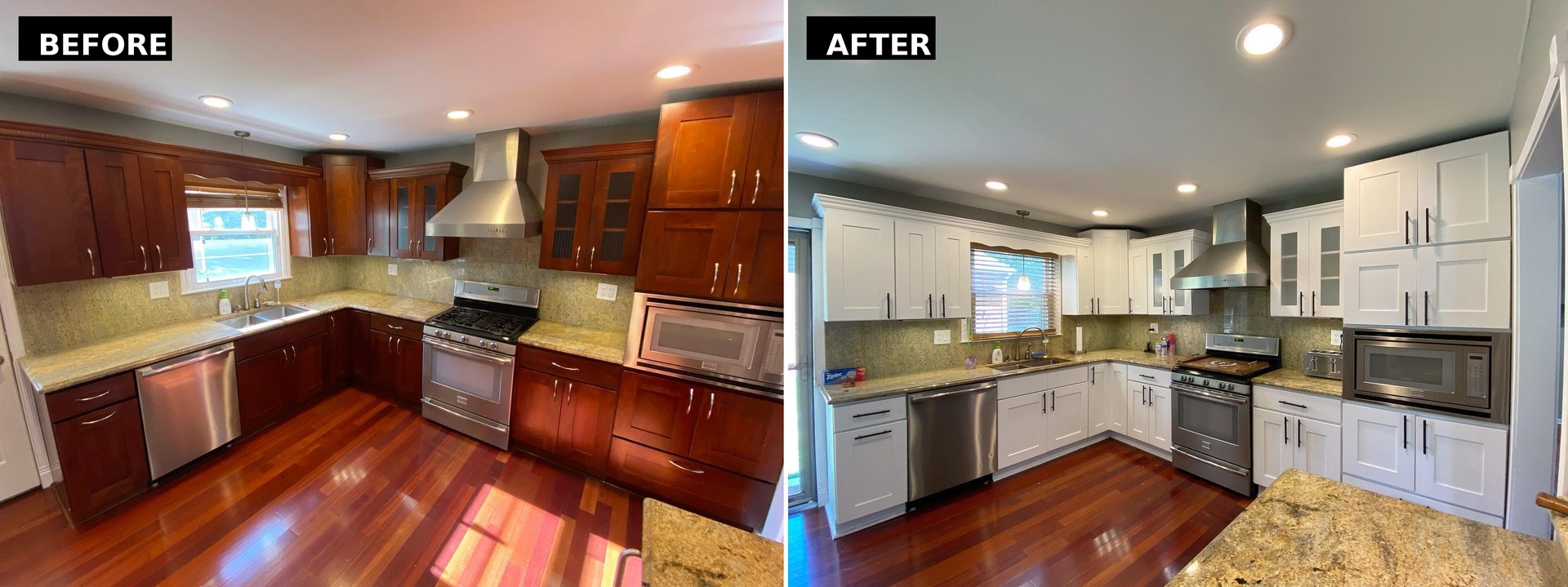
The ceiling is the second thing people notice. In the before, it reads darker and heavier, which was the style when the cabinets went in. After the paint job, the same ceiling looks cleaner and taller. White cabinets make everything above them look higher.
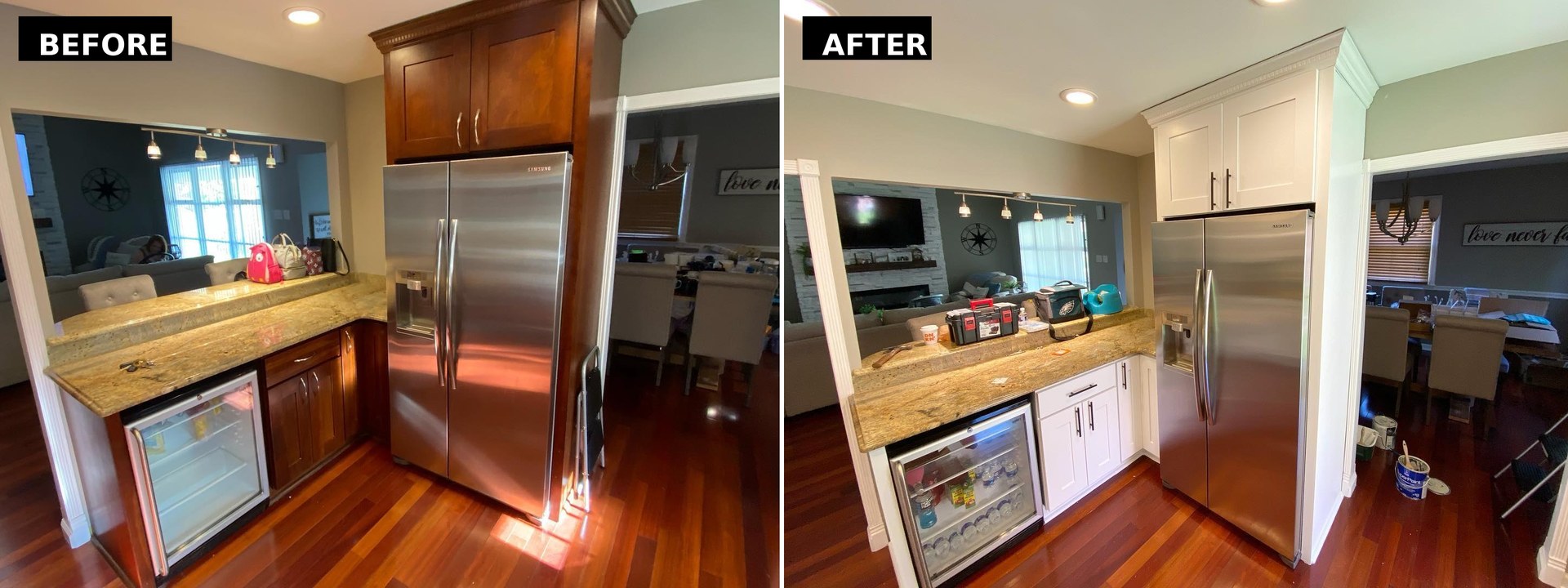
The fridge wall shows the biggest shift. In the before, the cabinets, the dark adjoining walls, and the cherry floors run together into one heavy block. In the after, the white steps forward and those darker rooms become a backdrop instead of a weight.
The detail work matters more than people think
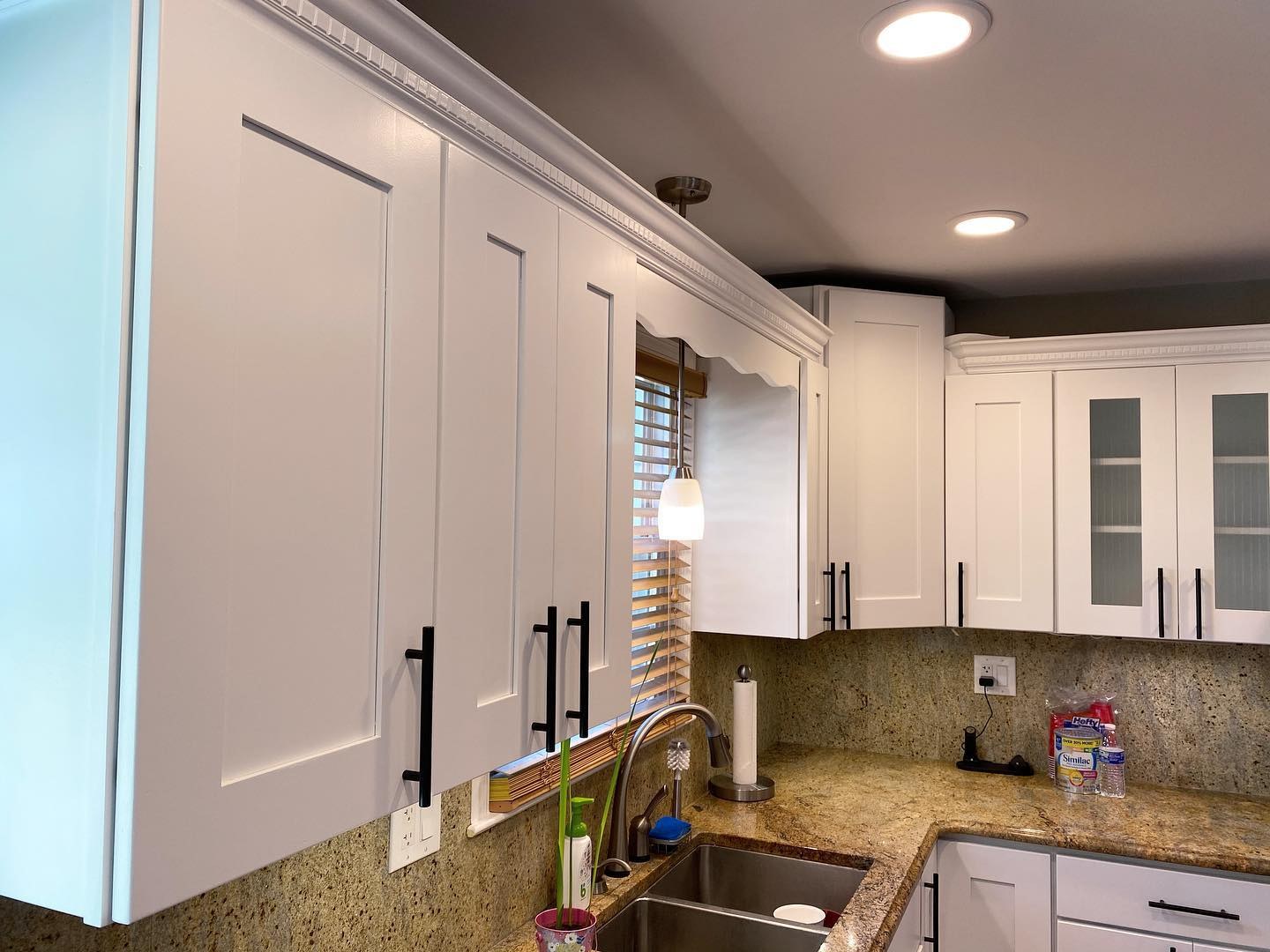
Painting cabinets is not rolling on a coat and calling it done. The painter sanded, cleaned, filled the old pull holes, primed every surface, and sprayed thin coats so the finish stays smooth under heavy daily use. A rushed cabinet paint job peels inside a year. A proper one lasts ten.
The crown molding kept its dentil detail because the white picks it up where the cherry hid it. The glass-front cabinets now read as display space instead of visual noise. These details were always there. Nobody could see them.
Why painting beat replacing
Ripping out these cabinets would have been a downgrade. The boxes are solid wood with real dovetail drawers and factory soft-close hinges. Most mid-range cabinets sold new today are particle board with a thin wood veneer.
The paint job cost a fraction of a tear-out. The granite stayed. The hardwood stayed. The layout stayed. Only the color story changed, and the color story was the whole problem.
What the before and after gives everyone else
There is a small grief in painting over wood somebody saved for. Grain you stared at for twenty years. Cabinets your spouse or your parents picked out. Covering that with white paint feels like admitting the thing you worked for is not the thing anymore.
That is why these before and after photos travel. They are not just showing a brighter kitchen. They are showing permission. Permission to update what you have. Permission to let the room match the year you are actually living in.
The cabinets were not the problem. The color was. And a gallon of Extra White, a set of black pulls, and a weekend of careful spraying was enough to prove it.
Credits: Painting by Pezzotti Painting (@pezzottipainting on Instagram) | Color: Sherwin-Williams Extra White (SW 7006)