You know the smell. You’ve been away for a week, you open the front door with your suitcase still in hand, and the house greets you with something sour and vaguely sulfurous drifting from the kitchen. Most people blame the trash they forgot, scrub the sink, light a candle, and never learn the real culprit, which is a shame, because preventing it takes ten seconds on the way out the door and two things sitting within reach of every sink in America.
The two things are a glass of water and a sheet of paper, and the culprit they neutralize lives under the sink: the P-trap, the U-shaped bend in the drain pipe. That bend isn’t a plumbing quirk. It’s designed to hold a small plug of standing water at all times, and that water plug is the only thing standing between your kitchen and the sewer gases in the pipes below.
Why an empty house starts to smell
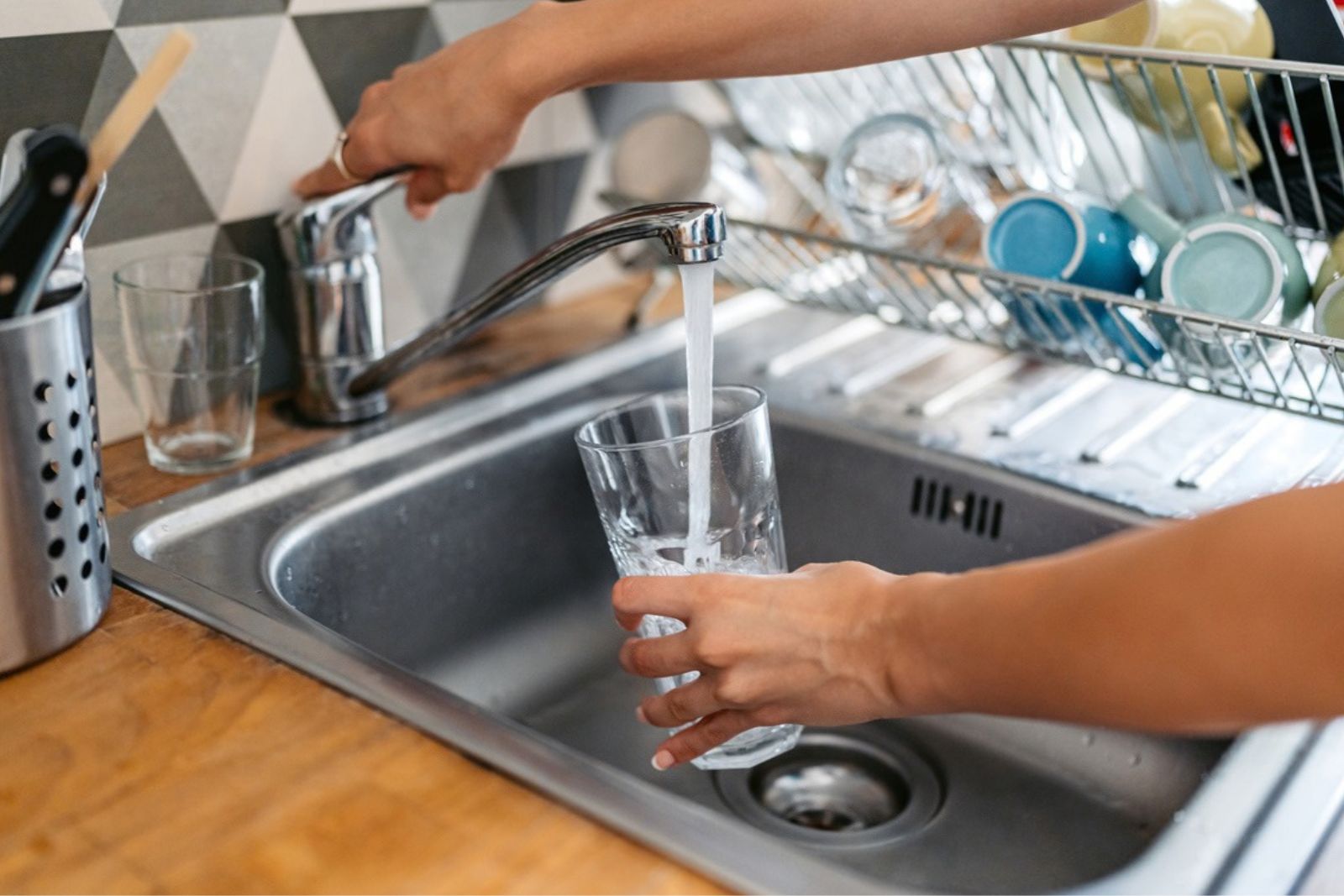
Every time you run the tap, fresh water replaces the water in the bend, and the seal stays full. Stop using the sink for days, and physics takes over: the trapped water slowly evaporates, the seal drops, and once it’s gone, sewer gas rises freely through the drain into the room. Warm, dry weather and a running HVAC speed the evaporation up. That rotten-egg welcome home isn’t dirt in your sink; it’s your sink standing open to the sewer because its water door evaporated while you were gone. Drain flies use the same open door, which is why long absences sometimes end with both a smell and a cloud of tiny insects.
The ten-second ritual before you leave
- Run the cold tap for about ten seconds, so the trap is completely full, then pour one last full glass of water straight down the drain to top it off.
- Dampen a sheet of paper (a paper towel works perfectly), and lay it flat over the drain opening so it seals against the basin.
That’s the whole trick. The full trap restores the water seal to its maximum; the paper lying over the drain slows the evaporation beneath it and bars the door to insects. Done on every sink, shower and floor drain in the house, it reliably covers an absence of one to two weeks.
For longer trips, add one spoonful
Away more than a couple of weeks? After the glass of water, pour a teaspoon of mineral oil down the drain. Oil floats, spreading into a thin film on top of the trap water, and a film of oil evaporates far more slowly than open water: plumbers use exactly this to keep rarely used floor drains sealed for months. Use mineral oil, not cooking oil, which can turn rancid and create the very smell you’re preventing. Two refinements complete the pre-departure routine: clean the drain first (baking soda, then vinegar, then hot water) so no food residue sits decomposing above the seal while you’re away, and if a faint sewer smell is already present before any trip, test the seal the way you’d test a fridge door, with a simple sheet of paper: a drain that smells with regular use has a different problem, possibly a leak lowering the trap, and that one’s worth a plumber.
One glass down the drain, one damp sheet over it, every sink, on your way out. The suitcase comes home to a house that smells like nothing at all. That’s the trick.