You dragged an old wooden dresser out of a garage. Or you got one from your grandma. Or you spotted one at an estate sale for next to nothing. It looks tired. The paint’s dull, chipped at the corners, with yellowed stuff on top.
Your plan is simple. One weekend, a little sanding, two coats of chalk paint, maybe new knobs.
Put the sandpaper down.
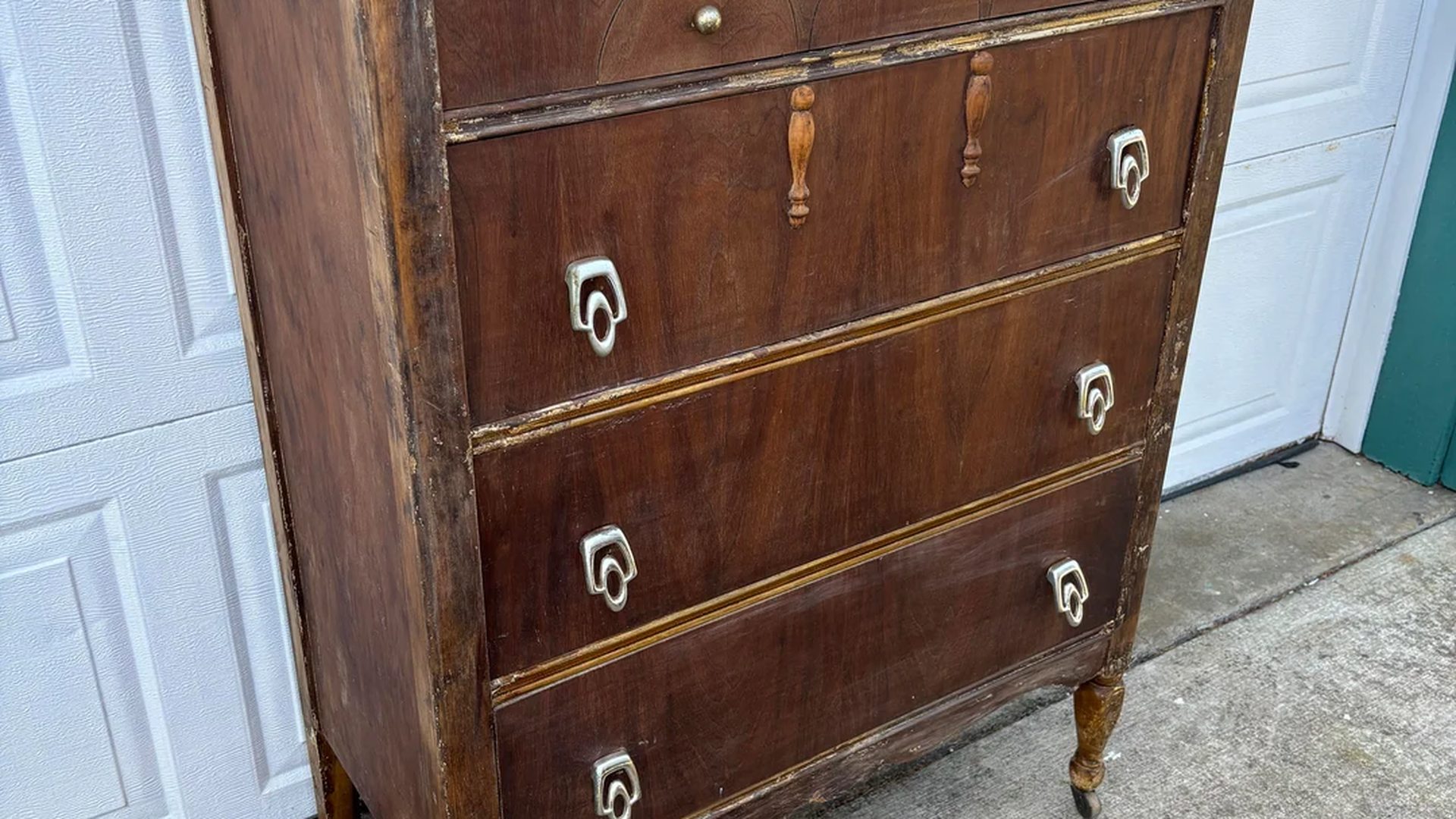
A few weeks ago, a short, plain-looking painted dresser sat under the lights at a Pennsylvania auction. It sold for $180,000. The auction house had guessed a lot less. Seven serious bidders fought over it. What made it worth that kind of money wasn’t the shape. Wasn’t the wood. Wasn’t even how old it was.
It was the exact part a weekend DIYer would’ve been dying to cover up.
It wasn’t a one-off. About six weeks earlier in Maine, another old painted chest opened at bids in the five figures, even with chips on top and a swapped-out hinge. At the same Pennsylvania sale, another old chest with newer feet still pulled over $24,000, because of what was on top.
Two sales. Two states. Same lesson. Something very specific about these old painted pieces makes serious buyers reach for serious money. One small thing a normal shopper would never think to protect, which is why worth-something dressers get killed in garages every weekend.
The sad part: the exact move most people make, grab the sandpaper and the fresh paint, erases almost all the value in one afternoon. Not just a little. Almost all.
So what are these buyers chasing? And how do you check, in about a minute (60 seconds), whether that sad-looking dresser in your garage might be the kind they want, before you make it worthless?
What the big-money buyers are really after
They aren’t paying for the wood. Or the shape, the drawers, the hardware, or the age. All of that is a bonus. The real price is paid for one thing, and once it’s gone, no money or skill can bring it back.
It has a name: the original finish.
That doesn’t just mean old paint. It means the exact coat of paint, varnish, or stain the maker put on it a hundred-plus years ago, that’s been aging and softening in place ever since. That old surface is treated as part of the dresser itself, not a layer you can scrape off and redo.
The Canadian Conservation Institute, Canada’s government body that advises museums on this exact thing, puts it in one line in its public care guide: original furniture finishes have real history, beauty, and money value, and should be left alone.
The $180,000 dresser proves why. Per Antiques and The Arts Weekly’s reporting, it was signed in pencil by its maker (John Mayer), dated January 1829, with painted designs tied to a known country artist of the era. It’s the only known signed and dated piece from that part of rural Pennsylvania. All that proof lives inside the paint itself. Sand it off and you erase the signature, the date, the artwork, and the whole reason it’s worth that much.
The 60-second check before you touch anything
Before you buy a single sheet of sandpaper, do this walk-around.
- Look for hand-painted designs. Flowers, hearts, tulips, fake-wood-grain patterns in colored paint, stencils, dates, initials, or signatures anywhere on it. If you spot any of that under the dust, stop.
- Pull every drawer out and flip it over. Check the back and bottom for chalk writing, pencil marks, maker labels, or stamps. Old makers signed in weird spots.
- Check the knobs and pulls. Hand-turned wood or lumpy old iron and brass? Good sign. Perfectly matched factory hardware is a red flag that it’s been “updated.”
- Peek inside the lid and under the top. Painted designs inside, or colors that don’t match the outside, often mean folk-art origins.
- Take photos of everything. Front, back, sides, drawer bottoms, inside the lid.
- Email the photos to a regional antiques auction house. Pook & Pook, Thomaston Place, Garth’s, and Freeman’s Hindman all give free photo appraisals. One email could save you from wiping out a few thousand dollars with a palm sander.
Straight talk: not every old dresser is a $180,000 dresser. Most aren’t close. These top prices are for rare, documented pieces from specific country traditions, not a 1950s pine piece from a department store. But the rule still works all the way down. A plain old painted country piece in honest, untouched shape is almost always worth more as-is than refinished.
The real risk isn’t missing a $180,000 payday. It’s spending a Saturday erasing the one thing that made your dresser worth more than firewood.
Before the sandpaper comes out, grab a soft cloth and a camera.
Sources: (1) Antiques and The Arts Weekly, “Fraktur, Chest Share Honors At Pook & Pook,” October 5, 2026; (2) Antiques and Auction News, “Pook & Pook Delivers Major Two-Day Auction,” October 23, 2026; (3) Pook & Pook Inc., Americana Session One lot catalog, October 1, 2026; (4) Thomaston Place Auction Galleries, Lot 1017, Queen Anne Paint Decorated Blanket Chest, August 2026; (5) Canadian Conservation Institute, CCI Note 7/2, Care of Furniture Finishes.