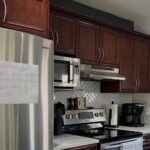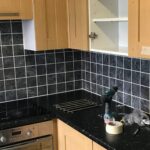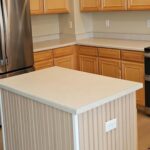

A cabinet company somewhere probably quoted the owner of this kitchen eighteen or twenty thousand dollars to make the orange go away. That’s the number most people hear when they ask what it costs to escape a 90s oak kitchen, and it’s the number that usually ends the conversation. She didn’t take the quote. She didn’t replace a door, swap a counter, or lift a floor tile. She painted.
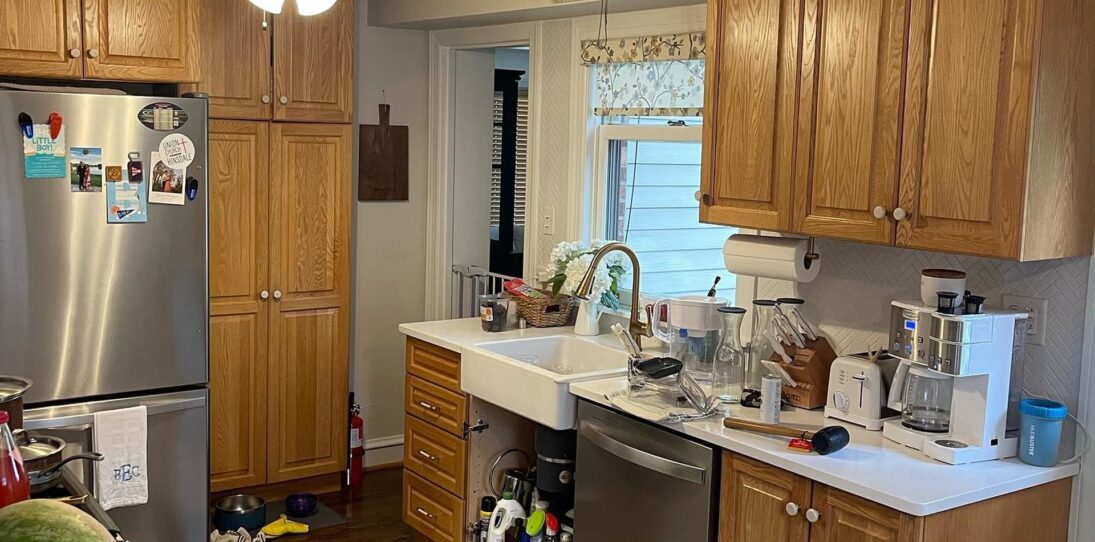
If you grew up in anything built between 1995 and 2010, you know this kitchen before you even scroll. Cathedral arch upper cabinets. Honey oak everything. A white Frigidaire smoothtop. Pale blue walls. A range hood that looked like it belonged in a 1998 catalog. Laminate counters doing their best.
The before
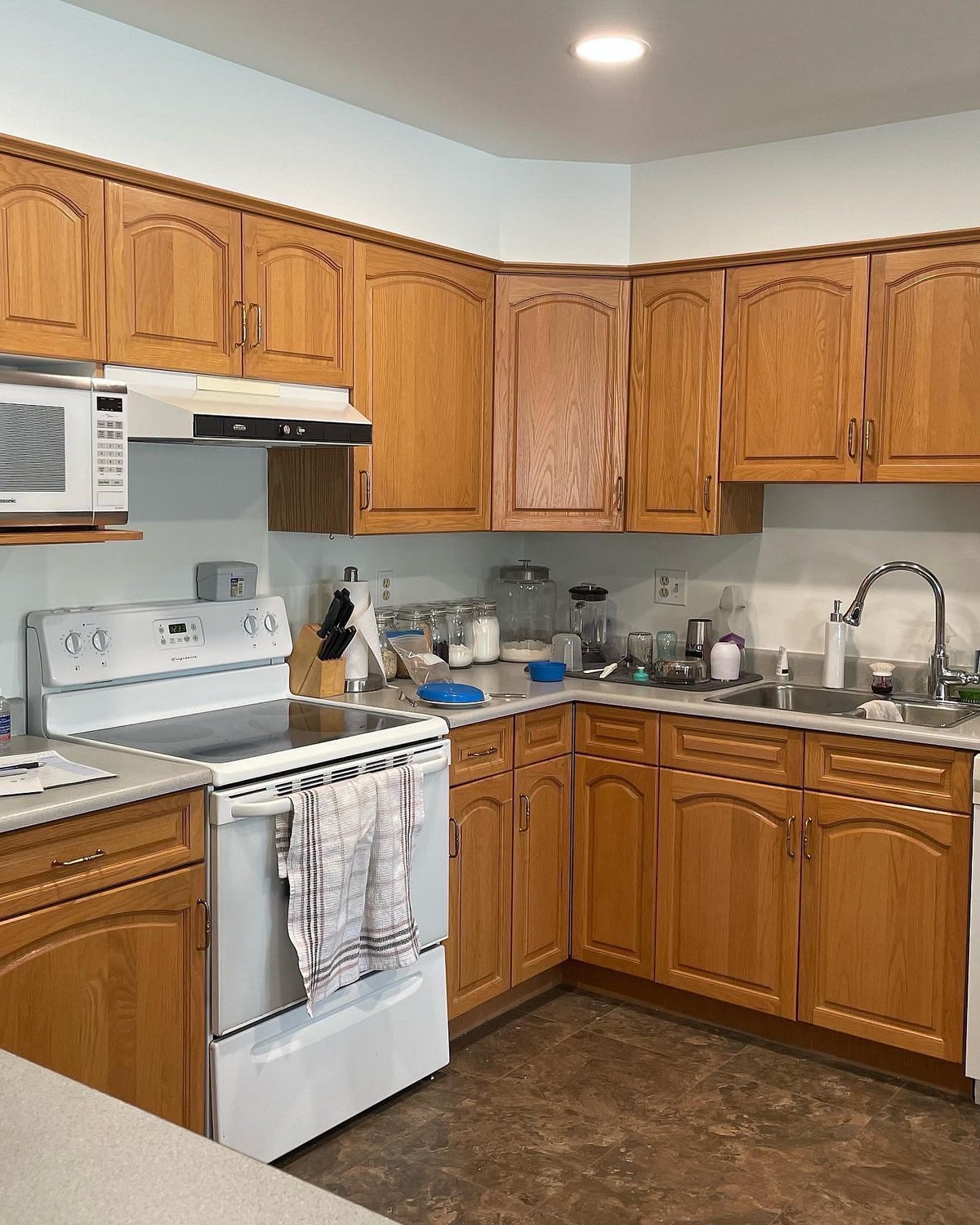
Nothing here is actually broken. The layout works. The appliances work. The cabinet boxes are solid. It’s a perfectly functional kitchen trapped in the wrong decade. That’s the thing most people miss when they get the renovation quote: the carcasses aren’t the problem, the orange is.
What the reno industry tells you to do
Rip the doors. Go shaker. Replace the boxes if the hinges are tired. Add quartz because the laminate is “dated.” Tear off the drywall behind the stove and put up subway tile. Each of those sentences has a price tag attached, and when you add them up, you understand why so many of these kitchens are still sitting here, orange and all, five years after someone first said “we should really do something about this.”
What she did instead
She painted every cabinet face and every box in Behr Titanium. She swapped the brushed brass arch pulls for long matte black bar pulls. She pulled the old range hood out and put a white over the range microwave in its place. She tiled the stove wall in glossy black stacked tile. She repainted the walls a warm off white so they stopped fighting the new grey.
The counters stayed. The floor stayed. The stove stayed. The cabinet boxes stayed. The arched door profiles stayed.
The after
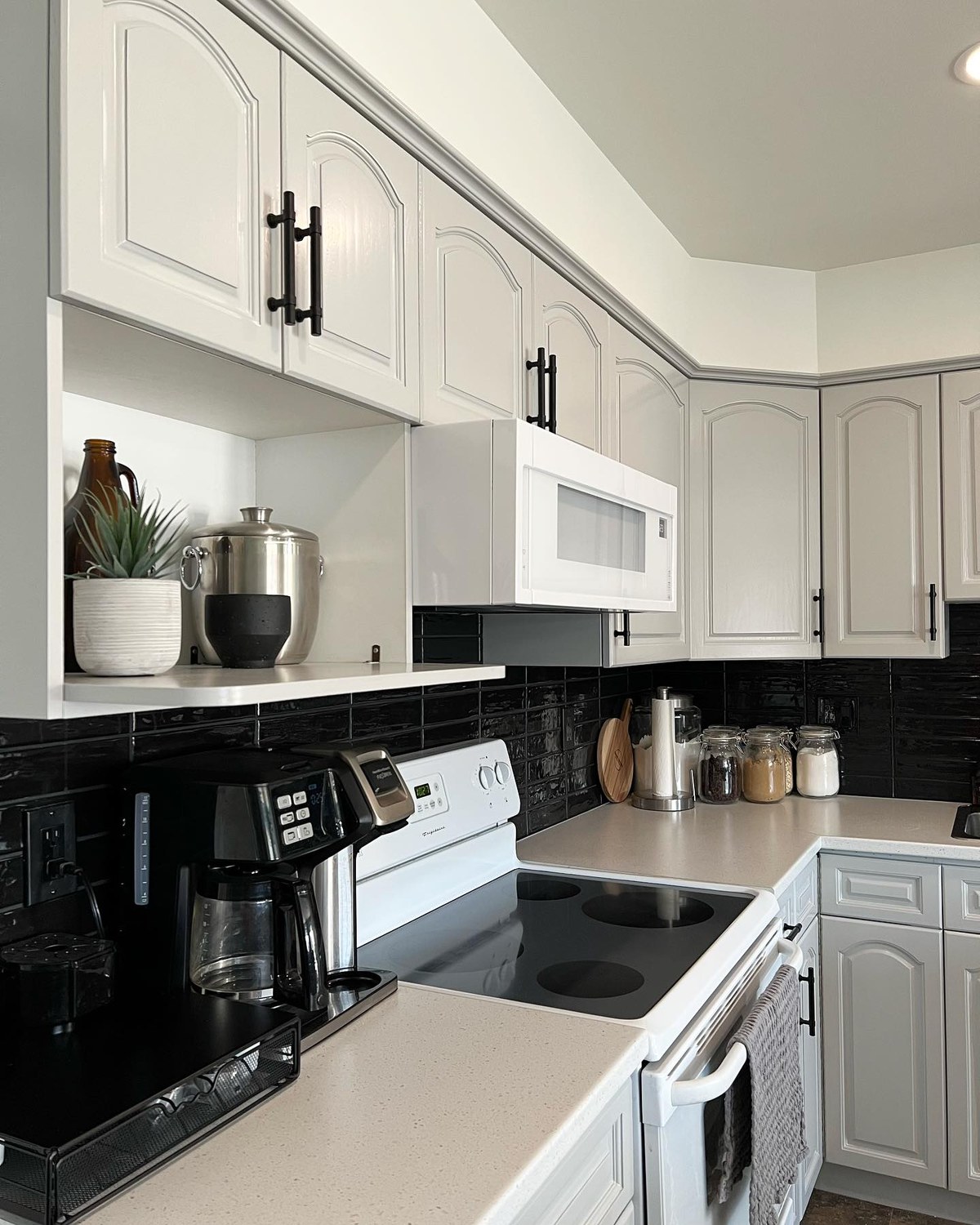
If someone told you this was a thirty thousand dollar gut, you’d believe them. The arch is still there in every door, same profile as the before, now reading as a nice detail instead of a dated one. That’s what Titanium does when it covers oak: it neutralizes the orange undertone without going cold, and it lets the shape of the door stop screaming “90s.”
Why Titanium and not every other grey
Grey paint has a reputation problem. Half the greys on the shelf read blue in the afternoon. The other half read purple. A few look clinical. Titanium is one of the warmer cool greys Behr sells, which matters here because oak kitchens almost always have warm-undertone wood floors and warm-undertone counters near them. A cold grey would have made the whole room feel like a dentist office. Titanium reads almost greige in bright light and settles into a soft cool grey when the sun drops.
Why the hardware swap carries so much weight
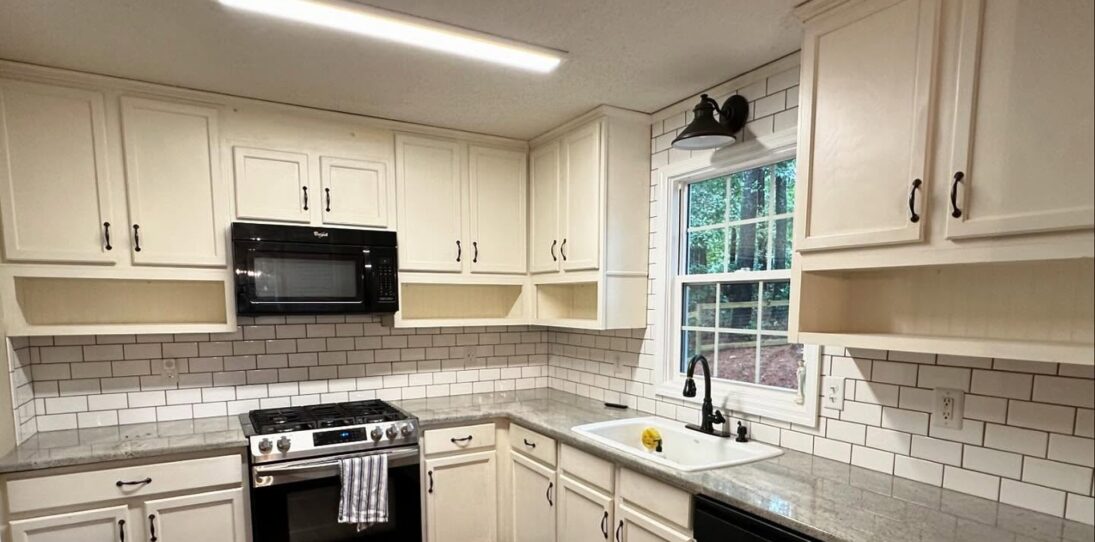
The brushed brass arch pulls on the before are a dead giveaway. Nothing dates a cabinet faster than a pull that was popular when Friends was still on the air. Long matte black bar pulls cost about three dollars each in multipacks and instantly reset the cabinet’s visual age. A whole kitchen’s worth lands under a hundred and fifty bucks. If you only did one thing to an oak kitchen, this is the thing.
The backsplash is doing more than it looks
That glossy black stacked tile is the one truly new material in the room. It gives the whole kitchen a focal point, ties the black pulls to the wall so they don’t float, and makes the grey cabinets look intentional instead of accidental. Stacked gloss tile also reads a lot more current than the subway tile everyone defaulted to a decade ago. A full run behind the range and along the counter is usually a couple hundred dollars in material plus a weekend if you set it yourself.
What she left completely alone
The light laminate counters. The brown vinyl floor. The white Frigidaire smoothtop range. The cabinet layout. The cabinet boxes. Those four things usually account for most of a renovation budget, and she didn’t spend a dollar on any of them. The counters look fresher in the after mostly because they’re not surrounded by orange anymore and the eye finally has somewhere else to land.
The thing worth taking away
The honey oak was never the real problem. The color sitting on top of the oak was. Once you understand that, the quote on your counter stops looking like a shopping list and starts looking like a question: do you want a new kitchen, or do you want to stop seeing the old one?
Paint, pulls, and a smart dark accent answer that question for a tiny fraction of the gut-reno number, and they answer it in a weekend or two, not a season of eating takeout on a folding table.