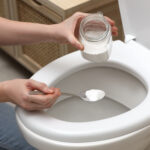
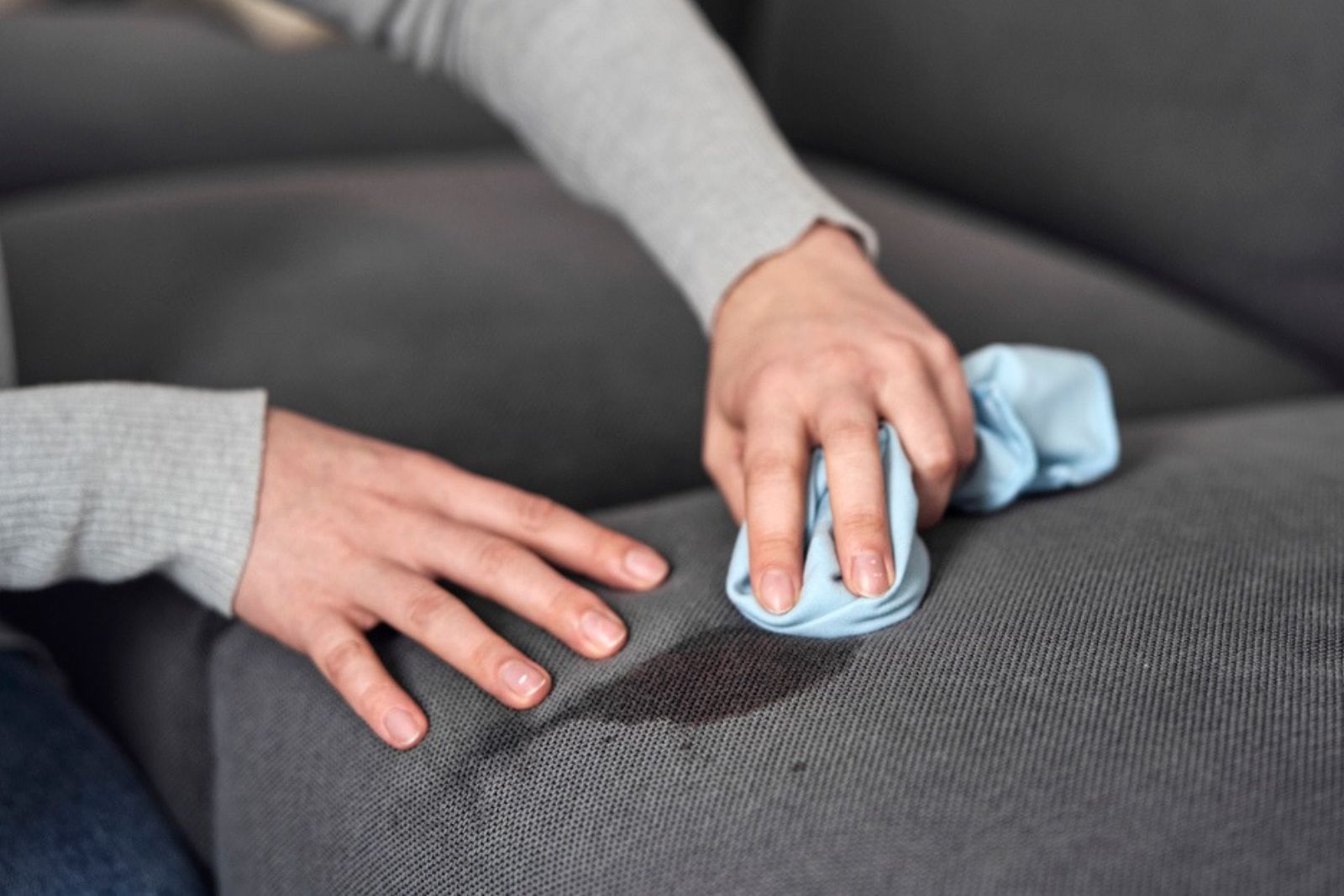
You cleaned one small stain, and now the sofa has a bigger one: a pale halo with a darker rim, right where you scrubbed, somehow worse than the mark you started with. It’s the most common way a fabric sofa gets ruined, it happens with plain water on a clean cloth, and it keeps happening because almost nobody knows the two things upholstery pros check before a drop of anything touches the cushion: why the ring forms, and the letter hiding under it.
The ring isn’t dirt you missed. It’s physics. Water soaking into upholstery dissolves whatever lives in the fabric, old soil, body oils, finishing agents, plus its own minerals, and as the wet patch dries from the outside in, evaporation pulls all of it to the edge and deposits it there as a visible rim. The slower and wetter the cleaning, the stronger the ring. Scrubbing makes it worse twice over: it spreads the moisture wider and grinds the soil deeper.
The letter under the cushion decides everything
Flip a seat cushion and find the tag: a single code tells you what the fabric tolerates. W means water-based cleaners are allowed; S means solvent only, water will ring it almost guaranteed; W/S accepts either; X means nothing but vacuuming, and any liquid, water or solvent, risks permanent damage. Most ring disasters are simply an S or X fabric cleaned like a W. Thirty seconds with that tag, plus a test of your chosen method on a hidden patch, prevents most of them.
The pros’ dry method: foam, not water
On water-tolerant fabric, professionals clean with almost no liquid at all. The version you can copy:
- Vacuum first, thoroughly, with the upholstery brush, cushions out, crevices included. Dry soil plus water is mud; removing it dry is half the clean.
- Make dry foam: whip a squirt of mild dish soap in a bowl of water until it’s stiff suds, then scoop only the foam onto a cloth or soft brush. The foam does the cleaning while keeping the fabric barely damp.
- Work panel to panel, not spot by spot. Clean the entire cushion face or the full armrest, seam to seam, feathering lightly at the edges. A uniformly cleaned panel dries uniformly, and uniform drying is literally the definition of no ring.
- Blot, never rub, lifting foam and soil with a dry white towel, then wipe once with a cloth barely dampened in distilled water (no minerals, no mineral rim).
- Dry it fast and evenly: a fan on the cleaned panel until bone dry. Speed is the second half of the no-ring trick, since rings are made during slow drying.
For S-coded fabric, the same choreography runs with a water-free upholstery solvent or rubbing alcohol on a cloth, tiny amounts, panel-wide, blotted. For X, your tools are the vacuum, a soft brush, and a professional’s number.
If the halo is already there
An existing water ring usually surrenders to its own medicine applied correctly: lightly re-dampen the entire panel with distilled water (re-dissolving the rim deposits), blot evenly, and fan-dry the whole surface at once so there’s no “edge” for minerals to gather on. On S fabric, do the same pass with solvent. And once the sofa is clean, keep the logic going on the rest of the textiles, from the greyed towels to the sheets’ real washing rhythm.
Read the letter, clean with foam, work seam to seam, dry fast. The ring was never about the stain; it was about the water. Use almost none, and there’s no halo to explain. That’s the trick.