

Most of the bathroom was original. The blue tub, the hex floor, the painted brick wall with its dark shelves, the scalloped vanity with its brass pulls had all been there since someone picked them out of a 1960s catalog. Then one morning somebody tore it out, and what came back is almost unrecognizable in the best way.
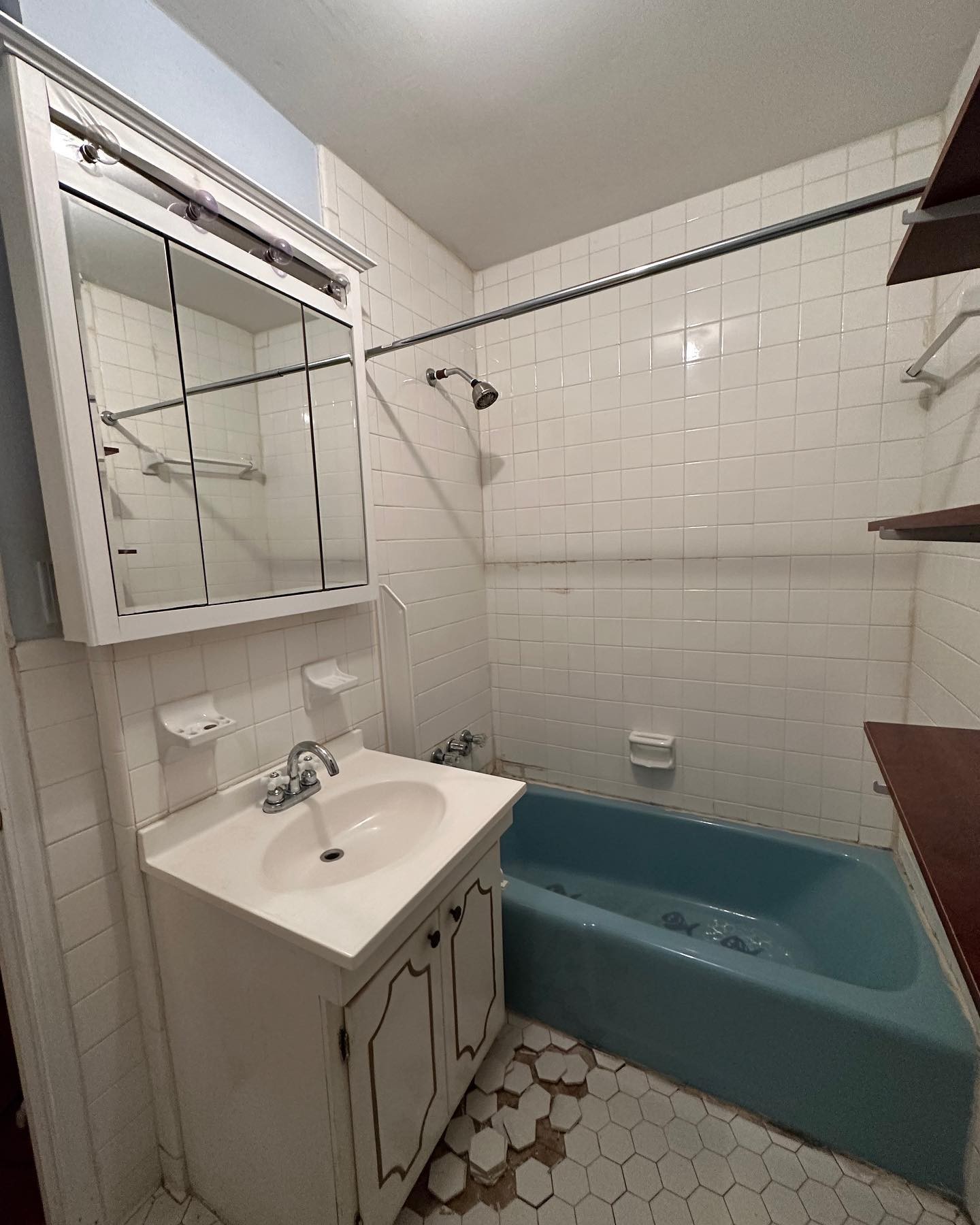
Look at this photo for ten seconds and your brain runs the whole decade. Square white tile climbing all the way to the ceiling. A medicine cabinet doing the job of the only real light source. Soap dishes glued into the grout line. It was once a bathroom that felt new to the people who installed it.
What a thumbnail hides is the real problem. Look near the top of the tub surround and the grout reads almost black. That is not scrubbable dirt. That is decades of humid shower air with no exhaust fan, soaking into porous grout a quarter inch at a time.
The accent wall that dated the room harder than the tub
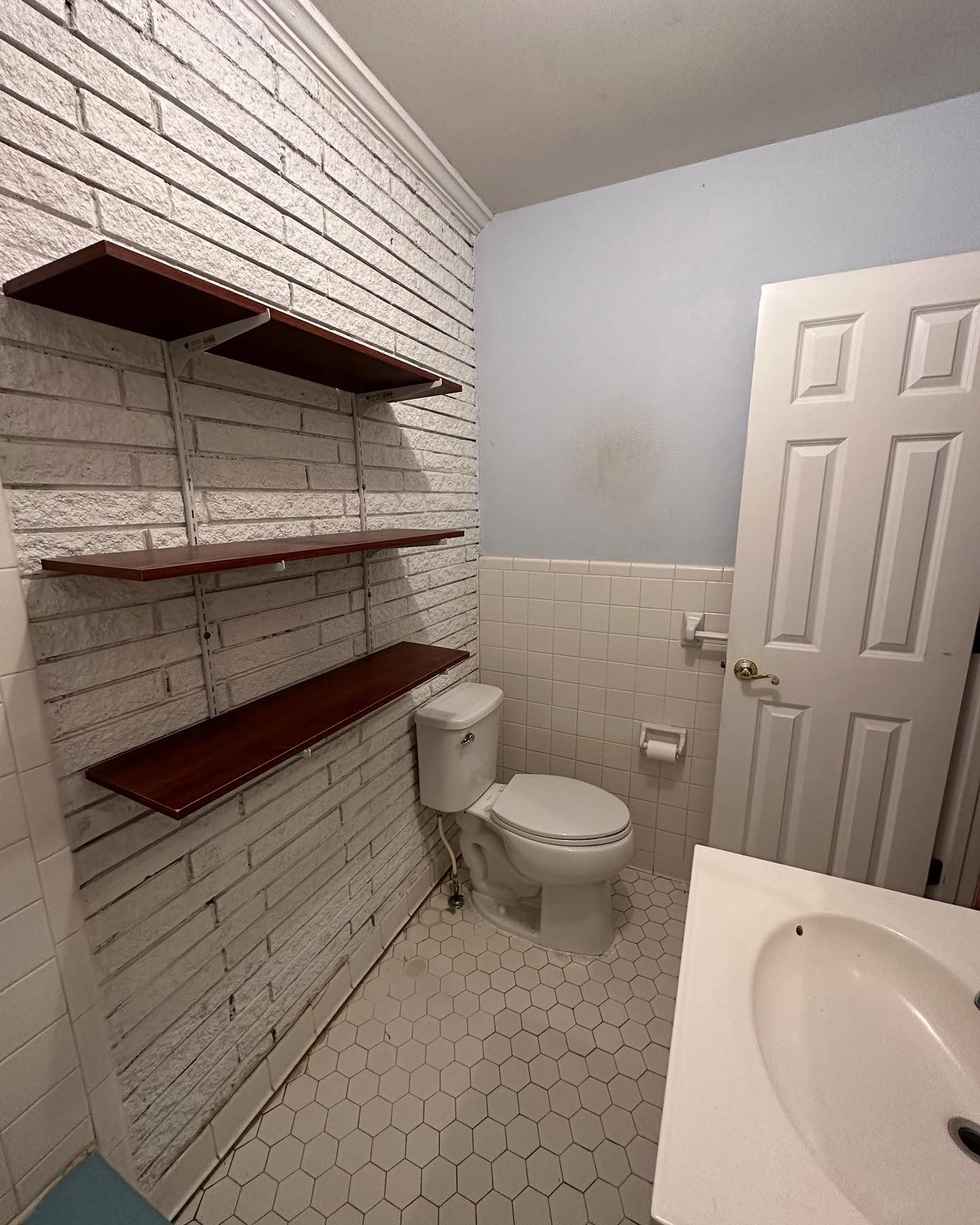
Turn the camera around and the room gets a second helping of its decade. Painted brick was sold hard in the sixties as a warm, masculine finish. Developers put it in dens, in bar corners, and yes, in bathrooms. Someone then screwed three stained shelves onto metal brackets right across it, which is what you do when a room has no real storage and you are trying.
The pale blue paint above the tile wainscot finishes the picture. The whole room was coordinated once, in good faith, and left.
And when you saw it all at once
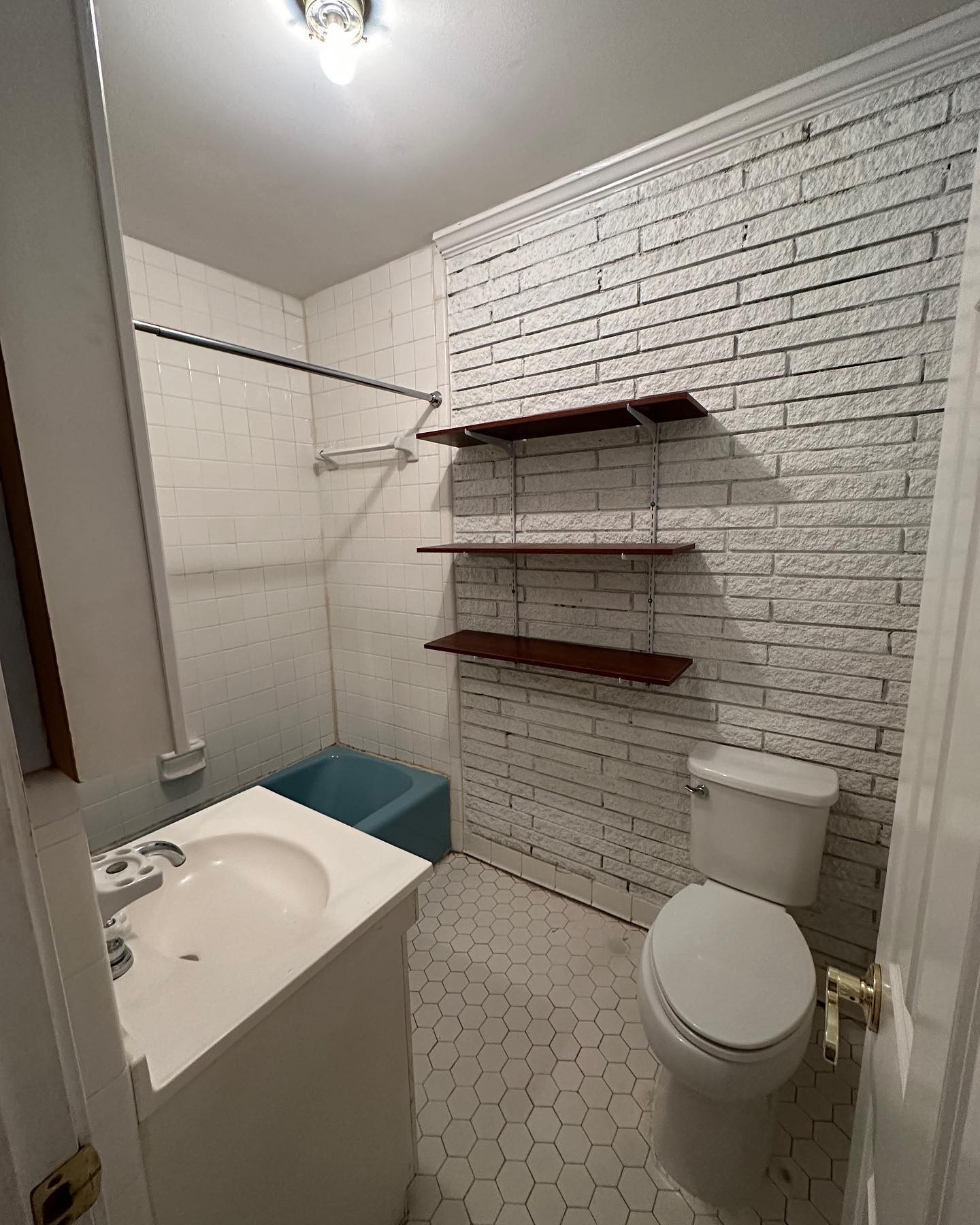
From the doorway you get the full arithmetic. A twenty-four inch vanity in a household that needed sixty. A toilet shoved hard against a brick wall. A tub tucked into an alcove with only a metal rod to hold a curtain. Zero counter, zero drawers, three narrow shelves that were never going to hold a real stack of towels. Not just dated. Quietly unlivable.
About that tub, because people are going to ask
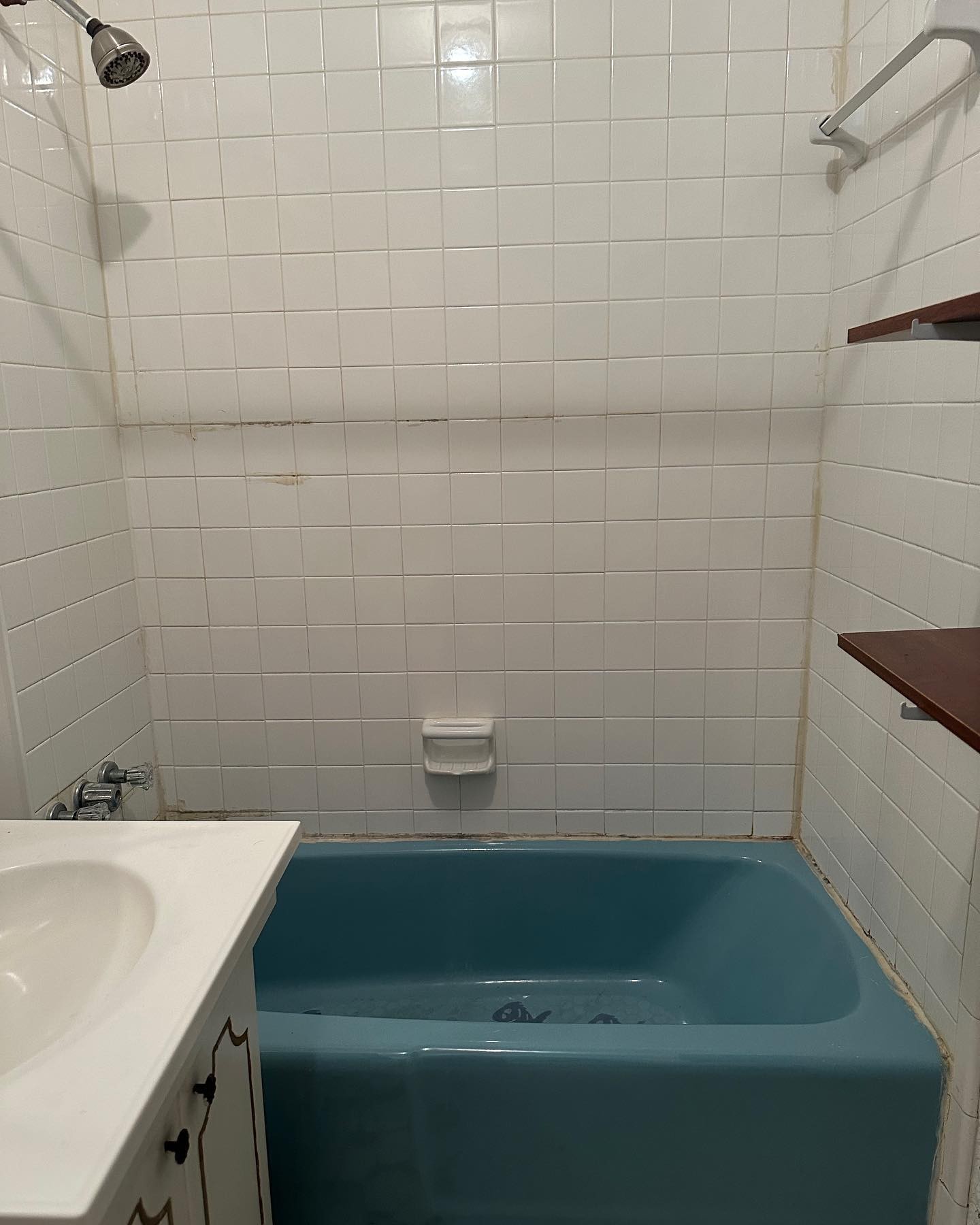
A word on the tub, because this is the part that will start arguments. It is not garbage. It is a three hundred pound cast-iron tub in a factory color Kohler built as standard between about 1954 and 1972. Clean pastel cast-iron tubs are selling on Facebook Marketplace for 300 to 800 dollars (about 275 to 735 euros), and designers are putting brand new tubs in this same color back into brand new bathrooms.
So why did it have to go? Because saving the tub meant saving everything the tub was locked to, and everything it was locked to is what you just scrolled past.
The shower is where the budget lives
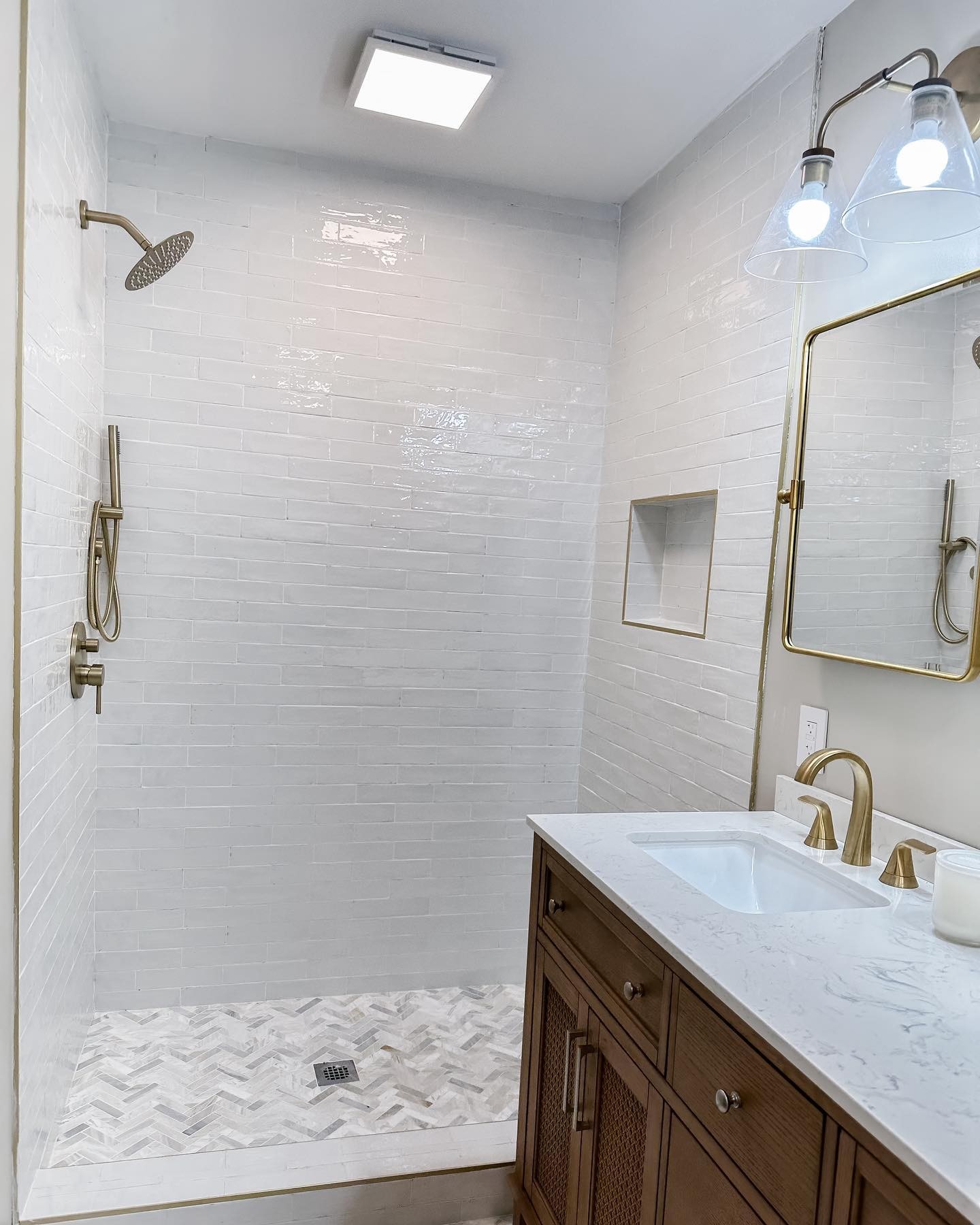
Walk in now and the whole room speaks. The tile on the shower walls is Daltile Remedy in the Elixir color, a handmade-look glossy tile with real glaze movement baked into every piece. Light does not lie flat against it. It ripples. One tile line, chosen carefully, is doing more work here than most whole remodels manage.
Underfoot is Daltile Sublimity in Namaste marble, cut into a tight herringbone and honed to a soft matte. Mapei Avalanche grout keeps it all bright instead of yellowing in year three.
Same wall, two decades apart
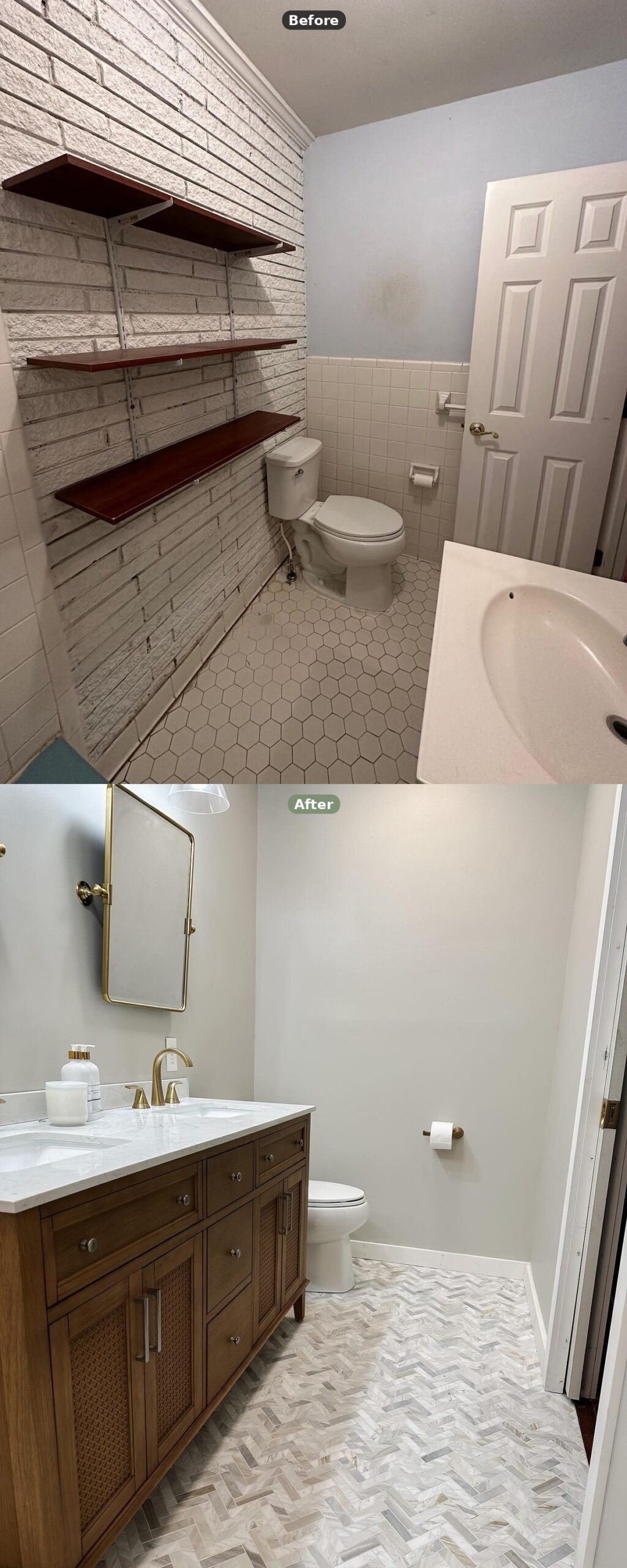
Same wall, same toilet, same door. Where there used to be painted brick and three screwed-in shelves, there is now a sixty-inch double vanity, and the floor swapped from chipped hex to a flowing herringbone marble.
Look down. The herringbone from the shower does not stop at the shower curb. It keeps going, right under the toilet, right up to the door. That is the small, expensive move that makes a renovated bathroom read as one room instead of a nice shower bolted onto an old toilet closet.
The mirror wall is where the money shows
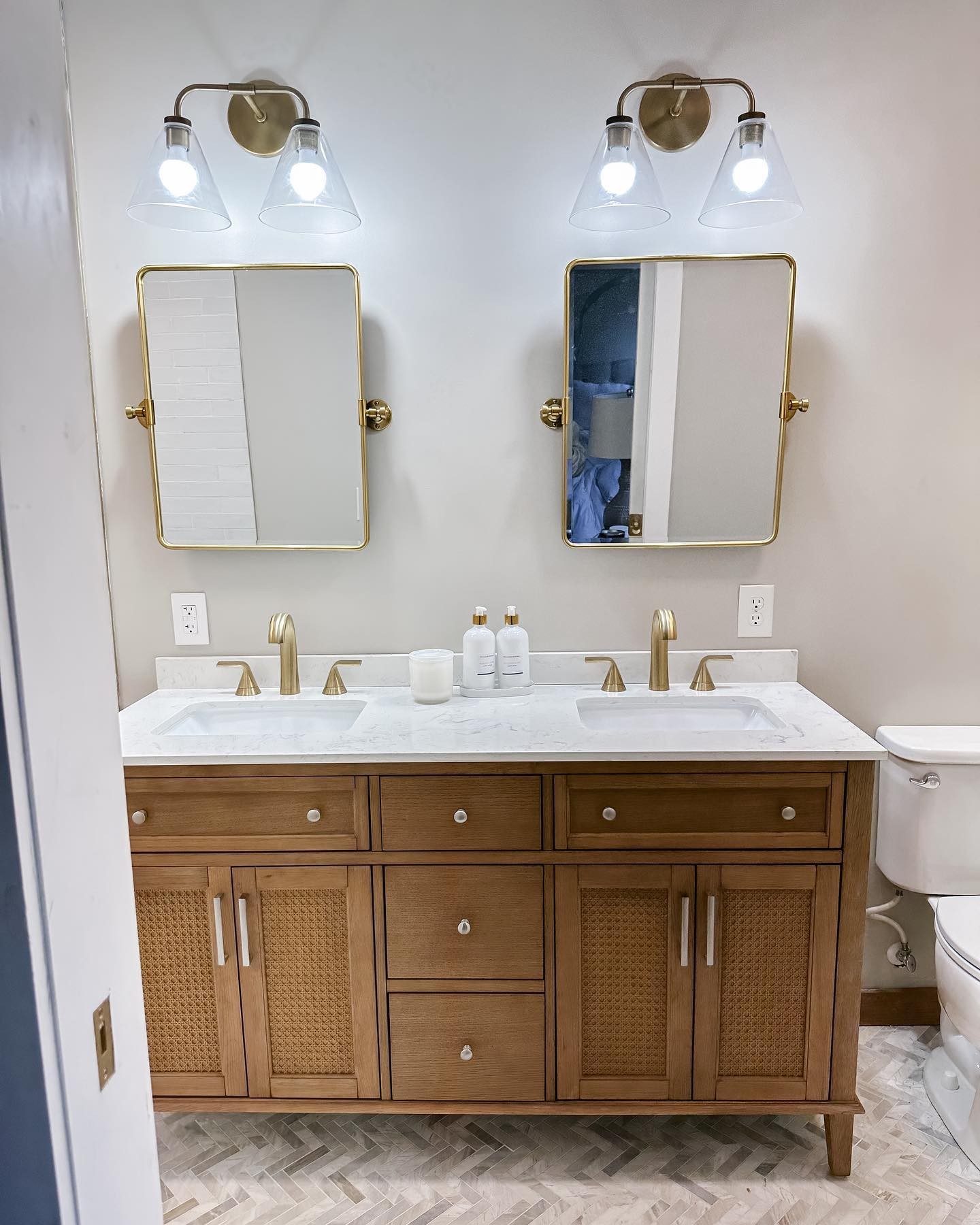
Two pivot mirrors trimmed in brass, two matching sconces with clear glass cones, a sixty-inch quartz counter with a soft grey vein that picks up the marble floor. Two people can brush their teeth at the same time now, which the old twenty-four inch sink was never going to deliver.
Zoom in on the tile that carries the room
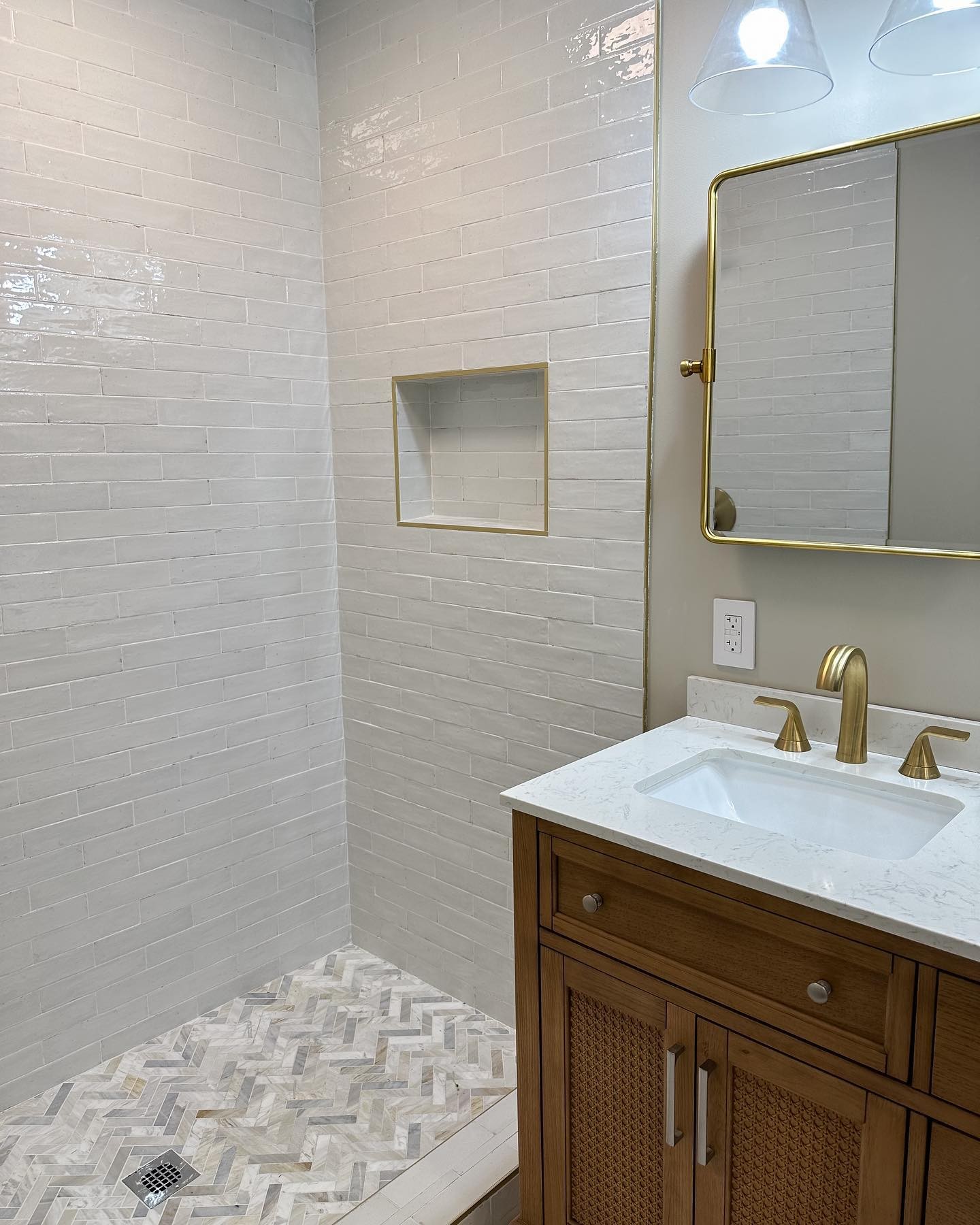
Up close is where Remedy in Elixir earns its keep. Every tile has small variations across the face, tiny puddles of glaze that catch the room’s light differently as you move past. Flat machine-made subway would have been cheaper. It also would have made the finished shower look exactly like the one in every midrange hotel built after 2018. This does not.
The soap dish stuck into the old tile field is gone. In its place is a proper recessed niche, framed on all four sides with a slim brass trim. It is the kind of detail nobody asks for and everybody notices.
What actually changed
The blue tub was not the villain. The painted brick was not the villain either. They were the ceiling this bathroom could grow to while they stayed in it. Once they came out, the room got a real walk-in shower, a double vanity, real light, real storage, and a floor that runs edge to edge.