The cycle beeps, and the ritual is always the same: you’ll empty it later, the door stays shut, and the machine sits sealed until morning. It feels tidy. To the technicians who open dishwashers for a living, that sealed door is the single habit behind most of the service calls that start with “it smells weird in there,” and the fix they keep repeating costs nothing and takes one second, right when the beep sounds.
The advice: open the door as soon as the cycle ends, and leave it cracked a few inches. Not to help the dishes, though it does that too, but to save the machine from its own climate.
What happens behind a closed door
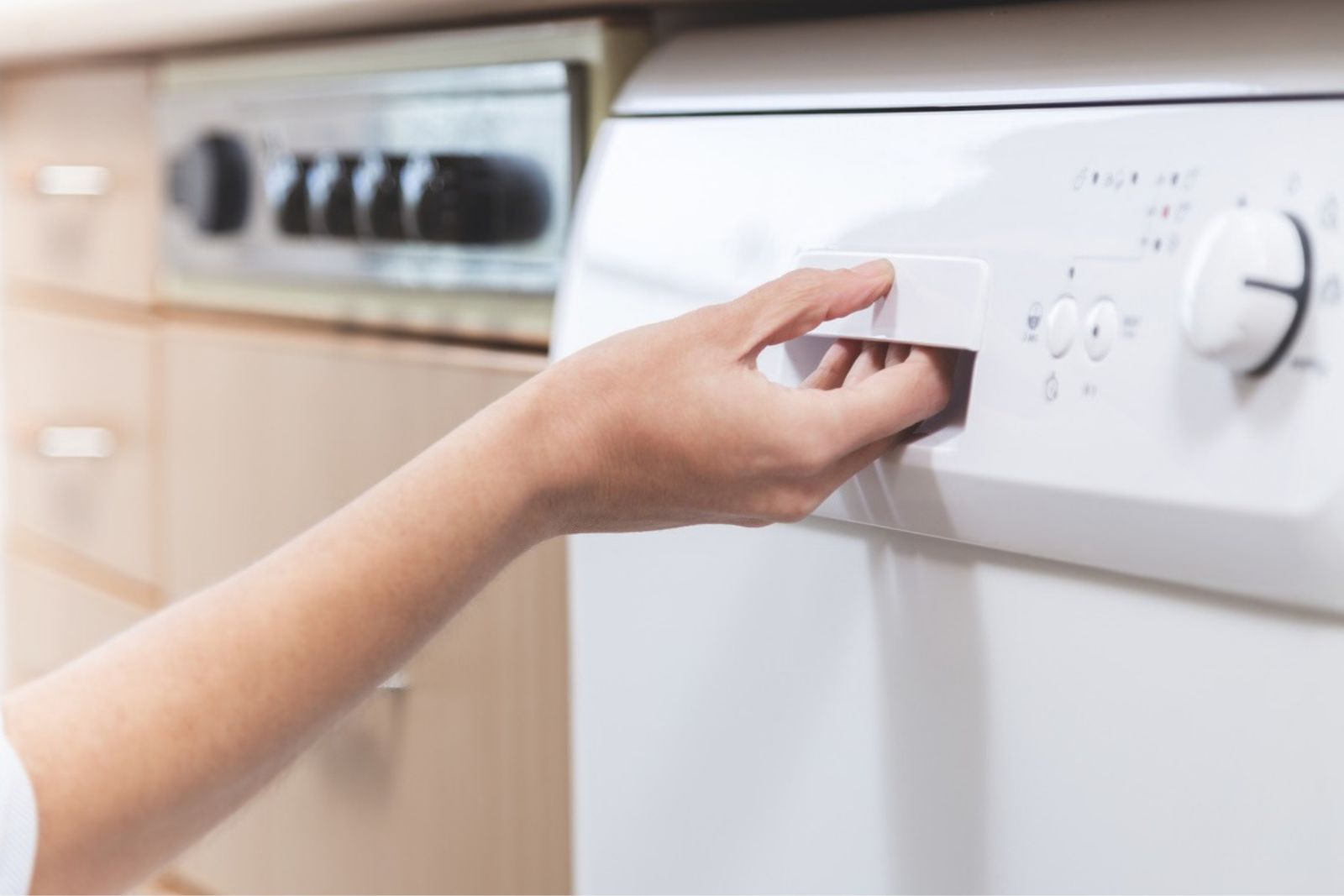
At the end of a cycle, the tub is a warm, dripping box, and a closed door keeps it that way for hours: a sealed chamber at the exact temperature and humidity where mold and bacteria do their best work. The first victims are the rubber parts, because the door gasket stays wet in its folds and becomes the colony’s home base, which is where the musty smell lives, and why it survives every “clean” cycle you throw at it. Repair pros add a second cost: seals that never dry out degrade faster, and a failed gasket means leaks. Cracking the door lets the trapped steam escape and the interior dry, removing the one ingredient, standing moisture, that every one of those problems needs. It’s the same physics as the washing machine door left ajar, and the same reason the fix works on both.
Bonus for the dishes: with the door cracked, the last rinse’s heat flash-dries them instead of condensing back onto them, which is why high-end machines now pop their own doors open automatically at cycle’s end. The engineers reached the same conclusion as the technicians.
The right timing, and the one precaution
- When the cycle ends, open the door fully for a few seconds to let the main cloud of steam out, standing back rather than leaning into it.
- Then leave it cracked two to four inches, for at least a couple of hours or until the next load. No need to leave it gaping into the kitchen walkway.
- The precaution is above the door: that escaping steam rises, and years of it hitting the same strip of particleboard is how countertops bubble and crumble along their front edge. Open the door wide for the steam release instead of letting it jet upward through a crack, wipe visible condensation off the door top, and if your counter’s underside is bare particleboard, a strip of foil tape there is cheap insurance.
Households with toddlers adapt rather than skip: a dishwasher cracked open is a climbing frame, so there, run the machine at night and open it in the morning, once, deliberately.
The habit’s supporting cast
The open door does the daily work; three small routines finish the job. Clean the filter under the bottom spray arm monthly (trapped food is the smell’s other half), wipe the gasket folds with soapy water when you do, and run an empty hot cycle with a dishwasher cleaner now and then. Skip the vinegar shortcut for that deep clean, by the way; its acidity and your machine’s rubber parts are a bad long-term couple, the same warning technicians give about the washing machine next to it.
One beep, one door cracked open, every time. The machine dries, the gasket lasts, the smell never starts, and the dishes come out drier for free. The cheapest repair a technician will ever recommend is the one where you simply stop closing the door. That’s the trick.