
The scarred plastic board beside the sink gets the onion, then the sandwich, then the chicken. It looks practical, and it’s probably the one you grab without thinking. Once the knife marks deepen, though, that easy choice isn’t so simple anymore.
The board that does every job
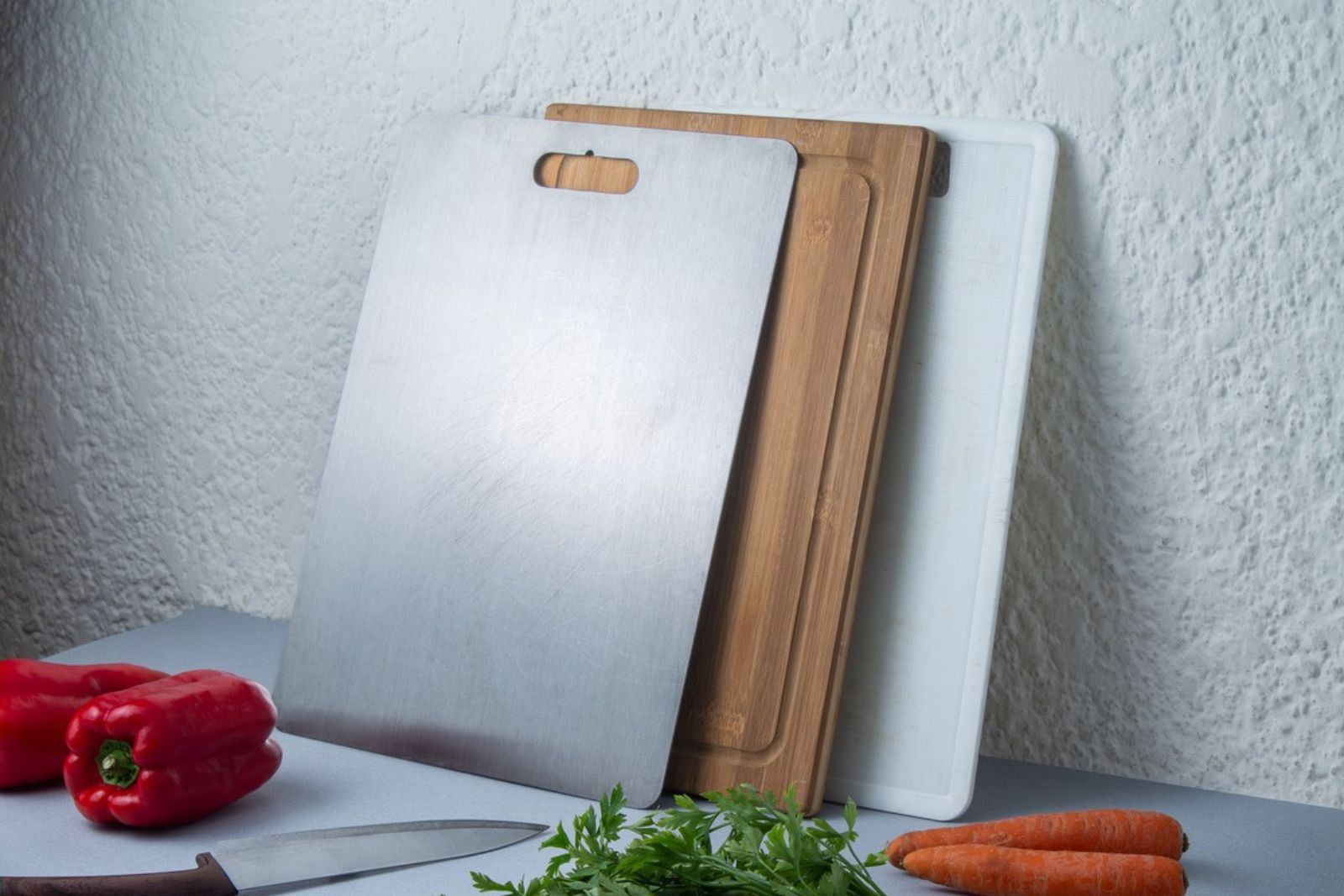
Food-safety guidance doesn’t actually crown one winner. Plastic is easier to clean while it’s smooth, but a scarred plastic board isn’t automatically the safer one. Studies have tested bacterial recovery from wood and plastic, but neither material eliminates the need for careful cleaning.
That said, if you’re only going to love one board, make it a hard, close-grained wooden one. Use it for fruit, vegetables, bread, cheese and cooked food. It stays steady under a knife, and it’s kinder to your blade’s edge than glass, marble or stone.
Still, it shouldn’t get every job. That chicken needs its own plastic or other nonporous board, because that kind of surface is easier to sanitize afterward. Trusting wood sounds backwards at first, but it makes more sense once you look at the grain.
What happens inside the grain
At first glance, wood looks like the riskier pick. It soaks up liquid, after all. But in a close-grained board, that’s part of the point. Capillary action pulls moisture and germs away from the cutting surface and down into tiny channels.
As the board dries, those germs lose the damp conditions they need to multiply. Fewer of them are left at the surface. It helps, but it takes time, and it’s no excuse to skip the sink. Greasy residue can also slow the way liquid moves into the grain.
Plastic wins while it’s smooth, because liquid sits on top and rinses away easily. Then the knife cuts add up. Deep grooves hold bits of food and moisture, the board dries more slowly, and scrubbing gets less reliable on the scarred board by your sink.
Two boards, one easy routine
Keep the wooden board for ready-to-eat food and the nonporous one for raw meat, poultry and seafood. If either one slides around, tuck a damp paper towel or a clean damp cloth underneath before you start chopping.
After every use, scrape off the scraps and wash the board with hot, soapy water and a sponge or soft brush. Rinse it, then let it air-dry so both sides get some air. Don’t soak wood, and keep it out of the dishwasher unless the maker says that cycle is fine, and don’t go at it with a scourer. Scratches just give residue more places to hide.
After raw meat, poultry or seafood, wash the board first. Then stir 1 tablespoon of unscented liquid chlorine bleach into 1 gallon of water. Wet the clean board with it, wait several minutes, rinse with clear water and stand it upright to dry.
When the wood starts to look dry, give it a thin coat of food-safe mineral oil to help prevent cracking. Let it sit for several hours, then wipe off the extra. Oil keeps the board in good shape, but it doesn’t sanitize it.
When it’s time to let a board go
It bears repeating that raw chicken and salad must never share a board, Unless it’s fully washed and sanitized in between. For the nonporous board, follow the maker’s dishwasher instructions.
Deep grooves, cracks, split seams or stubborn residue mean it’s time to replace either kind. Sanding can save solid wood only if it brings back a flat, smooth surface.