
The tree was already up when the carpenter packed his truck and drove off. The family had been counting down to this. New wall-to-wall built-in, big TV, open shelves for all the Christmas stuff. They walked into the living room ready to start decorating. And then they stopped.
What a “finished” built-in actually looks like
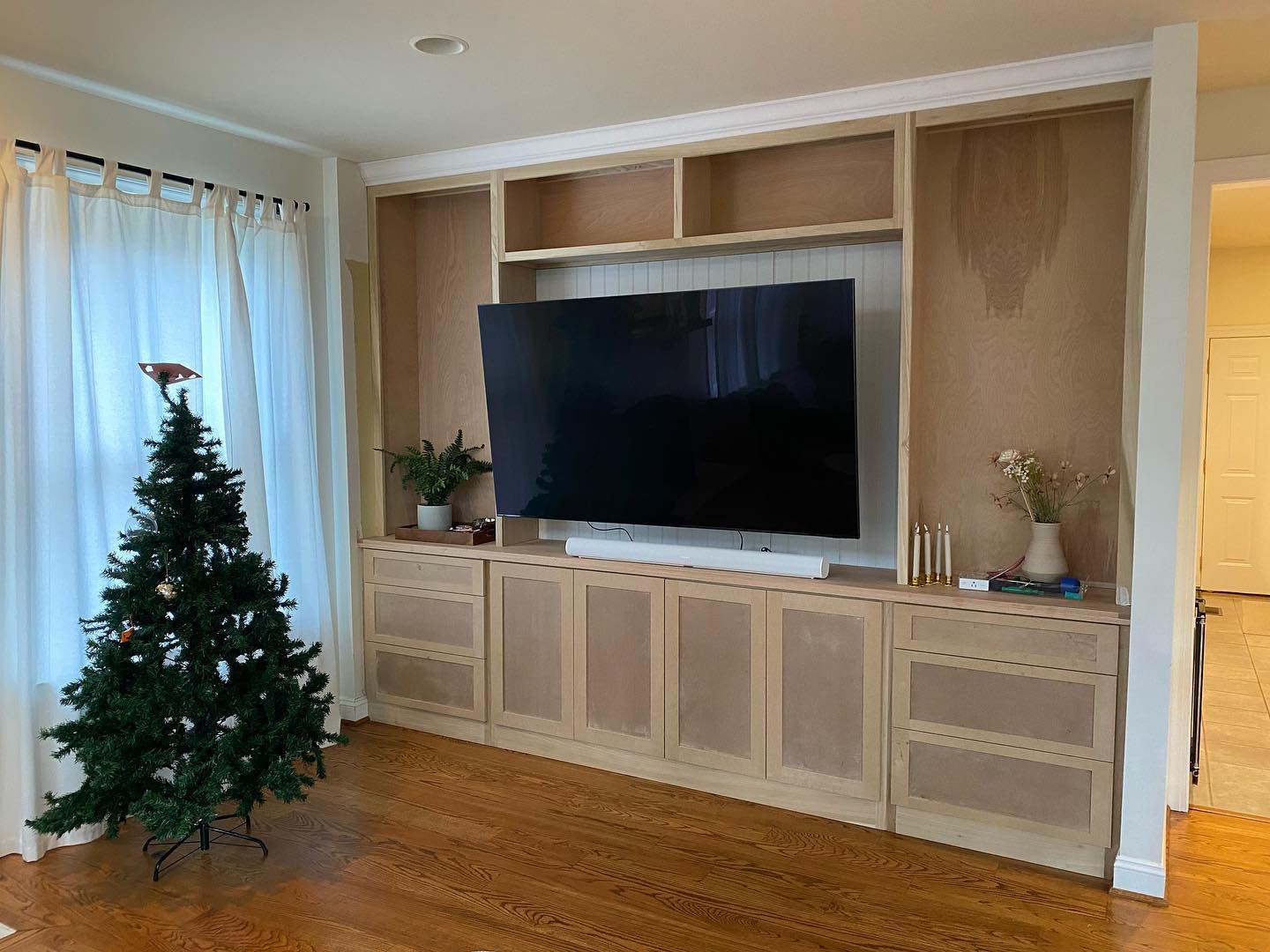
Every stud was plumb. The shelves lined up. The beadboard behind the TV sat flush. On paper, the carpenter was done.
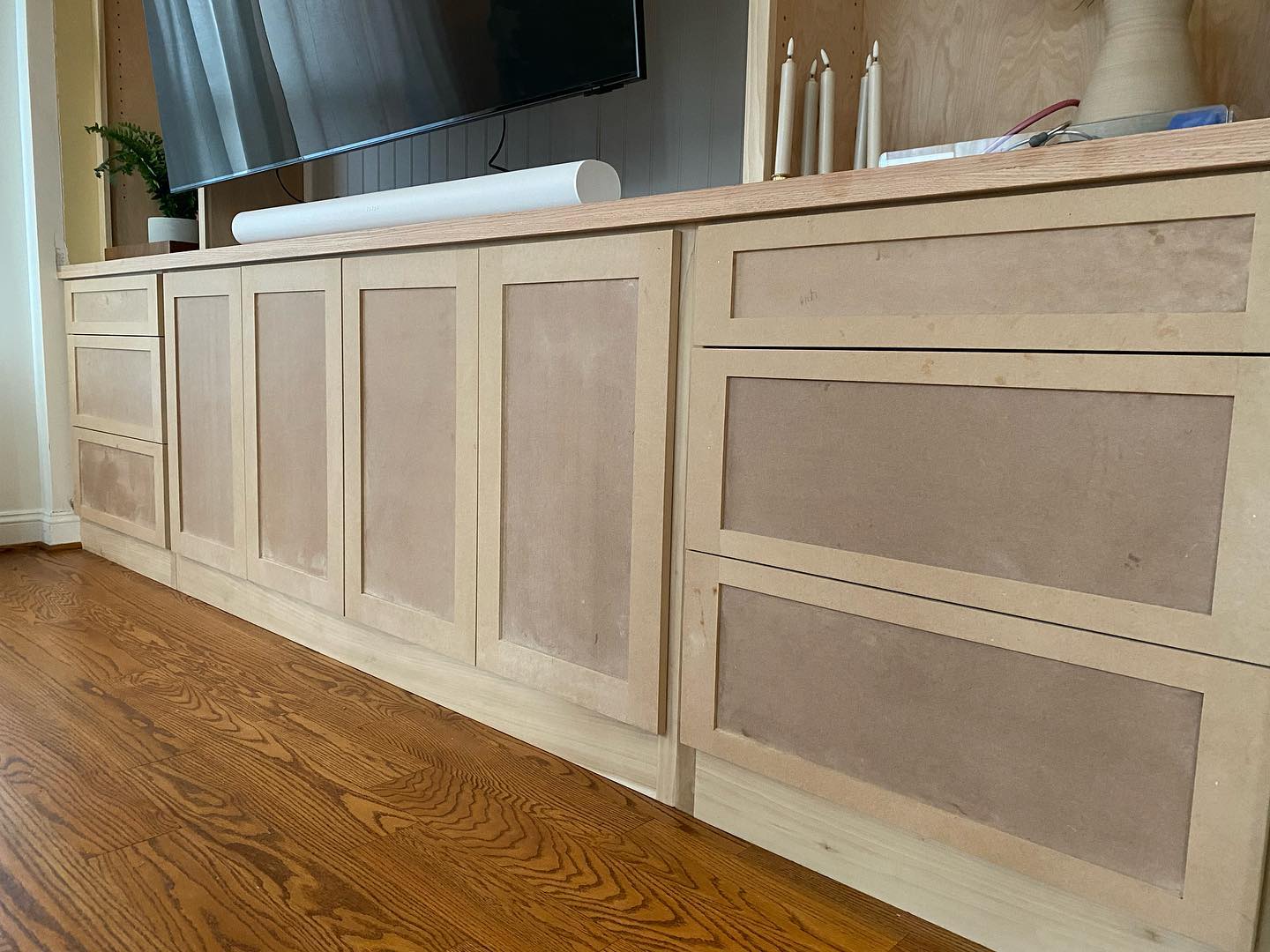
But nothing about the wall said custom yet. The backs were pale plywood that still smelled like sawdust. The shaker doors were pink-brown MDF, powdery from the sander. You could see pencil layout marks and the smudge of someone’s thumb on a panel. It looked less like the Pinterest built-in they’d ordered and more like an IKEA box that nobody had opened.
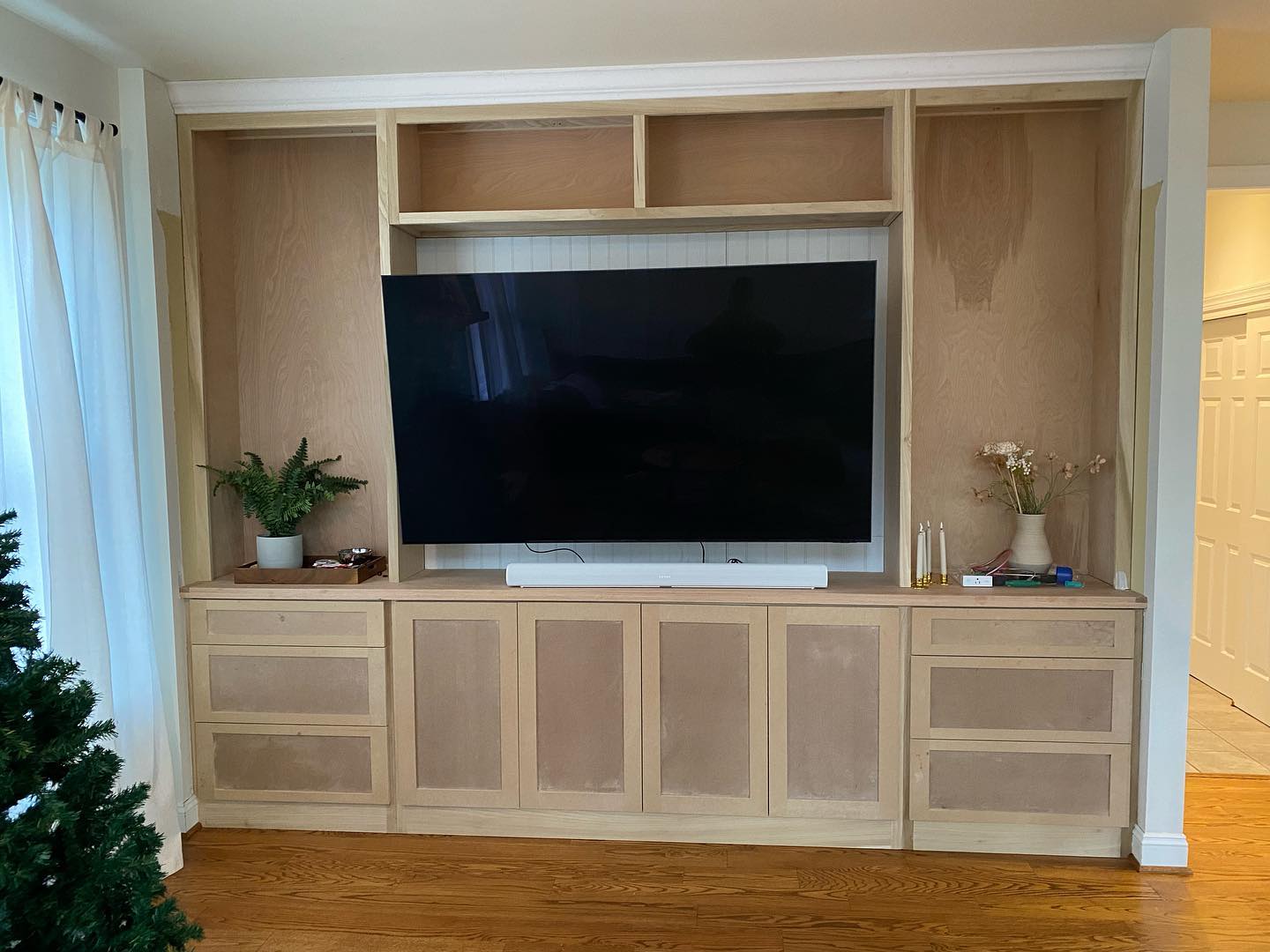
Get up close and it’s even clearer. The shaker frames and the center panels are two different woods, two different shades. The whole surface was waiting on a finish it hadn’t gotten yet.
This is the part nobody warns you about when you sign a built-in quote. You’re paying for the carpentry. The finish is almost always a separate trade. Different crew, different bill, different week.
The two shortcuts that would have killed it
Pop open the garage, grab a brush and a gallon of leftover wall paint. That’s what most people try next. It’s also why most DIY built-ins never quite look right.
A roller leaves a tiny orange-peel texture on every door. A brush leaves streaks you can spot from across the room. And flat wall paint on raw MDF? It soaks in blotchy and stays that way. Stack those three shortcuts and the finished wall reads homemade in the worst way.
What the pros actually did
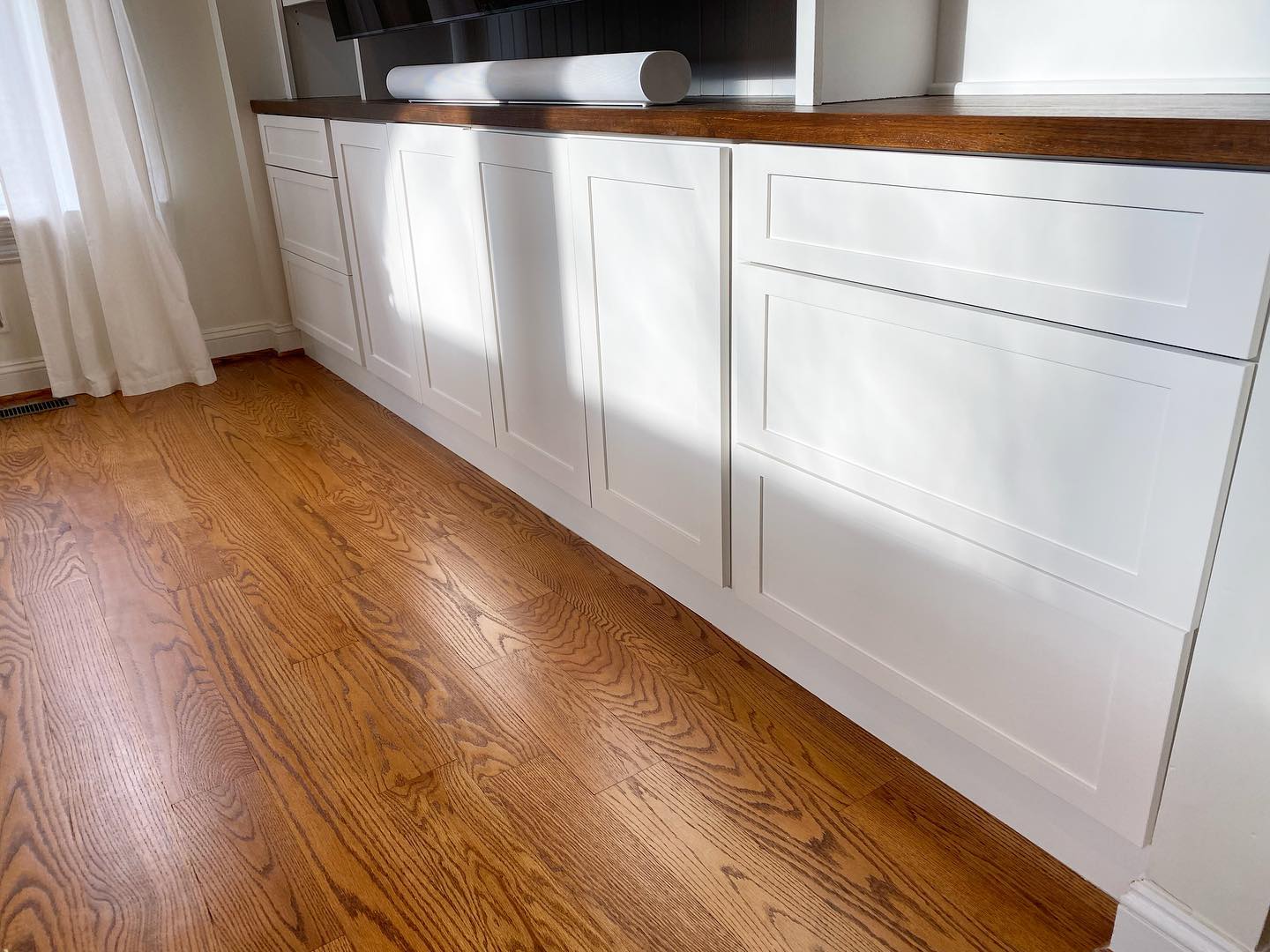
The painters tented the room off, taped every outlet, bagged the curtains, and dropped a sprayer out of the van. Then they laid down Swiss Coffee in thin coats until the panels looked like glass.
That’s the trick. Not the color. The surface. A sprayed finish has no brush marks, no stipple, no streaks. Light slides across it instead of catching on it. That smoothness is what your brain reads as factory-built, which is what your brain reads as expensive.
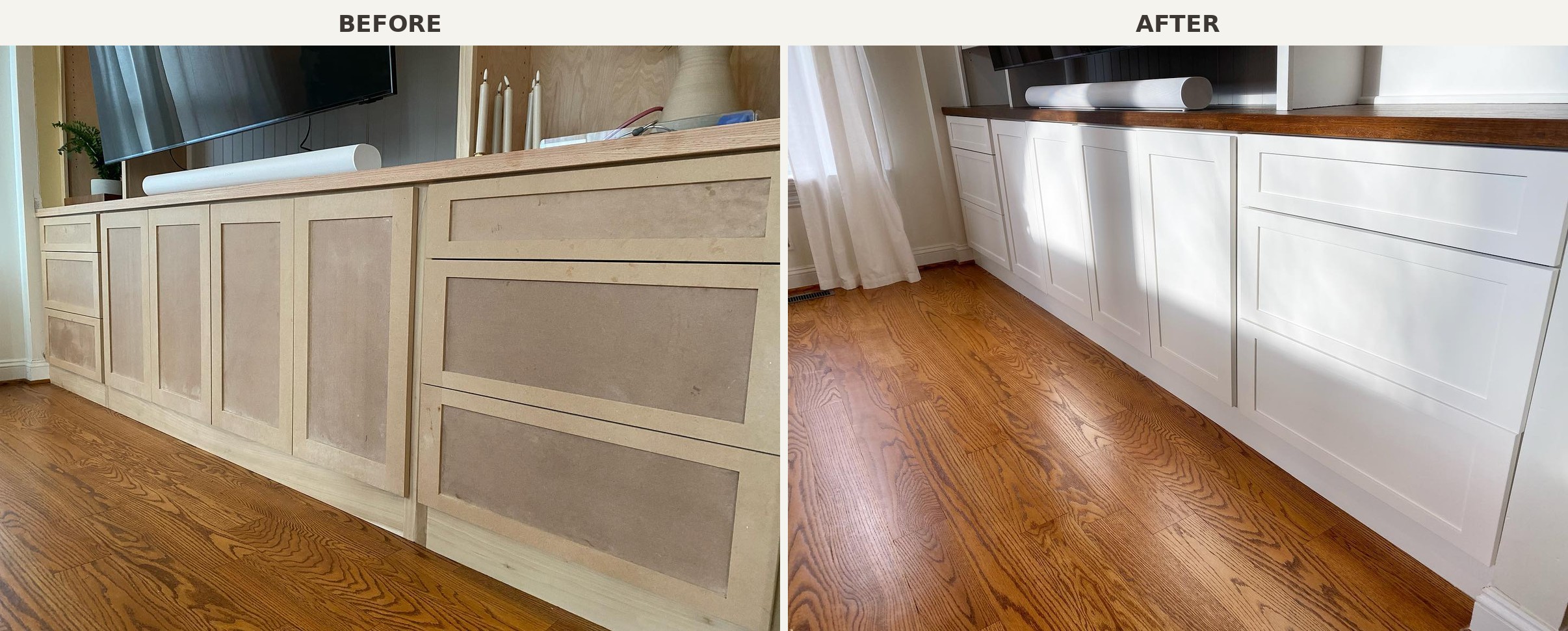
Hold the before and after side by side and the shift is impossible to miss.
The product stack in plain words
Here’s what went on the wall. The cabinets got Renner 688 at a 15 sheen. That’s a cabinet-grade paint from a pro supplier, almost flat, with just enough shine to wipe clean without showing every fingerprint. The wood counter got a Milesi wipe stain in a chestnut tone, then a Renner 851 clear coat over it at a 30 sheen. The clear coat is why the wood looks deep and wet when the sun hits it, instead of dry and dusty.
Forget the product names if you want. Just remember the shape of it. Cabinet paint goes on cabinets. Wood stain and clear coat go on wood. Two different jobs, two different product families, and wall paint has no business on either one.
Why Swiss Coffee, not just any white
Plain hardware-store whites are a trap in a room with warm wood floors. They swing blue in the morning, gray in the evening, and they always end up looking cold next to red oak.
Swiss Coffee is a Benjamin Moore classic. Soft white, with a drop of warmth baked in so it reads clean without turning sterile. Against the floors in this house, it looks like the wall was always this color, which is exactly the illusion a good built-in needs.
Same angle, before and after, and the whole wall relaxes into the room.
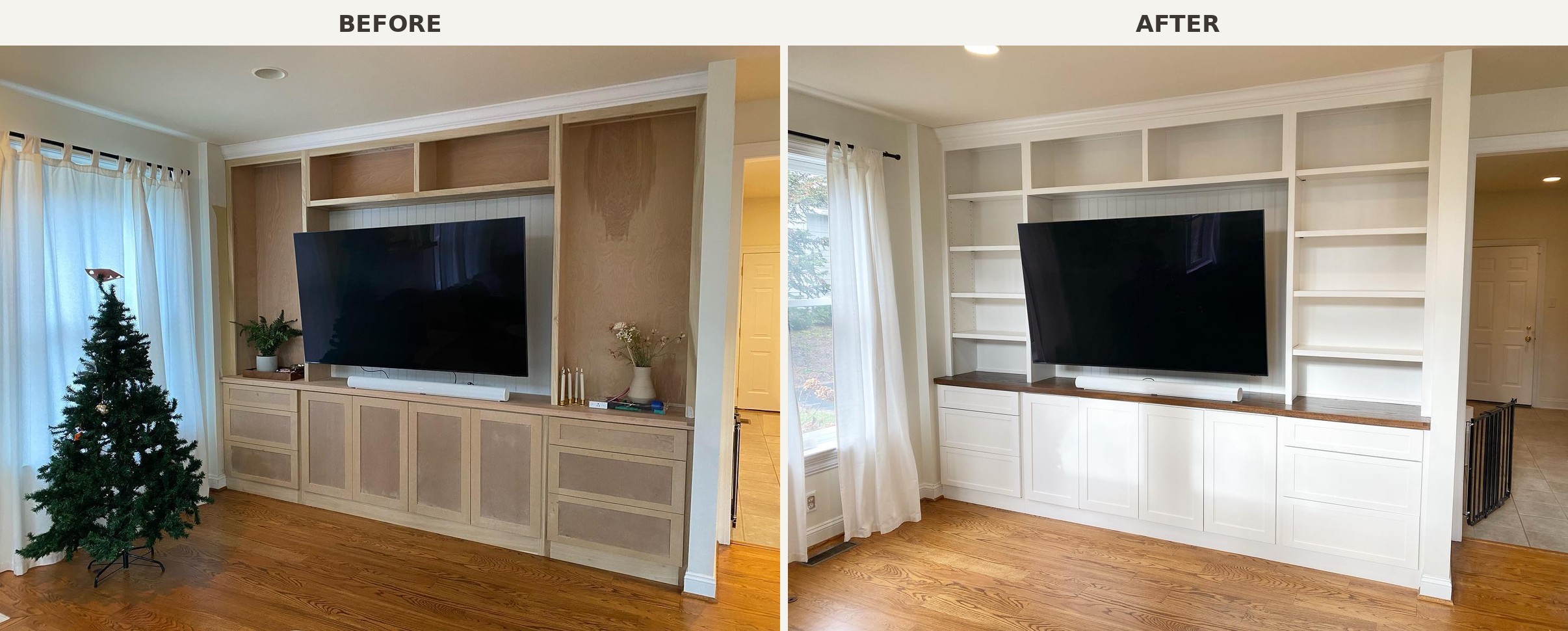
The payoff, from where the family stands
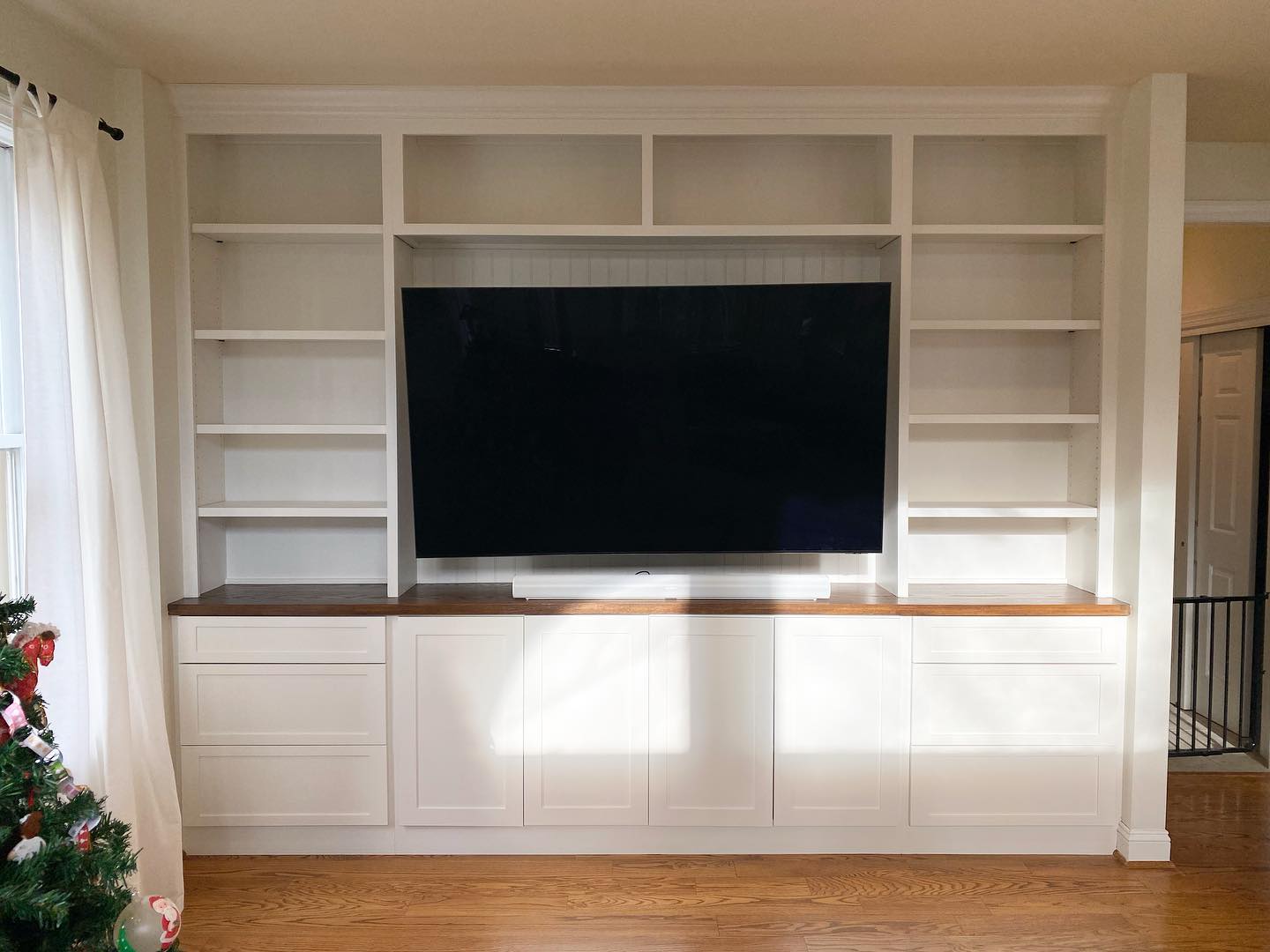
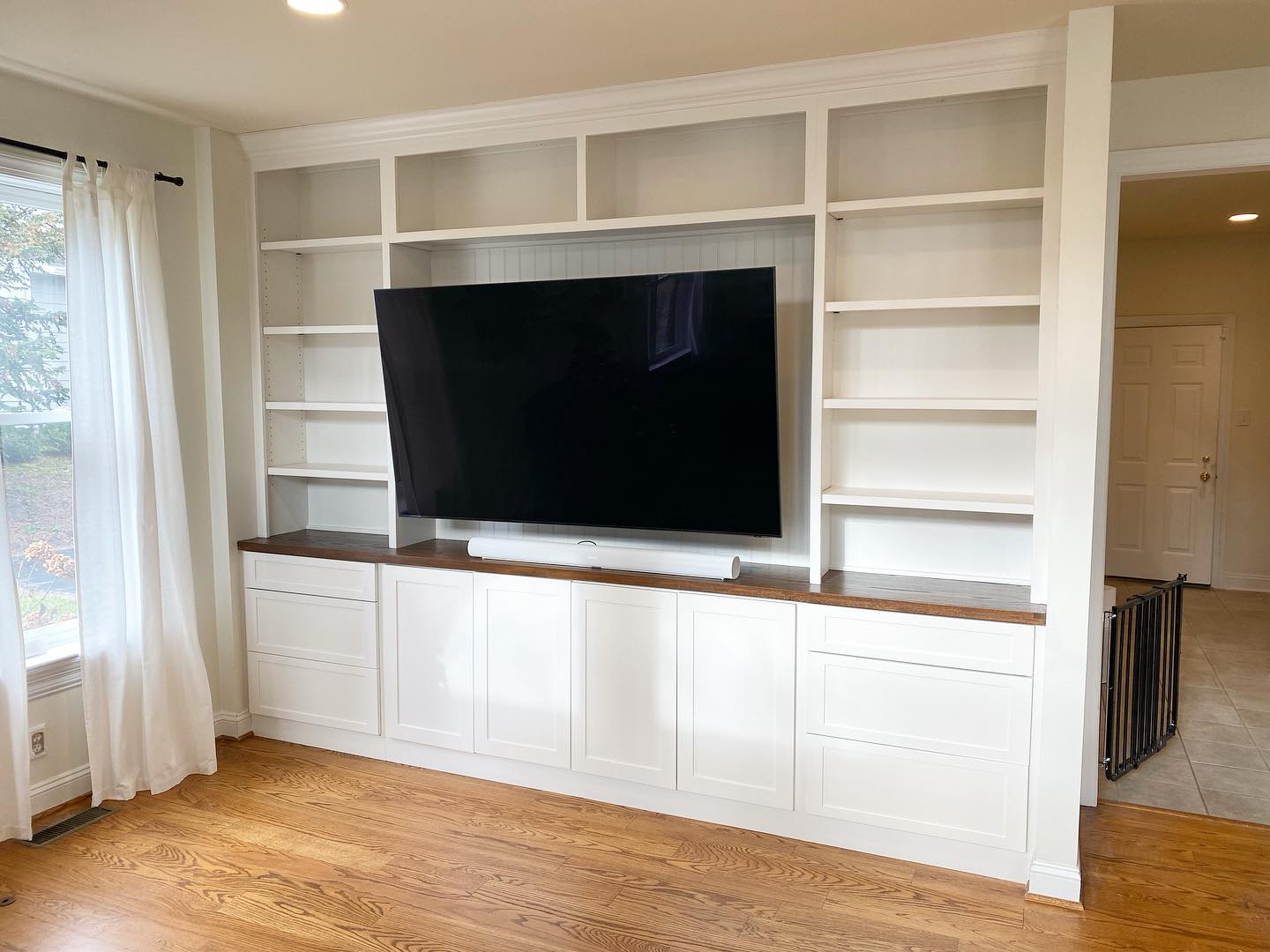
Line that up against day one and the whole story lands.
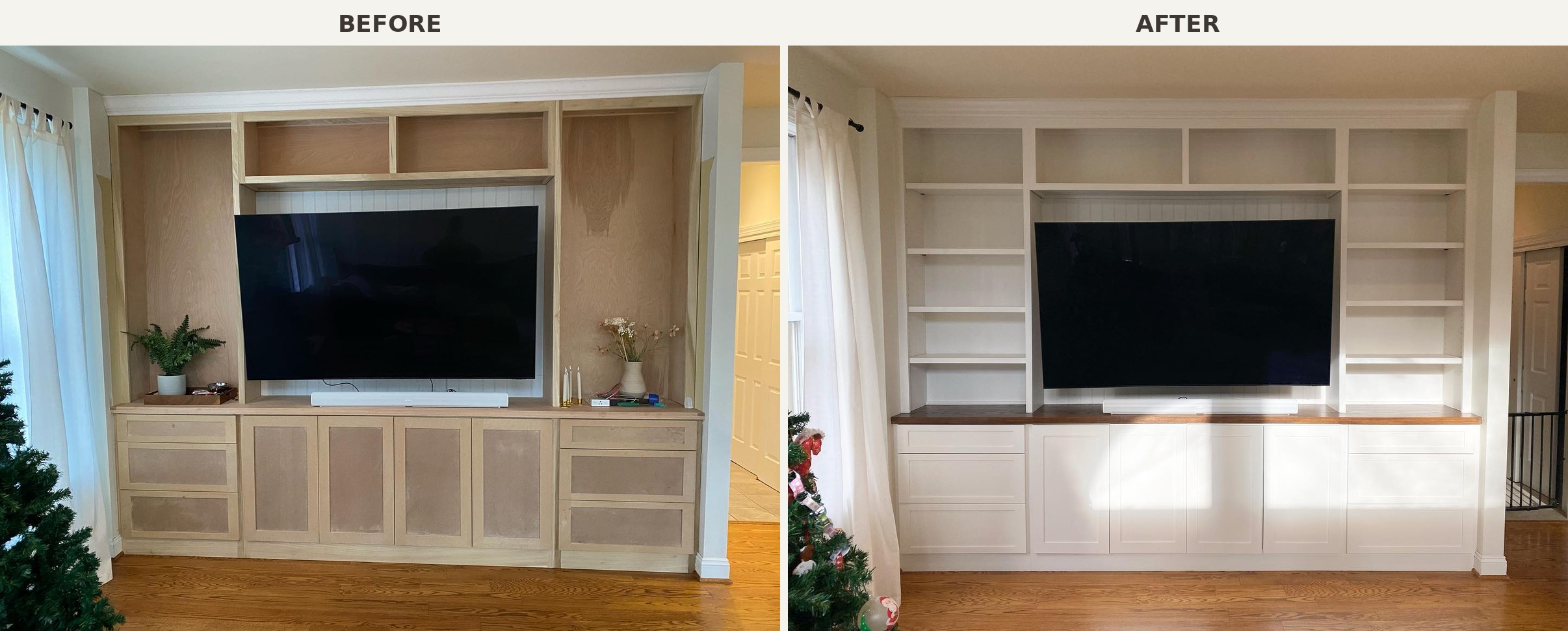
Same cabinet. Same TV. Same room, same light, same wall. All that changed was paint on the doors and stain on the top. Everything your eye reads as expensive now, the smoothness, the depth, the way the whole wall disappears into the trim, is finish. Not framing.
The one question to ask before you sign
Before you write the check for a custom built-in, ask one thing. Is the finish included, or do I need a separate painter? If the answer is separate, build another $1,500 to $4,000 into your number and another week or two into your calendar. That line in the budget is the difference between a construction site in your living room at Christmas and a wall that looks like it was always meant to be there.