If you have a honey oak kitchen from the 2000s or 2010s, you’ve probably been told the same thing by every magazine, Pinterest board, and well-meaning relative. Rip it out. Start over. Budget twenty-seven grand or more. The cabinets are the problem.
A couple in Farnsfield just proved that advice wrong without replacing a single cabinet.
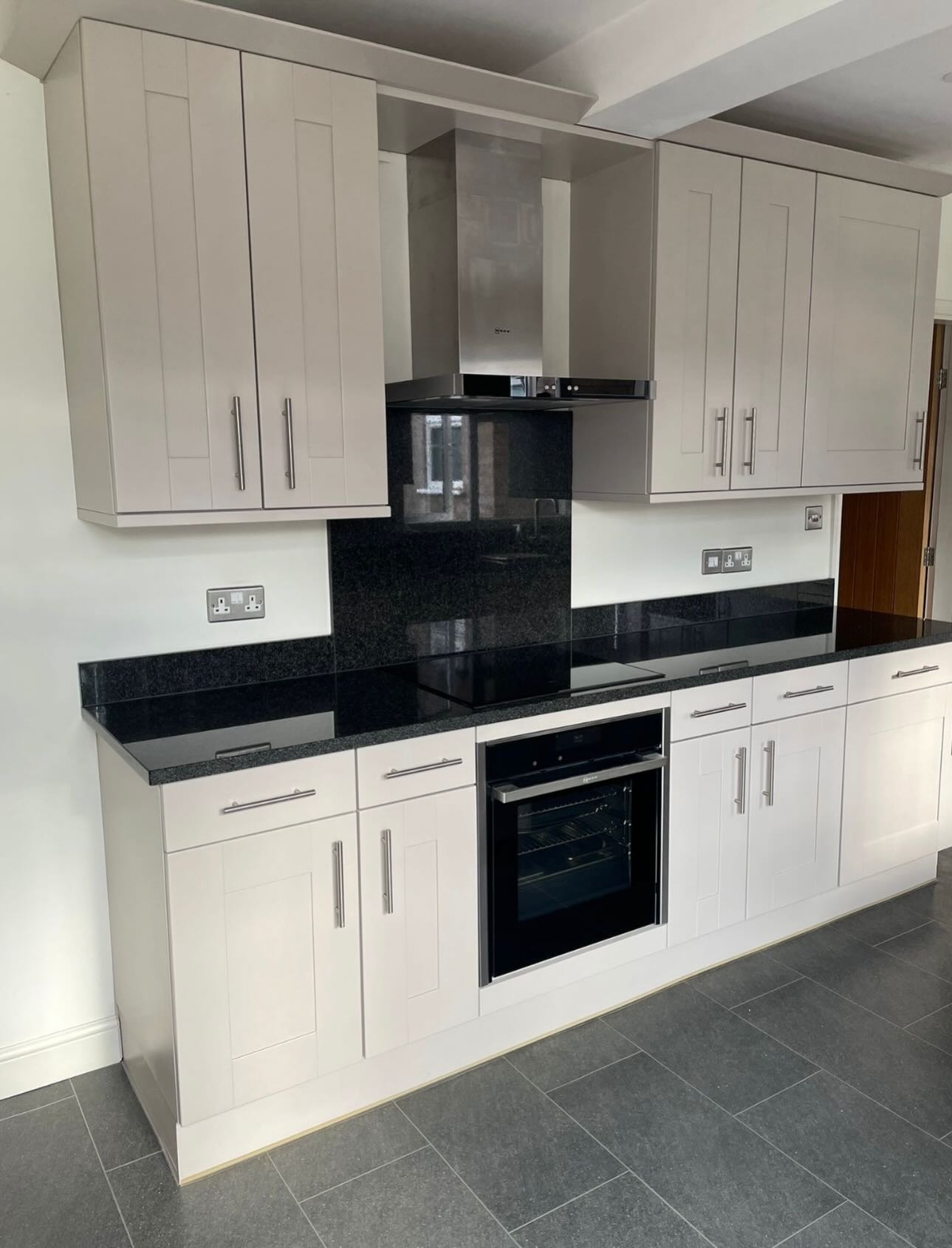
They didn’t change the layout. They didn’t swap the black granite worktops. They didn’t buy new handles, new drawer boxes, new hinges, or a new oven. They kept every oak door exactly where it was. And when the dust sheets came down, the room looked like a $27K showroom install.
The only thing that actually changed was the color.
The problem almost nobody names correctly
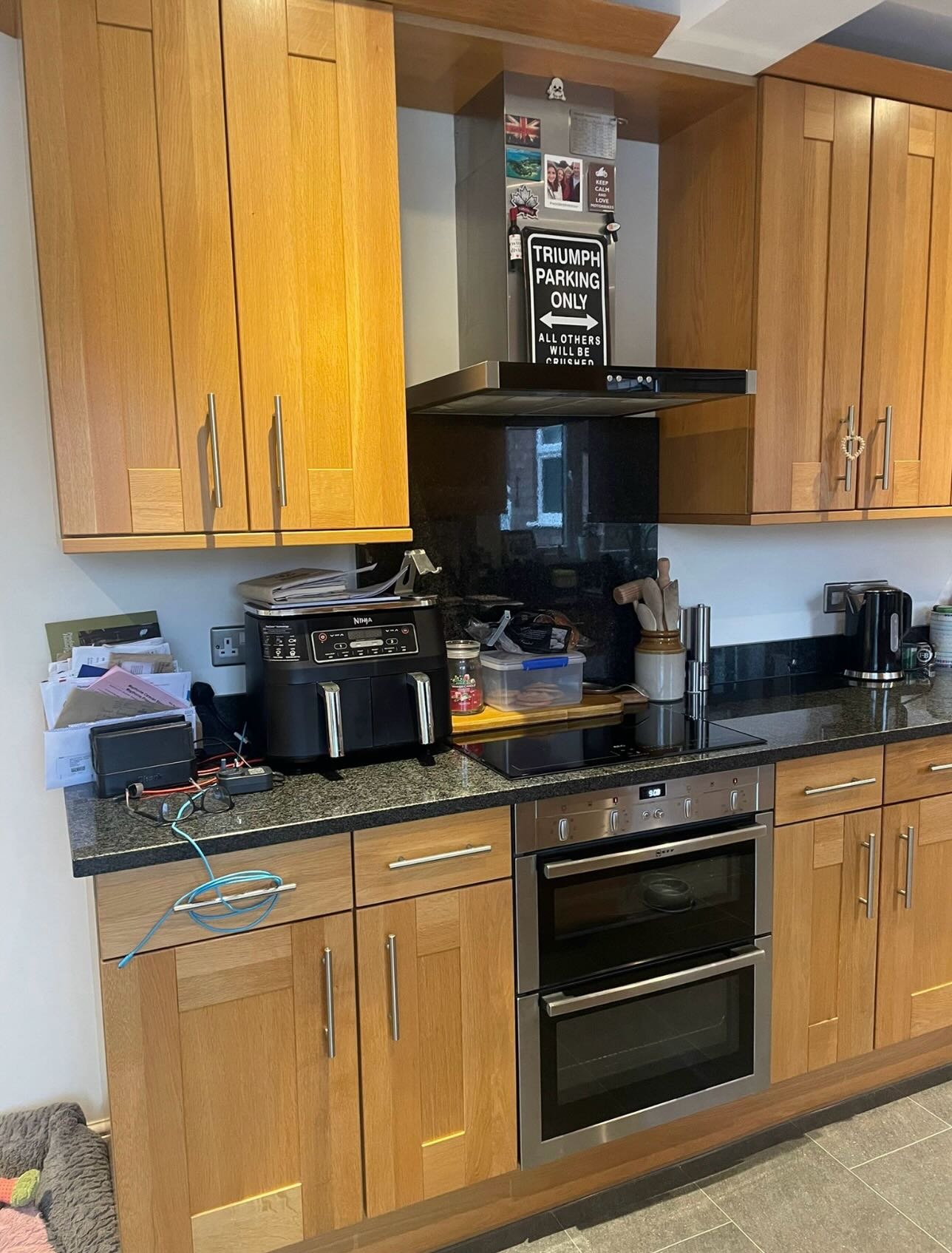
Here’s the thing most people get wrong when they stand in their own kitchen and feel that sinking “it looks dated” feeling. They blame the cabinets. They start pricing out full remodels and researching contractors.
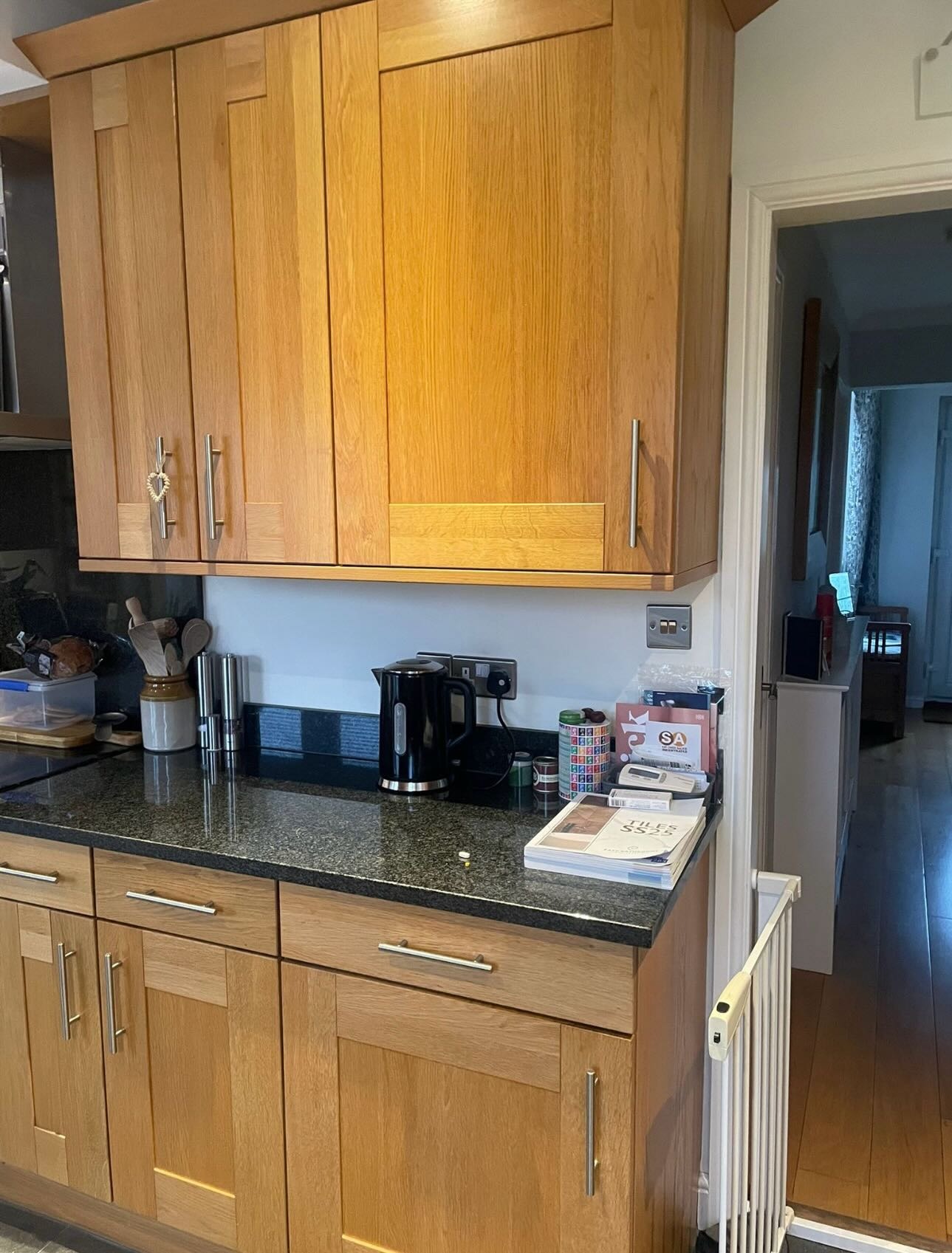
But the cabinets aren’t the problem. The orange and yellow tone the oak picks up over ten or fifteen years of sunlight and kitchen heat is the problem. The grain is beautiful. The shaker frame is timeless. The construction is solid. It’s the warm pigment that reads old. Nobody separates those two things when they look at their own room, so they assume the whole box has to be thrown out.
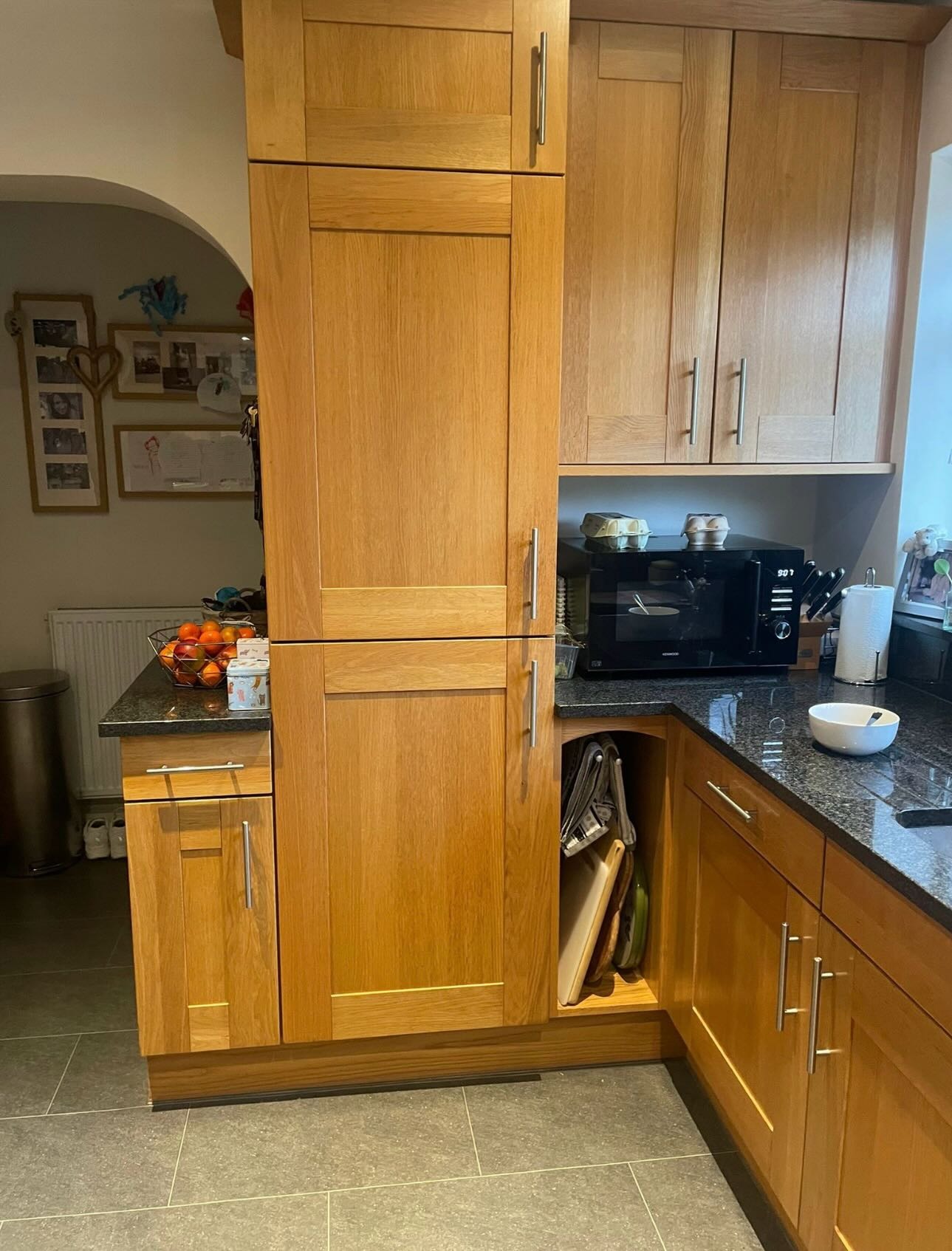
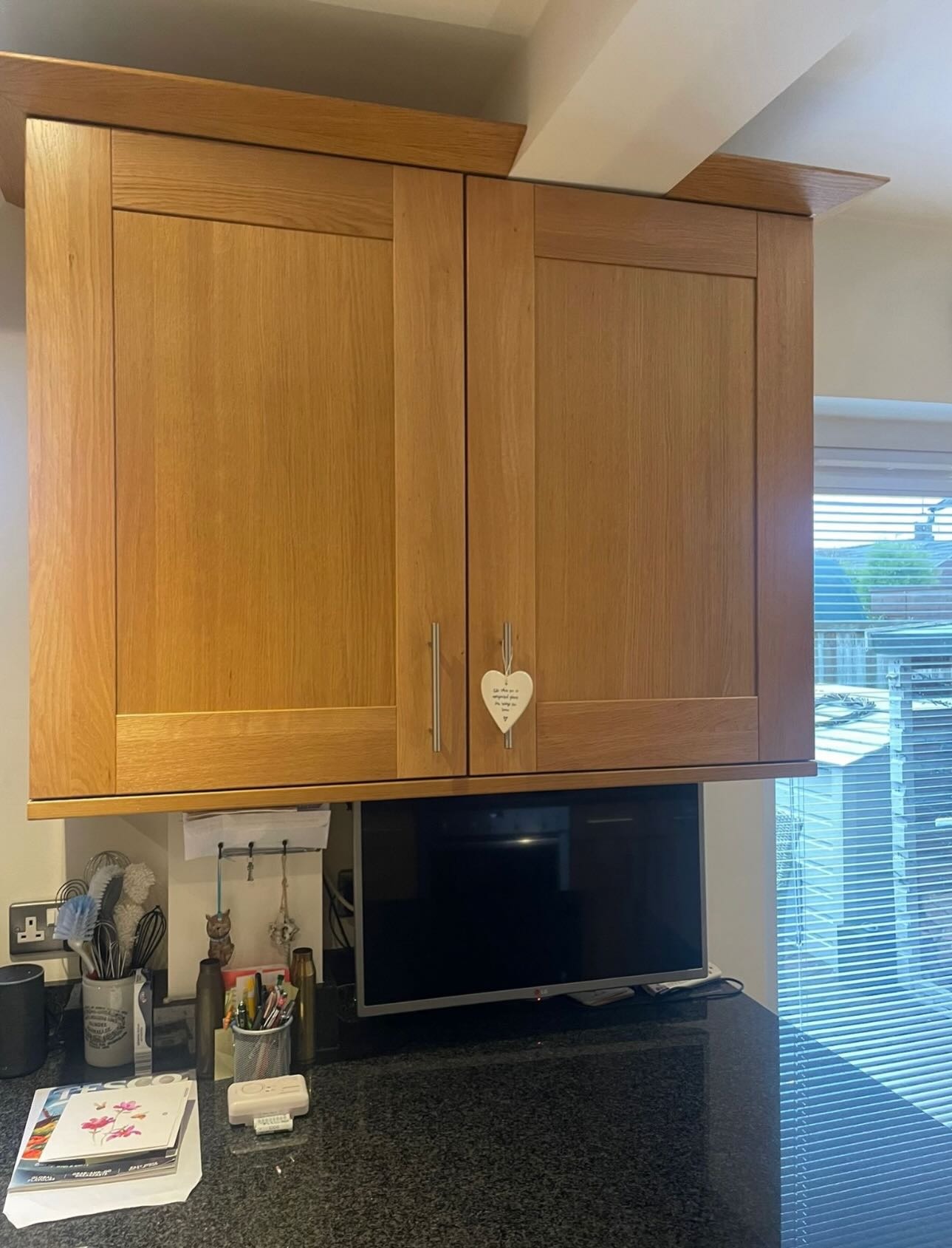
The move almost nobody tries
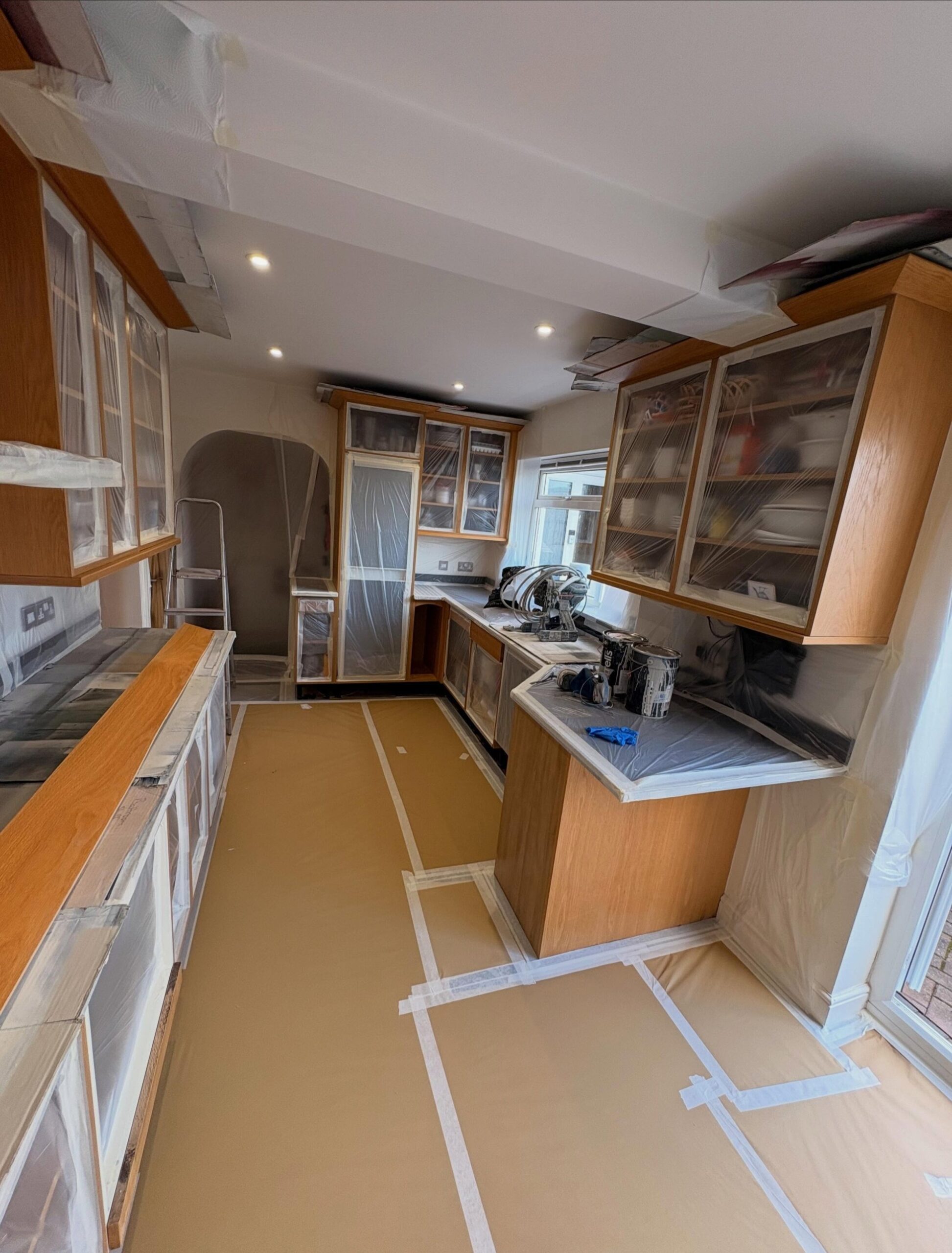
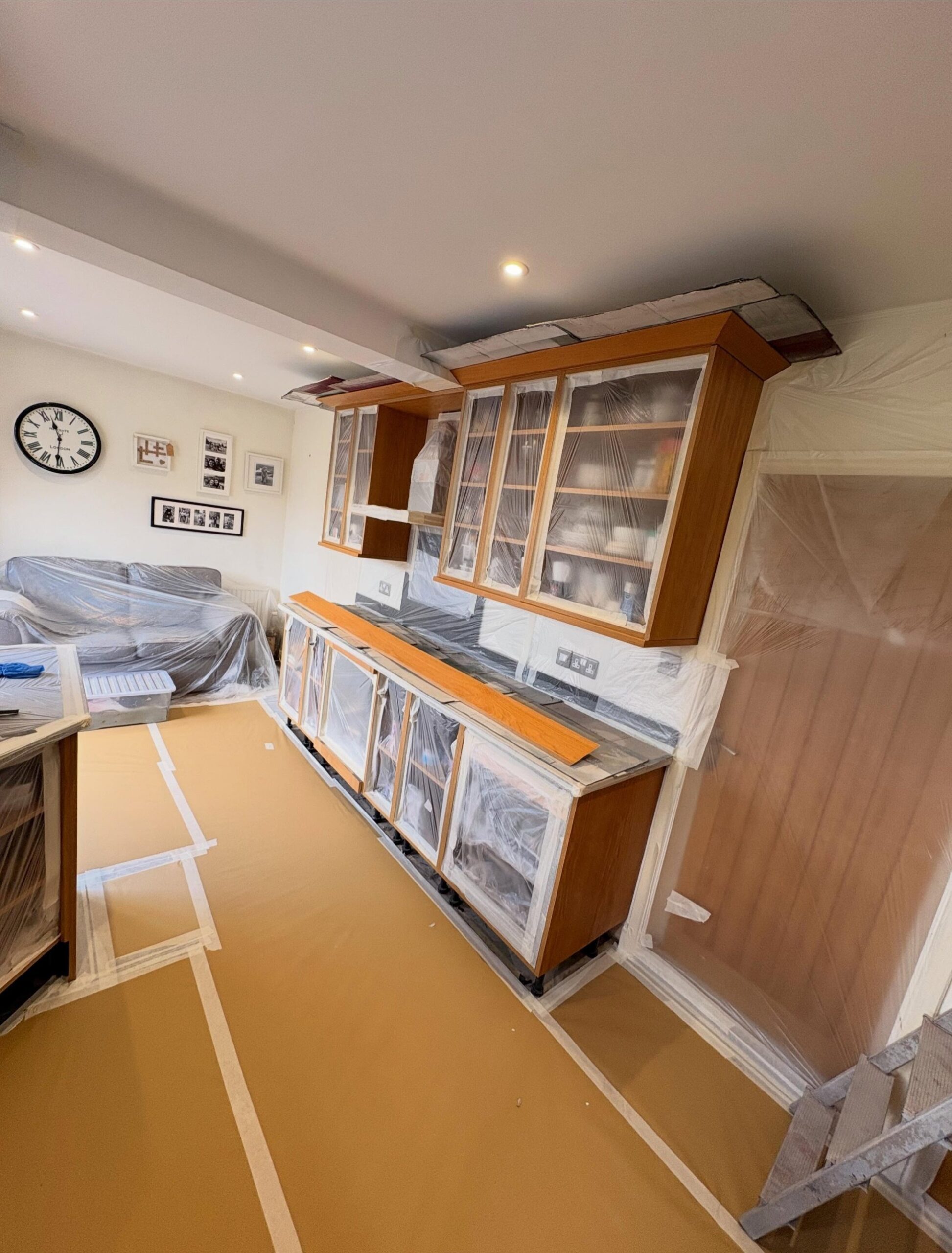
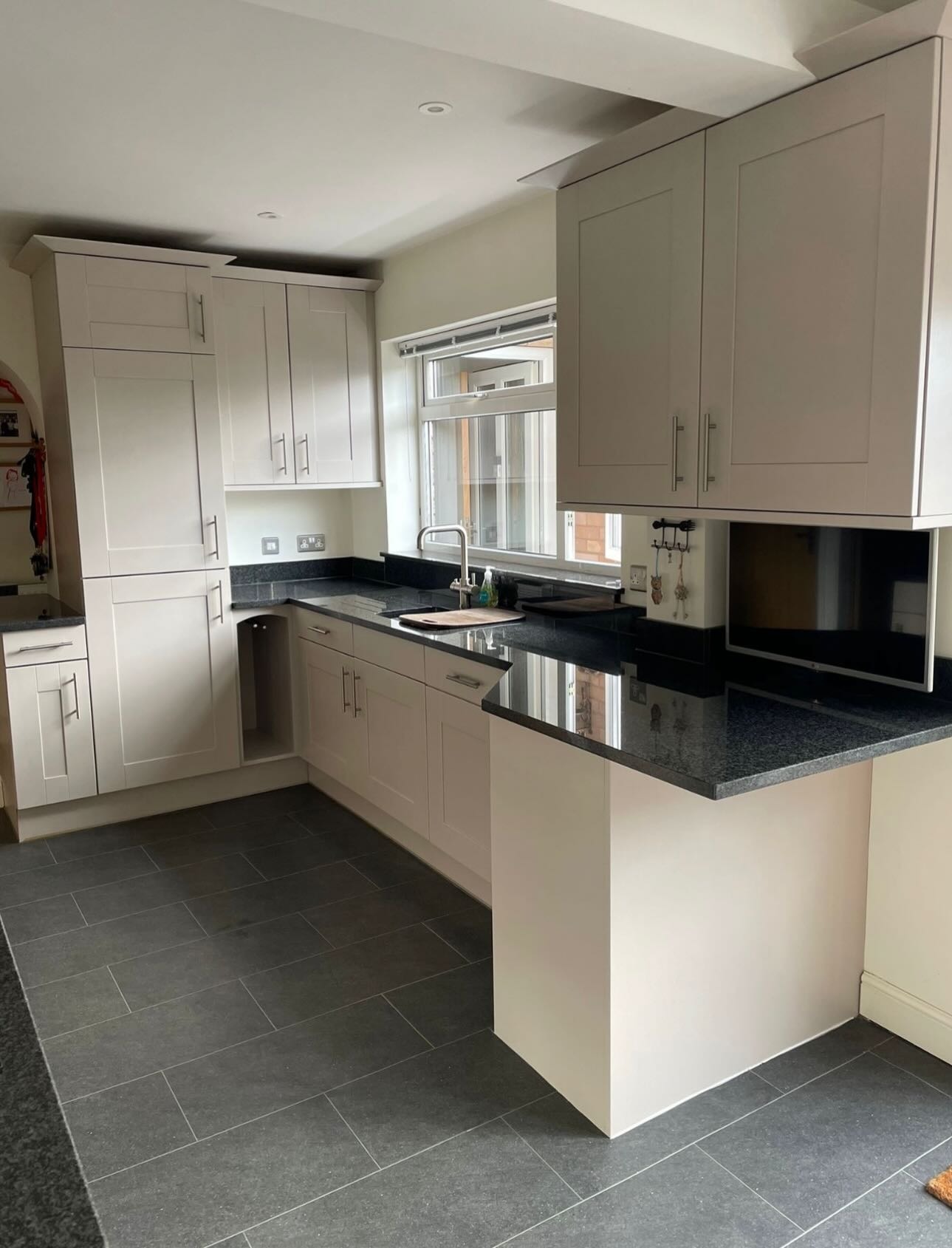
Instead of booking a kitchen contractor, this couple booked a mobile spray team. The team masked the entire room with brown floor paper and plastic sheeting. Every worktop, every socket, every window frame. Then they prepped the oak surfaces, primed them, and sprayed a cashmere greige in a satin finish, color matched on site.
The whole kitchen went under cover for a few days. No dumpster rental. No new plumbing. No retiling. No new countertops. No kitchen out of action for three weeks.
And then the covers came off
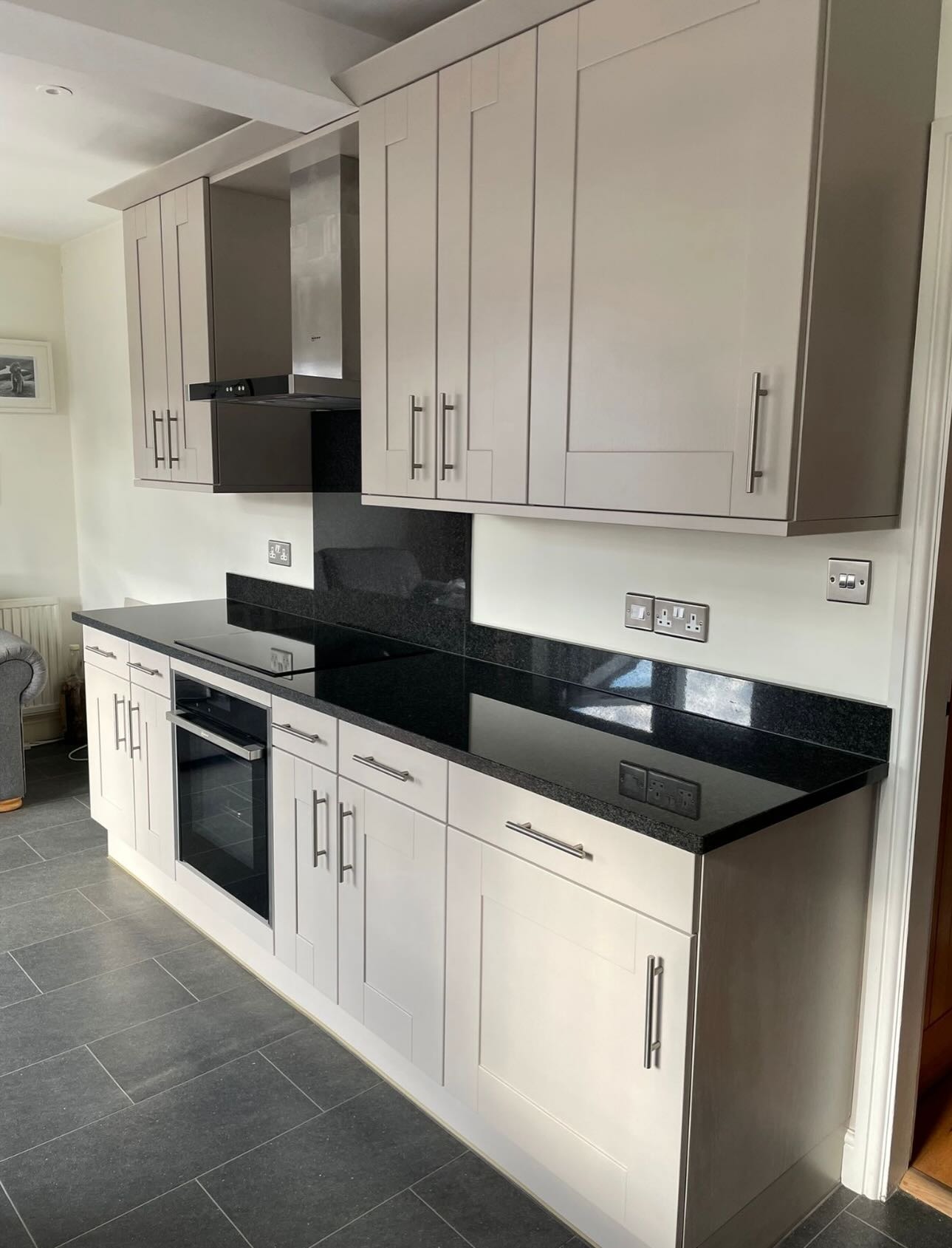
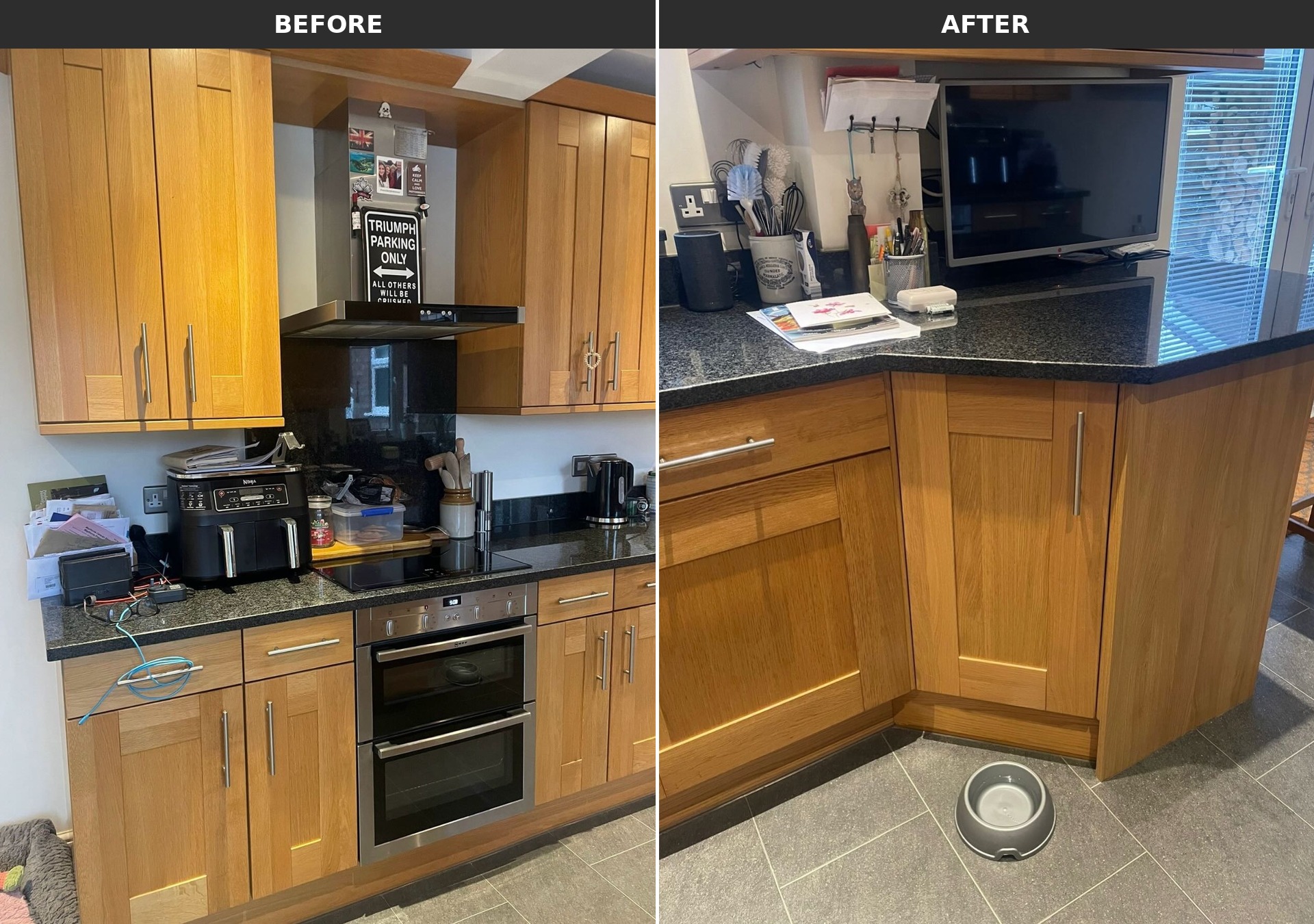
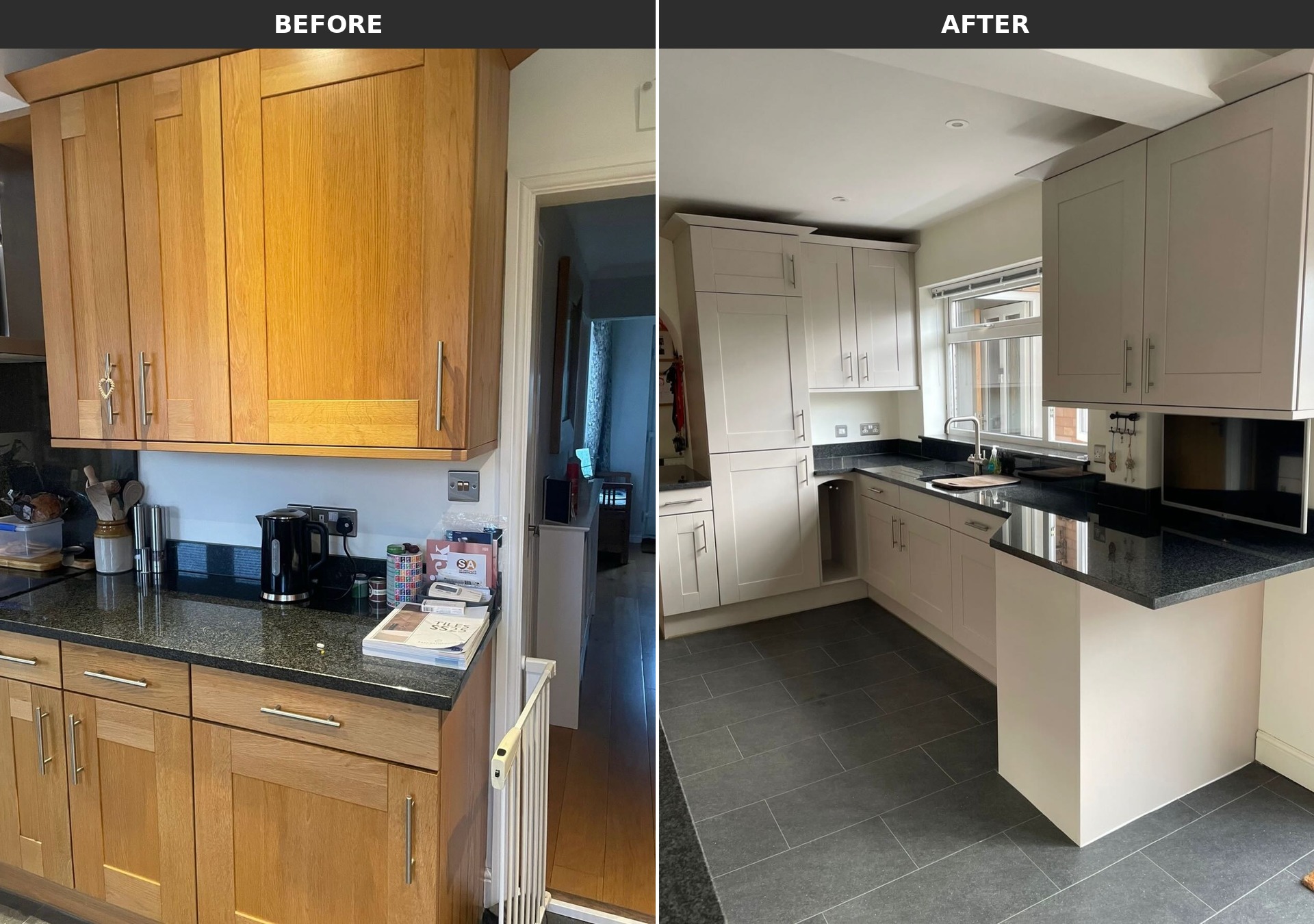
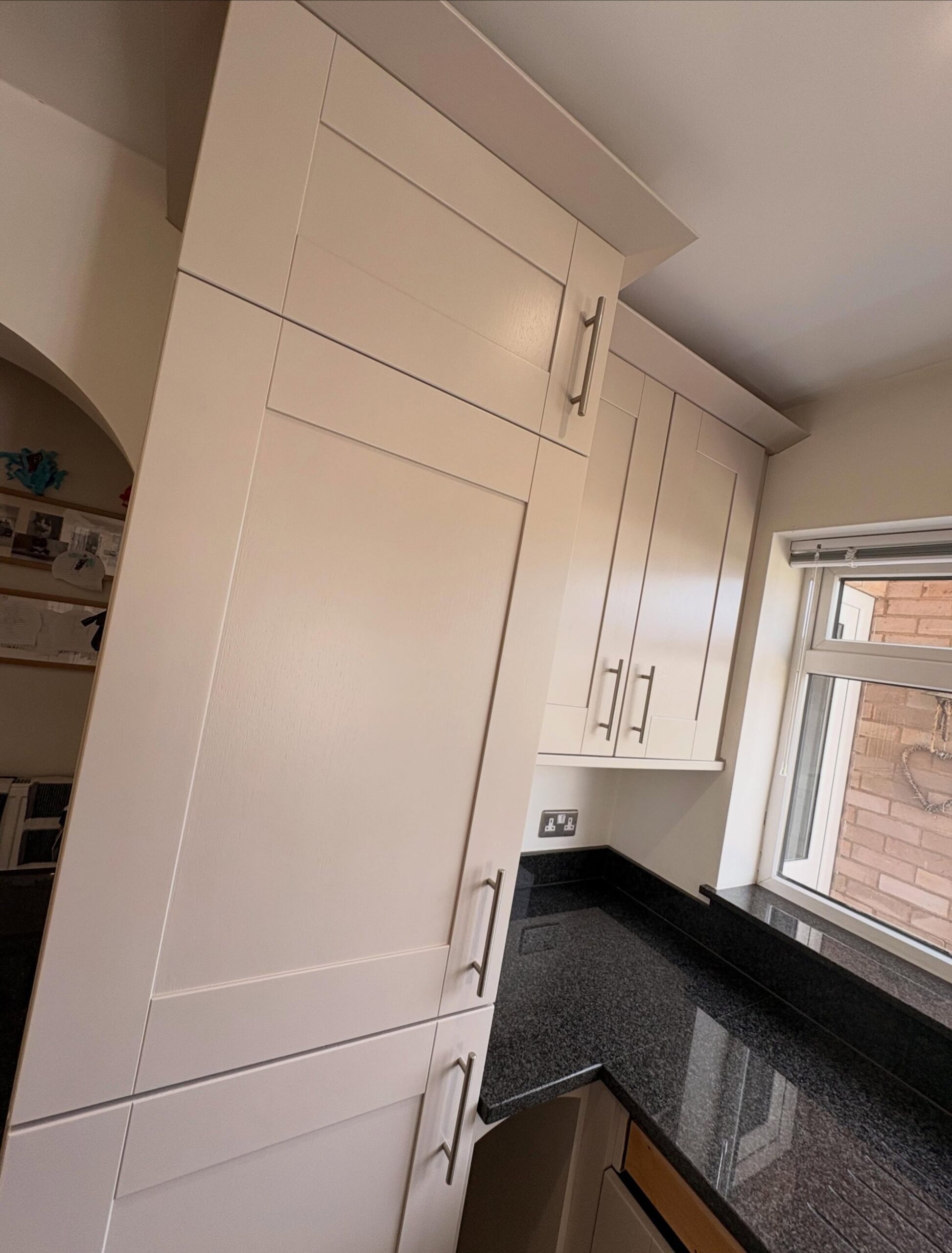
This is the moment that stops people scrolling. Same cabinets. Same granite. Same handles. Same layout. Completely different kitchen.
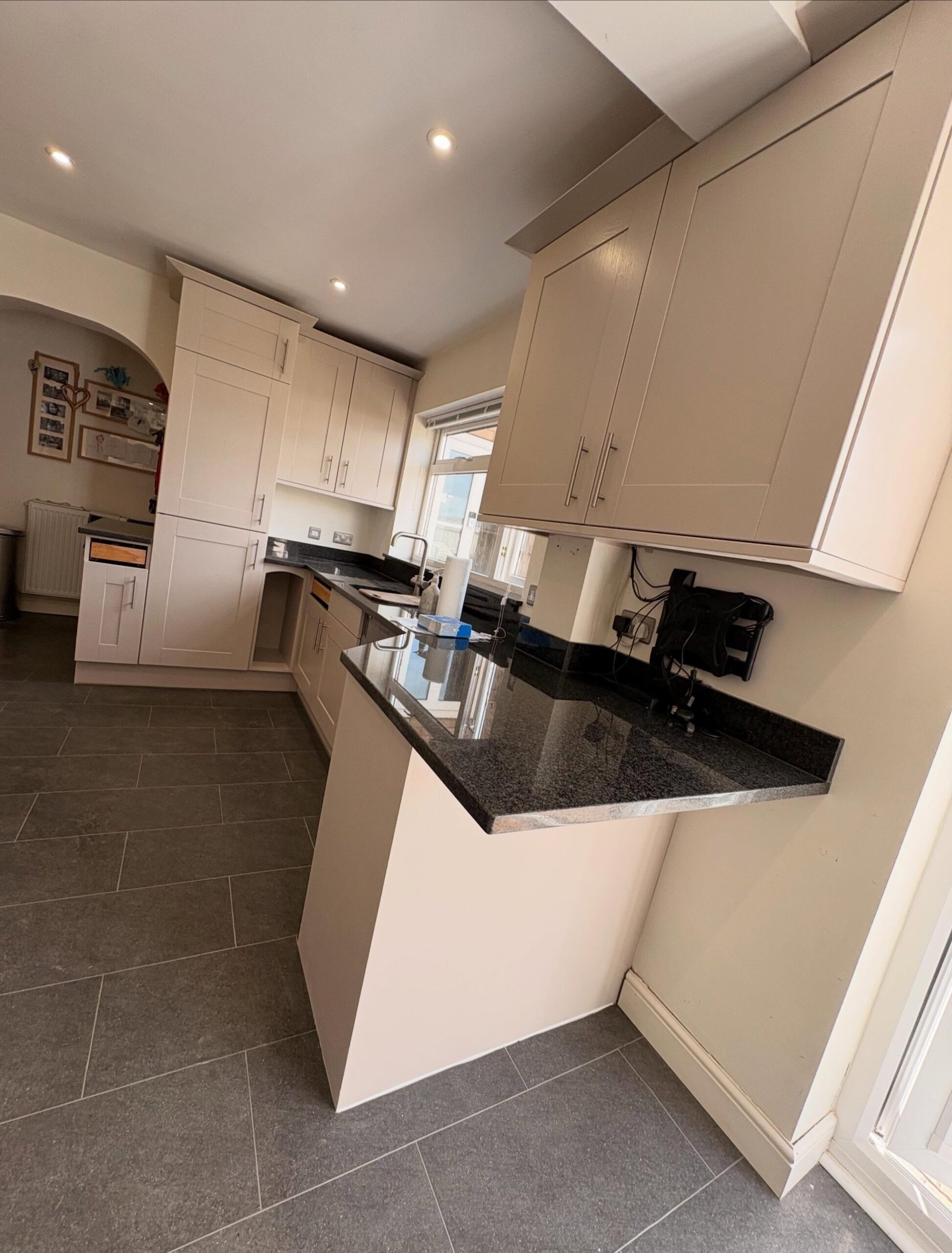
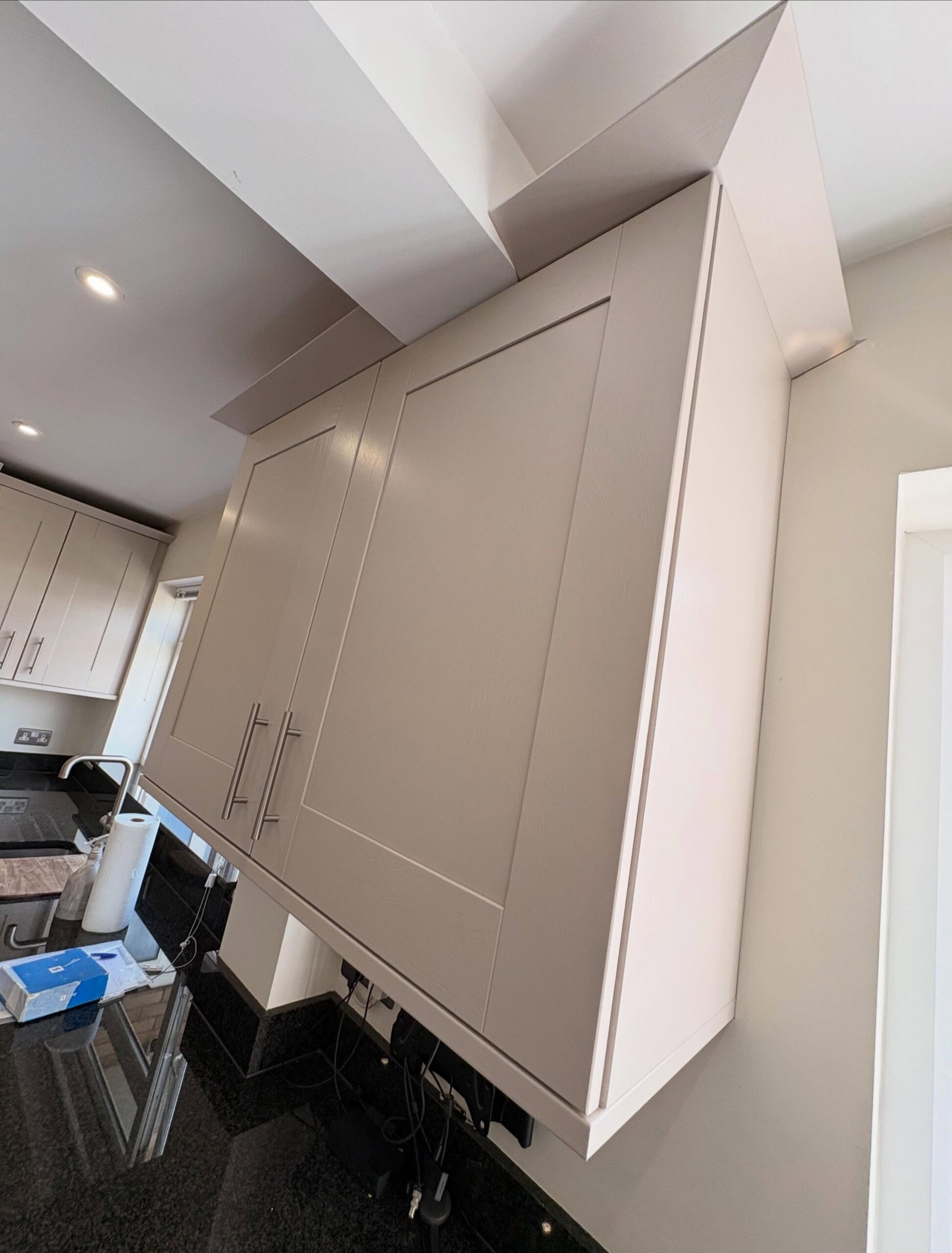
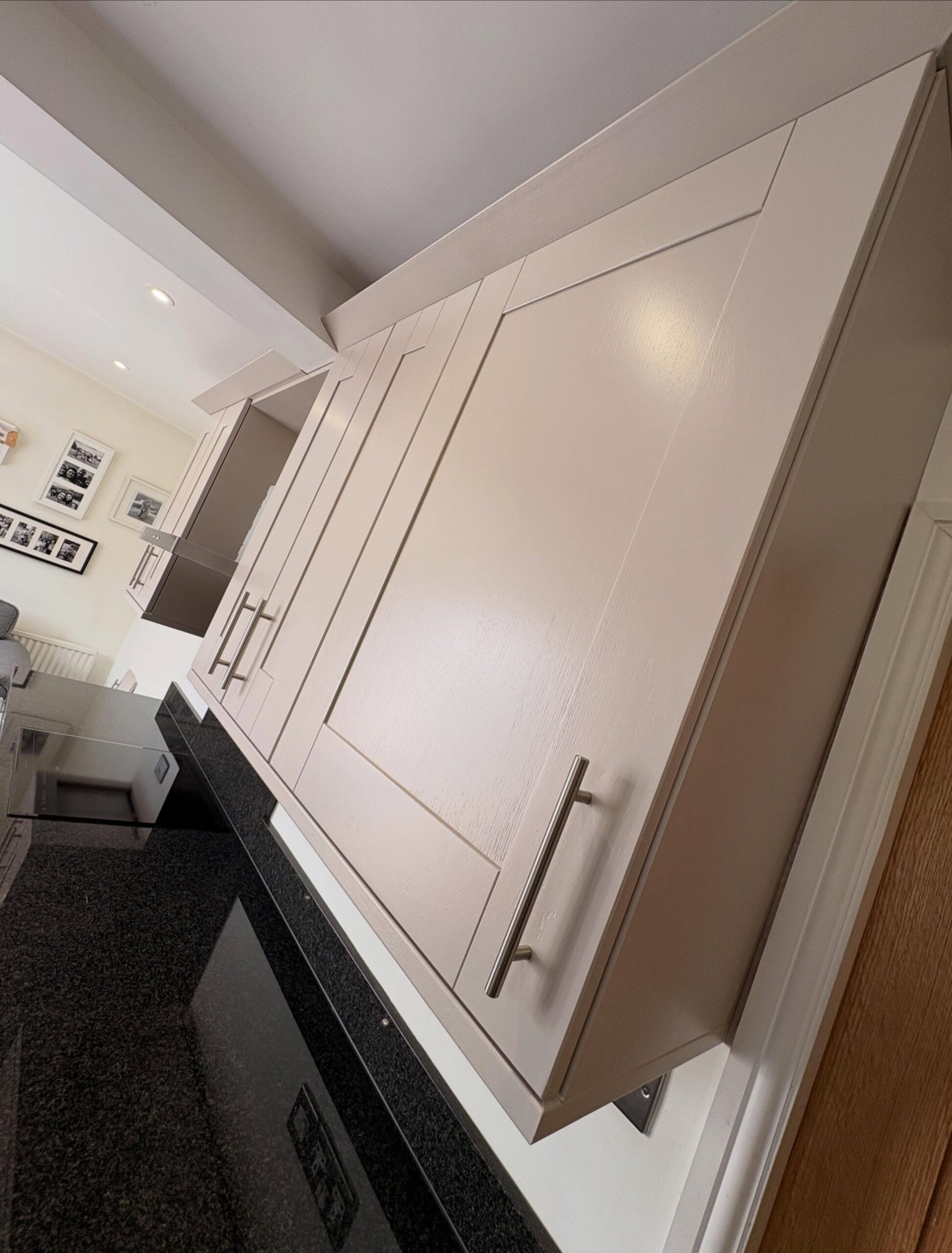
The cool greige kills every bit of the orange tone. The satin finish catches soft light without going shiny. And because the shaker frames were already crisp, the paint pass makes them read as a built-in craftsman job instead of a mid-range flat-pack install.
Cashmere is the color that keeps showing up in high-end kitchen catalogs this year. It sits between warm cream and cool gray, so it works with black granite, white walls, stainless steel, and natural wood floors without fighting any of them. Satin is the finish that reads expensive because it bounces light softly instead of showing every brush mark the way matte does or every fingerprint the way gloss does.
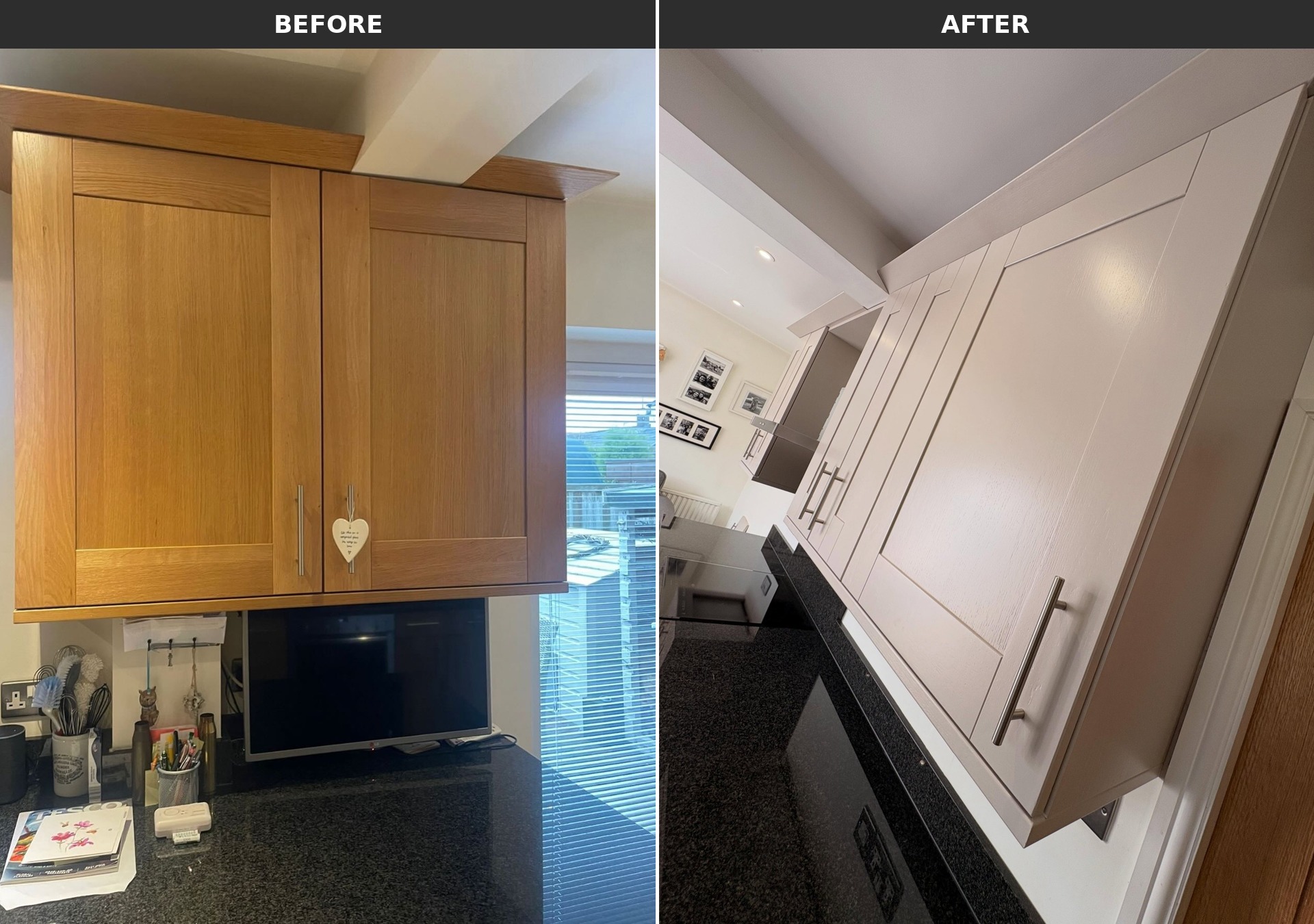
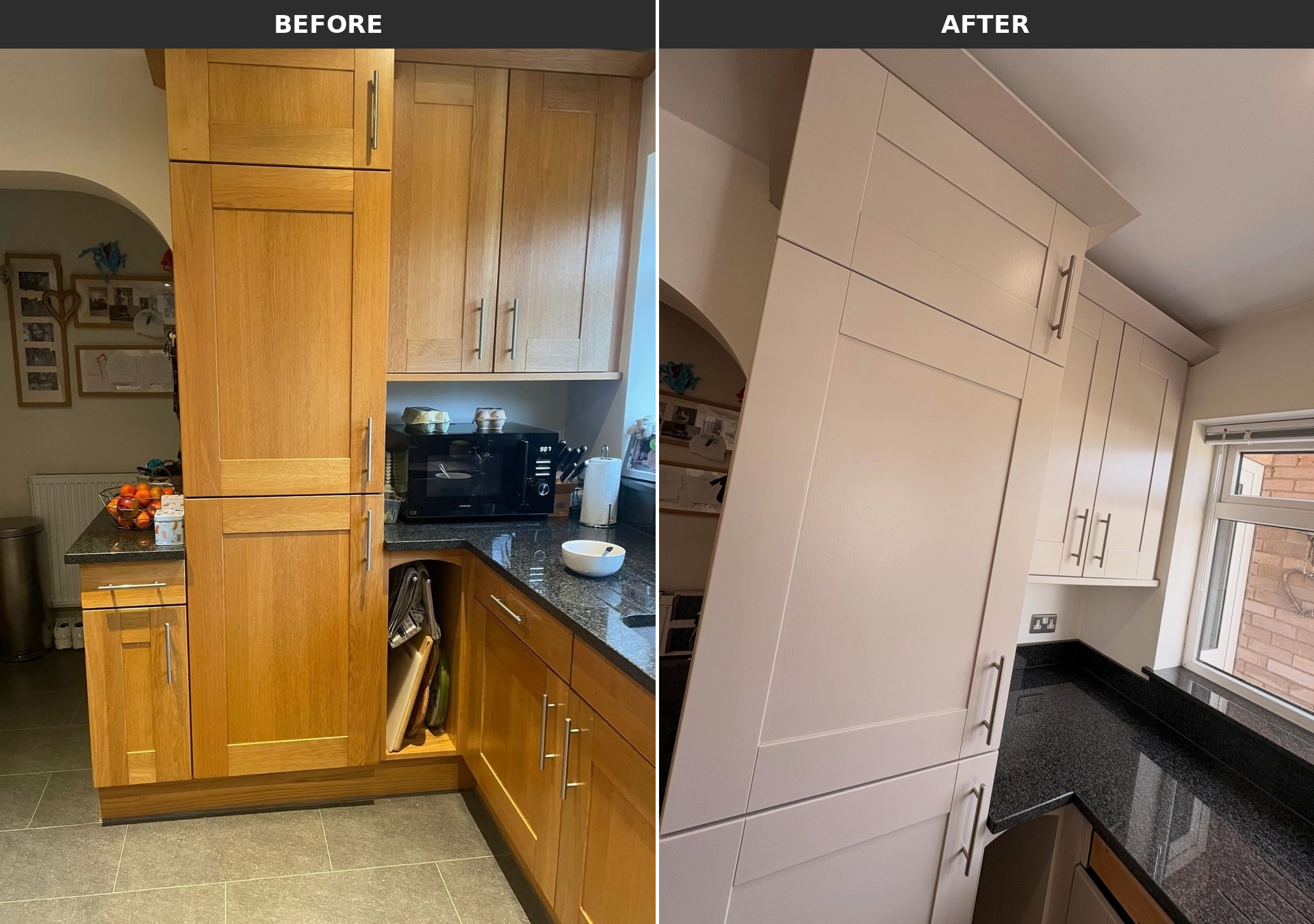
Look at the switch side by side.
Why it suddenly reads expensive
Three things make a kitchen look like a fresh custom install from across the room. Color temperature on the cabinets. Contrast between the cabinets and the worktop. And a quiet, matched finish across every door.
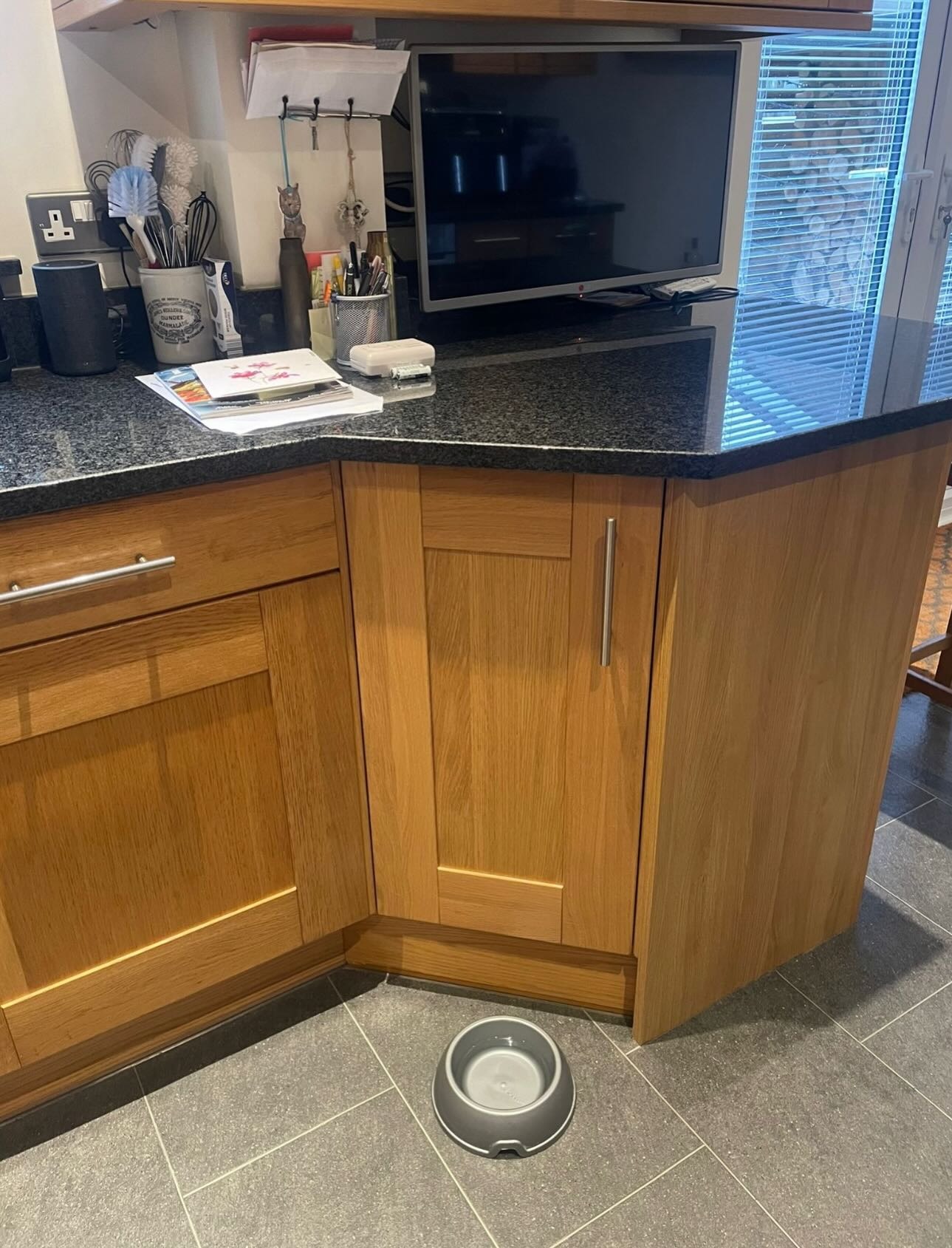
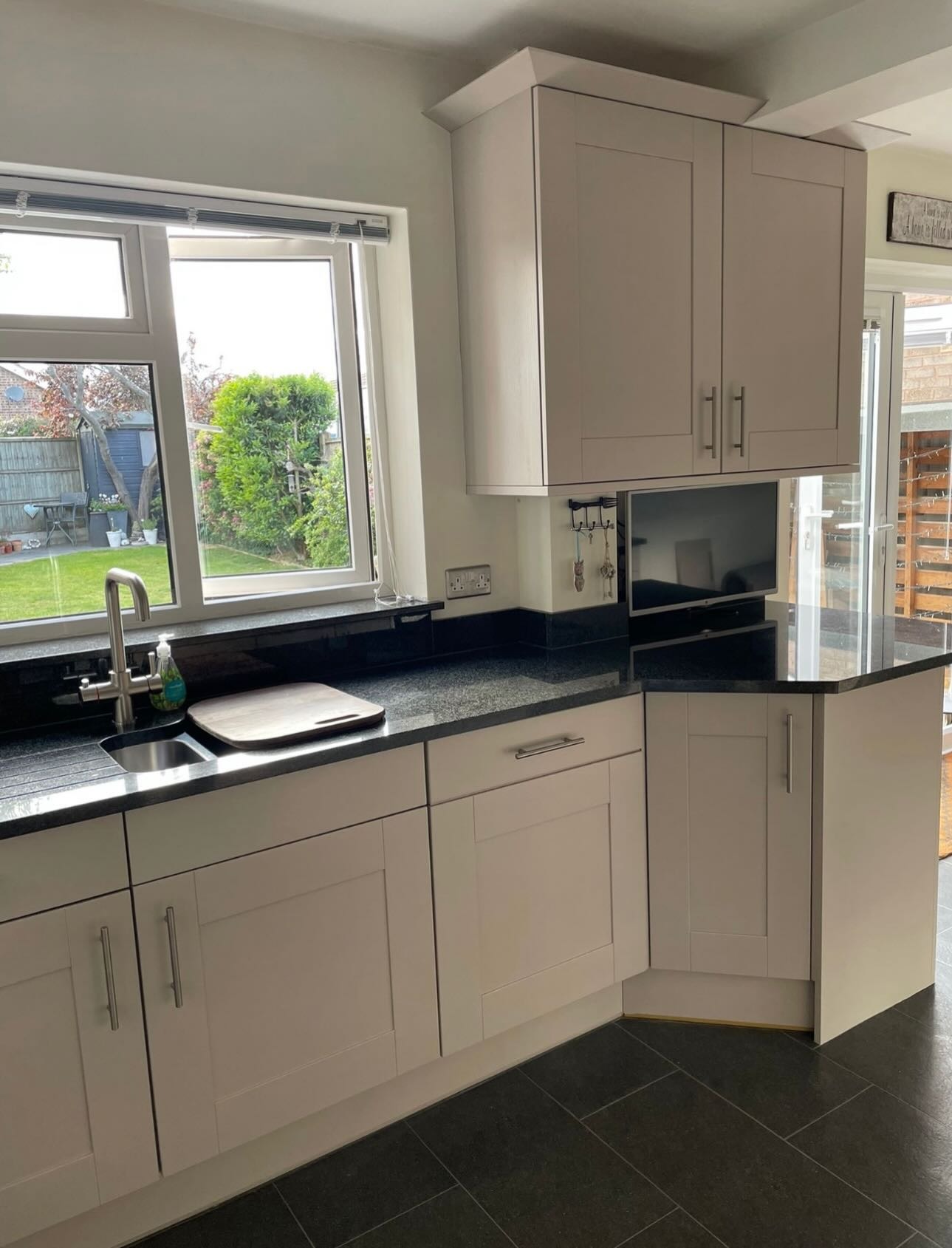
Honey oak against black granite is a warm-cool clash that reads cheap even when the cabinets cost real money. Swap in cashmere greige against the same black granite, and the whole room suddenly reads intentional. The stainless handles that looked ordinary on oak now look chosen. The granite looks picked for the paint instead of leftover from the last decade. Even the stainless chimney hood, which barely registered before, now reads as a statement piece instead of just a vent.
The lesson for anyone staring at honey oak right now
If you’ve been saving for a full gut job, you might be solving the wrong problem. Walk back into your kitchen and squint. Imagine the exact same cabinets in a cool neutral paint. Imagine the handles staying. Imagine the worktop staying. Imagine the layout staying.
If that mental picture suddenly looks like the kitchen you’ve been pinning for two years, you don’t need a new kitchen. You need a spray team, a few days, and a color that kills the orange.
The oak is still there under every one of those cashmere doors. The granite is the same granite. The handles are the same handles. The whole room just stopped shouting its birth year, and started looking like something a kitchen designer charged a lot of money to build.
The cabinets never were the problem.