

Most people would have ripped it out.
A honey oak kitchen in 2026 has a kind of expiration date on it. The orange tone catches every light in the room and makes the whole house feel older than it is. The usual move is to tear the whole thing out, drop ten to twenty-five thousand pounds on new cabinets, and start over. The second-usual move is to spray every door white and call it done.
The homeowner in Mosborough did neither.
She kept every single cabinet. Every drawer. Every carcass. The layout. The windows. Then she handed the painter a color most people have never heard of, a quiet Dulux shade called Gentle Fawn, swapped the counters for quartz, and let the room breathe. The result does not look like a respray. It looks like a kitchen a designer built for the house from scratch.
Here is what changed, and why the color choice is the whole story.
What the kitchen looked like before
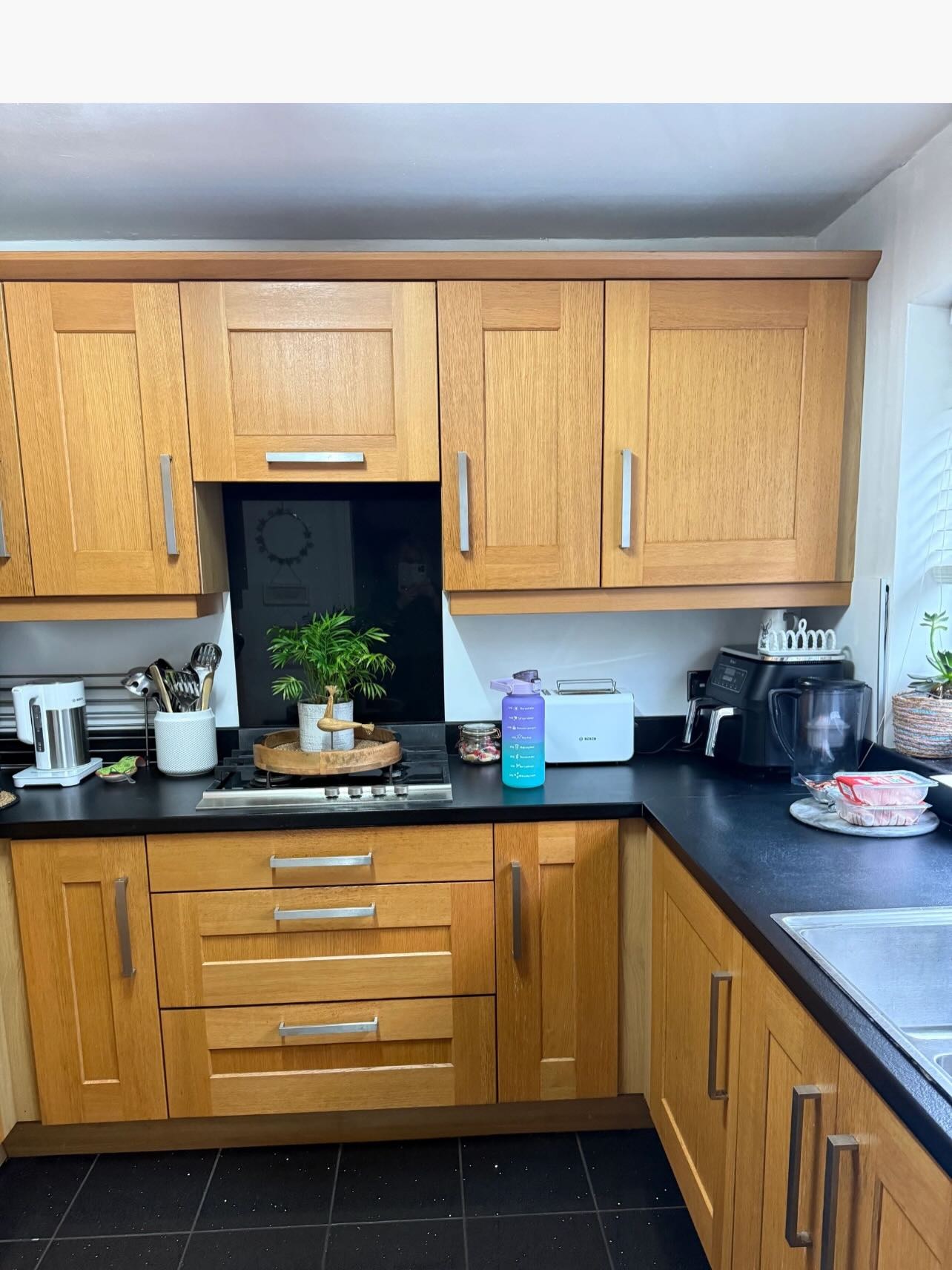
Nothing structural was broken. The cabinets were real shaker doors, solid, well made, mid-2000s build. The layout worked. The window over the sink pulled good light into the room.
But the oak was loud. Every photo of this kitchen came back orange. The black laminate counter and the black tile floor did not help, since they made the orange sit on top of the room instead of blending into it.
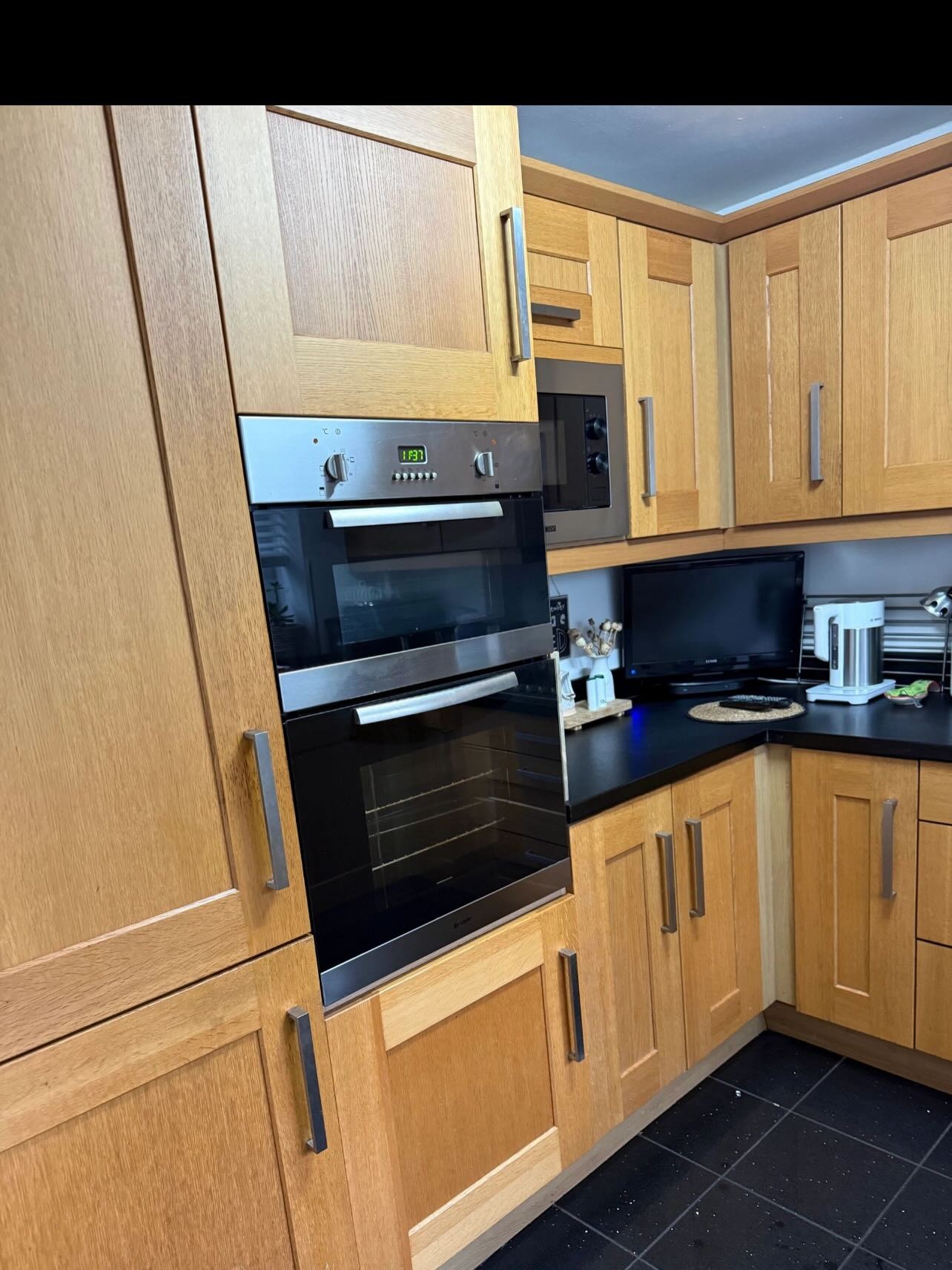
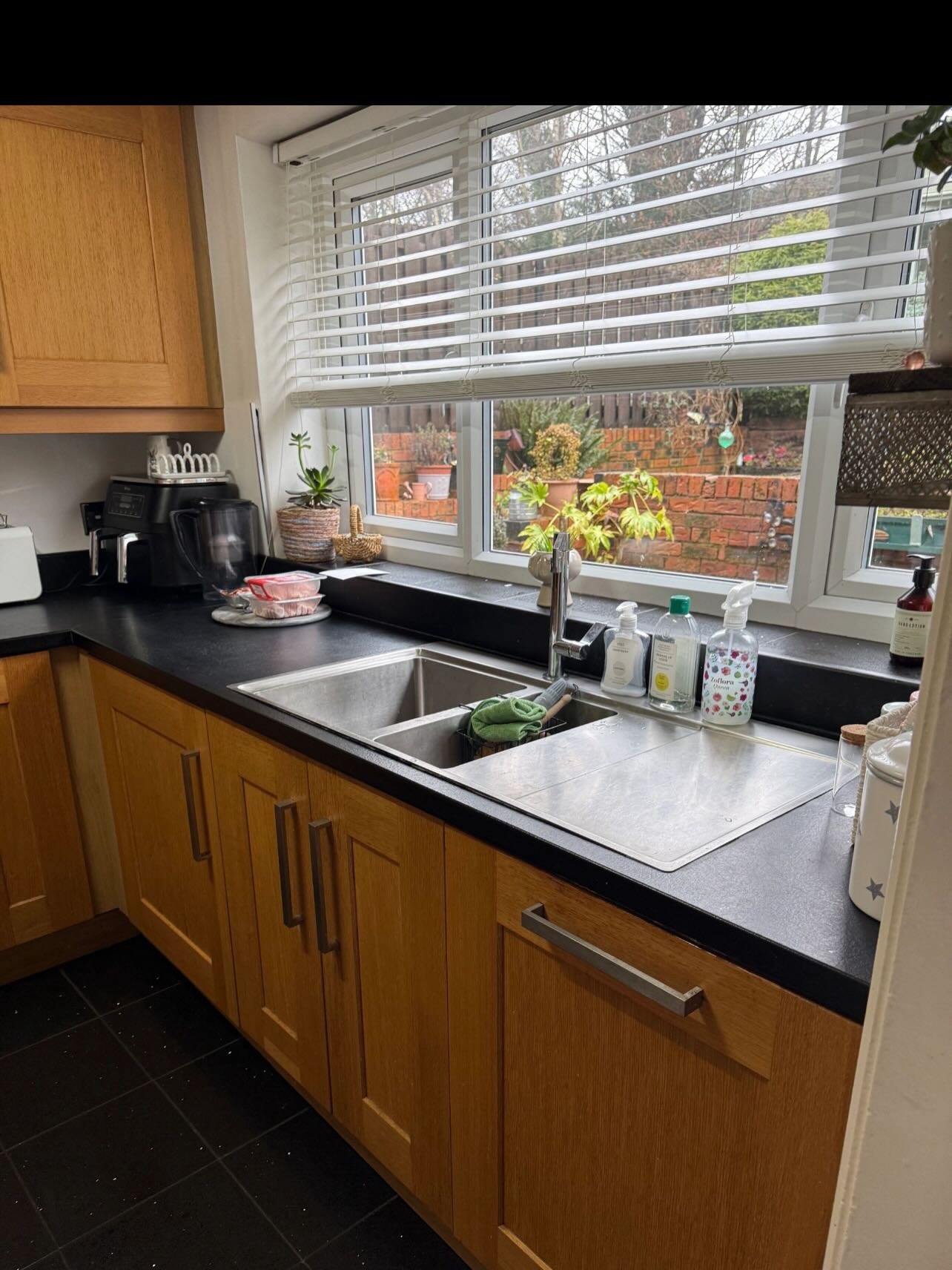
This is the moment most families call a kitchen showroom. She called a sprayer instead.
Why white would have been the wrong call
The reflex pick for a tired oak kitchen is bright white. It feels safe, Pinterest-approved, easy to sell on later. But white does not actually help this room. The new quartz counters are already a creamy white with soft gold veins. The new floor is a warm herringbone wood-look. Two warm, light surfaces already carry the room. Painting the cabinets a cold bright white on top of that reads flat, and reads flipper. Everyone has seen that kitchen by now.
Gentle Fawn is a soft, warm, dusty beige. Not greige. Not mushroom. Warmer than either. It sits with the quartz, picks up the wood tone in the floor, and lets the burnt steel hardware pop against it.
That is the quiet trick. The color was not picked to be pretty. It was picked to make peace with every other surface in the room.
Prep was the real work
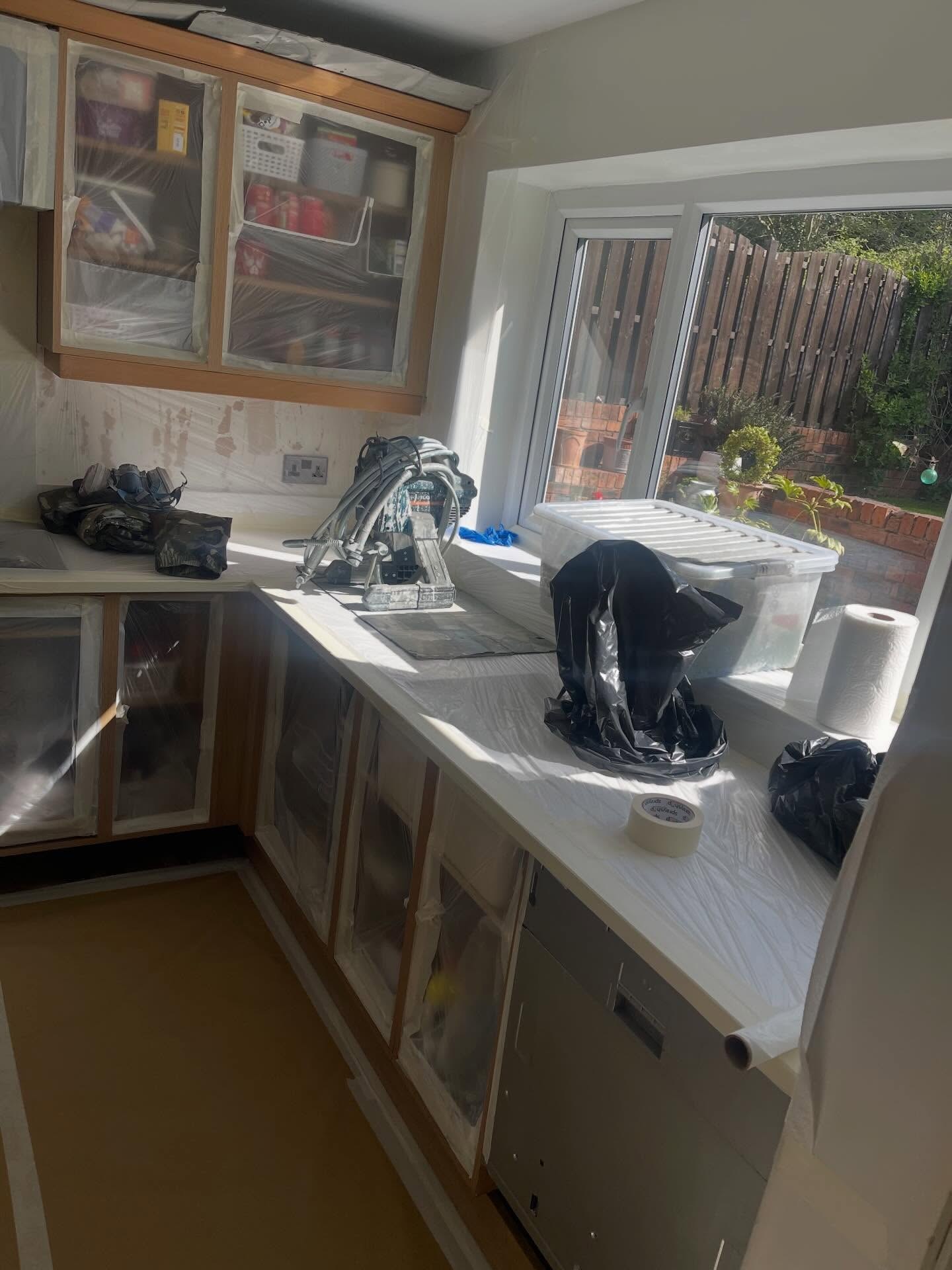
A spray job lives or dies on the taping. Every glass front, every worktop, every socket, the floor, and the ceiling edge got wrapped. From the outside this stage looks like chaos. From a paint point of view, this is the stage that decides whether the finish looks sprayed or looks sloppy.
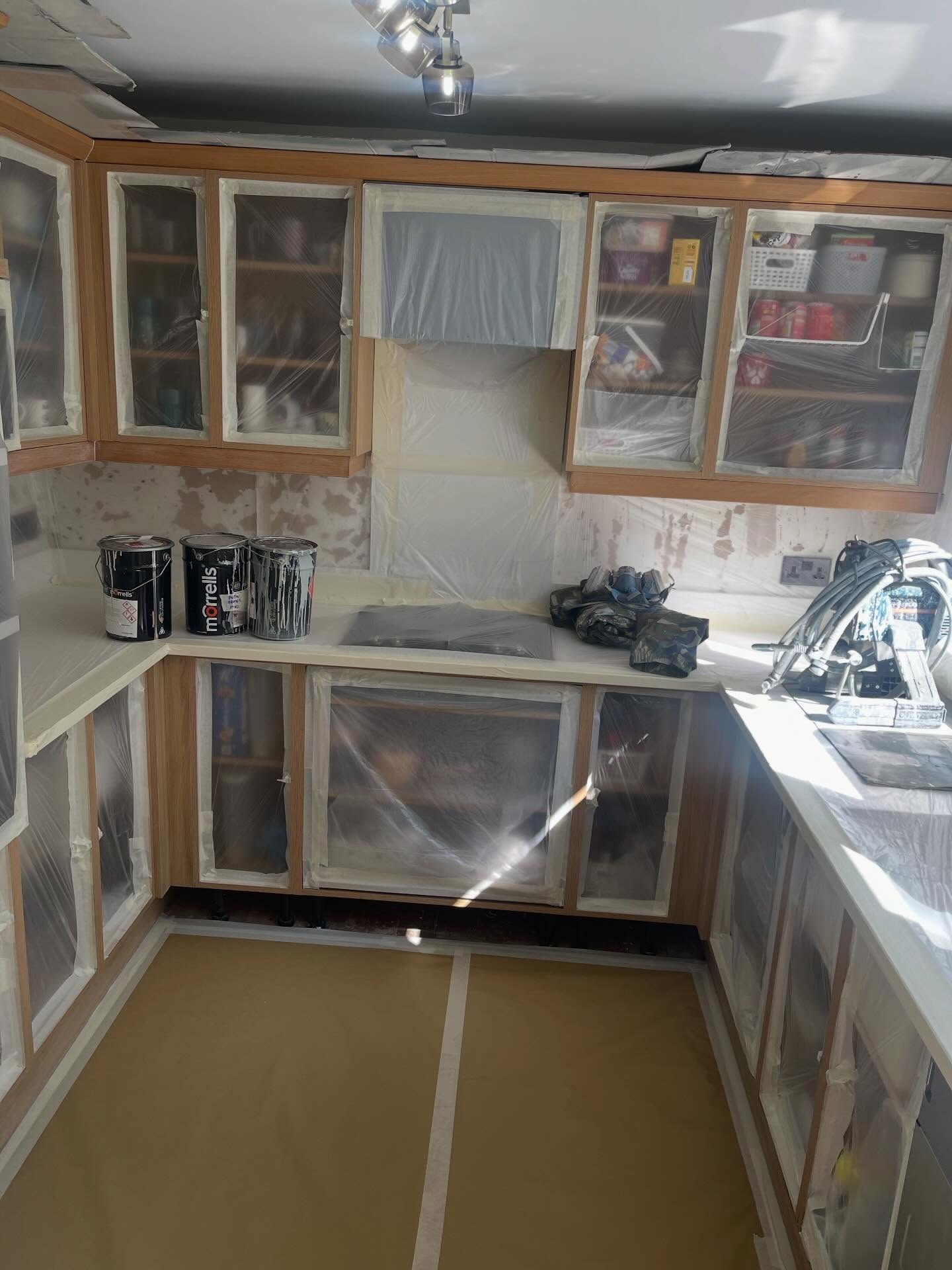
The paint on the counter is Morrells, a tough industrial coating that cures hard enough to stand up to a working kitchen. Dulux color, Morrells build. You want a finish that will not chip the first time a pan hits the lower door.
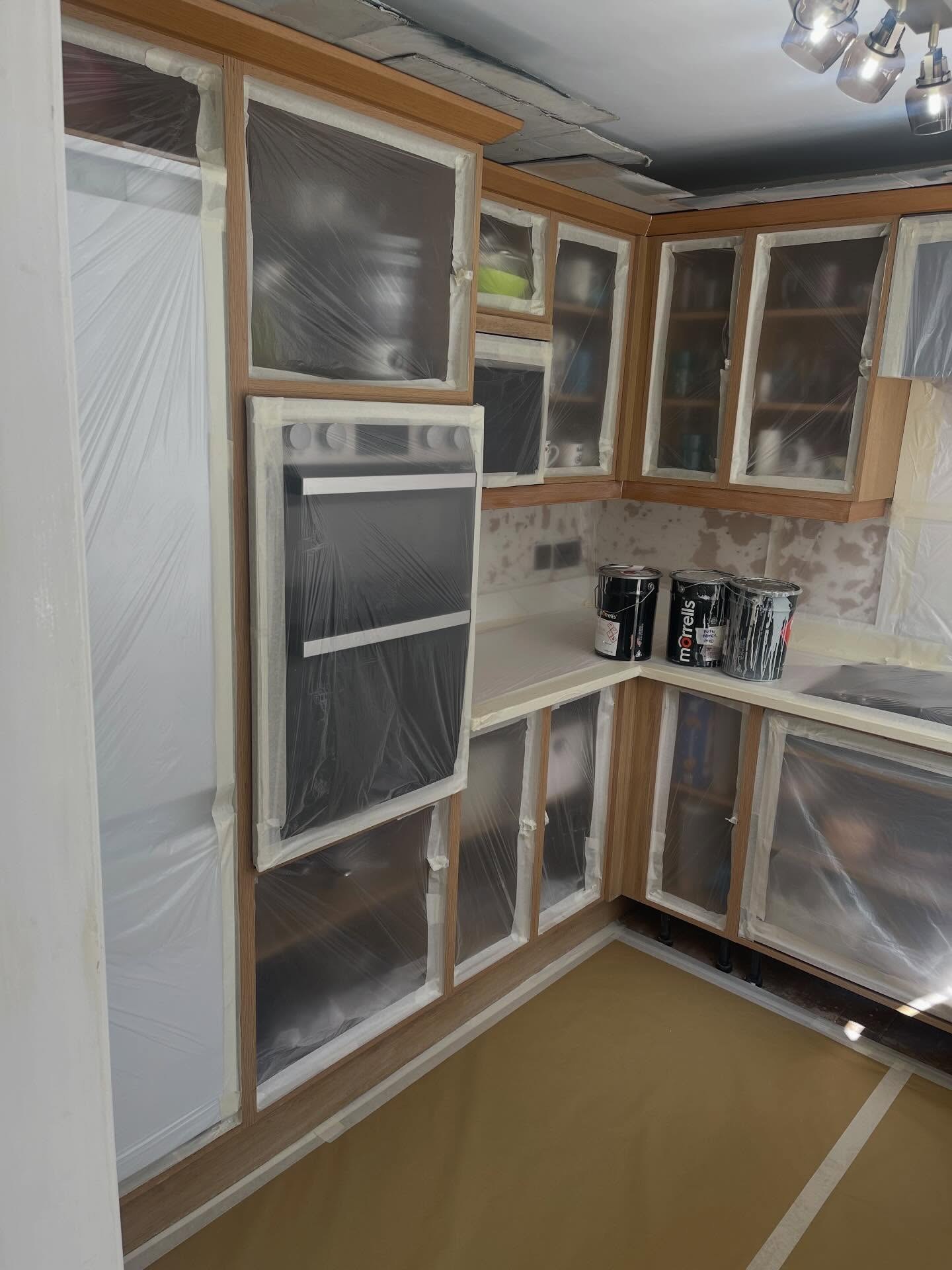
Primer went on first in the sunshine, then two coats of Gentle Fawn in a matte finish. Spray dries fast and lays flat, so you do not get the brush marks or the orange peel that rollers leave on a factory door.
The reveal
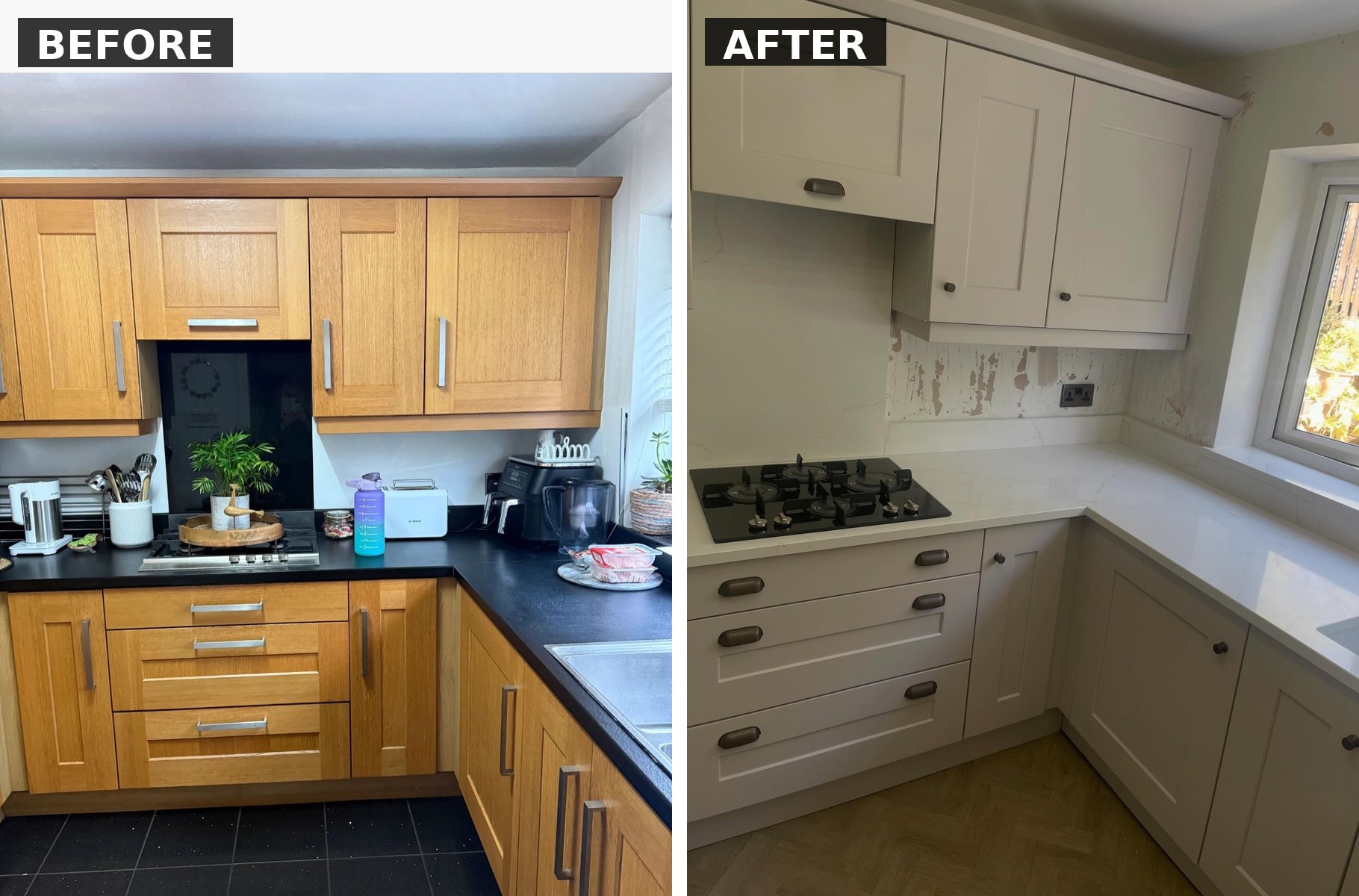
Look at that side by side. Same cabinet boxes. Same window. Same layout. The room reads twice as expensive on the right.
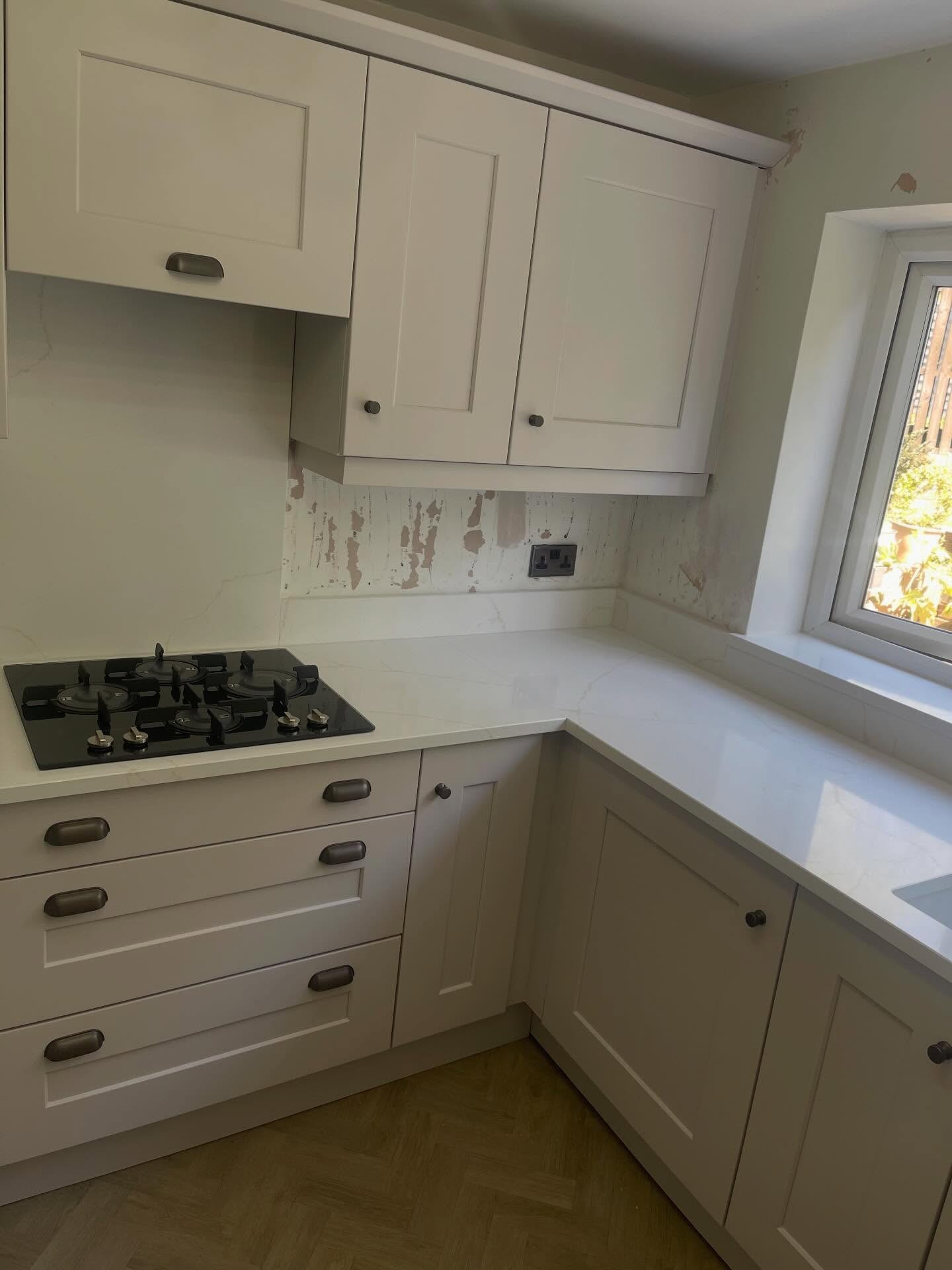
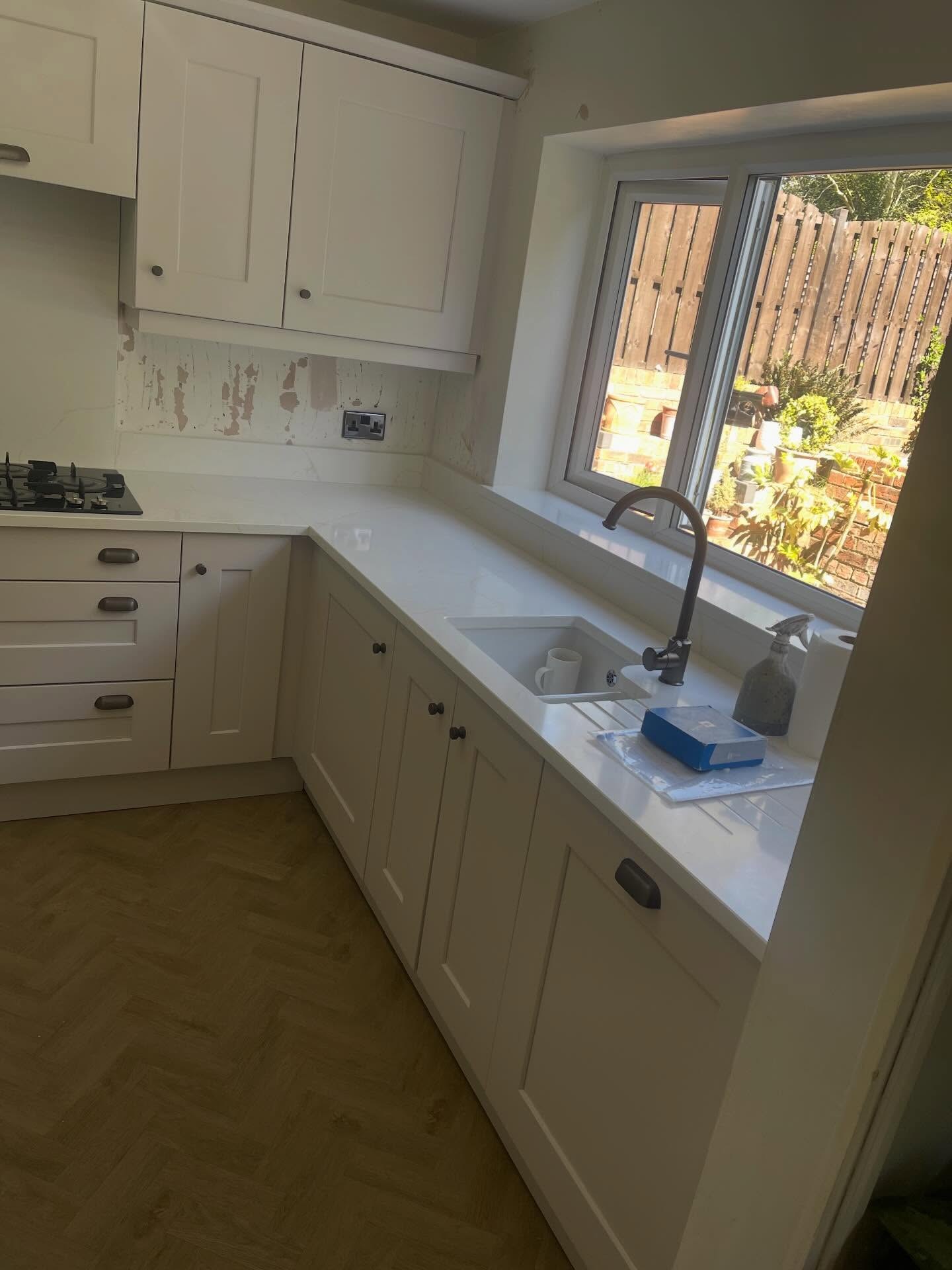
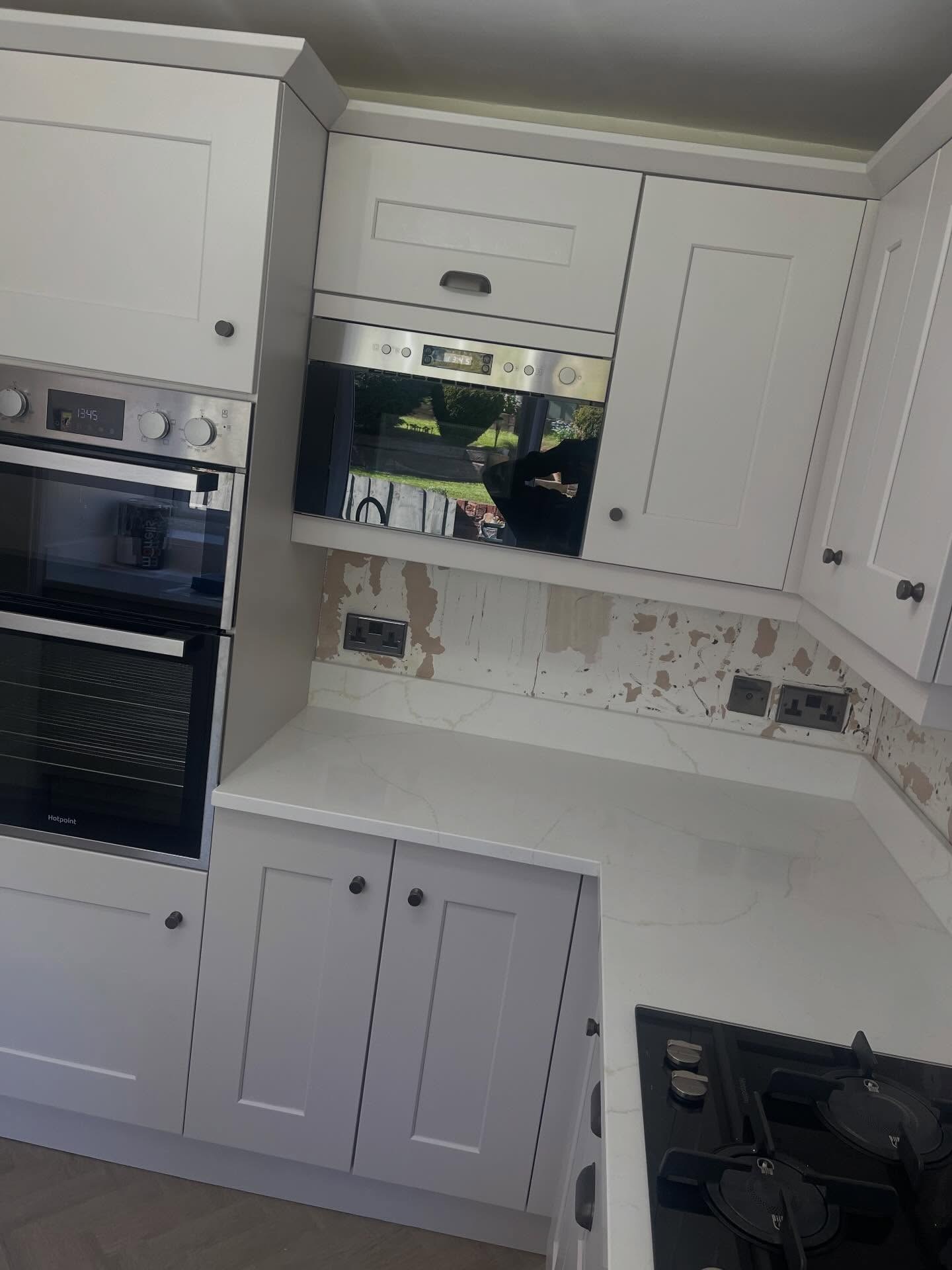
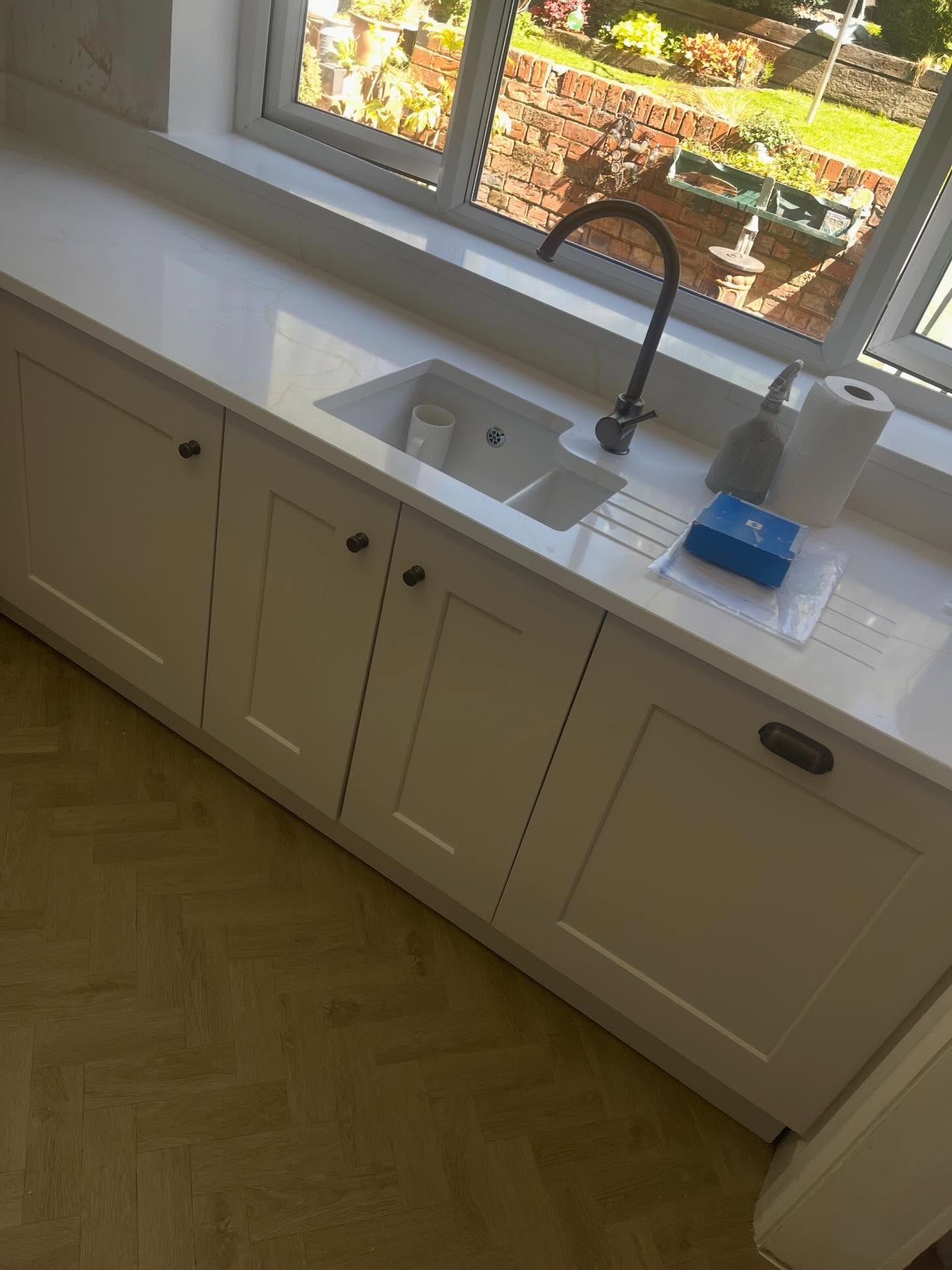
The quartz is the second star of this room. White with a soft gold vein, which echoes the warmth in the Gentle Fawn instead of fighting it. A pure, cold, bright white quartz would have cheapened the whole thing.
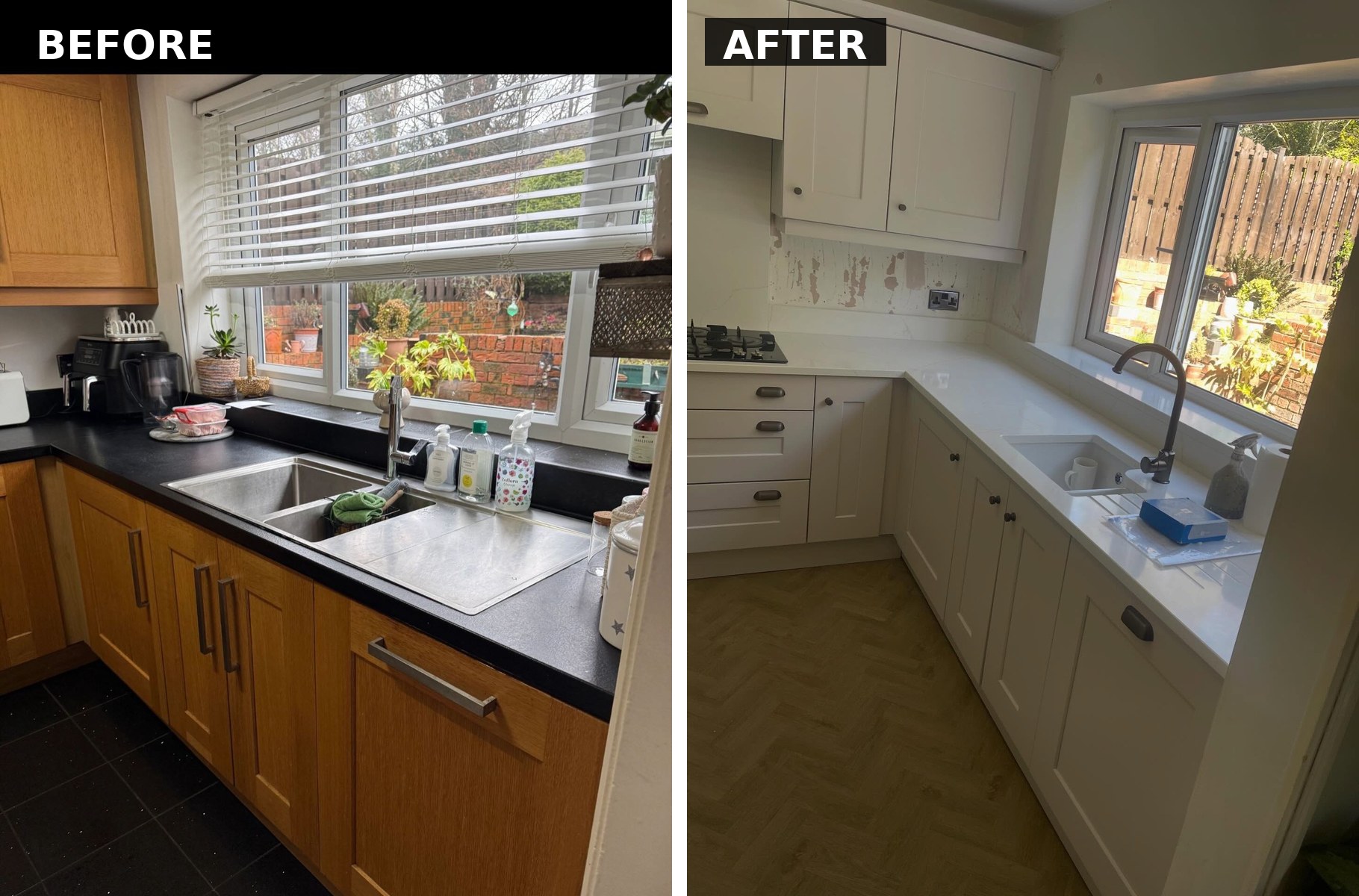
The tap swap deserves a sentence. The old chrome mixer went, and in came a matte black gooseneck. That one piece of hardware shifts the whole sink zone from builder-grade to intentional.
The hardware mix nobody notices but everyone feels
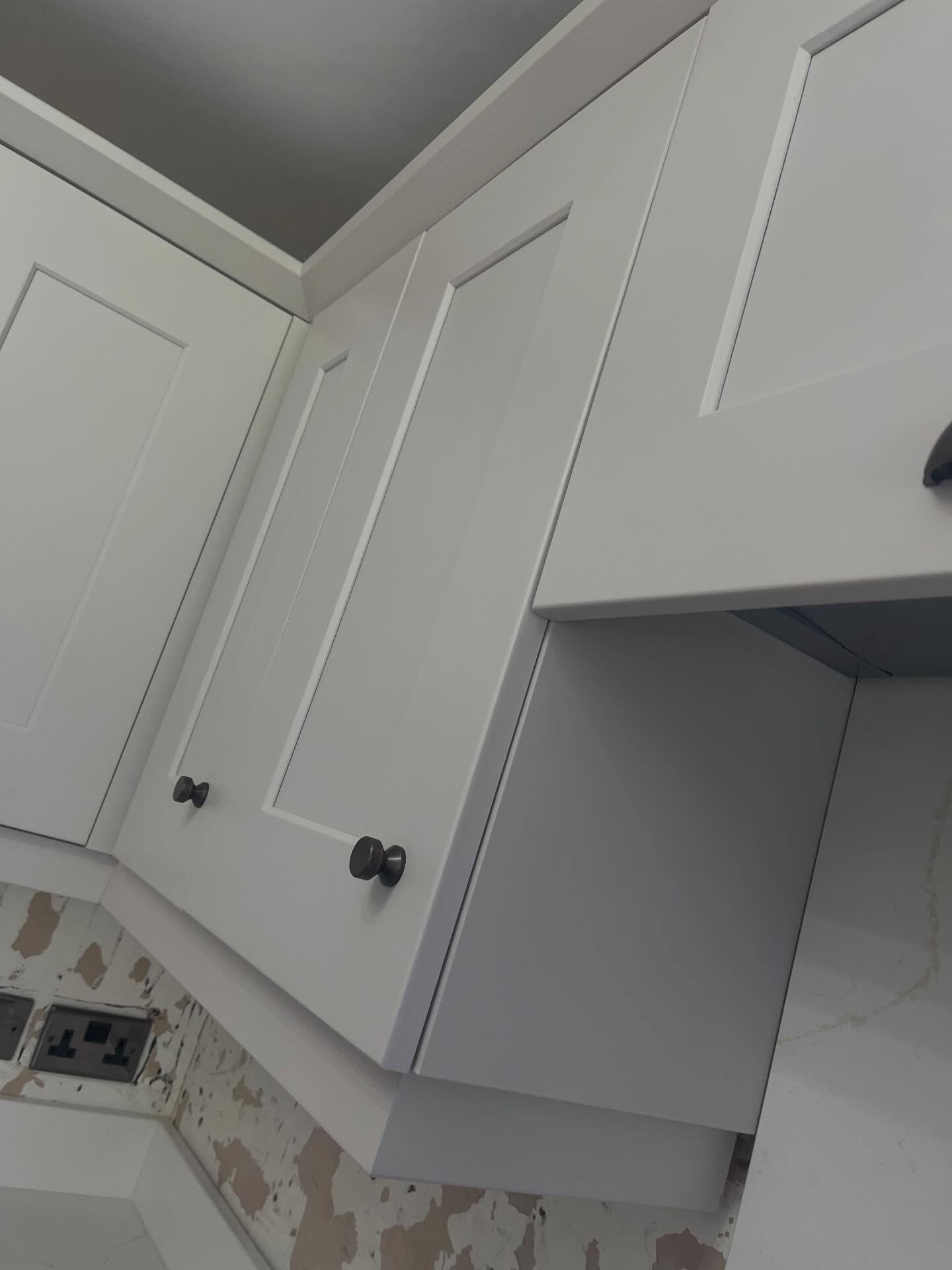
Every door got a round, matte burnt steel knob. Every drawer got a cup handle in the same burnt steel finish, positioned clean and centered.
This mix is what expensive bespoke kitchens do. Knobs on the doors read quieter. Cup handles on the drawers give your hand something to pull. A flipper buys one bag of matching handles and puts them on everything. A designer picks two.
Zoom out
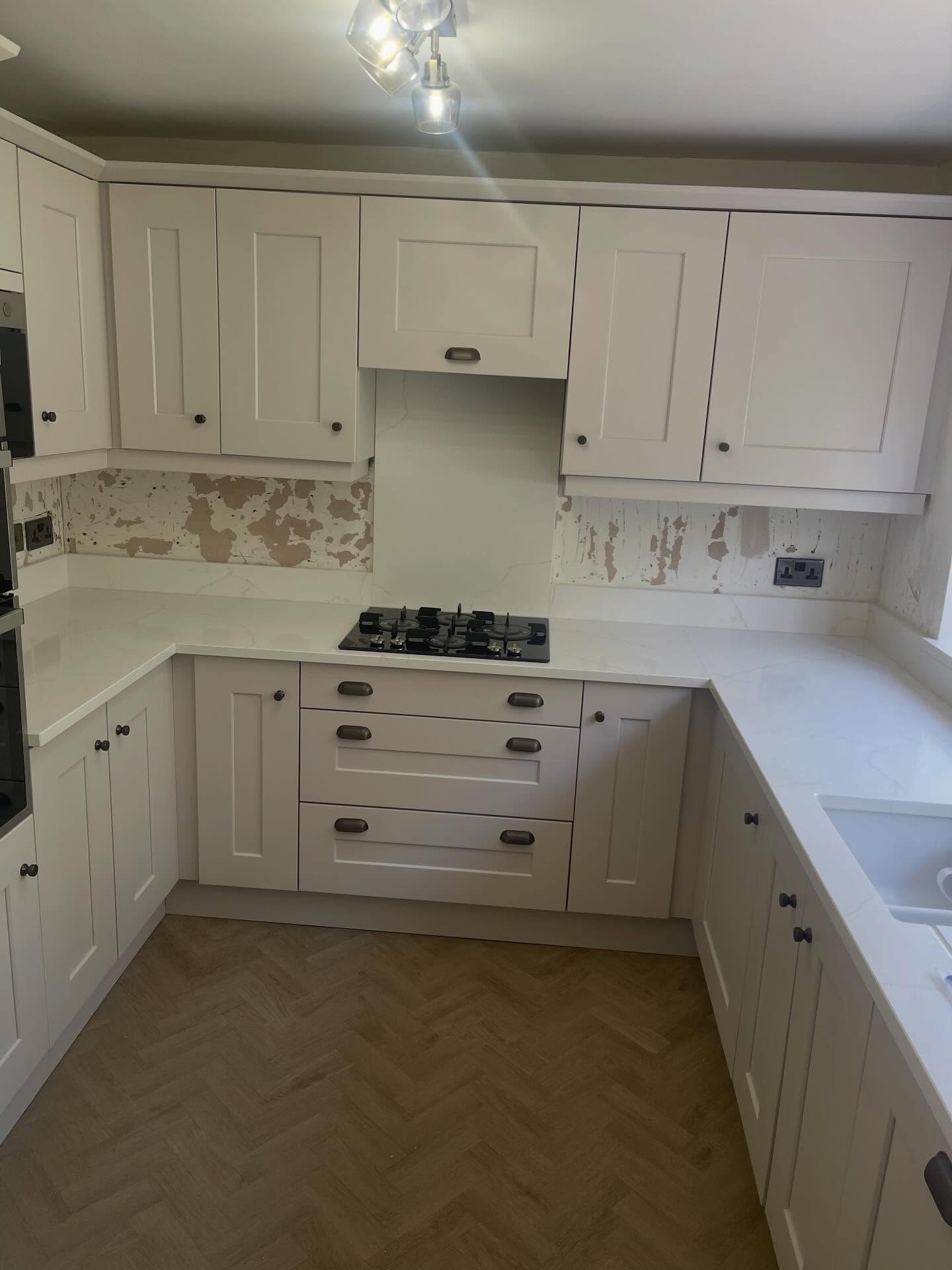
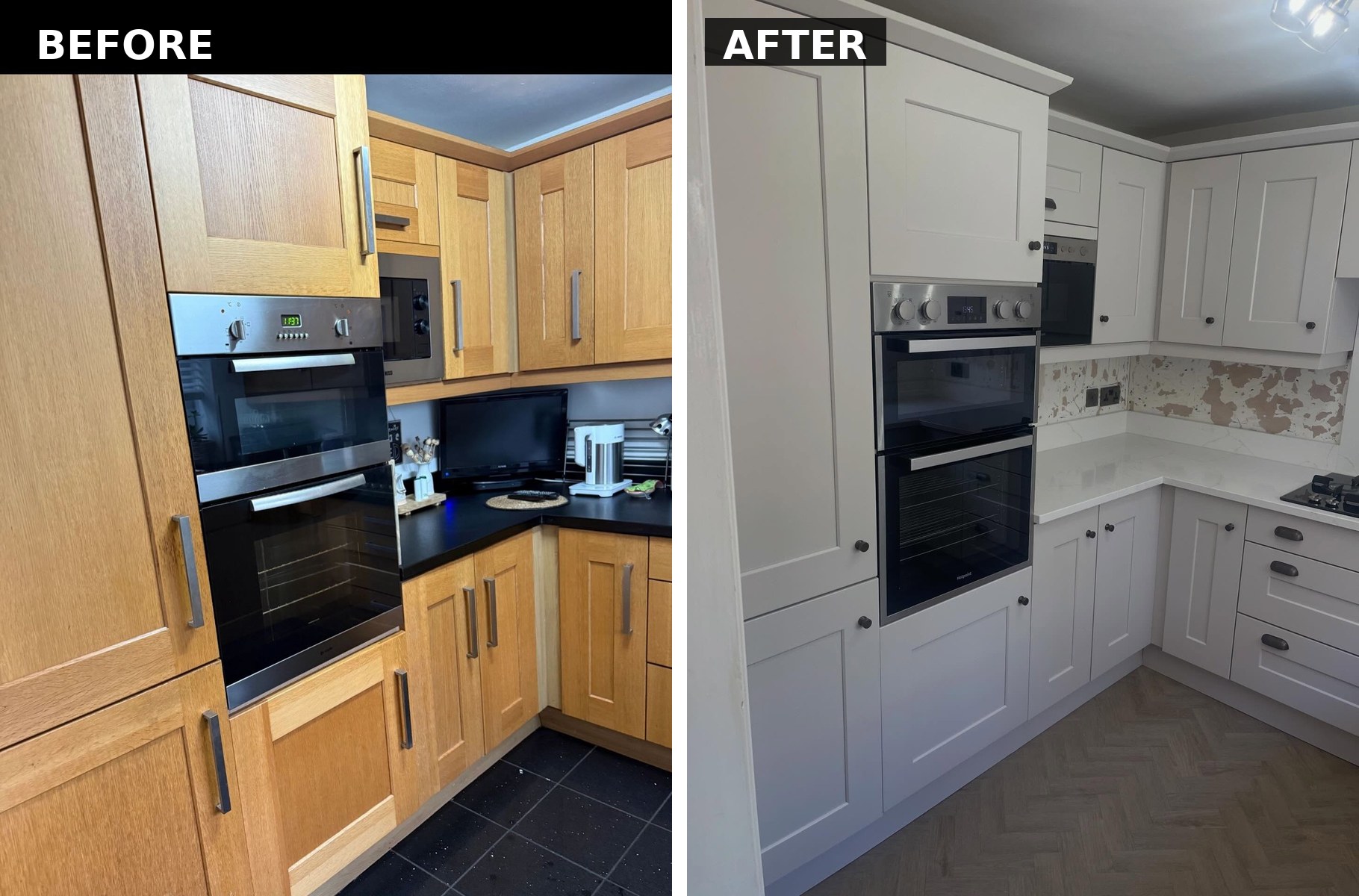
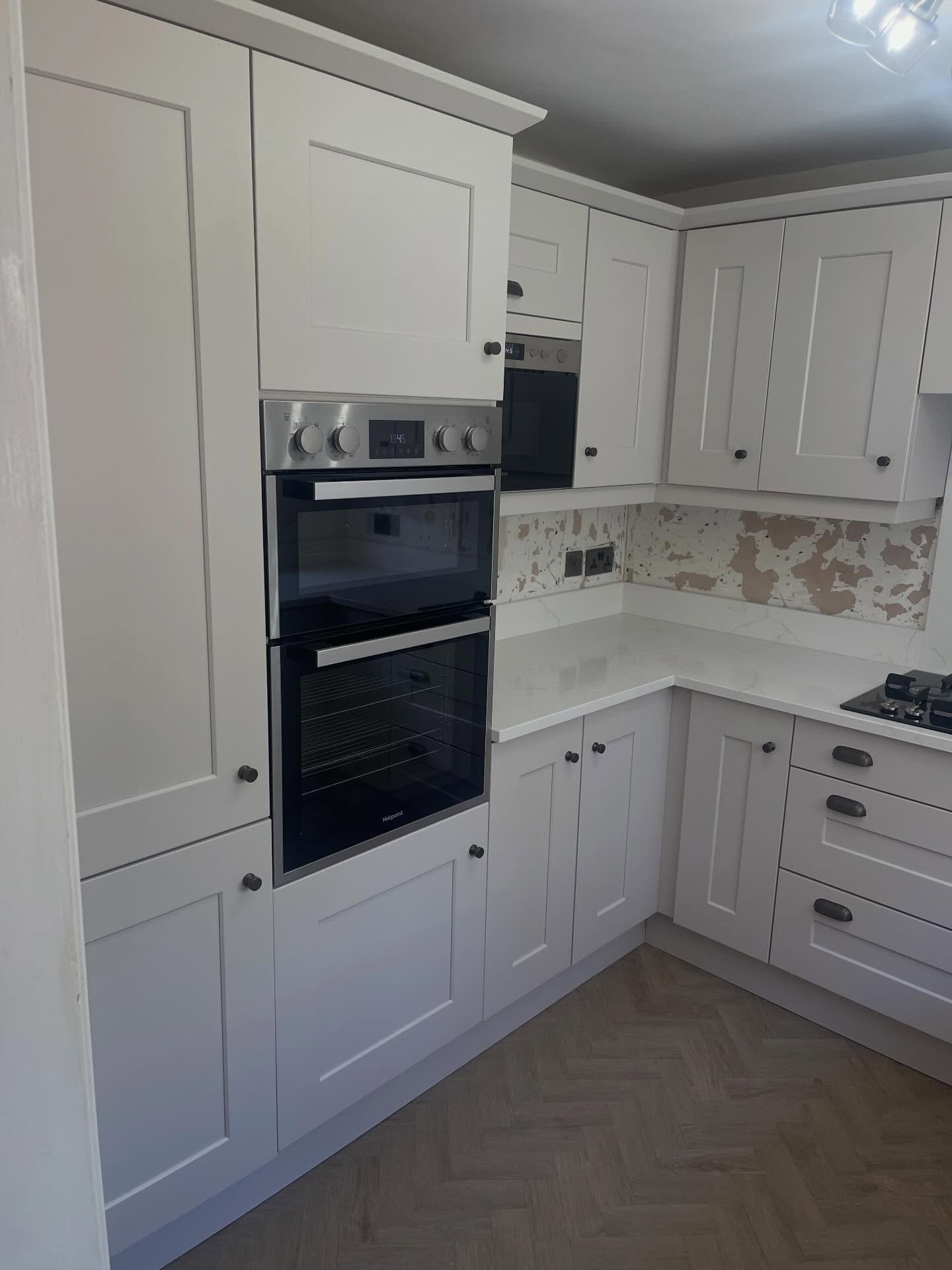
Same cabinet carcasses, same openings, same cutouts. The run reads brand new because the cabinets around the ovens finally stopped shouting.
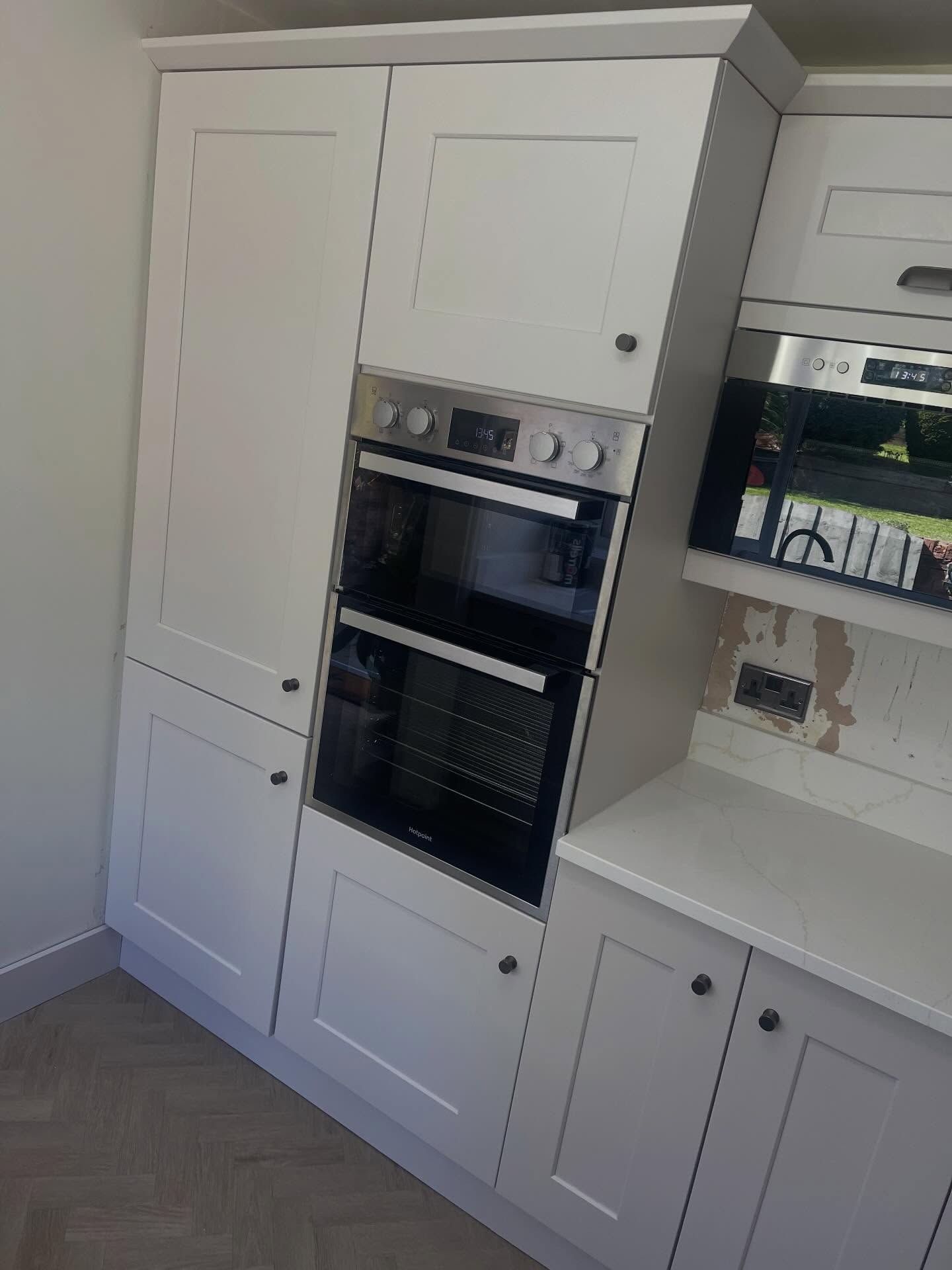
The little shots that prove the finish
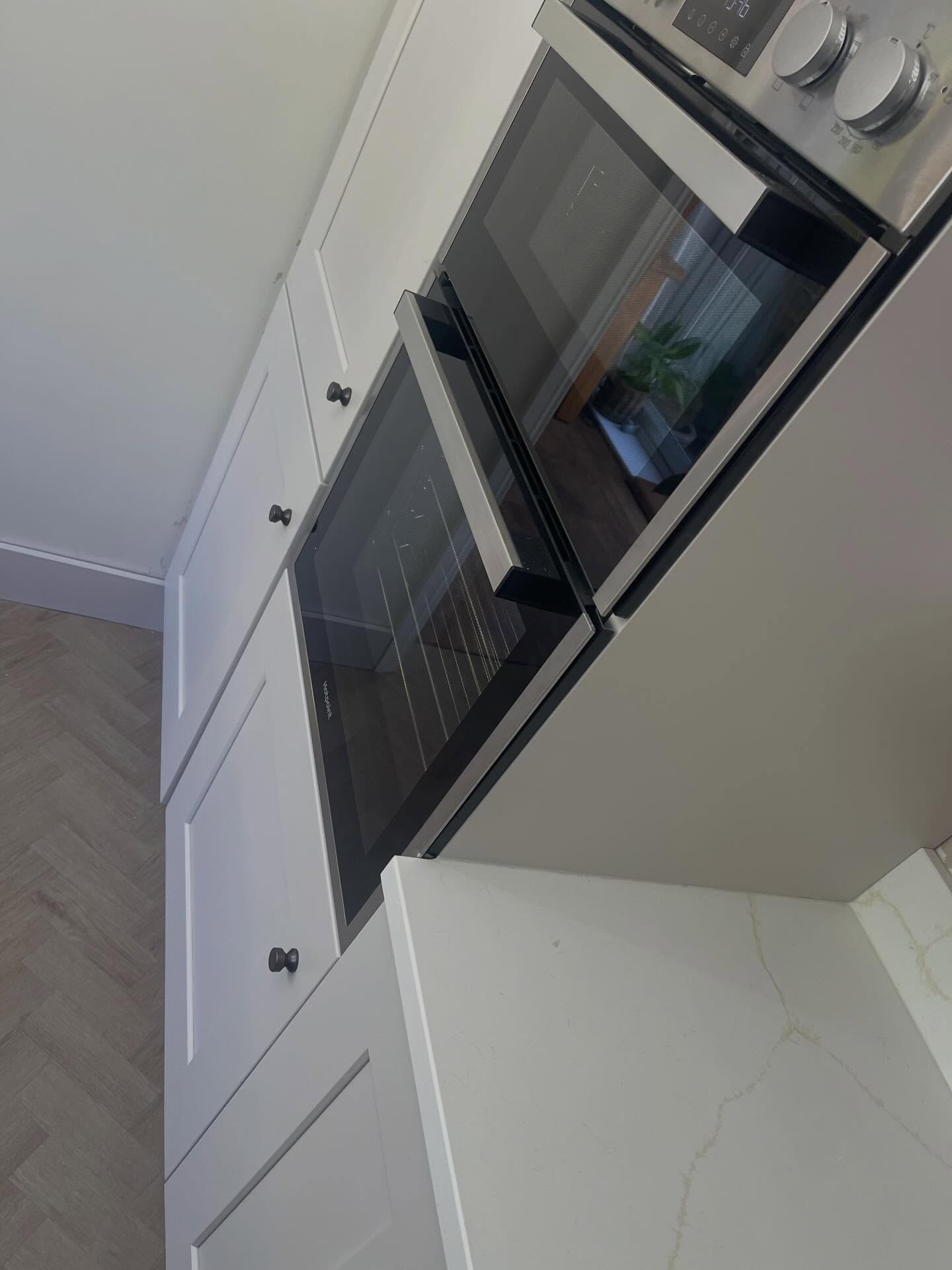
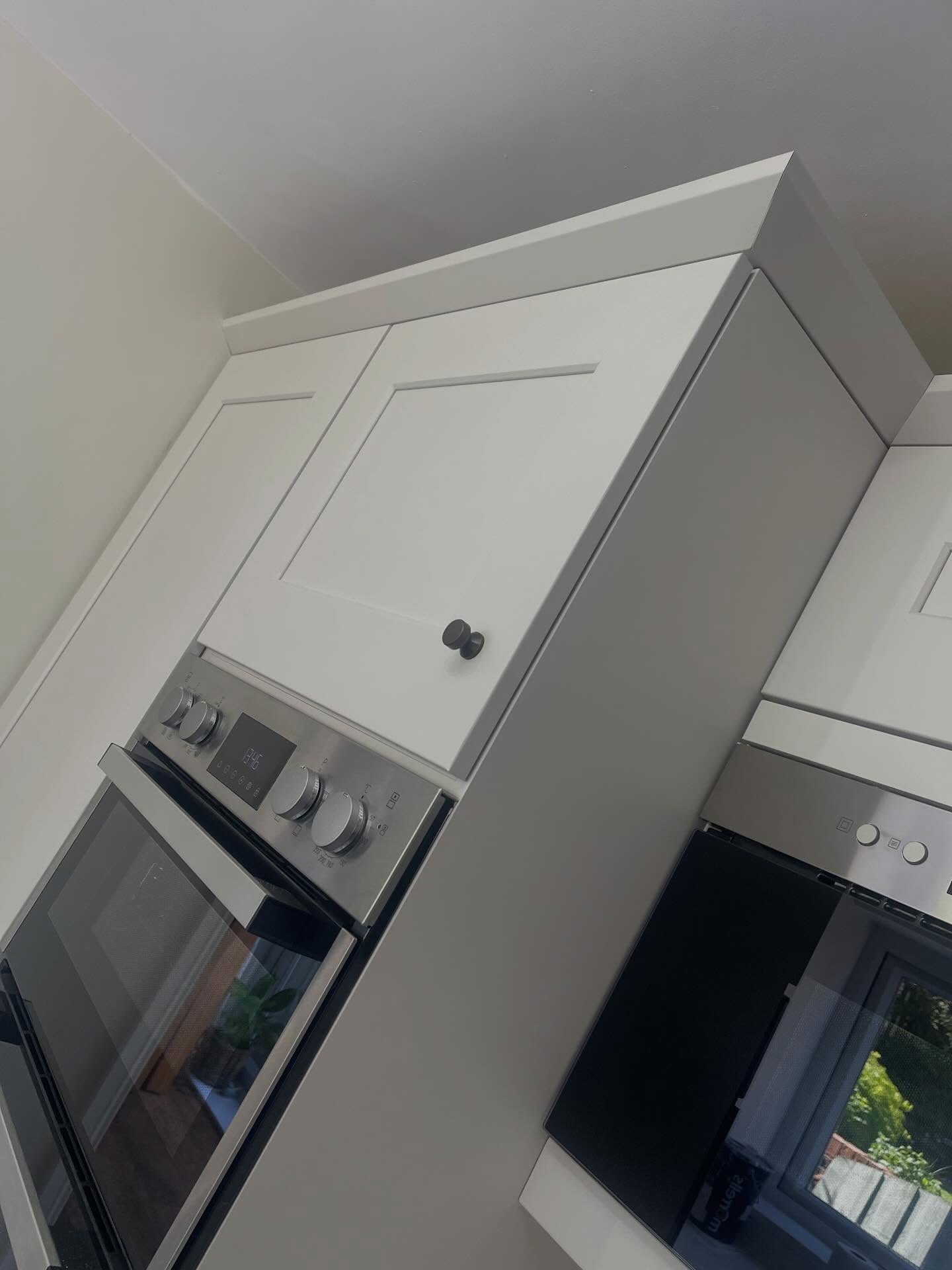
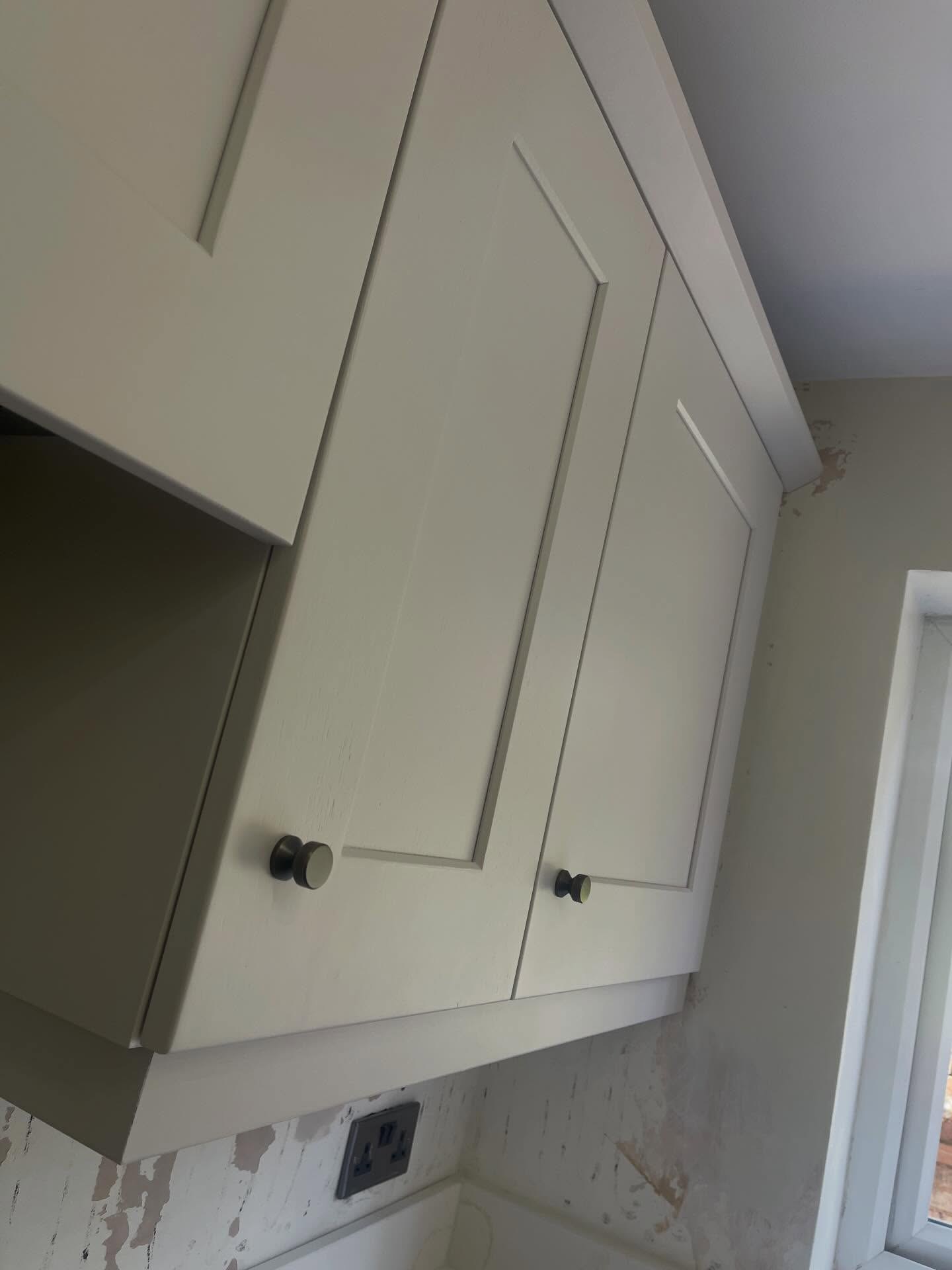
Sprayed finishes do this. The light hits the door and slides across it. A brush job catches on every stroke.
The takeaway
A full respray like this runs a fraction of a kitchen replacement. The tiling and the walls are still to come, which the painter calls out in the caption. But the cabinets, the counters and the hardware, the parts that take over a room, those are done.
If your kitchen is honey oak, do not reflex-paint it white. Pull a Gentle Fawn chip, or any warm dusty beige in that family, and lay it against the floor you are keeping. Warm to warm. Let the quartz and the hardware do the rest.
The reason this one looks custom-built is that nothing in it is fighting anything else.



My Oak kitchen still looks the same as when I fitted it more than fifteen years ago. I do like the warmth of natural wood finishes . Apart from the hinges near the water softner I haven’t replaced or serviced any of It.
The painted doors won’t last the same , the paint will wear and chip so will need doing again.
Don’t replace the doors either , they don’t fit as good as the originals and soon look higgledy piggledy. Think before you spend.
Really dark wood doors can dampen the whole kitchen appearance though.
If you live in Scotland, most doors and windows are pine and wood kitchens common, and loved, despite fashion changes