

Flowers, swirls, quilted diamonds and hundreds of tiny dots: almost every roll of toilet paper carries a pattern, and nobody really looks at it. Yet those designs are not just decoration. Pressed into the paper during manufacturing, they change how thick it feels, how much it absorbs and even whether the layers stay together.
In short: what the dots and patterns are for
- More volume: they make a thin sheet feel thicker and softer, without adding more paper.
- More absorbency: the tiny hollows hold extra liquid.
- Layers that stay together: on 2-ply and 3-ply rolls, some dots are bonding points between the sheets.
- A brand signature: a recognizable pattern sets one roll apart from another.
The pattern is pressed, not printed
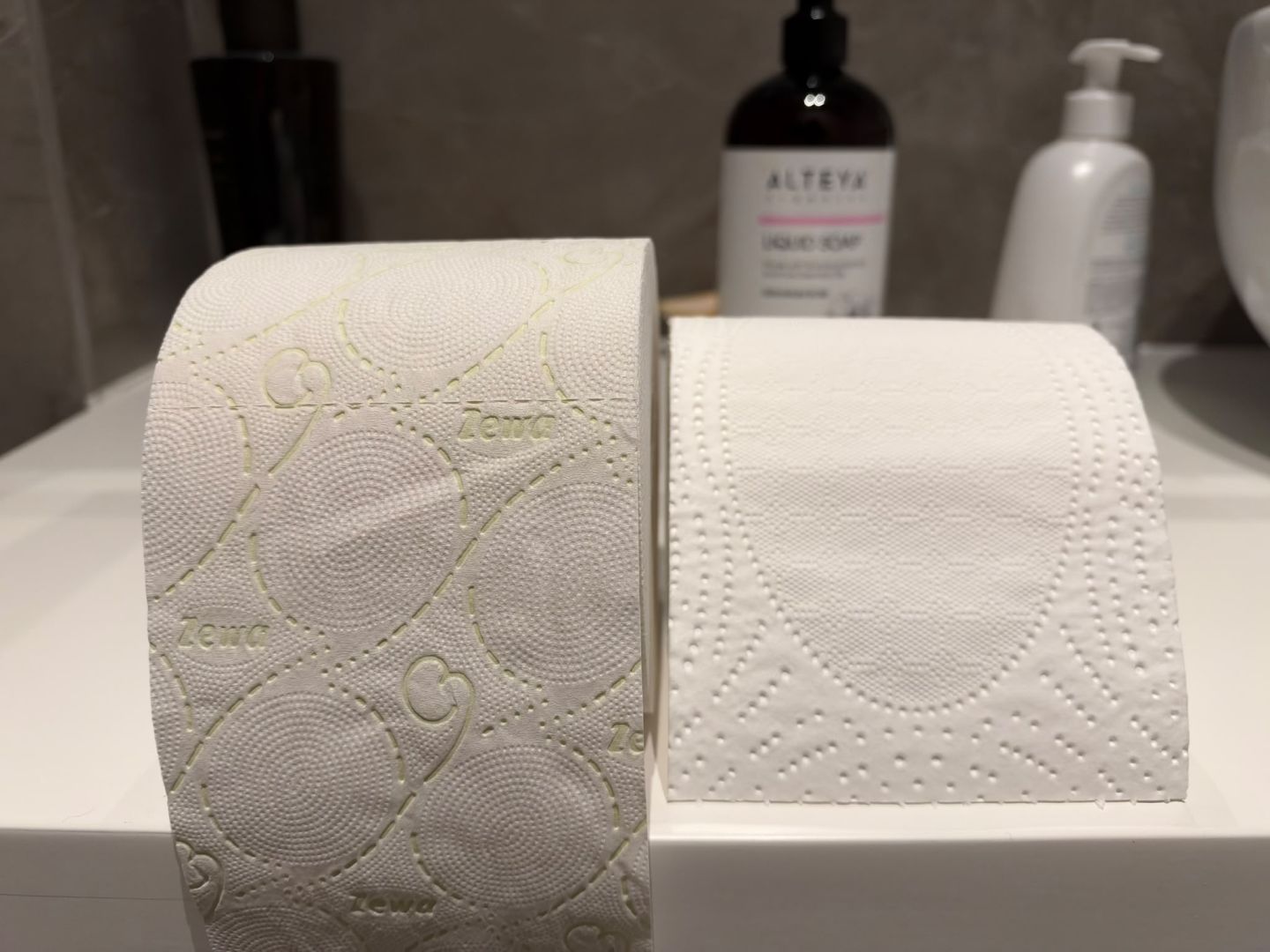
Those raised dots and hollow shapes come from a process called embossing. When giant reels of tissue are turned into finished rolls, the paper passes between engraved steel rollers that press a design into it. It’s a physical imprint in the sheet, not ink.
A single sheet often carries two designs at once: a large visible motif, like flowers or diamonds, and a fine background of tiny dots. The depth and spacing of those imprints change the structure of the paper, which is why manufacturers don’t choose a pattern only for its looks.
Why a thin sheet feels thicker
Embossing creates small spaces in the paper and between its layers. The sheet becomes thicker and more cushioned without using more fiber: part of that “plush” feeling is pure construction.
Those spaces also help it hold more liquid. In a 2020 study published in BioResources, researchers compared four two-ply toilet papers before and after embossing: their water absorption capacity rose by 18% to 72%, depending on the product. The paper didn’t absorb faster, though: it simply held more.
Some dots hold the layers together
On multi-ply toilet paper, certain embossed points are where the layers are joined, so the sheets don’t peel apart when you pull. Some manufacturers apply a little adhesive on the raised areas before pressing the layers together; others bond them with water only, no glue. You can’t tell which by looking: not every dot is a bonding point.
And the actual holes?
The only real holes in toilet paper are the perforations, the dotted line between two sheets. Their job is simple: make the paper tear cleanly where you want, and not in the middle of a sheet. If a roll tears unevenly, the perforation, not the pattern, is the culprit.
A deeper pattern isn’t always better
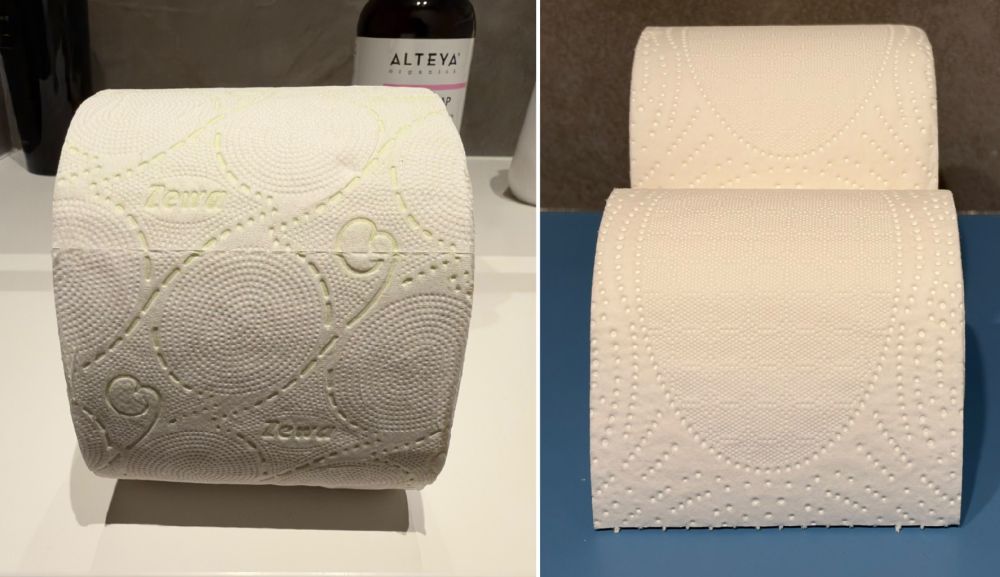
Thicker doesn’t automatically mean softer. A 2022 laboratory study in Materials found that the embossing patterns tested reduced both the strength and the measured softness of the paper compared with the original base sheets. Manufacturers are constantly balancing bulk, strength and comfort.
There is also a marketing side. Tissue equipment maker Valmet describes distinctive engravings as a way for brands to stand out on the shelf.
What it means when you buy
- Don’t judge by the pattern: flowers or diamonds won’t tell you which paper is softer.
- Compare sheet count and sheet size, not the size of the roll: a puffy roll doesn’t necessarily contain more paper.
- Test it: a good roll is comfortable, stays in one piece during use and tears cleanly at the perforation.
The limit
The absorbency figures come from a handful of products tested in the lab, not from every roll on the market. Fibers, processing and the number of layers matter as much as the embossing itself.
Everyday objects are full of details like this one, starting with the two holes in your clothespins. Toilet paper even has a surprising cleaning use: some people lay it along their window tracks before cleaning. And while you’re in the bathroom, here’s the best way to remove limescale from the toilet and faucets.
A pattern for comfort, dots for absorbency and a perforation that tears where it should. That’s the trick.


