Twenty-five bare willow rods go into the ground looking like a bundle of broom handles. Crossed into diamonds, they look more built than planted. Then, quietly, the bare lattice begins to wake up.
Sticks that refuse to stay sticks
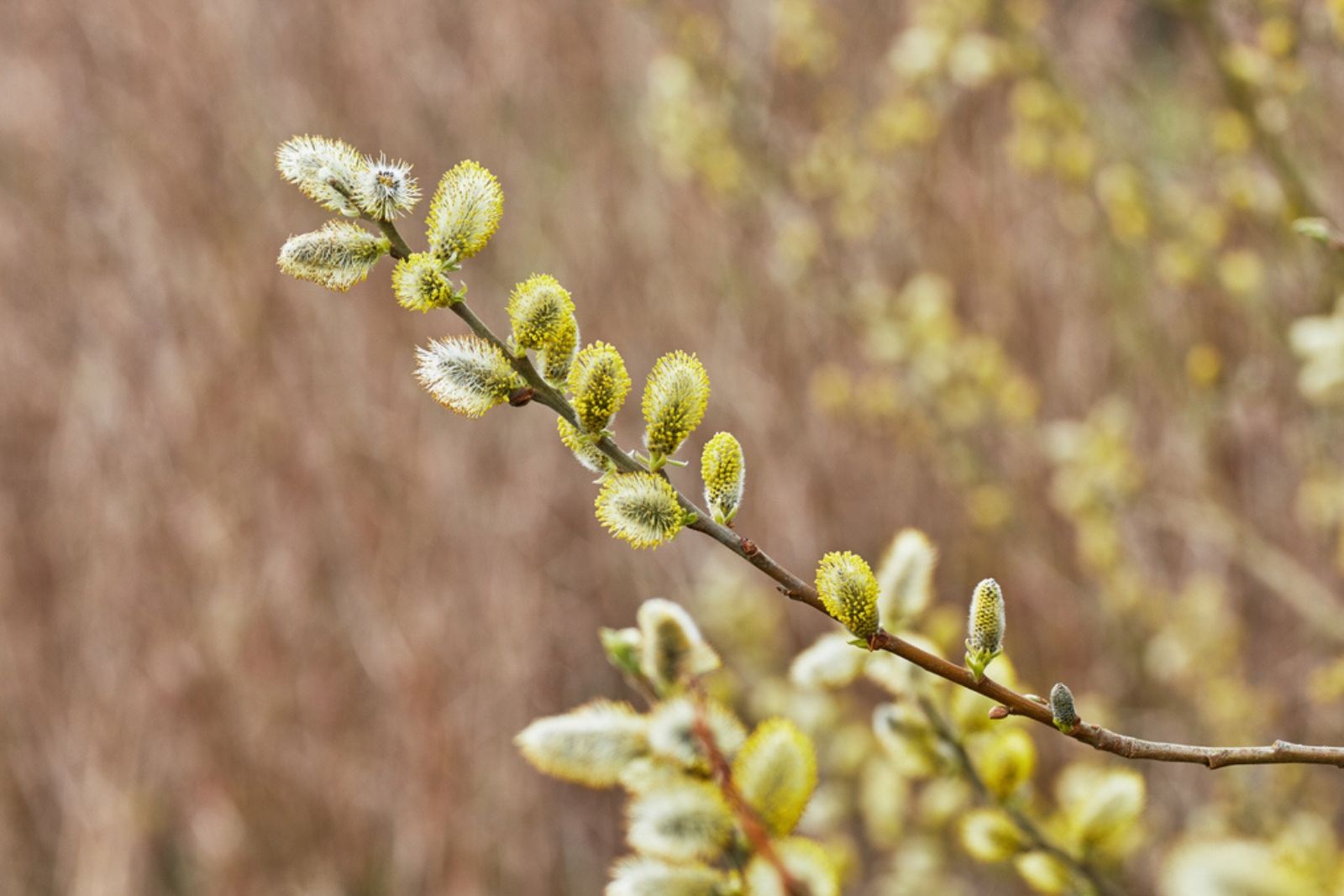
Those broom handles aren’t really fence posts. Each one is a hardwood cutting, a piece of a plant waiting for its chance. The base you push into the soil grows roots, while the buds above ground open into leaves and side shoots.
That’s why the trick works with willow and not just any branch. Willow roots so readily that a long, dormant whip turns into a living plant instead of drying out into a stake. Where two rods stay pressed together, they may even graft into one over time.
New shoots can then be guided back through the original diamonds. Each year the screen grows fuller, and the woven pattern stays in view. But it all starts with how those first 25 rods go into the ground.
Weaving the first 25 diamonds
The work happens from winter to early spring, while the rods are still dormant and flexible. You’ll need 25 fresh, straight rods about 6.5 feet long, plus soft garden twine, some mulch and a steel dibble or narrow planting bar.
First, mark 13 spots along a straight line, each 10 inches apart. Then add a mark midway between every pair. That gives you 25 planting points over roughly 10 feet.
Clear away the grass and make each hole at least 12 inches deep. The first 13 rods go in at a 45-degree angle, original base down in the soil, tips leaning right. The other 12 fill the gaps, leaning left this time.
Now comes the weaving. Where the rods cross, bend each one over one neighbor and under the next. Tie the first few crossings loosely, then firm the soil around every base. Water deeply and spread about 2 inches of mulch along the row.
Your first lattice should stand around 4 feet high. That leaves plenty of room for the new shoots to rise above the diamonds.
The season the diamonds turn green
That first year, most of the action happens underground, where the roots are growing. Keep grass from crowding the bases. In a dry spell, water the row deeply rather than often. If a rod never shows any growth, swap it out during the next dormant season.
As the fresh shoots lengthen, tuck them into the empty spaces instead of letting them sprawl outward. Keep each one heading up or sideways, because shoots pointed sharply downward may die back.
Bigger changes are easiest in winter, when the stems are bare and bendable. Over the next few seasons, the leaves soften the openings while the woody lattice grows bolder. A winter reweave and a light summer trim keep the diamonds crisp, so the row never slides into an untidy hedge.
Pipes, pools and what willow won’t hold back
Before you mark the row, check what local fence rules allow and find out where buried services run. Willow roots can clog and damage drain lines, so keep the row away from septic fields, sewer lines, water pipes and foundations.
In winter, the leaves drop and the lattice shows through. This isn’t secure fencing for pools, pets, children or livestock: when safety or year-round privacy matters, use a code-compliant barrier.