You settle into the living room with a cup of coffee, turn up the thermostat, and still feel a chill around your ankles. The ceiling fan overhead rarely gets a second thought once summer ends, even as your heating bill climbs and the thermostat creeps higher.
In short
- In winter, your ceiling fan should spin clockwise when you look up at it from below.
- Flip the small reverse switch on the fan’s motor housing to change its direction.
- Run the fan on low so warm air near the ceiling moves back down into the room.
- Running a fan in reverse can cut winter energy costs by as much as 15%.
Your ceiling fan can bring warm air down
View in gallery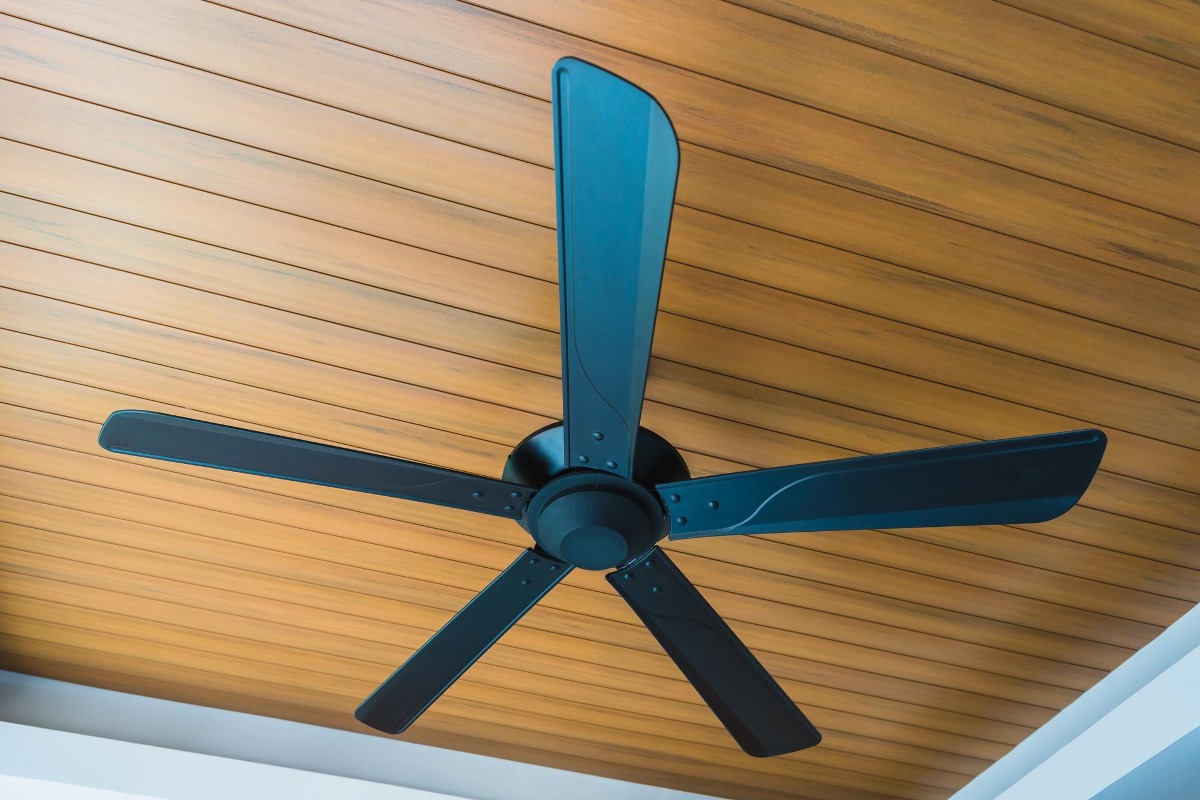
You’re settled on the couch, the heat is on, and the room still feels cooler than you’d like. Look up. Some of the warm air you want around your chair has risen toward the ceiling, and your ceiling fan has a way to move it back through the room.
The winter setting is clockwise, as seen from below. At low speed, the blades draw air gently upward. That movement sends warm air gathered near the ceiling outward and down into the space where you’re sitting. ENERGY STAR recommends this clockwise, low-speed winter setting to bring warmth into the part of the room you use.
It’s a different job from the one you give the fan in summer. Then, counterclockwise rotation creates a downward breeze that helps you feel cooler. In winter, you want the warm air to circulate without feeling a draft on your face.
The switch changes the direction
Once the fan has stopped, look at the motor housing, the part above the blades. Find the small reverse switch and flip it. Turn the fan back on at its lowest speed, then stand beneath it and watch the blades.
From where you stand, clockwise is the winter direction. You can also check the movement across the side nearest you: blades traveling from left to right are moving clockwise. That quick look tells you whether the switch did what you wanted.
When warm weather returns, flip the direction back to counterclockwise. The fan stays in the same place, but its job changes with the season. You use the downward breeze in summer and the gentle upward flow in winter.
The warmth reaches where you sit
Think of the warm air above you as heat you’ve already paid to produce. Moving it down helps make the room feel more comfortable where you actually spend your time. That can give you room to lower the thermostat while staying comfortable, which is where the possible savings come in.
This small adjustment has a wide reach. A Lawrence Berkeley National Laboratory study estimated that 239 million ceiling fans are installed in U.S. homes. For you, though, it comes down to one switch, one low setting, and a warmer-feeling spot on the couch.
The limit
The 15% figure is a possible reduction in winter energy costs, not a promise that your bill will drop by that amount. Your savings depend on whether the redistributed warmth lets you lower the thermostat. If your fan has no reverse switch, this particular adjustment is not available; and if you run the fan fast enough to feel a chilly breeze, it is no longer doing the gentle winter job described here.