You check the backyard feeder on a chilly morning, looking for the bright yellow goldfinches that seemed to own it all summer. Other birds are still crowding the perches, and you’re still filling the feeder, so where did that familiar flash of yellow go?
In short
- Goldfinches remain in northern areas through winter when food is available.
- Their bright yellow fades to brown or olive-brown, making them easy to miss.
- Nyjer seed draws goldfinches to a backyard feeder.
- Sunflower chips are another favorite feeder food.
Goldfinches wear different colors
View in gallery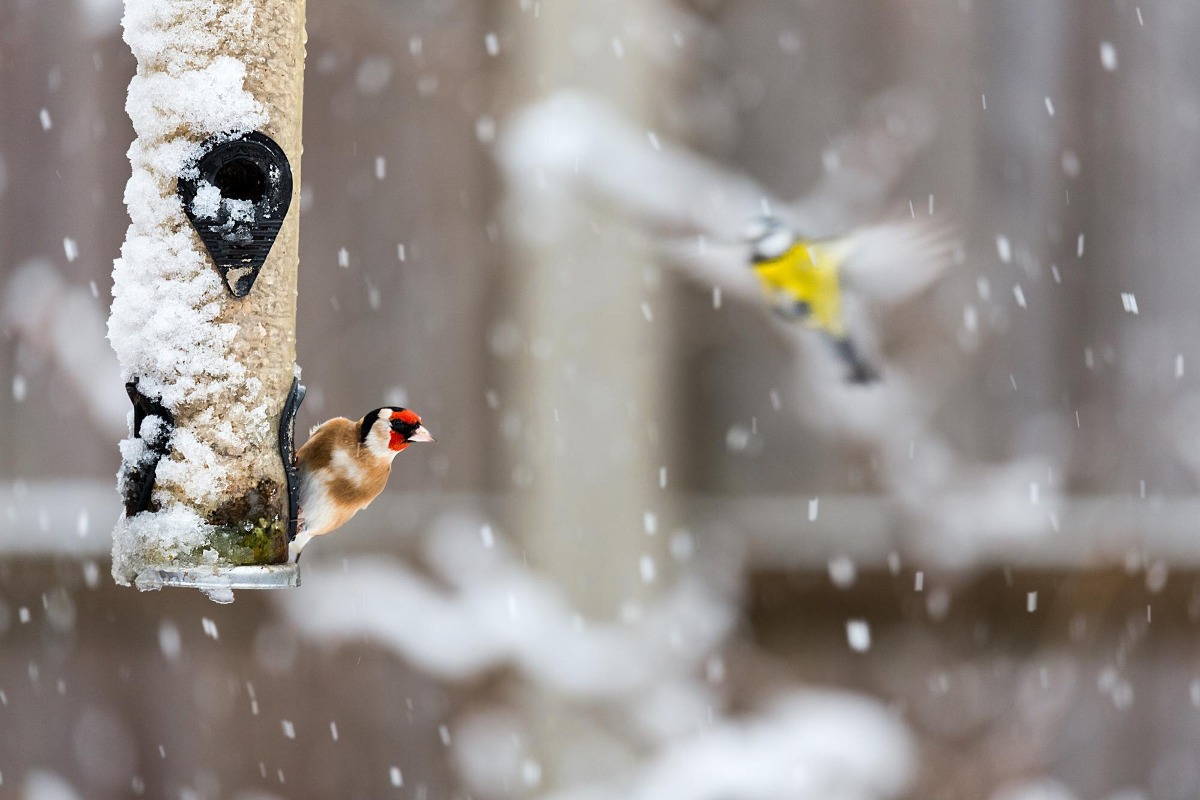
You look out at the feeder from your kitchen and see no flash of yellow. Then a small brown bird lands, and you almost pass right over it. Winter goldfinches look so different from the birds you watched in summer that seeing one can feel like meeting it all over again.
The male’s vivid breeding yellow gives way to a much quieter winter coat. Females grow duller, too, and both sexes look brown or olive-brown without streaks. Against bare branches and dried plants, that change makes them much less obvious to you.
Look beyond color. The Cornell Lab of Ornithology points to the goldfinch’s short, cone-shaped bill, wing bars and pointed, notched tail as useful clues in winter. Those familiar details are still there when the yellow is gone.
Goldfinches change their body feathers twice a year, once in late summer and again in late winter. That late-summer change helps explain the surprise at your window: you are looking for the color you remember, while the bird in front of you is dressed for another season.
Nyjer brings them to the feeder
Once you know what you are looking for, give the birds a reason to come where you can see them. Nyjer is the tiny black seed often sold as thistle seed. It is a particular favorite of goldfinches, and Cornell lists it alongside sunflower seed as a food they regularly take at feeders.
Nyjer also has the kind of richness these small, active birds seek. It is an oilseed, high in fat and protein compared with less calorie-dense choices. A feeder made for small seeds puts that favorite food where you can watch for those quiet winter coats.
If you already have sunflower chips, you have another strong choice. These hulled sunflower seeds are a close second to Nyjer for goldfinches at feeders. The point is not to wait for a yellow bird to reappear in spring. Offer a seed they eat now, then watch the brown birds that arrive.
That tiny seed has a history
Nyjer’s name has its own backyard story. The seed was once sold under the name Niger, and a contest in the mid-1990s gave it the name you see on birdseed bags today. The Wild Bird Feeding Institute received the registered Nyjer trademark in December 1999.
The seed also goes through a required heat treatment before imported Nyjer is sold as birdseed in the United States. That USDA-regulated process stops the seed, along with weed seeds mixed into it, from growing. So the little black seeds you pour into a feeder have already had quite a journey before a goldfinch finds them.
The limit
Nyjer draws goldfinches, but it does not guarantee that the same birds you saw in summer will return. American goldfinches are irregular, short-distance migrants, and more remain in northern areas when food is plentiful. A new feeder may take time to attract visitors, and Pine Siskins or House Finches may eat the Nyjer, too. If the yellow birds seem absent, keep an eye out for their quieter winter colors.