You prep the furniture, tape the baseboards, debate shades for hours, and commit to repainting an entire living room wall. The result often feels flat, like something is still missing. Meanwhile, a writer’s mother skipped the big gestures entirely and focused on a spot most guests never notice first. That single brushstroke in a tucked-away corner brought more energy to the room than any accent wall ever could.
Most homeowners assume color impact requires scale. The bigger the surface, the bolder the statement. But the most memorable transformation in Emma Dangel’s family home in Cape Cod came from painting a place you wouldn’t think mattered: the back panel of built-in shelving.
No major project, no furniture rearrangement, no second-guessing a dominant hue. Just one smart placement that changed how the entire space reads.
Where a decorator’s instinct landed in 2009

The family house underwent a full renovation in 2009, then handed over to a decorator friend to finish the interiors. Seventeen years later, Emma Dangel, now a writer for Apartment Therapy, returned and realized the detail that stuck with her wasn’t a sofa or wallpaper.
It was that discreet paint choice her mother’s decorator made inside the built-ins. Designers now call this move the Peekaboo Paint Theory, a technique as understated as it is effective.
Erica Finamore described the approach in a 2026 article for Apartment Therapy: painting overlooked zones of the home with a pop of vivid color. That might mean the back of a closet, the interior of a wardrobe, the underside of a shelf, or even the edge of a door.
The goal is double: create an element of surprise and test bold shades on small, easily repaintable surfaces.
How one pale yellow anchors two rooms
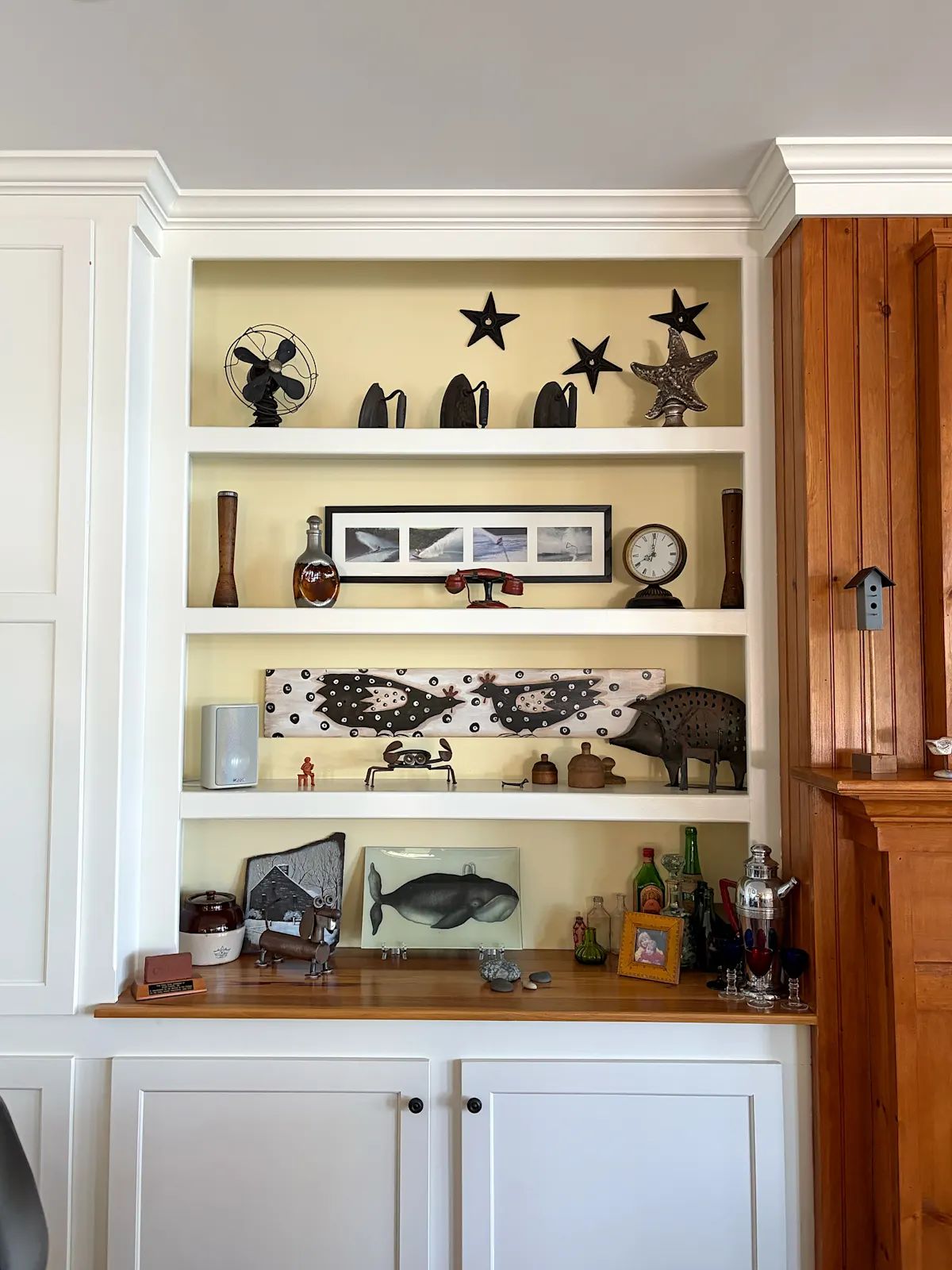
In the Cape Cod living room, the principle plays out on those built-in shelves. The back panel was painted in a pale yellow, echoing the dining room walls, while the molding stayed white. That contrast adds depth and makes each item on display pop forward.
Emma’s mother explained that painting the shelf backs brings out memories of time spent with family, from old attic finds to fun purchases picked up around the peninsula, and she never tires of how everything is framed.
For Emma Dangel, that colored shelf backing does more for the living room than repainting a fresh wall ever would. It ties the living area to the dining room, makes the whole scheme feel intentional, and puts the focus on family objects rather than the paint itself. Designers interviewed by Apartment Therapy see it as a simple way to personalize interiors without a big construction job or a hefty budget.
The eye lands on your favorite pieces first, supported by that colored backdrop. That is the trick.
Why this move stays low-risk and reversible
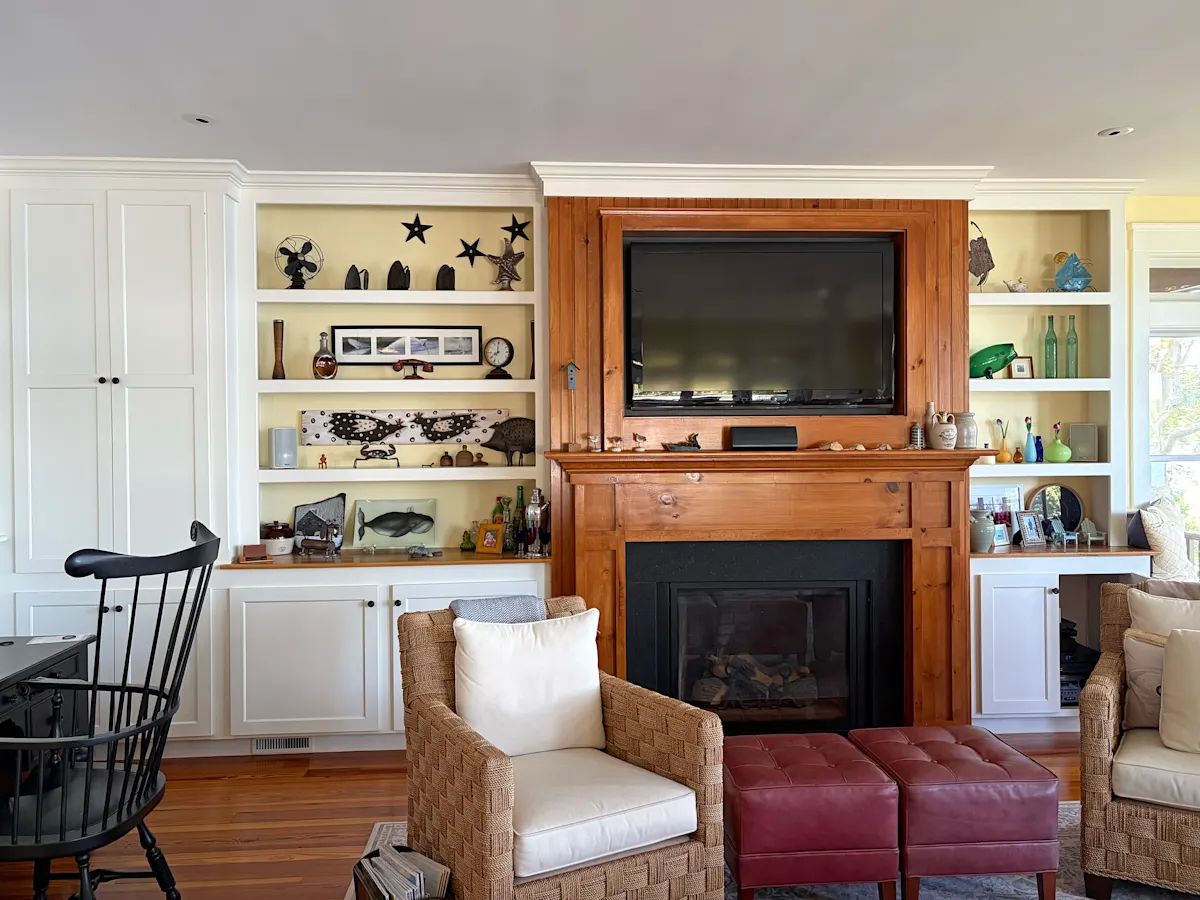
Another advantage often cited: this technique remains reversible. A closet painted inside can be repainted white very quickly if tastes shift or if you’re moving out of a rental. It also lets you test a strong color you’d never dare spread across four walls, slipping it behind books, dishes, or baskets in small doses. Your gaze settles on your prized items, held up by that colored ground.
In Emma Dangel’s home, the Peekaboo Paint Theory centers on those built-in shelves, but the possibilities don’t stop there. Articles from Apartment Therapy and Ideal Home mention the inside of cabinets, the back of cupboards, and even door edges. At your place, the principle stays the same: pick a small hidden or secondary surface and give it a surprise shade.
For color choice, the Cape Cod example shows a soft option: repeat the hue from an adjoining room to create a thread, like that pale yellow echoed between dining room and living room. Experts quoted by paint manufacturer Dulux lean instead toward strong contrast to trigger the surprise effect when you open a cabinet. A simple piece of medium-density fiberboard painted and placed at the back of a shelf is already enough to try this idea at home.
The one thing worth remembering
The problem isn’t that homeowners lack ambition with paint. It’s that they aim at the wrong surface. A big wall demands commitment, perfect lighting, and flawless execution. A shelf back, a closet interior, or a door edge asks for none of that and delivers just as much personality. It keeps the scheme flexible, the risk low, and the focus where it belongs: on the objects that matter to you.
If you only borrow one idea from this approach, make it placement over scale. Paint the spot that frames what you love, not the one that dominates the room. That shift in thinking is what makes a space feel layered, finished, and entirely yours.