

If you own a tired stucco house in Florida, you have probably been told to budget for new windows, new siding, or a full teardown before the place feels current again. The couple who owned this Orlando bungalow heard that advice and ignored it. They hired a paint crew with one plan: paint everything, including the ceilings, the soffits, and the concrete porch floor. The before and after is a quiet lesson in what paint can do when nobody loses their nerve halfway through.

The back wall is a good place to start. The stucco had gone a muddy beige that read as dirty even when it was clean, the sills were pink, and heart-scroll iron grilles sat bolted over every window, the kind of detail that once felt protective and now mostly reads as a relic.
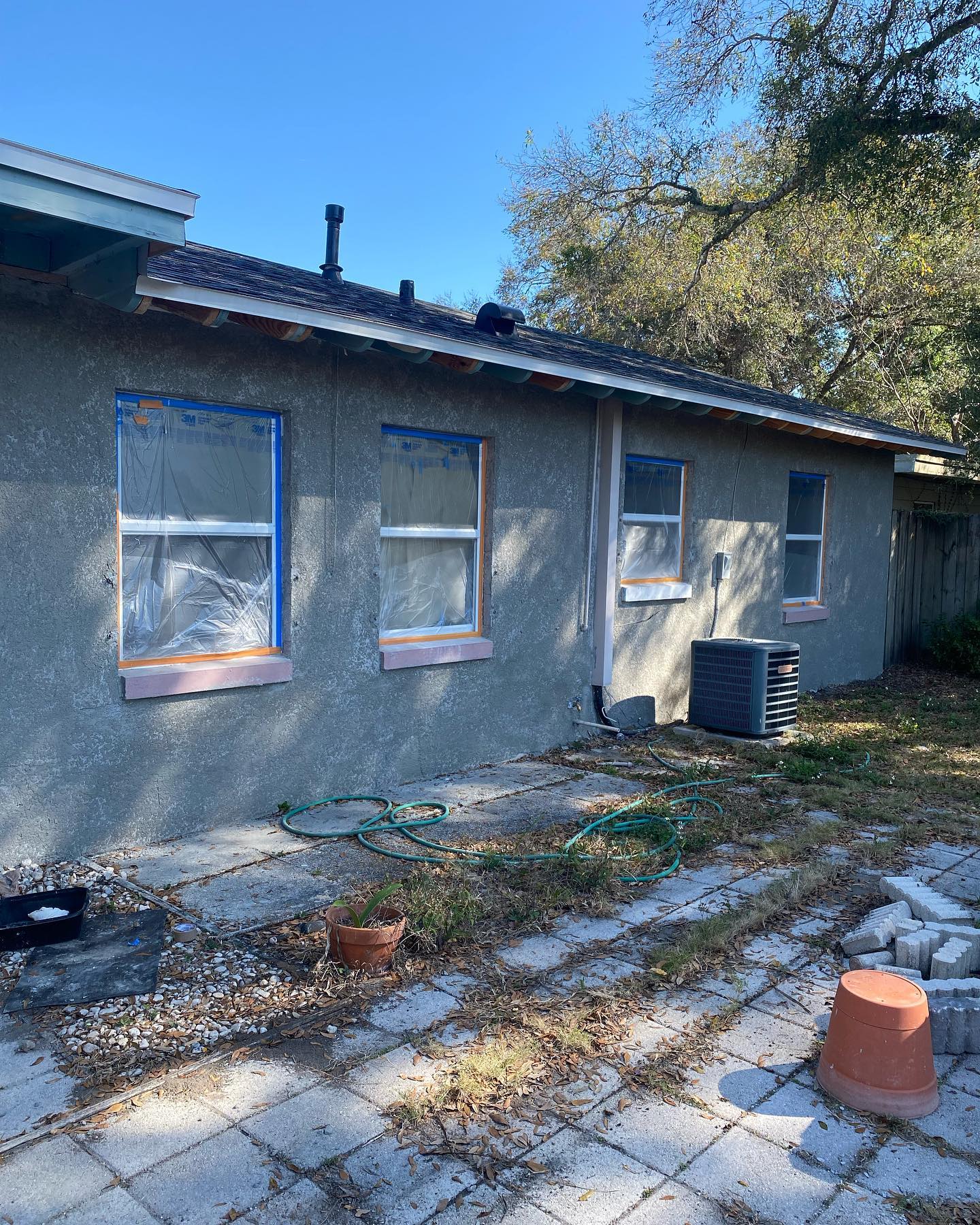
The prep stage shows how much of the house the crew was ready to change. Every window was taped and papered, the AC was covered, and those pink sills were left exposed so they could disappear under new paint.
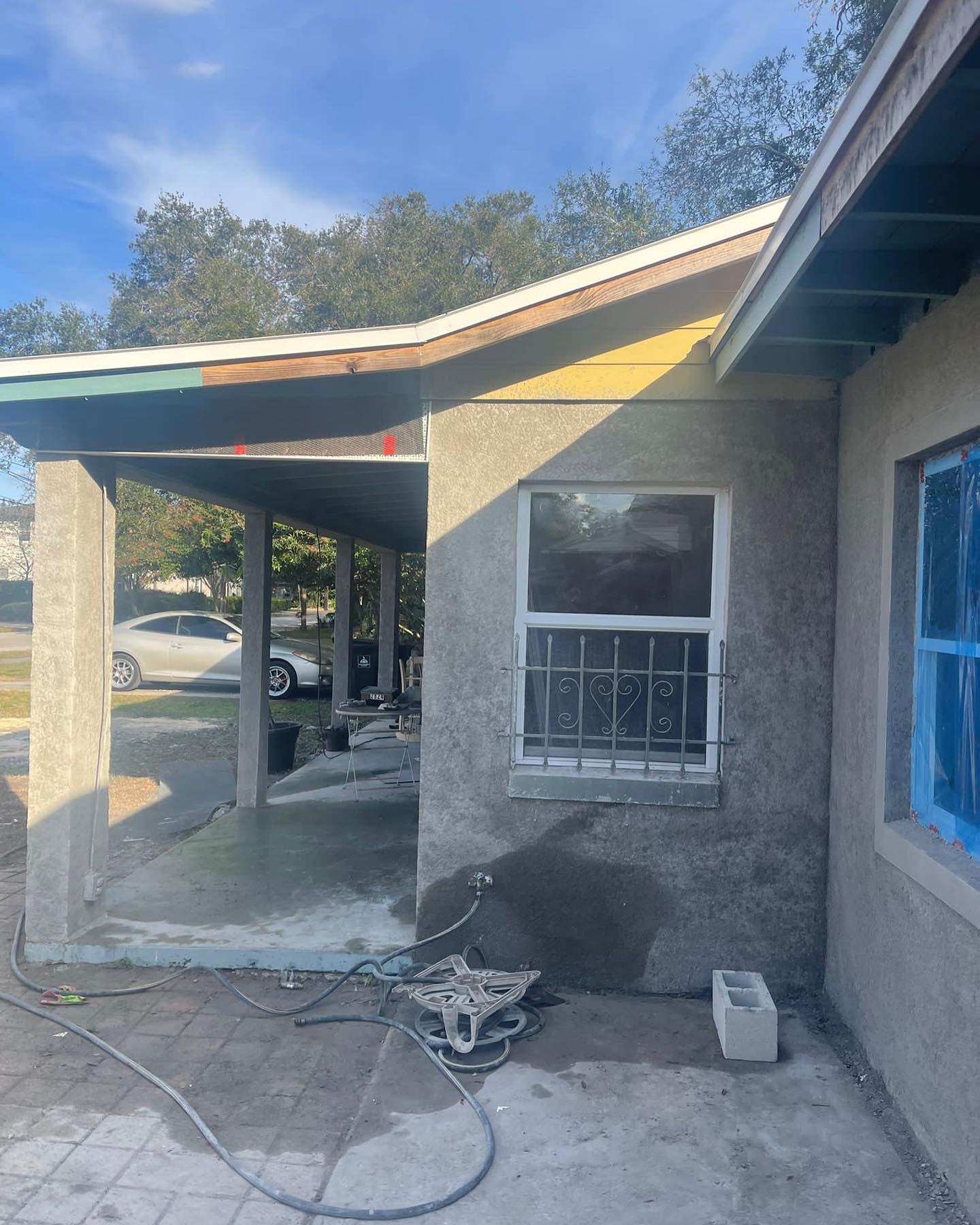
Around at the carport, things got rougher. The ceiling had been patched with newer boards, giving the overhang a half-finished look, and the columns and slab underneath were raw and chalky. You could stand here for twenty seconds and talk yourself into a full renovation.
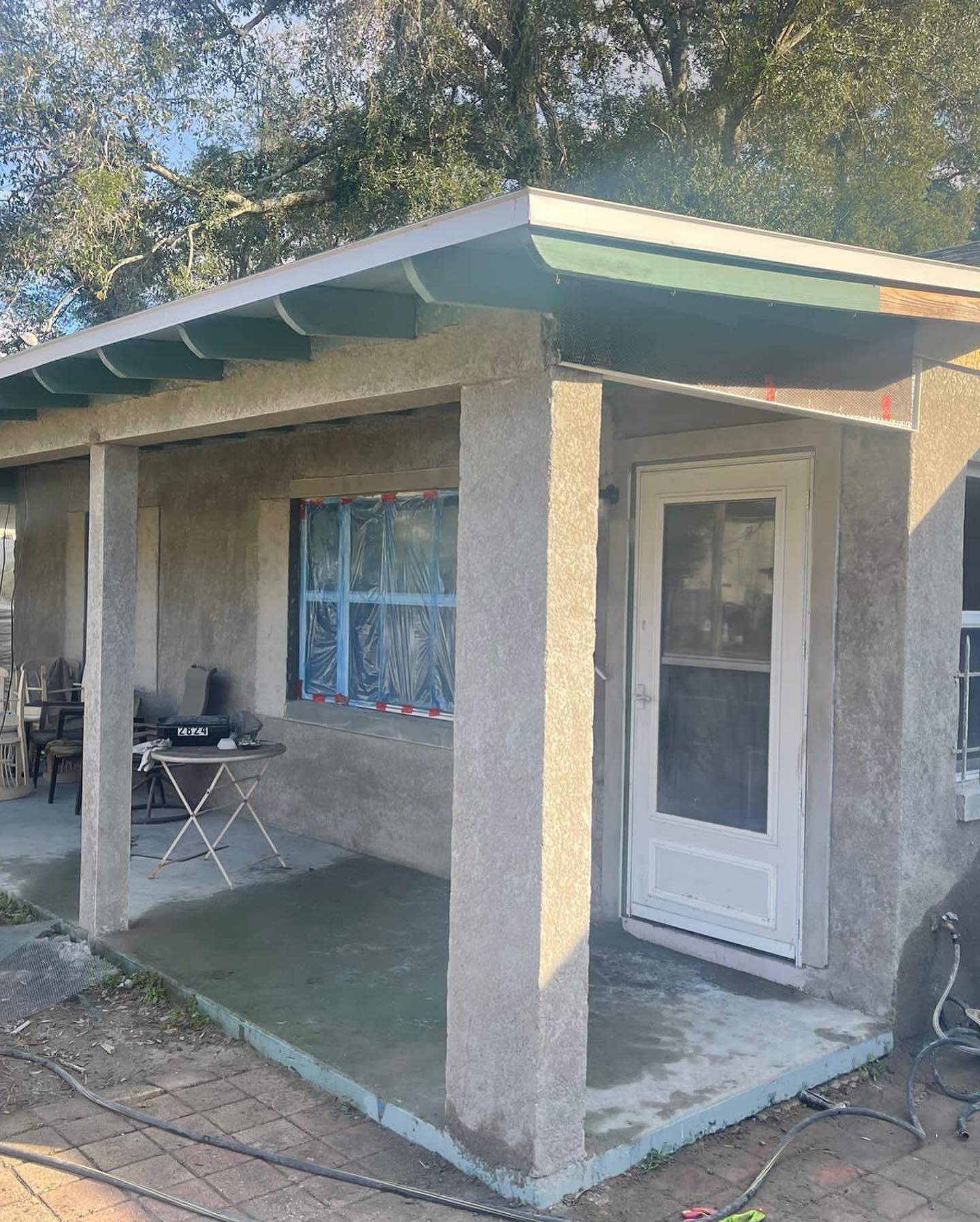
The side porch told the same story in a different palette: teal eaves, raw walls, a plain white side door, a stained slab. Nothing on this elevation matched anything else.
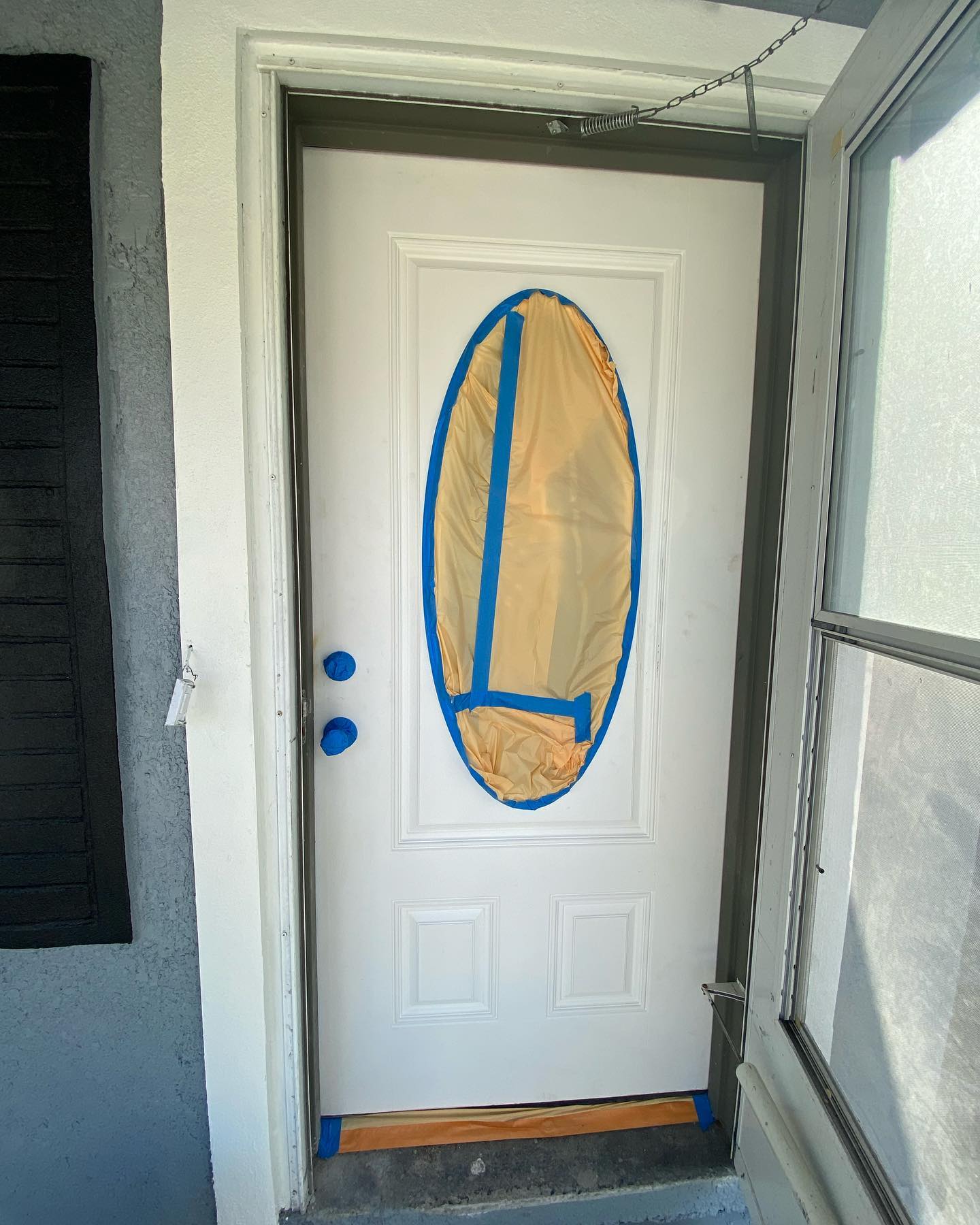
The front door was maybe the quietest heartbreak on the property. A decent builder-grade door with a genuinely pretty oval of leaded glass, but because the door was white and the trim around it was off-white, your eye walked straight past it. The painters taped off the glass and got started.
The one move that changed everything
Instead of picking a body color, a trim color, a shutter color, a porch-floor color, and a ceiling color, which is what most exterior painters are trained to do, this crew picked one cool medium gray and wrapped it around everything. Walls, soffits, ceiling boards, concrete porch floor. Roof to floor, one color, no breaks.
The logic is counter-intuitive but simple. When a house wears five surfaces in five colors, your eye catches on every patch, stain, and mismatched line. When those surfaces share one quiet color, your eye finally gets to read the shape of the house instead of its wounds. The architecture, which was always fine, finally gets to speak.
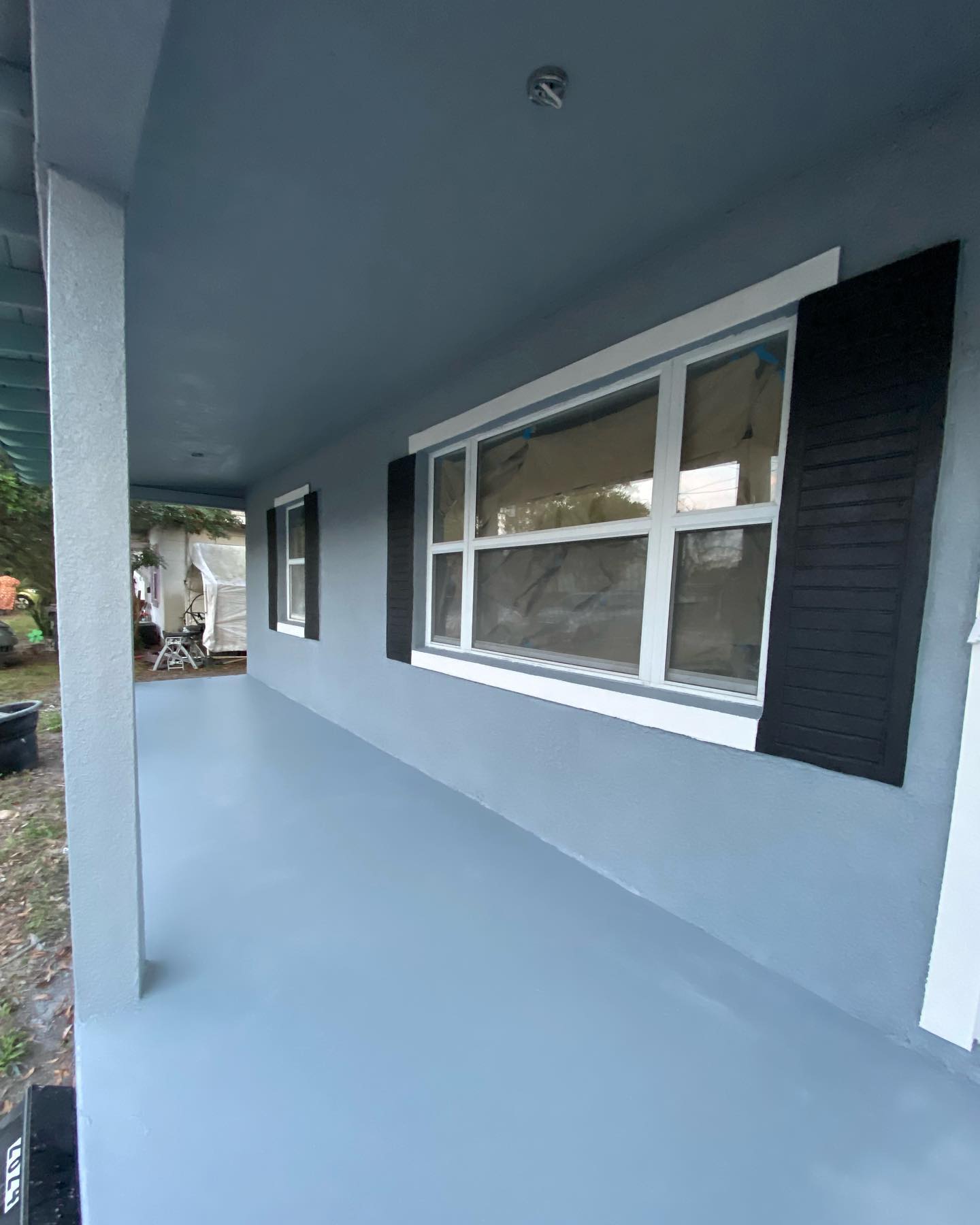
Watch what the gray does for the concrete porch floor specifically. That slab had been the ugliest single surface on the property. Painted the same gray as the walls and ceiling, it now reads as finished flooring, not something to apologize for. If you have ever stared at a stained Florida porch and wondered whether to tile it, this is your cheaper answer.
Two black accents, used like jewelry
With the whole house wrapped in gray, the crew had room to be bold in exactly two places. The shutters went matte black with a heavy wood-grain texture. The front door got the same black, with its leaded-glass oval kept bright white. That was the entire accent palette: two shots of black, used on the pieces that frame your eye as you walk up to the house.
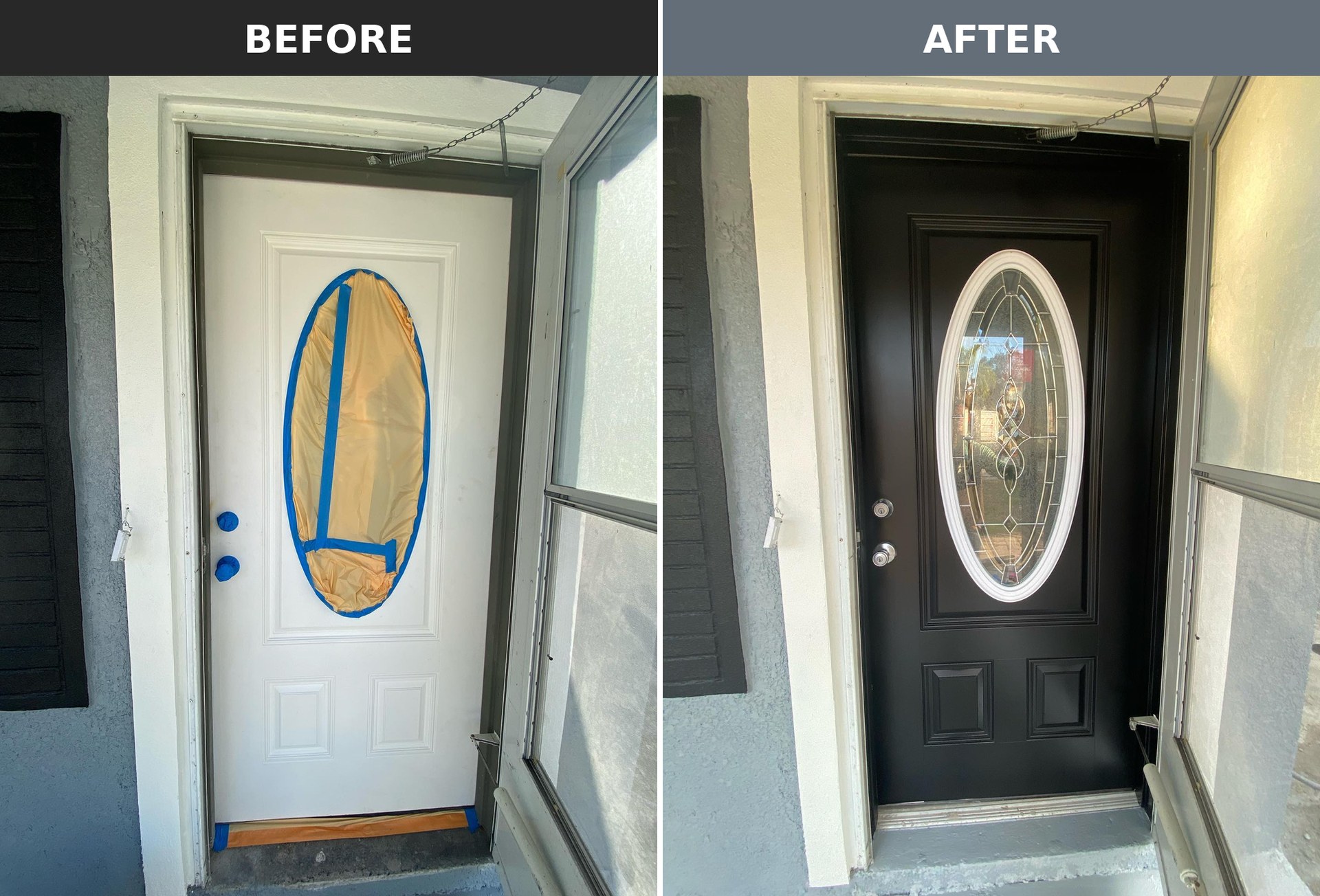
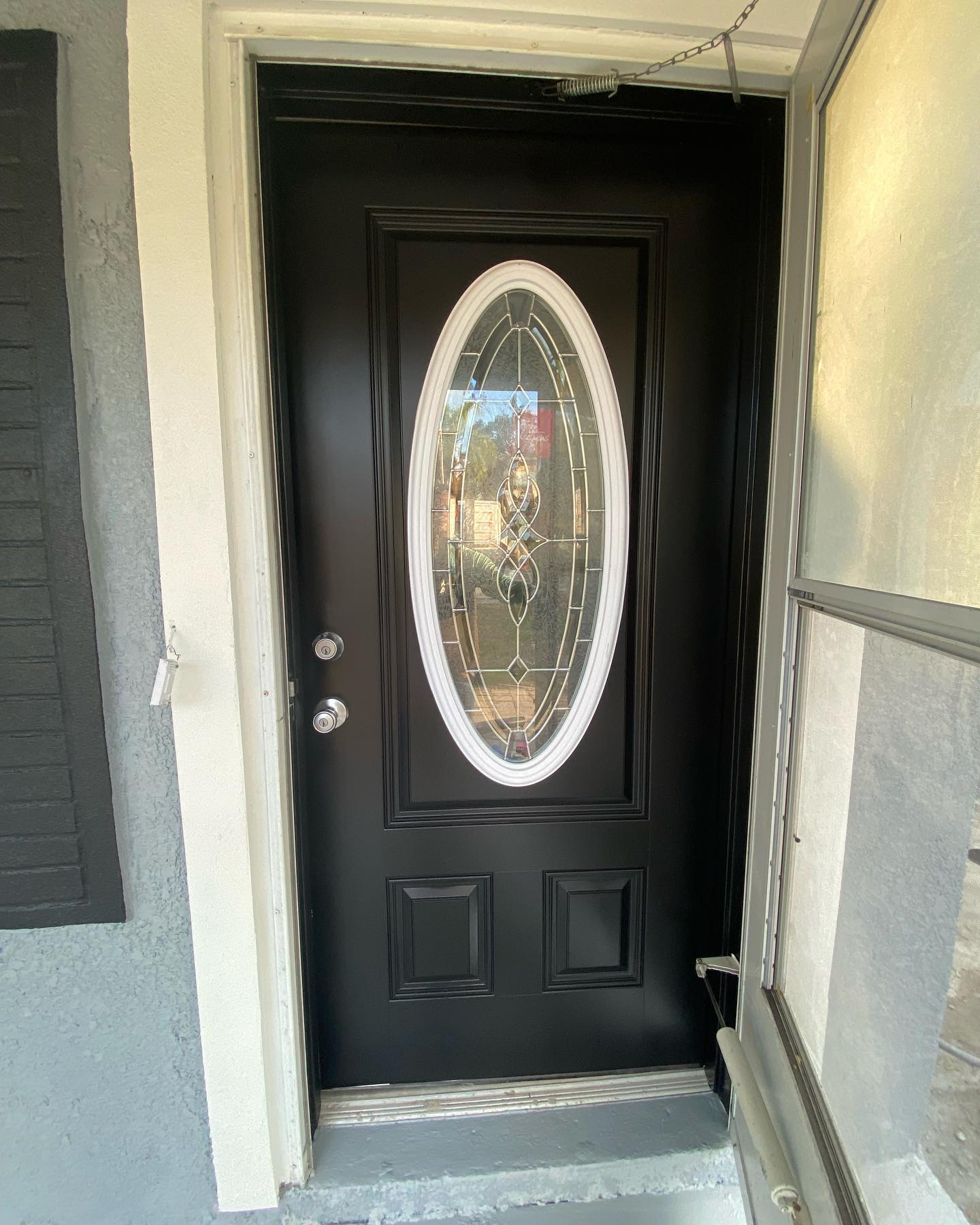
Look at the door now. The leaded oval, which you could barely see on a white door against pale walls, carries the whole personality of the entry. The white trim around the glass reads like a neat frame around a small piece of art.
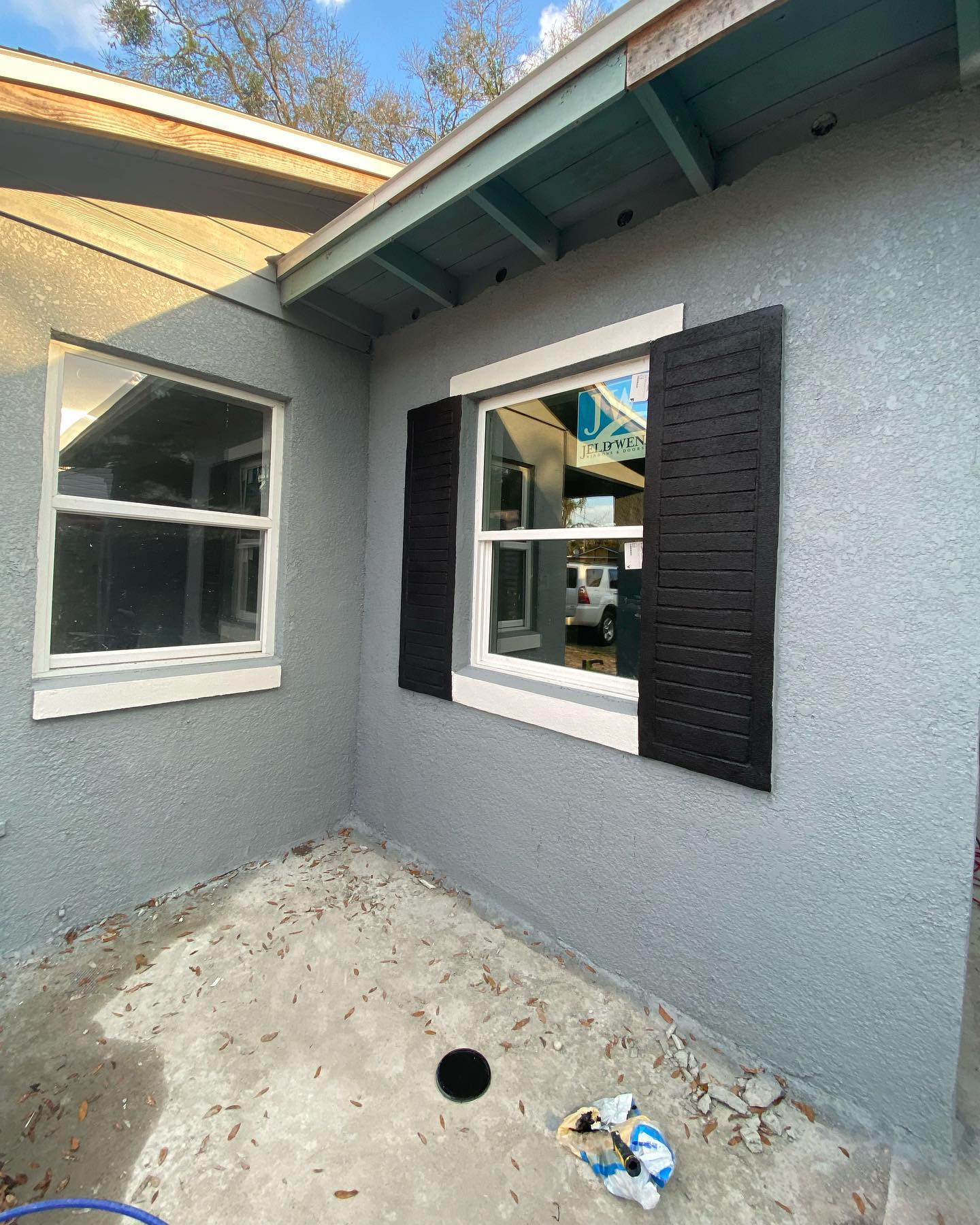
The shutters pull the same trick on every window. On a plain gray wall, each window becomes a small composition: black louvers on either side, white trim around the glass, gray stucco wrapping the rest. Calm and confident, without a second accent color anywhere.
How far the one-color idea travels
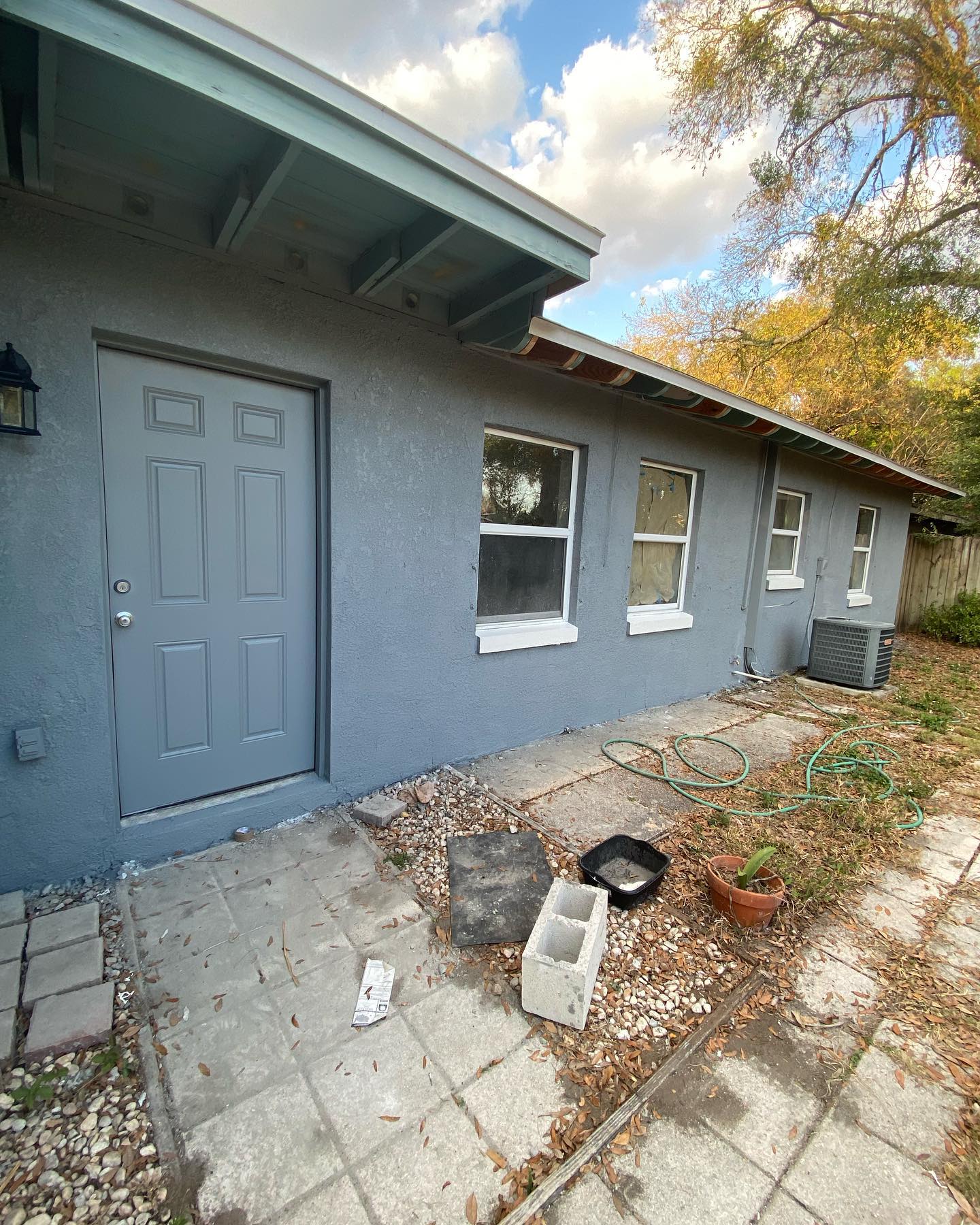
What separates this project from an average paint job is how far the owners let the crew push the one-color plan. Even the side entry door, which could easily have been painted black for visibility, got the same gray as the walls around it. On paper that sounds boring. In practice it reads as a decision somebody made on purpose, which is why it works.
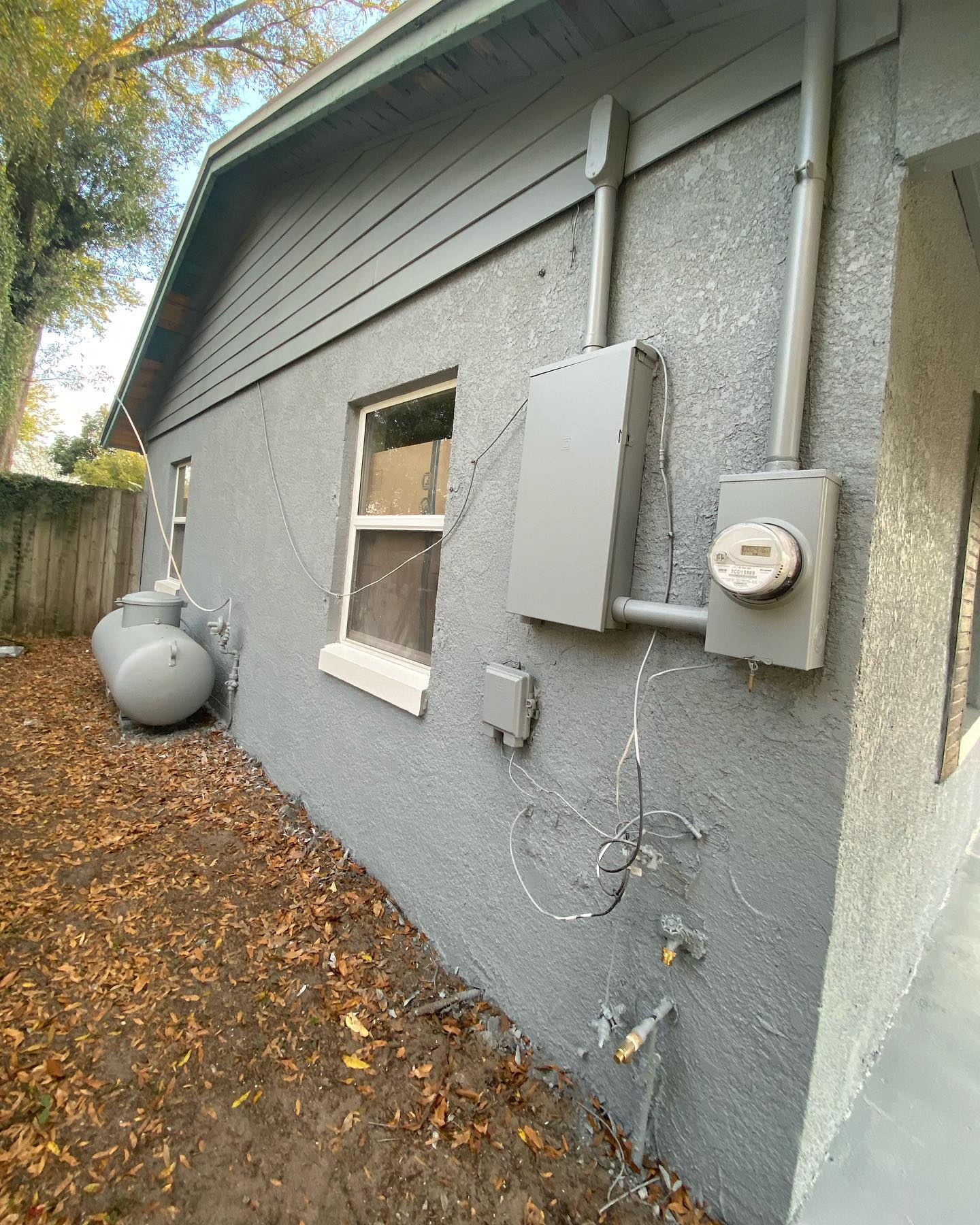
Around the back, the electrical meter, breaker panel, propane tank, and conduit all got painted the same gray as the stucco behind them. Painting over a utility meter looks dramatic, but it is allowed as long as paint stays off the glass face and out of the vents. A wall that used to look like a scrapbook of random metal pieces now reads as one calm plane.
What to borrow for your own house
The real takeaway is not that every Florida bungalow needs to be gray. It is that most tired stucco houses are suffering less from their age and more from the busy, mismatched color schemes somebody put on them decades ago.
Try it mentally on your own house: picture the trim, the sills, the porch posts, and the ceiling all disappearing into the body color. Then picture two accents, used only where the eye needs to land. A few cans of paint, one decision most homeowners would never make on their own, and a house that quietly looks twice its price.