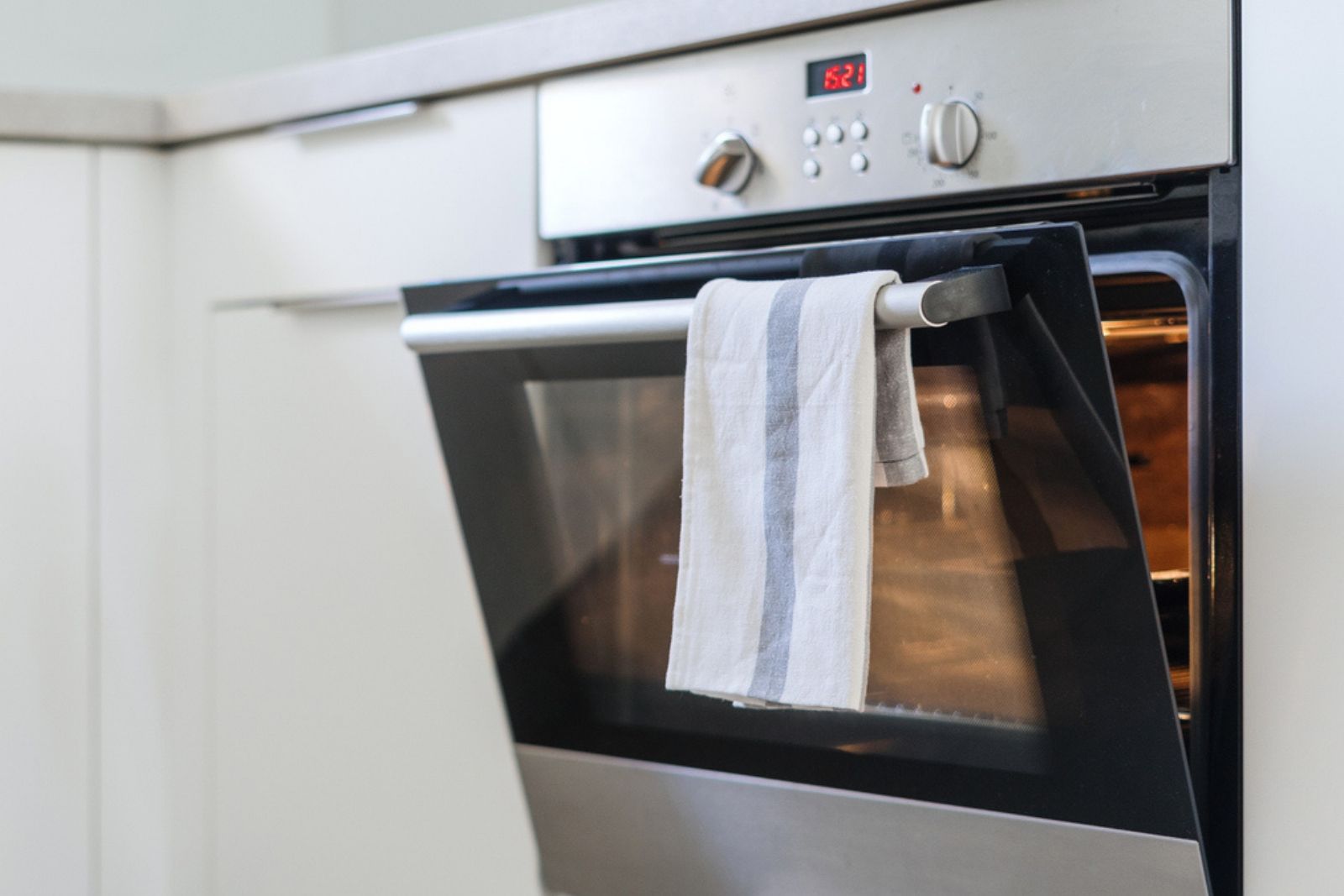
The dish towel draped over the oven handle looks perfectly placed: right there, easy to grab, ready for wet hands. Then the burners come on, and that handy cloth is suddenly hanging from the hottest appliance in the room. It feels harmless, but the handle is the one spot in the kitchen that changes the moment you start cooking.
The moment the burner clicks on
When the range is off, the handle looks like spare storage. Once dinner gets going, it becomes part of an appliance surrounded by hot surfaces, steam and airborne grease. Items that can burn, including towels, should be kept away from the stovetop.
The trouble is where the towel hangs. It sits right under the cooktop, beside an oven door that releases hot air and steam every time you open it. A long corner, or one that shifts when you bump it, can drift toward a burner or a hot pan. Meanwhile, grease mist and food splashes settle into the fabric.
And heat is only half the story. Because that towel is so easy to reach, it ends up doing every little job in the kitchen.
One towel, every job
Think about how that towel spends an evening. It dries your hands, wipes a drip, polishes a plate and sometimes gets grabbed to lift a warm lid. Those jobs shouldn’t share one cloth. Whatever it picked up from the counter or from raw-food juices can travel right back onto clean hands and dishes.
The lid grab is its own problem. A damp towel makes a poor potholder, because the trapped moisture heats up quickly against your skin. The better setup is a towel set aside just for hands, clean dishcloths for the rest, and real potholders for anything hot.
Hand and dish towels also need regular washing. That’s much easier to keep up with once each cloth has one job and its own place to dry.
A rail of its own by the sink
That place is beside the sink, outside the cooking zone. A wall-mounted bar, an over-cabinet rail or a freestanding rack all work. Hang the towel at full width so air reaches both sides, instead of folding it over several times or bunching it on a knob. If your sink cabinet sits right next to the range, put the rail on the far cabinet end or a nearby wall.
Set up at least two towels: one for clean hands, one for drying clean dishes. Counters get their own washable cloth, and it goes straight to the laundry after it touches raw meat juices. Hidden paper towel storage can keep disposables near the sink for greasy spills, so the cloth towels keep their own jobs.
After each use, the towel goes back on its rail, spread flat. Swap in a fresh pair whenever one stays wet, smells, looks dirty or lands on the floor. Wash them according to the care label, and let them dry completely before they go back up.
When the heat comes on, the handle stops being storage
A cool oven lowers the immediate fire risk, but the habit is easy to forget once the heat comes on. While cooking, never use a damp towel as a potholder, cover an oven vent or leave fabric touching the appliance.
Oven layouts differ, so check your manual for vent locations and warnings. If no rail fits safely away from the range, a freestanding sink-side rack does the job.