She had already posted the dresser. Reddit had already told her she nailed it. The gray body was sharp, the dark top was moody and expensive, and the comments were full of words like “stunning” and “what paint did you use?”
By any sane person’s measure, the flip was done.
Then she walked past it one morning and something still felt off.
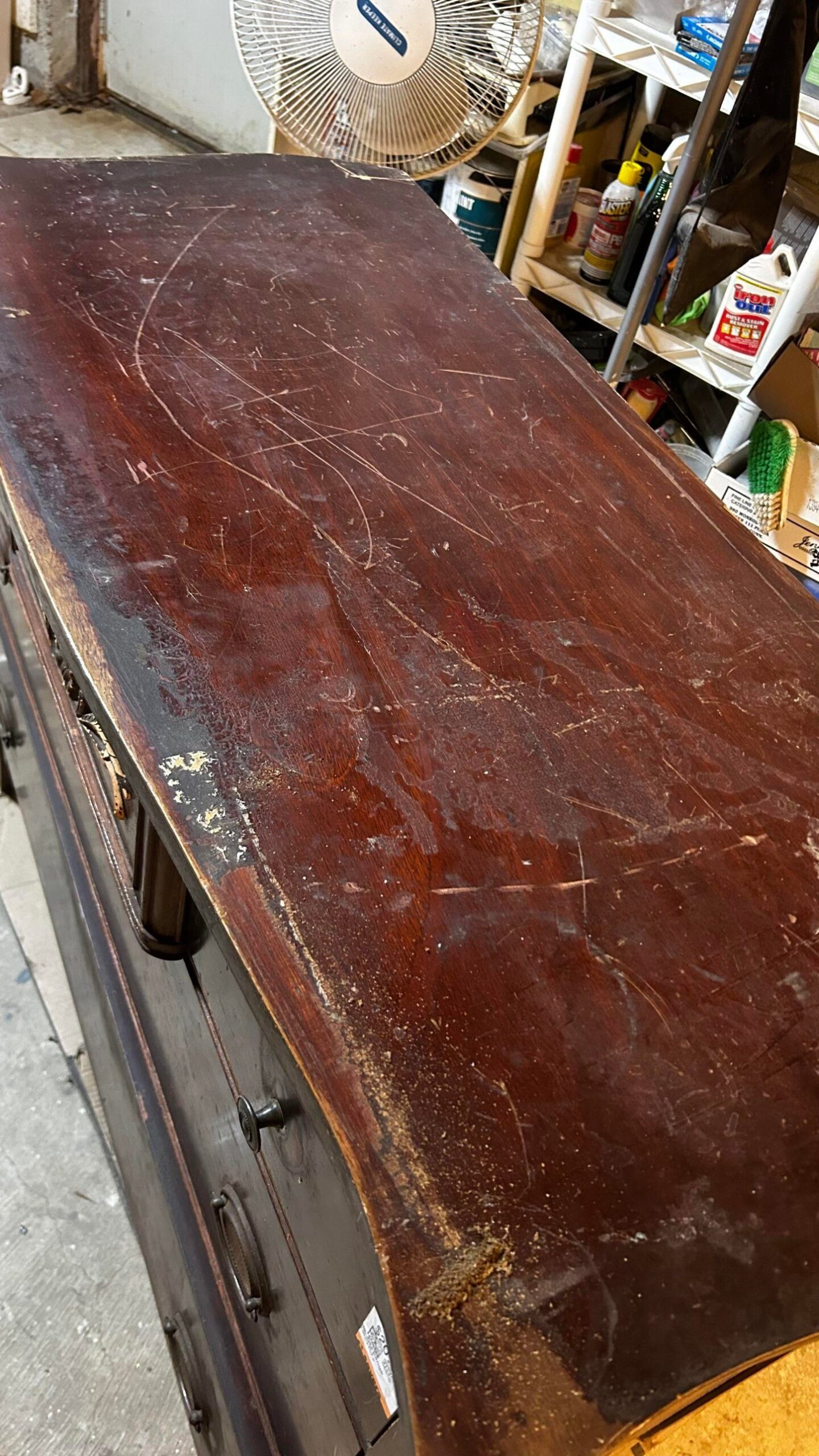
The $20.99 basement rescue
Back up a few weeks. The dresser came home with a bright orange $20.99 sticker slapped on the side. It had been living next to a boiler, propped on a flattened cardboard box, surrounded by copper pipes and plumbing magnets. The kind of corner where good furniture goes to be forgotten.
But the bones were there. A classic 1940s American bow-front chest with a carved shell-and-leaf center drawer, two little flanking drawers up top, two deep drawers below, fluted side columns, and delicate bracket feet. Nothing being built today has this profile for twenty bucks.
The top, though, was a horror show. Deep gouges, black burn rings where something hot had sat too long, white blooms from water damage, and patches where the finish had cracked into alligator skin. Someone had clearly used this thing as a workbench, a hot plate, and a spill zone for decades.
So the plan was the obvious two-tone: paint the body a quiet color, strip and restain the wood sections where the carving actually mattered, keep the original brass pulls because new reproductions never land right on an old piece.
Round one: dark Kona on top, olive sage on the body
She mixed a soft, dusty olive for the body. For the wood, she went with Kona. If you have ever stained anything, you know Kona. It is one of the darkest stains sold anywhere, basically black with a whisper of brown.
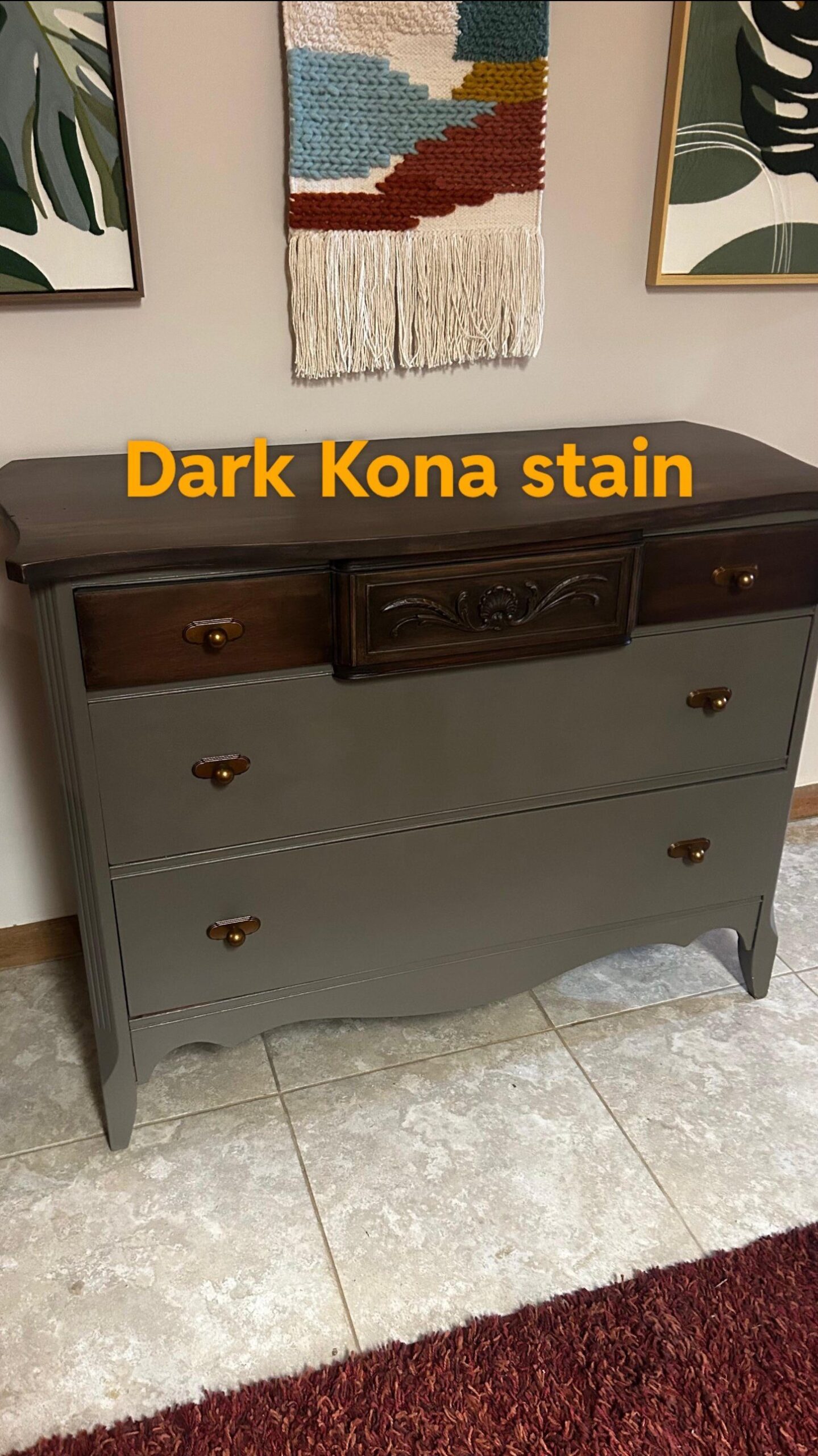
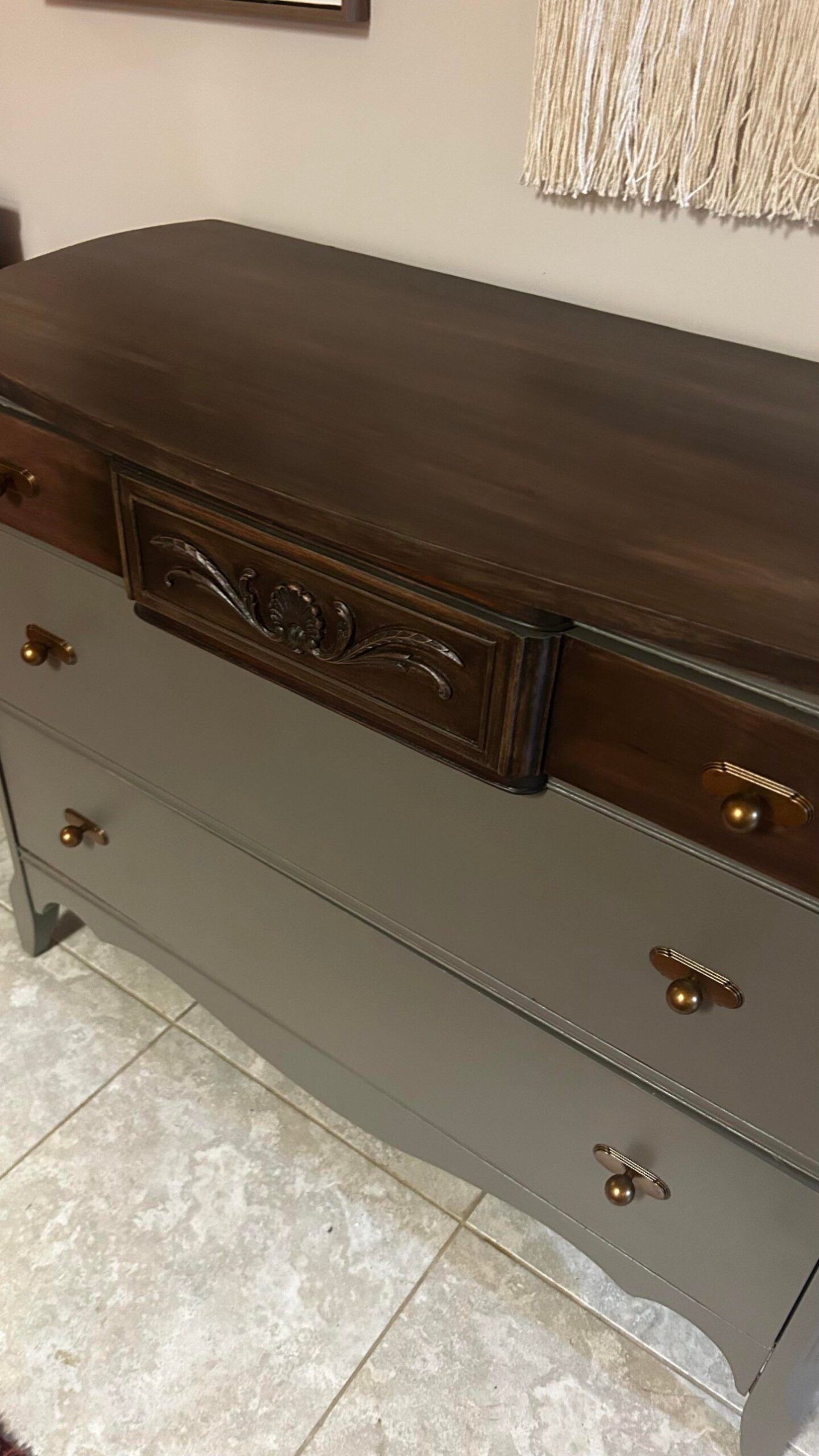
The reveal landed. The before-and-after was objectively a huge glow-up.
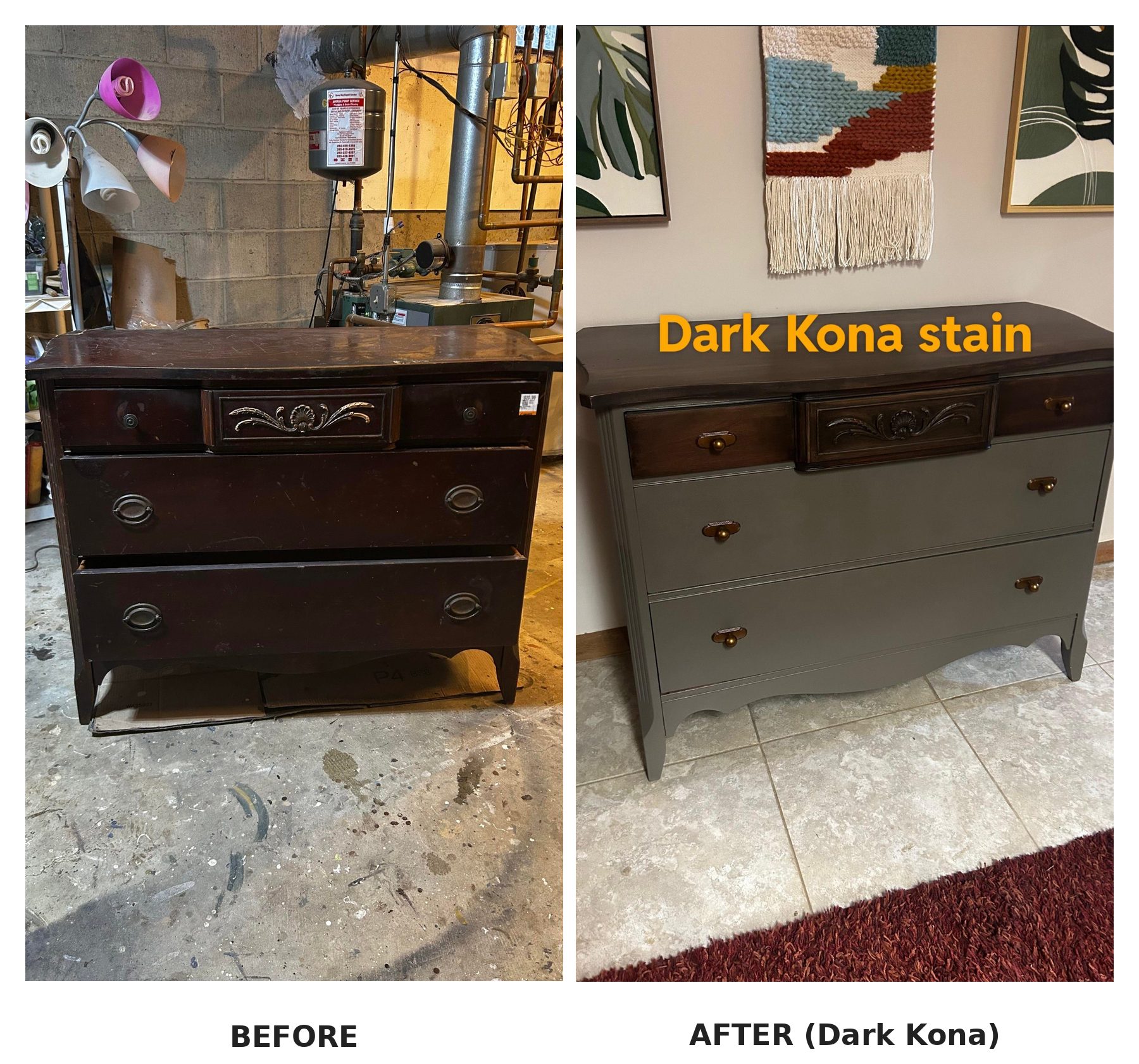
Why her gut kept pulling at her sleeve
Here is the thing nobody wants to say when a flip gets praised: sometimes the praise is really for how much better it looks than before, not for how great it actually is.
Sit with the Kona version for a minute. The top is so dark it stops looking like wood and starts looking like a slab of black laminate. All that beautiful carving in the center drawer? Lost. Shadows swallow it. Those graceful shell curves she was supposed to show off are basically invisible.
The olive body gets dragged down with it. On its own, that sage has a dusty, lived-in quality to it. Set it next to near-black wood and it goes cold, almost steely, and suddenly it isn’t sage anymore, it is just gray. The brass pulls, which should have been the warm little thread tying the whole piece together, float there with nothing to grab onto.
The dresser looked dramatic. It also looked about ten years out of style. Dark stain plus cool gray paint was the painted-furniture handshake of the mid-2010s. That wave crested and rolled back years ago. Right now the whole market is leaning into warmth, honeyed wood tones, and soft greens, and anything cold-leaning dates itself the second you walk into the room.
She did not have to articulate all that. She just knew.
So she stripped it. Again. By hand.

Round two: Minwax Antique Walnut, nothing else changed
If you have never used chemical stripper, picture a greasy oatmeal-colored sludge that eats finish down to raw wood and smells faintly like a bad decision. Doing this once is a lot of work. Doing it a second time on a piece you already finished is a whole act of faith.
The new pick was Minwax Antique Walnut, a mid-brown with honey and amber under it. The color of an old leather belt that has been loved for twenty years. Nothing else about the dresser changed. Same olive body. Same brass pulls. Same floor, same wall, same light.
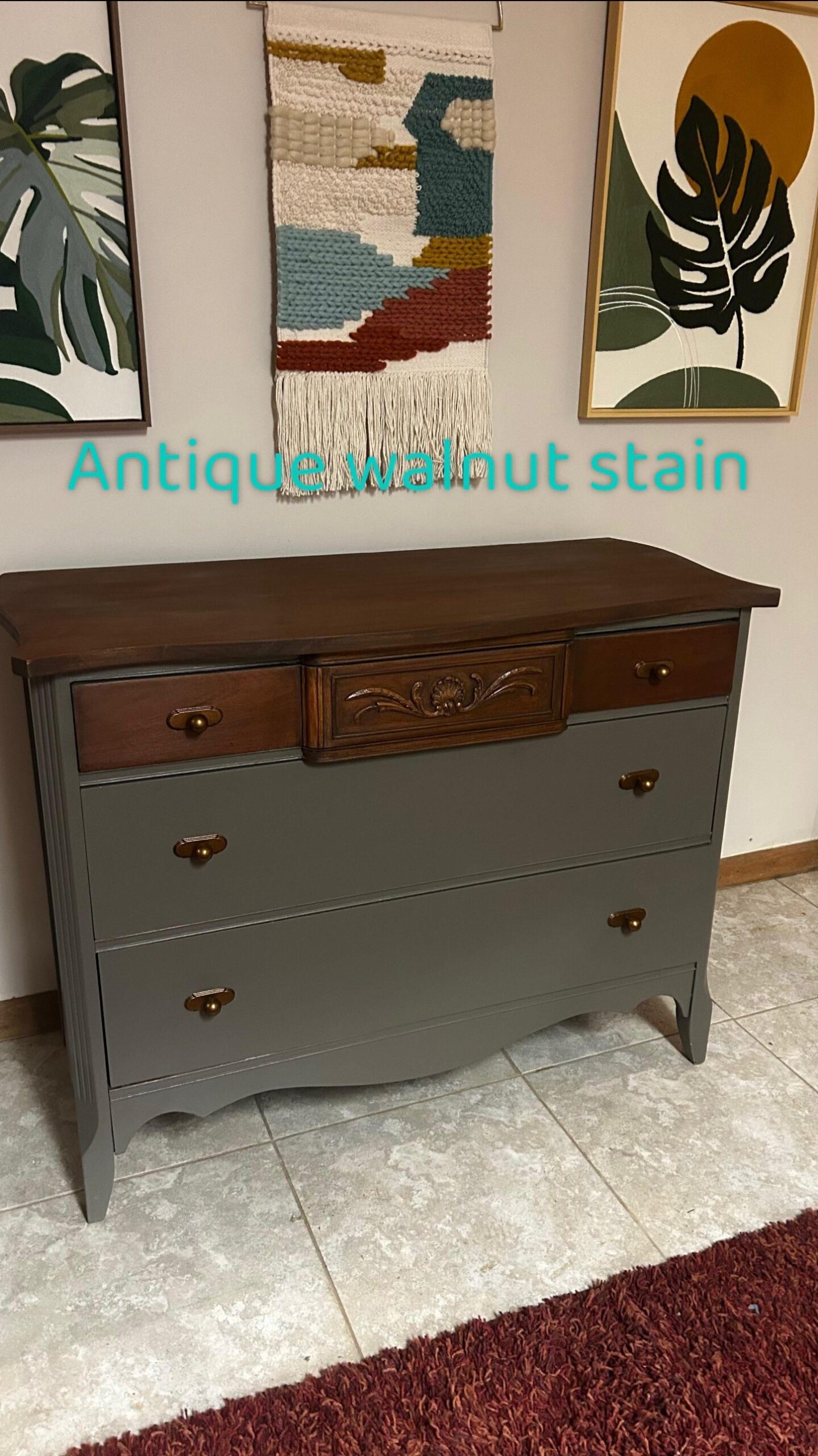
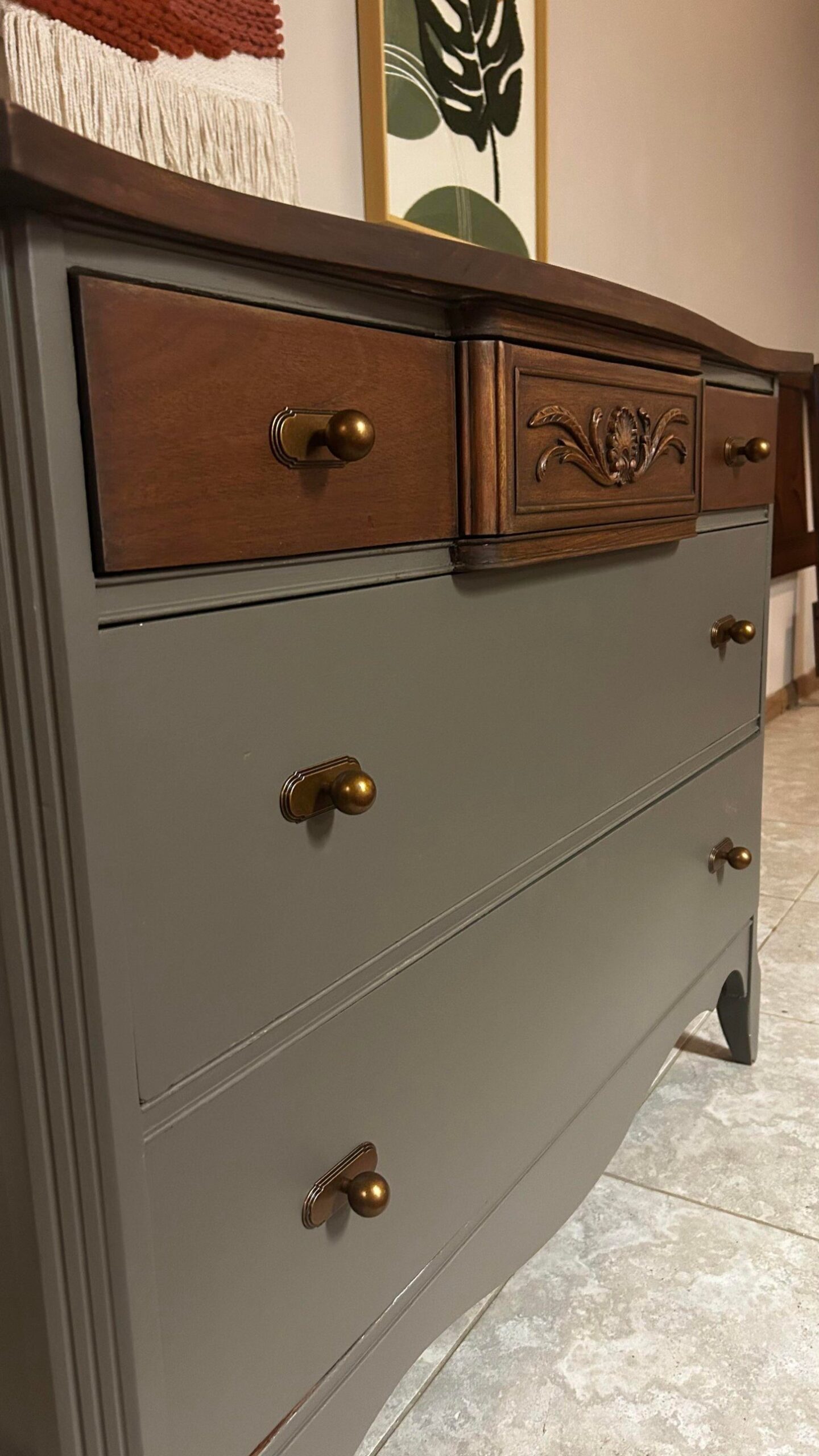
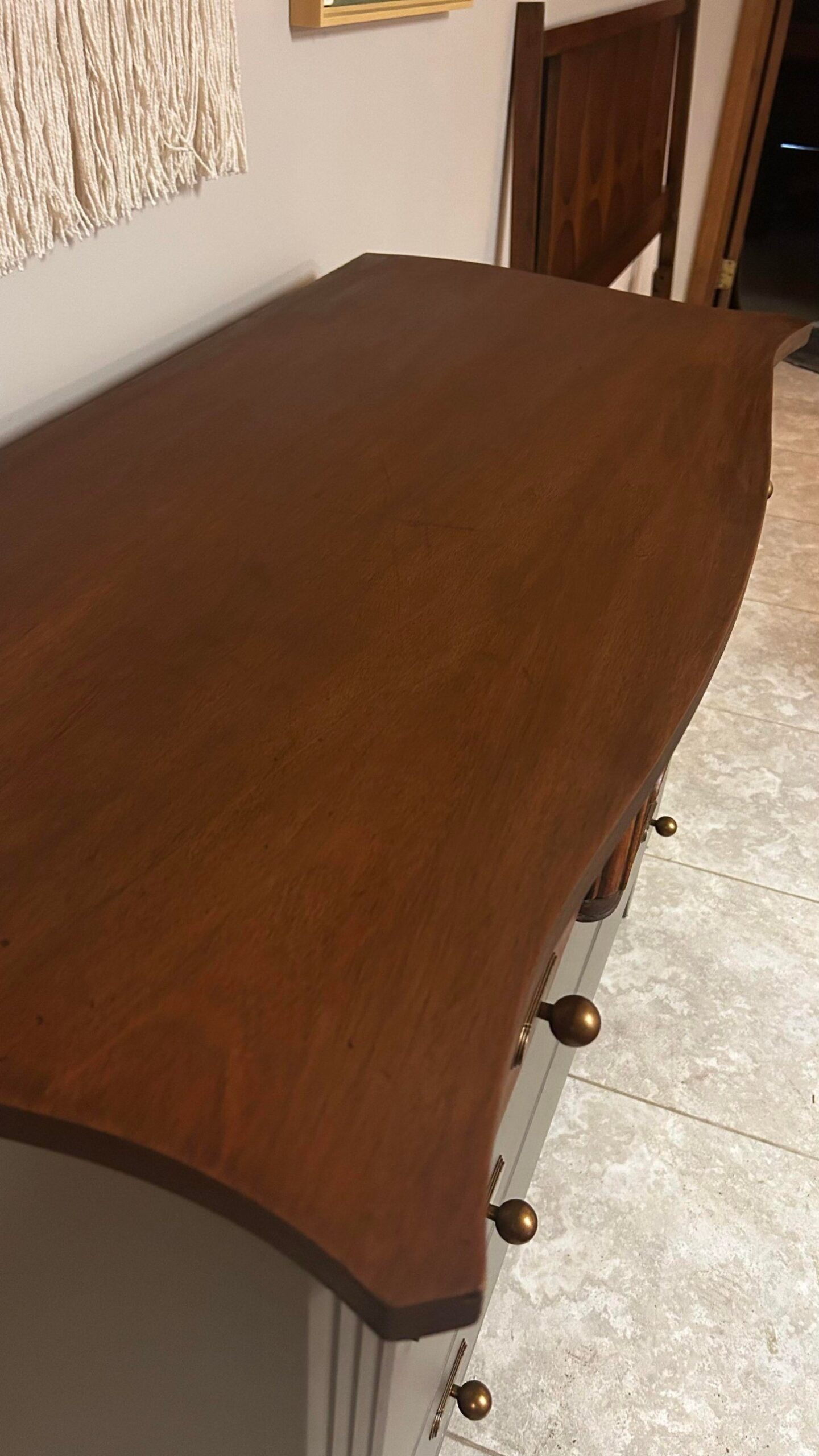
Look at that carved shell now. Every curve is back. The grain in the top is doing something, telling a story about where the piece has been. The brass pulls stopped being a question mark and started being the obvious right call. And the body paint, the exact same color, finally gets to be the warm, sagey olive she originally mixed.
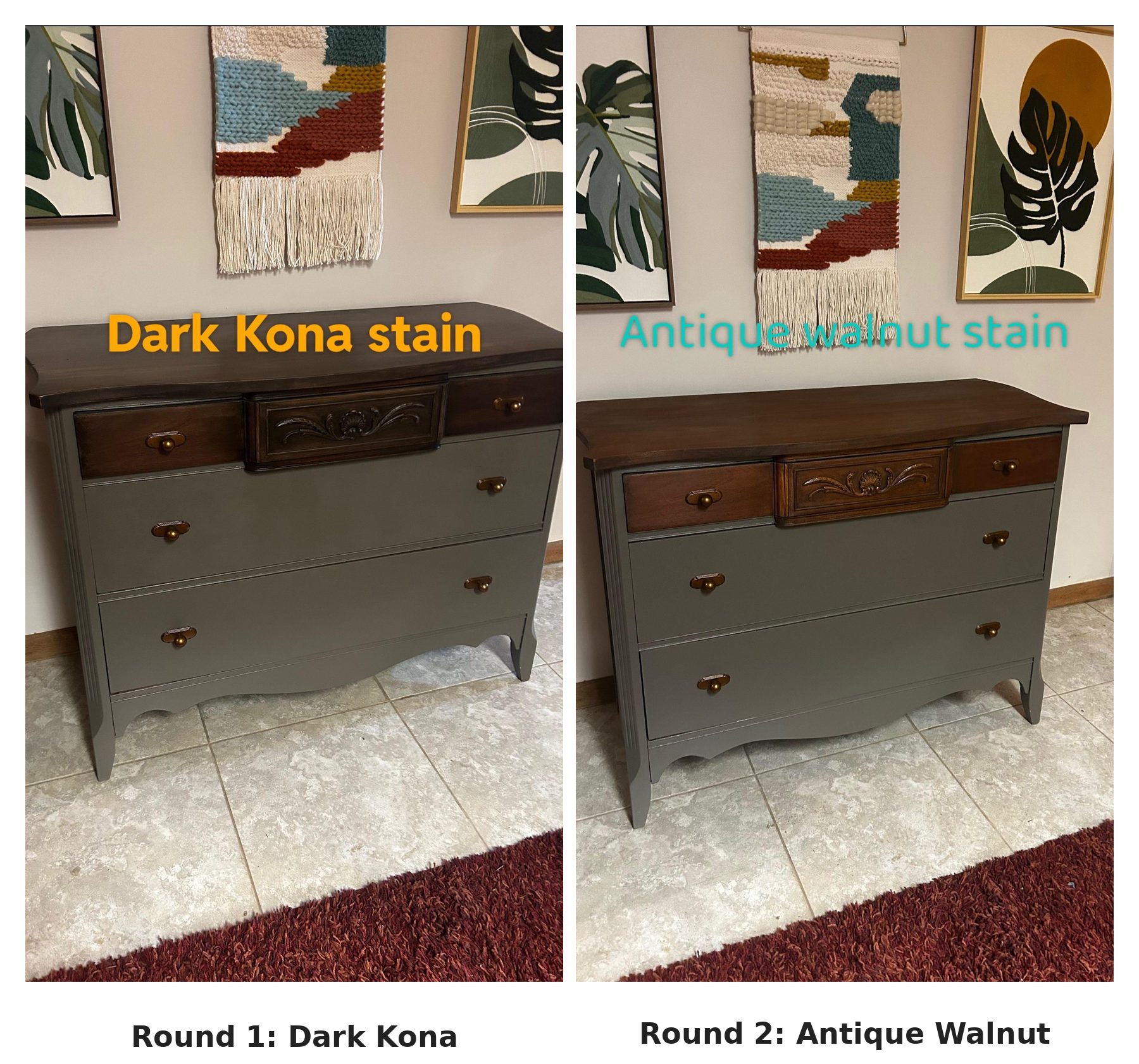
This is a controlled experiment flippers rarely get to see. Same dresser, same body, same hardware, same room, same camera. Only the stain is different. And the walnut version doesn’t just look nicer. It looks like it belongs in a completely different store. One costs 60 dollars at a yard sale. The other costs 600 at a boutique down the block.
The little surprise she hid inside
Pull open any drawer and you get a small, delighted gasp.
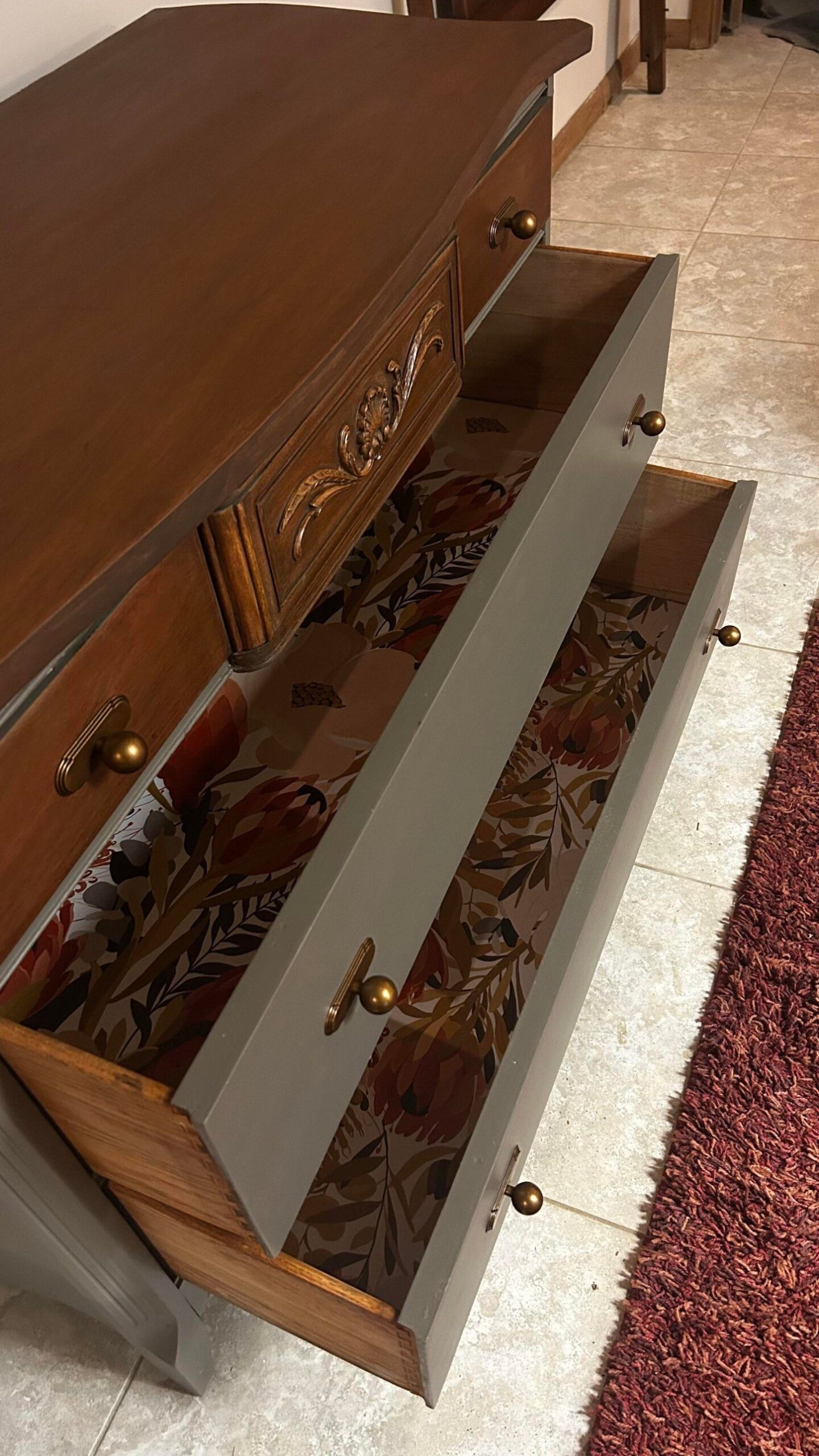
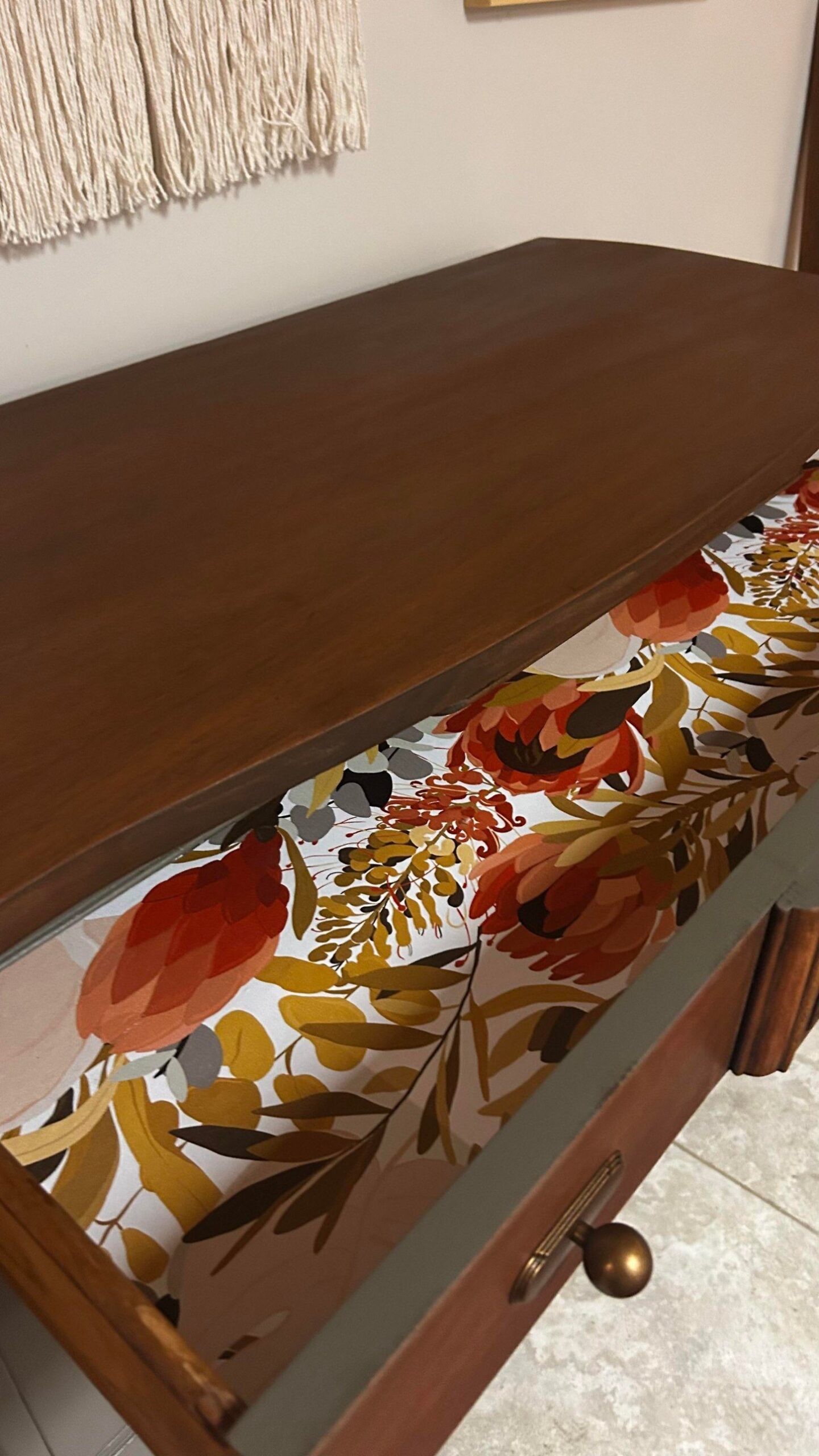
Every drawer is lined with a wild protea floral in rust, mustard, and dusty pink. The outside of the dresser is quiet and grown-up. The inside is a party. This is the kind of detail that costs maybe twelve dollars at Target and separates a flipper who is going through the motions from one who actually loves the piece she is working on.
Which version was right?
Here they are back to back, from basement orphan to finished.
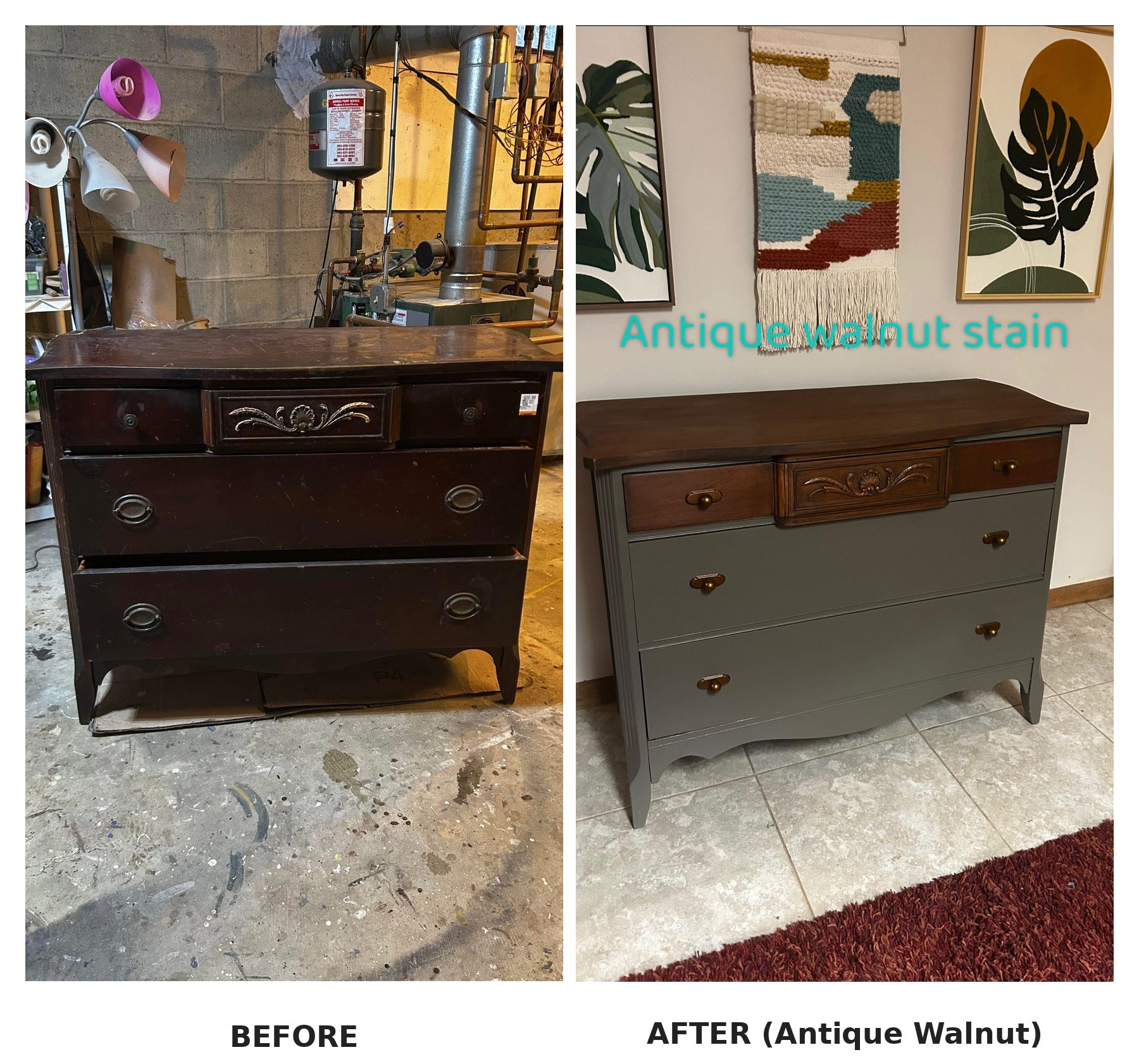
Twenty bucks and change, two full refinishes, one quiet gut call, and a can of Minwax Antique Walnut. That is the whole recipe.
The real takeaway is quieter than the dresser itself. Applause is a trap. It sounds like a final verdict and it is really just the first opinion. Sometimes the only person who knows a piece isn’t done is the one who made it.
Source: u/TlyTlymama on r/FurnitureFlip via Reddit.