
You pull the winter duvet out of the closet, hold it up to the light, and there it is: a faint yellowed patch, a stale smell, a full season of sleep stored in the filling. So you carry it to the washing machine, push, fold, push again, and the drum simply refuses. The thing fills the entire opening and will not go in. The usual answer is a trip to the laundromat with a garbage bag over your shoulder, or a dry-cleaning bill you did not budget for. Most people pick one of the two, grumbling.
There is a third option sitting in your bathroom. A bathtub washes a duvet that no home machine can swallow, and done right, it comes out clean, fluffy and clump-free. The method matters more than the muscle.
Why A Duvet Comes Out Lumpy, And How The Tub Avoids It
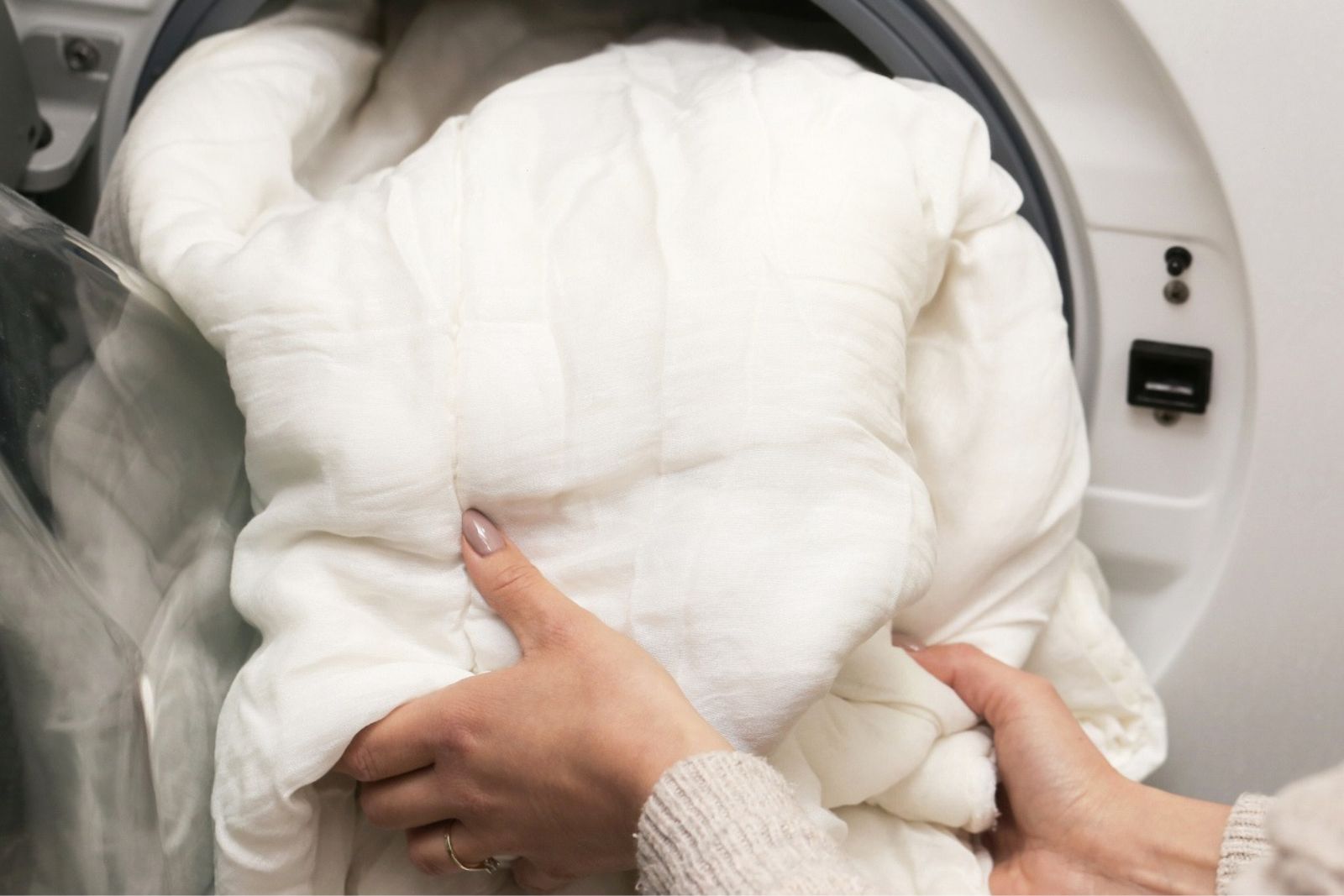
The failure everyone fears, a duvet that dries into flat, hard lumps, has two causes, and neither is the tub itself. The first is detergent residue: soap trapped deep in the filling coats the fibers or the down and mats them together as they dry. The second is rough handling while wet: twisting or wringing a soaked duvet tears the filling and bunches it into clumps that never fully redistribute. The bathtub method is built around avoiding both: very little soap, a lot of rinsing, and pressing instead of wringing.
Here is the full sequence:
- Clean the tub first. Rinse away any soap scum or cleaner residue, which would transfer straight into the fabric.
- Half-fill with lukewarm water and a small dose of mild liquid detergent. About a tablespoon is enough. Skip powder, which does not dissolve well in a still tub, and skip fabric softener entirely, because it coats the filling. For a natural down duvet, use a down-specific detergent, which protects the oils in the clusters.
- Submerge and press. Lower the duvet in and press down on it repeatedly with flat hands, the motion some laundry guides compare to a cat kneading a blanket. You are pushing water through the filling, not scrubbing it.
- Soak 10 to 15 minutes, pressing now and then, then drain the tub completely.
- Rinse two or three times. Refill with clear water, press, drain, and repeat until the water runs clear and the duvet no longer feels slippery. This is the step that decides everything: residue left now becomes lumps later.
- Press the water out, never twist. Push the duvet against the side of the tub, then roll it in dry bath towels to draw off more water. A wet duvet is heavy, so take it in stages.
- Dry it long, flat or spread over two parallel lines, so the weight is distributed. Turn it every half hour at first, and break up any forming clumps with your fingers while the filling is still damp, when they separate easily. In good airflow, count a full day; a thick duvet can take longer.
If your pillows have gone the same yellow as the duvet, they get a different treatment: this soak restores their original whiteness. And if space is tight at home, the overhead drying setups from a tiny studio that dries all its laundry indoors work for a duvet too.
The One Rule That Is Not Negotiable
The duvet must be bone dry before it goes back on the bed or into the closet: evenly filled, with no cool damp spots when you press your hand deep into it. A down or feather duvet dried incompletely can develop mildew and odors inside the filling, which no second wash fixes well. If the weather will not cooperate, finish it in a dryer on low heat with a couple of tennis balls. Ten minutes of tumbling beats a musty winter. And check the care label before you start: a wool-filled duvet or one marked dry-clean only stays out of the tub.
Plan the wash for a dry morning, press instead of twisting, rinse more than feels necessary, and keep your hands in the filling as it dries. That’s the trick.


