
Every design account on the internet would tell these homeowners to start over. Pull the brown diamond backsplash. Swap the dark speckled granite. Tear up the terracotta floor. That is the usual advice for a dated 2000s kitchen, and it runs well past forty thousand dollars before anyone picks out new knobs.
They didn’t touch a single surface. They painted.
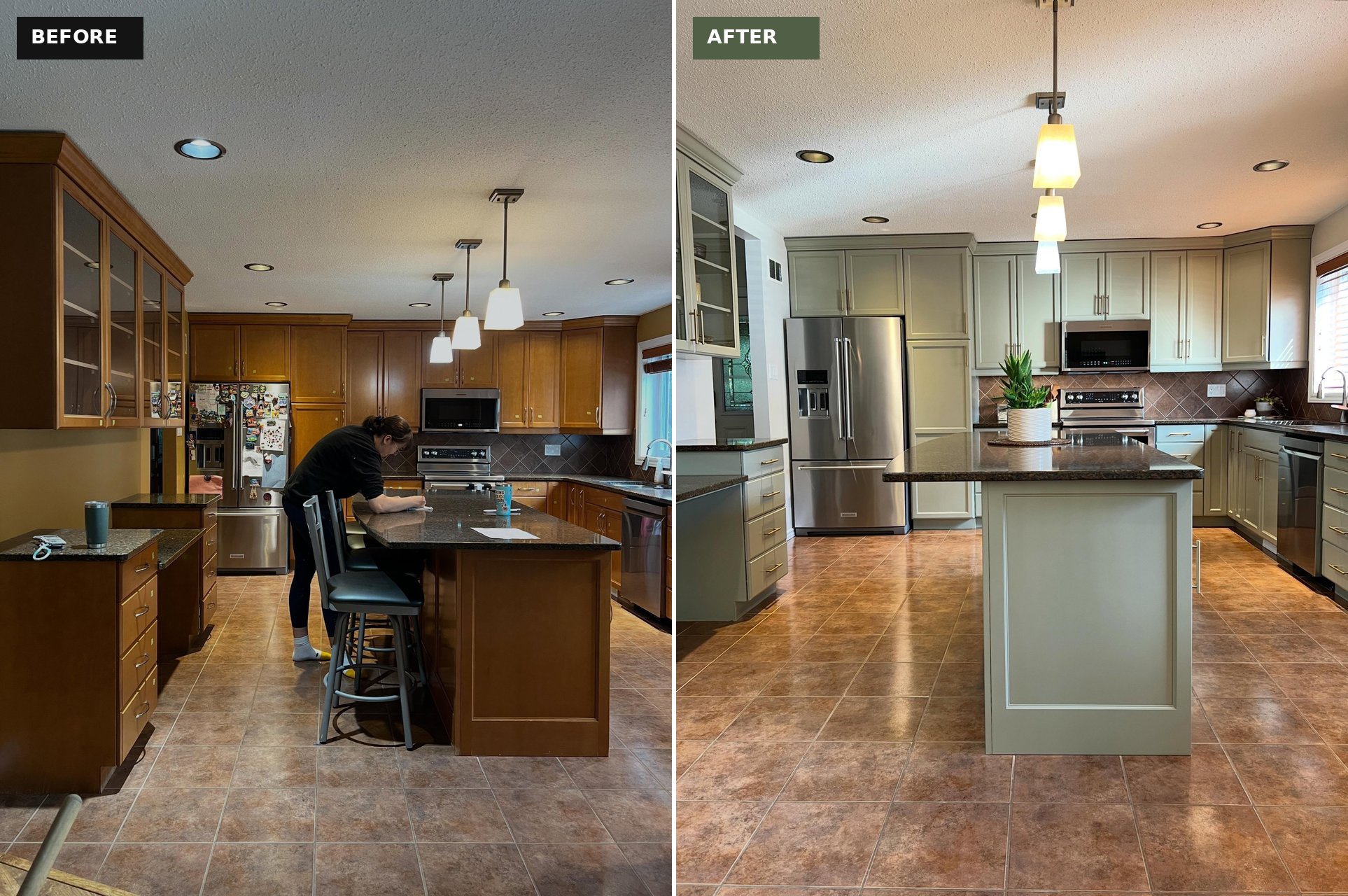
Two paint colors did the whole thing
Cabinets got Sherwin-Williams Honed Soapstone, a sage with warm olive sitting under it. Walls got Benjamin Moore Pale Oak, a soft off-white that calms the textured ceiling. The old satin nickel pulls came off, long brass bar pulls went on, and the painters packed up. That was the project.
Here is day one
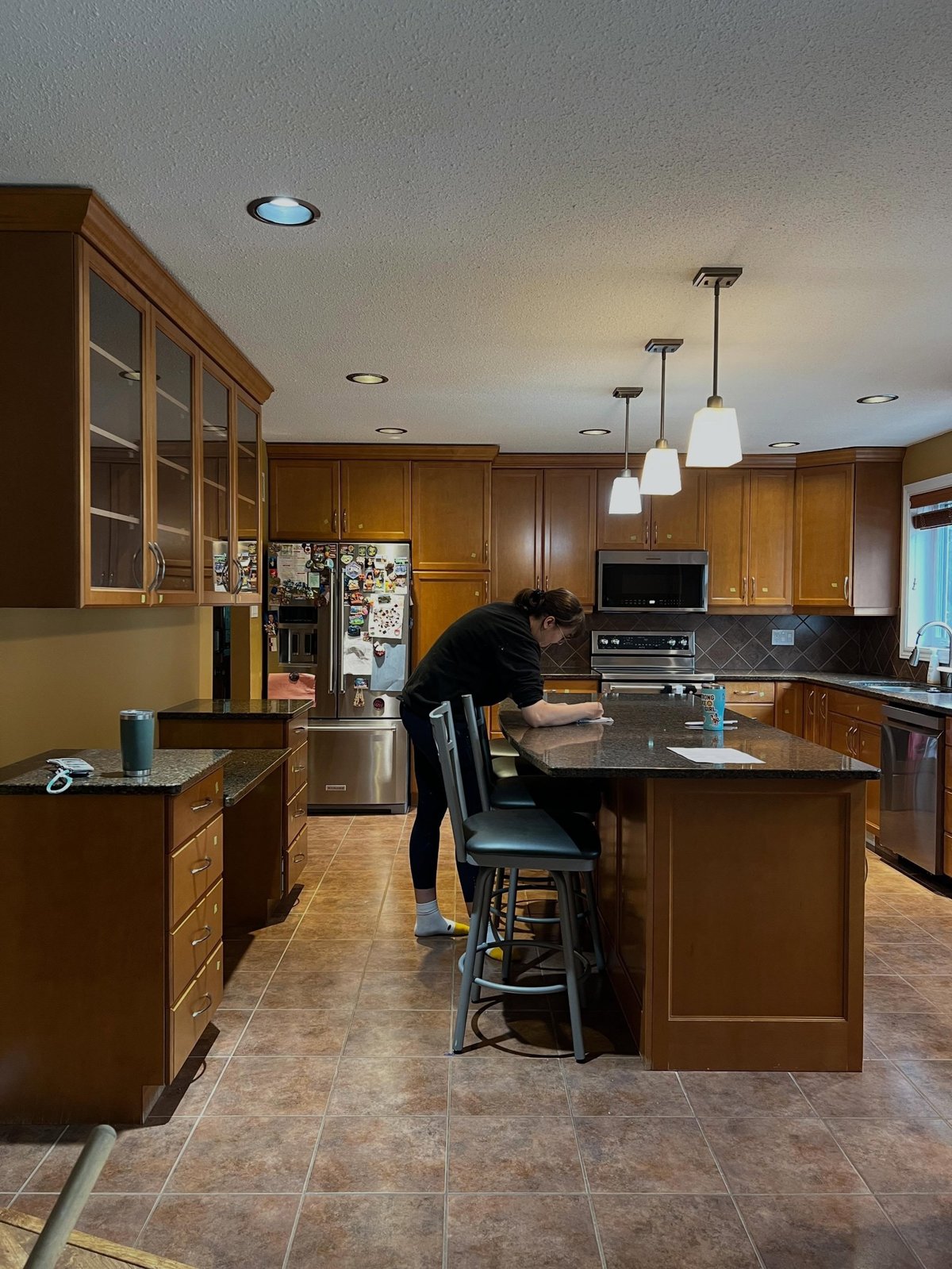
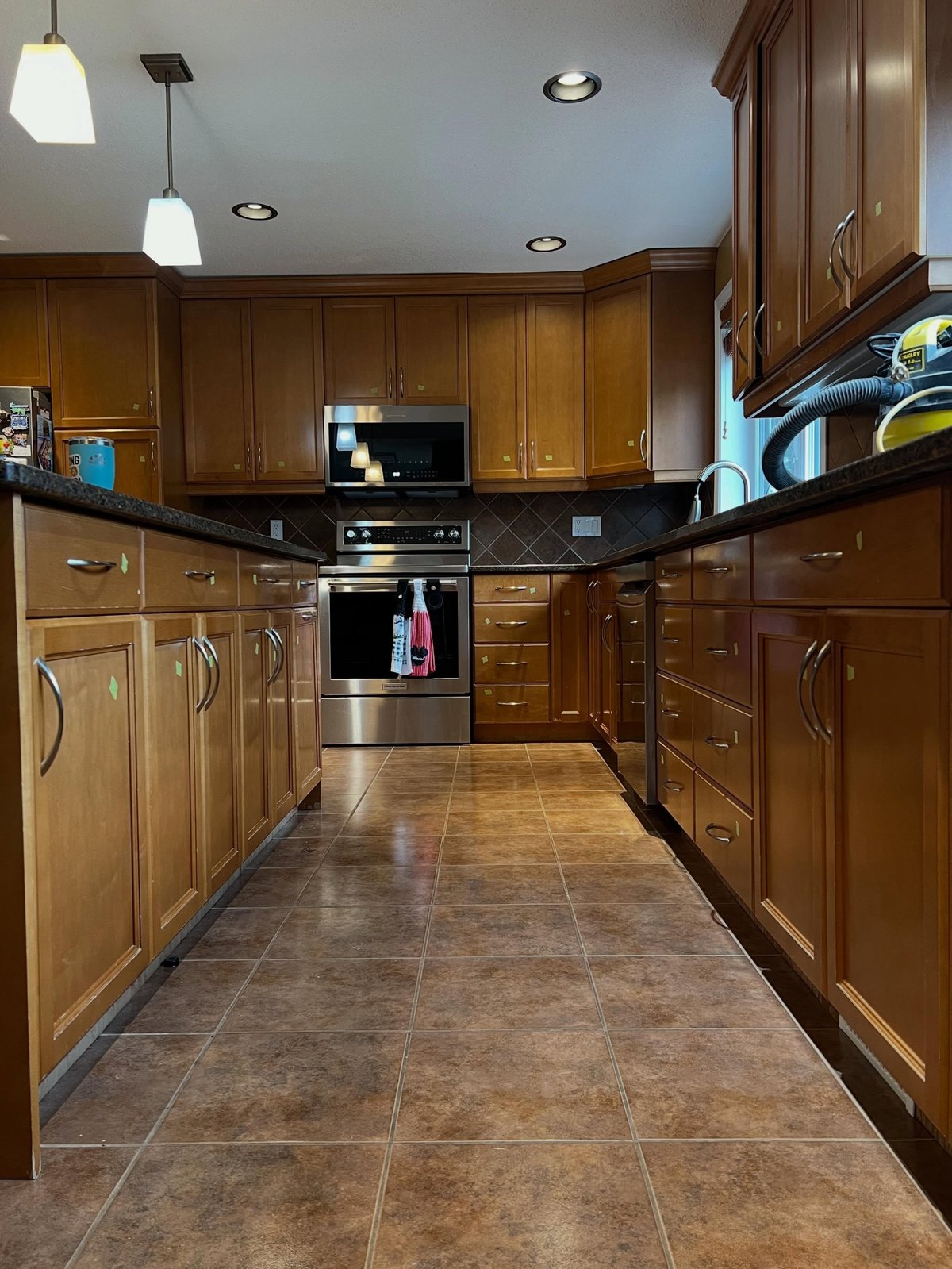
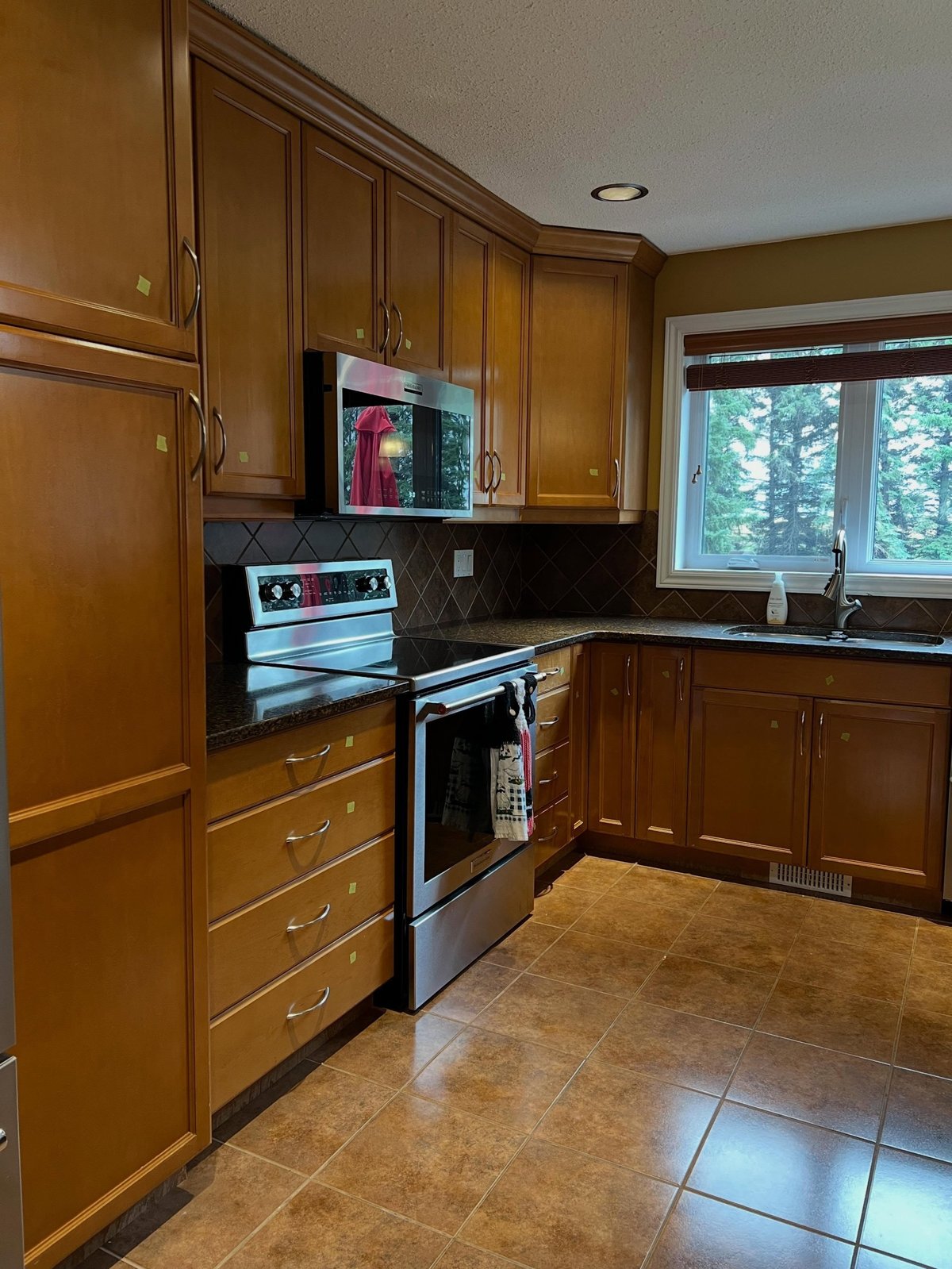
Honey oak cabinets wall to wall. Dark speckled granite. Brown tile backsplash in a diamond. Terracotta floor running right into the cabinets. Scroll Instagram for ten minutes and you will find a hundred captions saying every one of those surfaces has to go.
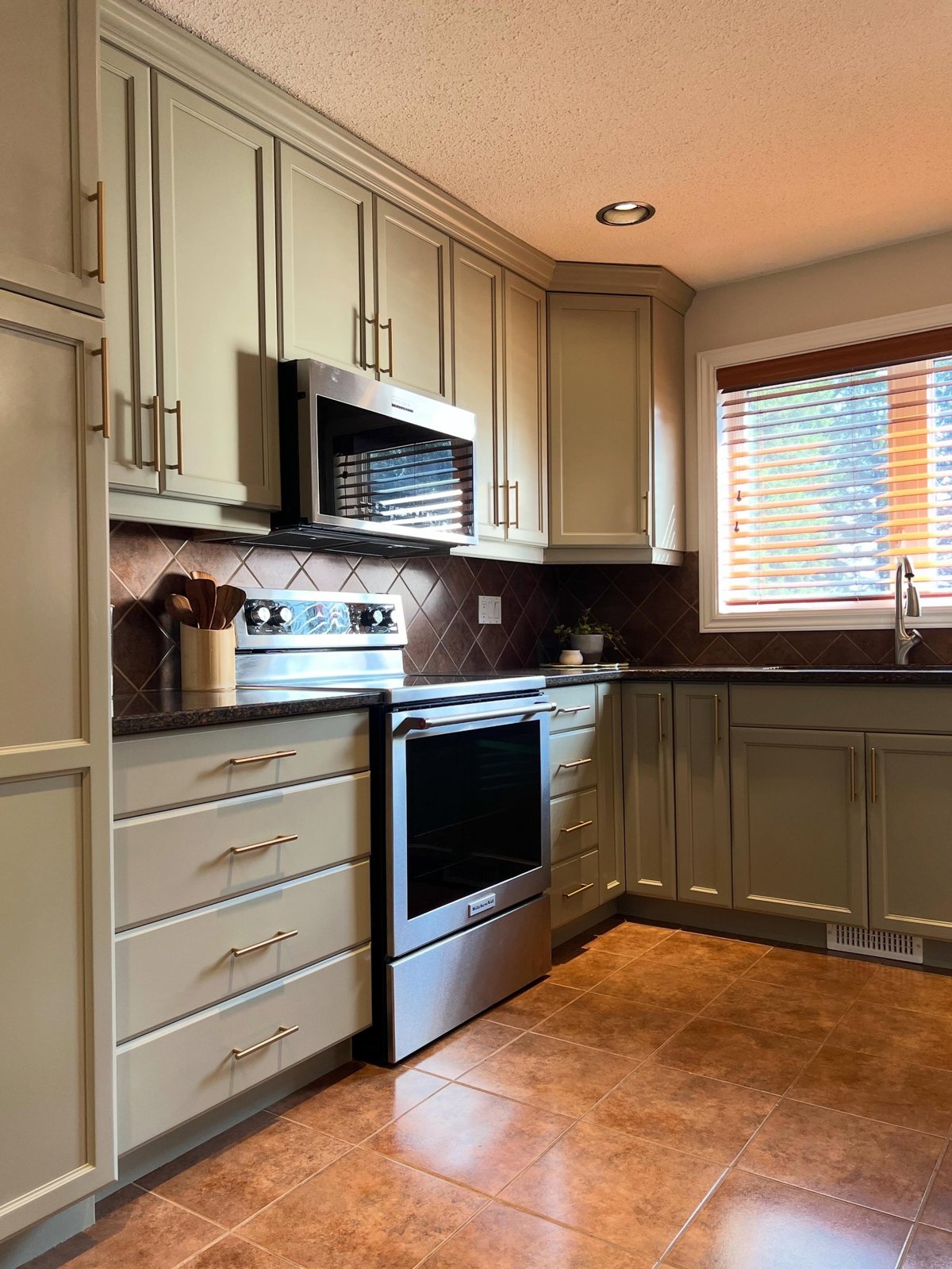
Same room, totally different kitchen
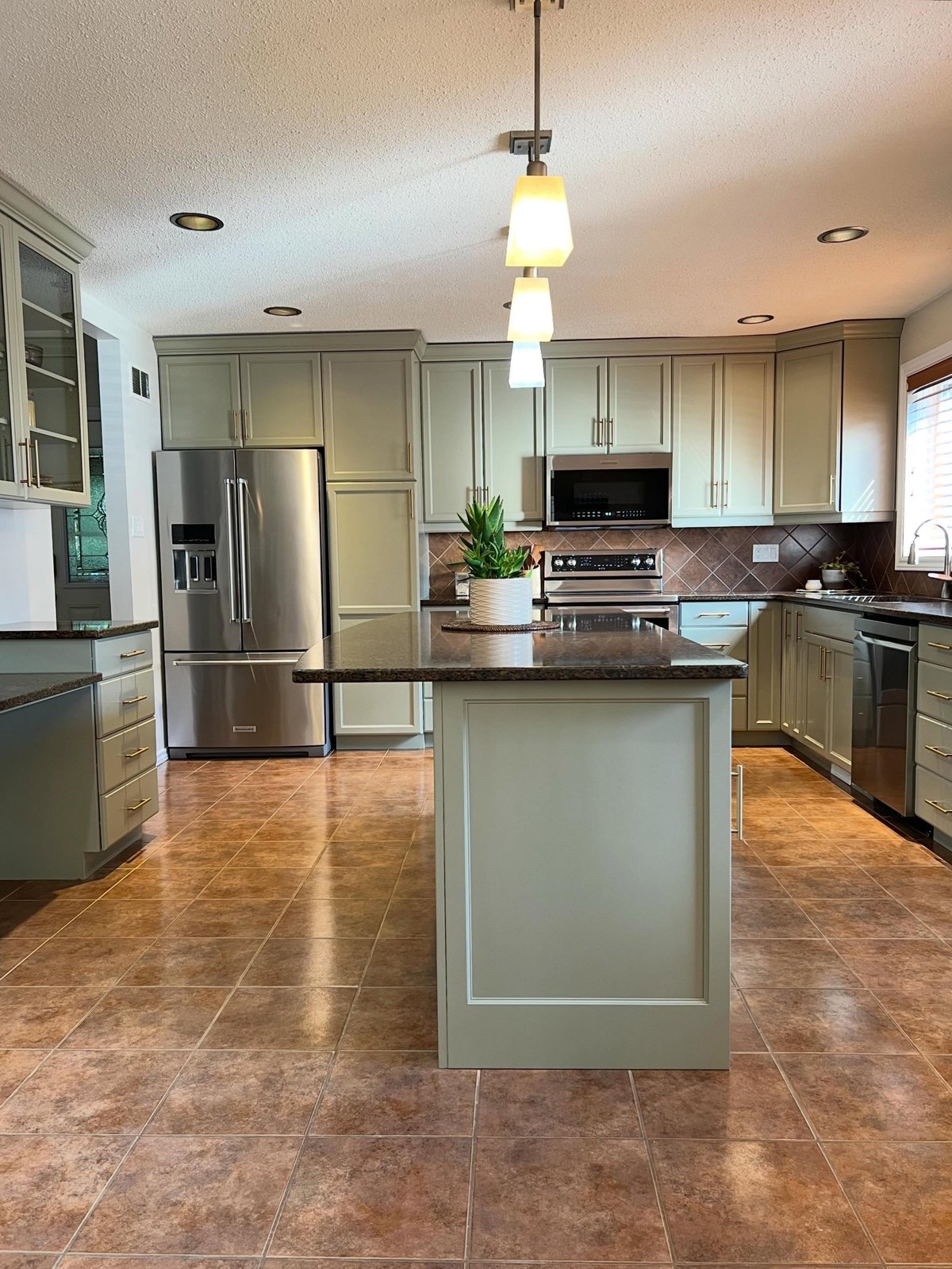
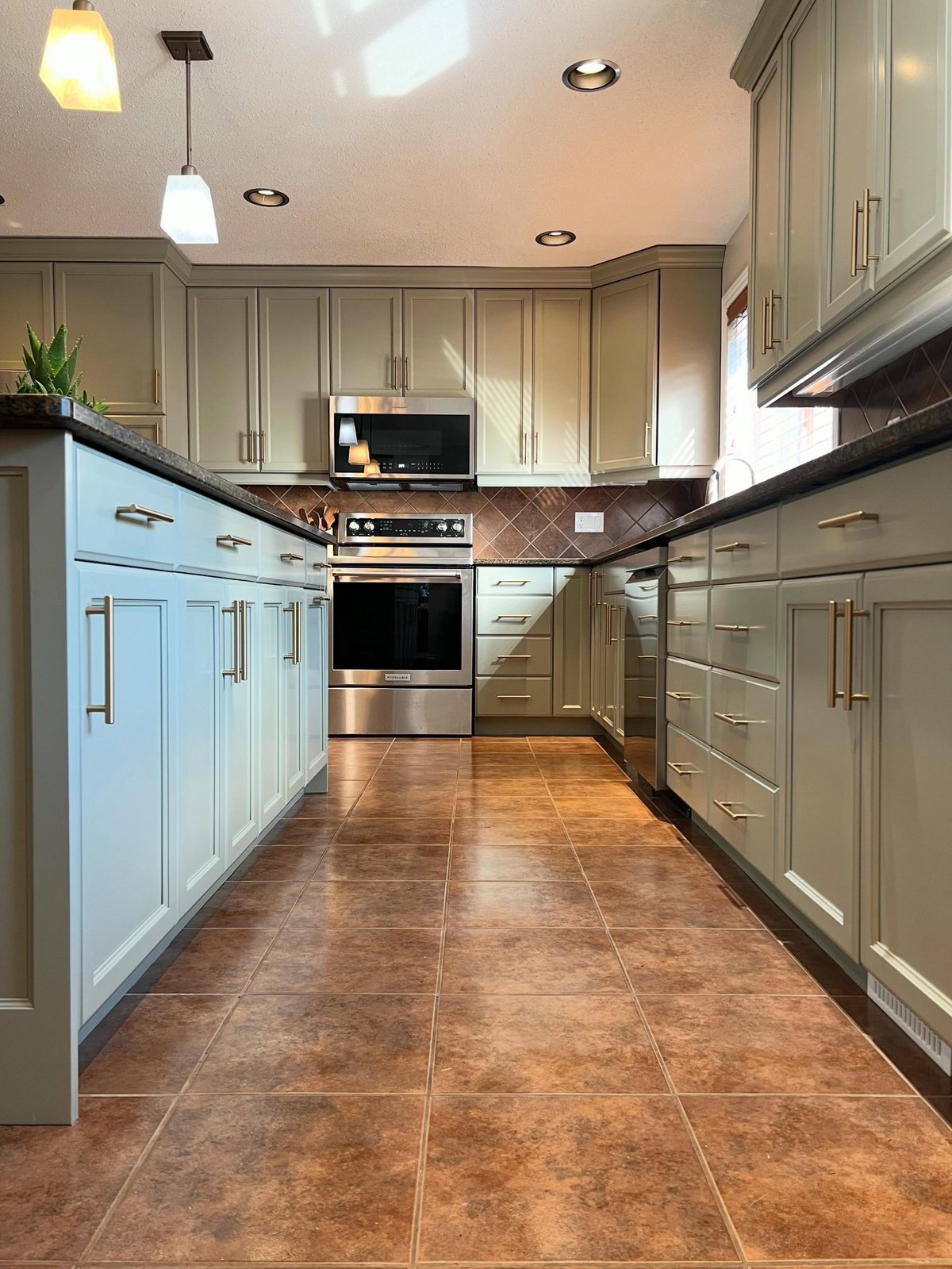
Same island. Same granite. Same tile on the walls. Same tile on the floor. Same appliances. Same pendants. Nothing moved. It reads completely different.
What actually changed
Everything different came out of a can of paint. No sledgehammers, no dumpster, no weeks of takeout. Colors picked on a Saturday, painters in a few days later, kitchen back in use inside a week.
Down the galley, the shift lands even harder
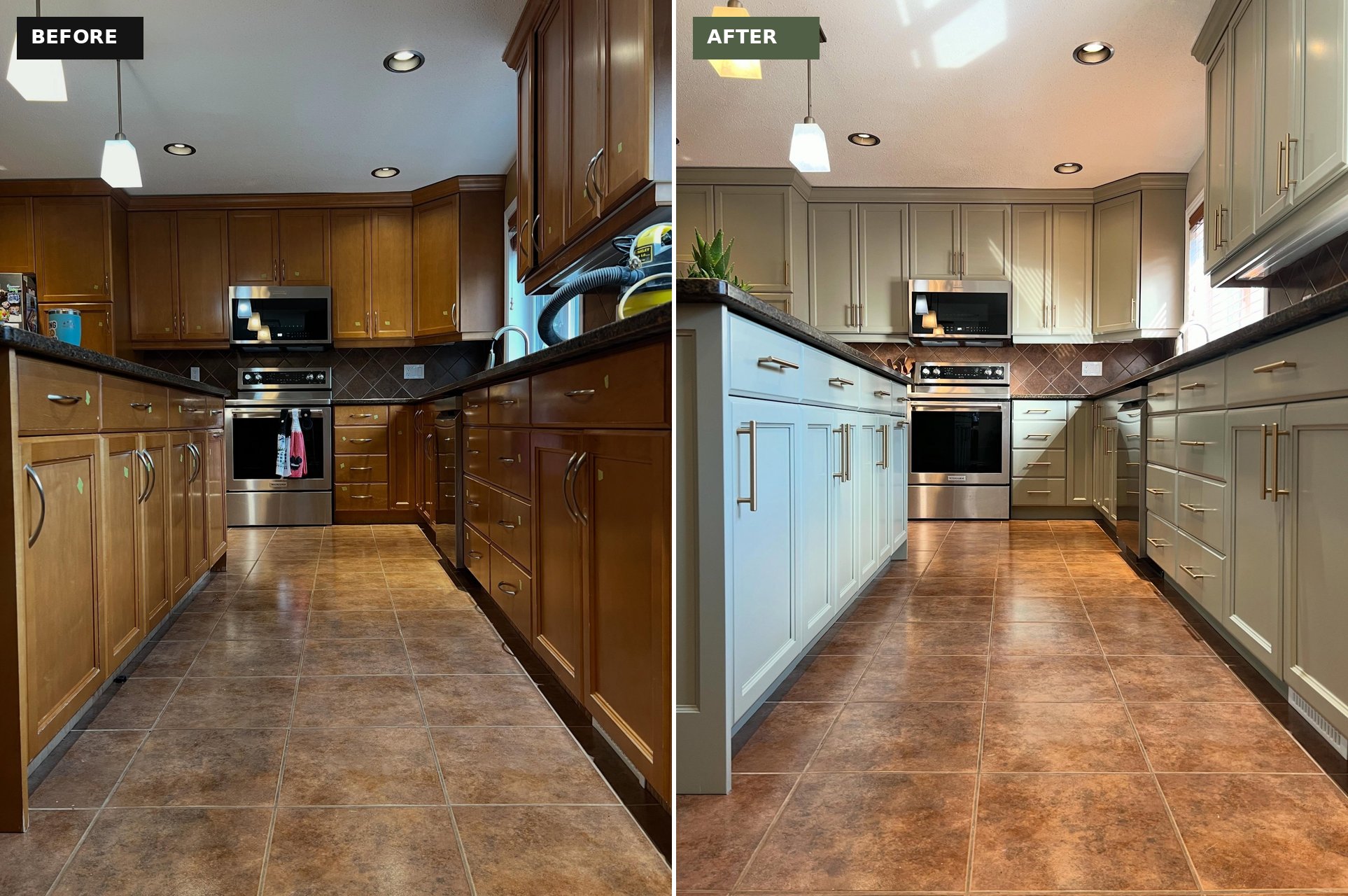
The old honey oak felt heavy, like the room was closing in on the stove. The sage opens the corridor back up, and the brass catches enough pendant light to feel finished, not slapped together.
Why this color actually works
The brown backsplash, the brown granite, and the terracotta floor all share the same warm red-brown base. Drop a cool gray or a crisp white on the cabinets and every one of those surfaces suddenly looks stranded. The room reads broken, which is why the standard advice says to rip them out. The problem is not the materials. It is the color mismatch nobody fixed.
Sage with an olive base lives in the same warm, earthy family as that tile and granite. Instead of fighting the brown tones, it leans into them. The brass pulls do the same. Three warm tones start reading as one palette instead of three leftovers.

Before you copy it, here is the honest check
Paint cannot save every kitchen. Two quick checks before you spend anything.
The color test: grab a Honed Soapstone chip from the paint store and hold it right against your backsplash and granite at the same time, in your real kitchen light. If the green pulls the warm tones forward and the three surfaces start reading as one palette, you are in business. If the sage goes grayish or chilly next to your tile, your materials have a cooler base. Try a truer olive, a warmer mossy green, or a putty color instead. Match the undertone, not the exact shade.
The reality check, which Instagram tends to skip:
- Honey oak has open grain that will telegraph through paint unless the cabinets are cleaned, deglossed, and primed with a stain-blocking primer like BIN or STIX. Skip that step and the grain shows within a season.
- Pro cabinet painting in the US usually runs $3,000 to $8,000 for a kitchen this size, plus hardware. Fraction of a gut job, still not pocket change.
- Brush-and-roller DIY on cabinets almost always looks like brush-and-roller DIY. Factory-smooth needs a sprayer and real patience, or someone with both.
- Painted cabinets chip around pulls and drawer edges. Expect touch-ups every few years, more with kids.
- Sage green and brass are trends. They will date in ten years, same as honey oak did. Fine if you are staying. Worth thinking about if you plan to sell soon.
- Paint fixes nothing structural. Bad layout, failing appliances, cracked granite, water-damaged boxes, doors that will not close. If the bones are broken, no color saves them.
Pass the chip test and have solid cabinets, paint is the highest-leverage move you can make. Fail either, be honest with yourself before you swipe a card at Sherwin-Williams.
The stove wall is where it clicks
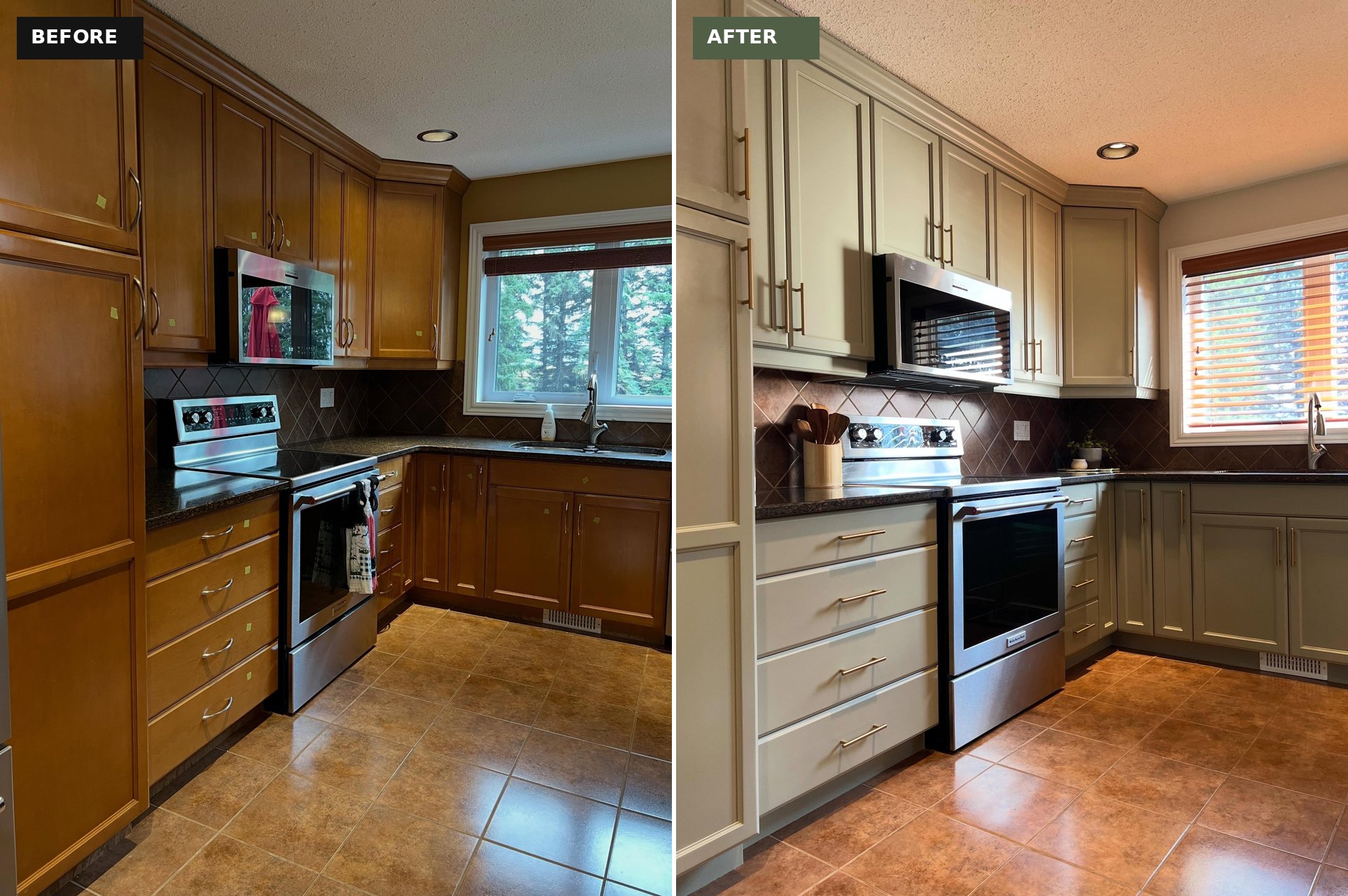
Up close, the sage absorbs the brown diamond tile instead of fighting it. The brass tracks with the gold warmth already sitting in the granite. Three materials, one color conversation.
The finished kitchen
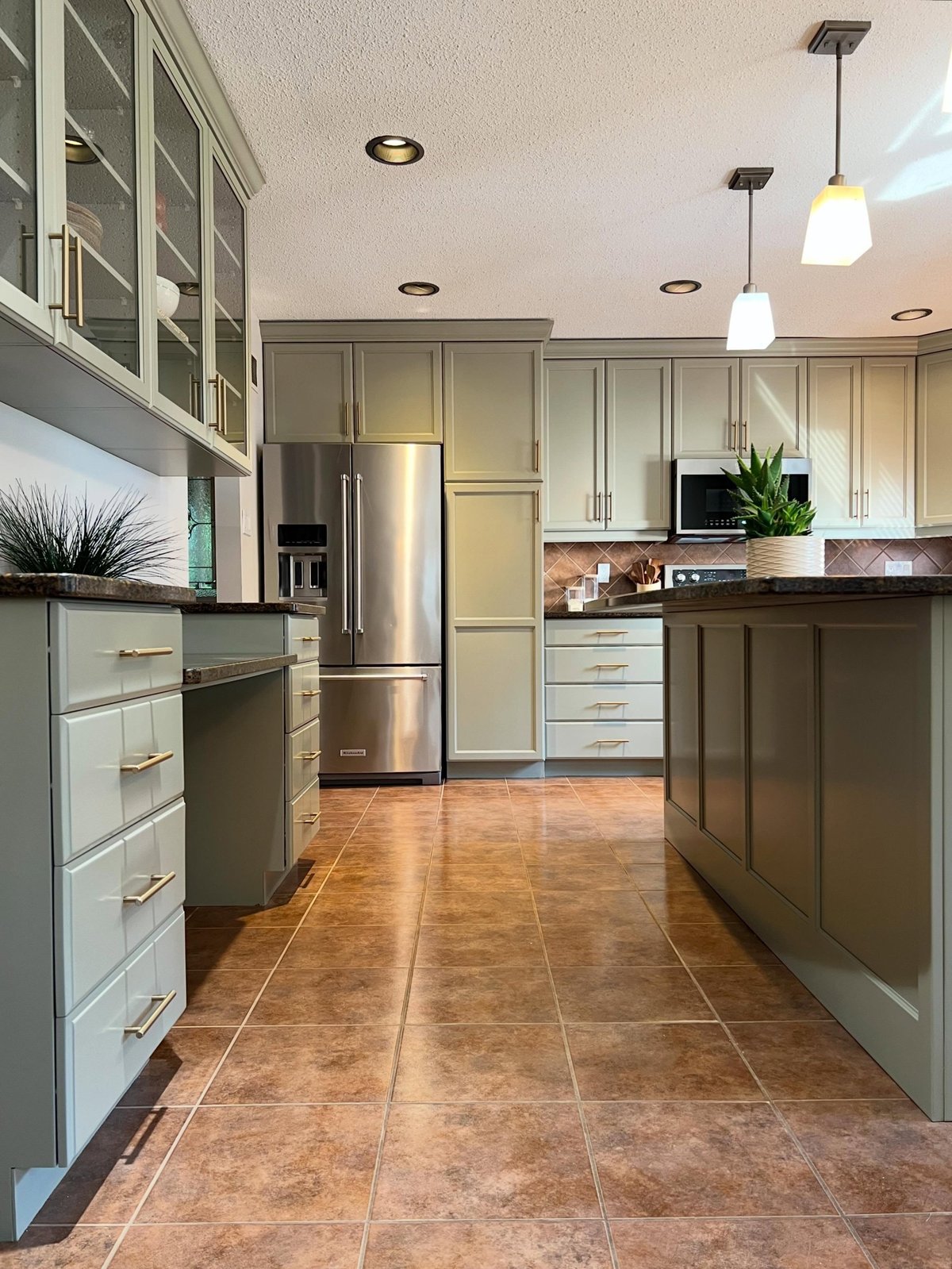
This is not a magazine kitchen. The terracotta floor is still terracotta. The ceiling is still textured. The granite is still busy, and anyone paying attention will clock the backsplash as a 2000s install. What the paint did was pull all of it into a palette that reads intentional instead of resigned. That is a different win, and it is the one most homeowners can actually afford.
Two cans of paint. One hardware swap. Zero demo. If you have been staring at honey oak cabinets and dark brown counters and talking yourself into a thirty-thousand-dollar gut, run the chip test first.
The paint colors used
- Cabinets: Sherwin-Williams Honed Soapstone
- Walls: Benjamin Moore Pale Oak
Credit: Transformation by @refreshedandrefurbishedmb on Instagram (original post).


Agree! The honey oak is beautiful. It’s warm. It’s classic. It’s time to stop robbing homes of life ( color)!!
I don’t think it looks better. The sickly green has neither enough depth to hold ip the substance of the current floor and countertop theme, nor is it bright enough to provide an appealing contrast. Ugly, really.