You cross the living room and there it is again: a raised seam, a chipped corner, a gray plank that makes the whole floor feel temporary. So you start picturing it all pulled up for something that lasts. You’re far from the only one, and what goes down next depends on more than looks.
That itch to start over shows in the numbers
That thought you have while staring at a lifted seam? Plenty of homeowners have it too. In its 2026 U.S. Kitchen Trends Study, Houzz found laminate in just 9% of kitchens where homeowners were upgrading their floors. Ceramic or porcelain tile and hardwood each accounted for 22%, followed by vinyl or other resilient flooring at 21% and engineered wood at 15%.
Those figures describe flooring choices in kitchen renovations, not the entire U.S. housing market. Still, they show how several alternatives are competing with laminate.
So what should you choose instead? It mostly comes down to what each floor can physically take.
What goes down where the gray planks used to be
Real wood is one option. Solid wood can be sanded and refinished many times, depending on its thickness and condition. Engineered wood puts a real wood top layer over a layered core. Its construction can offer greater dimensional stability, but the thickness of the wear layer determines whether it can be refinished and how often.
If wood wins in your house, it’s worth knowing why vinegar can dull the finish before you start cleaning it.
Luxury vinyl is another option. Rigid-core versions combine a decorative surface with a manufactured core, sometimes with underlayment already attached. Check the manufacturer’s installation instructions and warranty for the room, subfloor and expected water exposure. A waterproof product label doesn’t mean moisture trapped underneath the floor is harmless.
Porcelain tile is another strong candidate for splash-prone spaces. Its low water absorption makes it suitable for many kitchens and bathrooms, provided the tile, grout, substrate and installation are appropriate. In wet areas, waterproofing beneath the tile may still be necessary.
Whichever material you pick, the existing floor and its underlying structure need to be assessed first. In some cases, removal is necessary. In others, a new floor may be installed over an approved existing surface if the manufacturer permits it.
Pulling up the old floor, one row at a time
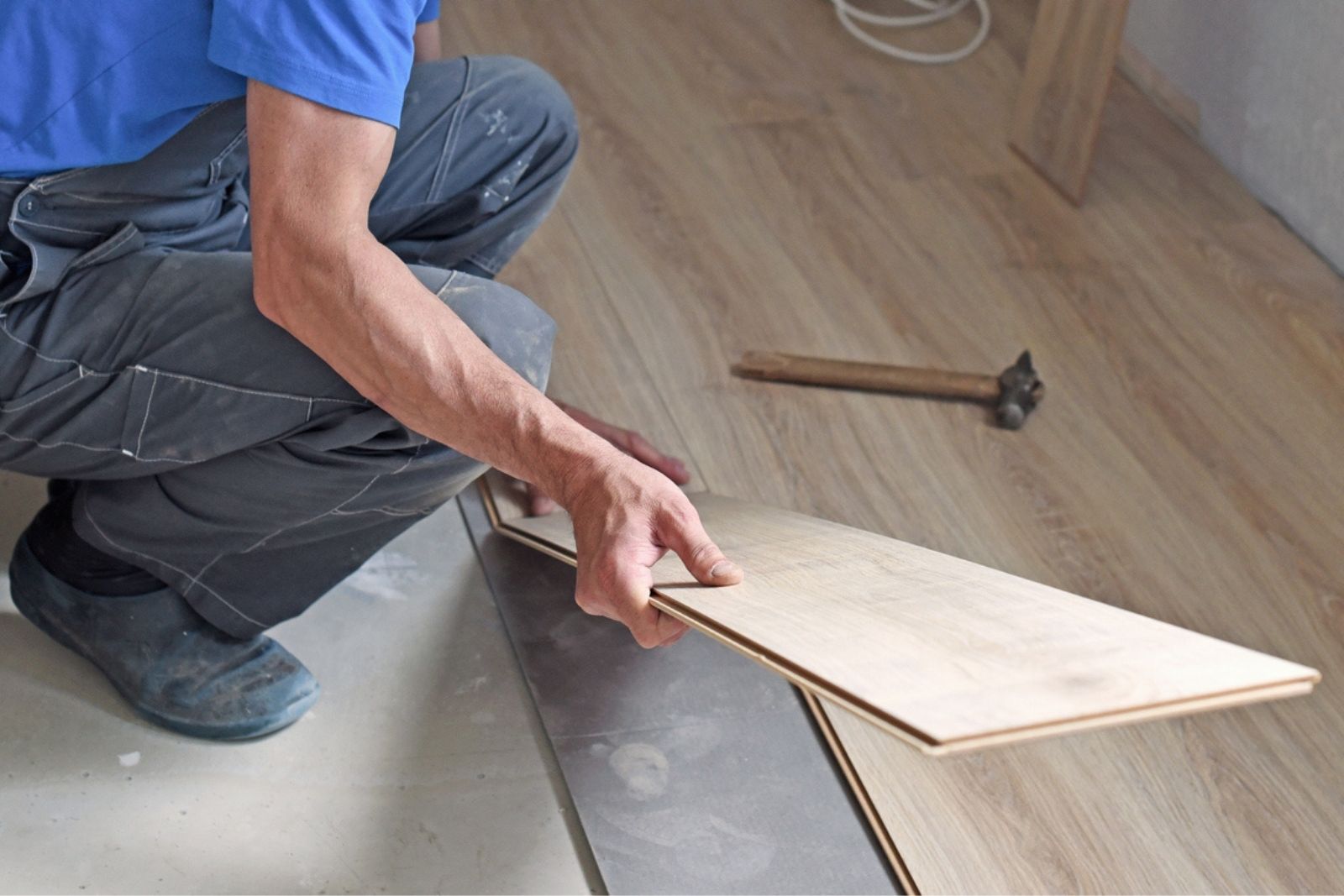
Laminate is often installed as a floating floor, with planks that click together. When that’s the case, careful disassembly may be possible without tearing everything apart.
Start by emptying the room. Before moving appliances, disconnect them safely and shut off the relevant water supply where necessary. Remove baseboards and transition strips carefully, protecting the wall with a scrap block. Number the pieces if you plan to reinstall them.
Next, inspect an exposed edge. If the boards use a click-lock system, follow the manufacturer’s unlocking method, lifting and separating rows carefully. Some locking profiles require a different removal sequence, and forcing them can break the joints.
If the flooring is glued down, removal may require cutting and scraping. Before disturbing any older flooring or adhesive beneath it, however, check for potentially hazardous materials, including asbestos.
Finally, remove any underlayment that will not be reused. Inspect the exposed subfloor for moisture, movement, damage and unevenness. The new flooring manufacturer’s requirements determine how flat, dry and stable that surface must be.
The Home Depot demonstrates a flooring removal sequence in the following video.
What’s under the laminate gets the last word
If you uncover older vinyl flooring, backing material or adhesive, stop before cutting, sanding or scraping it. Some older flooring products contain asbestos, and appearance alone cannot establish whether a material is safe. Have suspect materials evaluated by a qualified professional before disturbing them.
Fix moisture problems before installing the replacement. A leaking pipe, damp concrete slab or damaged wooden subfloor can compromise even a water-resistant flooring product.
Large glued-down areas, structural damage, unexplained moisture and uncertain hazardous materials are all good reasons to bring in a qualified installer or specialist.
The finish you choose matters, but the surface underneath determines whether that new floor has a chance to last.