Basting a Thanksgiving turkey can feel like the one job you absolutely must keep doing. Open the oven, collect the pan juices, give the bird another glossy coat. Yet all that attention may be getting in the way of the golden, crisp skin you’re hoping to bring to the table.
To help you get that crisp, golden skin, we looked at what experts recommend for roasting your Thanksgiving turkey—and which habits they say to skip.
In short
- Paul Kelly, turkey farmer: Basting adds moisture to the skin, working against the crisp finish you want.
- David Bouska, Oklahoma butcher: Repeatedly opening the oven to baste releases heat and disrupts the steady roasting temperature.
- What to do instead: Start with dry skin, follow your roasting recipe and skip repeated basting with pan juices.
Why Paul Kelly would put the baster down
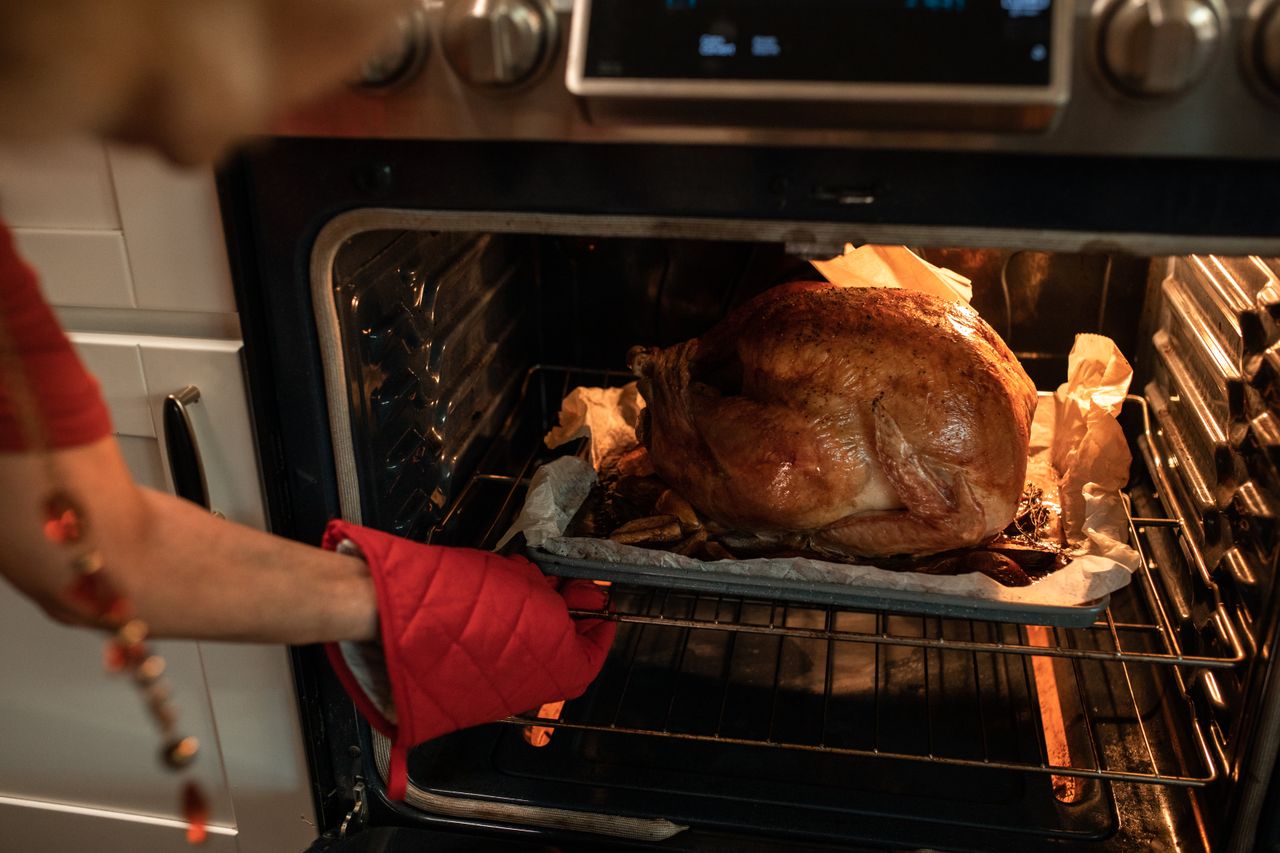
Paul Kelly, turkey farmer and managing director of KellyBronze, has a straightforward objection to the familiar routine. “Basting will stop the skin crisping up,” he told Real Simple.
The problem is the moisture going back onto the surface. For turkey skin to become crisp, it needs to dry out as it cooks. Repeatedly spooning watery pan juices over it gives that surface more liquid to shed before it can brown and crisp effectively.
That glistening finish can look promising through the oven door. But a wet shine during roasting isn’t the same thing as crisp skin when the carving knife comes out.
Kelly also questions how much the ritual accomplishes beyond making the cook feel useful. Thanksgiving already supplies plenty of jobs. The turkey doesn’t necessarily need another appointment with the baster.
An Oklahoma butcher points to another problem
David Bouska, the Oklahoma butcher and pitmaster behind Butcher BBQ, also skips repeated basting with pan juices. In his turkey-roasting guide, he explains: “Basting means spooning pan juices over the bird, which adds liquid and drags the oven temperature down.”
Every visit with the baster involves opening the oven. Heat escapes, the temperature fluctuates, and the oven has to recover. Those interruptions can extend cooking time while working against the steady heat needed to develop crisp skin.
Bouska makes a useful distinction, however. His recipe includes brushing the skin with oil before roasting and applying another light coat once during cooking. He separates that limited application of fat from repeatedly pouring pan juices over the bird. The target of his advice is the recurring wetting-and-door-opening routine.
Give the skin a better start before roasting
For a crisp-skin approach, begin with a fully thawed turkey and pat the surface dry with paper towels. If you’re preparing ahead, place it on a rack over a rimmed tray and leave it uncovered in the refrigerator overnight. Keep the refrigerator at 40°F or below, with the tray positioned to prevent raw juices from reaching other food. This gives the skin time to dry before it encounters the oven. University of Wyoming Extension similarly recommends an uncovered refrigerator drying period after brining to encourage crisper skin.
Dry brining is another option: season the turkey with salt according to a tested recipe, then refrigerate it for the specified time. Check the packaging first. Kosher, enhanced, self-basting and pre-brined birds may already contain substantial salt, so adding a full dry brine can leave dinner unpleasantly salty.
Before roasting, a thin coating of olive oil is one way to prepare the exterior. Follow your chosen recipe’s oven settings and seasoning instructions rather than combining several different roasting methods halfway through.
Watch the meat’s temperature instead of its shine
Crisp skin and juicy meat are related goals, but they require different attention. Drying the surface helps the exterior. Avoiding unnecessary overcooking matters inside. Another spoonful of drippings cannot reverse breast meat that has spent too long in the oven.
The CDC recommends roasting turkey at an oven temperature of at least 325°F and checking that it reaches a safe internal temperature of 165°F. Measure in the thickest part of the breast and the innermost thigh and wing areas, avoiding bone. Golden skin alone cannot tell you whether dinner is ready.
After cooking, let the turkey rest before carving. Avoid wrapping it tightly in foil if you want to preserve the crisp exterior; trapped steam can soften the skin you’ve worked to develop.
Kelly has a backup plan for skin that stays soft
If the meat is cooked but the skin still lacks crunch, Kelly suggests treating the skin separately. Remove it while the turkey rests, spread it on a baking tray, season with salt and return it to the oven until crisp. KellyBronze’s cooking guide allows approximately 10 to 15 minutes for this crackling-style finish.
Meanwhile, the pan juices can go toward gravy. They still have an excellent job to do—just without another trip over the turkey every half hour.
That’s the trick.