

On a windy New Zealand clifftop, a lone gannet carried nesting material toward a flock that never moved. From offshore, the other birds looked real. Up close, every one of them was made of concrete. The strange scene became one of the most memorable episodes in a decades-long seabird restoration project.
A clifftop dressed up as a colony
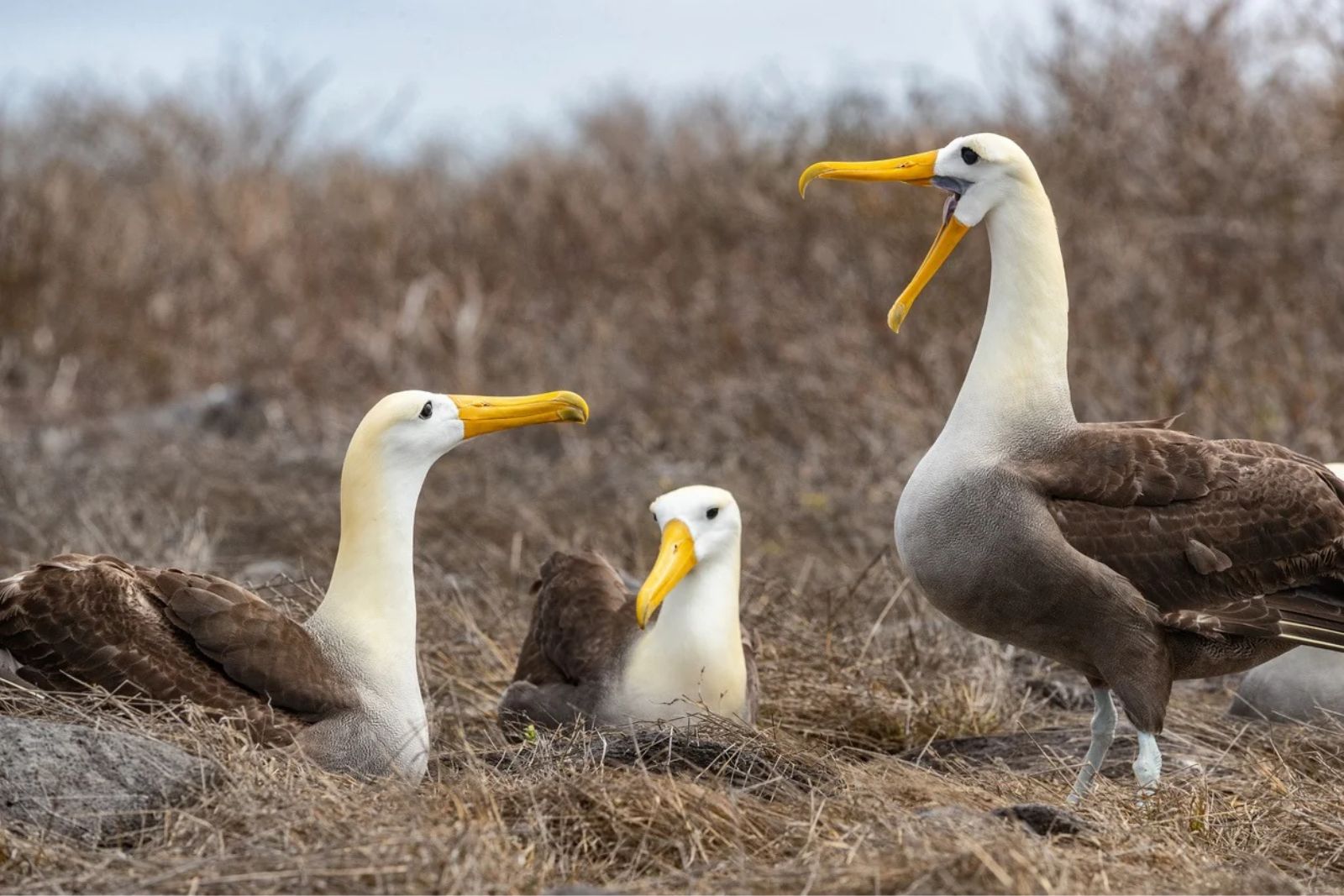
Mana Island, a scientific reserve off New Zealand’s North Island, appeared to offer a promising location for Australasian gannets.
Introduced mammalian pests had been removed, and gannets were already seen feeding and flying offshore. Conservationists hoped to persuade some of them to establish a breeding colony on the island.
In December 1997, they cleared vegetation from a western clifftop, painted the ground white to resemble accumulated guano and installed 100 life-size concrete gannet decoys.
Two real gannets landed among the models on the day they were installed. Another bird was observed at the site overnight in March 1998.
In 1999, conservationists added an acoustic attraction system broadcasting the sounds of a gannet colony.
The strategy was based on the birds’ social breeding behavior. Australasian gannets typically nest in colonies, and the presence of other birds can influence where newcomers choose to settle.
The decoys created the appearance of an occupied nesting site, while recorded calls added another signal that a colony was already established.
Similar social-attraction techniques have been used in seabird conservation projects around the world, although their effectiveness varies between species and locations.
On Mana Island, however, the early visits did not develop into a breeding colony.
According to a 2023 scientific review of the island’s ecological restoration, no further live gannets were recorded at the original decoy site before the project was relocated.
In November 2012, conservationists moved 62 decoys and the sound system to a northeastern headland, hoping the new location would prove more attractive.
Gannets began visiting the second site occasionally, but persuading them to breed remained difficult.
One possible challenge is that many seabirds show strong fidelity to established breeding locations. Once they settle at a colony, they may continue returning to it for years.
That tendency is also reflected in the story of a seabird tracked over decades, illustrating how long some seabirds can remain connected to familiar nesting areas.
Nigel picks one concrete bird
By late 2015, one male gannet had become a regular visitor to the relocated decoy colony.
Volunteers named him Nigel.
Instead of simply resting among the concrete birds, Nigel began displaying courtship behavior toward one particular model.
He gathered nesting material, built a nest beside the decoy and was observed preening and attempting to mate with it.
The concrete bird never responded, but Nigel continued returning to the same location.
His unusual behavior attracted international attention and gave the conservation project an unexpected public face.
In the weeks before his death, three other gannets were observed visiting the site.
According to Friends of Mana Island, those birds remained in a different part of the decoy colony and did not socialize with Nigel.
His presence may have made the site more attractive to other gannets, but the available observations do not establish that he was responsible for their arrival.
Nigel was found dead in January 2018 on the nest he had built beside his concrete companion.
His story became widely known as that of the world’s loneliest gannet, although that description reflects a human interpretation rather than a scientifically established account of his emotional state.
For conservationists, his visits showed that the artificial colony could attract prolonged attention from a real bird. Turning that attention into successful breeding was another challenge.
The neighbors who did move in
Mana Island’s wider ecological restoration program achieved much better results with several other seabird species.
Common diving petrels, fairy prions and fluttering shearwaters established breeding populations on the island following carefully managed conservation work.
These species benefited from a different strategy: chick translocation.
Conservationists brought young seabirds from established colonies to Mana Island and raised them in artificial burrows until they were ready to leave for the ocean.
Recorded calls helped create the conditions of an active colony, while feeding and monitoring supported the chicks during their time on the island.
The approach takes advantage of the tendency of some seabirds to return to the location where they were raised when they become old enough to breed.
The New Zealand Department of Conservation documents the use of chick transfers, artificial burrows and acoustic attraction in the island’s seabird restoration program.
The 2023 scientific review reports that all three translocated petrel species had returned and bred on Mana Island.
By 2022, at least 255 fluttering shearwater chicks had fledged after being reared on the island, alongside successful breeding by returning adults.
The gannets did not receive the same type of intervention.
Their restoration effort relied on attracting free-flying birds to an unfamiliar nesting site using concrete models and recorded calls.
That distinction helps explain why the results differed, although it does not prove that chick translocation would necessarily have succeeded with gannets.
What concrete can’t turn into a colony
By the time the 2023 review assessed the project, the concrete gannets had been used on Mana Island for approximately 25 years.
Real birds had visited the decoys, gathered nesting material and occasionally remained at the site. At times, as many as four gannets were observed among the models.
Yet the scientific review reported that no gannet pair had occupied a nest site or laid an egg there.
The project demonstrated both the possibilities and the limits of social-attraction techniques.
Concrete decoys and recorded calls can imitate some features of a breeding colony. They cannot reproduce every aspect of interaction between living birds.
Real gannets respond to courtship displays, defend nesting territories and interact with potential mates. Those behaviors may influence whether a new colony becomes established.
Still, the absence of breeding cannot be attributed to one confirmed cause. Site characteristics, the number of visiting birds, existing colony preferences and other ecological factors may all matter.
Friends of Mana Island continues to describe the artificial colony as a conservation project intended to encourage future breeding.
The story is therefore not simply one of failure. It shows how difficult it can be to establish a new seabird colony, even when conservationists provide the visual and acoustic signals of an occupied nesting site.
And it highlights an important contrast: while the concrete gannets have yet to produce a documented breeding colony in the reviewed period, other seabird restoration efforts have helped return breeding birds to Mana Island.


