When she collected the keys to her new house, the kitchen was in perfectly good working order. Appliances all heated and ran. The oak counter was sealed and clean. Every cabinet door opened and closed without a wobble. Nothing in the room actually needed replacing, and that turned out to be the whole problem. The space was stuck somewhere around 2010, and the first thing visitors noticed was how dated it felt rather than how well it was built.
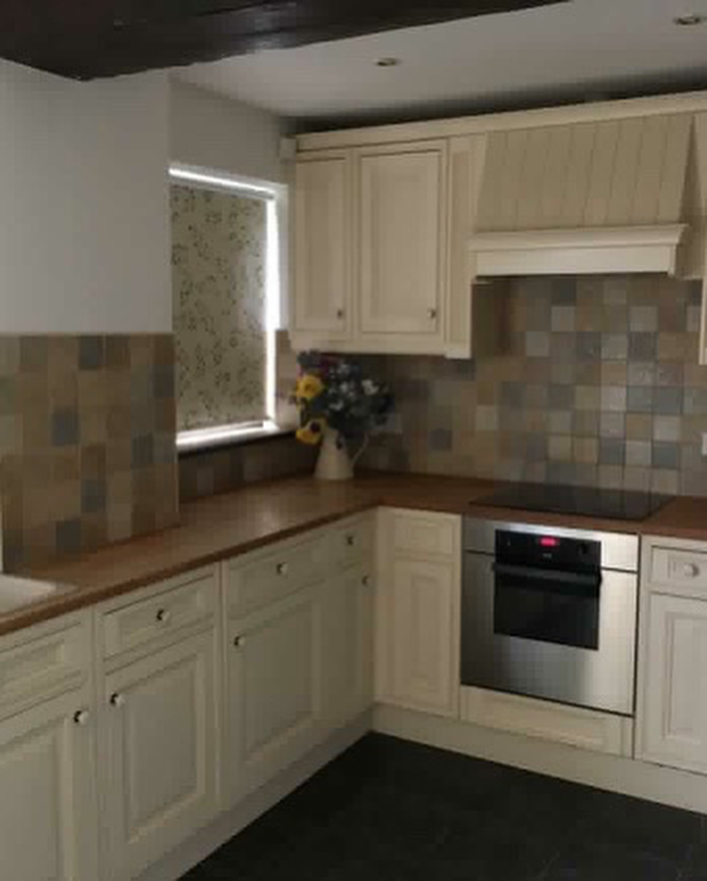
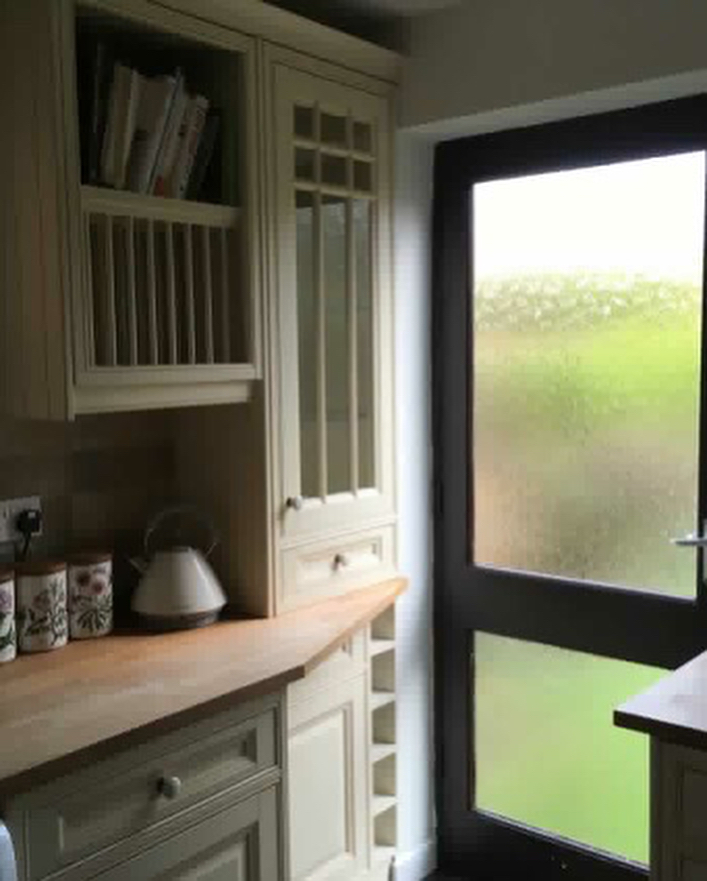
You could almost pin down the year it was installed. Everything had that late-2000s UK look about it: raised-panel doors with the stacked beading up the sides, a decorative range hood shaped like a little Georgian mantel, a wall-mounted plate rack built into the dresser, mullioned glass on the display cabinets, small white porcelain knobs on every door, an oak butcher-block counter, dark slate underfoot. And the finish that really dated the whole thing was the patchwork stone backsplash, a grid of small square tiles in mixed warm beige, soft tan, dove grey, and biscuit. That particular tile went into roughly a million British kitchens between 2006 and 2012 as the respectable country-but-modern default. A decade later, it had become the first thing most new owners wanted to rip out.
The full-gut fix she decided to skip
By the standard playbook, the fix was a full gut. Pull the tile. Swap the oak for quartz or pale marble. Change the raised-panel doors for flat slabs, or at least repaint them a safe soft white. Trade the porcelain knobs for brushed brass. In her corner of the country, a project like that easily runs £8,000 to £25,000, lives in the dining room out of cardboard boxes for weeks, and keeps the family eating takeaway while the electrician argues with the plumber about who gets to work first.
She did none of it.
One surface, one weekend, one specific grey
What she did instead was spend one weekend changing one thing. Not the tile. Not the counter. Not the floor. Not a single piece of hardware. Only the color of the cabinets, in a specific shade that you don’t usually see in a retail paint fan: RAL 7004 Signal Grey, satin finish, laid down by an airless sprayer.
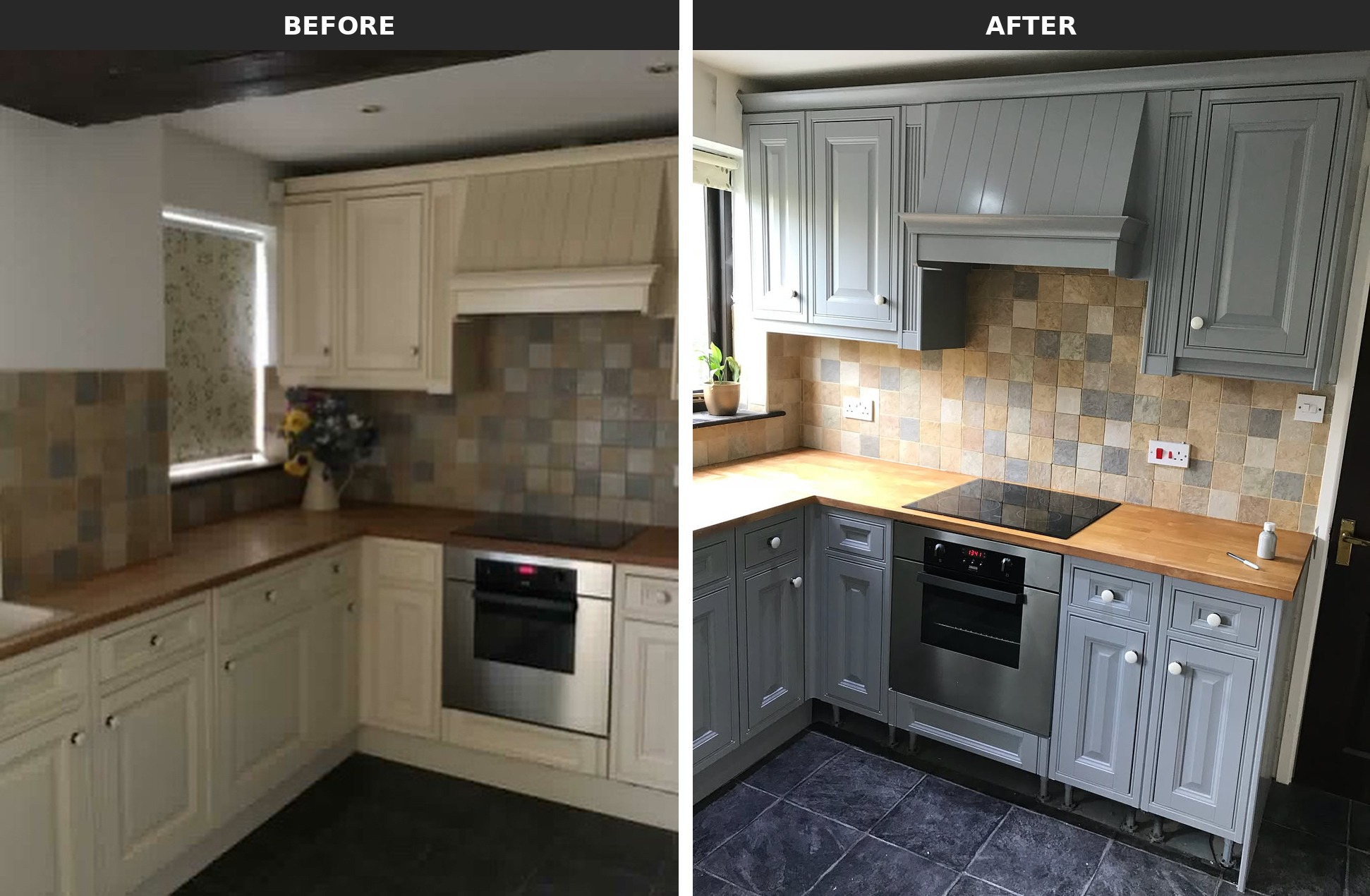
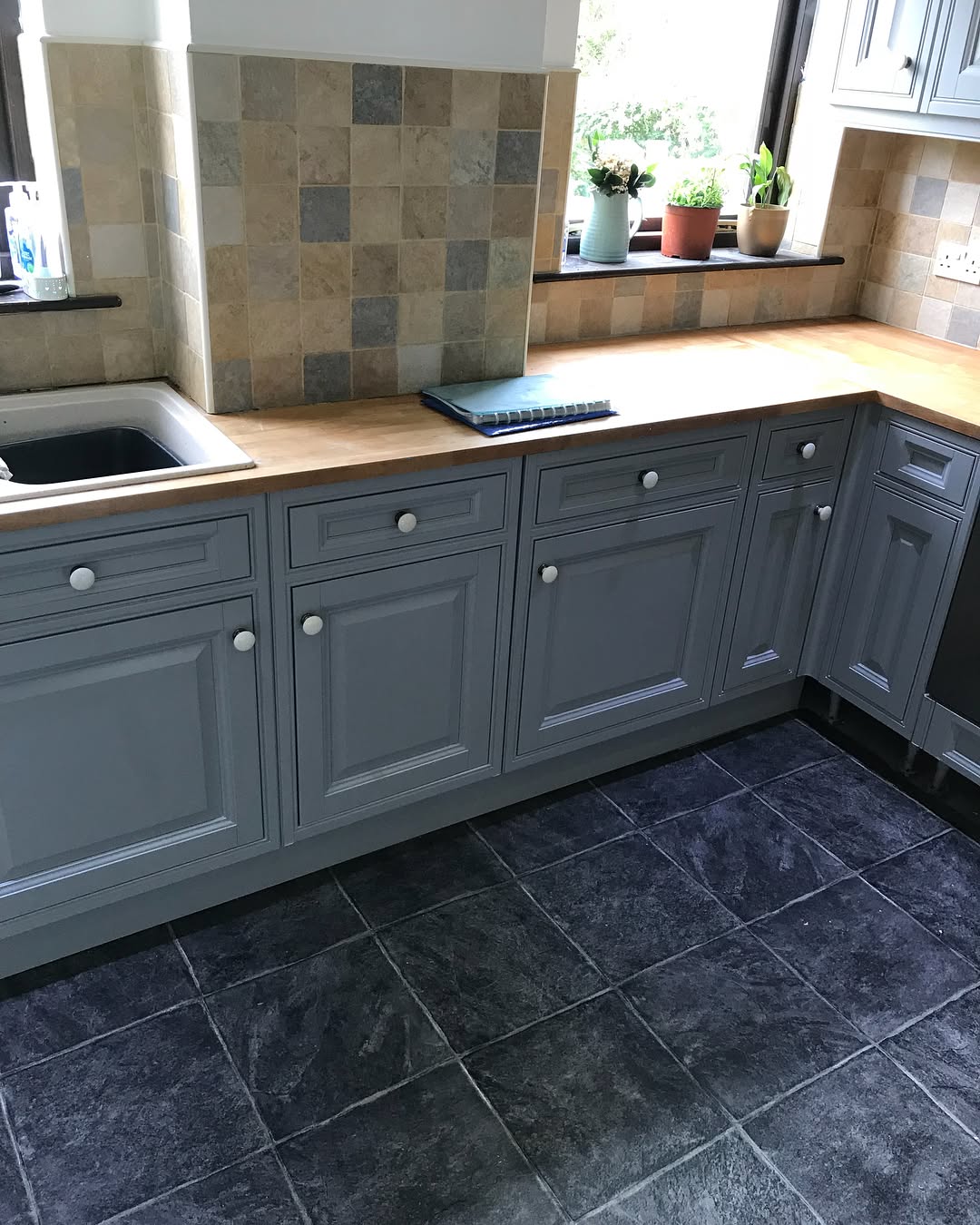
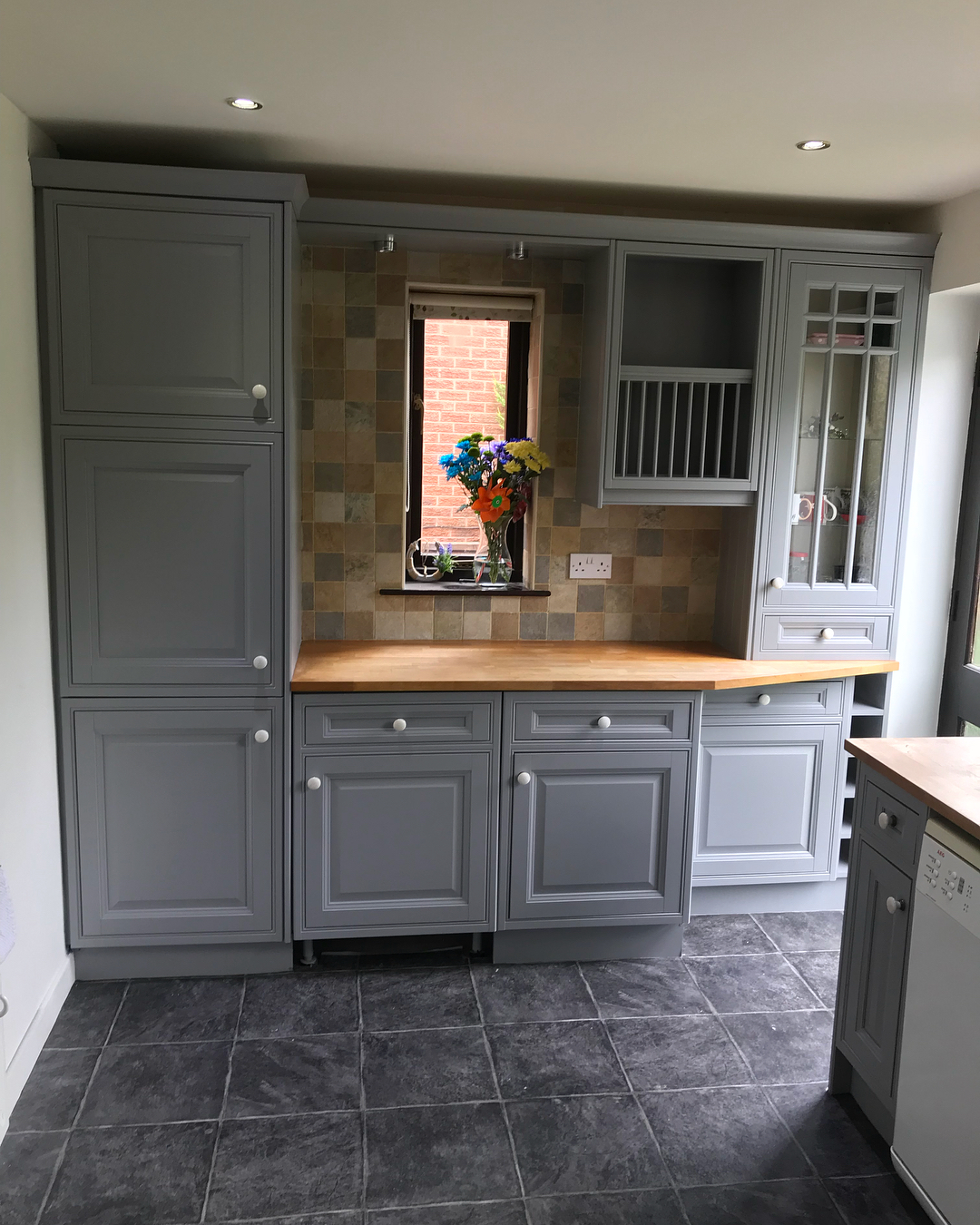
That was the whole project. Everything else in the room sits exactly where it was on move-in day. The patchwork tile, the oak worktop, the slate floor, the decorative range hood, the mullioned glass, the Zanussi oven, the white porcelain knobs, the window-sill plants, even the little vases of fresh flowers on the dresser. All untouched.
The prep took longer than the paint
The hard part was the prep, not the paint. The spray crew spent most of their first morning wrapping the room in plastic and masking paper, taping around every tile joint, every worktop edge, and every appliance door, then covering the slate floor in long paper runners so no overspray could settle on it.
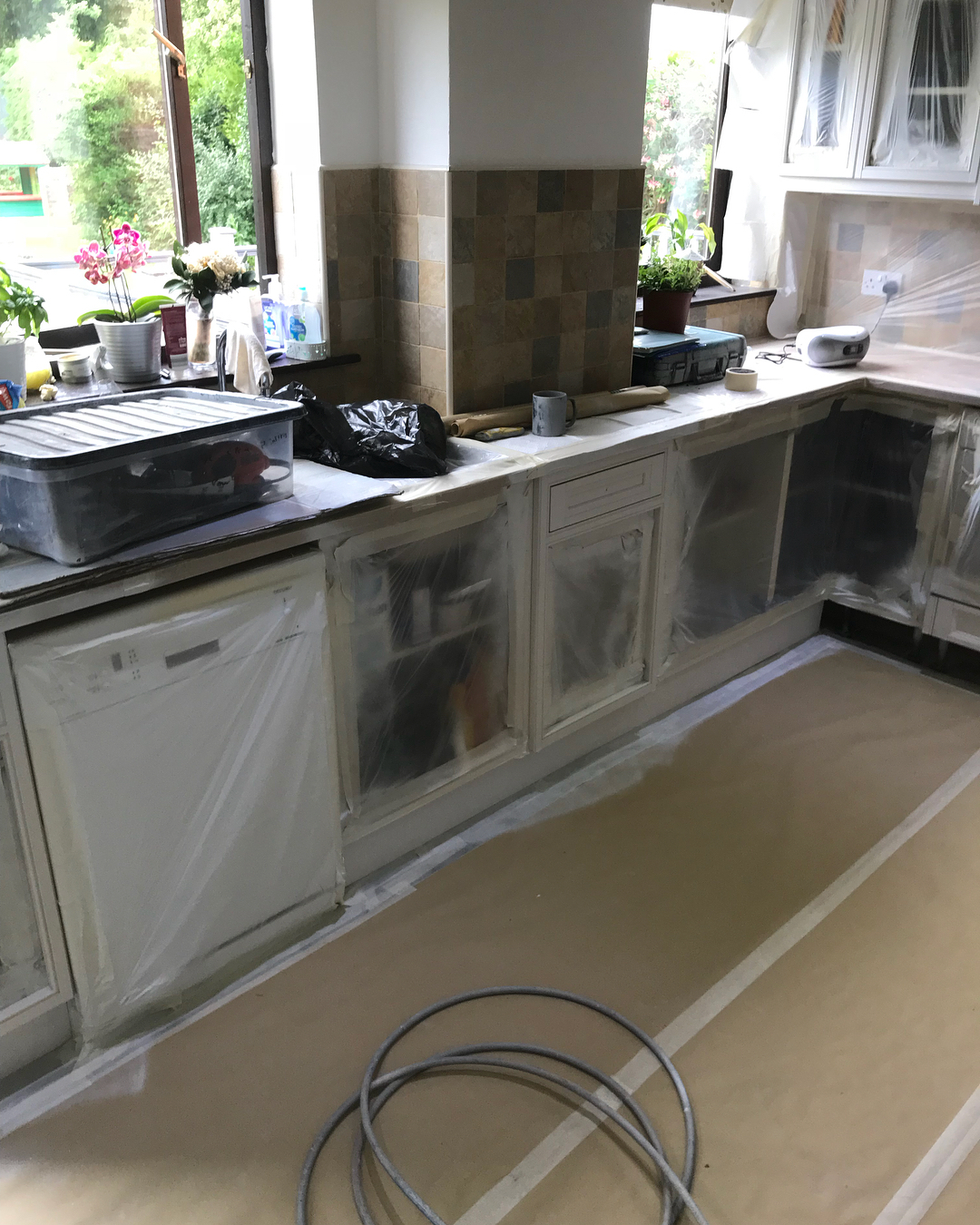
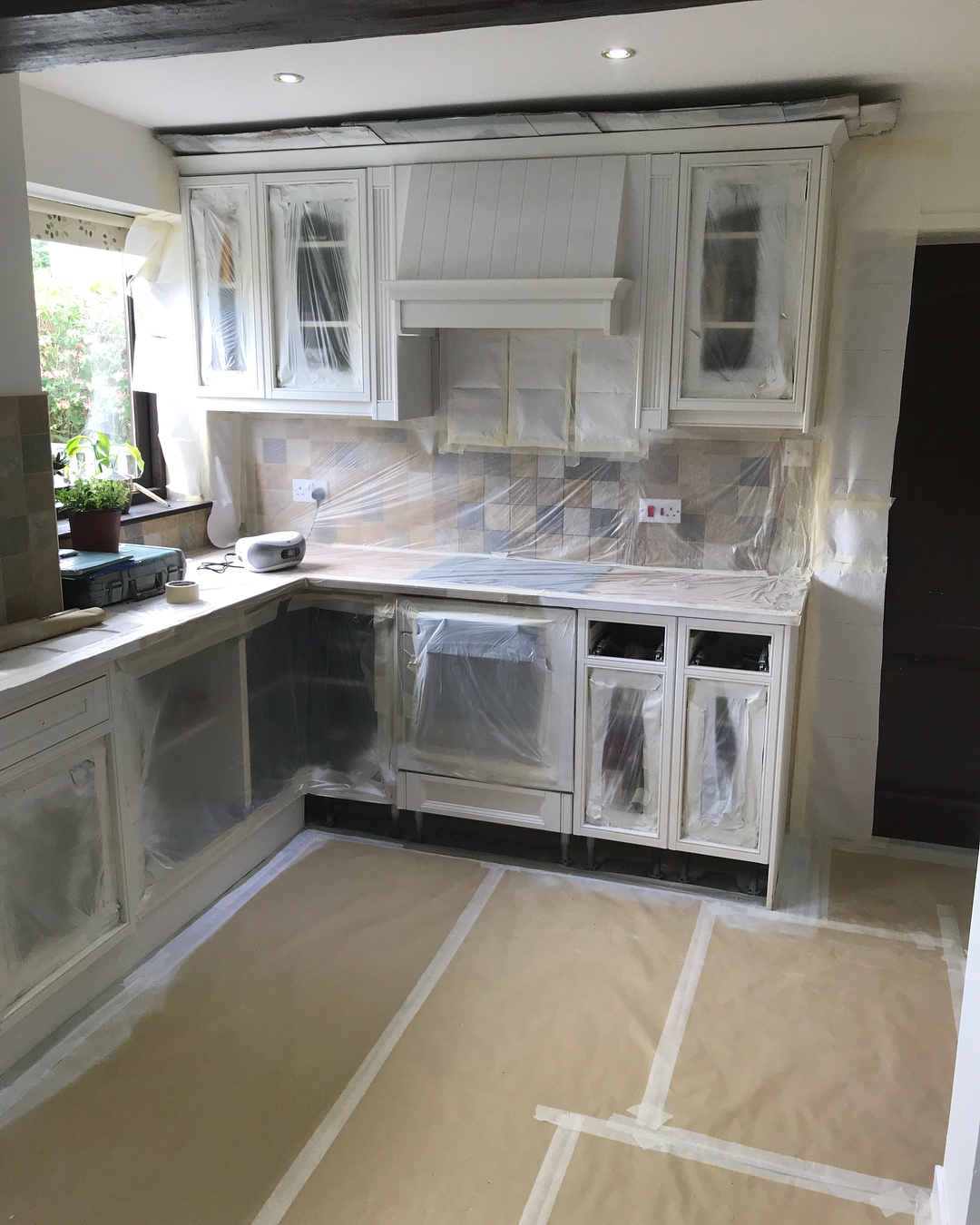
Once the room was fully sealed, they loaded up the sprayer and laid two coats of Signal Grey onto the cabinet fronts, the frames, and the decorative range hood. Nothing else got touched.
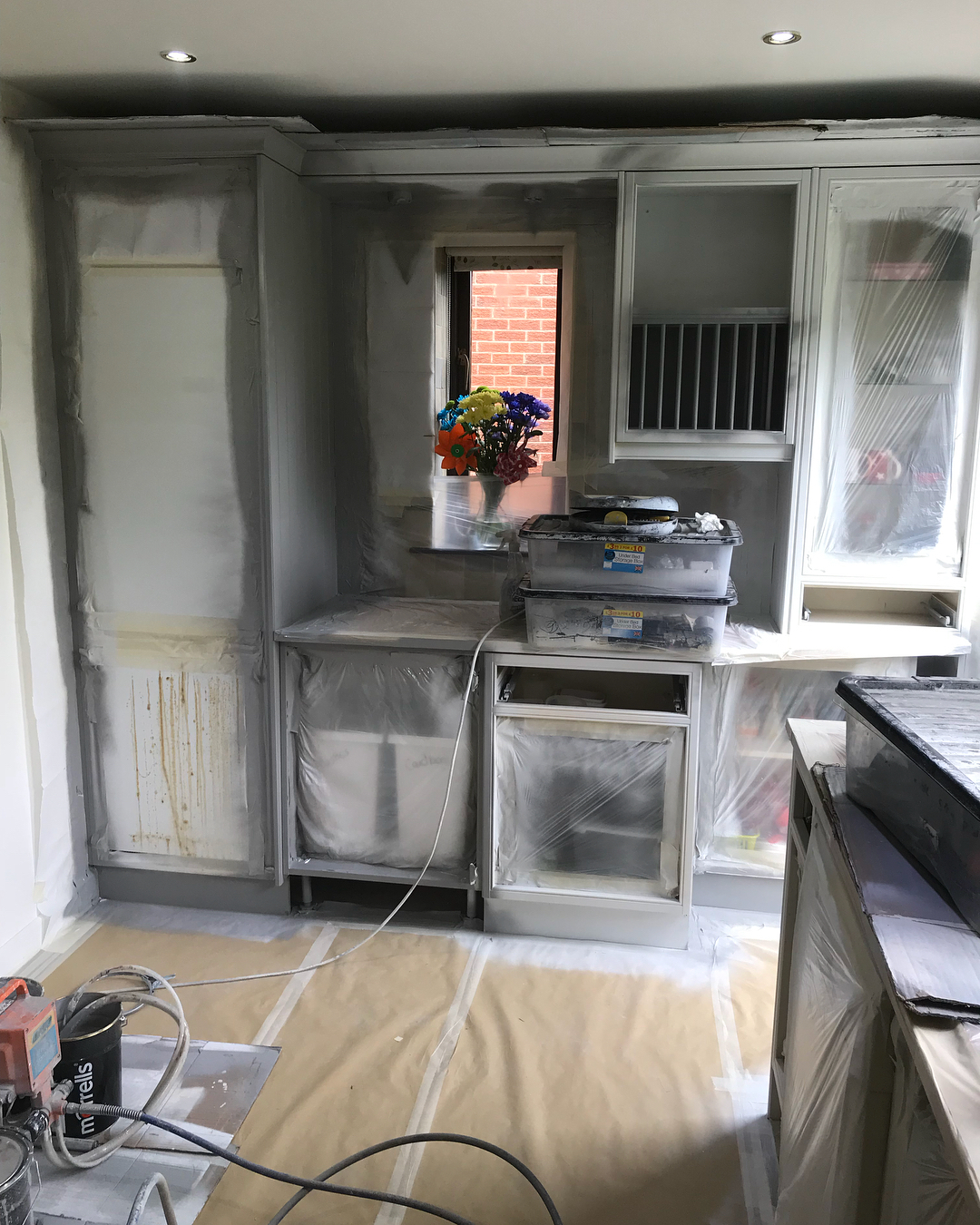
By the end of the second day, the plastic was coming off and the room was ready to live in again.

What the backsplash does against grey
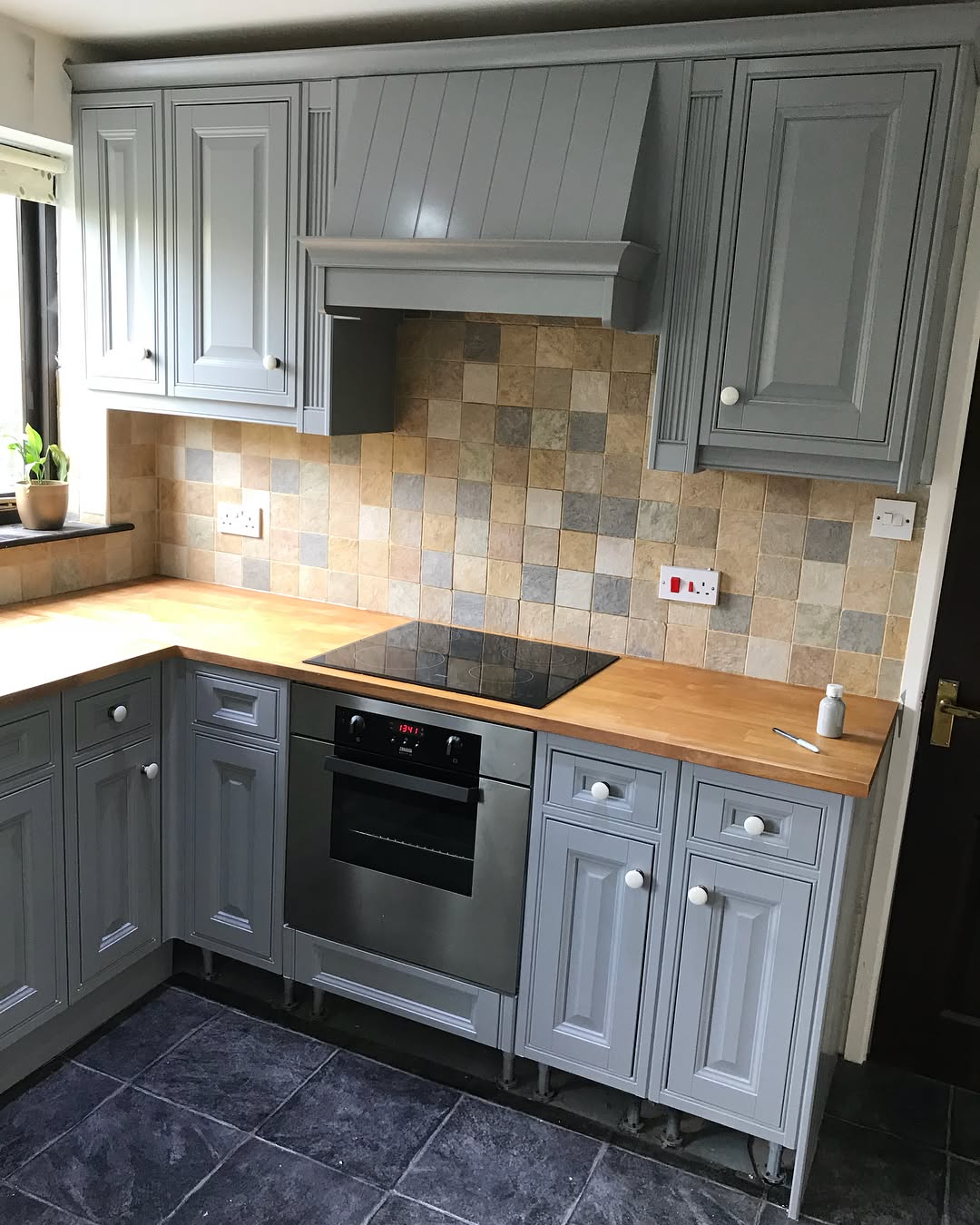
The real surprise was what happened to the backsplash. Against cream cabinets, that patchwork tile had read as a random jumble of colors, which is exactly why so many owners end up hating it. Against the Signal Grey, the same tile suddenly looks like a carefully chosen palette. The cool grey squares in the tile echo the cabinets. The warm tan squares play off the oak counter. And the whole backsplash now reads as if it was picked to go with a grey kitchen, instead of looking like leftover inventory from a previous owner’s renovation.
Why Signal Grey works where other greys wouldn’t
The shade itself is doing careful work, and it’s worth knowing which grey she used, because not every grey would have pulled this off. Signal Grey is a mid-tone architectural color with a faint warm cast to it, not the icy blue-grey that was popular at the same time. That little bit of warmth lets it sit comfortably next to the oak, and it keeps the tile from feeling stranded. The sheen matters just as much. A glossy finish on those traditional raised panels would have thrown the whole kitchen back into the 1990s. Full matte would have pushed it the other way, toward distressed farmhouse. Satin lands in the quiet middle where an old door profile can still read as current.
The one-change rule worth stealing
What’s most useful to copy here is her discipline. Every design feed in her algorithm was telling her to swap the knobs for brass, flatten the hood, and bin the tile. She ignored all three suggestions, trusted one good decision to carry the room, and saved thousands of pounds and a month of disruption in the process.
If you’ve inherited a kitchen that is structurally fine but visually tired, this is the shortcut worth copying. Take ten minutes to figure out which single surface is dragging the rest of the room backwards. In most kitchens, that will be the color of the cabinets rather than the tile or the counter. Change only that one surface, and have the nerve to leave everything else alone.