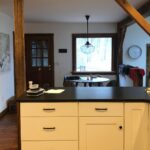

If you bought a house in the last decade and the staircase came with honey oak railings, you already know the feeling. The floors can be new. The paint can be fresh. The kitchen can be beautiful. But the stair sits there glowing orange and dragging the whole room back twenty years.
That is where she started. Every piece of wood on the stair matches the same warm honey tone. The wainscoting around it is clean. The chandelier is modern. The dining furniture is not the problem. The stair alone kills the room.

The honey oak problem almost nobody solves right
Builders put this exact railing in millions of American homes between the 1980s and the early 2000s. It was cheap, strong, and warm looking at the time. Thirty years later the rest of the house has moved on and the stair stayed stuck in 1994.
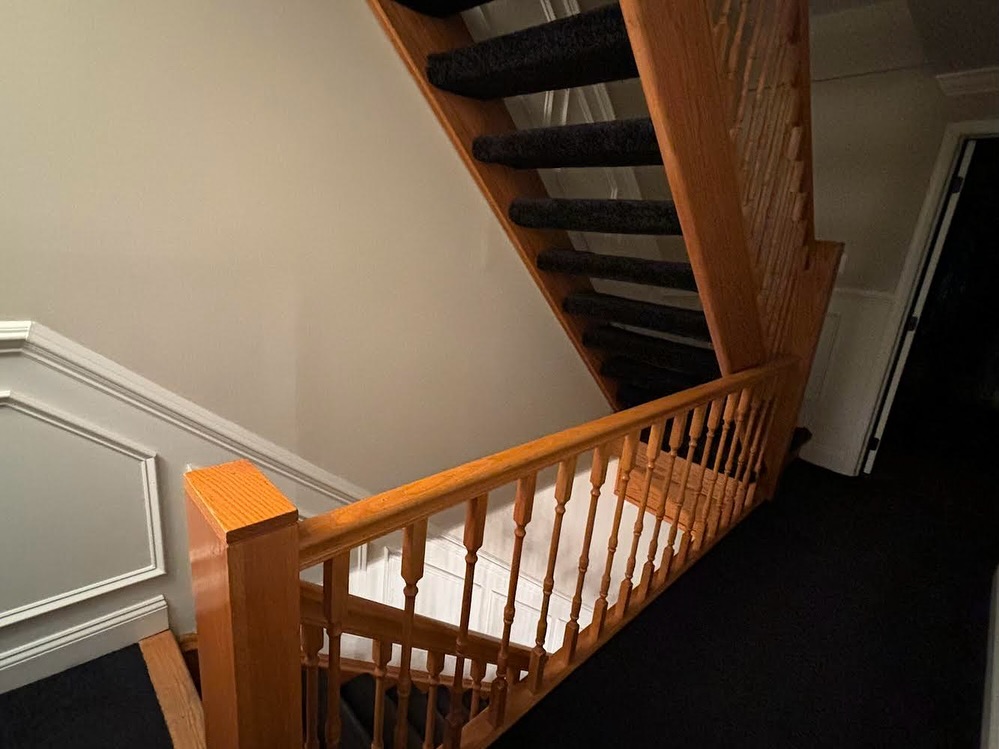
From this angle you can see why it dominates. The railing sits at eye level and runs the length of the room. Whatever color it is doing, that is what your brain reads first every time you walk in.
Why the usual fixes land flat
Most homeowners try one of two things, and both of them disappoint.
The first move is painting the whole railing white to match the spindles and the trim. For about a week it feels fresh. Then the stair blends straight into the wall, the room loses its weight, and the whole thing starts to feel builder-grade instead of upgraded.
The second move is grabbing a single can of Dark Walnut or Jacobean, brushing it on, and calling it done. The catch is that both of those stains are warm on their own. You just spent a Saturday sanding, and you traded orange oak for a slightly browner version of orange oak. If your floors lean gray, smoky, or cool at all, the fight is still there.
What she actually did with the railing
She picked a harder path and the result shows it.
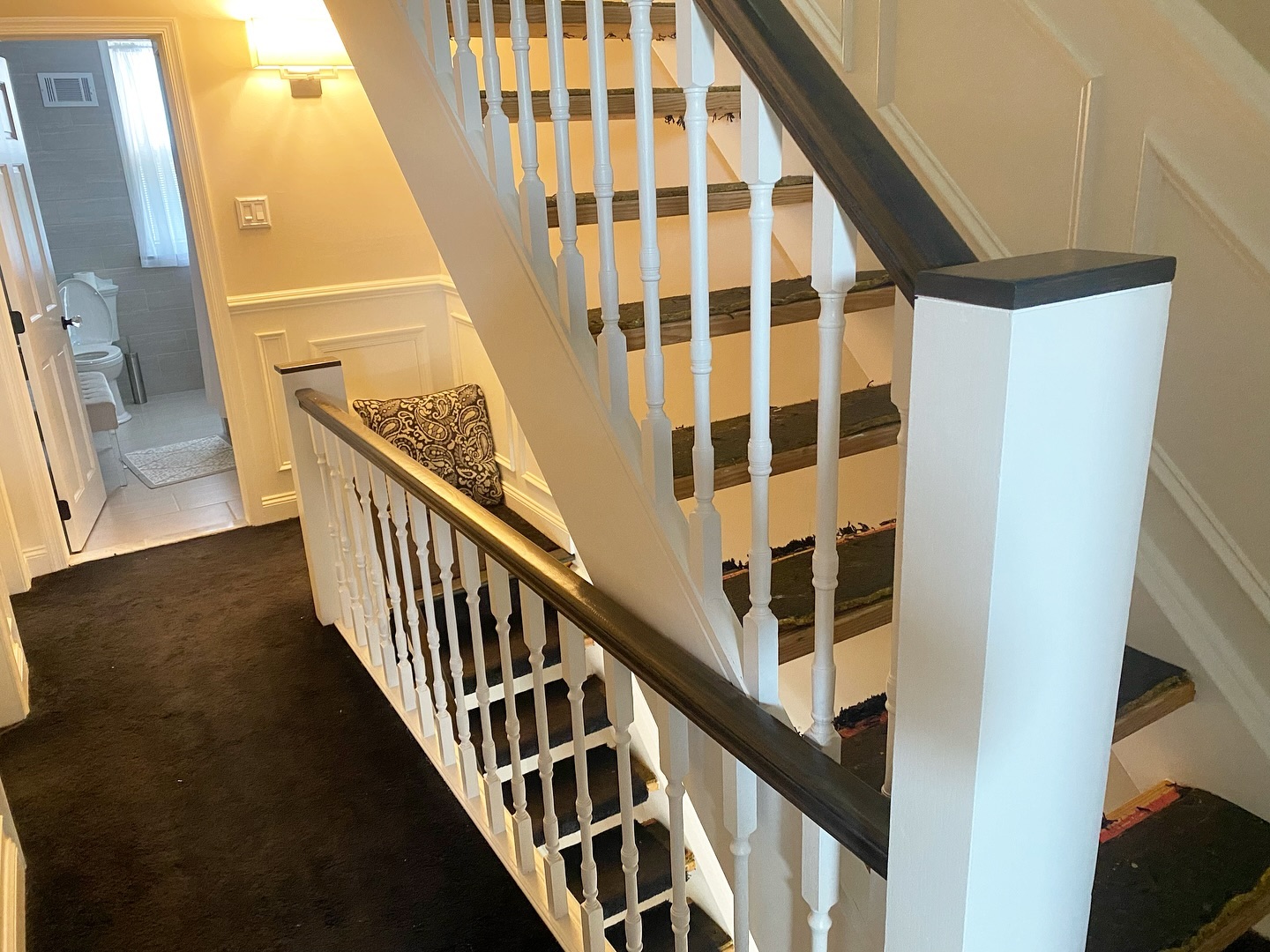
The spindles got Sherwin Williams Pure White, which is the standard playbook. The real work was on the railing itself. She did not scuff sand and brush over. She stripped the entire handrail down to raw wood. Stain only reads true on fresh grain. Put it over an old orange finish and the warmth bleeds through everything you add on top.
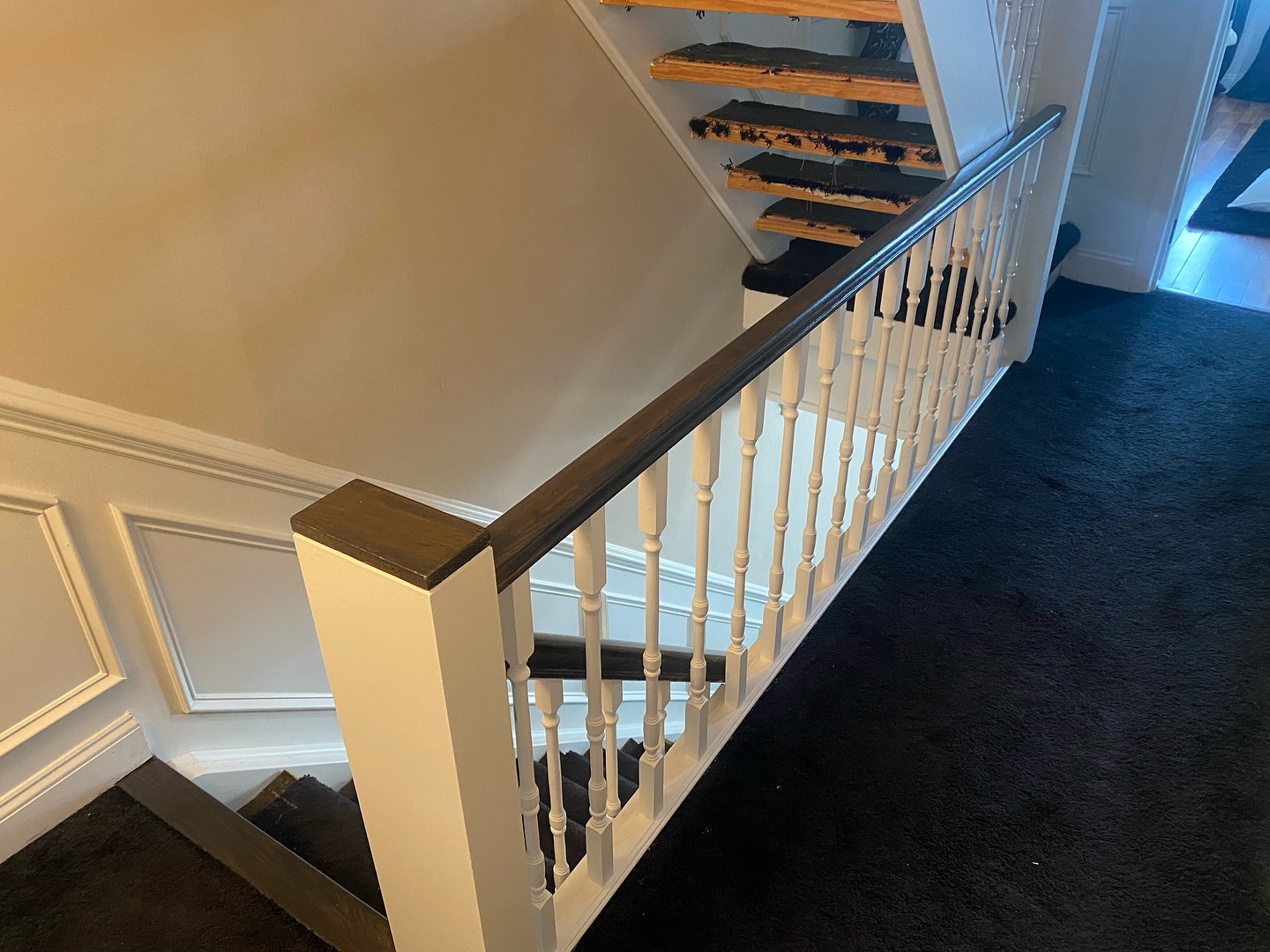
Then came the move almost no DIYer thinks to make: she mixed her own stain. Three cans of Minwax, blended on a scrap piece of oak until the shade matched her new flooring exactly. The recipe was Dark Walnut for depth, Phantom Gray to pull the warm orange out of the mix, and True Black to push the finish into the same smoky range as the floor. That shade is not on any store shelf. It only exists in her house.
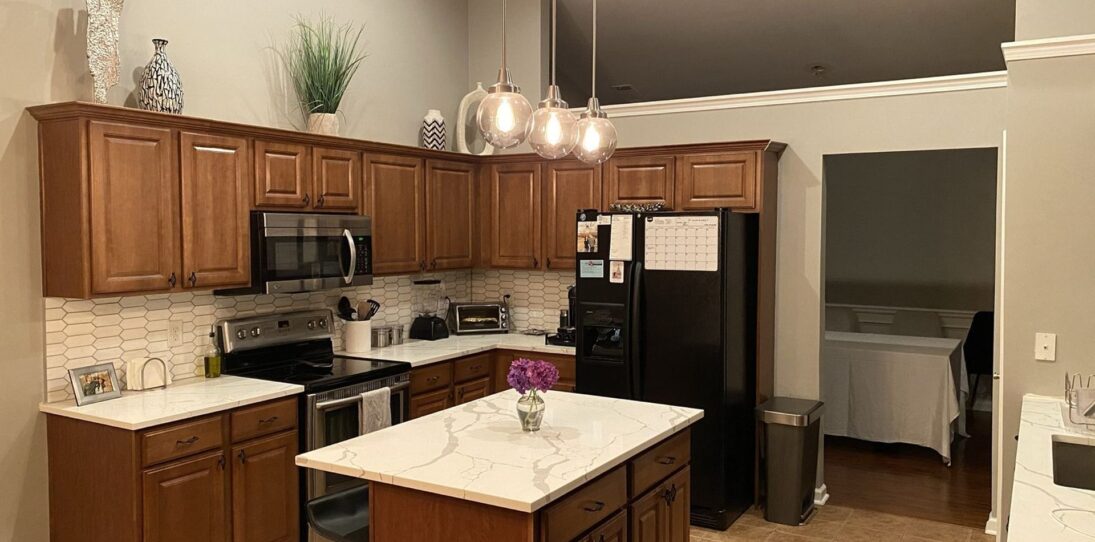

The quiet rule designers follow with railings
In any room with a staircase, your eye tracks two long horizontal lines: the floor line and the handrail line. When those two tones agree, the whole room reads intentional. When they argue, the space feels unfinished no matter how good the kitchen, the paint, or the lighting is.
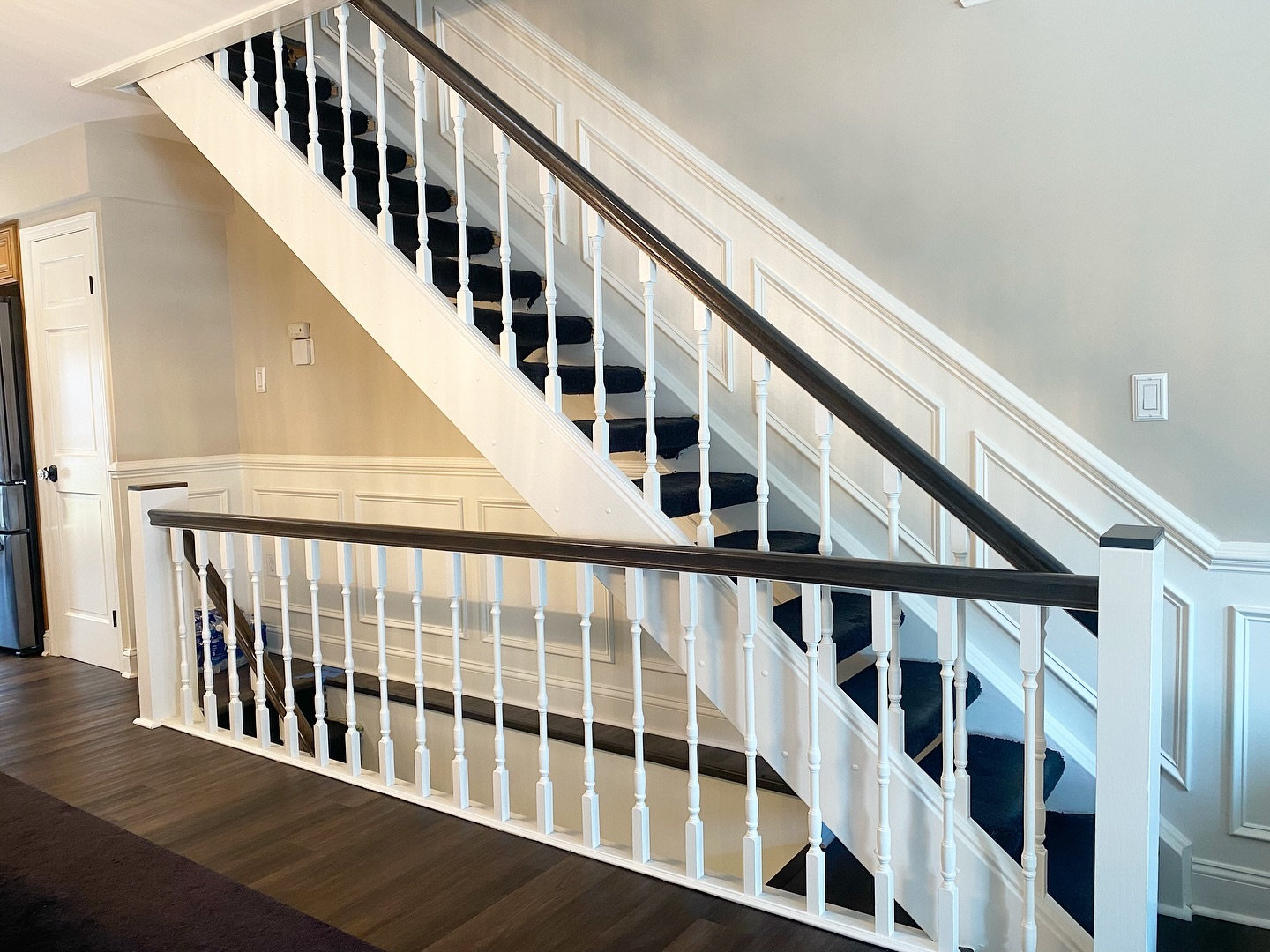
That is the quiet trick happening in this shot. The handrail and the floor now hold the same cool, smoky tone. They read as one dark line that frames the whole first floor, instead of two mismatched pieces fighting for attention.
Side by side, you can see what shifted
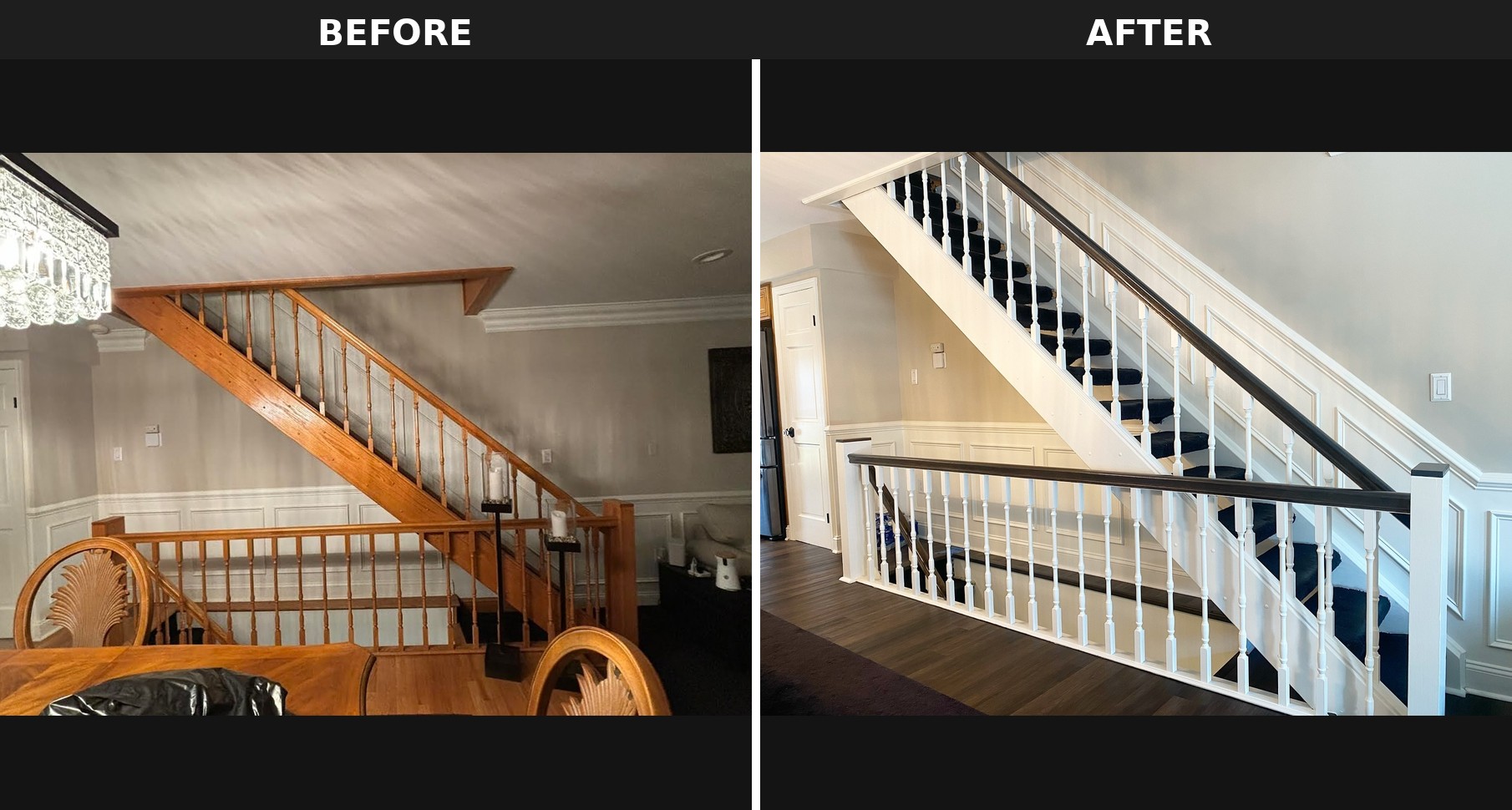
Same stair. Same spindles. Same wainscoting. Same room. Only the color on two surfaces changed, and the whole house grew up by about a decade.
The grain is where you can tell it was mixed
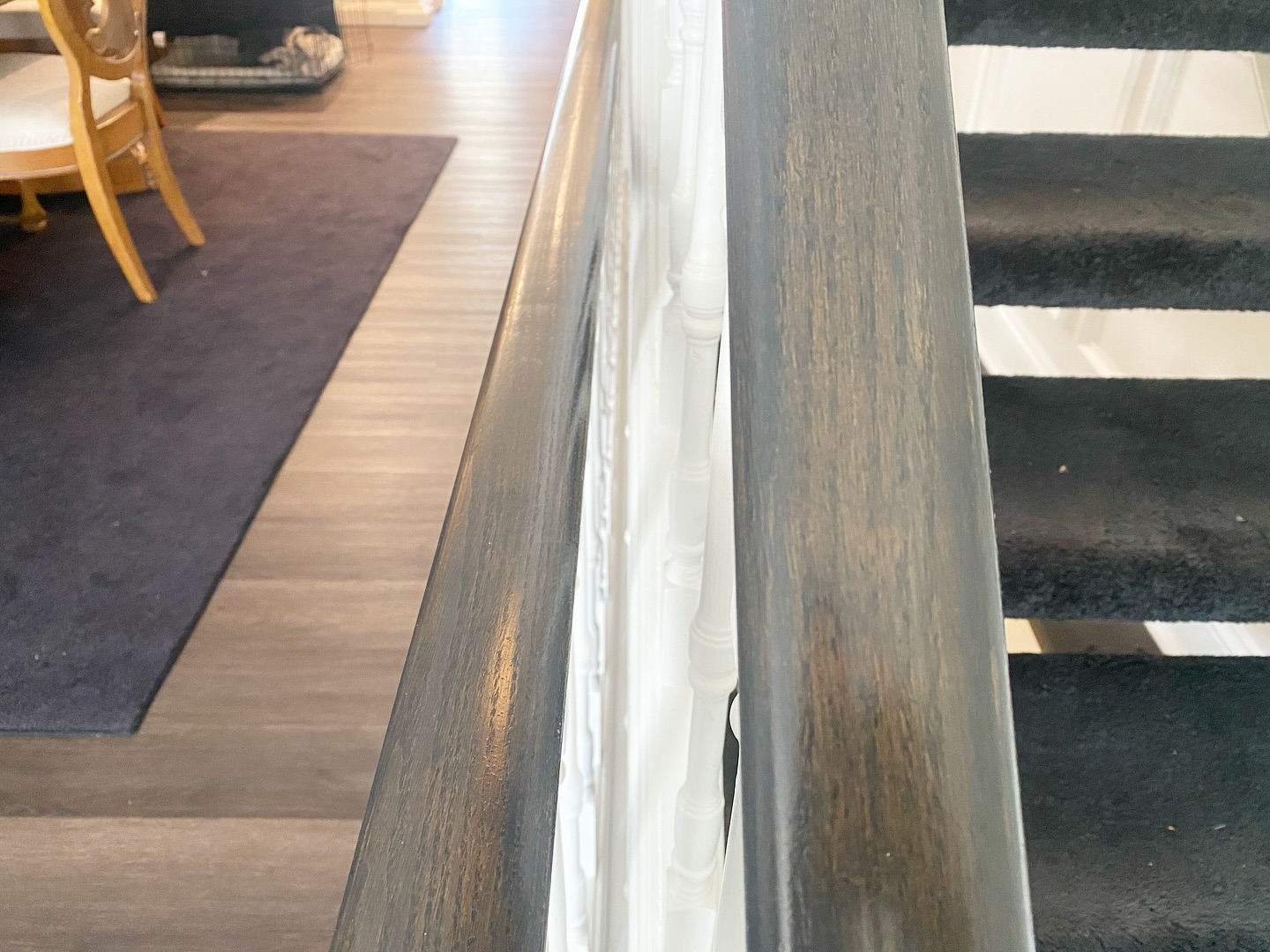
Up close the three-can blend proves itself. The grain still moves through the finish. There is depth, not flatness. A single can of Dark Walnut alone would have landed muddy brown. This one looks custom because it is custom.
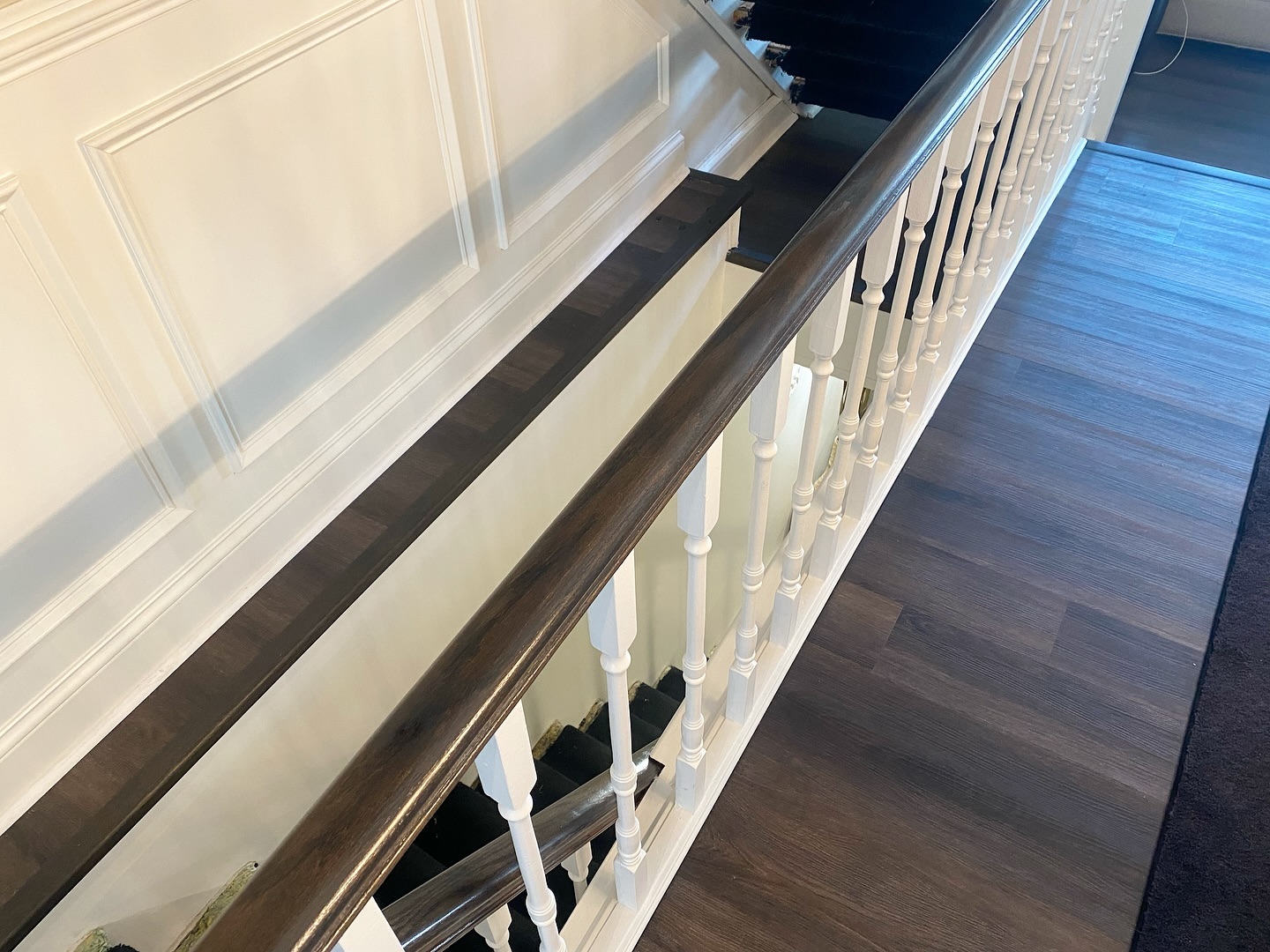
Watch what happens when the handrail and the floor sit in the same frame. The two tones are nearly identical. That is not luck. That is the whole point of the blend.
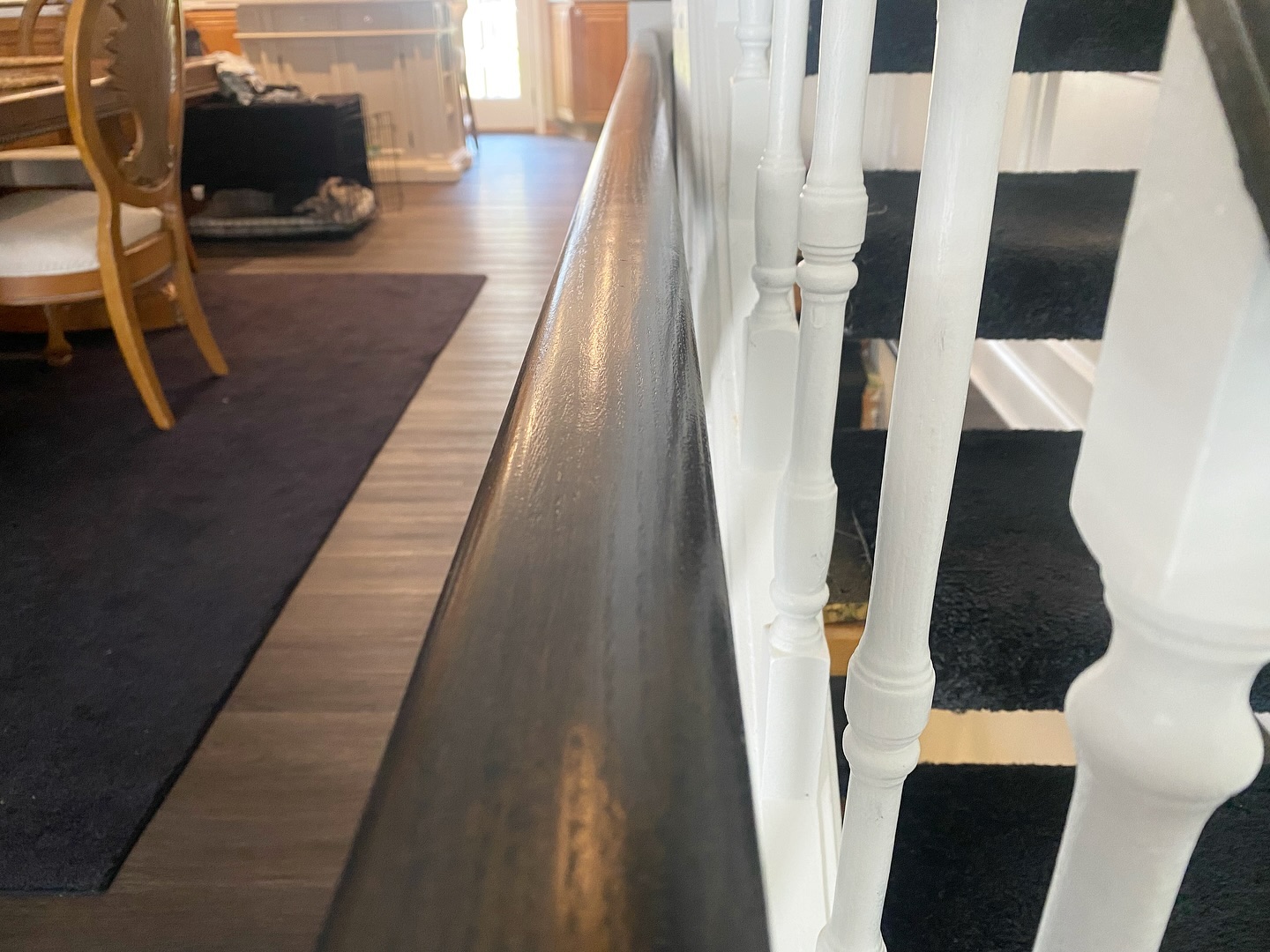
Even the side profile lands clean. The sheen is subtle, the color is deep without going black, and the whole railing feels like it belongs with the floor underneath it.
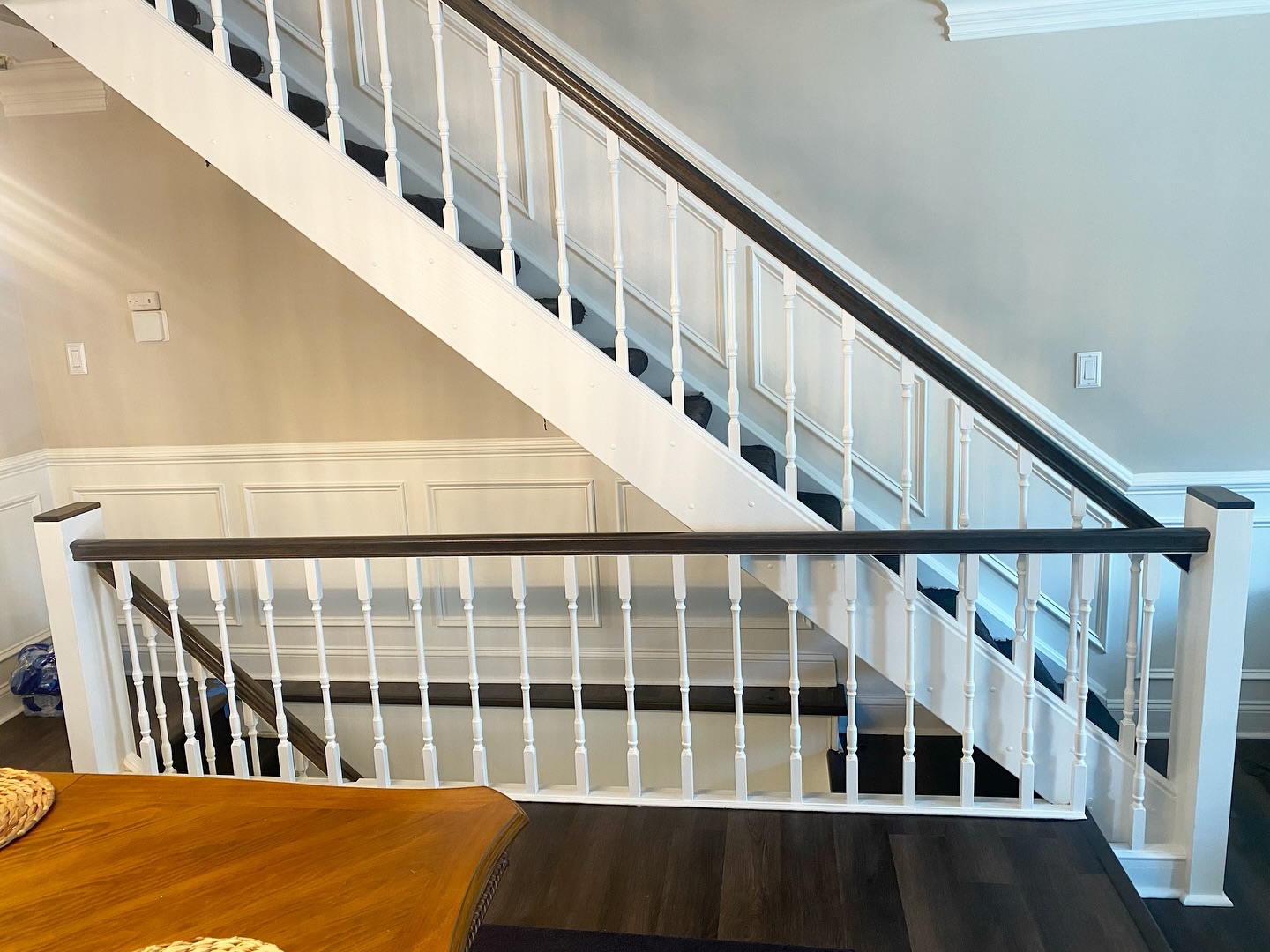
From the dining room the staircase finally feels like a feature. The two-tone contrast gives the room a backbone it did not have before. The eye bounces between the white spindles, the dark cap, and the floor, instead of locking onto a slab of orange.
If your railing looks the same, start here
The lesson is not about which stain color to buy. It is about the method.
Strip the handrail all the way down to raw wood. Pull two or three Minwax cans that match the dominant tones in your floor. Mix a sample on a scrap piece of oak before you touch the real thing. A single stock color almost always misses. A quick blend is how finishers hit the shade a designer would actually specify.
Spend one more afternoon on the sample board and the stair stops costing you the whole room.