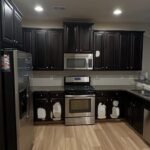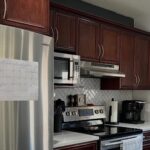

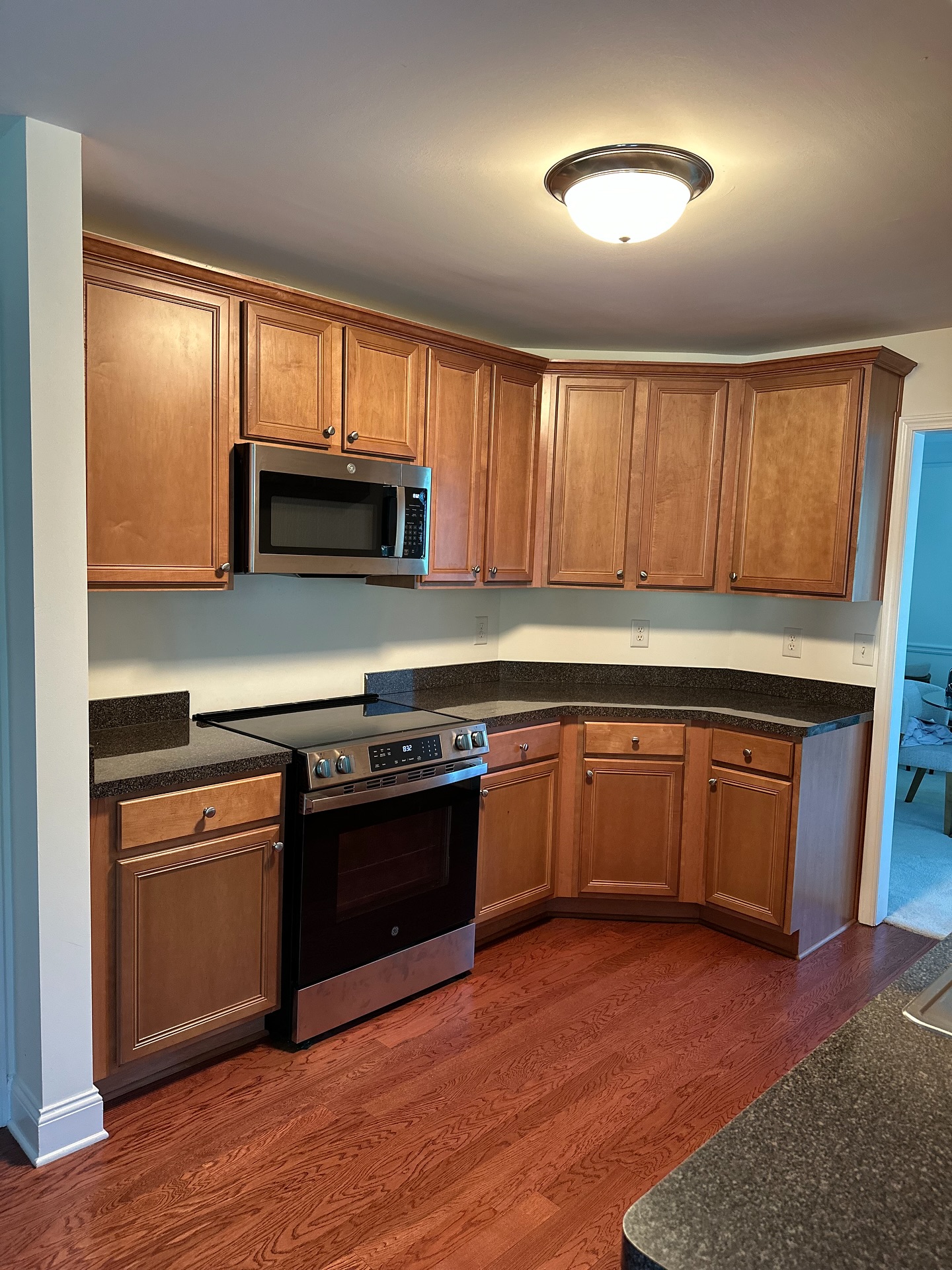
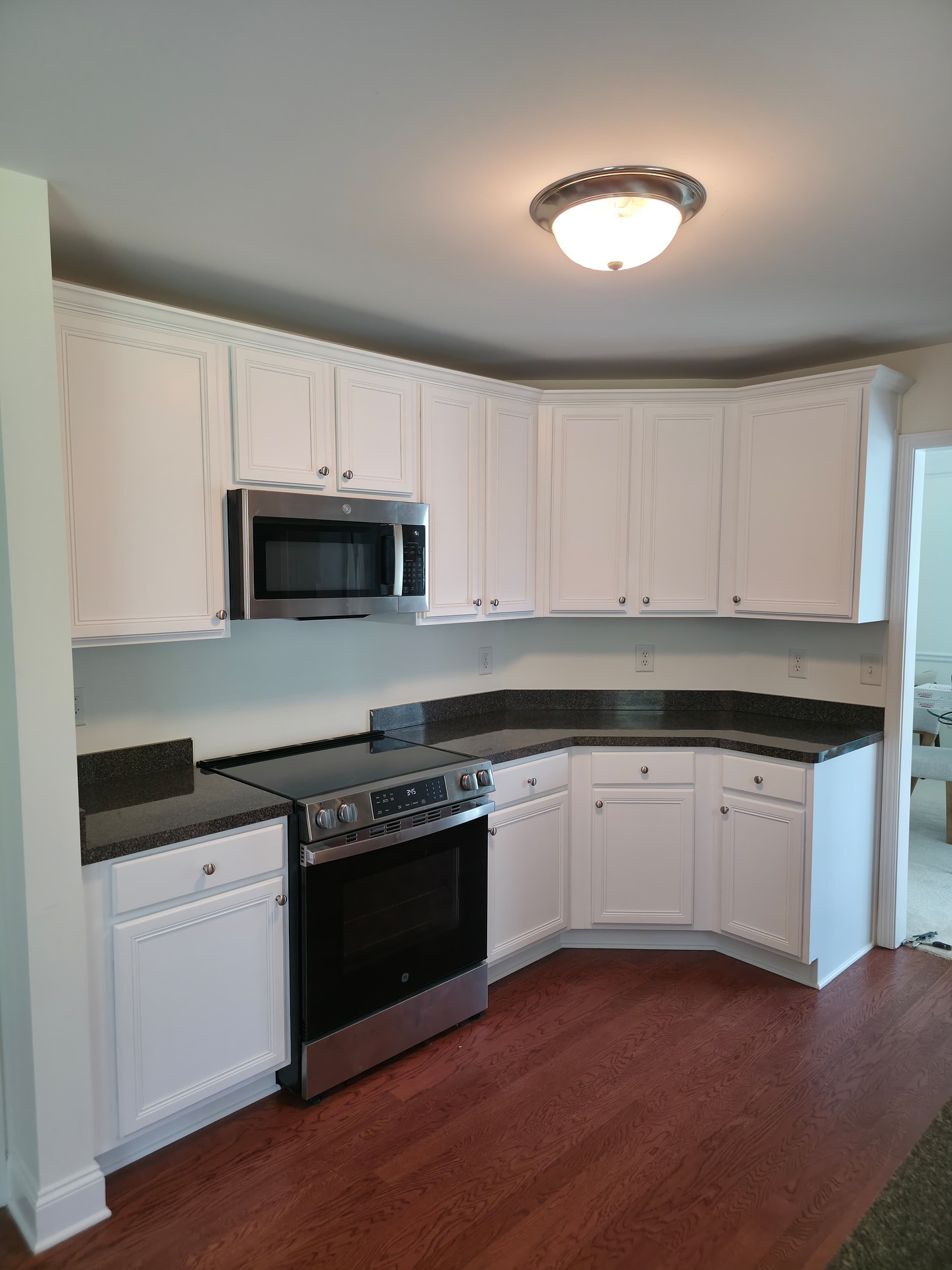
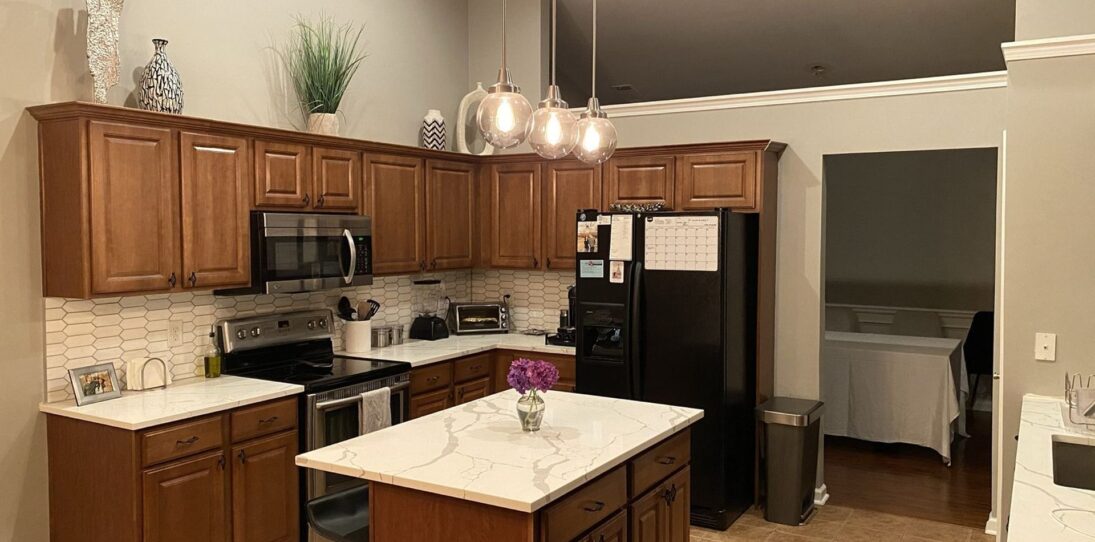
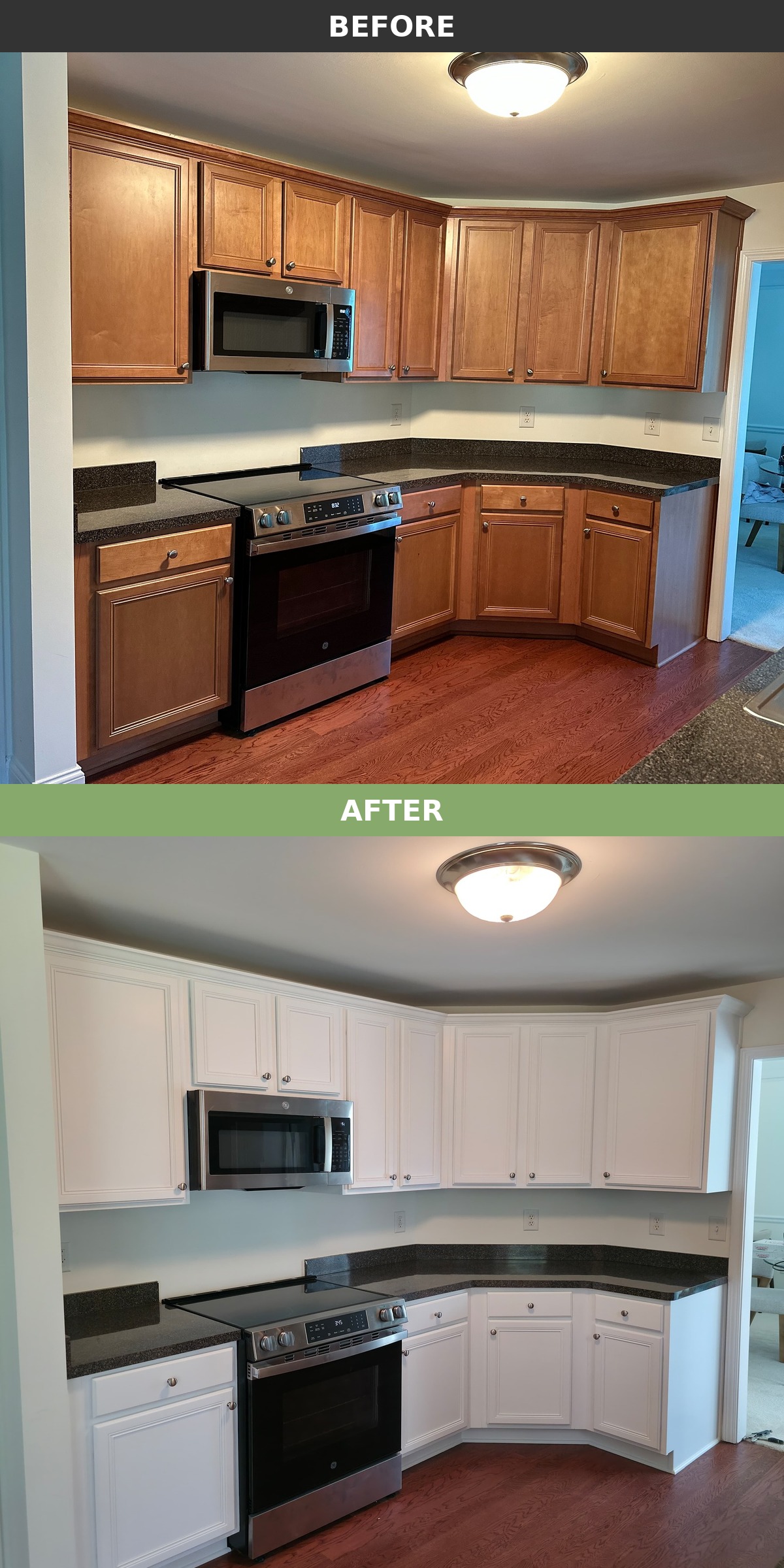
This kitchen had everything working. Solid cabinets, dark granite still in great shape, stainless appliances, hardwood floors with life left. But when the owners walked in, they didn’t see any of that. They saw a honey-maple time capsule from around 2008. Three days of a paint crew’s time later, same kitchen, different century. One color did all the work.
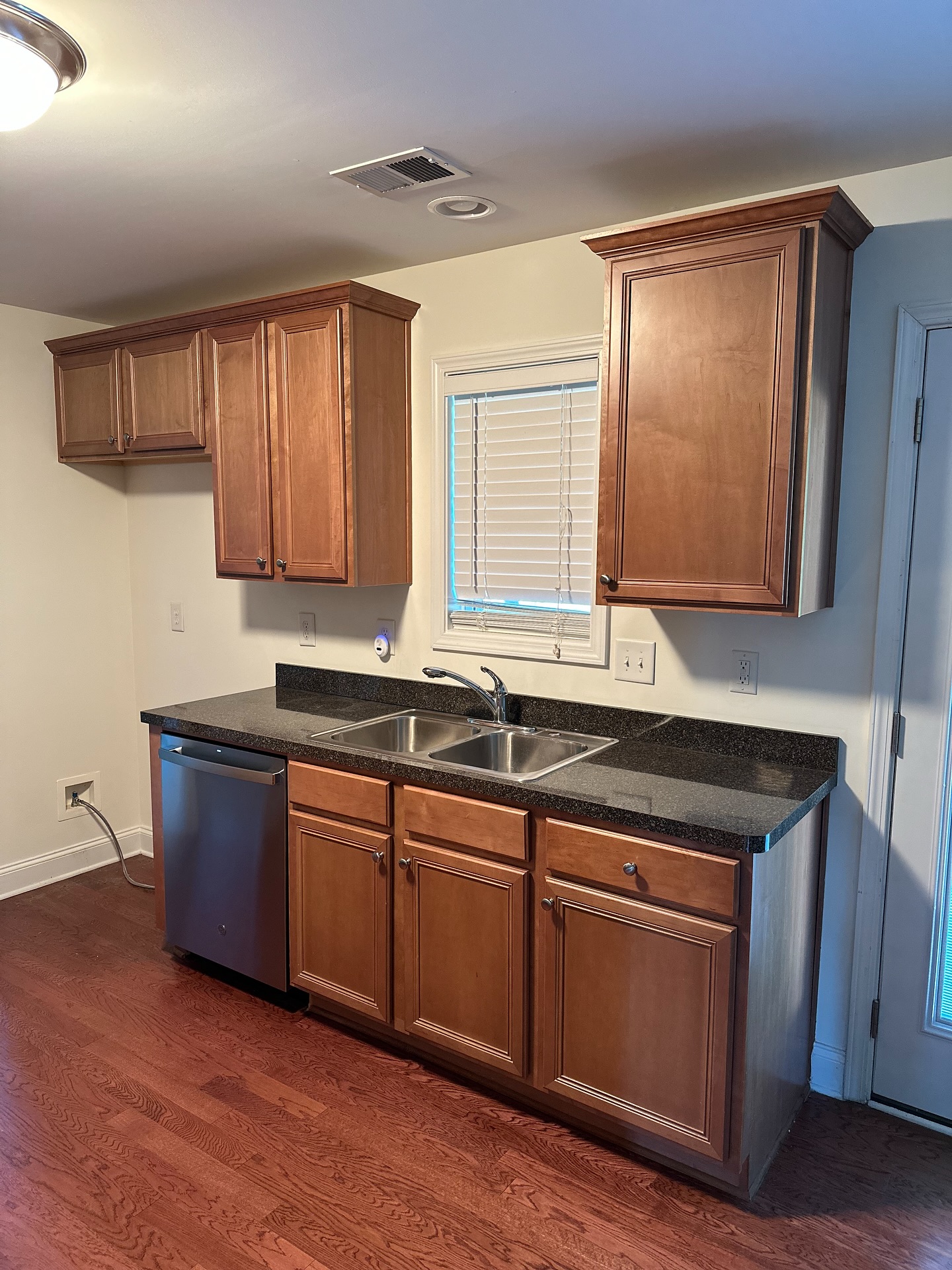
Nothing was broken, just tired
This kitchen would pass any home inspection. Nothing rattled, nothing dripped, no doors sagged on their hinges. On a listing sheet it would sound great. In person, you’d clock the vibe in about two seconds. The whole room felt a decade behind the rest of the house.
The one undertone that ages every builder kitchen from this era
Between about 2000 and 2015, nearly every US builder kitchen came in the same package. Honey maple or cherry raised-panel cabinets. Dark speckled granite to “elevate” them. Brushed nickel knobs. Stainless everything. At the time, this was the upgrade tier. Today, that honey-orange wood tone is the single loudest signal that your kitchen hasn’t been touched in 15 to 20 years. And it drags everything near it down. Counters, floors, window trim all start looking dated by sympathy. The wood anchors the room to 2008.
The call: a painter, not a contractor
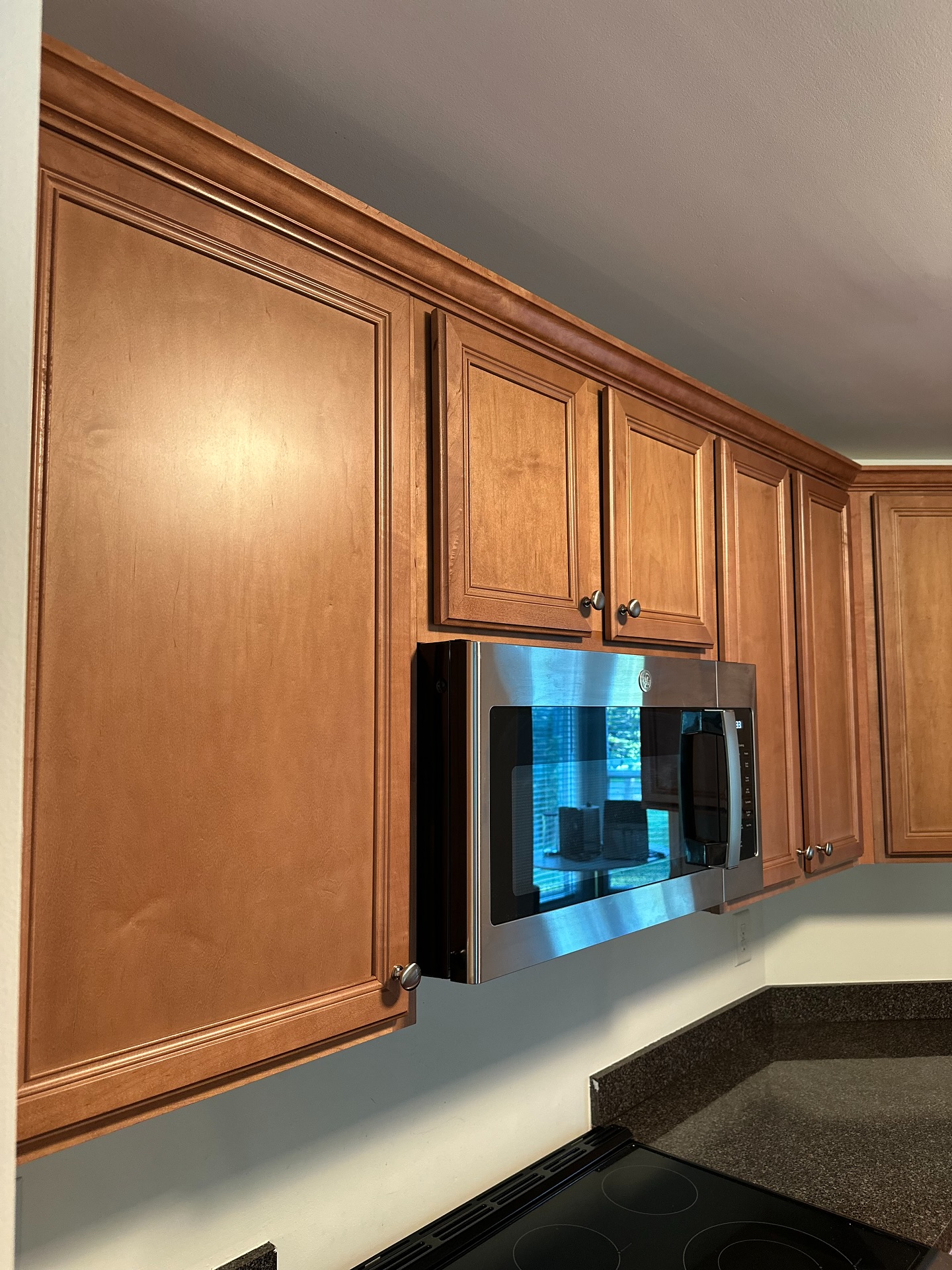
The owners didn’t call a remodeling company or shop for new cabinet doors. They called a painter. Every piece of woodwork you see in the after photos is the exact same piece from the before. Different coat, same bones.
Why BIN shellac primer is the step nobody should skip
The usual DIY failure point sits right here. Honey maple and cherry push tannins through standard latex paint, and a few months after you roll it on, the bright white you were so happy about has turned a dingy yellow. BIN shellac primer locks those tannins in before they can bleed. Two coats of it are the quiet reason this job will still look clean five years from now. Skip it and you’ll be repainting by spring.
Why Extra White, not just any white
Sherwin-Williams has a whole shelf of whites, and most of them pull in one direction. Some carry a warm cream undertone, others go cool and almost blue. Extra White (SW 7006) is their cleanest neutral. It stays out of whatever your room’s natural light is doing. Next to warm wood floors like these, it holds its ground instead of turning yellow at sunset or gray in the morning. That restraint is the whole trick.
Three days, and the family was back in the kitchen
Day one was prep, which honestly is 70% of any good paint job: degrease, sand for grip, mask the counters, tape every edge. Day two, both coats of shellac primer. Day three, two coats of Gallery Series satin in Extra White, plus cleanup. No plumbers, no electricians, no weeks-long dust cloud. One crew, three days, out.
The counters nobody expected to love again
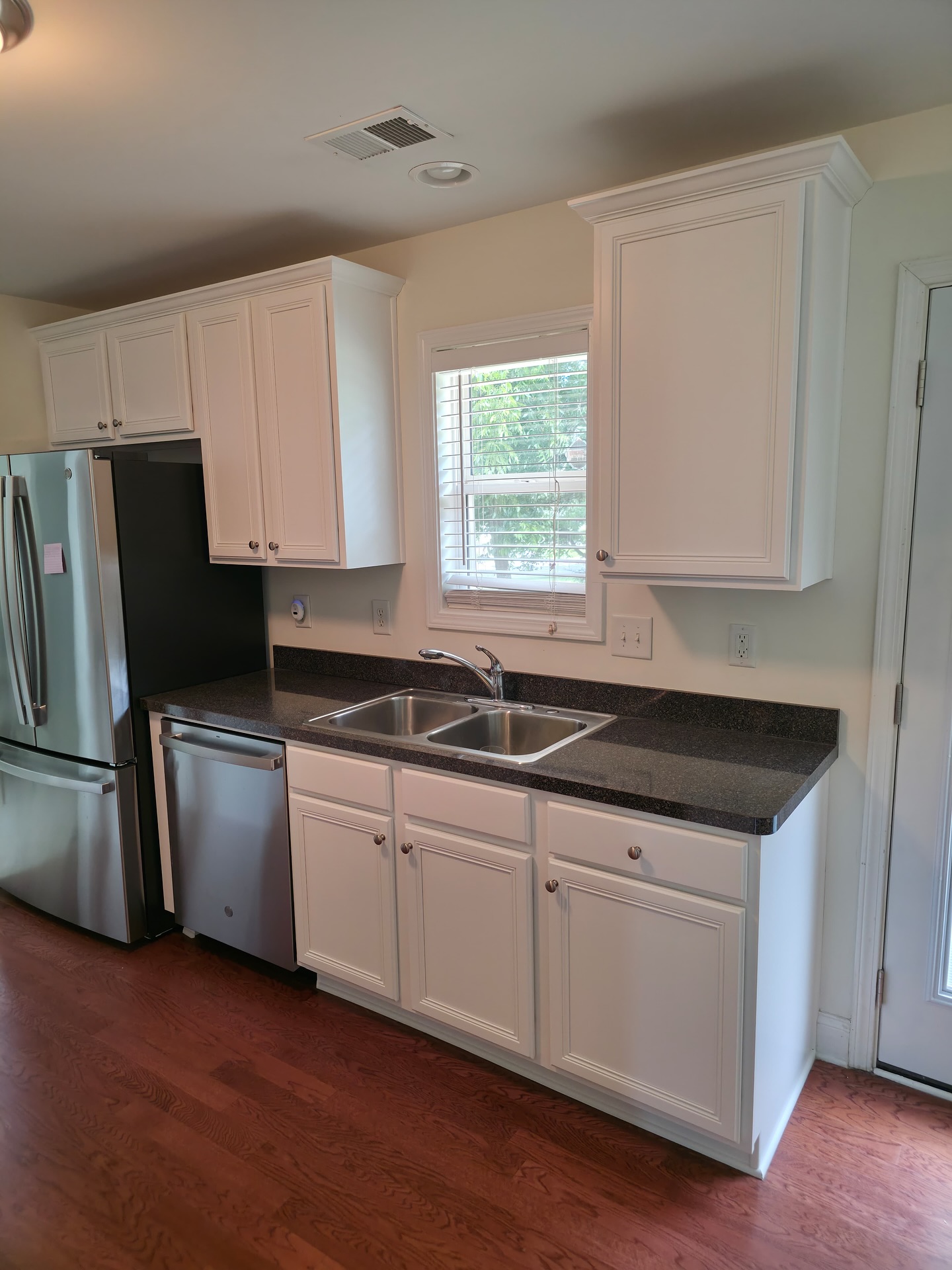
Here’s where it gets interesting. The dark speckled granite that read tired against the honey wood suddenly looks intentional. The flecks pop. The depth comes through. Nobody resealed a stone or polished an edge. The counters just started reading like someone chose them on purpose. The context around them finally caught up.
Same knobs, same hinges, same fixtures
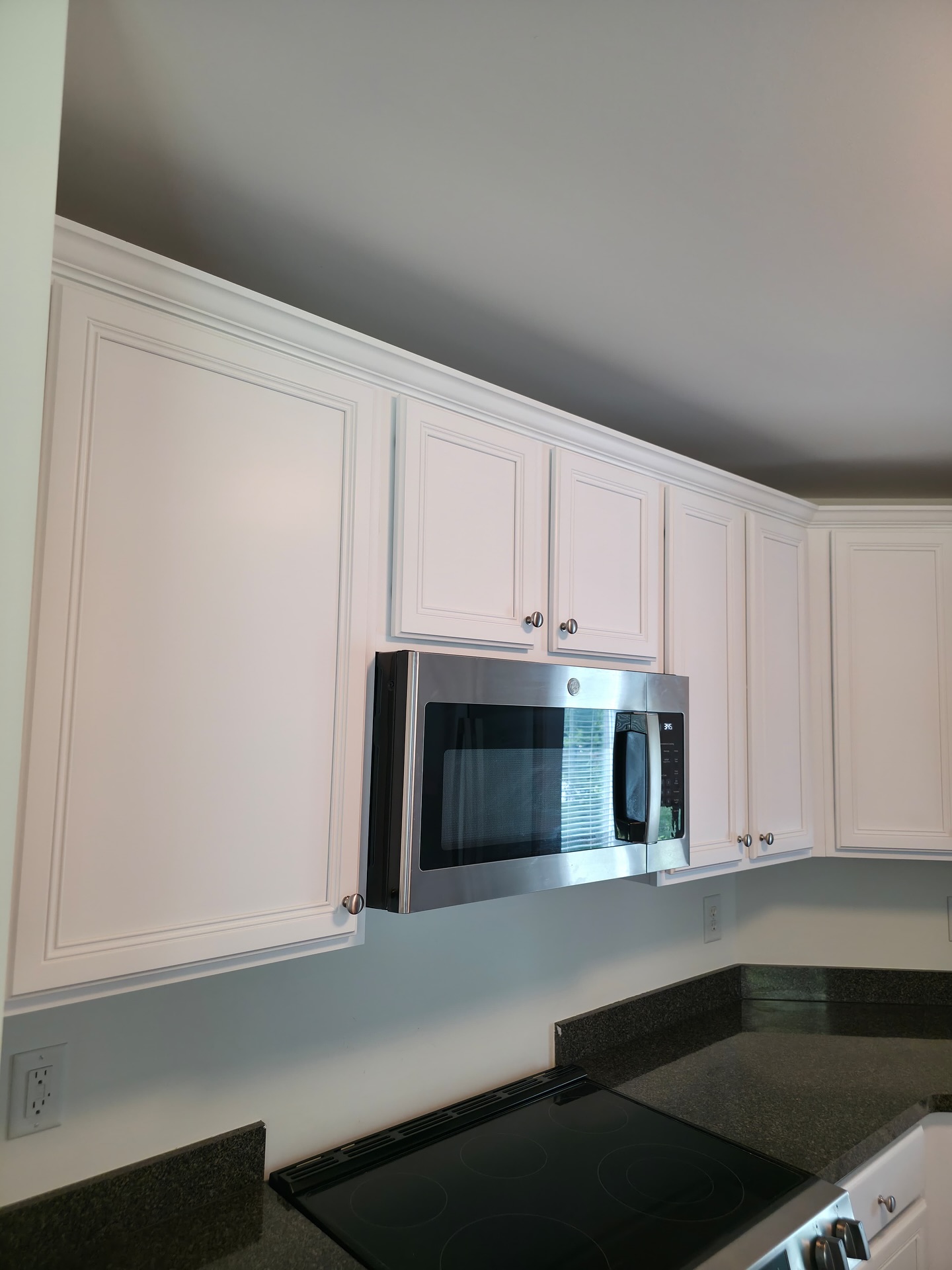
The detail that always surprises people: nobody unscrewed a single piece of hardware. Those brushed nickel knobs are the same ones the builder installed in 2008. Against the honey wood they read dated. Against the white they look current. The metal didn’t change. The room around it did.

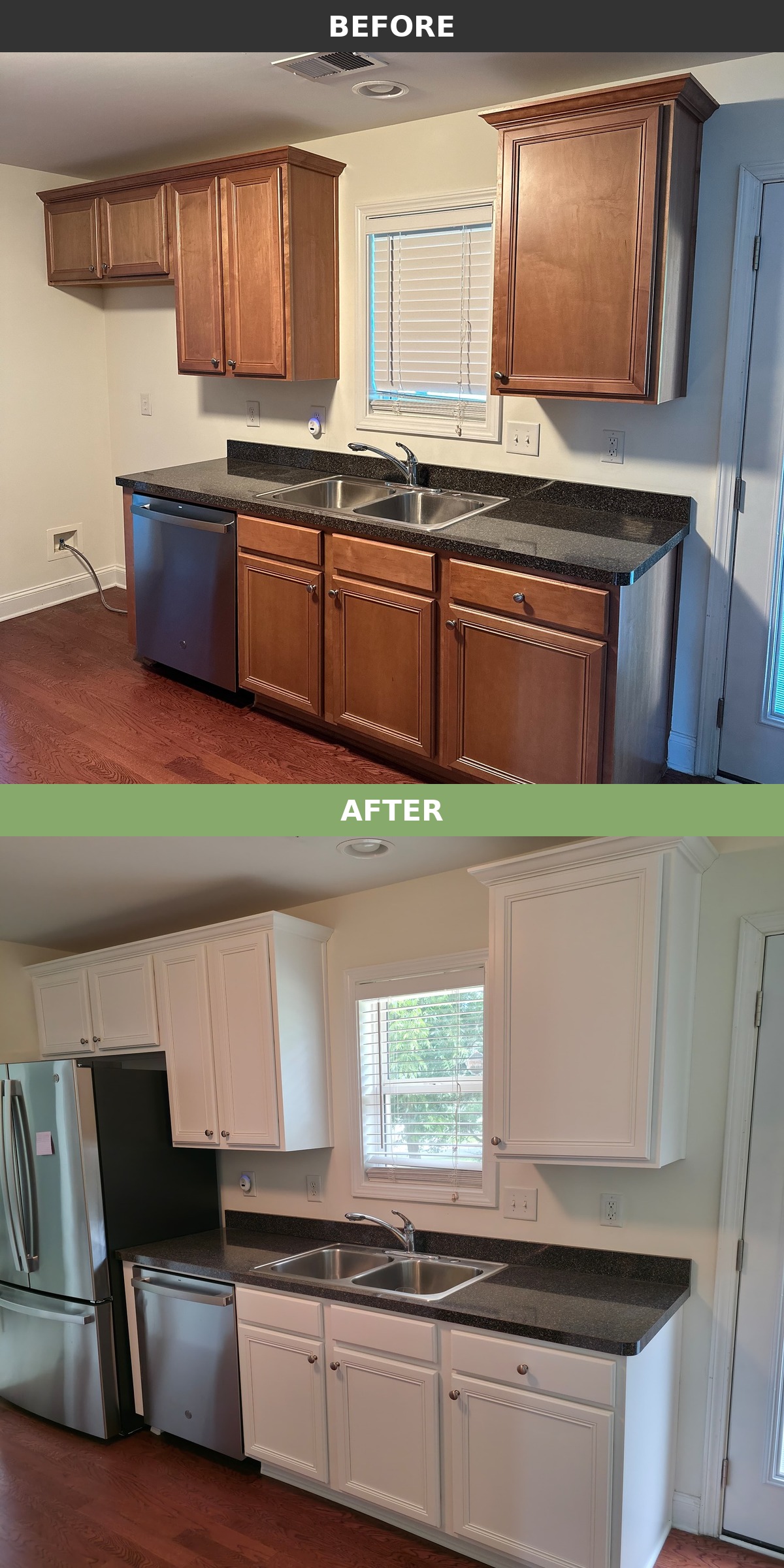
Sink wall, honey to white
Same window, same granite, same sink, same dishwasher spot. The only real change between these two frames is the color on the cabinets around them.
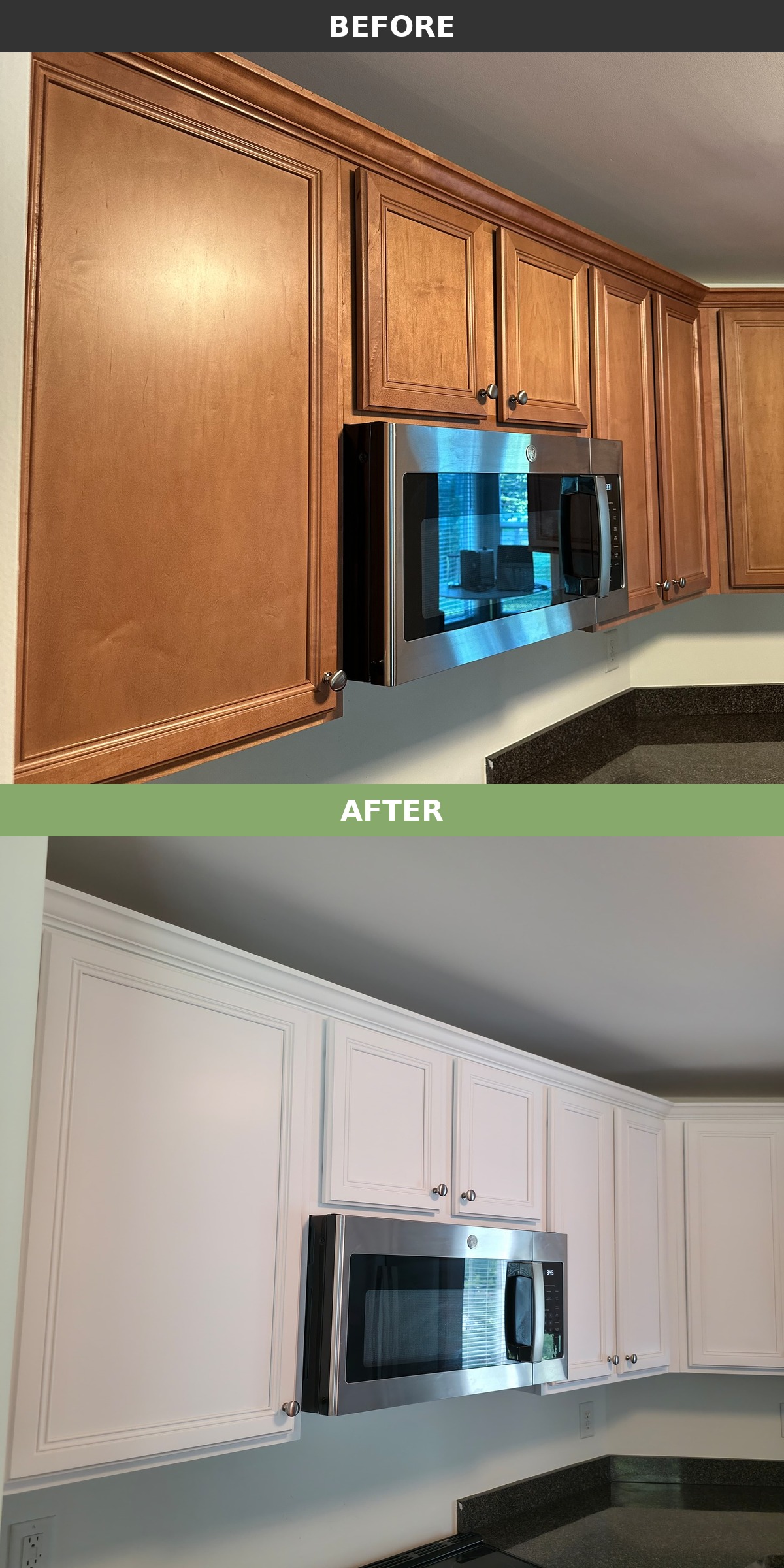
Microwave wall, same spot, different decade
Same microwave in the same spot. Same cabinet layout, same panel sides, same corner of wall behind it. The wood warmth that was soaking up all the light now reads clean.
Corner range wall, before and after
Same corner, same range, same ceiling light. The dark granite that was fighting the wood is now doing contrast work with the white, and the hardwood floor stops reading as “old” and starts reading as a warm accent you’d actually want.
Could this work in your kitchen?
If you’ve got honey maple or cherry cabinets from the 2000s builder era, and the boxes and doors are still solid, the honest answer is probably yes. A pro job on a kitchen this size usually runs $2,500 to $4,500 (about €2,350 to €4,200). A full cabinet replacement runs $15,000 to $30,000 (about €14,000 to €28,000). Roughly 10 to 15% of the cost for most of the visible win. The cheapest kitchen update most people will ever do, and the one that moves the needle most.
One warning worth taking: don’t try this with a $30 (about €28) can of hardware-store latex. You’ll have a yellow kitchen by spring. The shellac primer and Gallery Series satin are what make this a five-year job, not a five-month one. Do it the way this crew did, or hire someone who will.
Which pair hit you harder, the sink wall or the corner by the range?