
Just about every house touched up in the last thirty years has the same kitchen hiding inside it. Honey oak cabinets with cathedral arches. A grey speckled laminate counter trying its best to pass for granite. A black oven, a black hob, a brown tile floor nobody has touched in a decade. You walk in, you make coffee, you stop seeing it. But every time a friend visits, you catch yourself apologizing for it a little.
Quotes to rip it out start around twenty-five grand and climb from there. A full gut means six weeks of microwaved dinners and a lot of decisions you never signed up for. So the quotes go in a drawer and the drawer stays closed.
This Sheffield homeowner did not open the drawer. She kept every cabinet box, the tile backsplash and floor, the oven, the hob, the sink, the window, even the little steel hooks under the counter. She changed exactly two things, and the job took about a week.
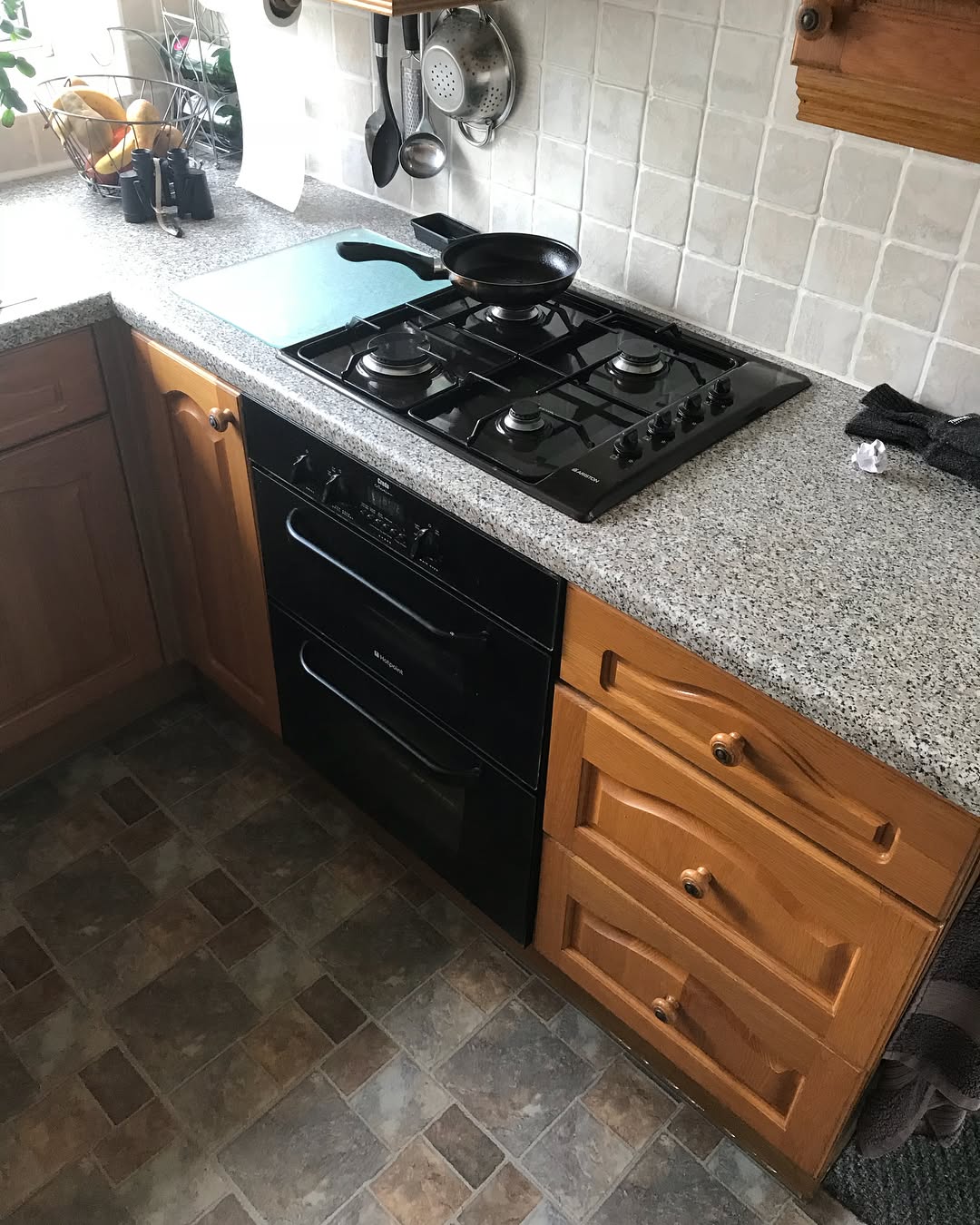
The two swaps that did everything
Two changes, no more. The cabinets came off their hinges and got sprayed in RAL 1013, a warm oyster white in satin finish. The old speckled laminate counter came off too, and a solid oak worktop stained a deep walnut went on in its place. That is the entire project.
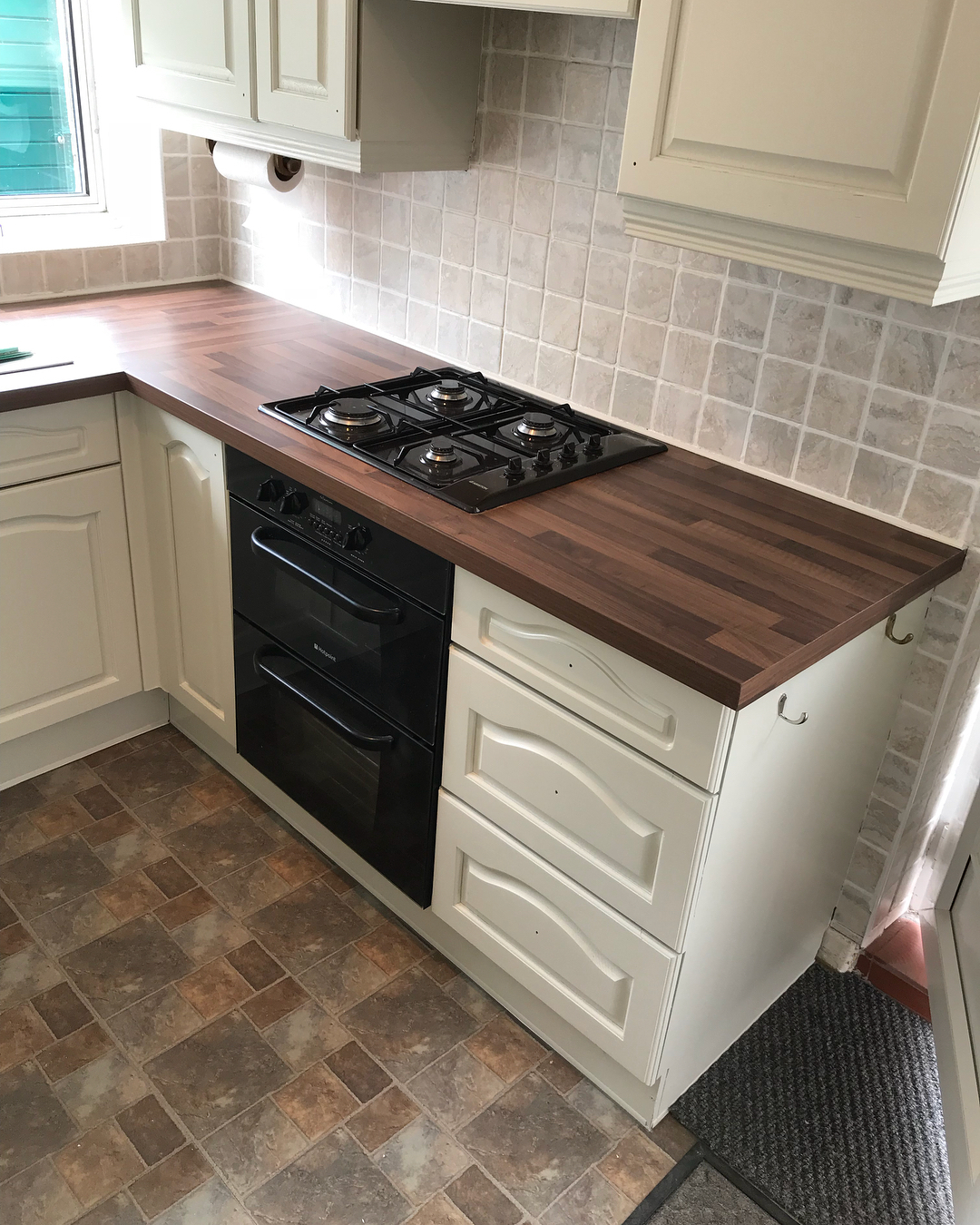
Side by side is where the trick stops being invisible.
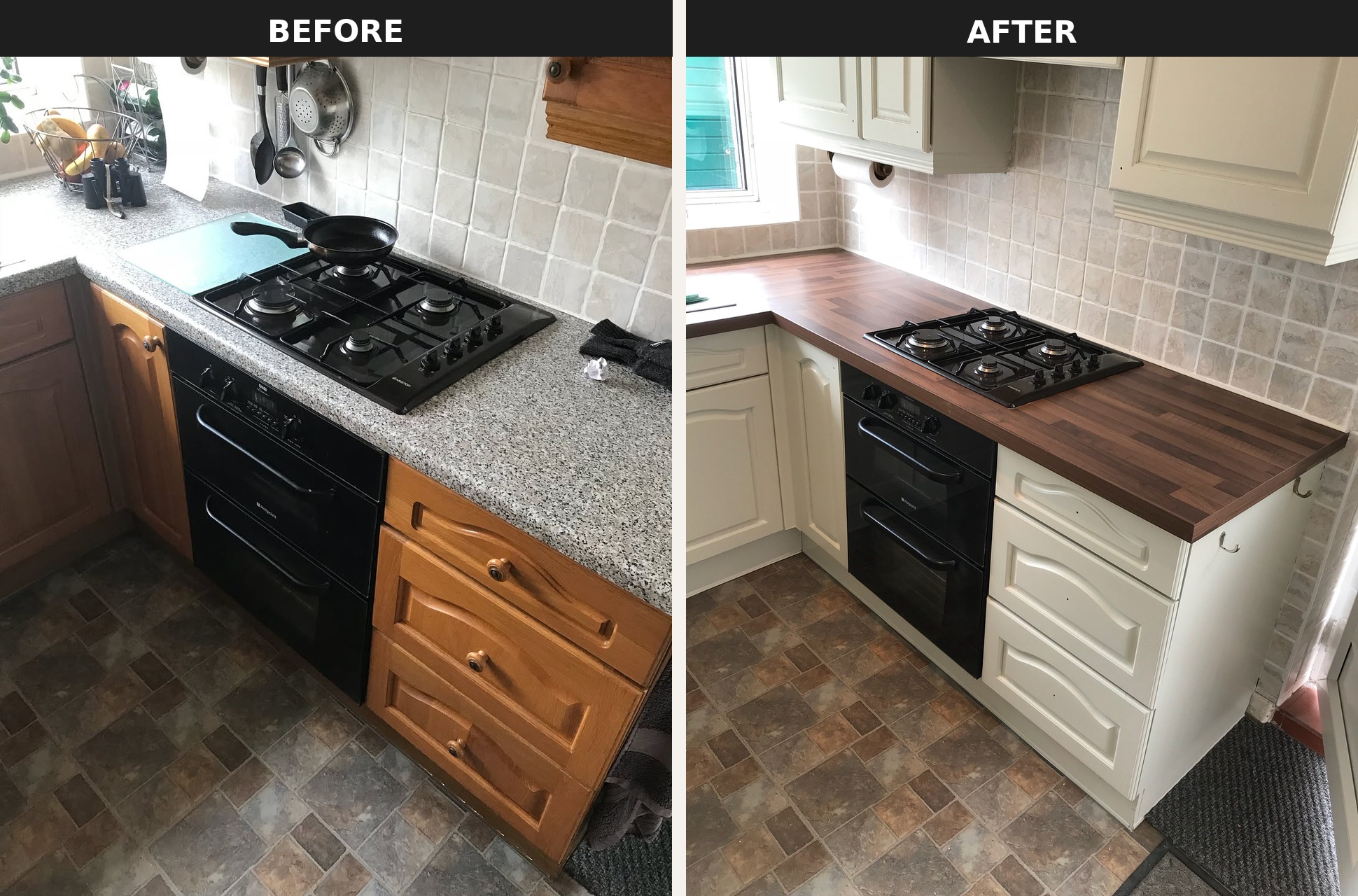
Look at everything still in both frames. Tiles, floor, oven, hob, cathedral doors, hinges, hooks. Between cabinet fronts and countertops, you are staring at roughly seventy percent of what the eye catches in a kitchen. Flip those two and the room loses the only two things making it feel heavy.
Every wall lightens up the same way
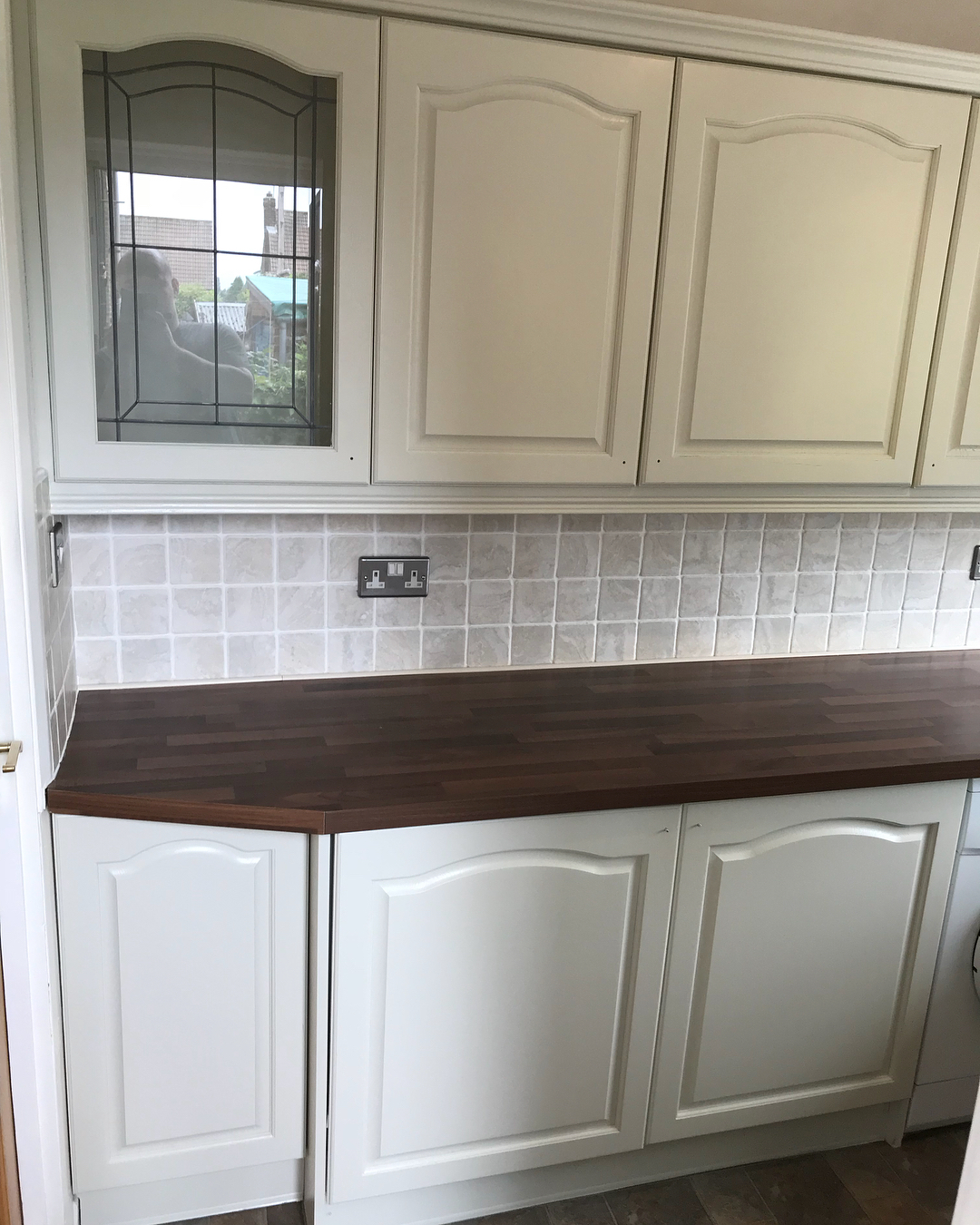
The leaded-glass cabinet door on the back wall was always a nice detail. Against the old oak it vanished into the grain. Painted, it becomes the first thing you notice walking in, the way it was probably meant to work when someone picked it out of a catalog.
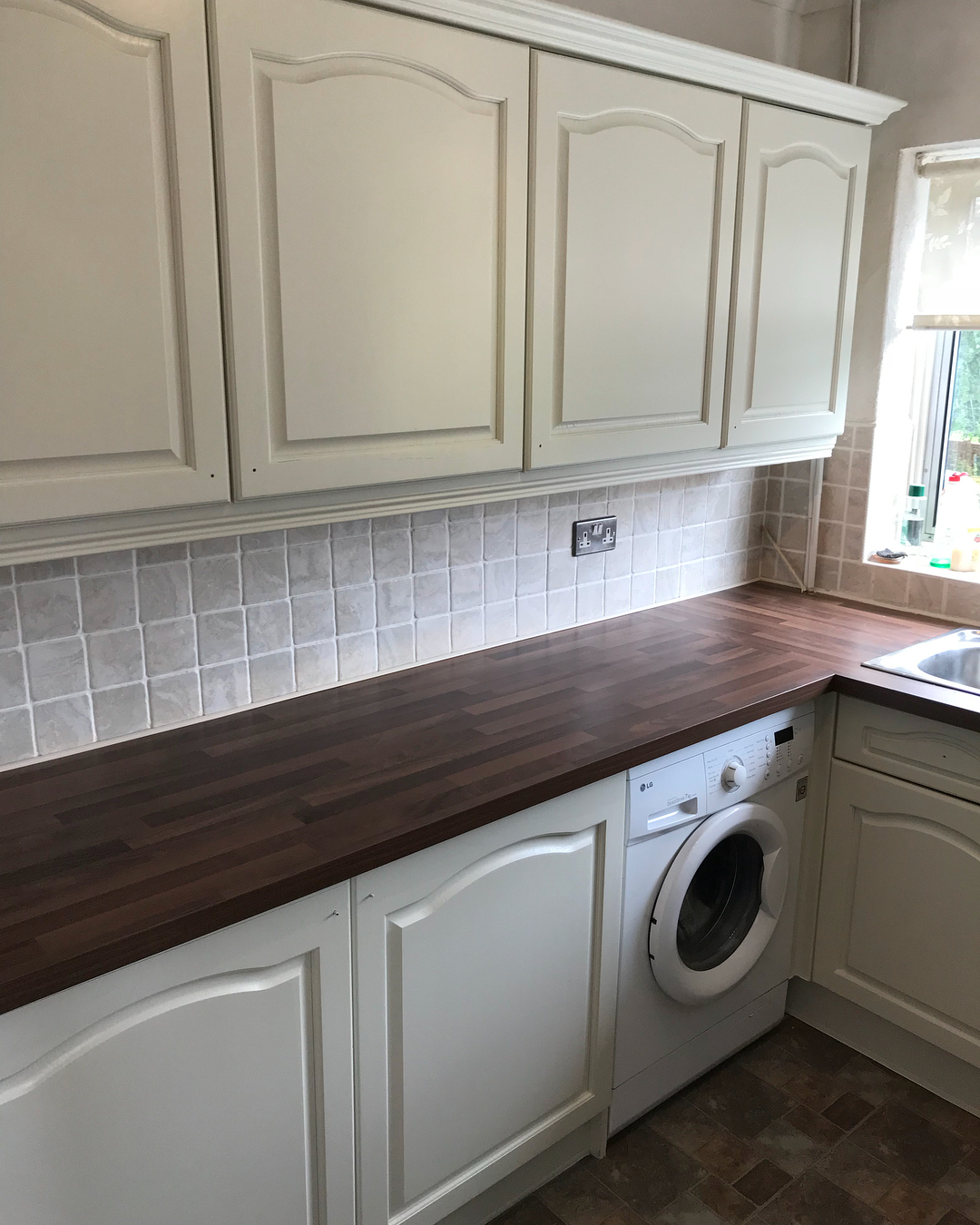
Along the L-shape that holds the washing machine and the sink, the walnut worktop does the warming. You get the glow of real wood without having to pick between marble and quartz. The washing-machine panel disappears into the cream, which is what you want a washing machine to do.
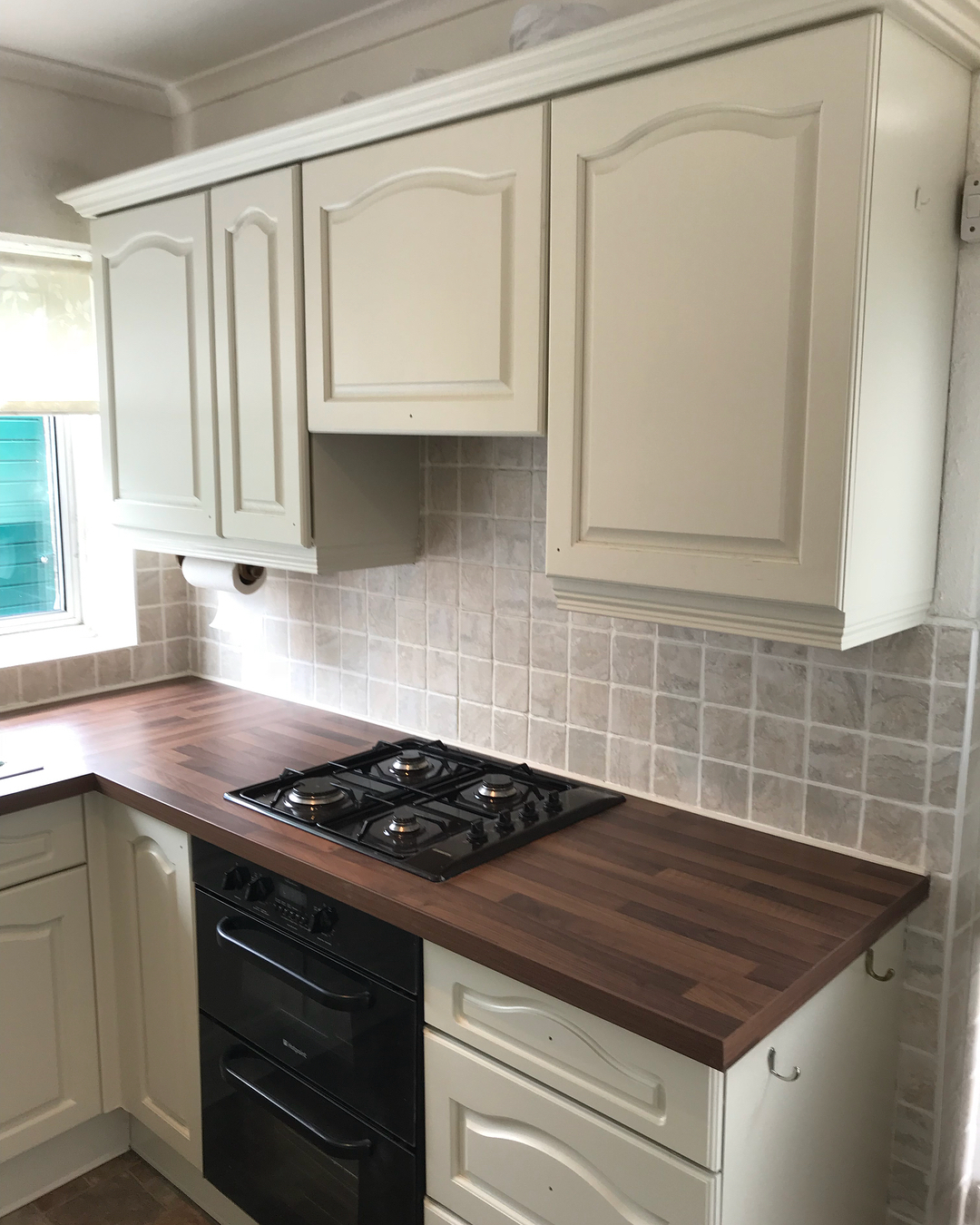
Up close by the hob, the finish earns its money. Not shiny. Not chalky. The cathedral profile that used to disappear into brown wood now catches a soft edge of light. These are the exact same doors as before. They just stopped shouting over everything else.
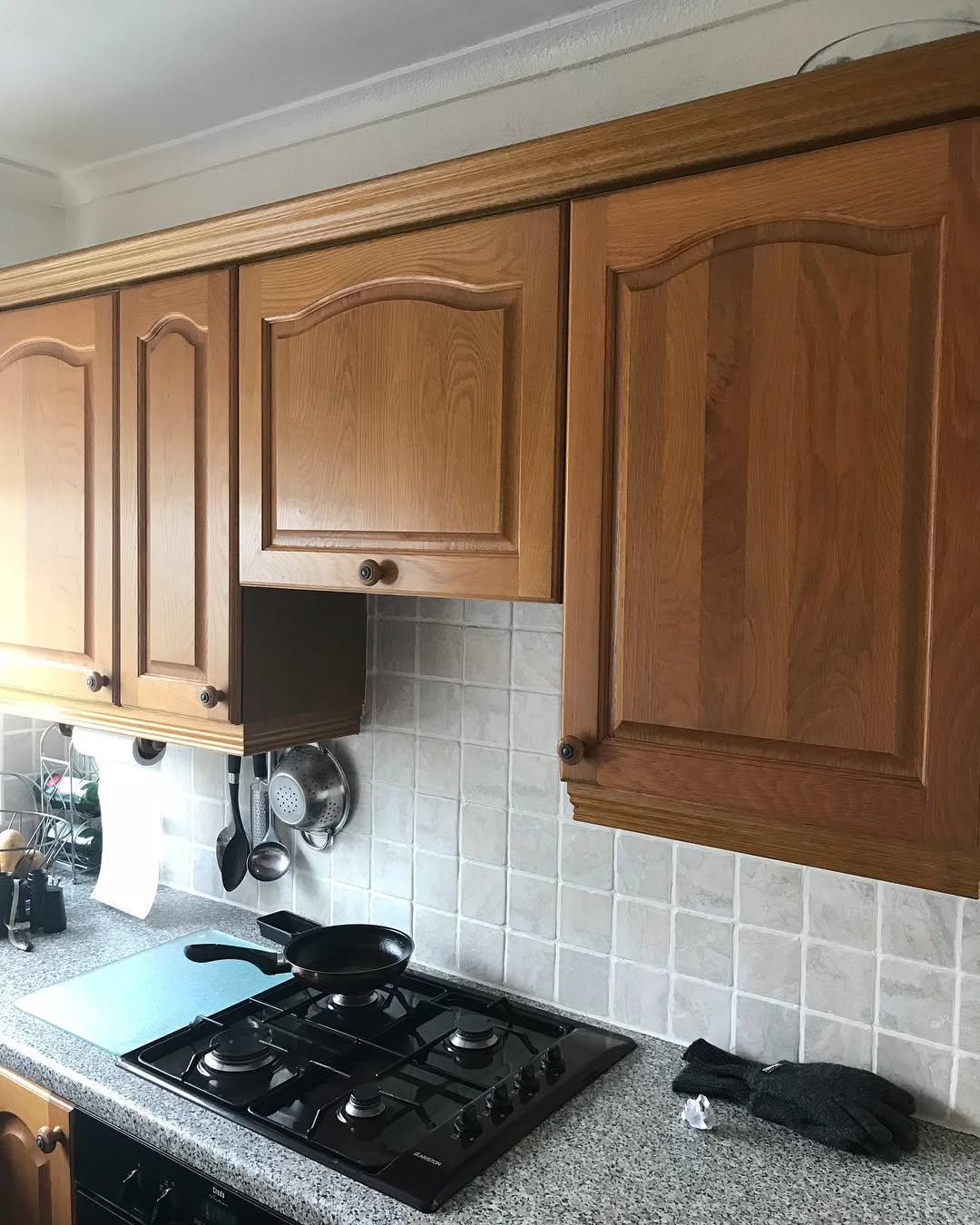
Same doors in their original brown. Same hinges, same arches, same square tile grid behind them. The orange-brown was doing something you probably never noticed until it was gone, pulling daylight out of the room and keeping it.
The real design lesson sits under all of this. Your eye expects a modern kitchen to be light up top and warm on the counter. Yours was the opposite for years, medium-dark cabinets stacked over a cool grey counter, and that reversed pattern is why the room read as dated long before anything in it was actually broken.
The prep nobody sees
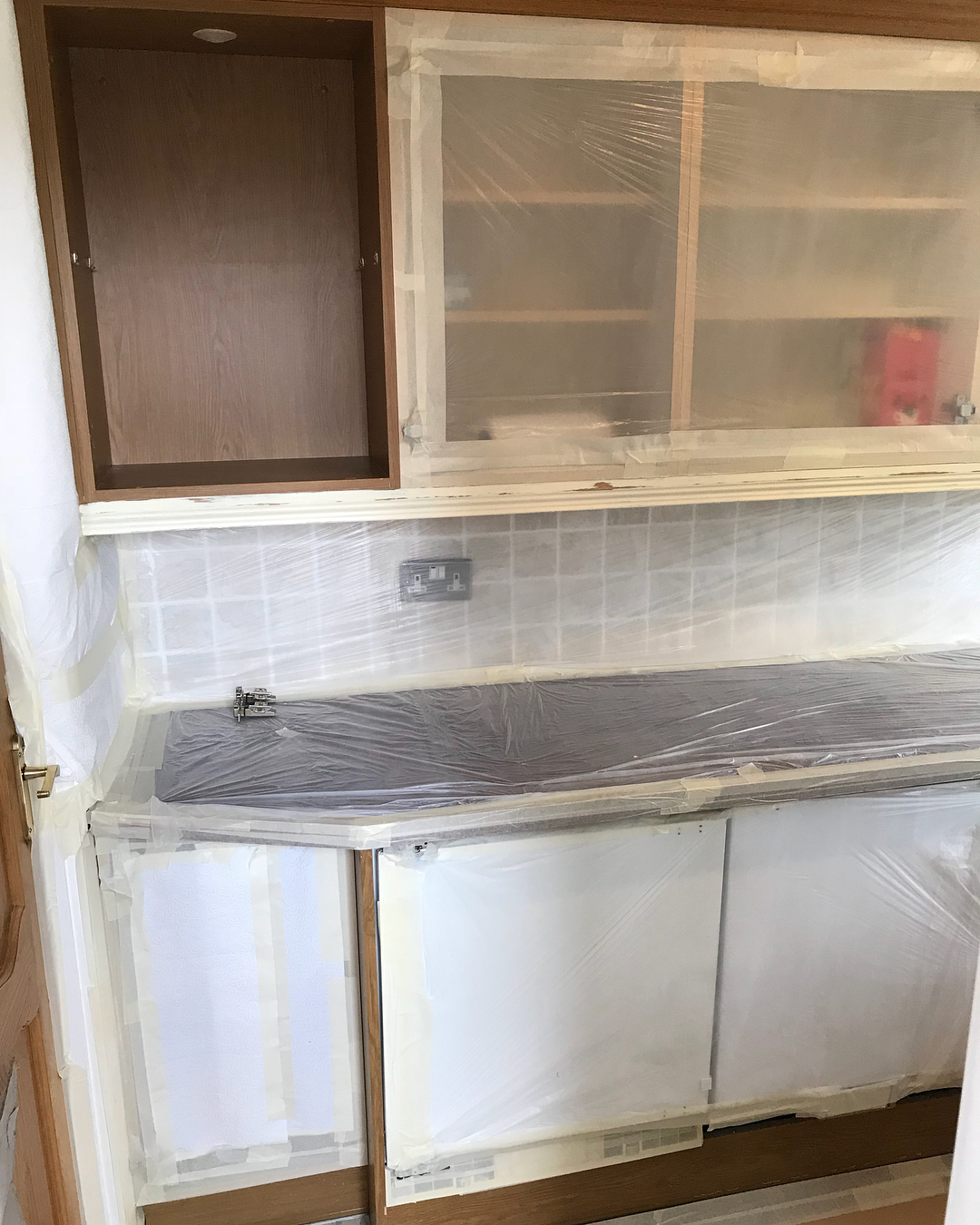
A good cabinet spray job is masking first, then more masking, then paint. Every door and drawer front came off. Every surface staying put got wrapped in film and taped tight: the tile backsplash, the old laminate counter during its last week on the job, the hinges, the sockets. The reason this finish is not peeling around the knobs a year later is sitting in this photo.
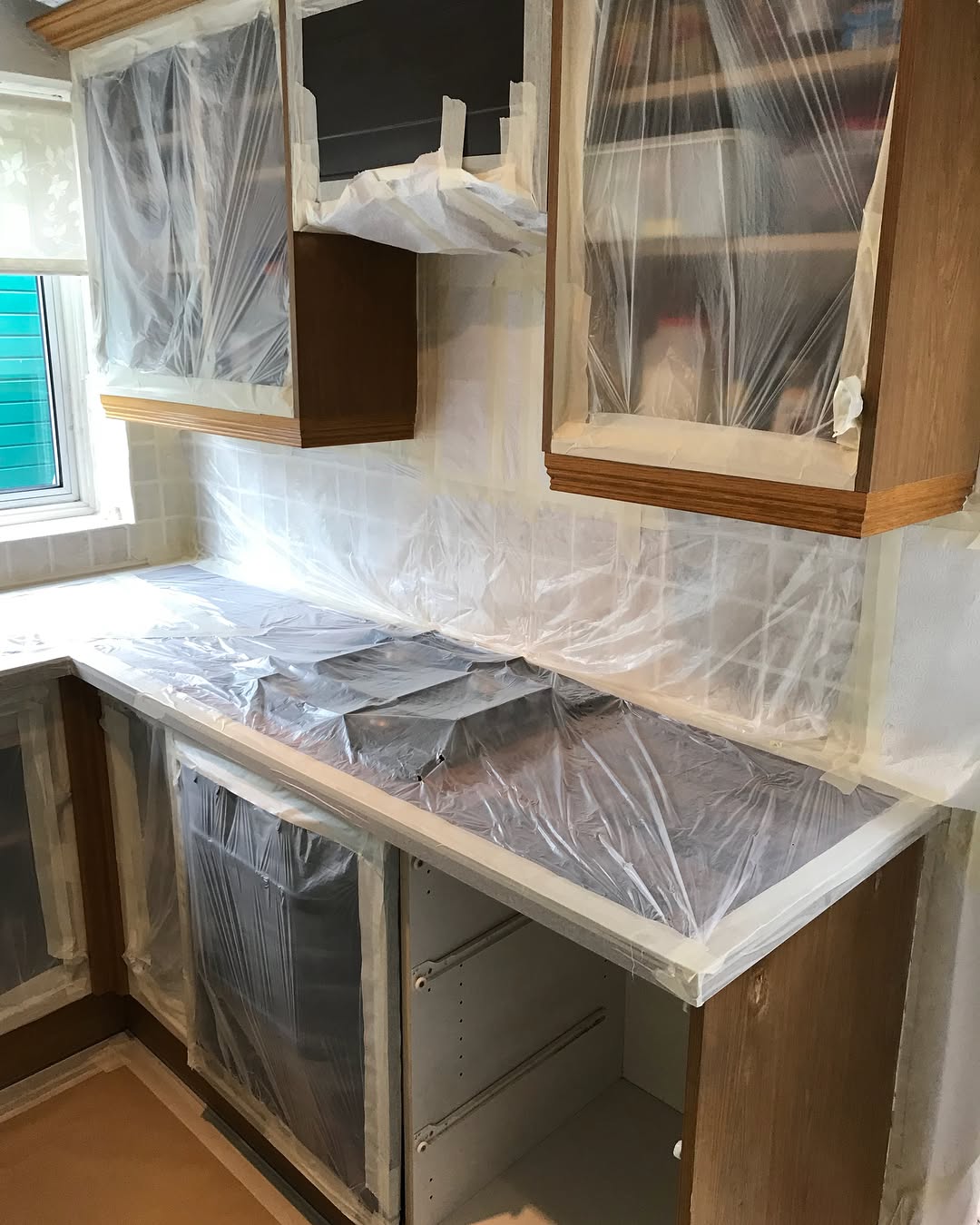
Same story on the window run. The oak is still under all that plastic. It got a light sand, a coat of primer made for slick surfaces, then thin layers of paint through a spray gun so the finish lies flat with no brush marks. Brushing gives you a kitchen that looks painted. Spraying gives you a kitchen that just looks cream.
The far side was the same story
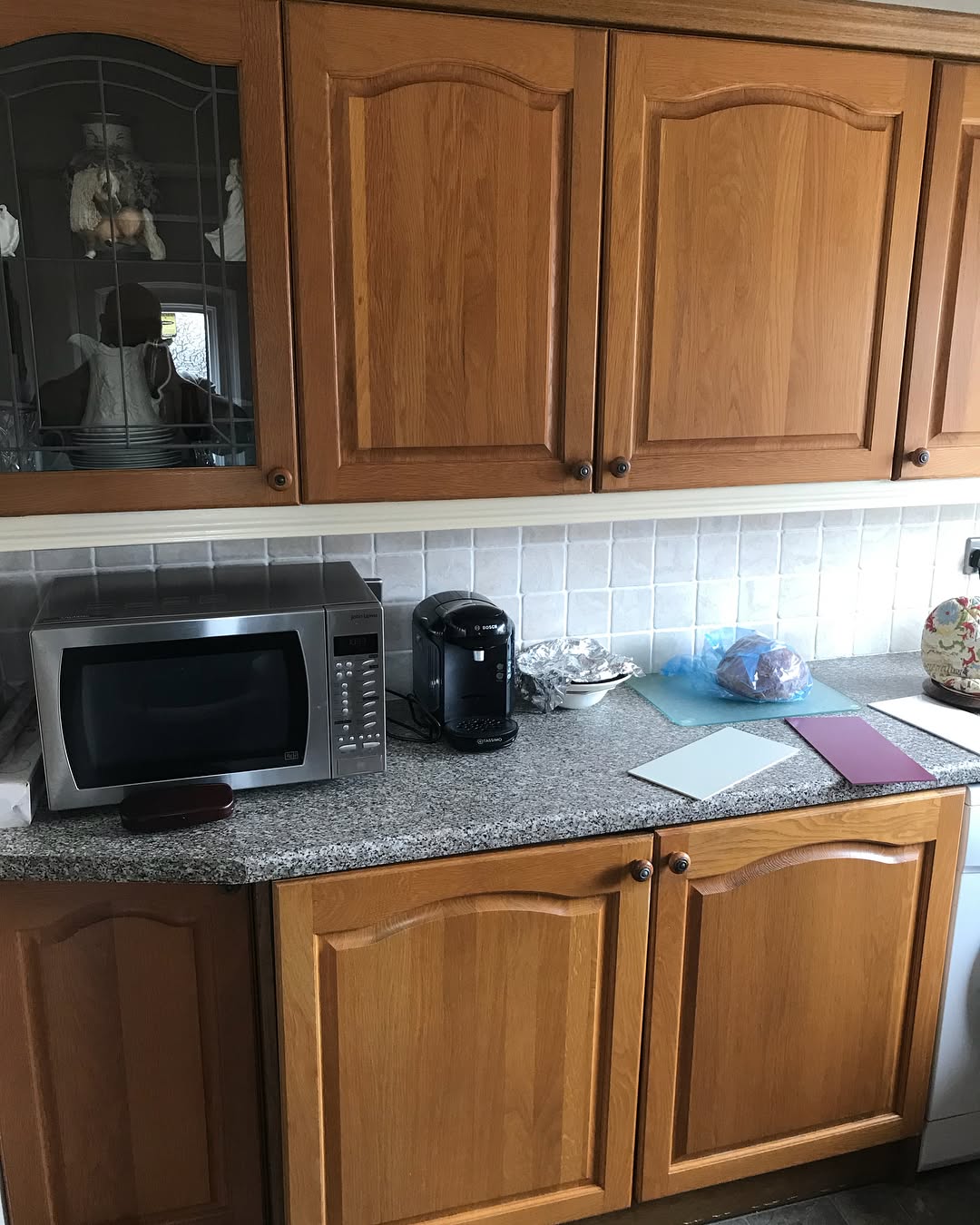
Across the room, the wall with the leaded-glass door ran the same oak above and below with the same grey counter in between. A microwave, a Bosch coffee machine, and a few cutting boards fought for space on top. The pretty glass door never had room to breathe.
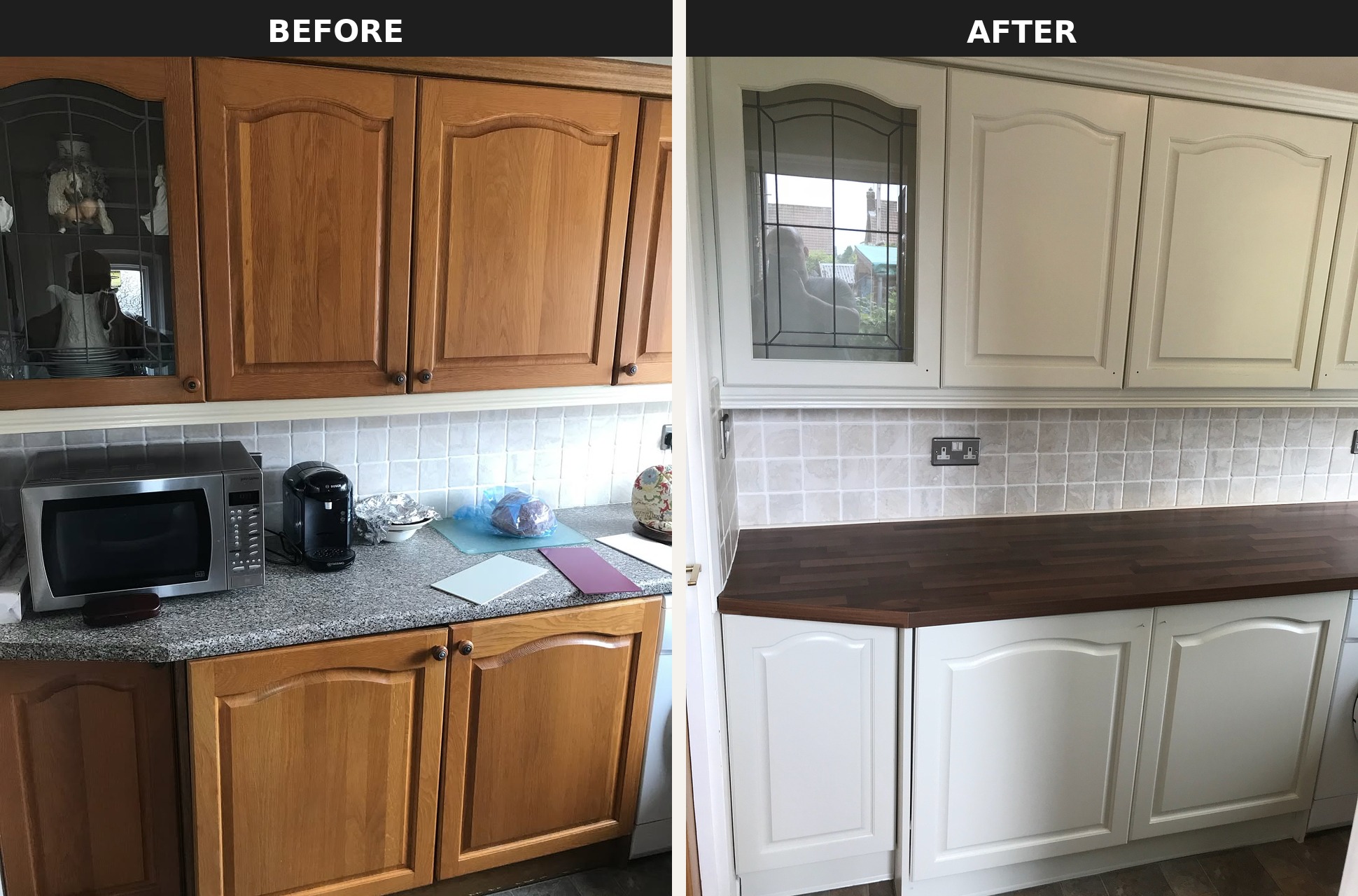
With the paint and the walnut down, the same wall reads calm. The glass door finally gets to be the feature it always was.
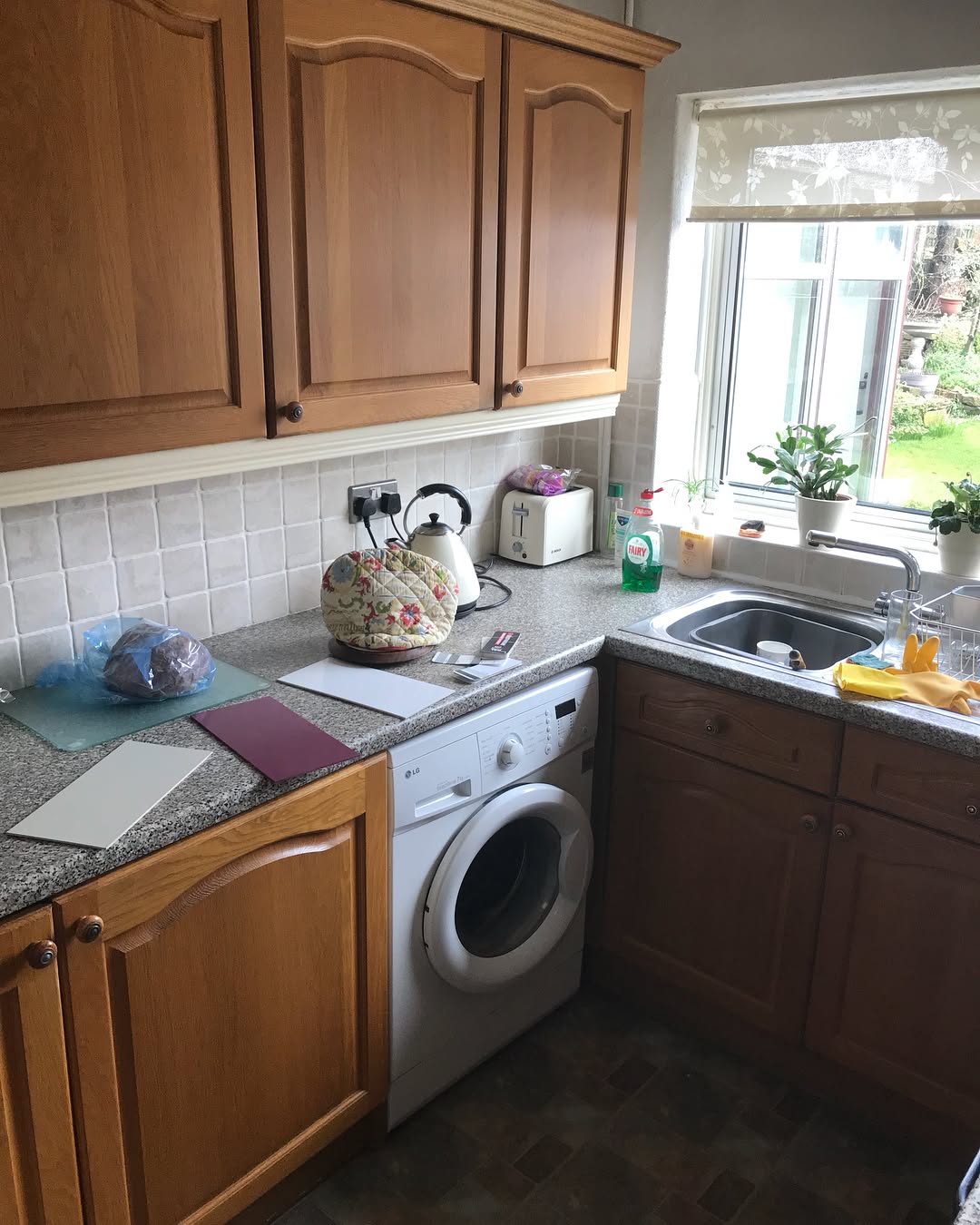
The sink corner was the saddest part of the before. A big window looking out on a garden full of plants, wasted on a stretch of grey counter and oak boxes that would not step out of the way.
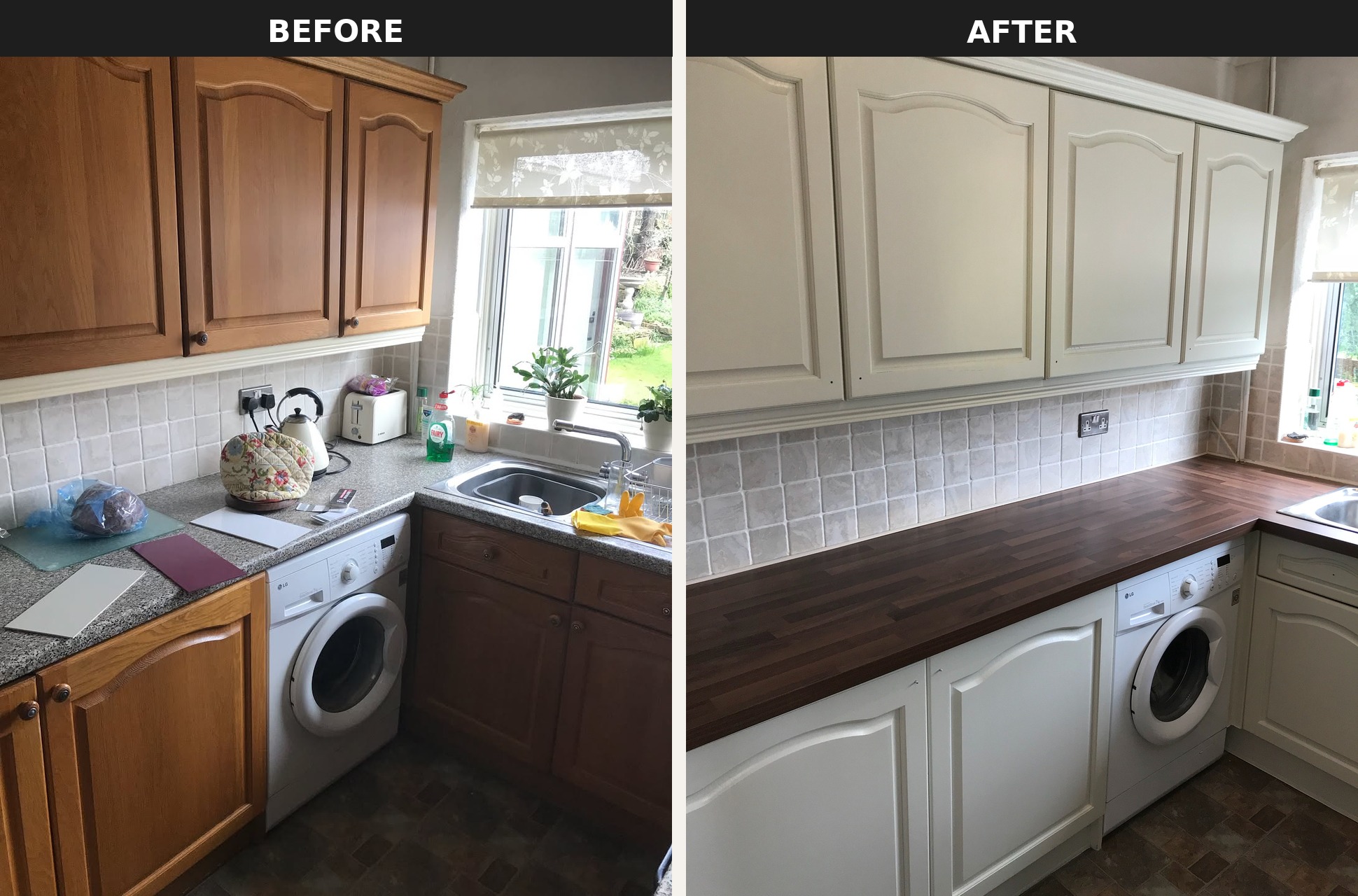
Same corner after, and the window is finally doing its job. The plants on the sill feel like they belong to the room. Nothing structural moved. The paint and the wood just stepped aside and let the daylight in.
What this is really about
Painted cabinets are not a magic wand. This works because two surfaces drive almost the entire mood of a kitchen, and both can be swapped without ripping the room apart. You can keep the floor you never would have picked. You can keep the backsplash. You can keep the appliances. You can keep every cabinet box where the builder put it.
Spray the fronts. Change the counter. The rest of the house will catch up.