
The owner of this Villa Rica, Georgia kitchen had done the smart updates already. New quartz counters. Fresh blue-gray subway tile. The gas range still worked, the oak floors still had life. Every time she walked in, her eye went straight to the one thing left, and the whole room felt a decade old.
That’s the trap. You update the big stuff. You spend real money. And then the honey oak cabinets just absorb all the light and drag the room back to 2003 before the paint on your tile grout has even cured. By the time she was ready to call contractors, she was already dreading the quote.
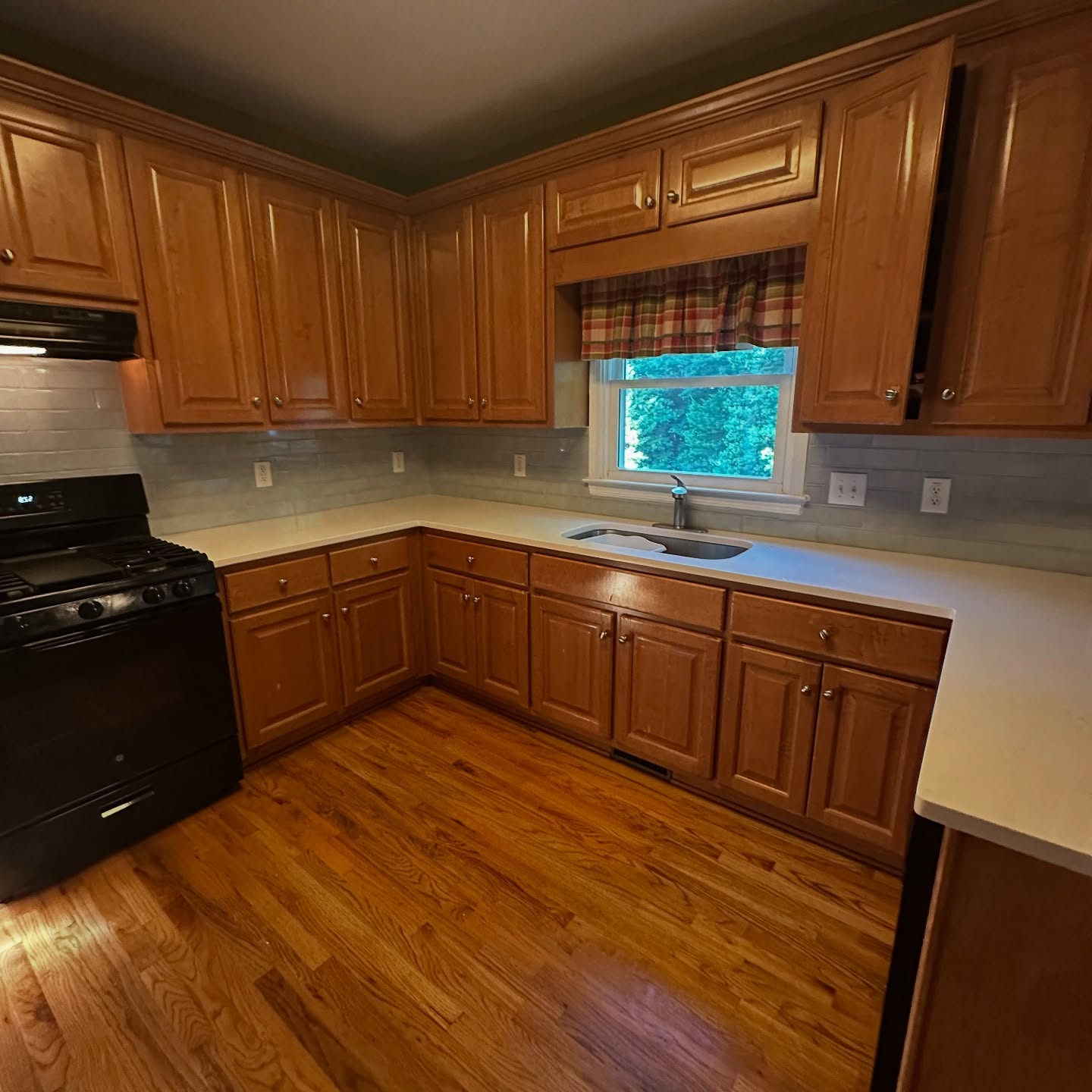
The quartz was fine, the cabinets were doing the damage
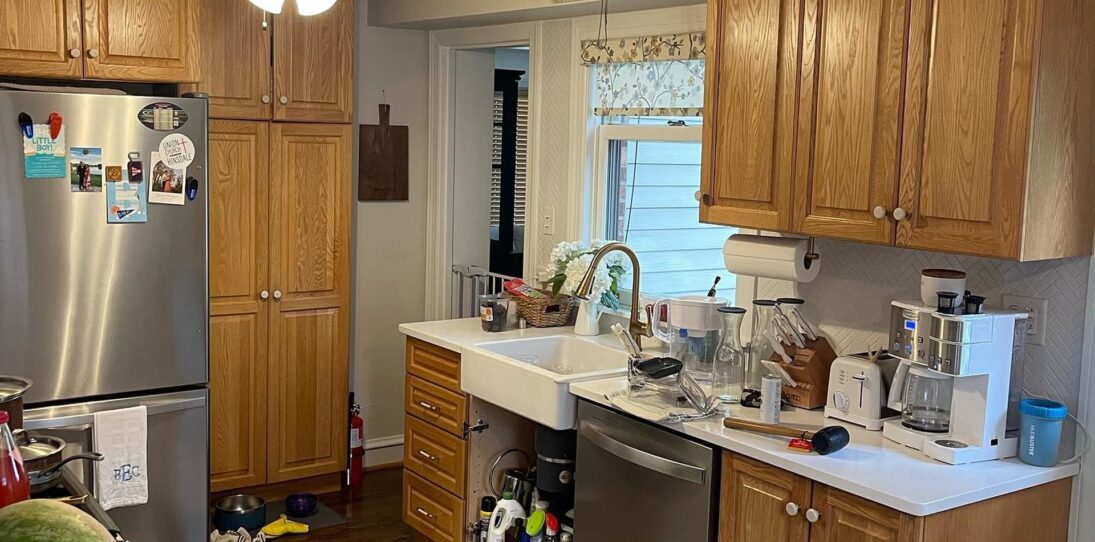
Pull back a few feet and the mismatch gets louder. Crisp white counters, modern tile, a plaid country valance from 2002, and cabinets the exact color of a honey badger. One of those things does not belong, and it was taking up every square foot of eye level in the room.
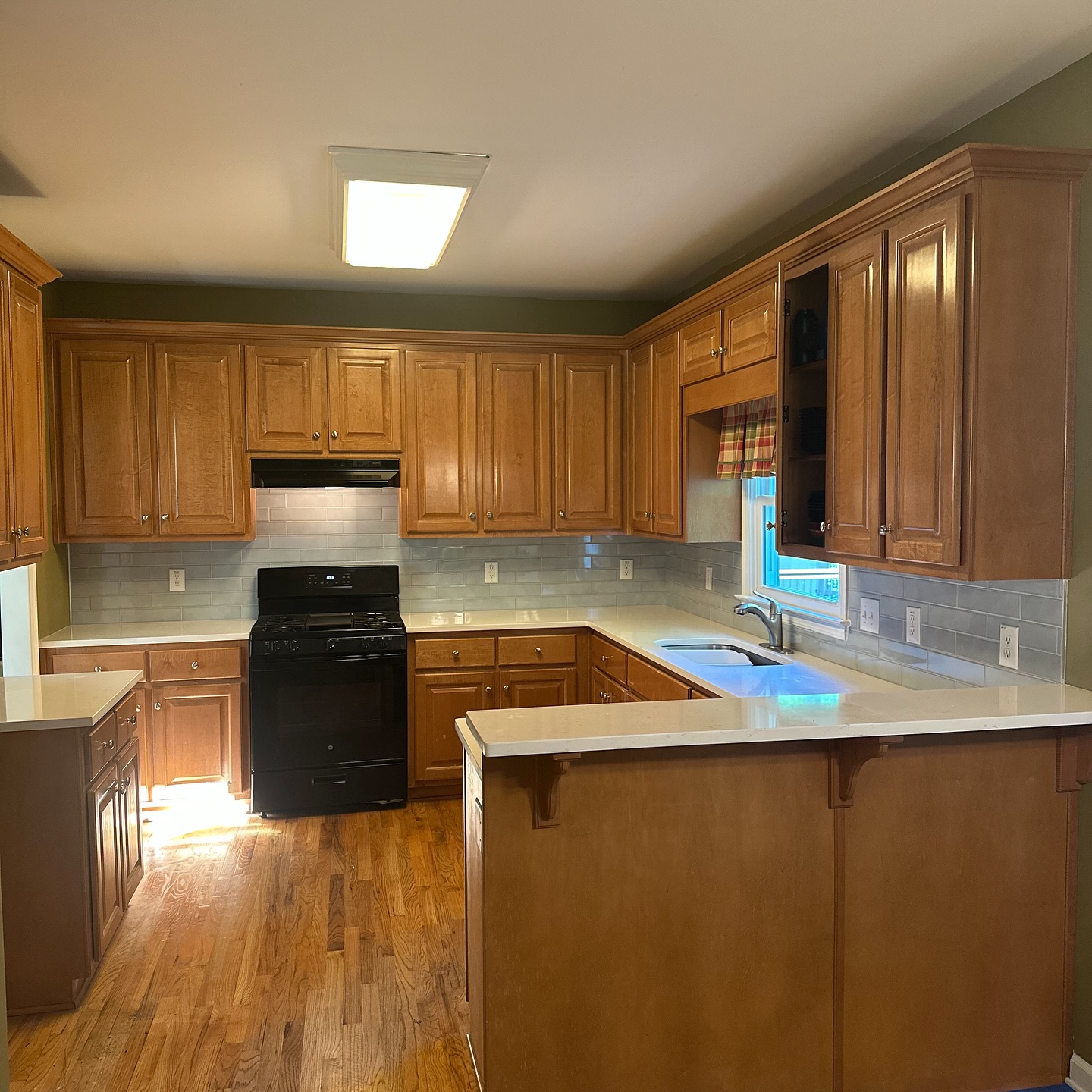
Walk around the corner and it only gets worse
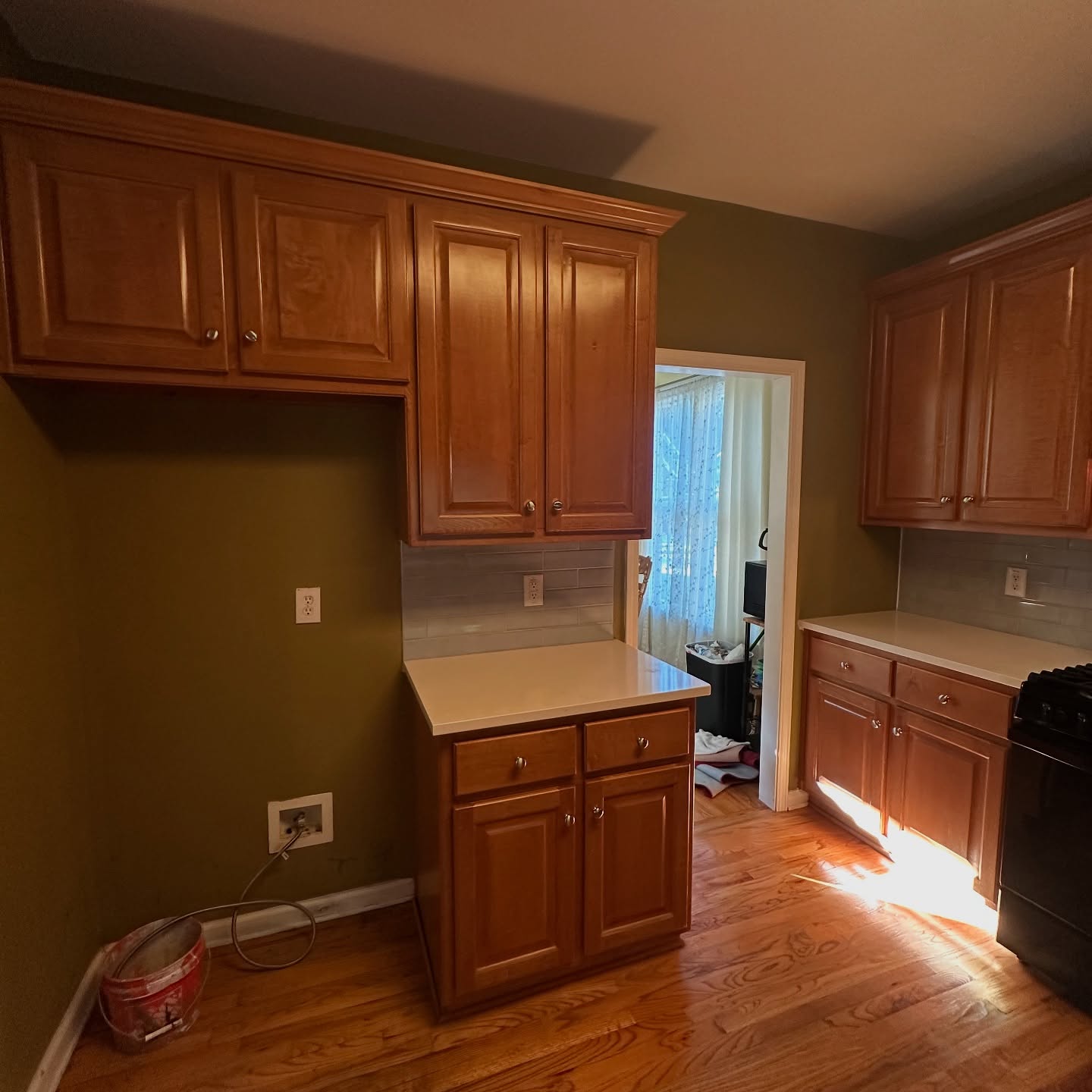
The far side of the kitchen kept the theme going. Olive walls, oak cabinets, oak floors, a narrow pantry in the middle, and a doorway to a room wearing the same outfit. No visual break anywhere. Just warm brown on warm brown on warm brown, stacked like a sandwich nobody wanted.
Three quotes almost killed the project
Three estimates came back for a full gut job: $48,000, $62,000, and just over $70,000 (about €45K, €58K, €66K). None of them made sense for a kitchen that had counters and backsplash she liked. So she picked up the phone again, this time to a cabinet refinisher, and the timeline dropped from eight weeks to four days.
Four days later, same kitchen, completely different room
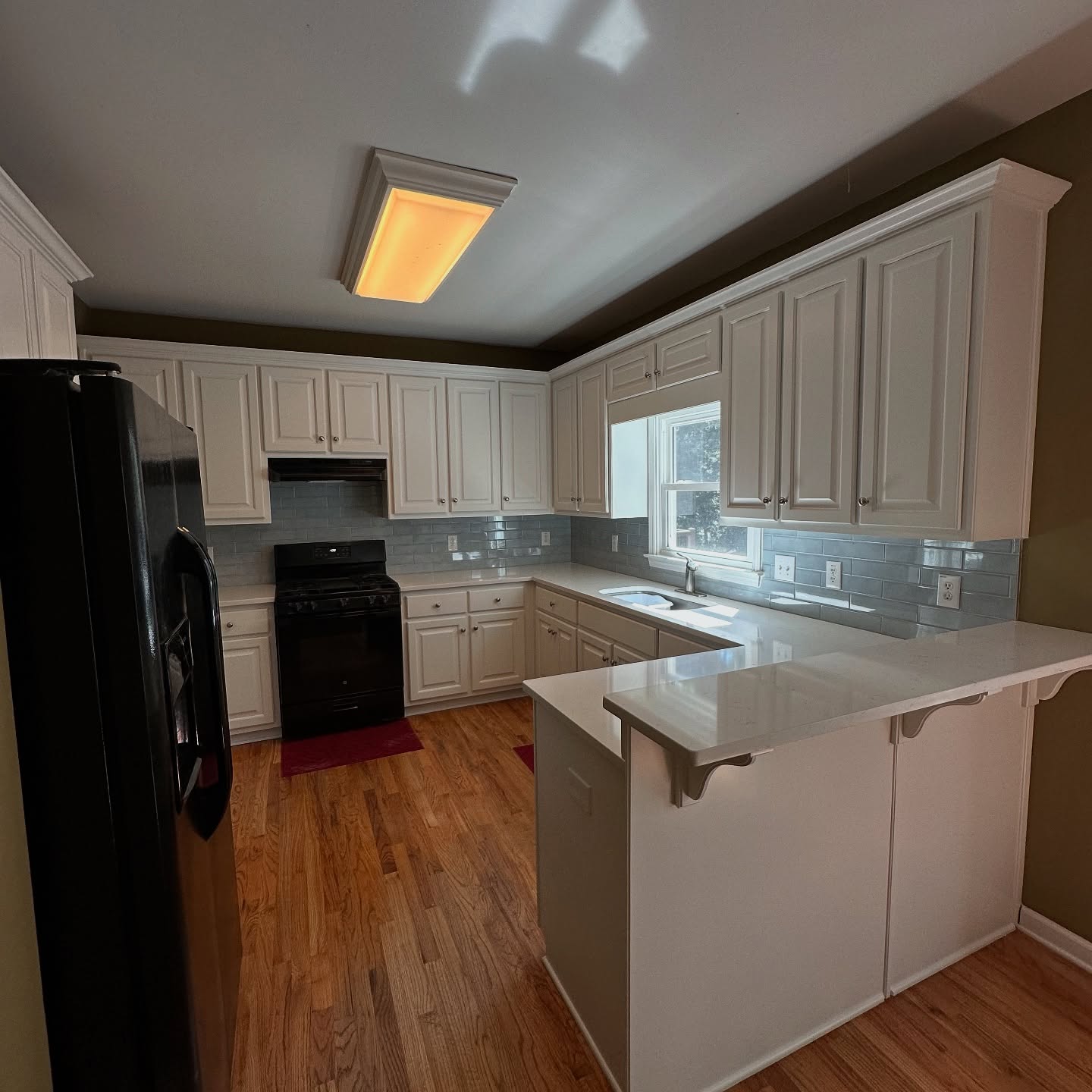
Only the paint changed. Everything else stayed: the quartz, the tile, the fridge, the oak floors, the subway tile, the gas range, the brushed nickel knobs, even the olive walls. One surface got a factory-quality finish and the whole room reads brand new.
Why Benjamin Moore White Dove and not some trendier pick
Dozens of white paints look basically identical in a swatch book. White Dove is the one cabinet refinishers reach for year after year because it pairs with warm floors without looking yellow and sits next to warm walls without turning sterile. The oak floor would fight anything cooler, the olive walls would fight anything colder. White Dove quietly solved both.
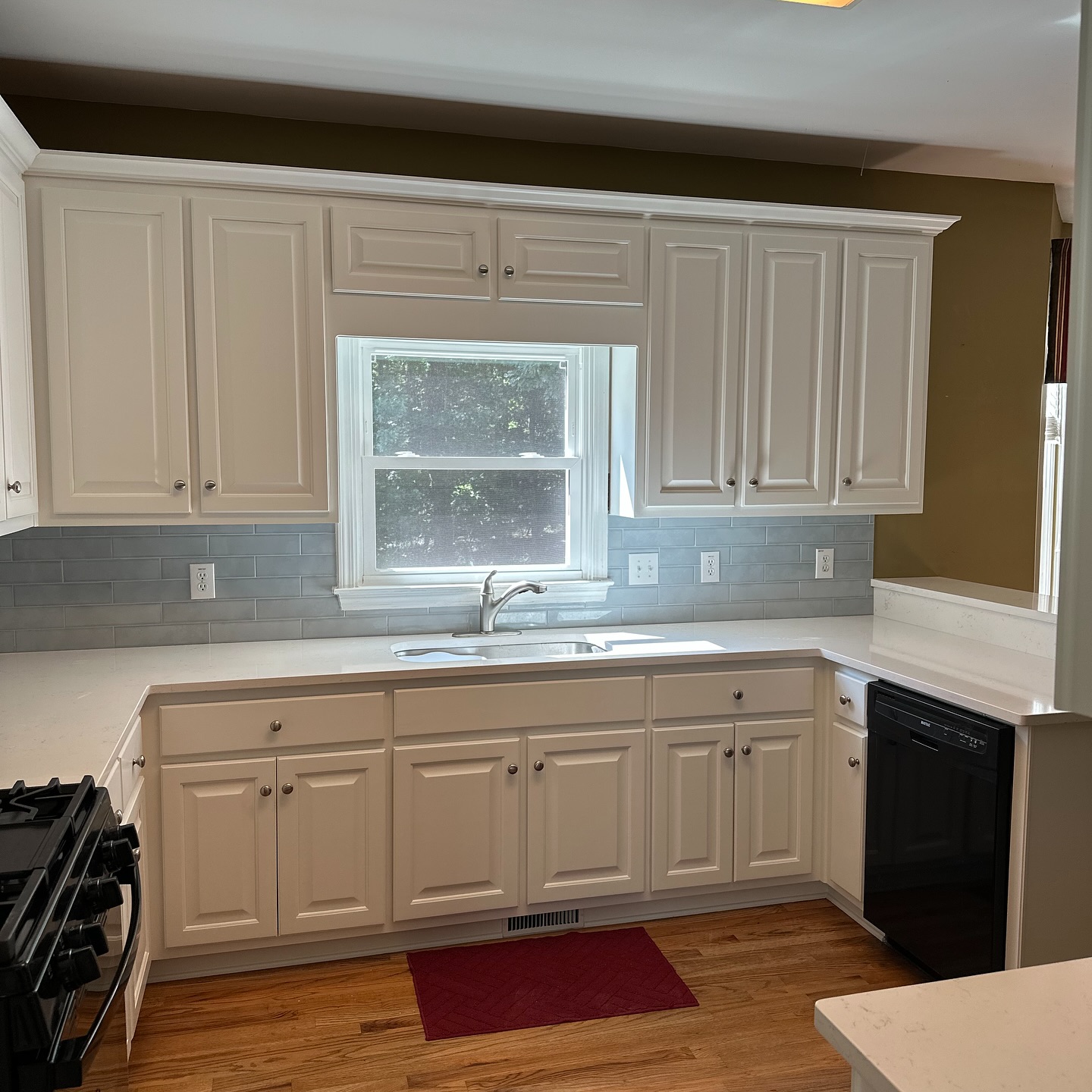
Head-on at the sink wall
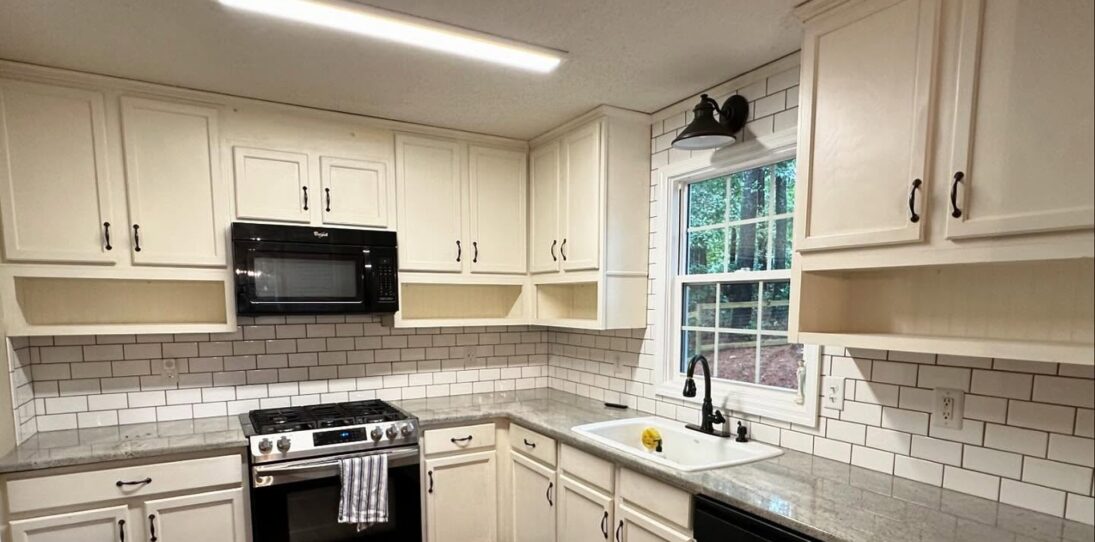
From this angle you can actually see the window frame for the first time. The old plaid valance used to cover it. Now the trim reads as its own architectural detail, the blind tucks inside the window instead of hanging over it, and the counter under the sink looks twice as deep because the cabinets aren’t pulling the eye back.
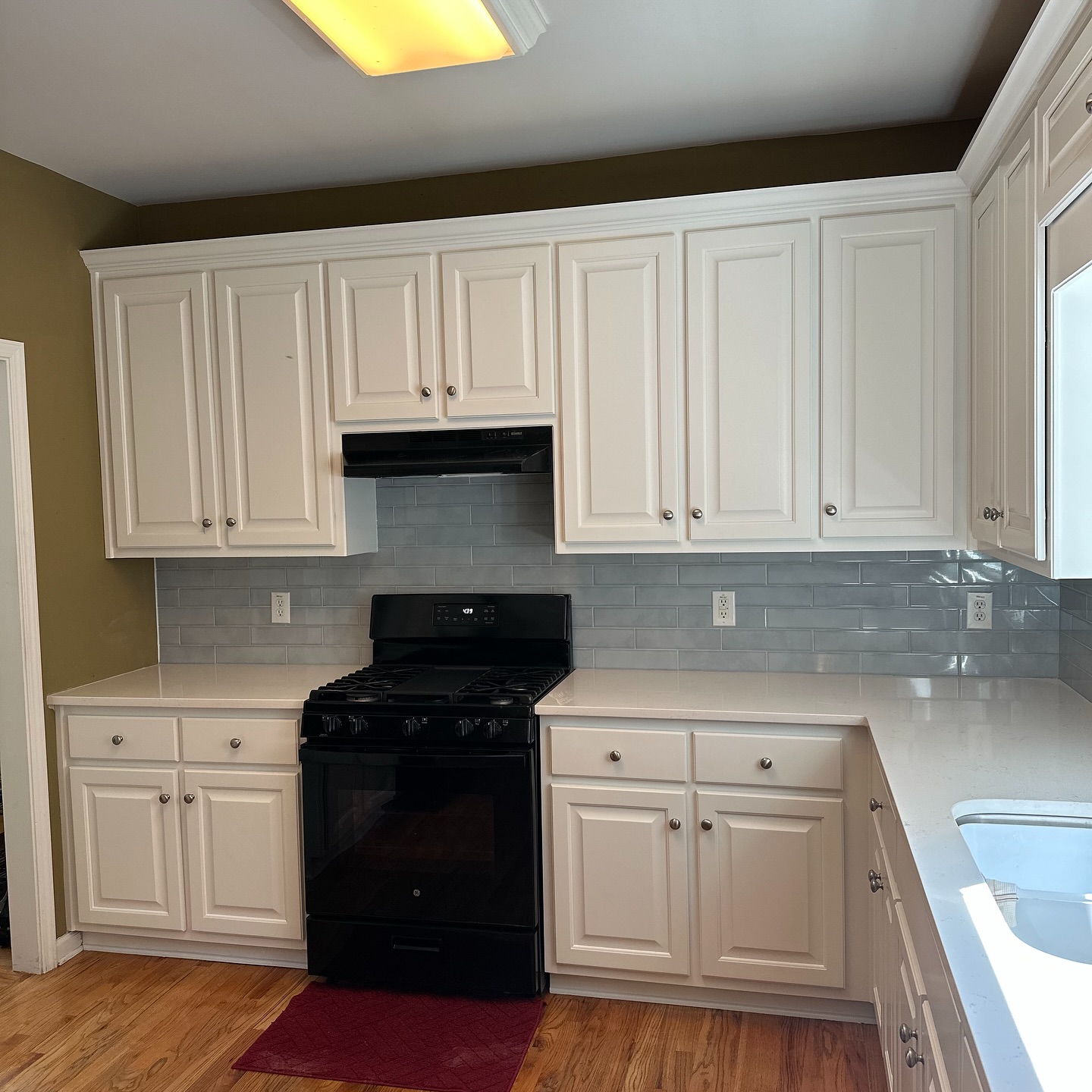
The range wall finally has a focal point
Before, the black range and the honey oak cabinets were fighting each other for attention and losing. Both were too busy to be the star. Now the range reads sharp against clean white, and the blue subway tile finally gets to do the one job it was installed to do: add a little color.
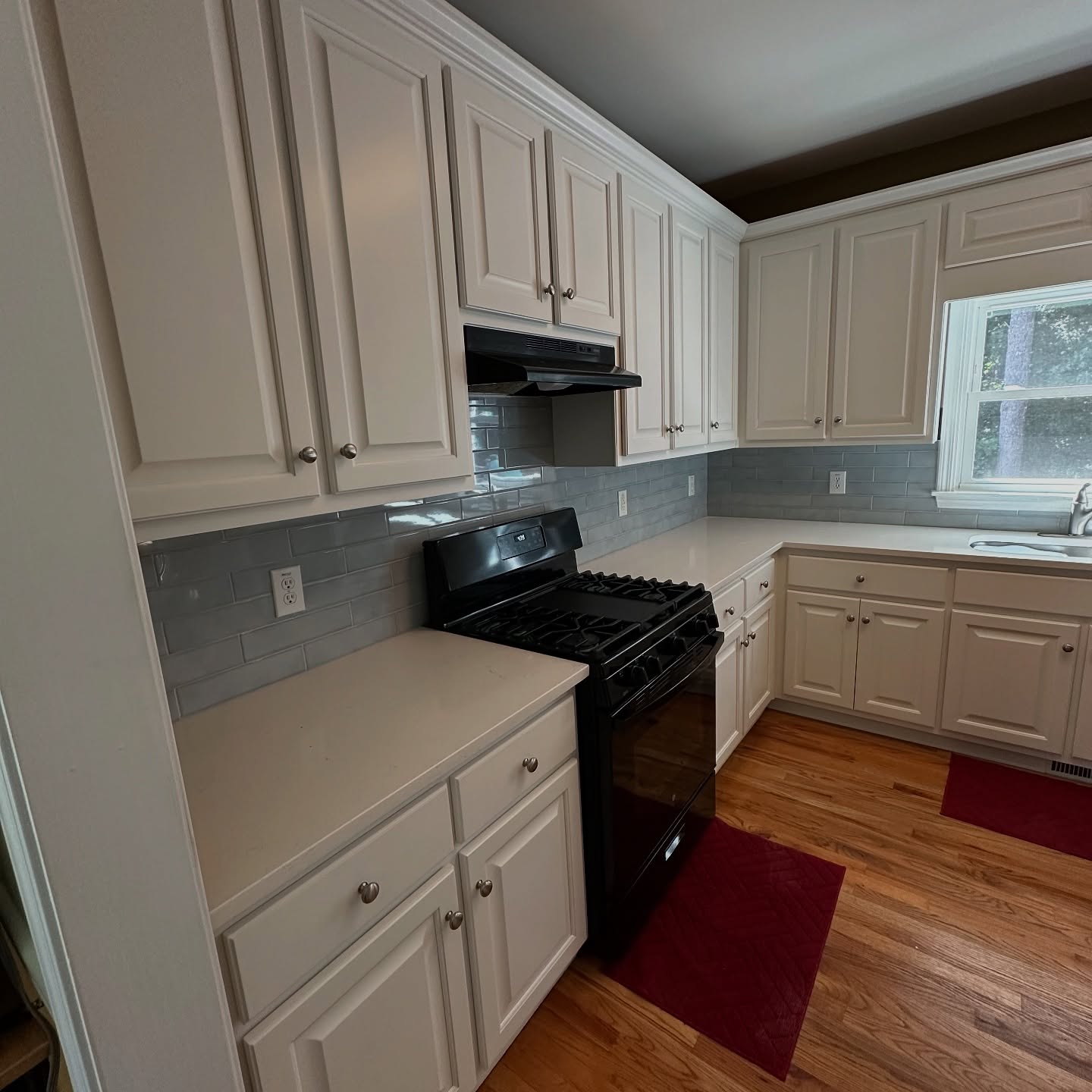
From the entry, the finish quality shows up
Painted cabinets live or die on how the finish looks from across the room: brush marks, drips, primer peeking through at every edge. This spray job holds up at a distance that would expose a DIY attempt in two seconds, and the knobs sit in the same holes the original installers drilled, which is why it still reads as cabinets and not refinished furniture.
BIN shellac is the step nobody talks about
Paint oak cabinets with regular primer and a white topcoat, and they turn pink or dirty cream within six months. That’s not workmanship, it’s chemistry: oak is loaded with natural tannins that bleed up through latex primer like coffee through a paper towel. BIN Shellac Primer locks those tannins down so they never reach the color coat. The difference shows up by year three.
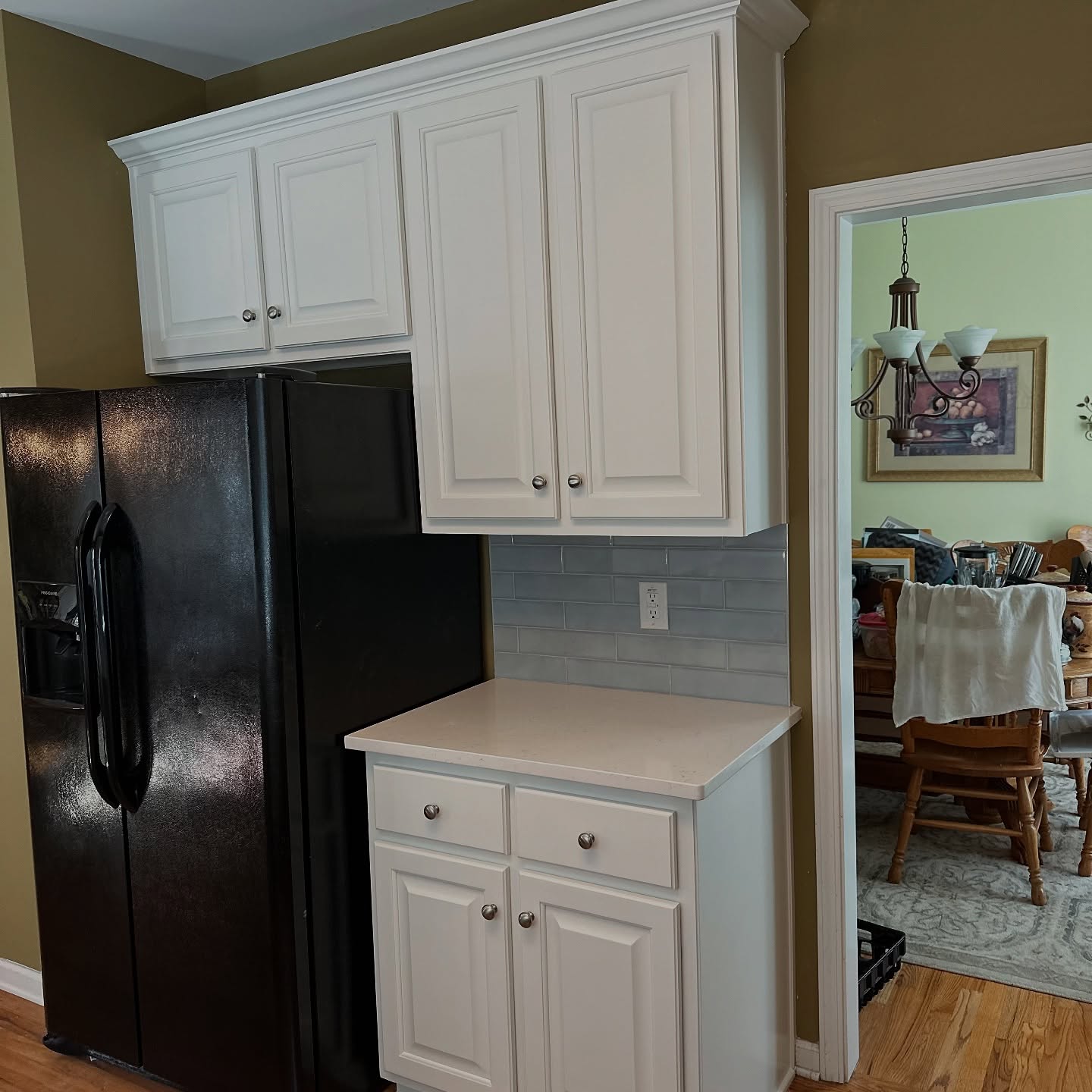
The fridge wall finally reads as one piece
That little pantry base next to the fridge used to feel like a random extra cabinet somebody tacked on. Now it blends into the bank around it, the fridge finally has a clean backdrop, and the doorway on the right opens into the dining room like a framed picture.
Up close, the paint still looks factory
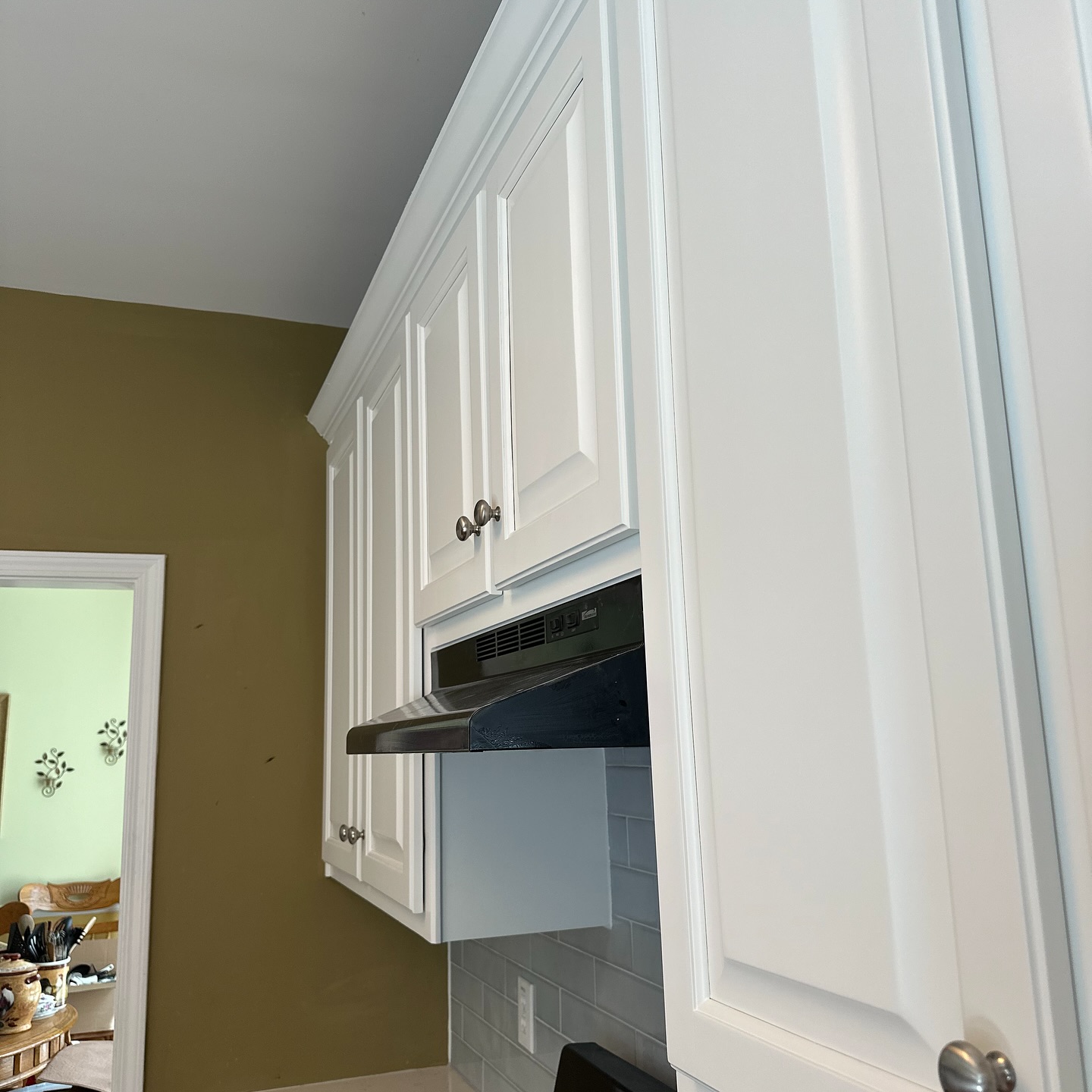
Get within arm’s reach and the finish still holds. Raised panel detail stays sharp, crown molding reads clean, the brushed nickel knob has the right contrast, and there’s no brush texture anywhere. That’s what Gallery Series Satin 20 and a sprayer buy you, and it’s why the project ages well instead of looking tired in six months.
What they didn’t change is the whole story
The list of things they could have ripped out is long: boxes, doors, counters, backsplash, flooring, appliances, lighting, drywall, trim. They touched none of it. One surface refinished in four days by a pro with the right primer and sprayer, and the bill landed at a fraction of any contractor quote.
Which part would push you to call a refinisher first, the color, the timeline, or the idea that you don’t have to rip out what you already love?