
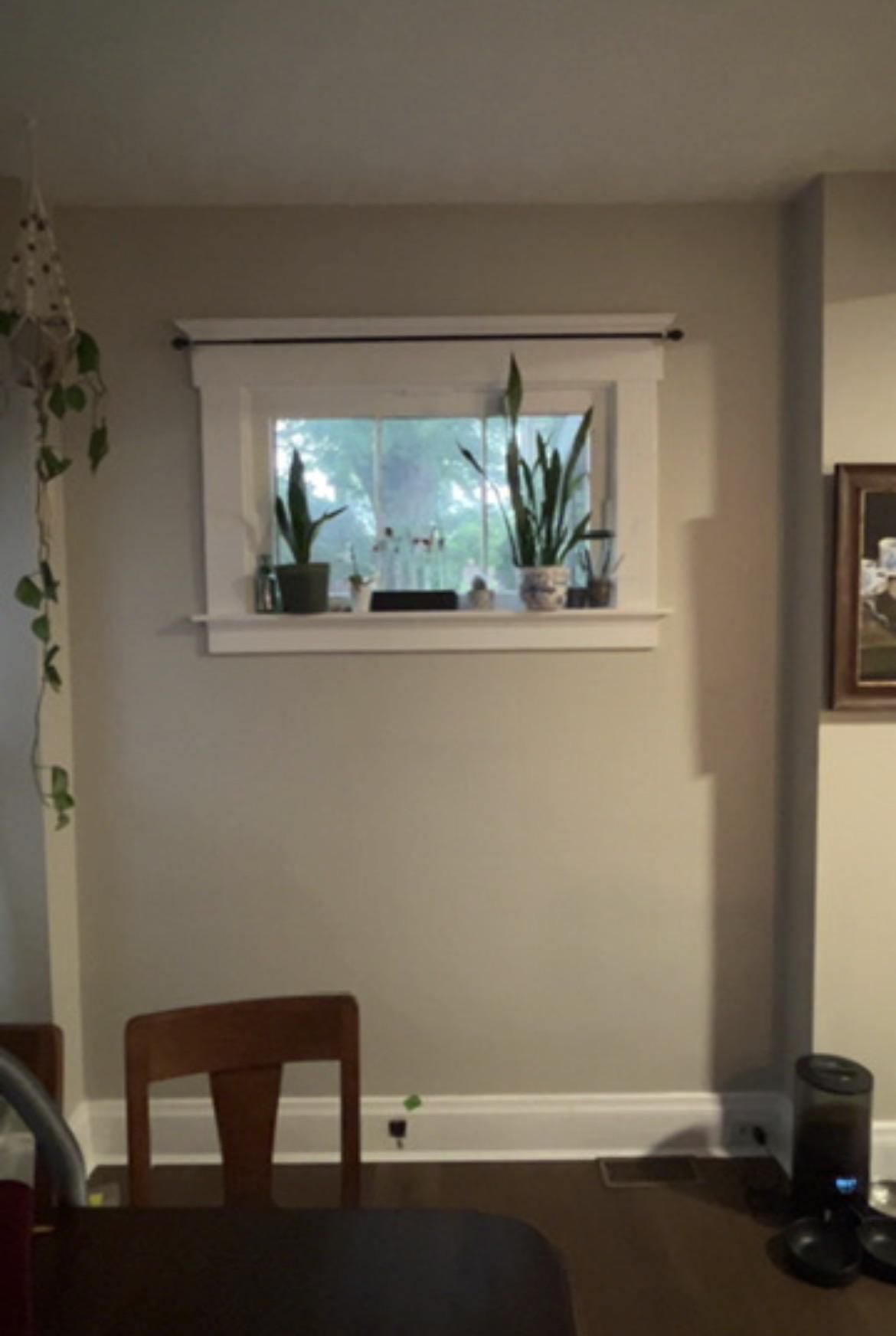
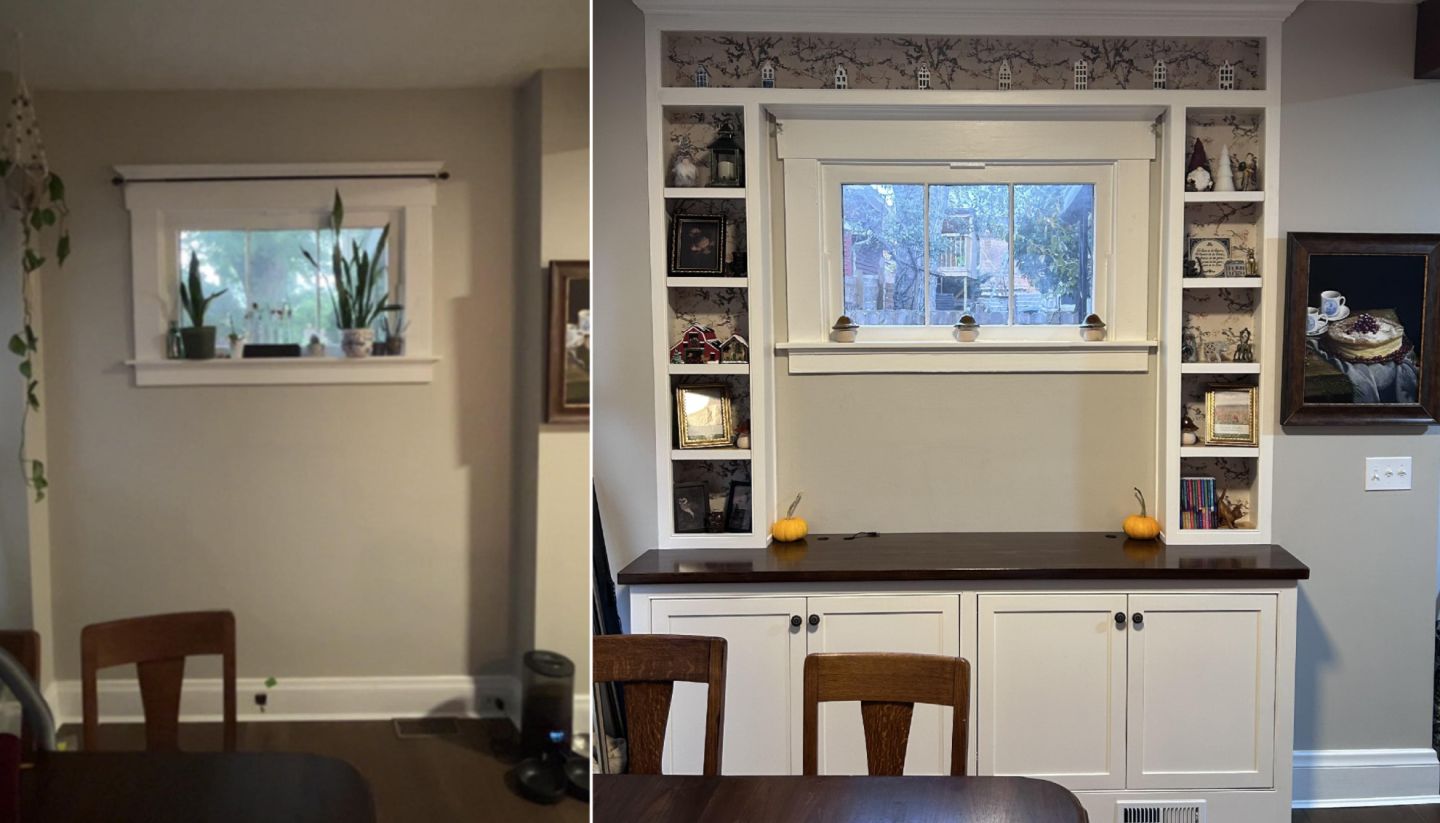
An empty space around her window seemed like an unlikely spot for built-ins, and several people advised against them. She went ahead anyway, giving the overlooked area a new purpose with a display that brought her favorite objects into everyday view.
A question of depth
The shelves in Hot-Chair-7706’s project measure just 6¾ inches deep. That dimension leaves little room for bulky objects, but it suits the small pieces she wanted to display. The shelves, she wrote, work “just fine for me.”
Their purpose helps explain the decision. Storage is often judged by how much it can accommodate, from books and baskets to tableware. A display shelf has another responsibility: allowing its contents to be seen. Extra depth can leave miniature objects stranded at the back or encourage layers that obscure the pieces behind them.
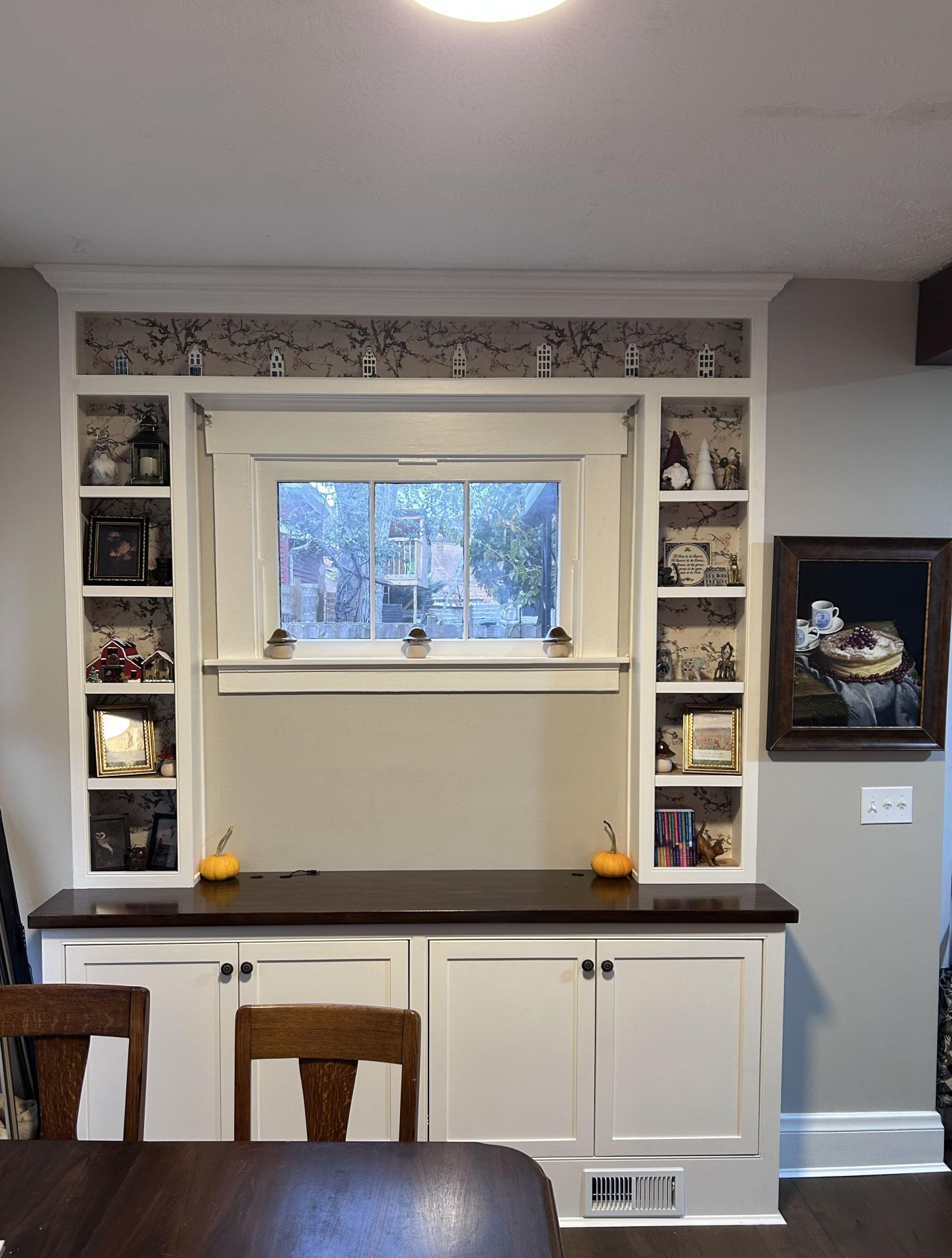
Here, the limited depth makes the scale of the collection central to the design. The objects give the shelves a job, and their size makes that narrow footprint useful.
Little houses with family ties
Among the pieces on display is a collection of KLM Delft houses. She explained that her family is Dutch and sometimes brings her one when visiting.
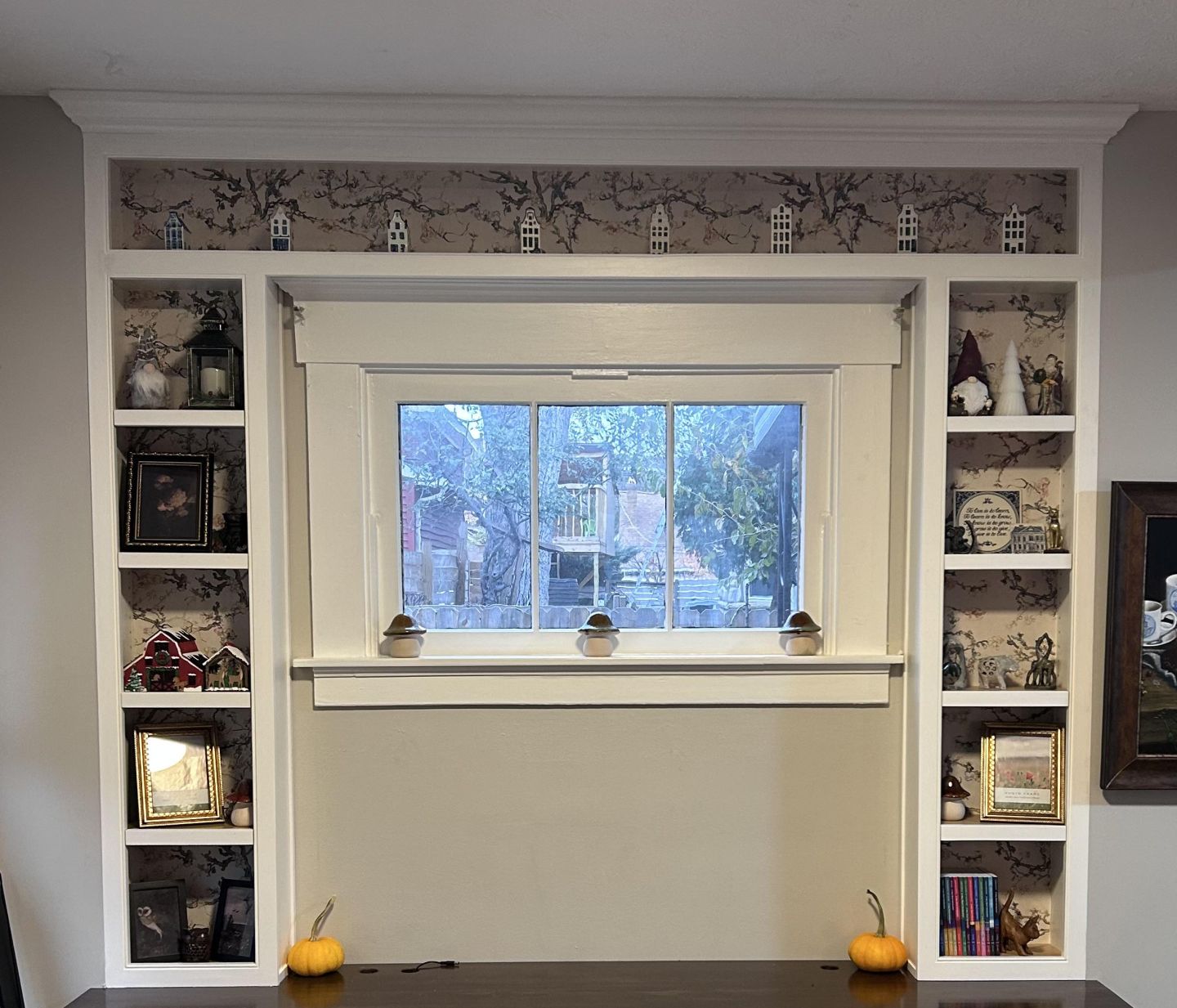
That detail gives the installation its personal dimension. Some of those little houses have a connection to people arriving at her door. Gathering them into a dedicated display gives that family connection a visible place in the room.
Collections can be awkward to accommodate because their importance has little relationship to their size. A miniature may occupy only a few inches and still deserve somewhere it can be enjoyed. When pieces are scattered across unrelated surfaces, the collection itself can become difficult to see.
Shelving establishes a setting for the group. Repeated forms acquire a rhythm; individual differences become easier to notice. The arrangement invites someone to look at the objects together and then attend to the details of each.
Giving the window area a purpose
The change is as much about attention as storage. An area that previously offered little reason to pause now holds things worth looking at. The window remains the architectural starting point, with the shelves giving the surrounding space a defined role.
For anyone considering a similar installation, the useful questions begin with the collection:
- Measure the widest and deepest pieces before deciding on shelf dimensions.
- Allow space between objects so their outlines remain distinct.
- Consider the shelves and window trim together when planning the arrangement.
These choices help establish whether a shallow installation will suit the objects and the room. A compact display still needs enough depth for its contents to sit securely, and enough restraint to keep the arrangement legible.
What makes this project convincing is how closely its purpose fits its limitations. The shelves have a particular collection to accommodate. The little houses, including those brought by visiting family, now have a place in everyday life.
All images by u/Hot-Chair-7706.