
Type “painted bathroom vanity” into Pinterest and the entire grid turns white. For most cabinets it works fine. For cherry, it’s a trap.
Cherry carries natural tannins that react badly to paint. You roll on a crisp coat of white, and for about three weeks it looks perfect. Then pink shadows start pushing up through the finish, worst along the grain and the door edges. A bathroom speeds it up, because humidity opens the wood pores and pulls the pigment through faster. A lot of homeowners find this out the hard way, repaint twice, and end up ripping the vanity out.
This Lithonia, Georgia bathroom had two cherry vanities. A long double by the window, and a small standalone next to the toilet. @duartpainting took the job and did something most refinishers wouldn’t have thought of.
The before
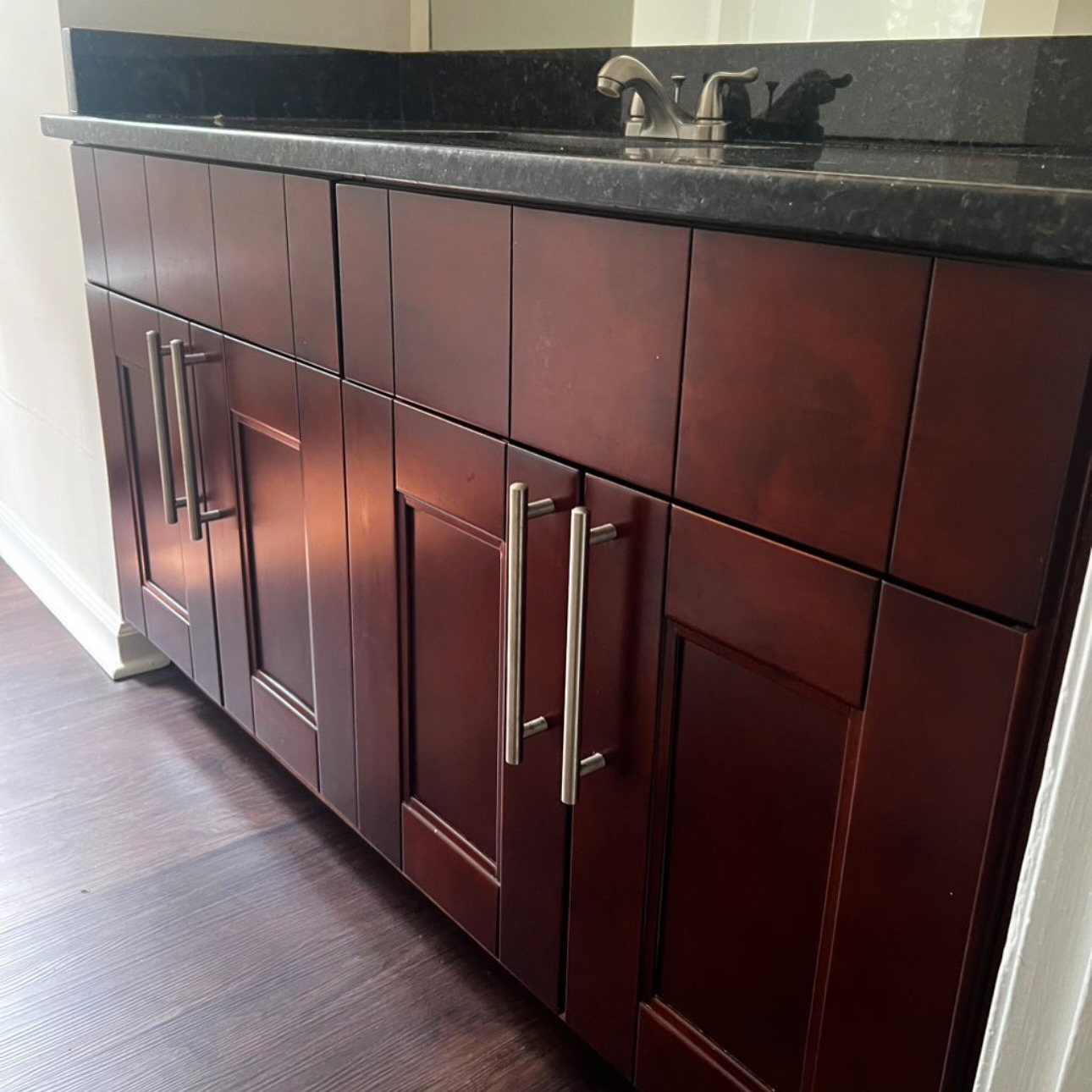
Look at the long one first. Deep reddish cherry stain, black granite top, and those oversized brushed nickel bar pulls that screamed 2012 the moment they went on. The stain fights everything in the room. The floor is warm wood. The wall tile in the shower (visible on the smaller vanity next door) is warm travertine. Nothing in there talked to anything else, so the eye bounced around looking for a place to land.
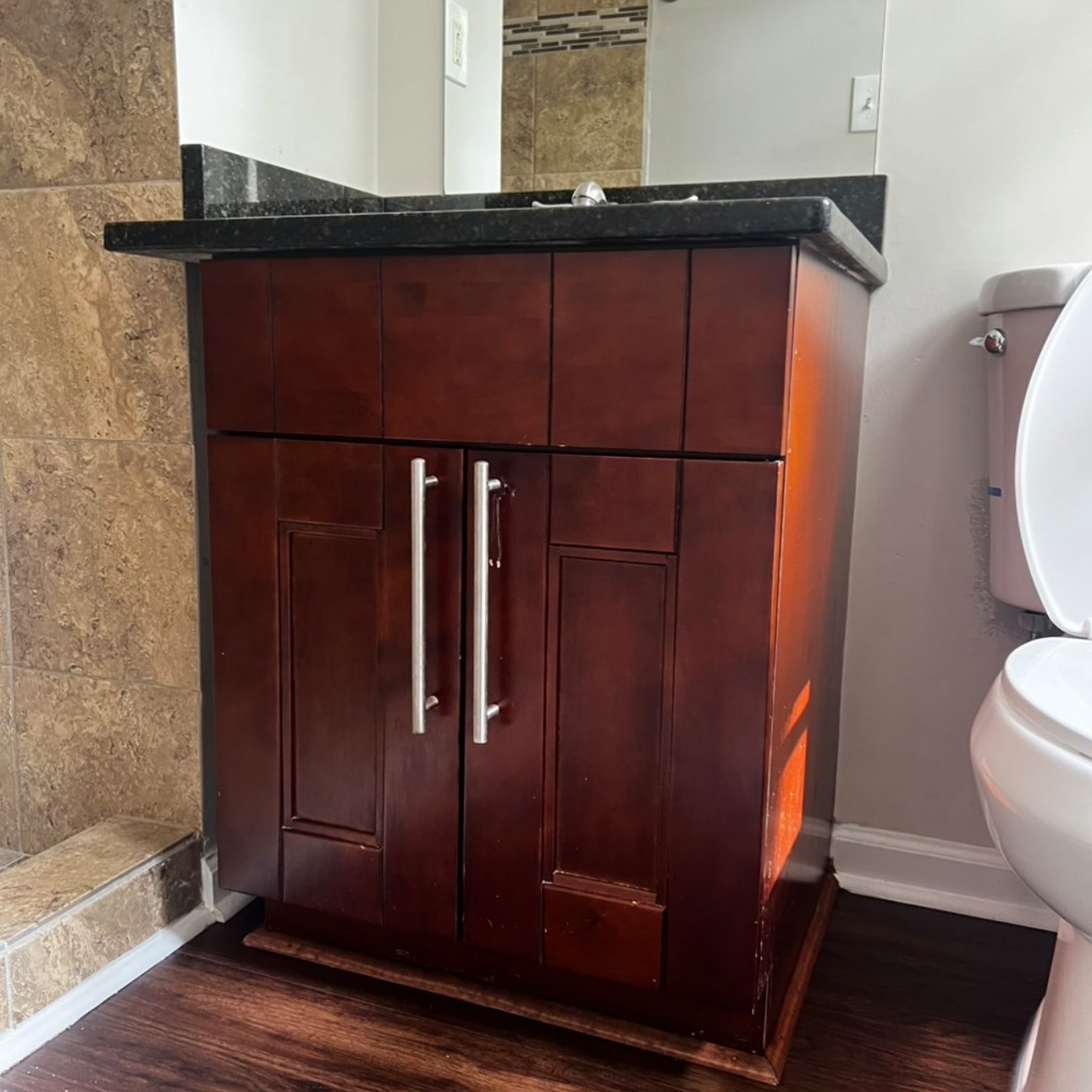
The small one was worse. Scuffs along the toe kick, nicks on the door panels, and the same chunky pulls. A good vanity in bad shape. Replacing both was going to cost real money, and the granite tops were still beautiful. Paint was the obvious call. The color of paint is where most people get it wrong.
The step DIYers skip and regret
Shellac primer. That’s the whole secret.
Standard water-based primer acts like a sponge on cherry. The water soaks in, loosens the natural pigments, and they ride the moisture straight up through every coat you put on top. The painter here reached for BIN, a shellac primer carried in alcohol instead of water. It dries in minutes, before the tannins have time to migrate, and it locks them under a hard sealed film that nothing gets past.
Old-school cabinet refinishers won’t touch cherry without it. New painters often don’t know it exists, or they trust what the big-box store clerk recommends, which is almost always wrong for this wood.
On top went Sherwin-Williams Gallery Series in Satin 20. A cabinet-grade alkyd hybrid, which is a longer way of saying “actually tough enough for a bathroom.” Regular wall paint chips the first time a towel drags across it.
Why beige was smarter than white
SW 7036 Accessible Beige. Not a color most people reach for when they want a cabinet to “pop.”
But pop wasn’t the goal. The goal was a cabinet that stopped fighting the room.
Accessible Beige is a warm greige, sitting about halfway between oatmeal and a very light mushroom. It picks up the warm tones from the travertine wall tile and the wood look floor instead of competing with them. If a trace of tannin ever manages to sneak through down the road (unlikely with BIN, but possible after years in a steamy bathroom), it disappears into the undertone instead of showing up as pink. White would have broadcast every imperfection.
The after
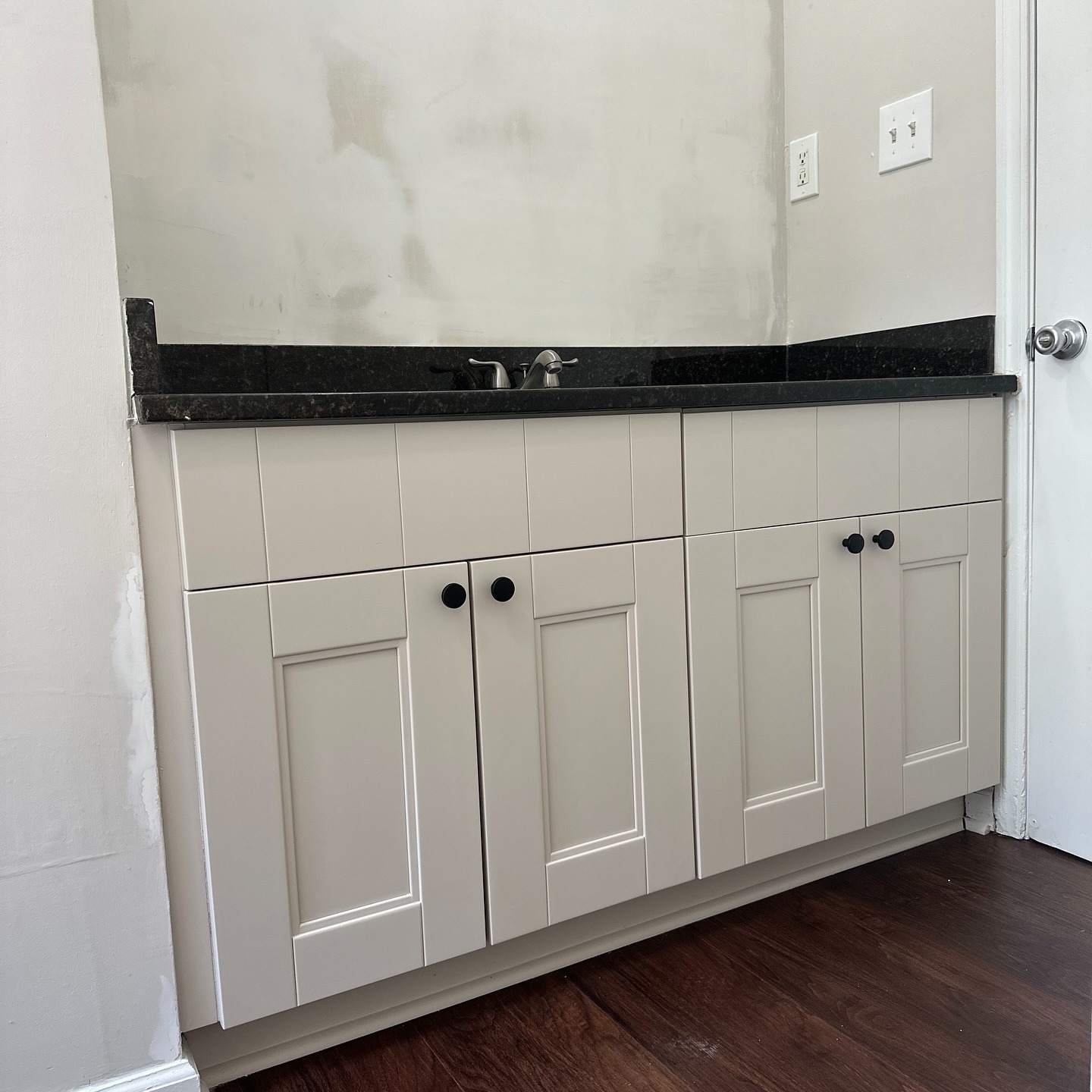
The whole bay feels three feet wider. Same cabinet, same granite, same wall behind it. The lighter color just stops absorbing the light, and the room opens up on its own.
Notice the knobs. Small, round, matte black, and centered on each door instead of mounted vertical along the edge. The old bar-pull holes are completely gone. Not covered. Not filled with a visible patch. Gone. Sanded flat, primed, resprayed, invisible.
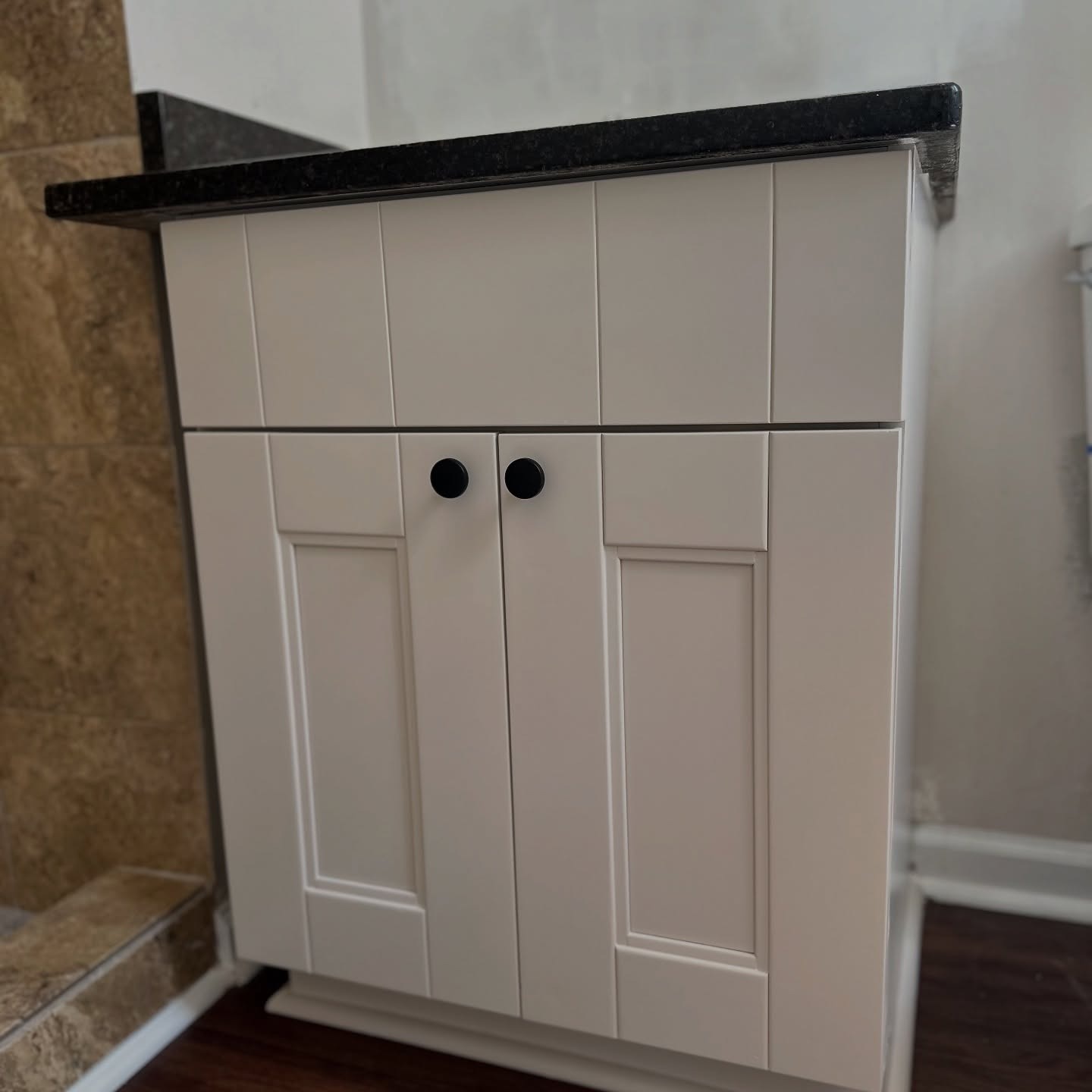
Up close you can see how smooth the finish is. That’s spray application, not a roller. A good sprayer and a cabinet-grade paint leave a finish that looks factory-applied. Brush and roller marks are the dead giveaway on DIY jobs.
What makes this look custom-built
Three things, in order of how much they mattered:
The patched hardware holes. Most refinishers either reuse the old holes (and leave you with dated placement) or drill new ones next to the old ones (and leave visible scars). This painter closed the originals completely and drilled fresh. That single step moves the work from “painted cabinet” to “custom cabinet.”
The color that respects the room. Beige instead of white means the vanity belongs where it sits. White would have stood out in a photo. Beige lives in the bathroom.
The right primer under the right paint. BIN seals the wood, Gallery Series holds up to daily use, and neither one yellows in a year like cheaper products do.
If you’re tempted to try this on your own cherry vanity: buy the shellac primer first, and don’t skip it even if the paint can says “paint and primer in one.” That claim is for drywall, not for pigmented wood. And resist the white. There are three dozen warm greiges on the fan deck that will age better and fight your room less.
The vanity you have is probably solid. It almost certainly isn’t the problem. What’s on top of it is.