Thunder is in the forecast, and your eye goes straight to the refrigerator plug or the AC controls. Leave those alone for now. The first plug worth pulling is one most of us never think about, and it sits across from the couch.
The screen with two doorways in
If you want one easy, nonessential device to unplug first, the television is the practical pick.
Your TV may have two doorways leading straight into its electronics. One is the power cord. The other may be a coaxial cable, a satellite connection or an antenna line. A cable box or a wired modem can add yet another route.
Lightning doesn’t need to hit your roof to cause trouble. A nearby strike can send a sudden surge through the lines coming into the house, and lightning can travel through electrical wiring and television reception systems. A connected TV setup sits right in its path.
What the remote doesn’t switch off
So you grab the remote and turn it off. The screen goes dark, but nothing has really changed. The set is still attached to the outlet and, in many homes, to an outside signal line.
Then there’s the strip behind the TV. A “surge protector” and a “power strip” aren’t the same thing. A plain strip only adds outlets. A surge protector can divert some everyday voltage spikes, but even typical plug-in protection may be overwhelmed by lightning.
It’s worth checking the label instead of assuming every strip offers surge protection. That matters beyond storm season too, especially with power strips in kitchens.
That still leaves the second doorway. One Samsung TV manual tells owners to unplug the set from the wall and disconnect its antenna or cable system during a lightning storm. Pull only the power plug, and the job is half done.
Before the first rumble
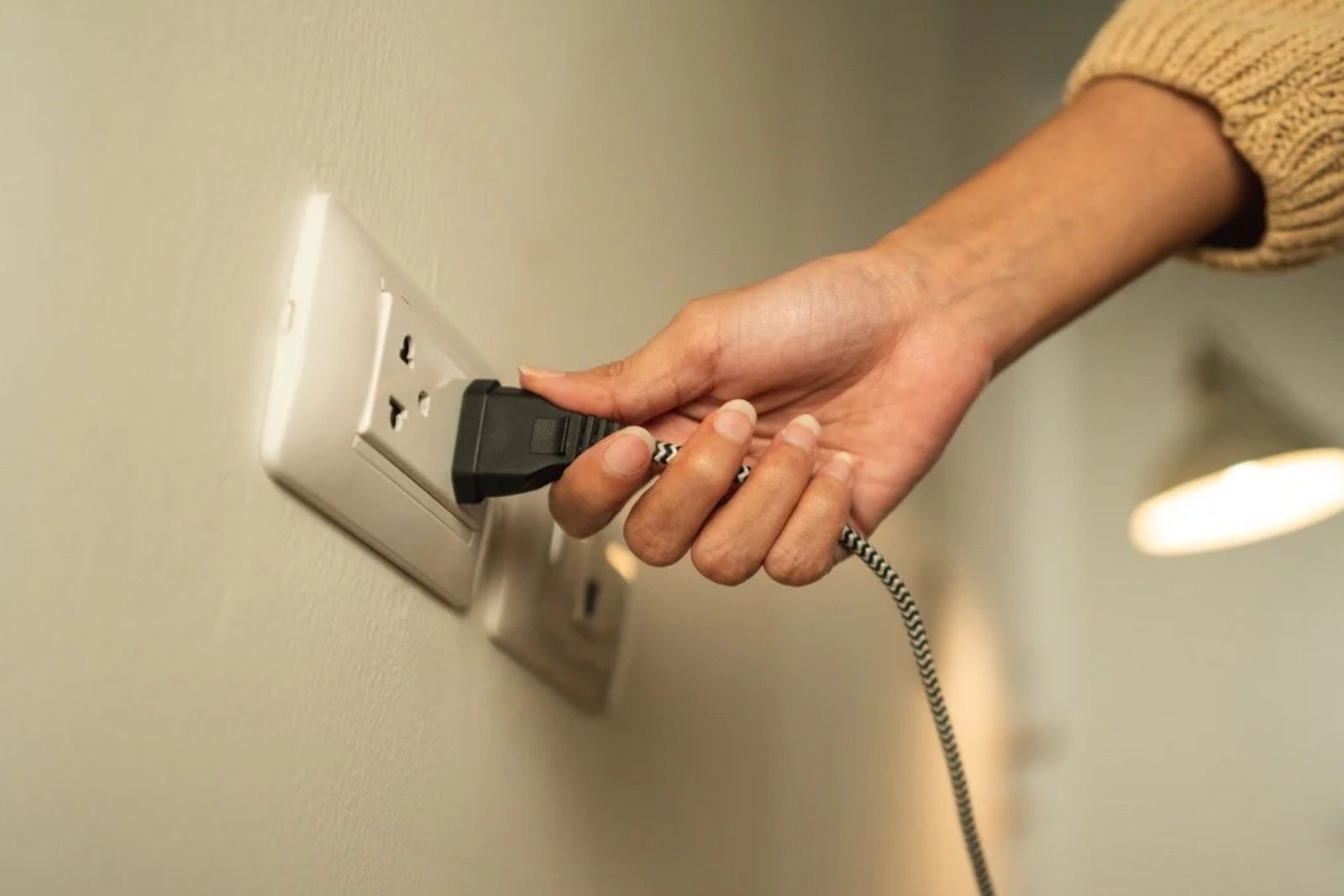
The forecast is your cue, not the first close flash. Shut down the TV and anything connected directly to it. With dry hands, grip the plug by its molded body, never by the cord, and pull it from the outlet.
Next, disconnect the coaxial antenna or cable connector from the TV or set-top box. If everything comes in over Wi-Fi, there may be no coax to remove at all. Unplug the powered boxes, game consoles and audio equipment hooked to the TV, then remove any wired network cable.
Tuck the loose cords where children and pets can’t reach them. The refrigerator and hardwired central AC can stay as they are, unless their manuals or your household emergency plan say otherwise.
When the waiting period is over and the power looks steady, reconnect your equipment one item at a time.
When the storm beats you to the plug
No official one-appliance rule exists: the TV is a priority, not a magic exception. Once thunder is audible, stop handling plugs. Stay away from electrical equipment and plumbing for at least 30 minutes after the last rumble.
If an outlet is wet, scorched, buzzing or smells burned, plug nothing back in. Call the utility for damaged service lines, or a licensed electrician for home wiring.