For five years the owners of this Covington, Georgia house kept promising themselves a new kitchen. Three contractors came out. The quotes landed between fourteen and twenty-two thousand dollars, and every one of them meant tearing the cabinets out. So the owners stalled. Meanwhile the paint on the doors kept peeling, and the red rectangles they’d painted around every panel back when the look still felt cute were starting to feel like a 1980s diner wall. Then a crew from Duart Painting pulled up on a Monday, took a look, and said they could finish by Wednesday night. They did.
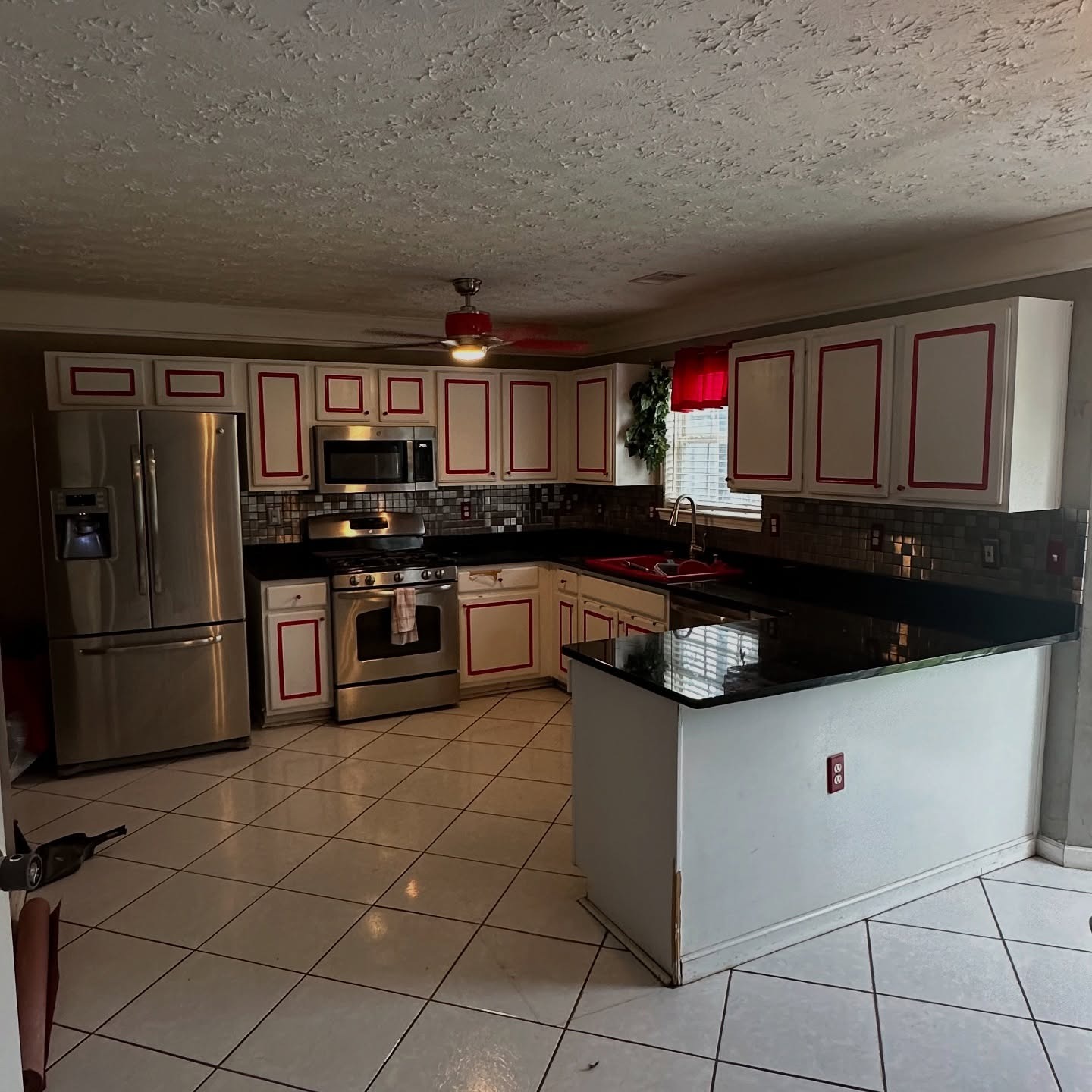
The granite was black, the appliances stainless, the floor cream tile. All of that was fine. The problem lived above the counter. Every cabinet door had a hand-traced red rectangle around its panel. The knobs were red, the sink was red, the curtains were red, the ceiling fan was red. Thirty-something doors, all shouting at once.
And then there’s what you only see up close
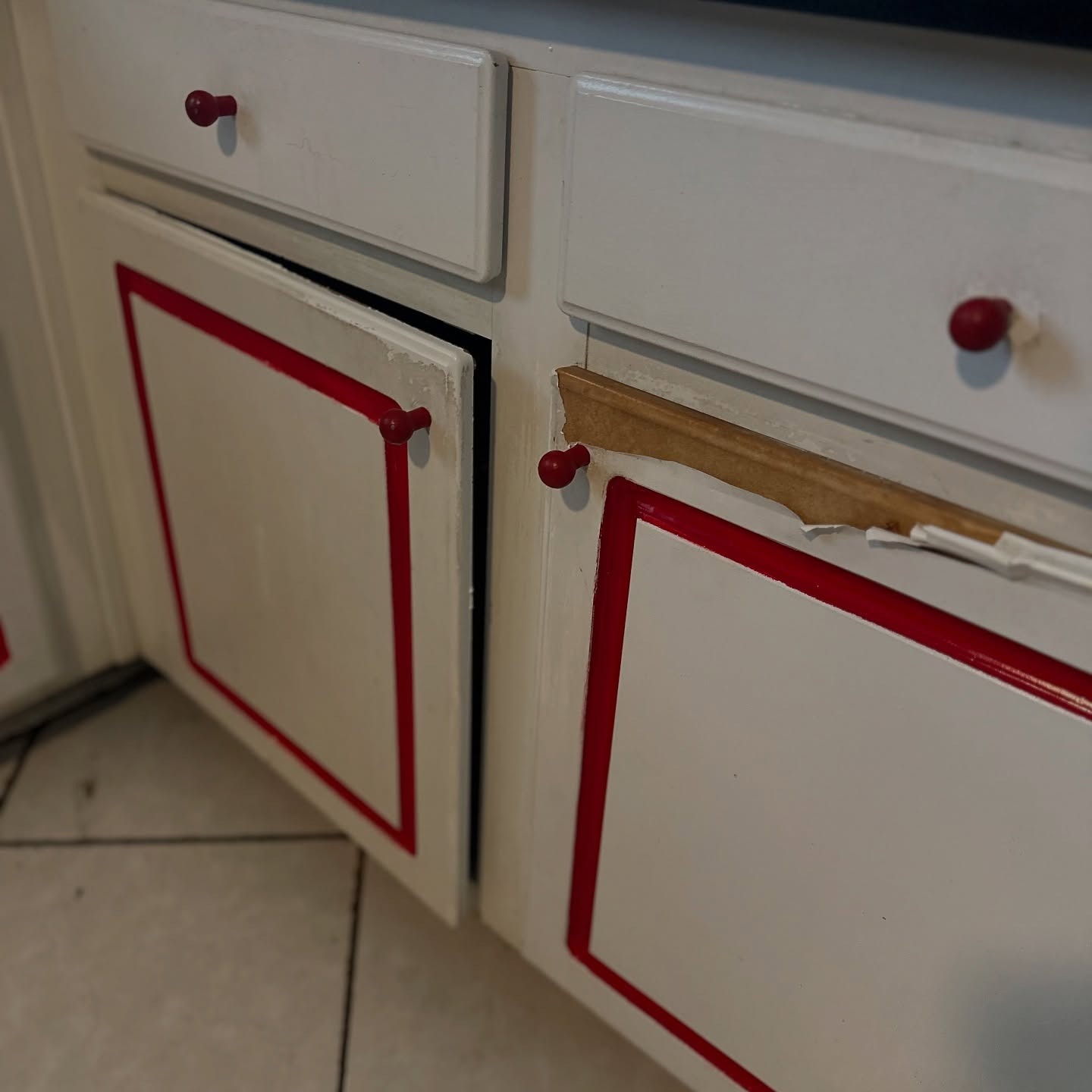
See that tan strip peeking out at the top of the drawer? That’s raw MDF. The doors aren’t wood. They’re thermofoil, which is just a thin sheet of vinyl heat-pressed onto shaped board. Builders used it in American tract houses from the late nineties through about 2012 because it looked fine and cost nothing. Nobody warned the owners about the glue. It gets maybe fifteen good years before oven heat and dishwasher steam break the bond. The skin lifts at the corner, then cracks, then sheds in strips.
Why three other painters quietly turned the job down
Before they found Duart, the owners called around. Three painters came out, looked, and found a reason to pass. What they weren’t saying is that the peeling vinyl doors and the slick laminate boxes they sit in aren’t the same surface. One primer won’t grab both. Latex primer slides off laminate like water off a car hood, and if you force it, the paint flakes off a few weeks later. Nobody wants that phone call.
The old stove wall, with every red line still in place
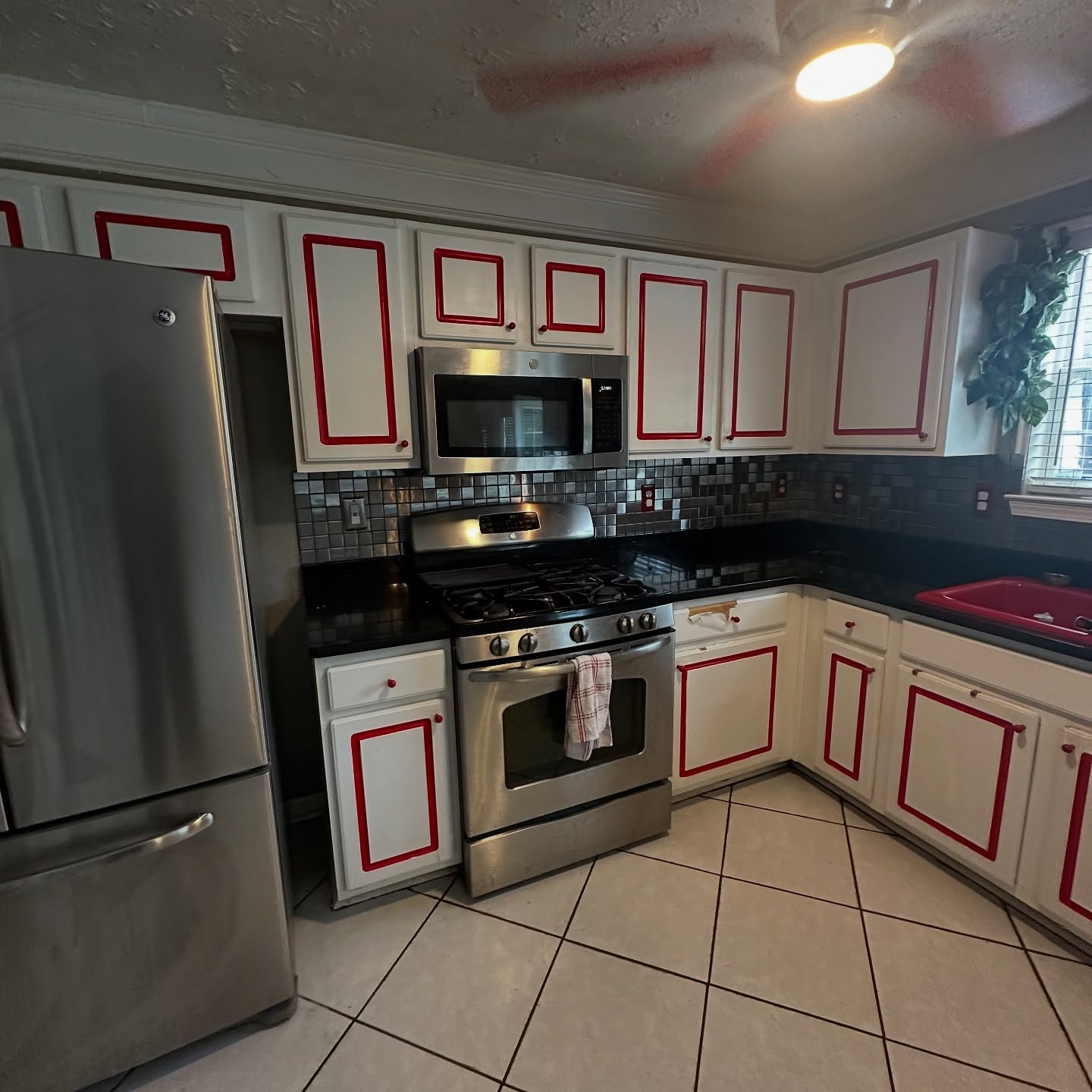
This is the stove corner Monday morning. Count the red rectangles if you want to feel seasick. Your eyes don’t get to rest anywhere.
The same corner by Wednesday evening
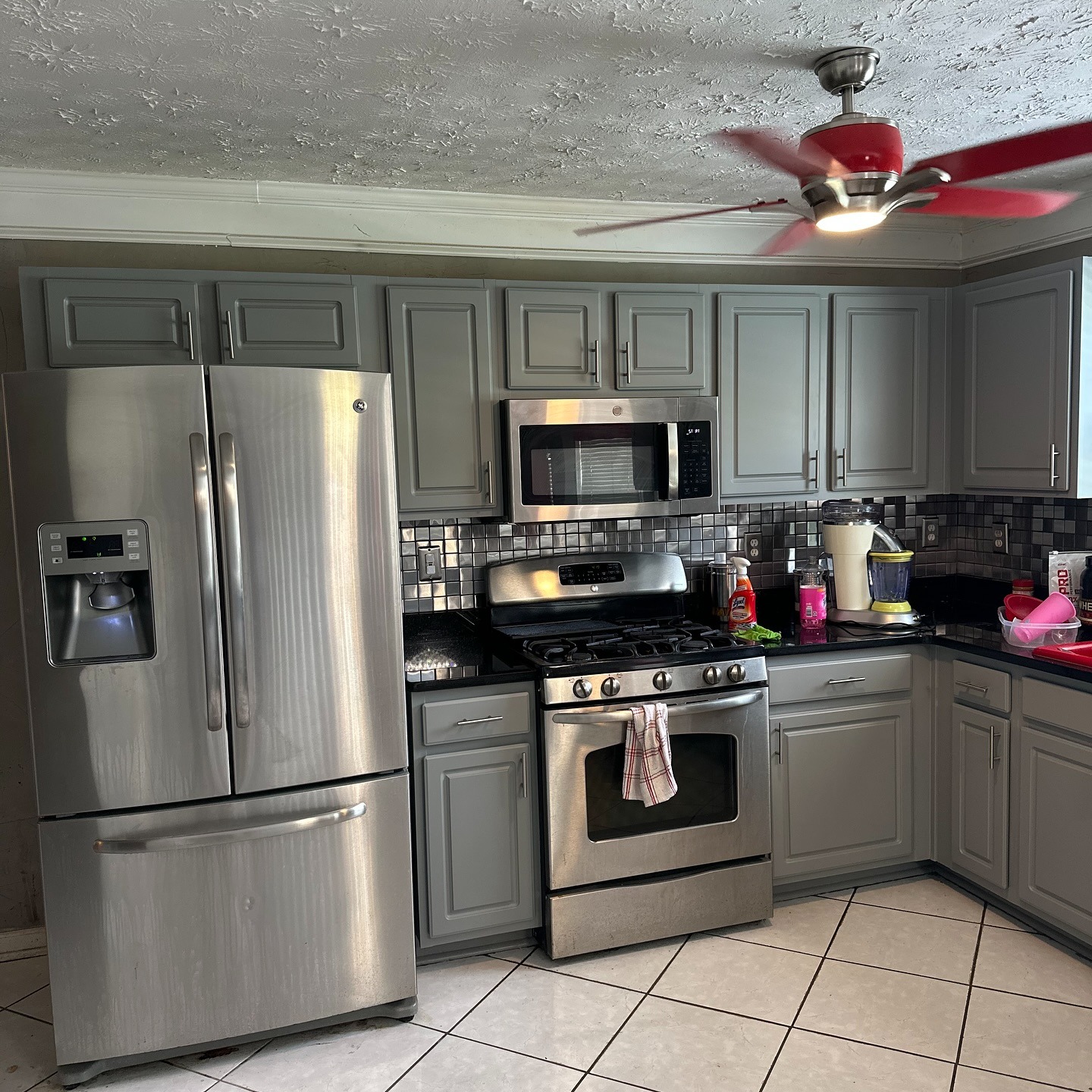
Soft gray takes over and the whole corner exhales. The dark mosaic backsplash finally looks like it’s doing a job instead of fighting the cabinets. The red knobs are gone, replaced by brushed nickel bar pulls. Same stove, same hood, same tile. It’s just quiet now.
The two-primer trick that makes the paint actually stick
So how do you paint a thermofoil kitchen and have it still be stuck in five years? You stop looking for one primer that does everything, and you use two.
The doors got BIN shellac first. Shellac is weird stuff. It comes from a bug resin, it stinks when you open the can, and it dries in about forty minutes. But it does two jobs nothing else does as well: it seals the raw MDF edges where the vinyl was stripped away, and it locks down any adhesive residue so nothing bleeds through the topcoat later.
The fixed cabinet boxes got Extreme Bond. It’s built for low-energy surfaces like vinyl, melamine, PVC, and slick laminate. It grabs chemically where sandpaper can’t. Not optional on a job like this, and not interchangeable with the shellac.

Why soft gray and not clean white
There was an argument for white, and the owners asked. The painter pushed back. A bright white against black granite would’ve made the kitchen look like a hospital hallway. The Gallery Series gray he landed on is cool enough to feel current but warm enough that the yellow in the tile floor stops fighting it. He sprayed it in a satin at twenty percent gloss. Shiny enough to catch a little light, not so shiny that every fingerprint shows up by dinner.
The sink corner, finished
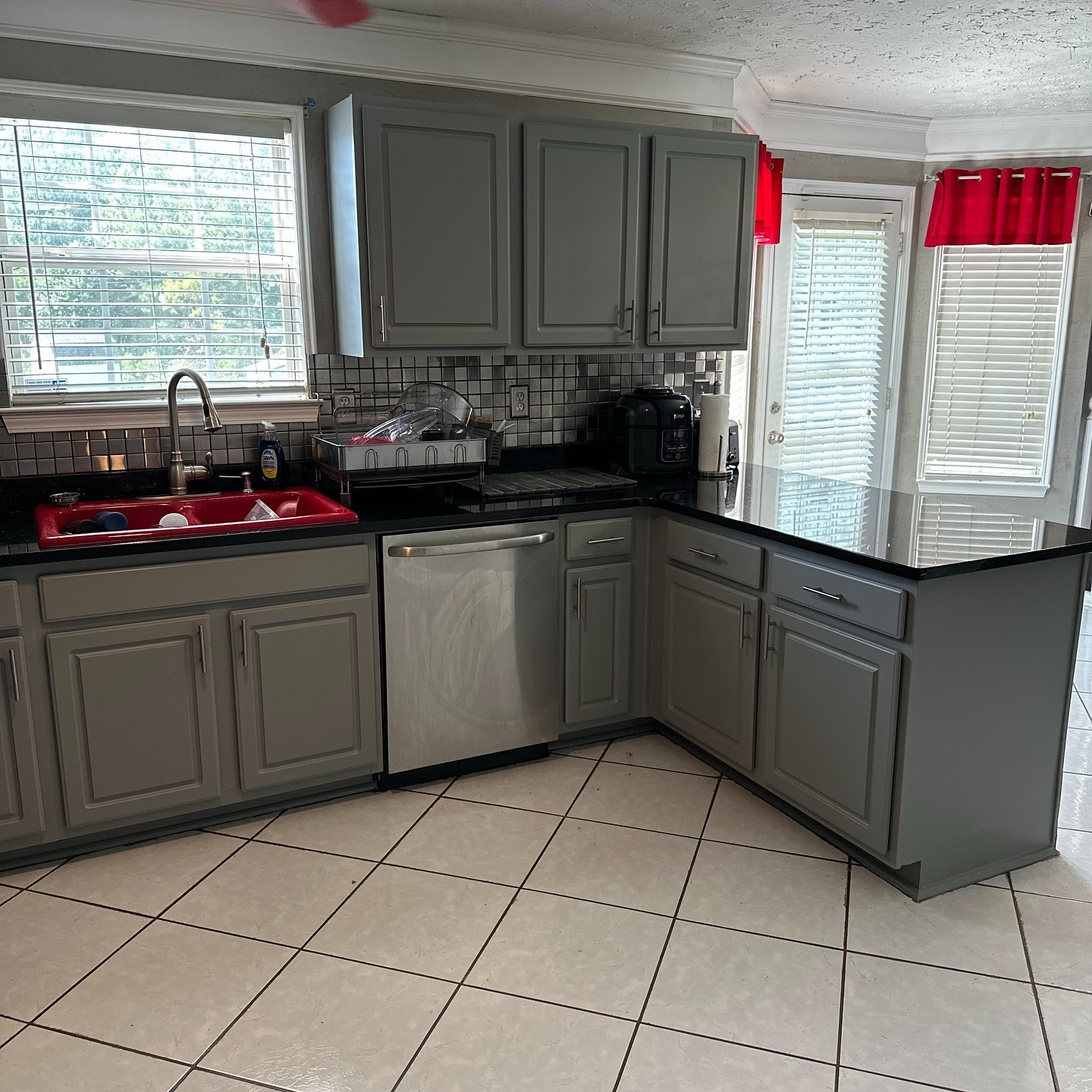
The red cast-iron sink stayed. In the old kitchen it was one more red thing in a room full of red things, so nobody noticed it. In the new one it reads as a choice. That’s the quiet rule of color: one red object in a calm room is a statement. Thirty red objects is a mistake.
Whole kitchen, before and after
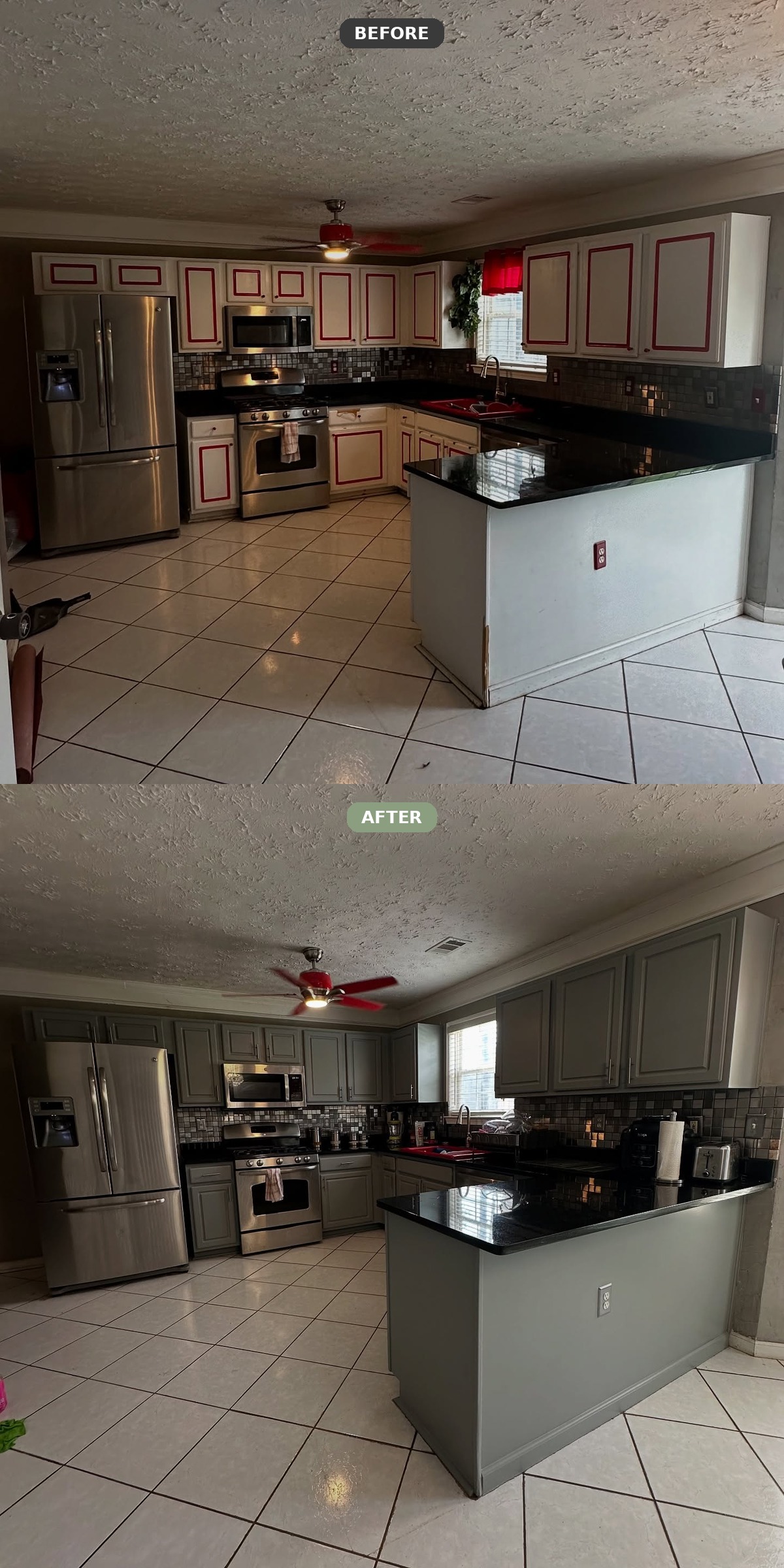
Not a single door left this house. The doors on top are the doors on the bottom. Worth sitting with for a second.
What it cost, roughly
Primer and paint for a kitchen this size runs about three hundred dollars in materials. New brushed nickel pulls were another sixty. The rest is labor. Duart billed the owners in the low four thousands for the three-day job. Roughly a quarter of the cheapest replacement quote they had sitting on the counter.
Which part of the old look would you have kept?