Here’s what everyone gets wrong about dated oak kitchens. It isn’t the arched doors. It isn’t the pelmets. It isn’t the little curved corner shelf everyone laughs at on Instagram. It’s one thing, and once you see it you can’t unsee it.
This couple saw it. Their friends didn’t. That’s why the quote they got for a full gut was north of $16,028 (£12,000), and why what they actually did cost a fraction of it. They didn’t rip a single cabinet out.
Walk into this room before anything happened, and you’re looking at a kitchen a lot of us grew up in. Solid oak carcasses. That honey-orange stain the factories could not stop making between about 1998 and 2005. Raised cathedral-arch doors. Brass-tone knobs. A curved corner display shelf with scalloped trim. Pelmets under the wall units. Cream speckled worktop. Beige marble-look tile. A textured artex ceiling nobody has ever liked.
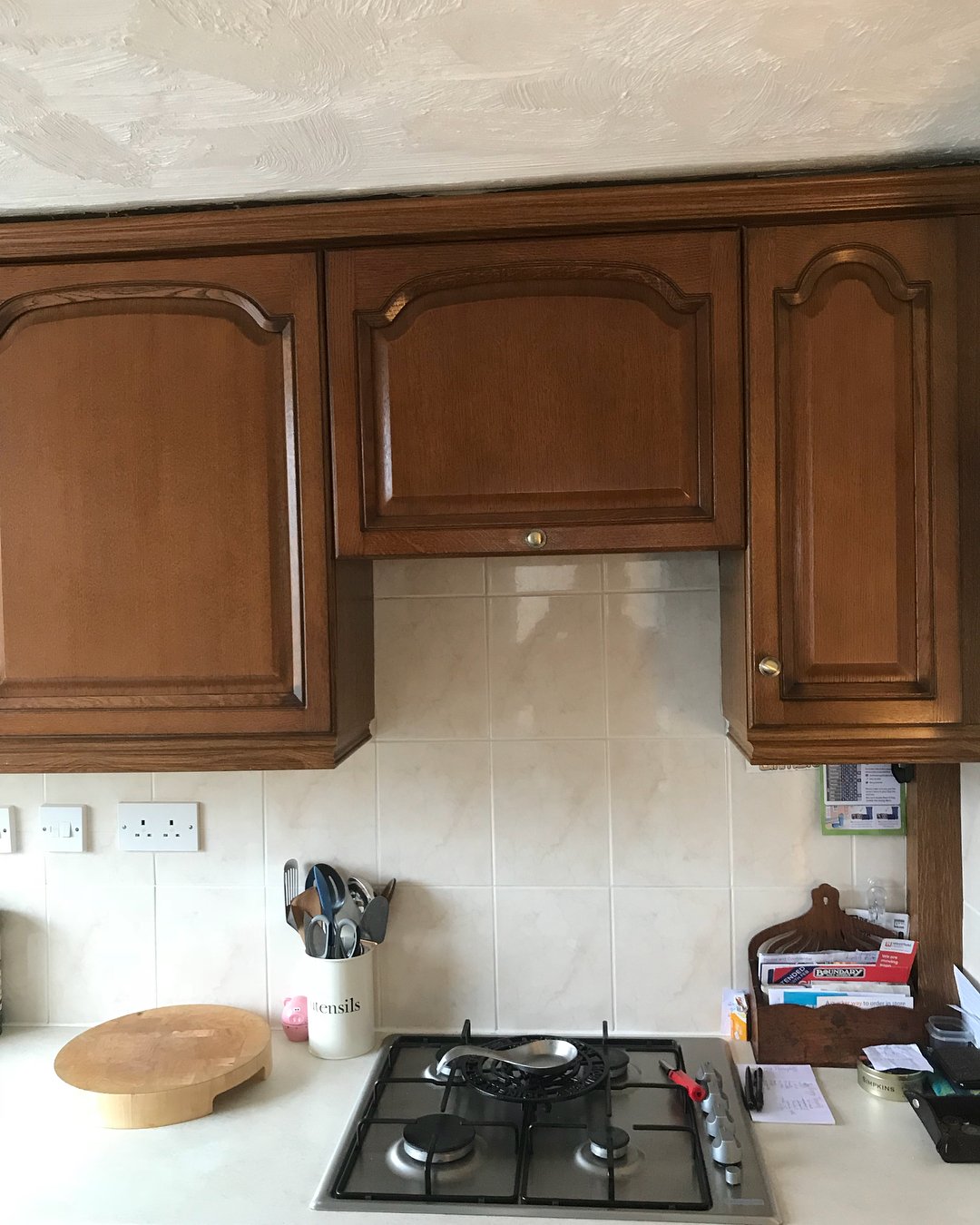
Every renovation account online would tell this couple to strip it. Flat-slab doors, new worktop, big-format porcelain, start over. A full gut on a kitchen this size runs $15,000 to $31,000 (about £12,000 to £25,000) with fitters, electrics, and tiling. That’s a used car. A year of take-out.
So they did the math, looked at each other, and tried something stupid first.
What the color was hiding the whole time
Oak isn’t dated. Oak in that one specific orange stain is dated. Two completely different statements.
Shaker-style arched doors have been made continuously for a hundred years. Pelmets and corner display shelves are standard features of painted English country kitchens selling today for $53,428 (£40,000) and up. The shapes in this room have never gone out of style. It’s the color that reads “my mum’s kitchen in 2003,” not the door.
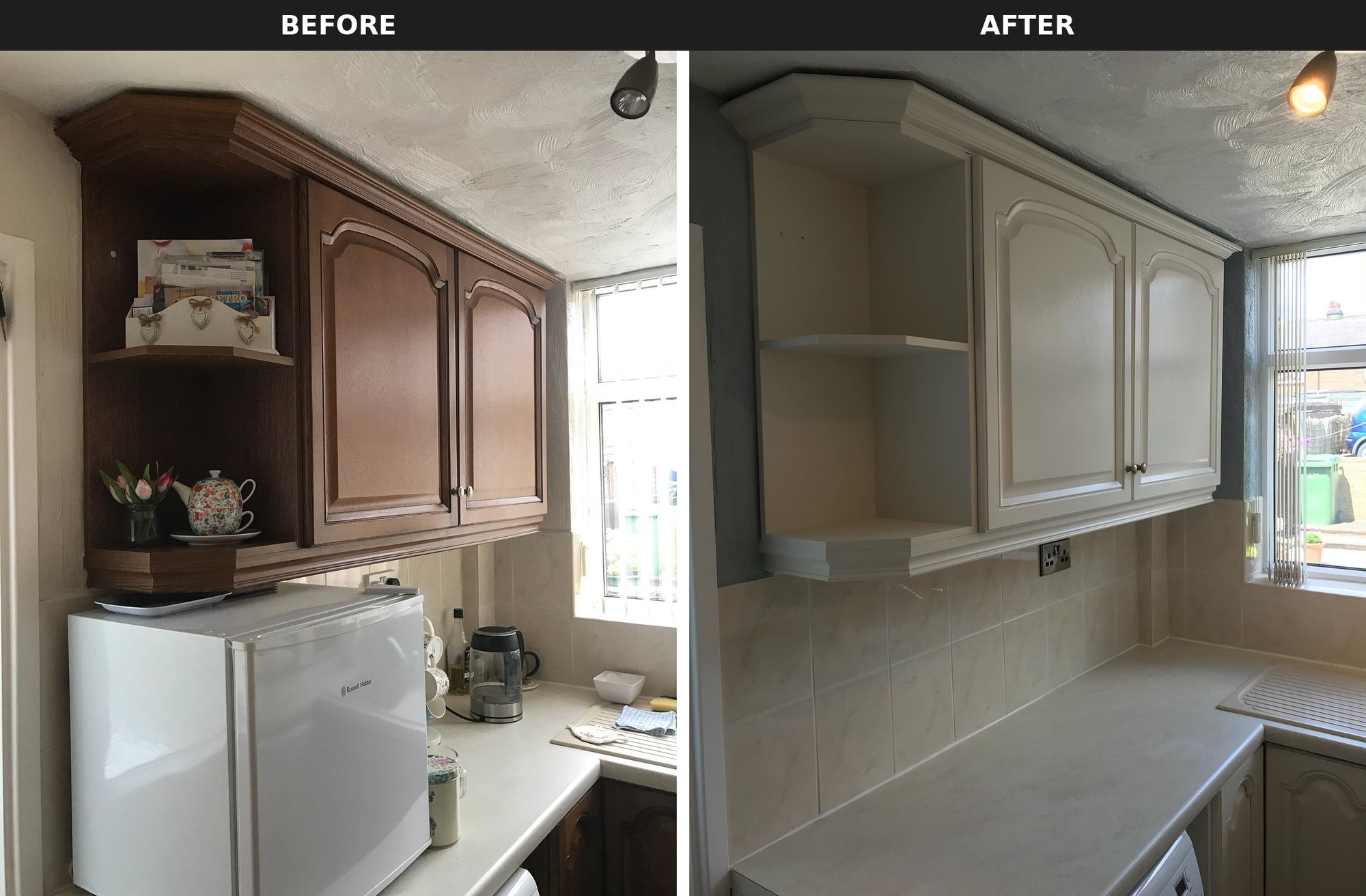
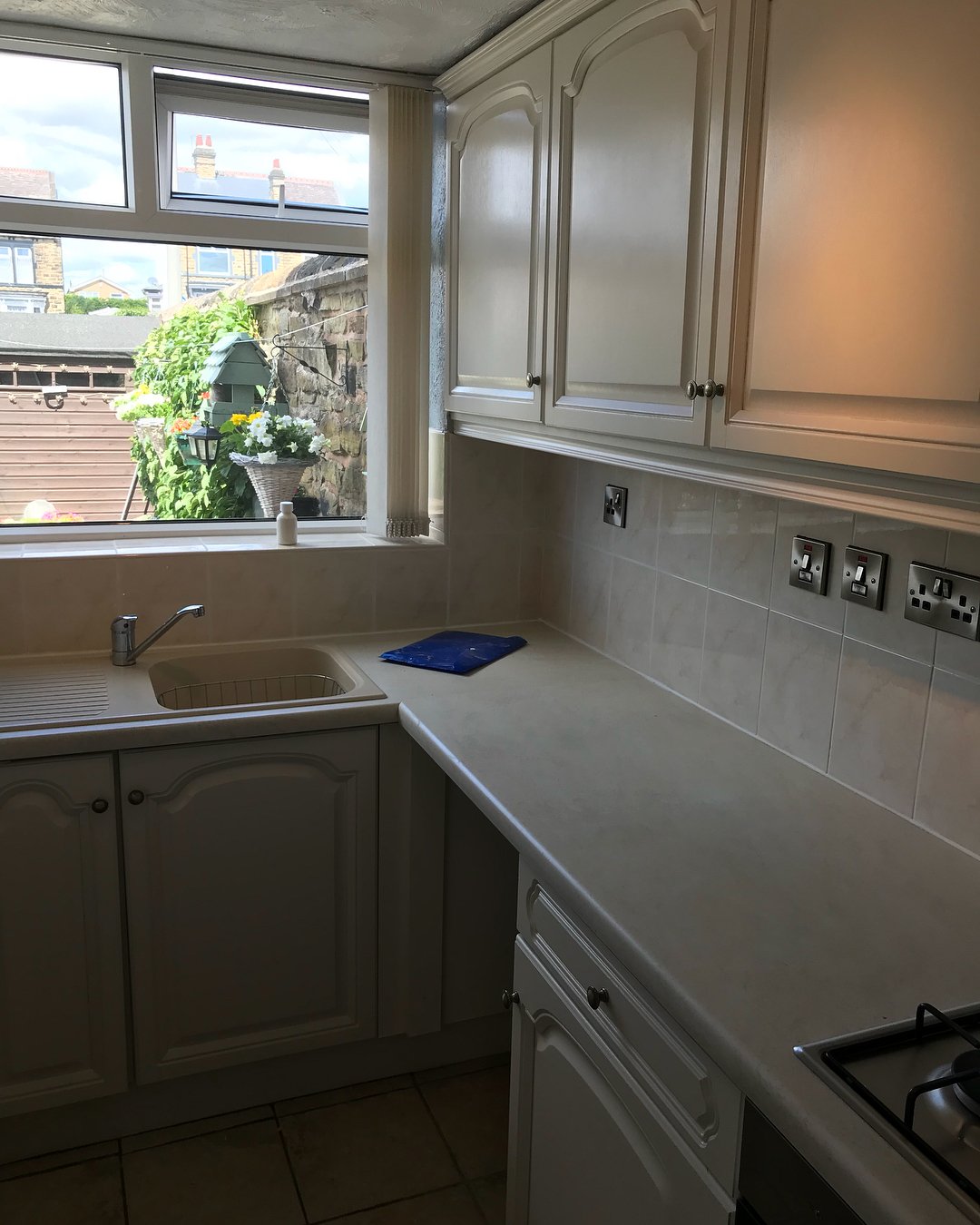
Strip the color signal and the shape underneath turns out to be timeless. Look at the same wall after one coat of RAL 9001 in satin.
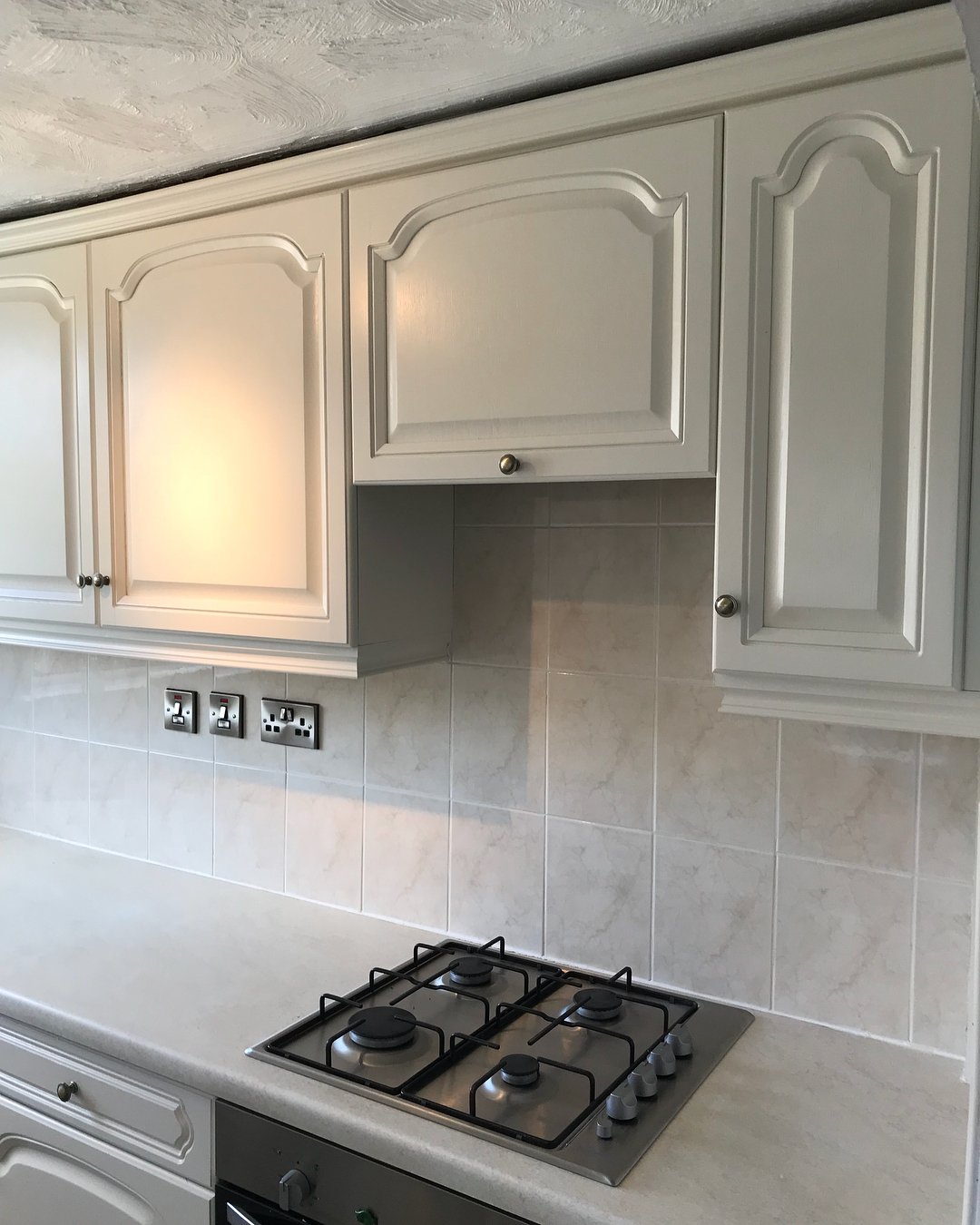
Nothing moved. Same hob, same tile, same sockets. But the arches suddenly read as joinery. The raised panels catch light the way painted furniture does. It looks like a cabinet maker got paid to carve those doors on purpose.
See the trick for yourself
Side-by-side is where this lands. Same cabinets. Same spot. One variable changed.
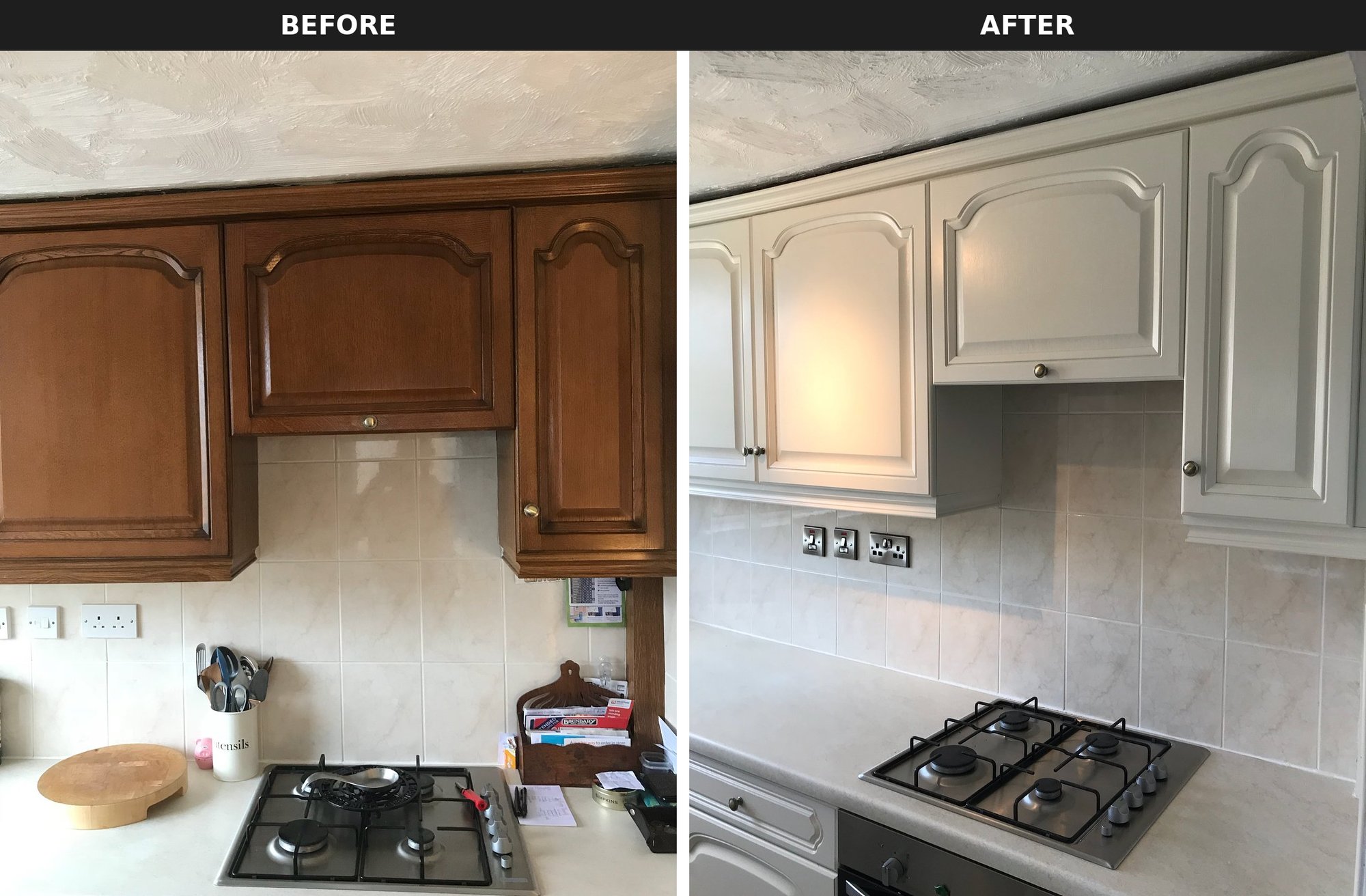
If you walked into a showhome and someone said “these doors cost $1,135 (£850) each, hand-painted in Farrow and Ball,” would you be surprised? That’s the point.
The oven wall tells the same story
This is the run everyone wants to replace first. In the orange stain, the oven looks lost in a brown wall. The whole room feels shorter and darker than it actually is.
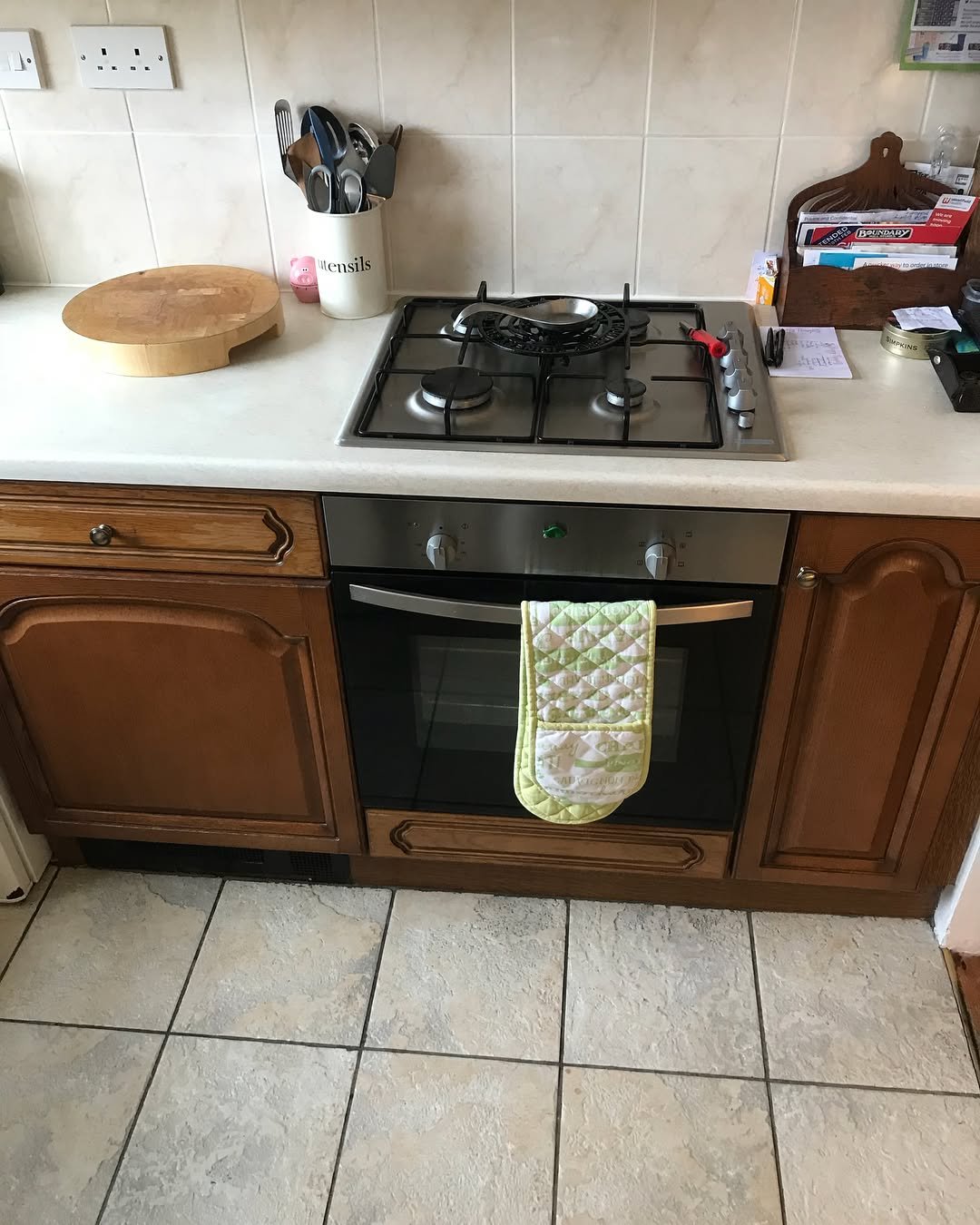
Painted cream, the cabinets stop being the loudest thing on the wall. The oven becomes a focal point. The counter looks longer. Your eye travels, instead of slamming into brown.
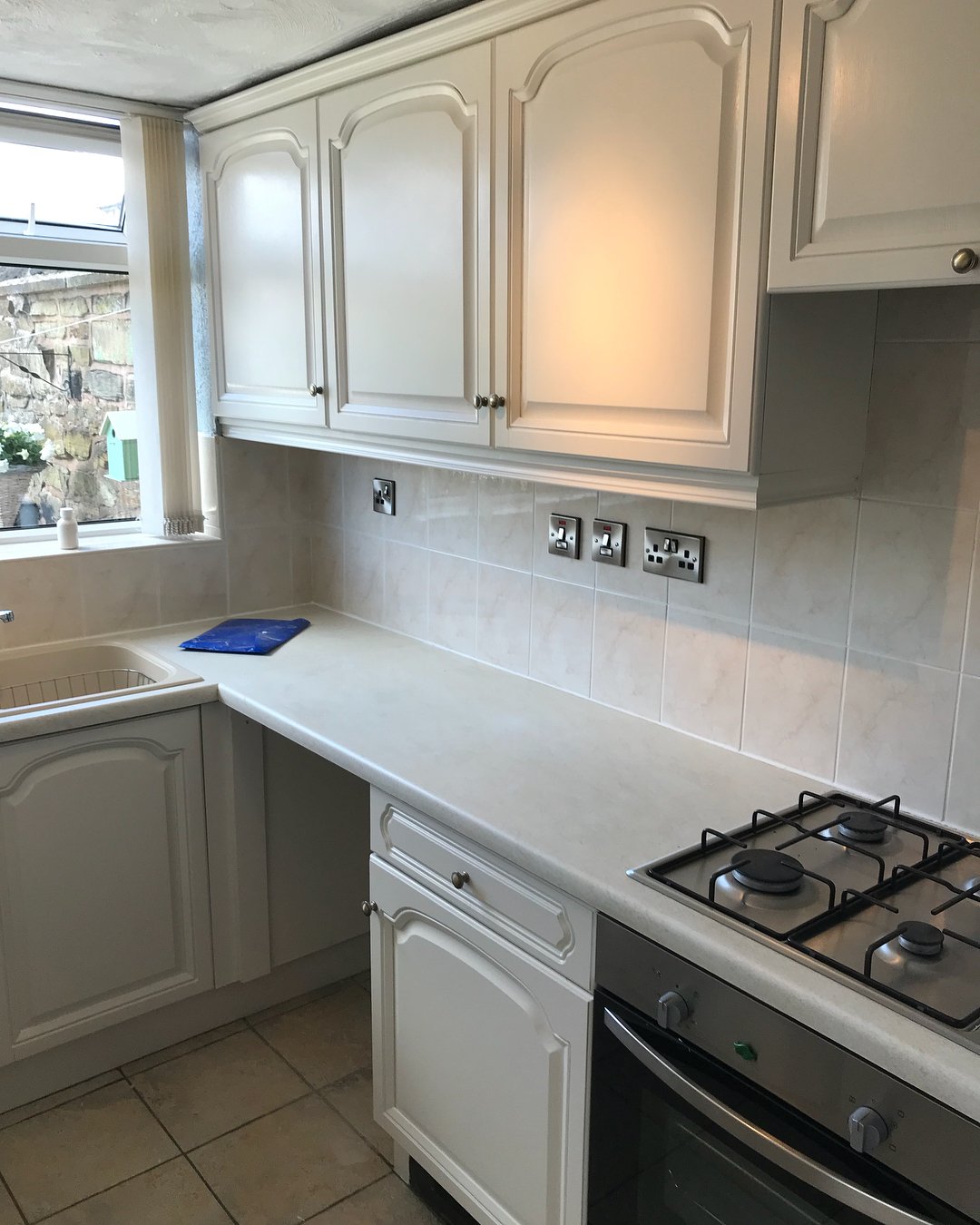
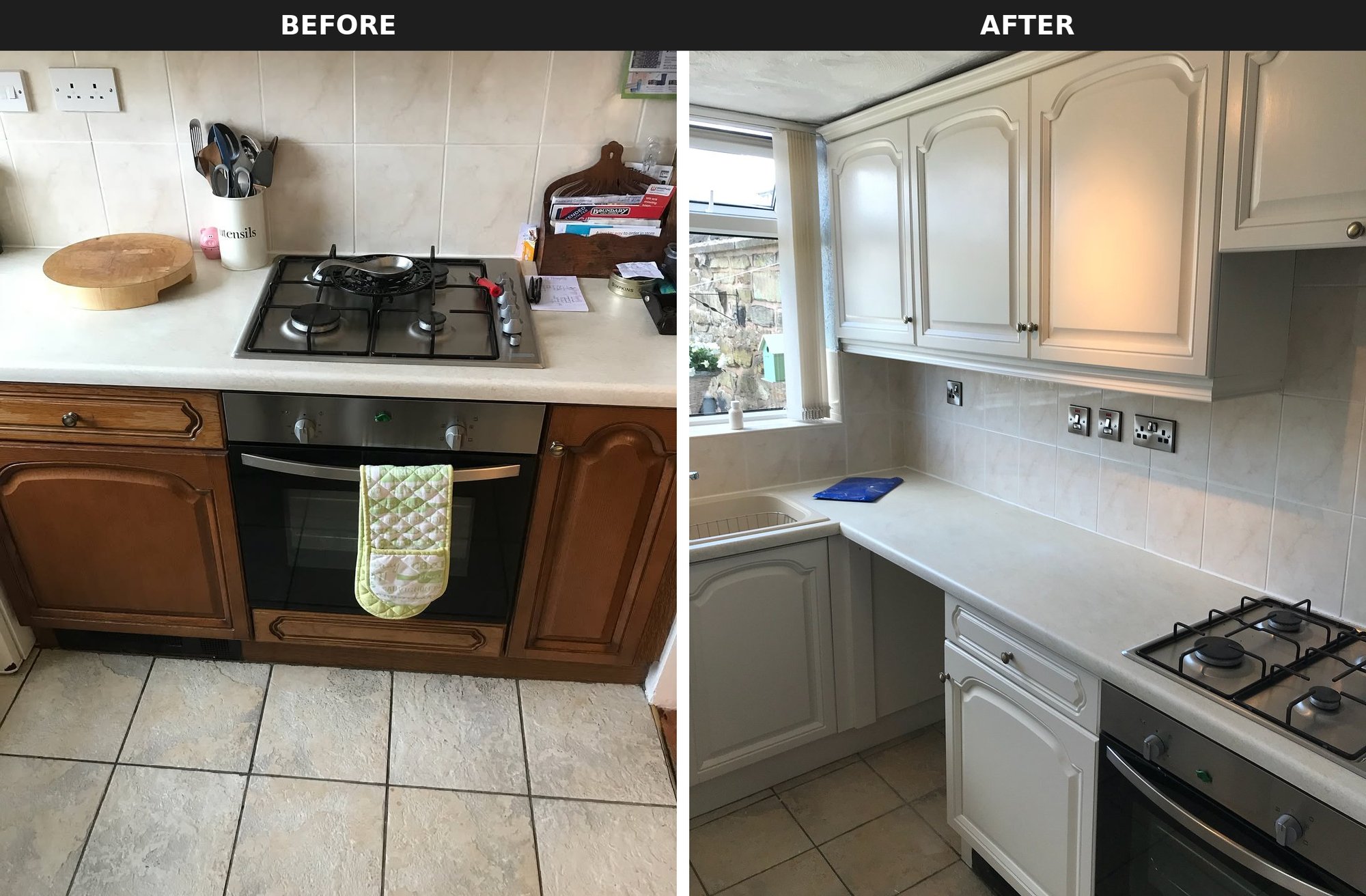
The oven didn’t move. The hob didn’t move. The worktop didn’t move. One coat of paint did all the work.
The corner shelf nobody wanted to keep
The curved corner display shelf is the piece most people would have ripped out first. It’s dark, fussy, holds mail and a floral teapot. On a mood board, it reads “grandma.”
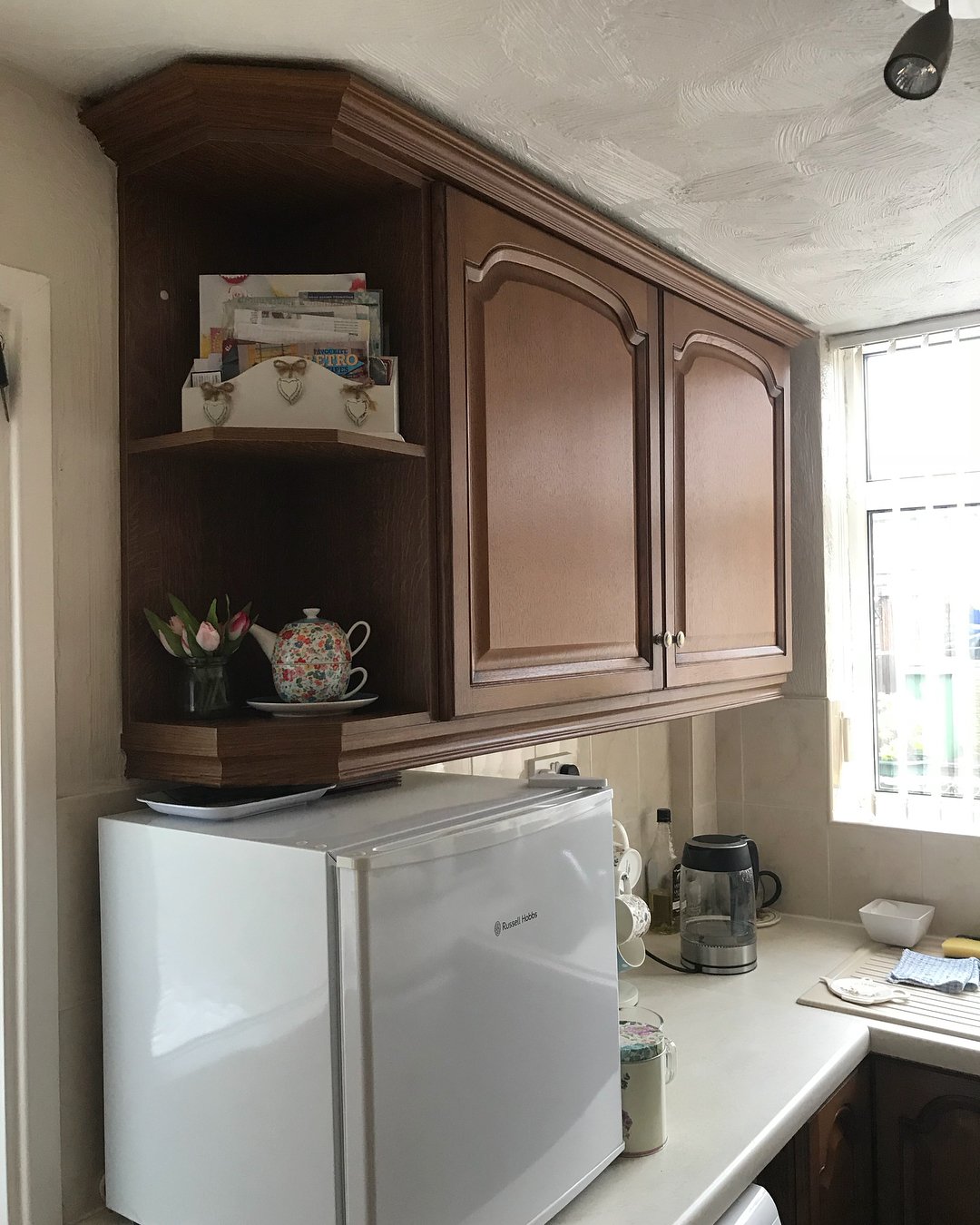
Now look at the same shelf after the spray. The curves become a feature instead of a flaw. The scalloped trim reads as English country detail. It looks like someone specified this on purpose.
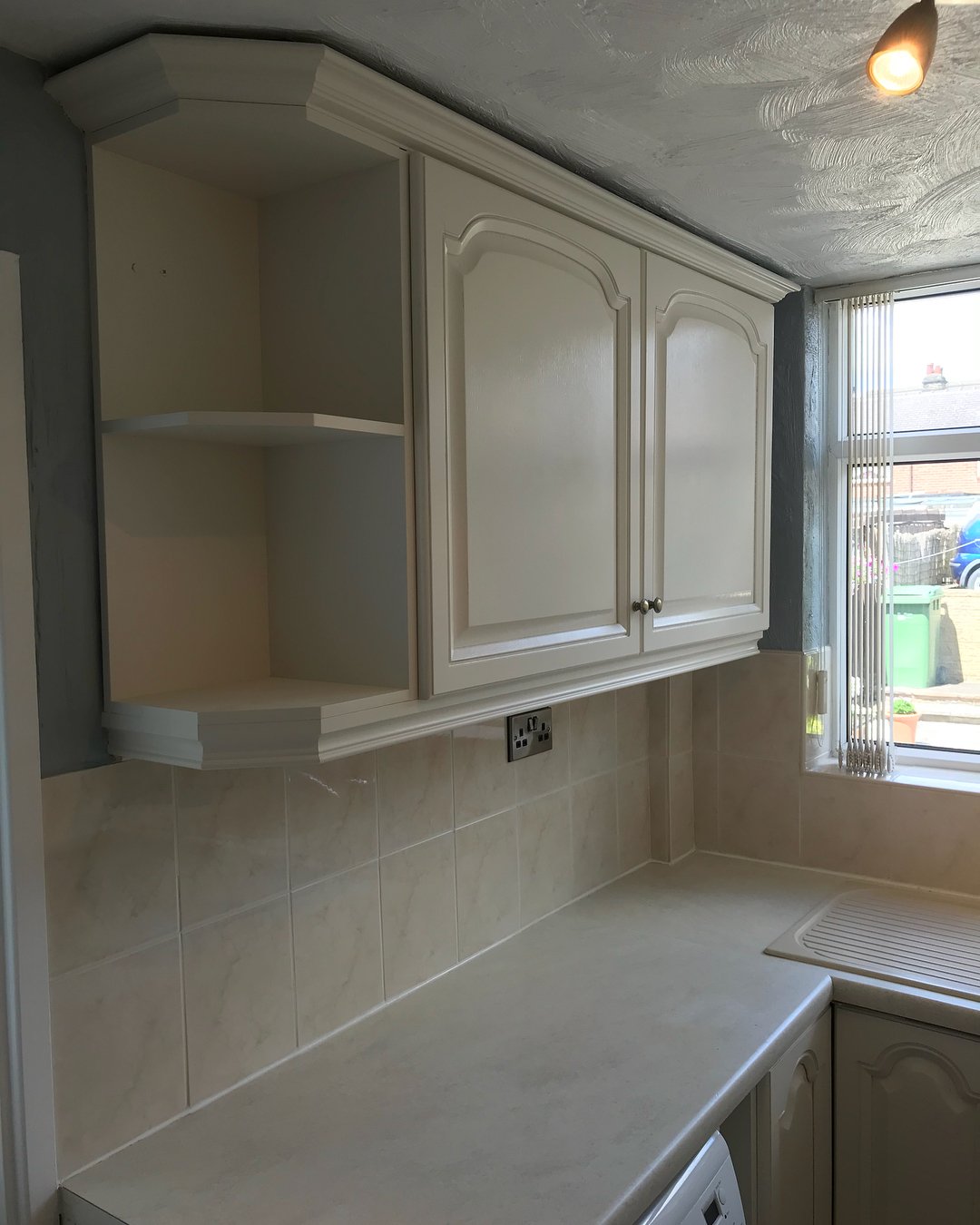
This is the clearest proof in the whole project. If the shape alone were the problem, the cream version would still look dated. It doesn’t.
The wall that felt too heavy
A long run of three upper cabinets over the small-appliance counter. In orange, this whole wall closes the room in. The microwave, the biscuit tin, the bread bin all fight each other because the cabinets shout louder than anything on the counter.
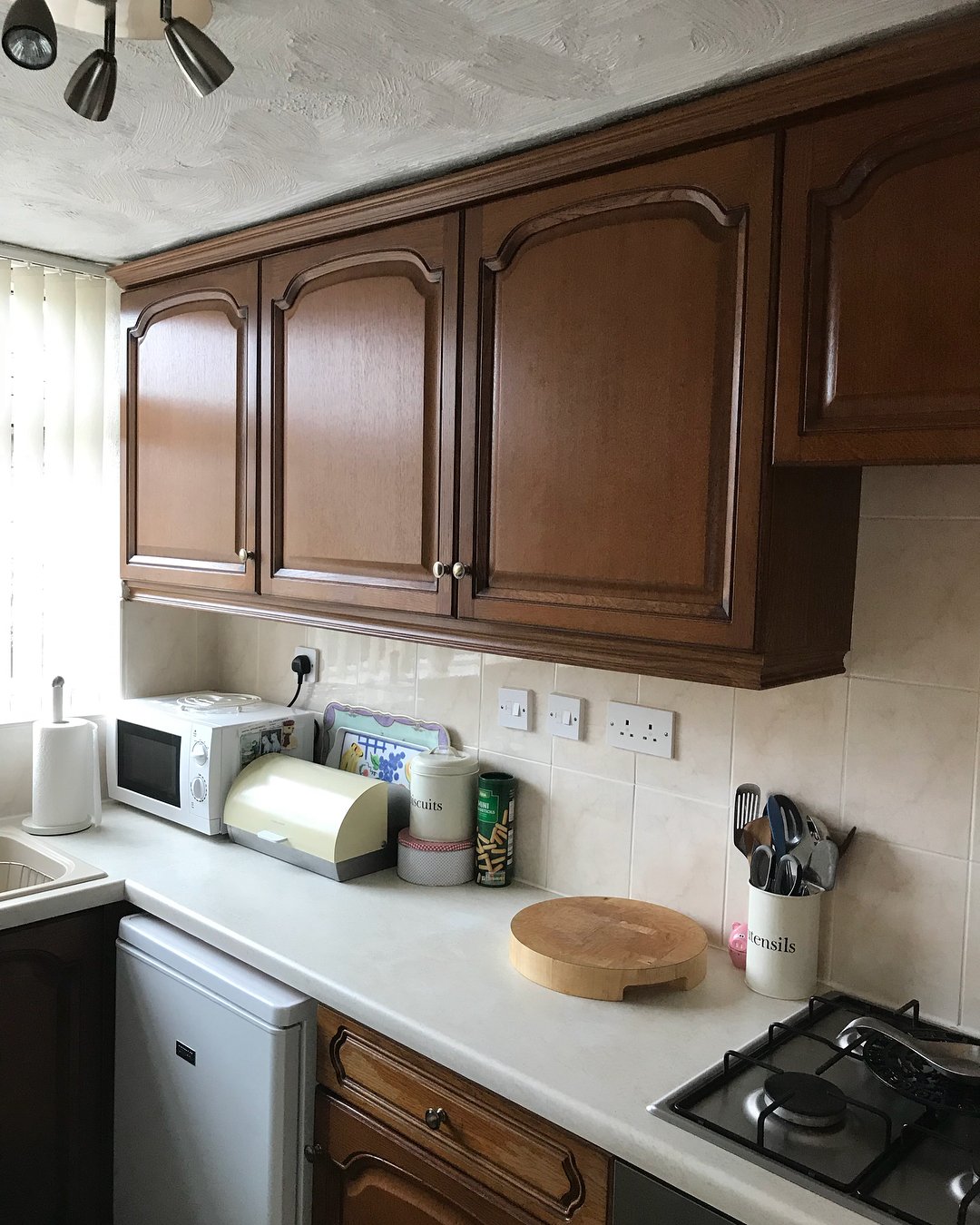
Painted cream, this wall would drop into the background and let the appliances breathe. The counter would feel like counter space, not a shelf inside a brown box.

The corners most people never show
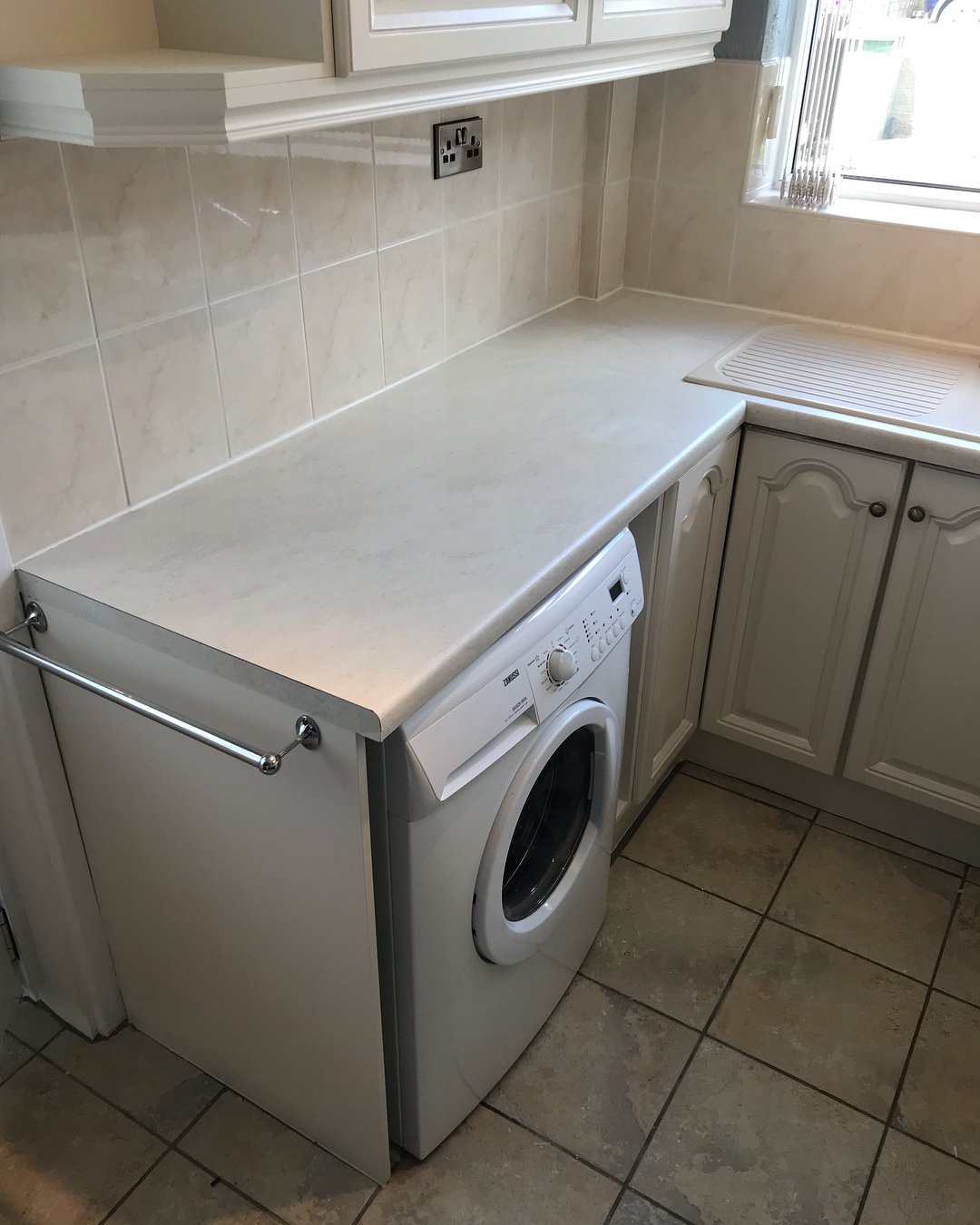
The washer corner usually doesn’t make it onto Instagram. In cream, even the ugly corner earns its place.
Same with the window wall by the sink. The painted cabinets reflect light instead of swallowing it.
A close look at the paint itself
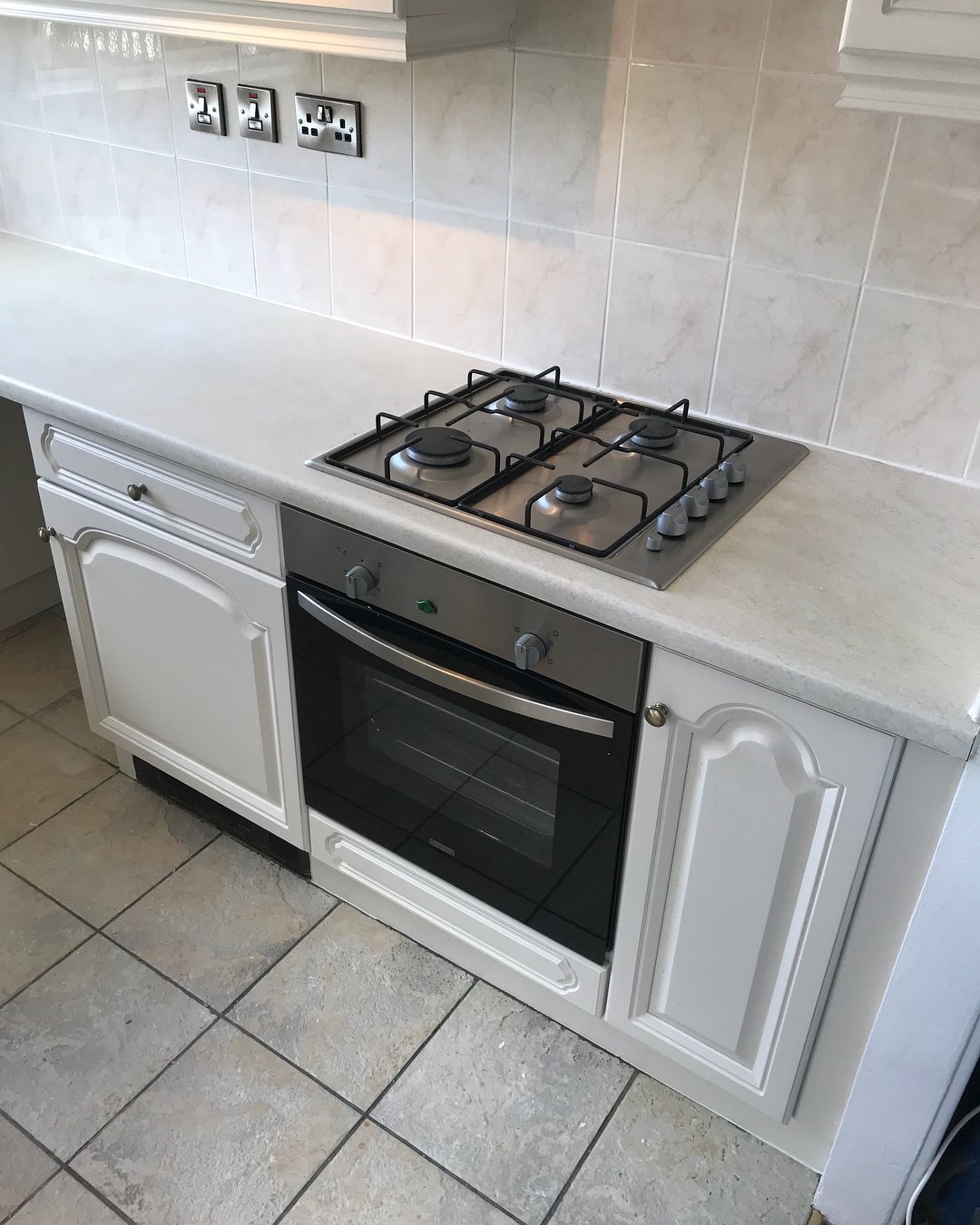
The spec, if you want to copy this: RAL 9001 cream in a satin sheen, professionally sprayed over the existing oak. Prep was degreasing, sanding, a bonding primer coat, then two topcoats. Total job time, two to three days.
The couple didn’t replace the hob. Not the oven. Not the tiles. Not the worktop. Not the sockets. Not the floor. Not the ceiling. Just the paint.
Steal this move for your own kitchen
If you’re sitting on a kitchen like this right now, dreading a quote you cannot afford, read this twice. The cabinets you were about to throw into a skip are the most expensive-looking thing in your room.
A sprayed cream finish in RAL 9001, or something close like Farrow and Ball Pointing or Sherwin-Williams Creamy, will do the same job on any solid oak kitchen. Pros charge $1,100 to $3,100 (about £900 to £2,500) for a full spray. The arches do the rest.