You set down your coffee, and your cat is back at the living room window, fixed on the same patch of yard she watched yesterday. Then a sparrow lands on the fence, and her jaw makes that tiny clicking sound, a detail veterinarians pay attention to.
In short
- Watching birds and squirrels through a window gives your indoor cat mental stimulation.
- An elevated, comfortable perch makes that view part of your cat’s daily life.
- Chattering at birds shows your cat’s hunting instincts are engaged.
- Veterinary guidance includes window access among ways to enrich an indoor cat’s home.
A window perch brings the outside in
View in gallery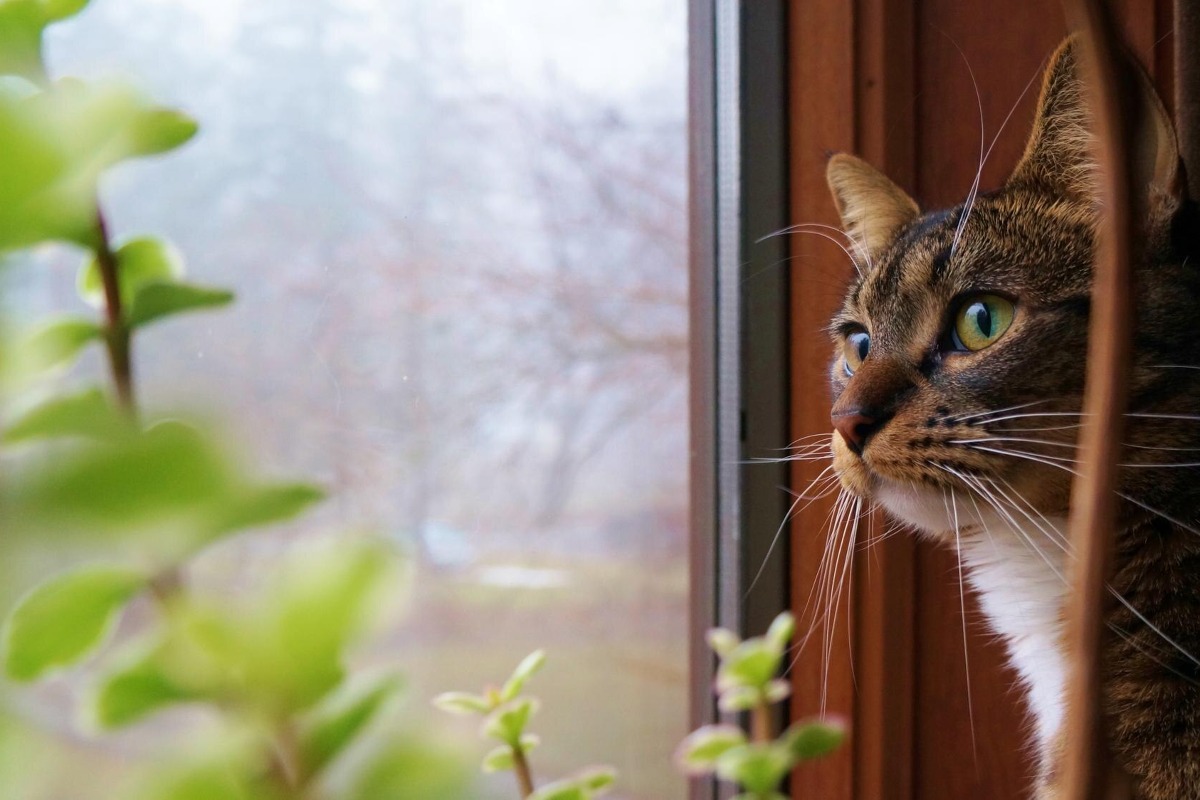
Your cat settles on the windowsill while you put away the dishes. Then a bird moves outside, and those eyes follow it across the yard. What looks like a long spell of sitting still is a chance for your cat to watch the movement that catches a hunter’s attention.
Vicki Jo Harrison, president of The International Cat Association, says cats’ “hunting instincts take over” when they see birds through a window. The glass keeps the action outside, while the view gives your cat something to follow from indoors. That is why the spot by the window can hold so much interest, even when your cat barely moves.
The American Association of Feline Practitioners and the International Society of Feline Medicine include a view of the outdoors in their guidance for an indoor resting place. They describe an ideal perch as elevated and padded, with a hammock-like dip that helps a cat feel tucked in. Think of it as a comfortable seat with a view, made for the cat who wants to stay awhile.
Chattering shows your cat is paying attention
You may hear a quick little sound from that perch and look over to find your cat’s jaw moving rapidly. The bird outside has its full attention. That familiar chatter belongs to the same moment as the fixed gaze: your cat has spotted something worth following.
Chewy’s pet education guidance describes how seeing a bird or squirrel through a window can start a cat’s prey sequence, the behaviors involved in hunting. Your indoor cat does not have to leave the living room for those instincts to switch on. The movement outside gives its eyes and mind something to track.
That makes window time more than a quiet place to nap. Your cat can rest there, then become absorbed in a bird passing by. The scene changes on its own, and your cat gets to respond in its own catlike way.
Veterinary guidance puts the view to work
There is a reason veterinary groups pay attention to the space your cat lives in. The American Association of Feline Practitioners describes indoor cats as intelligent, curious and active. Its guidance recommends enrichment that includes window access, vertical space and places to play.
In joint guidelines, the association and the International Society of Feline Medicine set out 5 pillars of a cat’s environmental needs. The 1st is a safe place, and their examples include a resting spot with a view outdoors. So when your cat returns to the same window, it is choosing a place that fits a need those guidelines recognize.
An elevated perch adds another useful part of that setting: more vertical space for your cat. A padded surface gives it a place to settle while it watches. The result is simple. Your cat has somewhere comfortable to rest and something interesting to look at when the world outside begins to move.
The limit
Window watching is one form of enrichment, not a replacement for play or other inviting spaces in your home. The exact reason cats chatter is unsettled: explanations include a motion related to a hunting bite and excitement or frustration at seeing prey they cannot reach. Whatever draws your cat to the window, its own habits should guide how much room you give that favorite spot in its day.