The winter electric bill lands, and your eyes drift to the stove. The old coil burners take forever to heat up, a friend won’t stop talking about her new induction range, and your neighbor swears gas is cheaper no matter what. Everyone sounds sure. Nobody has shown you a number.
Don’t feel bad for being lost here: appliance labels never put the answer in plain sight. The ranking is real, and it isn’t close. But it’s a ranking of efficiency, not of dollars, and mixing up the two is exactly how people overpay for a switch.
The Efficiency Ranking
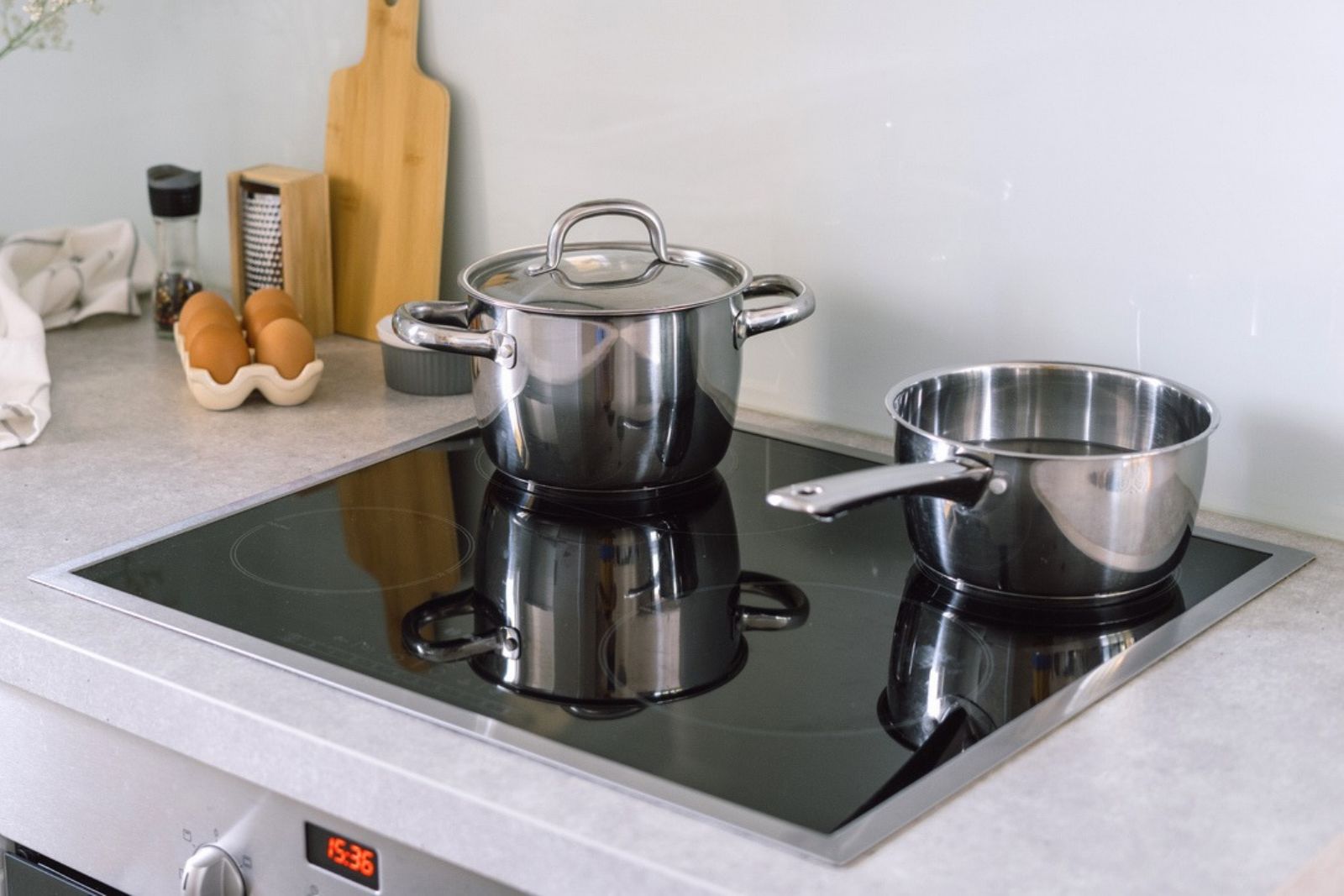
The government’s ENERGY STAR program puts the numbers side by side. An induction cooktop transfers energy at about 85 percent efficiency. Conventional electric resistance tops, whether exposed coils or a smooth ceramic glass surface, land around 75 to 80 percent. Gas sits near 32 percent, which makes induction “about 3 times more efficient than gas.” A Lawrence Berkeley National Laboratory analysis for the Department of Energy found nearly the same order: induction 84 percent, coil and smooth-top 74 percent each, gas about 40 percent.
The reason is where the heat goes. Induction heats the pan itself. A coil or glass top heats up first and then passes that heat along, and a gas flame loses much of its heat to the air around the pot. Coil versus ceramic is essentially a tie.
The Math Per Pot
Take one everyday job: bringing 4 quarts of tap water from 55°F to a boil, which takes about 0.38 kWh of heat. At the national average of 18.2 cents per kilowatt-hour projected for 2026:
- Induction: about 0.45 kWh, roughly 8 cents.
- Coil or ceramic: about 0.51 kWh, roughly 9 cents.
- Gas: about 4 cubic feet of gas and almost no electricity at all. At the 2025 average residential gas price of $15.34 per thousand cubic feet, that’s roughly 6 cents.
So induction uses the least electricity of any electric cooktop, and wastes the least energy of all three. But per pot, it beats a coil by about a penny. Boil water every single day for a year and the gap comes to around $4. Gas often costs less per meal despite its poor efficiency, simply because, at national average prices, a unit of gas energy costs less than a unit of electricity. Your local rates decide that one.
When Switching Actually Pays
Cooking is a small slice of a home’s energy use, under 3 percent by one estimate, so a new cooktop will rarely pay for itself through the bill alone. The smart moment to choose induction is when the old range dies or the kitchen is being redone anyway, because then you’re paying the difference between two new appliances, not the price of a whole new one.
If the goal is a lower winter bill right now, look elsewhere first. Heating dwarfs everything the stove does, and getting the thermostat setting right will do far more for the bill than any burner swap. In the kitchen, a lid on the pot is the cheapest upgrade there is, on every type of stove.
Rank by efficiency, decide by your own rates, and switch when the old one quits. That’s the trick.