
Dig around the edge of an old garden path, and sometimes the spade clinks: a row of glass bottles, planted neck-down, shoulder to shoulder, exactly where somebody put them fifty or a hundred years ago. It looks like eccentric trash burial. It was actually one of the most practical tricks in old-school gardening, common enough that historic estates still show it off, and the reasons behind it are solid enough that the technique is quietly coming back.
The pedigree is real: at the Oakland plantation house in Louisiana, preserved by the National Park Service, the wine cellar’s emptied bottles were used to edge the flower beds of the formal garden. The same habit ran through cottage gardens on both continents, for one simple reason the old gardeners understood perfectly: glass was free, and glass is forever.
What the buried bottles actually did
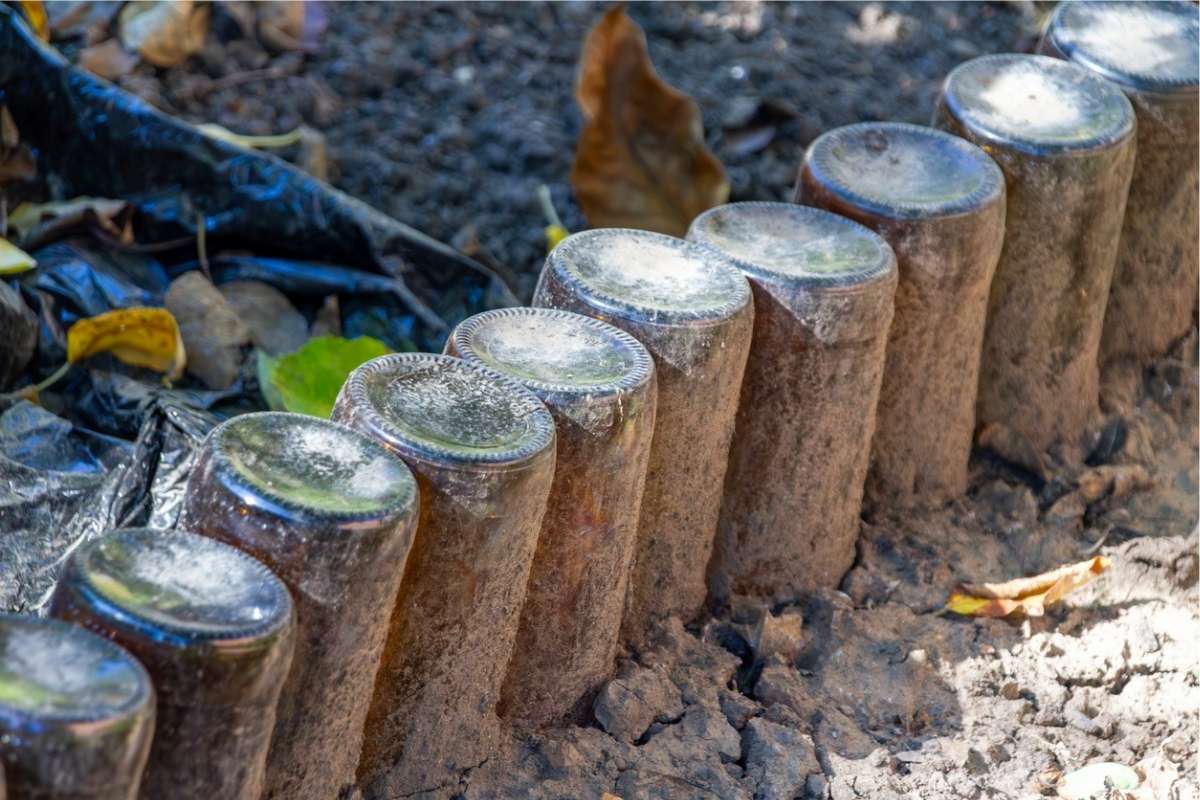
Edging that never rots. Planted upside down in a trench with just their bases showing, a run of bottles makes a firm, continuous border: it holds a gravel path in its lane, keeps bed soil from slumping onto the walkway, and draws a crisp line grass has trouble crossing. Wood edging rots in a few seasons and metal cost money; glass did the job for nothing, indefinitely. The frost question, the first one everyone asks, was settled by use: a buried bottle is backed by soil on all sides, and modern revivals report borders coming through year after year of freeze and thaw without trouble.
A dry, stable footing. Unlike timber, buried glass shrugs at waterlogged ground, so bottle rows outlined paths in exactly the damp spots where wooden boards turned to mush, while the bottles’ mass locked the path edge in place.
Light, color, and folklore. Green and amber bottle bottoms catch low sun along a path, which is half of why the look charms people now. The old-timers added a folk claim: bottles set open-end-up were said to hum in the wind and unsettle moles and gophers, a deterrent some gardeners still swear by, though that part remains garden legend rather than science.
Does it still make sense? Yes, with three cautions
As bed and path edging, absolutely: it’s free, durable, and genuinely pretty. The modern method matches the old one: mark the line, dig a trench 6 to 8 inches deep, set the bottles neck-down and touching, backfill and tamp firm, leaving an inch or three of base proud of the soil. Same-colored bottles read formal; mixed glass reads cottage. The cautions: it’s still glass, so keep the row out of string-trimmer range and away from where kids sprint barefoot, and sink bottles deeper (nearly flush) along mowing edges; drill or leave a drainage path so the upturned base’s dimple doesn’t collect mosquito water; and skip the old variant of paving the path surface itself with bottle bottoms, which turns lethally slick when wet.
The thread it hangs on
The bottle border belongs to the same thrifty lineage this season keeps revisiting: the house produced something “worthless,” and the garden found it a permanent job, exactly the economy behind the wood ash bucket and the morning’s coffee grounds, with the same lesson attached: the trick works when you copy the dose and the placement, not just the idea.
So the next clink of the spade along an old path isn’t trash. It’s a predecessor’s fifty-year-old edging, still exactly where it was planted, still doing its job. Rinse a dozen bottles, dig one trench, and leave the same puzzle for whoever gardens here after you.


