

Every renovation has a wall that kills the project. For this bathroom, it was all four of them.
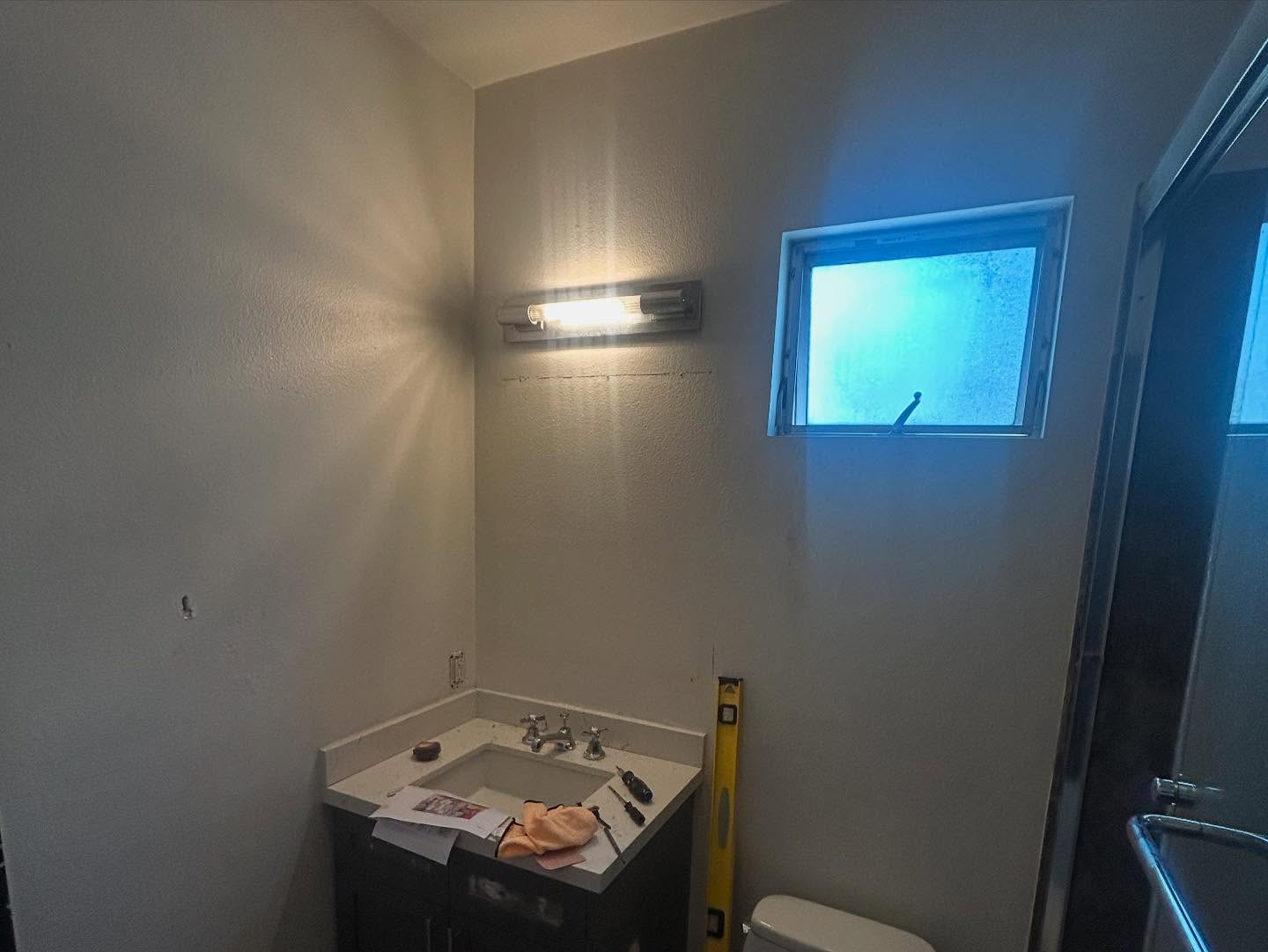
Picture a tiny room, maybe five feet across, mid-refresh. New dark vanity in place, white quartz counter already set, chrome faucet half-installed because whoever was holding the wrench walked away. A yellow level leaning against the cabinet. A screwdriver on the counter next to paperwork. Low on the left wall, a small drywall patch where an old towel bar used to live.
What was left was the walls. Which, in a bathroom this size, is where the bill quietly triples.
The before, exactly as it was found
Two very different ways to finish this room
Door number one is the version your contractor quotes. Skim-coat the texture so the patch disappears, prime, two coats of bathroom paint, probably a new vanity light while the sconce is already down. Three weeks and somewhere north of eight grand.
Door number two is what the owner actually picked, which no designer in their right mind would have suggested for a five-foot bathroom. One custom graffiti mural wallpaper, floor to ceiling, in a palette nobody puts in a wet room on purpose.
What a single day’s install changed
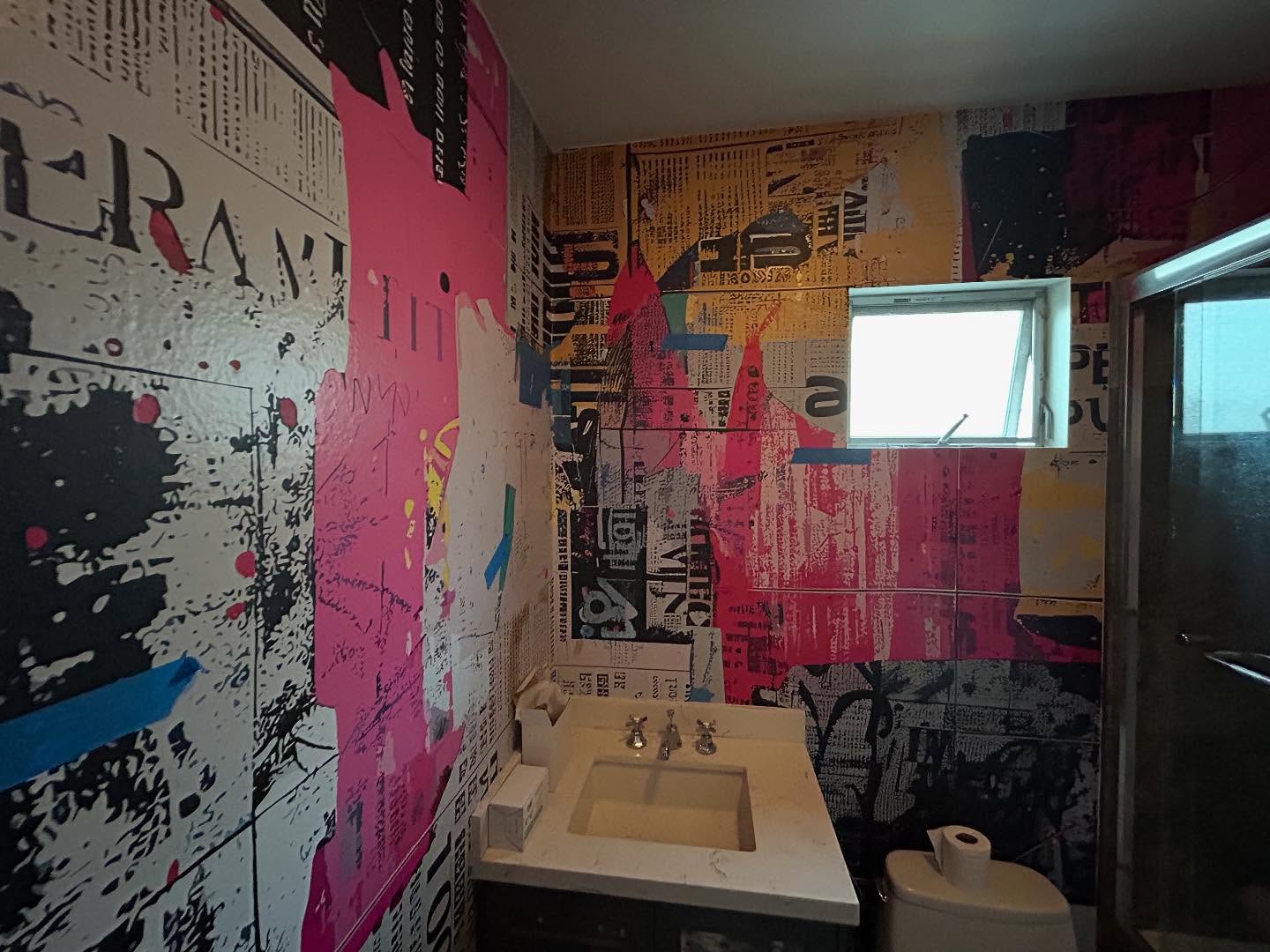
The crew was LA-based Surfside Wall Co. They wrapped the pattern around every wall, past the awning window, right up to the chrome shower frame, and across the little cove where the ceiling meets the top of the mural. Nothing else was touched. Same vanity, same counter, same faucet, same window, same shower, same bath fan, same toilet, same drywall patch underneath. Only the surface the eye lands on got replaced.
Same vanity, same window, completely different room
Put the two photos on top of each other
Nothing physical moved an inch. The vanity sits where it sat, the window frames the same patch of sky, the chrome shower edge still hugs the right side. The only thing your brain is reading as “new room” is paper.
Why the loudest print in the house works in the smallest room
Here is the quiet trick nobody mentions. A mural this busy is the ultimate forgiveness surface. That drywall patch is gone, along with the pencil marks from where someone lined up the sconce, every nail hole from the old mirror bracket, and the low spots where the texture never got skim-coated flat. Your eye has nowhere to settle long enough to notice any of it. In a big living room, a print this loud would wear you out by Tuesday. In a bathroom you walk into for two minutes at a time, it reads like walking into a boutique hotel.
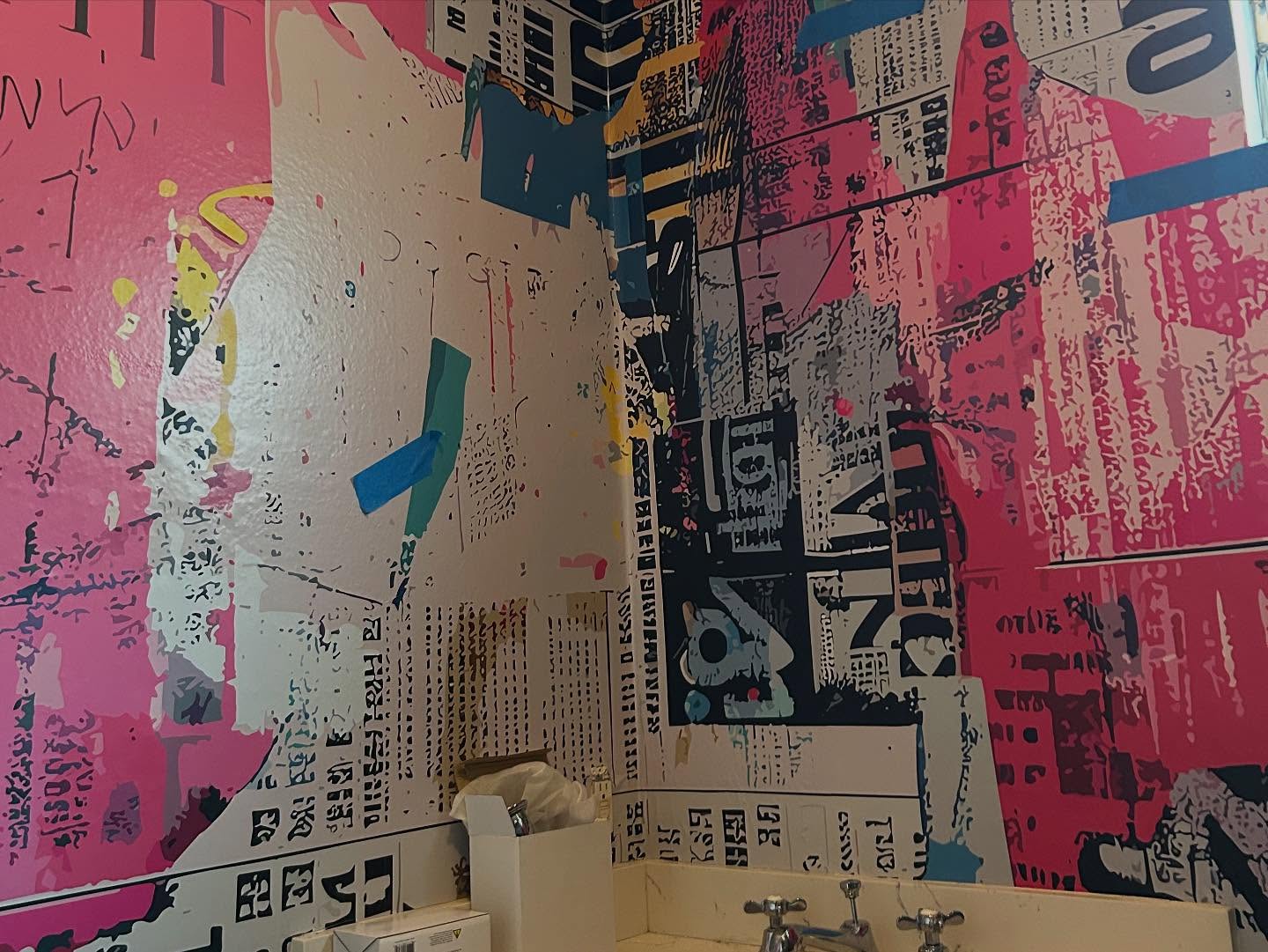
The back corner where the pattern really goes to work
Why the seam reads as one continuous mural
This corner is the whole case for hiring installers who do this for a living. Hot pink splash on the left meets bold black lettering on the right without a single break in the story. Follow any one color across the join and it keeps going, which is the sign the crew pattern-matched the drops instead of just hanging strips end to end.
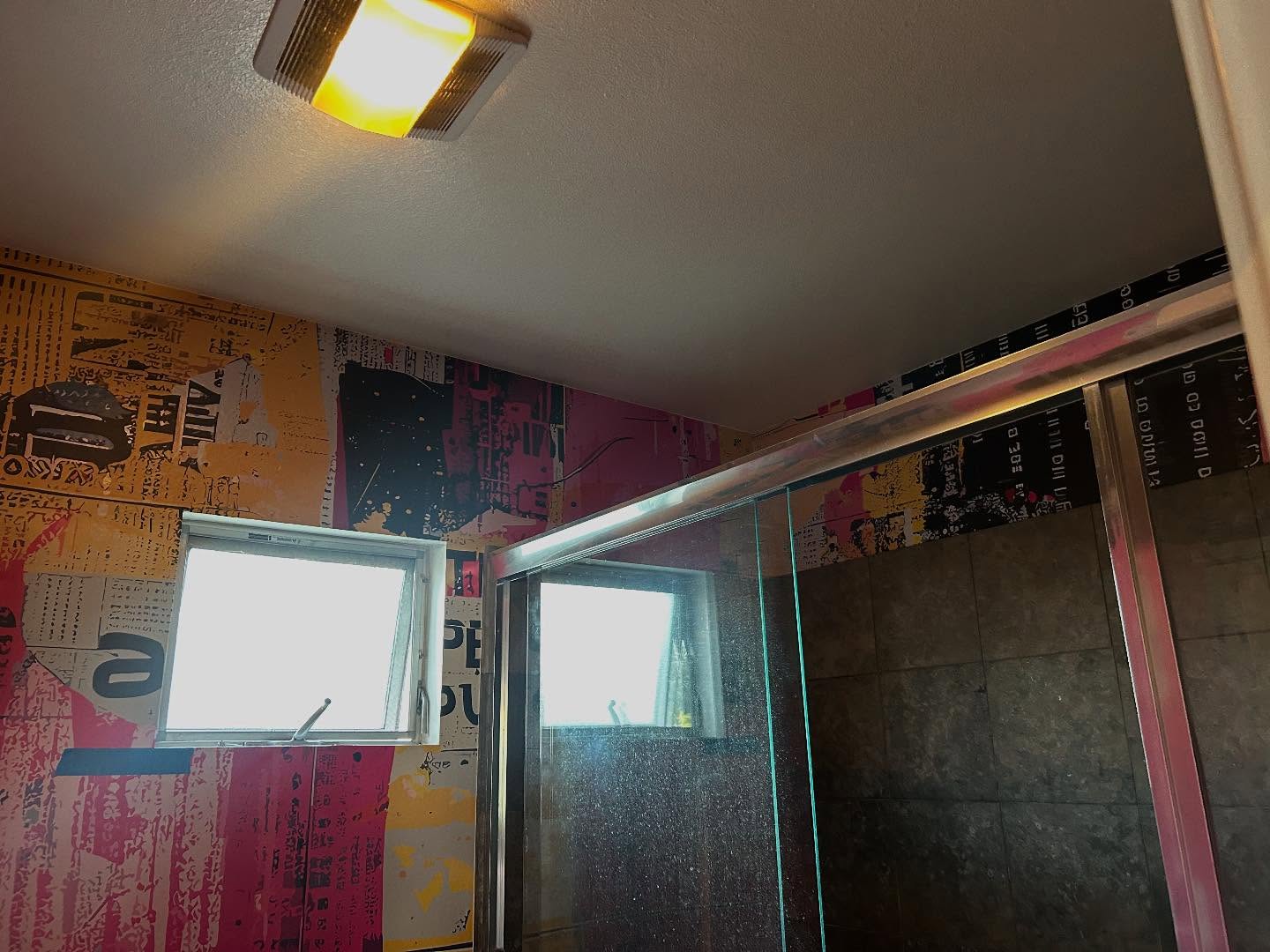
Even the awkward shower zone turned into a feature
That tiny window stops looking like a builder apology
On a beige wall, that little awning window read as the smallest window code would allow. Framed by bright yellow and hot pink panels, it suddenly looks like a deliberate editorial moment, a square of real daylight dropped into the middle of controlled chaos. The chrome shower frame pulls the same trick. Yesterday it was dated builder-grade metal. Today it reads as industrial contrast against the mural, which is the kind of accidental sophistication designers charge thousands to engineer on purpose.
The door wall shows how far the mural travels
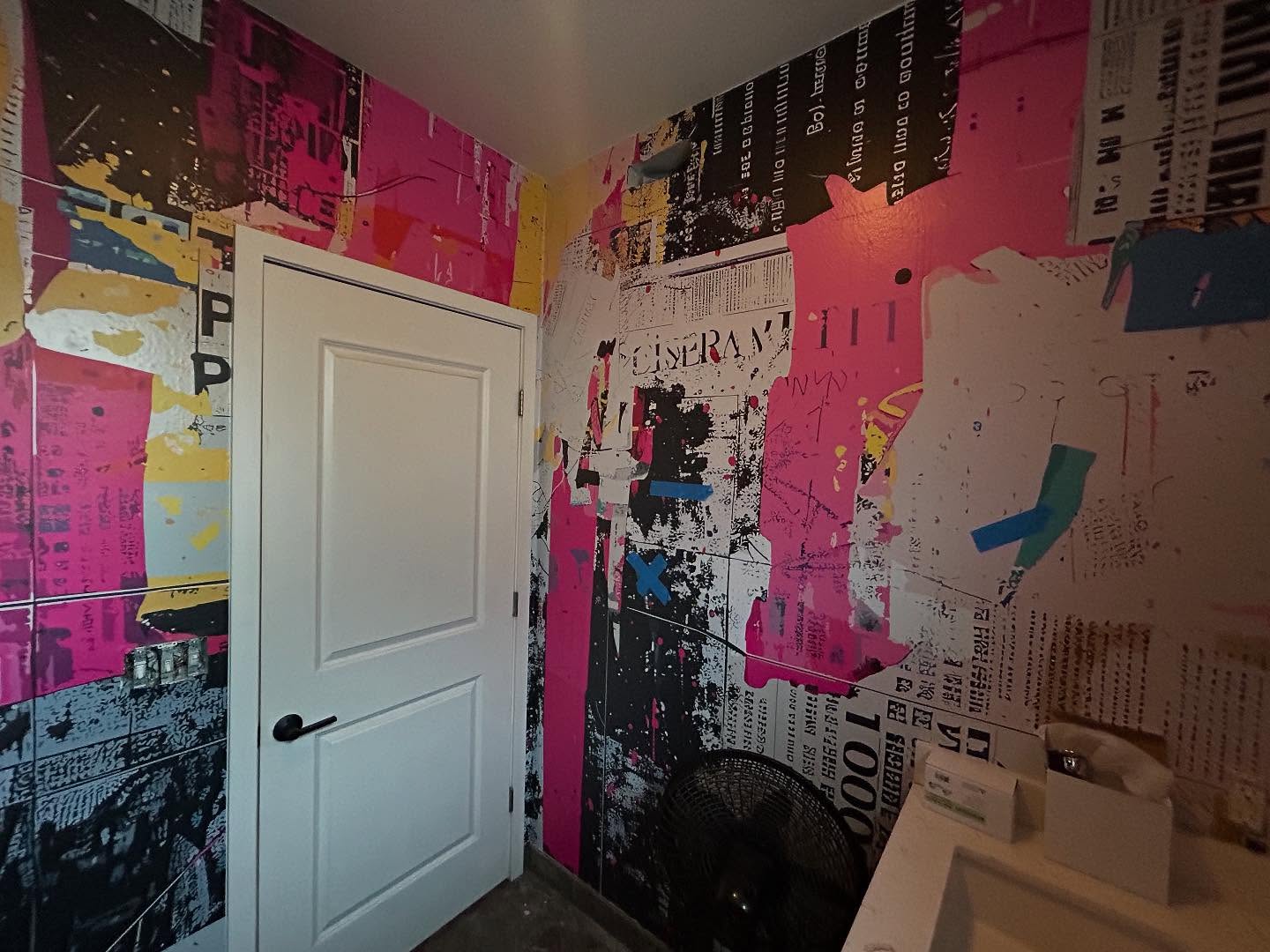
Why the plain white door earns its keep
You would guess the ordinary panel door breaks the spell. It does the opposite. A wall this loud needs somewhere for your eye to land between takes, and that flat white rectangle is doing the same job the white quartz counter is doing on the vanity side, which is giving you a place to breathe.
The math on what this actually replaced
A proper small-bathroom refresh (new tile, fresh paint, new mirror, new vanity light, new shower hardware) generally lands between $8,000 and $15,000 (about €7,500 and €14,000) and takes the room out of rotation for two to four weeks. A custom-print mural install at this scale runs more like $600 to $1,500 (about €560 to €1,400) and goes up in one working day. Roughly a tenth of the cost and a twentieth of the downtime, for a room that reads fully finished the moment the last strip is smoothed down.
The honest takeaway
The before shot is the receipt. Every fixture the owner was ready to swap out is still sitting in the after, doing its original job, looking chosen on purpose. Nothing left the room. Only the backdrop did.
If your bathroom is stuck in that half-finished phase where every next step feels like a fresh bill, this is the swing worth copying. Would you be brave enough to put a mural this loud on a wall of yours?