You look out the kitchen window as the winter light fades and spot a cardinal near the feeder. Sparrows and squirrels have spent the afternoon jostling for space, yet the cardinal’s next visit may depend on what happens in your yard before you close the curtains.
In short
- Cardinals are often the last birds at the feeder before dusk.
- Top off your feeder with black-oil sunflower or safflower seed before sunset.
- Give them room to feed on a platform or hopper feeder.
- Place the feeder near dense shrubs or evergreens where they can take cover.
Cardinals linger as the light fades
View in gallery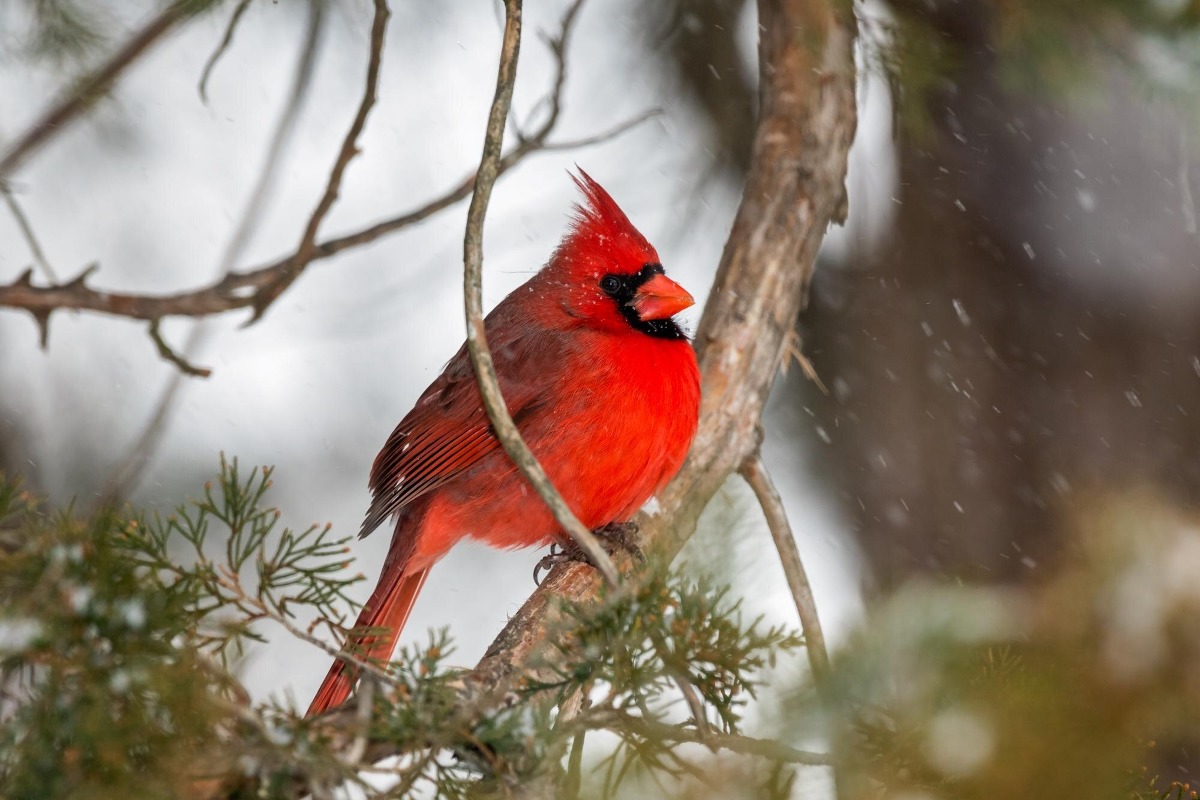
You glance out at the feeder as evening settles over the yard. Most of the birds have gone, and a red cardinal is still there, working through the seed. That familiar winter sight has a pattern behind it: Northern Cardinals often arrive early in the morning and linger later than other feeder visitors.
Cornell Lab’s feeder camera in Ithaca, New York, has captured as many as 6 cardinals gathering at dusk. The birds visit feeders during the day, too, yet dawn and dusk are especially busy times for them. If you watch your feeder regularly, the quiet stretch before sunset is a good time to look for that flash of red.
There are possible advantages to eating when the light is low. Fewer birds competing for food can leave a cardinal more room at the feeder, while the dimmer light can help conceal a bright red male. After feeding, cardinals head for thick evergreens or shrubs to roost through the night.
A small refill makes dinner easier
The gesture is simple: check the feeder before sunset and top it off. A cardinal that comes by for an evening meal finds food waiting instead of an empty tray. That matters in winter, when cardinals need to eat more in the cold and do not store food for later.
Black-oil sunflower seed is a strong choice. Cardinals eat safflower seed as well, and they also take shelled, unsalted peanuts. If squirrels keep getting to the seed first, safflower gives you another option because squirrels tend to leave it alone while cardinals readily eat it.
You do not need to make a production of that last refill. Keep the food that cardinals like on hand, then give the feeder a look as daylight fades. It fits their feeding rhythm, and it makes the same spot worth checking again the next morning.
Give them a comfortable place to land
Food is only part of what brings a cardinal to your yard. These birds favor ground, platform, and hopper feeders, where they have space to settle and reach the seed. A broad feeding surface also gives you an easy place to see whether that evening refill is needed.
Then look beyond the feeder. A nearby hedge, evergreen, or patch of dense shrubs gives cardinals cover close to their meal and a sheltered place to spend the night. In winter, that pairing is especially useful: food at dusk, with cover close by when feeding is done.
Cardinals remain in their range year-round, so your winter visitors can become familiar faces. Keep the feeder stocked through the season, not just on one cold evening. The small act of filling it before sunset meets them at a time they already come looking for food.
The limit
A dusk refill cannot guarantee cardinals will appear every evening or be the last birds at every feeder. They also visit at other hours, and a feeder far from cover may be less inviting. Think of topping it off as a way to support a well-documented habit, not as a promise that a particular bird will show up on schedule.