It’s one of gardening’s most repeated tips: don’t throw out the coffee grounds, the garden loves them. So every morning’s filter gets emptied around the roses, the tomatoes, the houseplants, a dark little offering to the soil. Then, weeks later, the plants look thirstier than ever despite the watering can, and nobody connects the two. The connection is right there on the surface, and you can test it yourself with a glass of water: pour it on that dark layer and watch it bead up and run off sideways.
The problem is the crust. Spent coffee grounds are extremely fine particles, and spread in a layer on open soil they do exactly what they do in an espresso basket: pack down tight. Once that layer dries, it cakes into a dense mat, and horticulturists warn that compacted grounds interfere with moisture and air movement into the soil. Your rain and your watering slide off or evaporate above the crust, while the roots underneath go dry: the “free fertilizer” has become a tiny tar roof over the root zone.
The tip’s other fine print
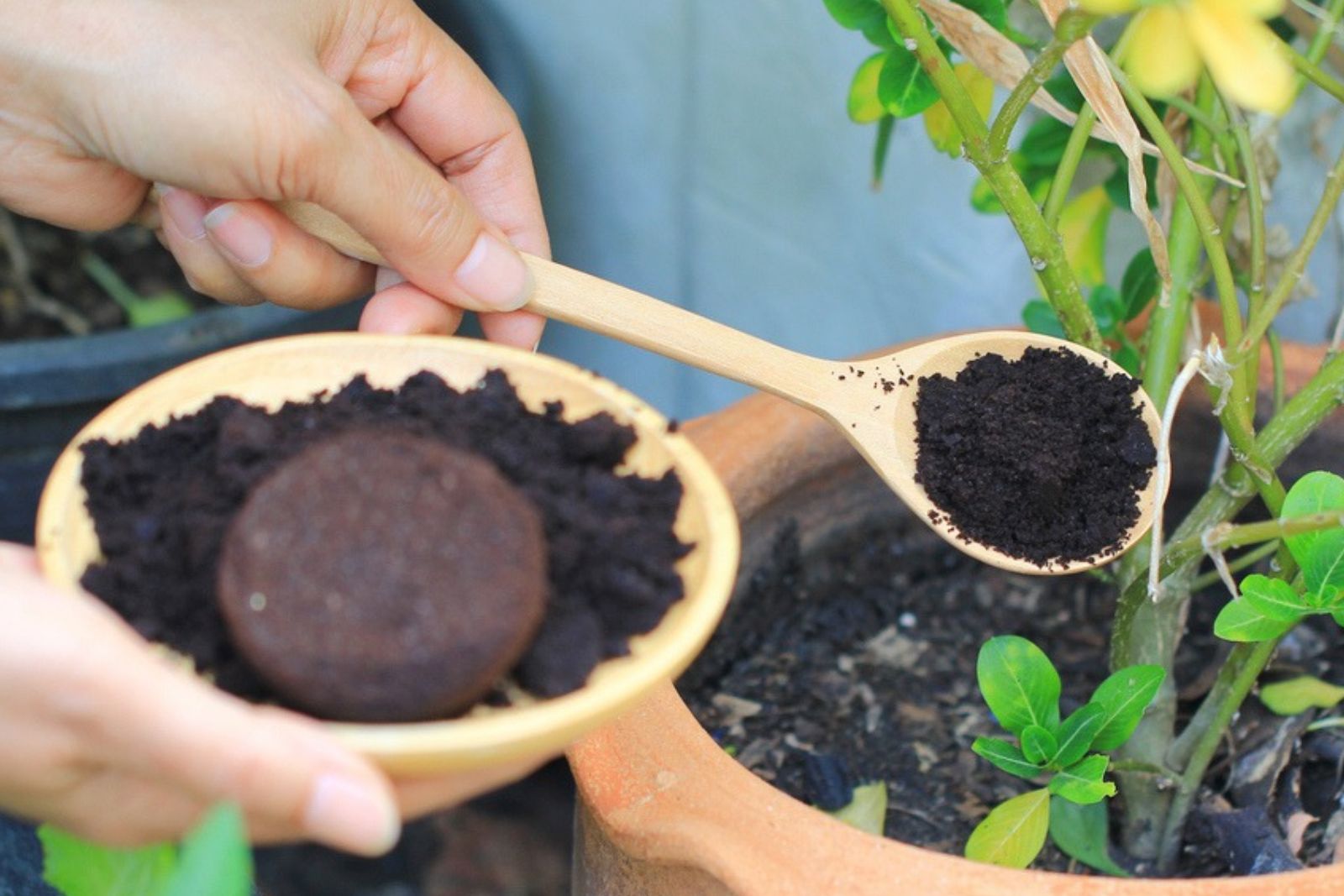
The crust isn’t the only way the shortcut backfires. Fresh grounds carry residual caffeine and related compounds, and Oregon State’s extension notes they can inhibit seed germination and slow plant growth, which their own lettuce trials showed; as the grounds break down, soil microbes also temporarily tie up nitrogen, briefly starving plants of the very nutrient the tip promised. And the most famous claim of all, that grounds acidify soil for blueberries and hydrangeas, doesn’t hold: tested grounds swing from slightly acidic to neutral to alkaline, and any pH effect fades fast. None of this makes grounds bad for gardens. It makes them bad raw, thick and on top.
The right way, in two routes
Route one, the forgiving one: compost. Grounds are a nitrogen-rich “green” that composts beautifully, filters included. Keep them to no more than about 20 percent of the pile by volume, roughly three parts leaves to one part grass clippings to one part grounds, and in a few months the caffeine, the compaction risk and the nitrogen tie-up have all composted away, leaving genuinely good soil food.
Route two, direct use done correctly: a thin layer, half an inch maximum, and never left as a bare film. Either rake it into the top few inches of soil so the particles disperse among coarser ones, or cover it with four inches of chunky mulch like wood chips, which keeps it moist, crumbly and crust-free while the earthworms, who genuinely love the stuff, pull it down for you. Skip grounds entirely around seedlings and seedbeds.
The pattern worth keeping
It’s the second kitchen-to-garden shortcut this season with the same moral as the wood ash bucket: free amendments are real, but the dose and the placement are the whole difference between feeding soil and sealing it. Even the finest material plays by the same rule as mulch: thin, mixed, breathing.
So keep saving the filter. Into the compost by the potful, onto the soil by the half inch and raked in, and never again as a smooth dark blanket. The glass-of-water test will tell you you’ve got it right: the water should disappear downward, not sideways. That’s the trick.