
The homeowner and her painter made a quiet pact: no demo, no new tile, no touching the counters. Just a color flip and a handle swap, and the kitchen most people would have gutted was going to earn its keep instead.
Then she packed a suitcase, flew out for a holiday, and handed him the keys and a Farrow & Ball code.
What she came home to was the kitchen she’d been scrolling past on Pinterest for years but never had the nerve to approve in person.
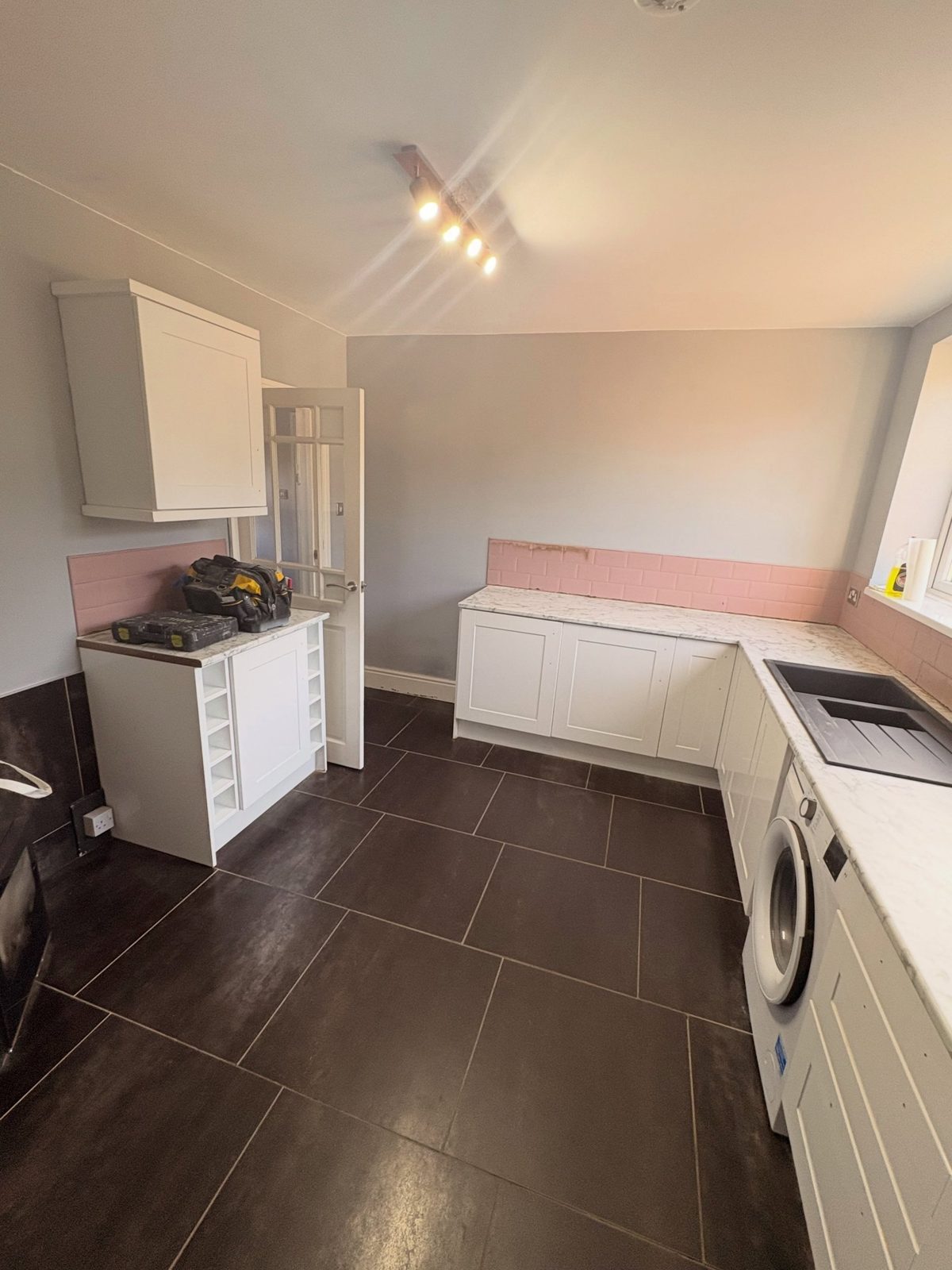
Nothing was wrong with it. That’s the trap. The cabinets were in good shape. The marble was clean. The pink tile sat there as a leftover from a previous owner, awkward against the white gloss but not awkward enough to spend a weekend tearing off.
She’d been dreaming of dark cabinets forever. Every time she stood in her actual kitchen, she talked herself out of it. Too risky. What if we sell. What about the pink tile.
So she booked a sprayer, picked Farrow & Ball Stiffkey Blue in a matte finish, swapped the chrome handles for copper, and left the country.
The side-by-side nobody expected
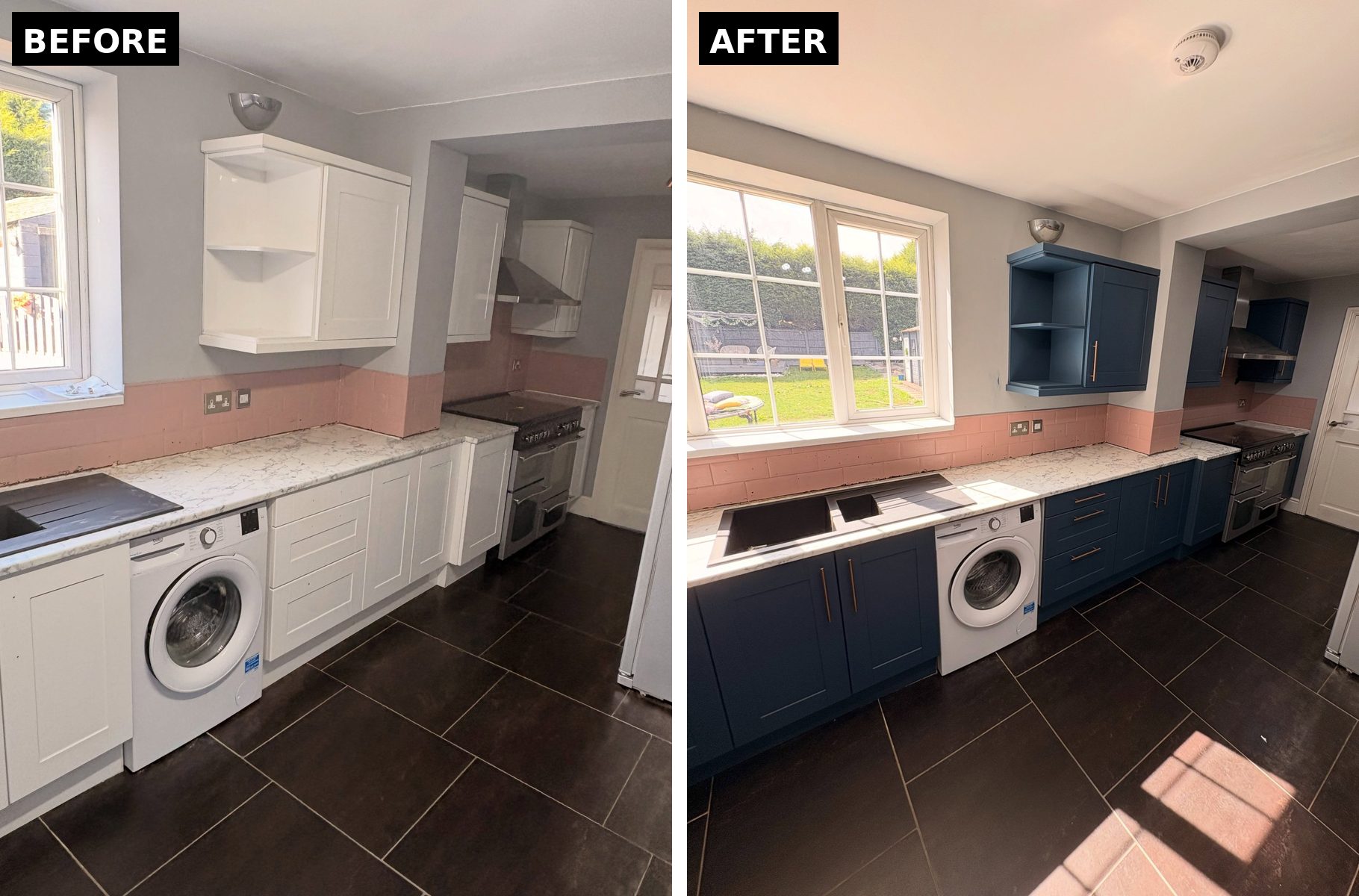
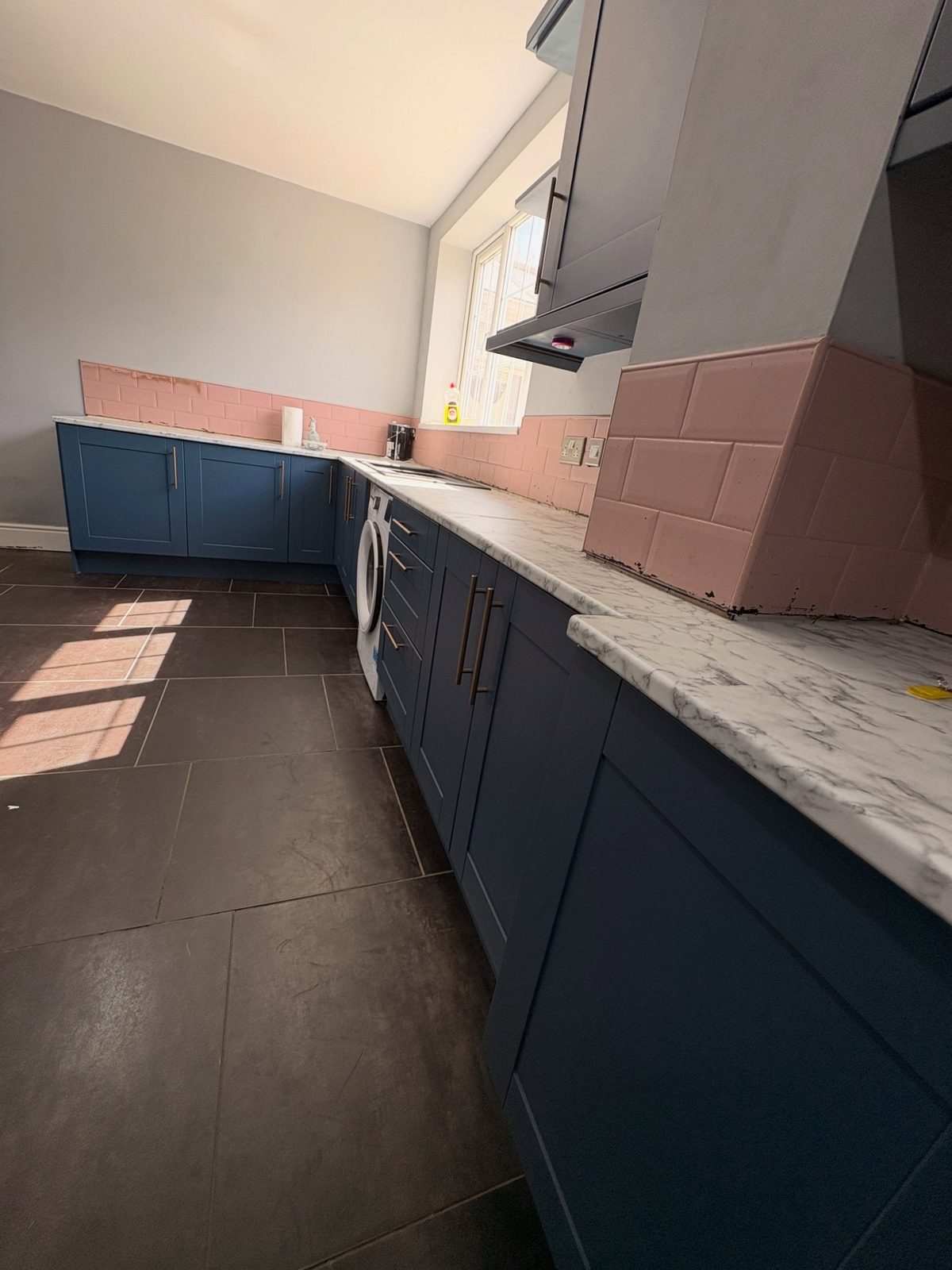
Look at the pink tile. In the before shot it fights the white cabinets. In the after shot it suddenly reads intentional. Deep blue and dusty pink are a classic pairing. Once the cabinets went dark, the pink stopped looking like a mistake and started looking like a design decision.
What the sprayer actually did
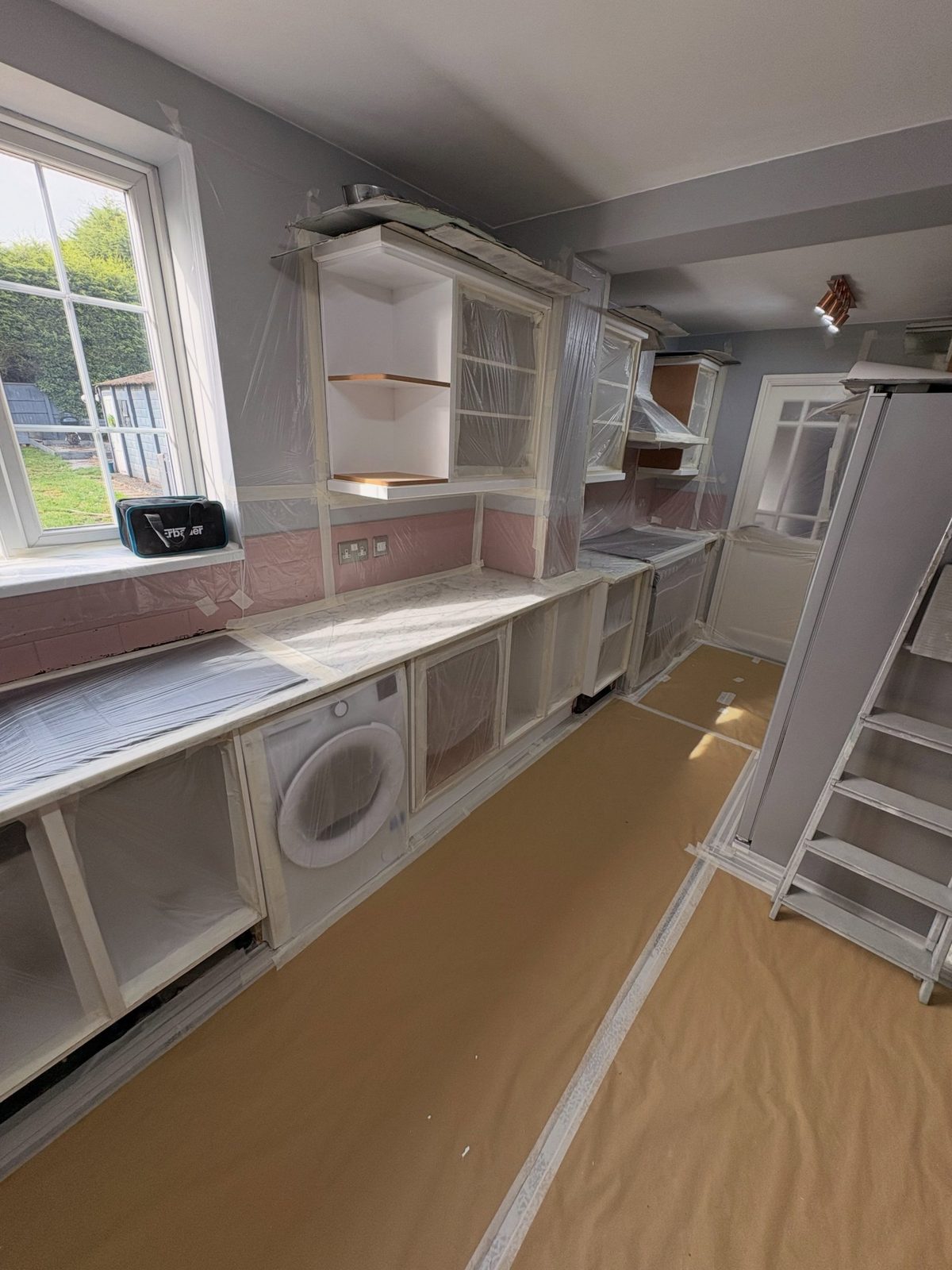
This is the part most homeowners never see. Every surface that isn’t getting sprayed gets taped, bagged, and sealed. The counters disappear under plastic. The floors go under brown paper. The appliances get wrapped.
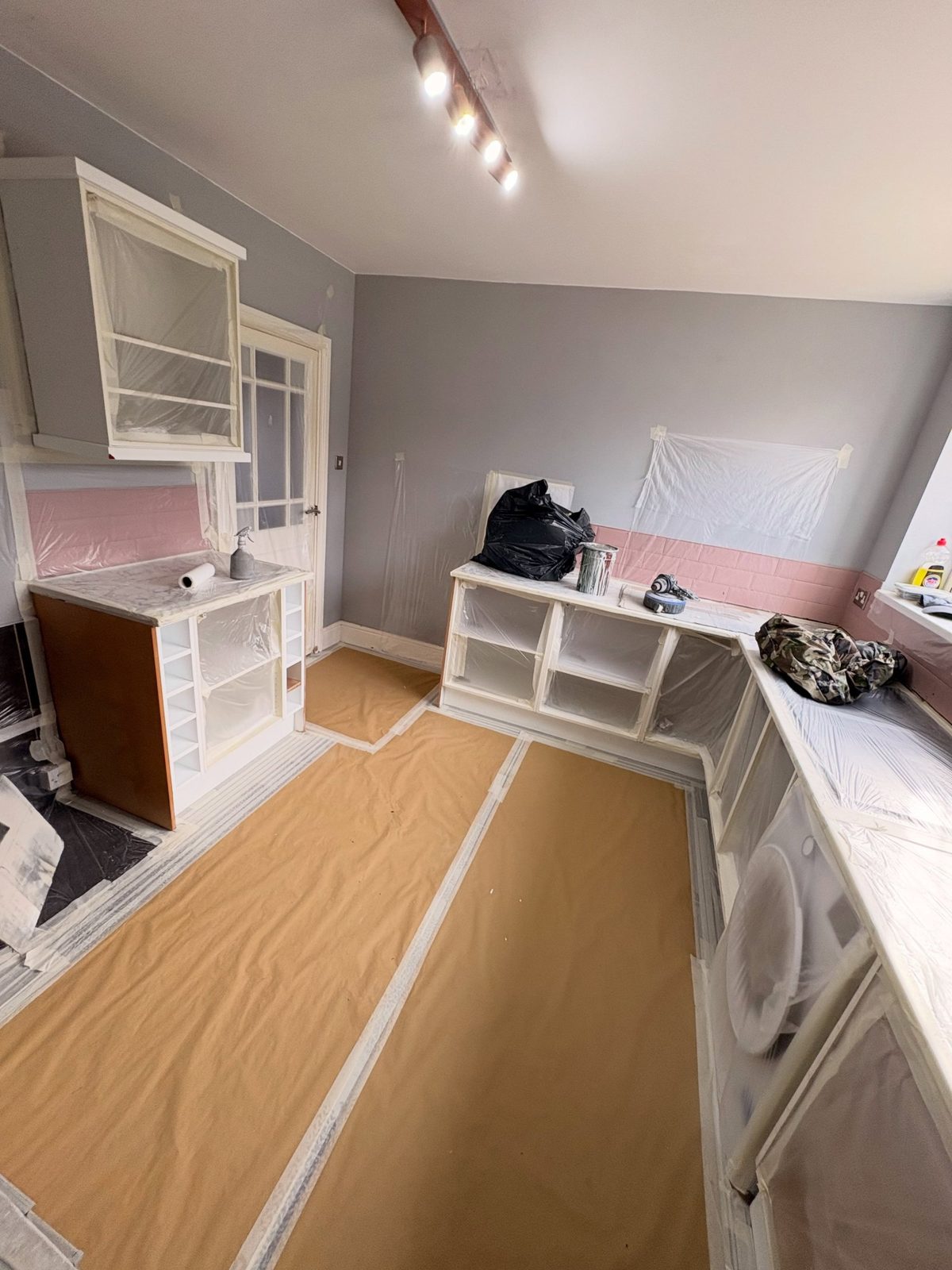
The doors come off. The carcasses stay in place but get fully wrapped. The whole room turns into a controlled booth for a few days.
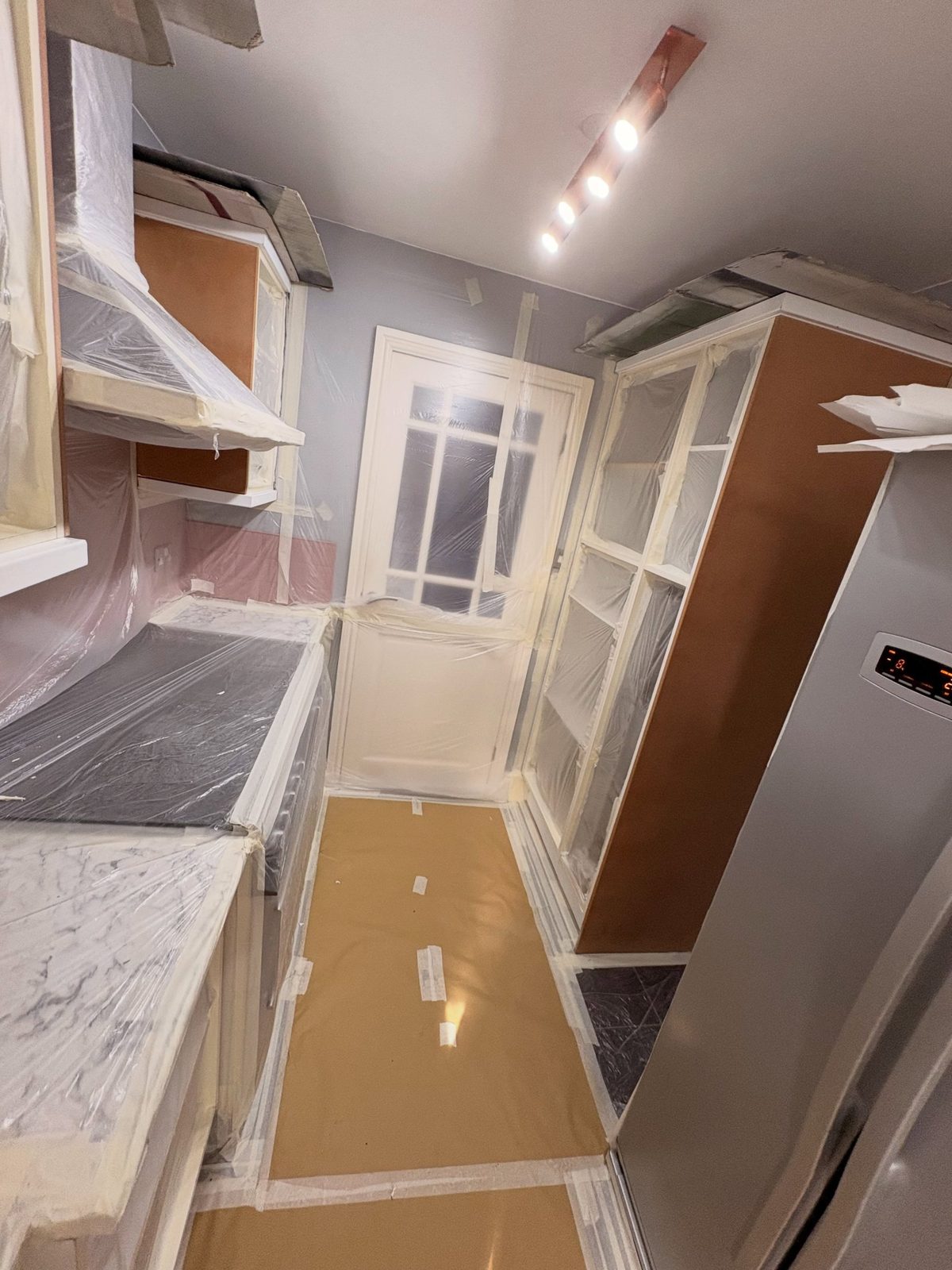
That orange cast on the shells is the primer coat going on before the final blue. A spray finish doesn’t look like a brush finish. It flows. No brush marks, no drag lines. That’s why repainted cabinets so often look like repainted cabinets. Sprayed cabinets look like new ones.
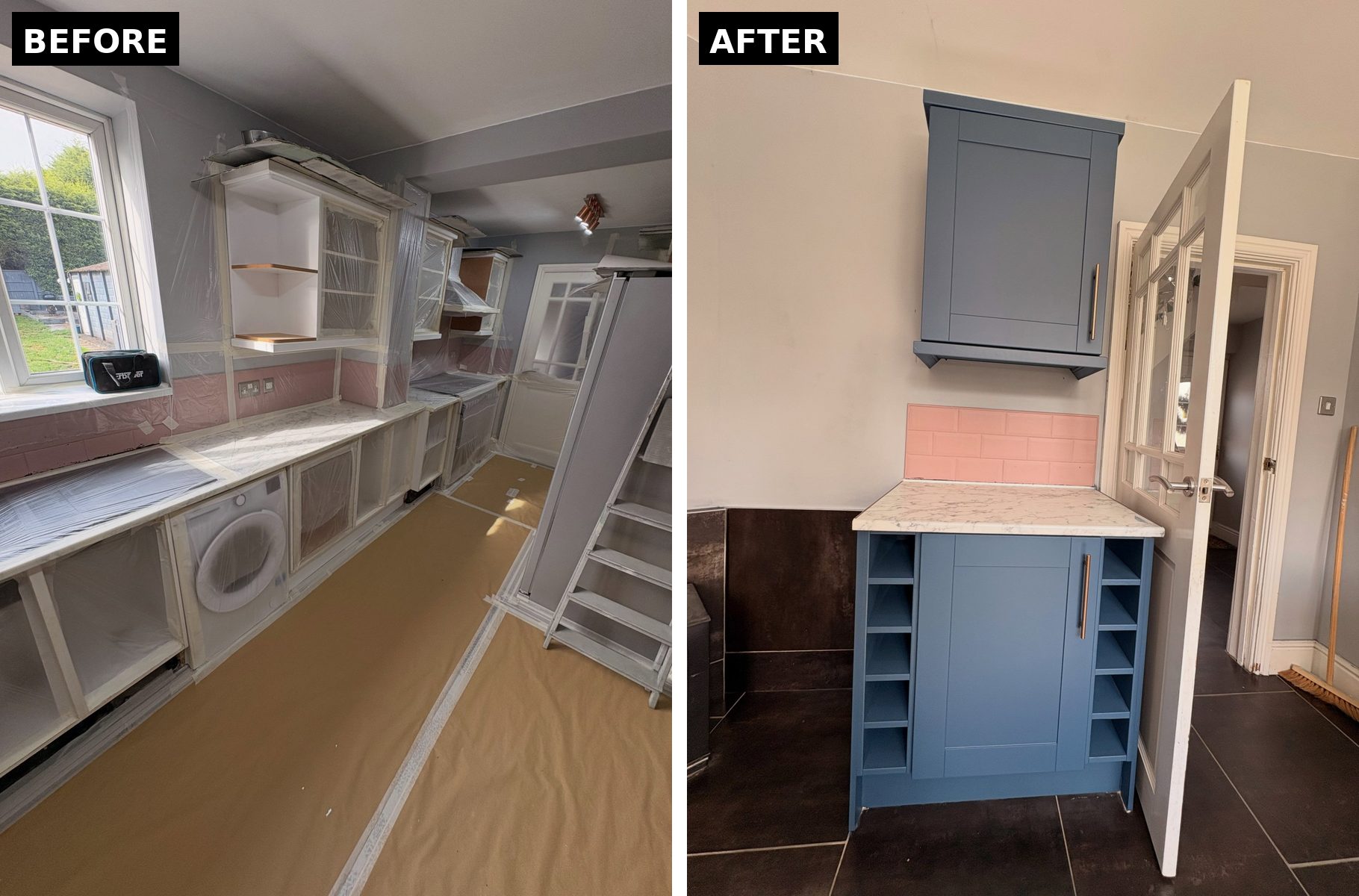
The whole respray took around a week. No deposit to book, no gutted room. She came home to a kitchen that was already dry.

The copper handles do the heavy lifting
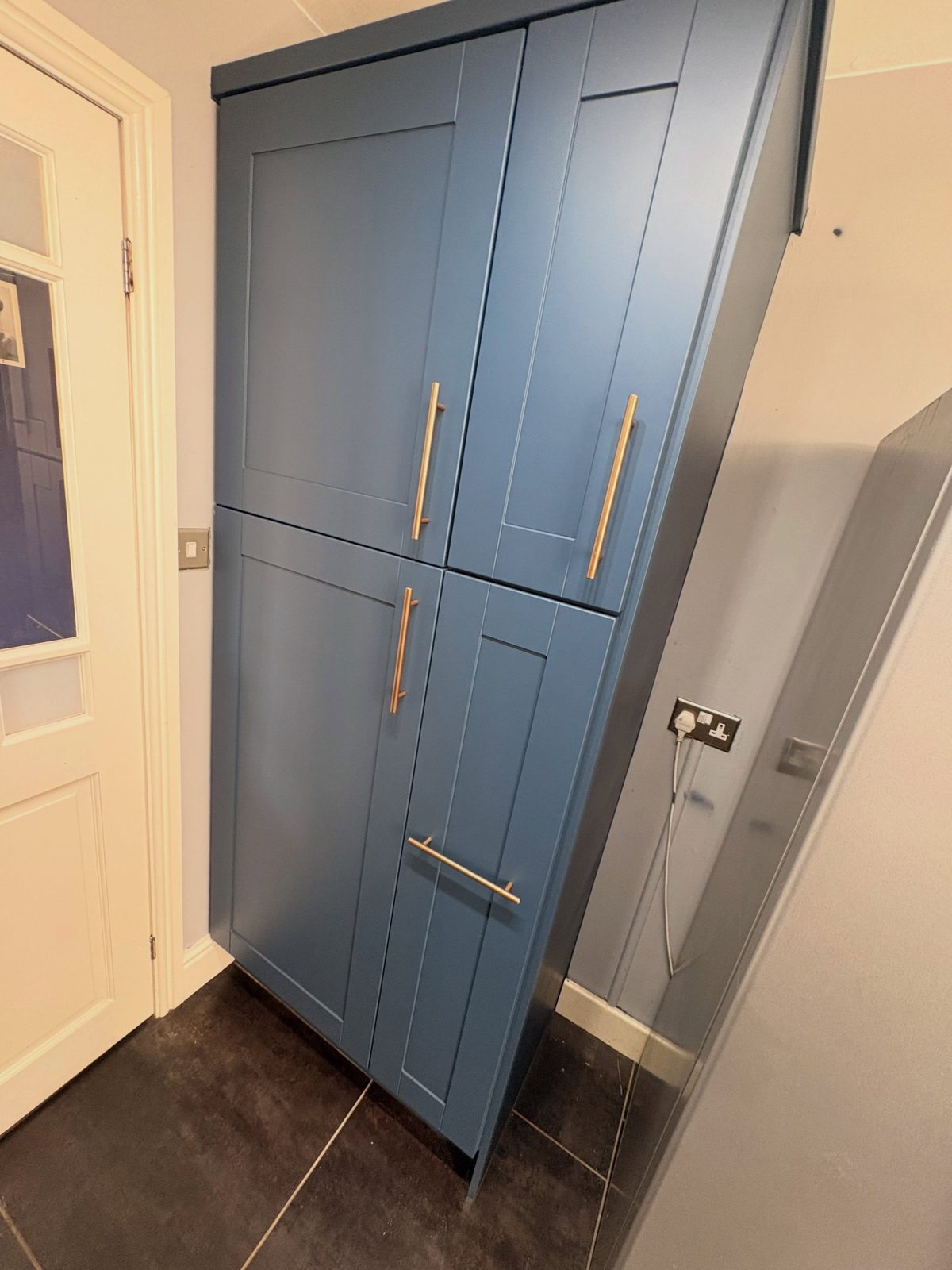
Dark cabinets on their own can read heavy. What breaks that is metal. She chose copper. The copper picks up the ceiling spotlight track that was already in the kitchen. It plays with the pink tile. It warms up the blue.
The pantry wall nobody can stop looking at
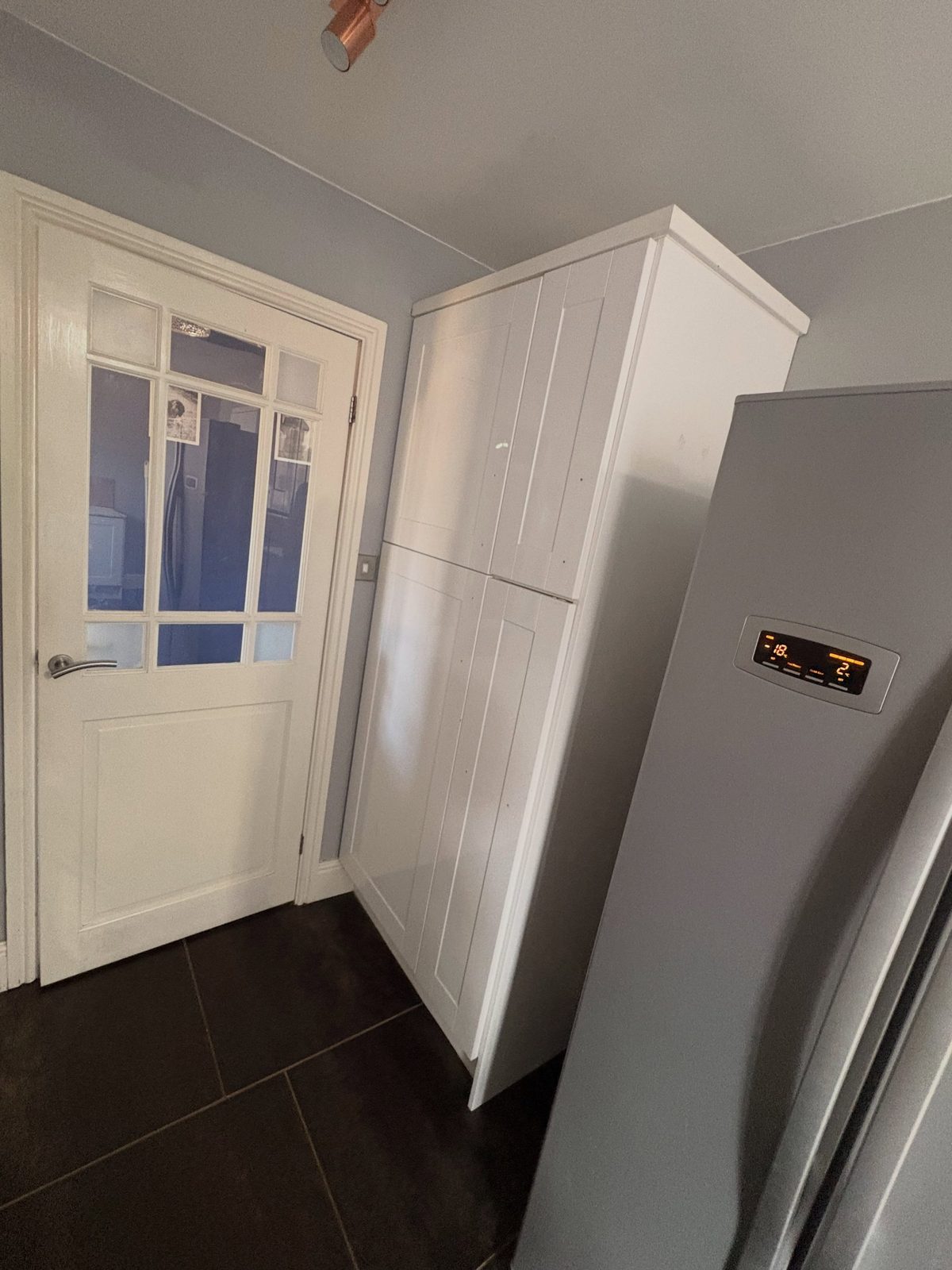
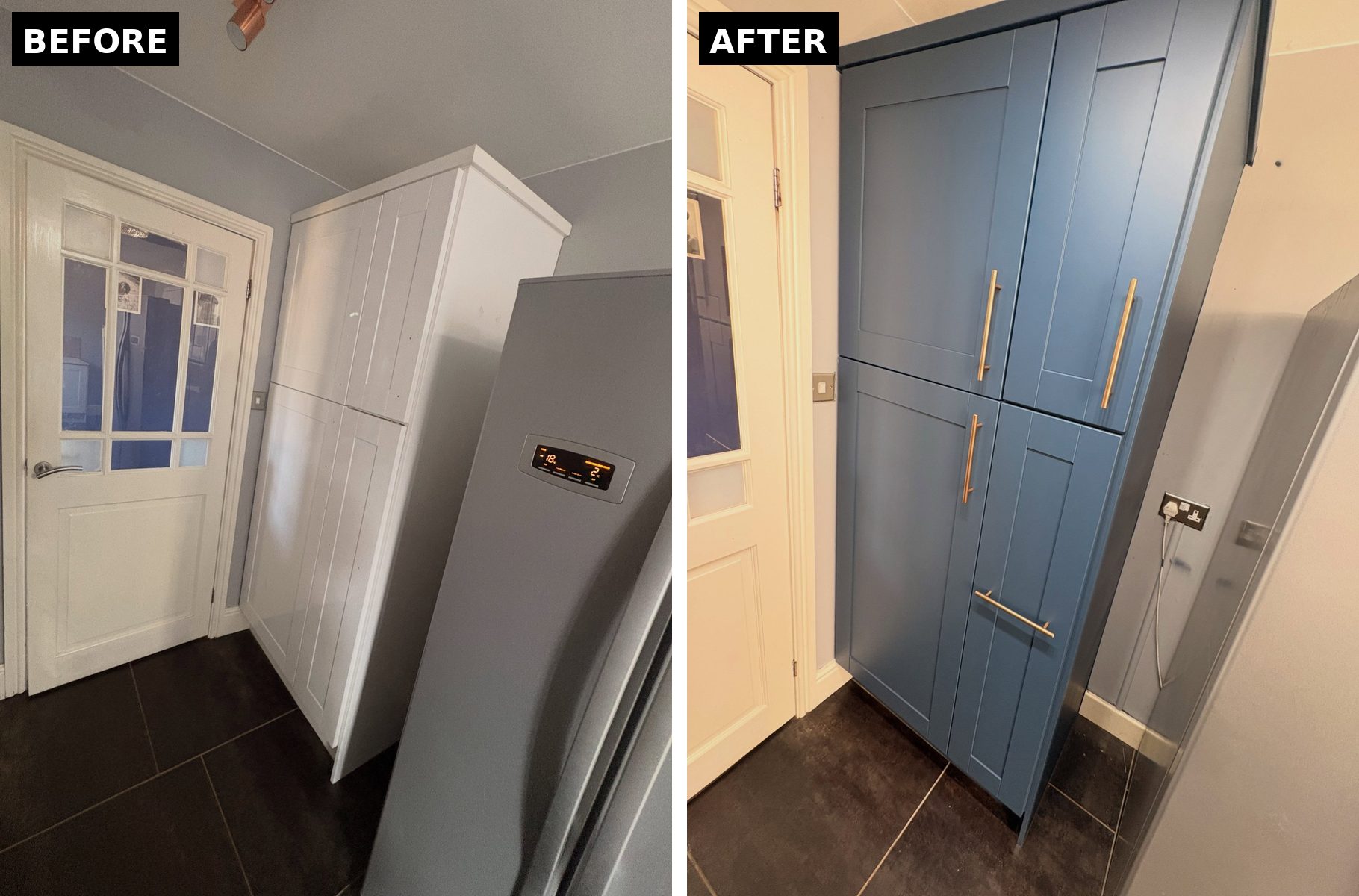
Same doors. Same hinges. Same layout. The color flip is what gave them presence. In the before it looked like a wardrobe shoved into a corner. In the after it looks built in.
The sink wall grounded itself
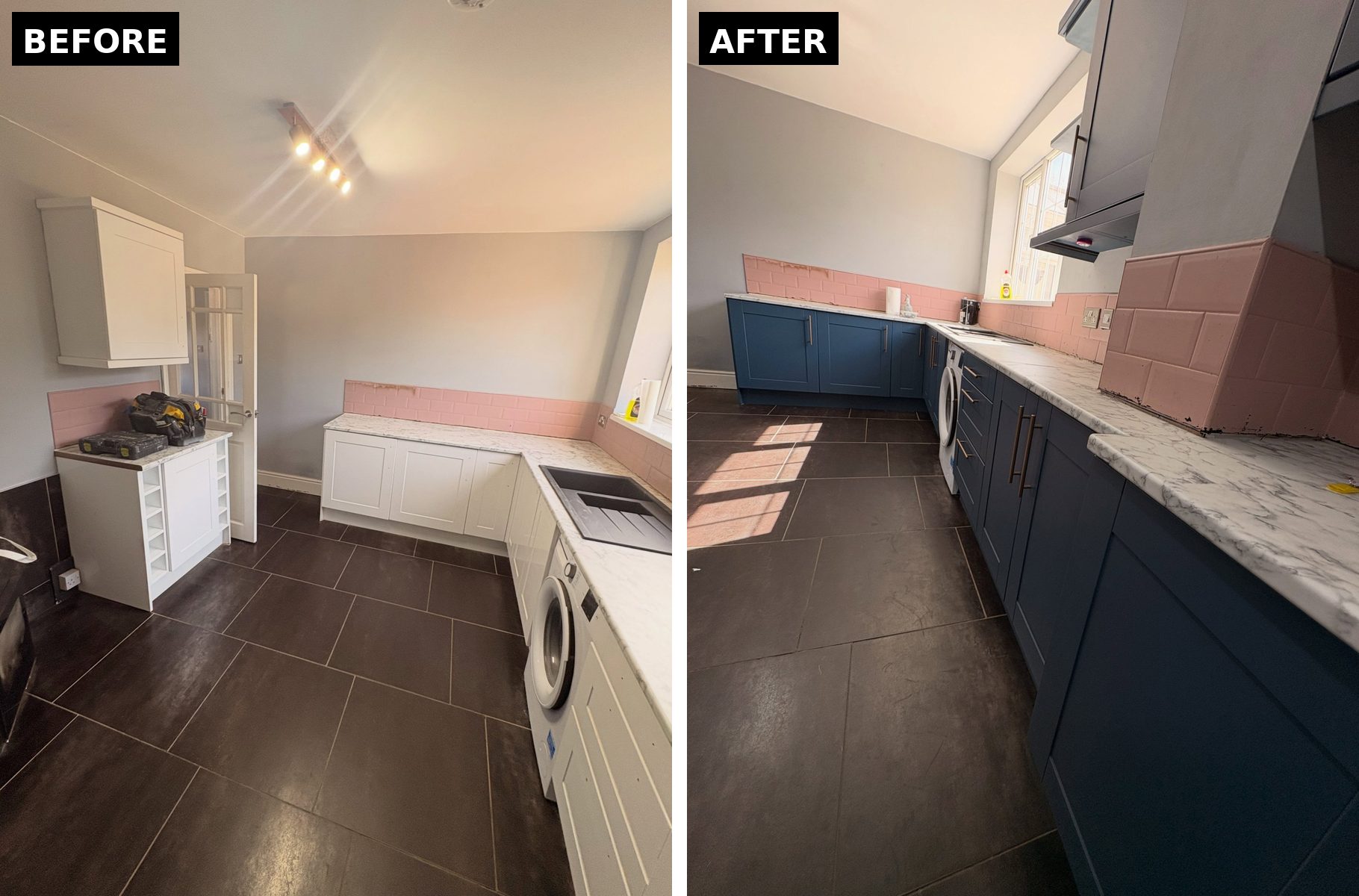
In the before, the kitchen floats, because everything on the walls is pale and the floor is dark. In the after, the blue bridges that gap. The room reads anchored.
Where the pink tile stops being a problem
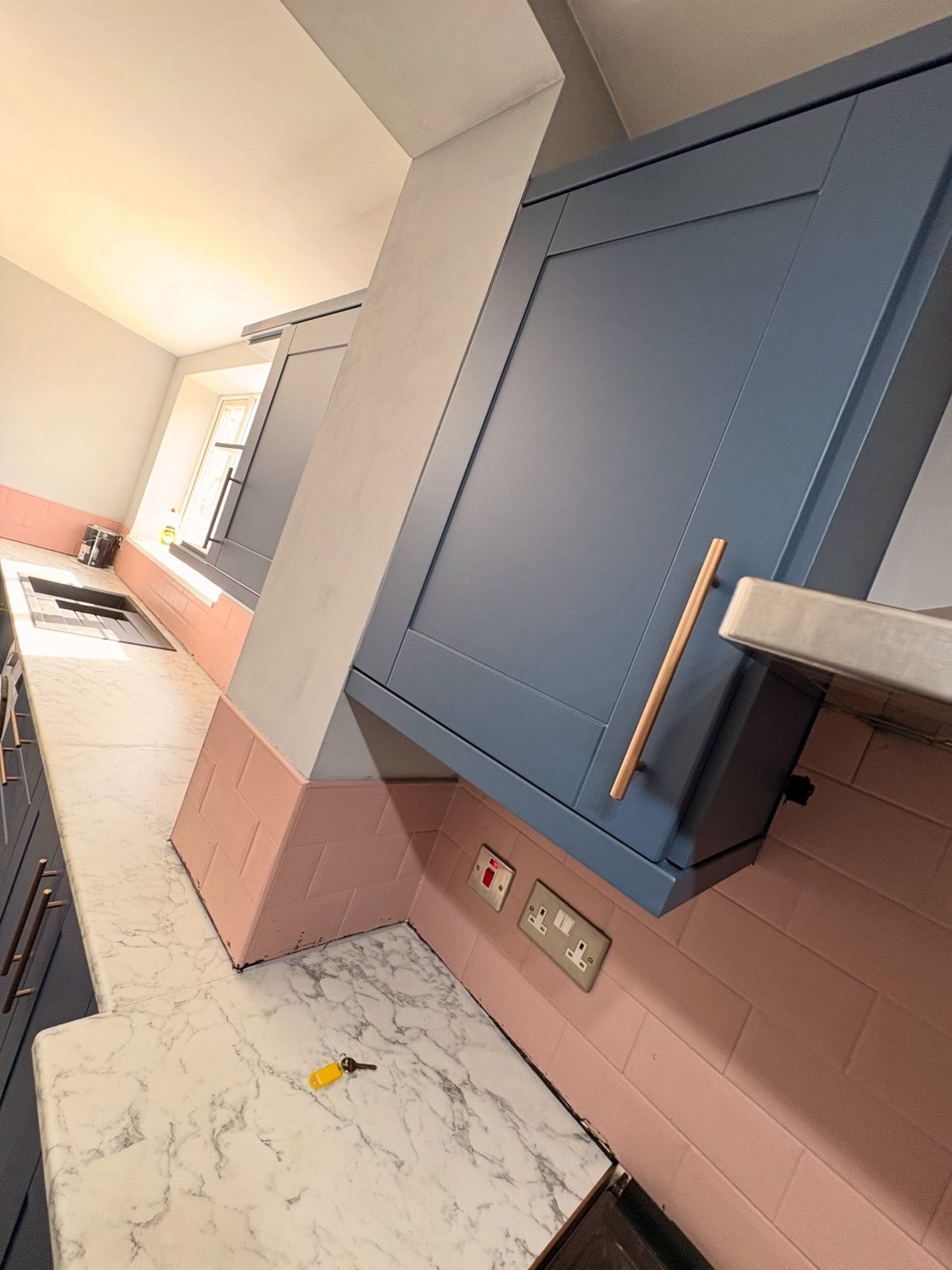
This is the corner that would have been the whole argument against doing this project. “The pink is going to clash.” It doesn’t. The pink reads warmer against the blue. The marble picks up both.
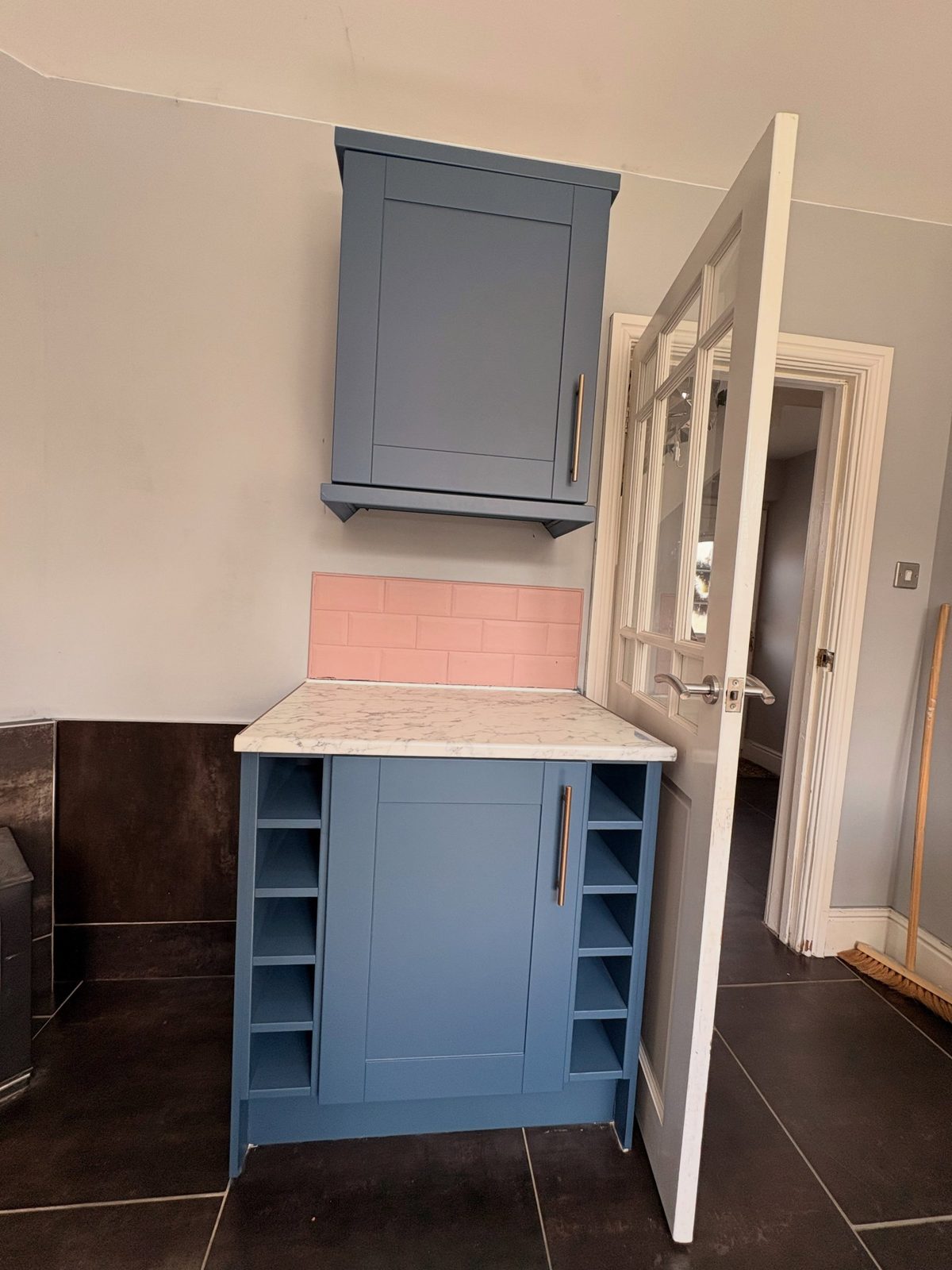
Even the little side cabinet, with its wine rack cubbies, now looks like a joiner-built piece instead of a filler unit.
The range wall
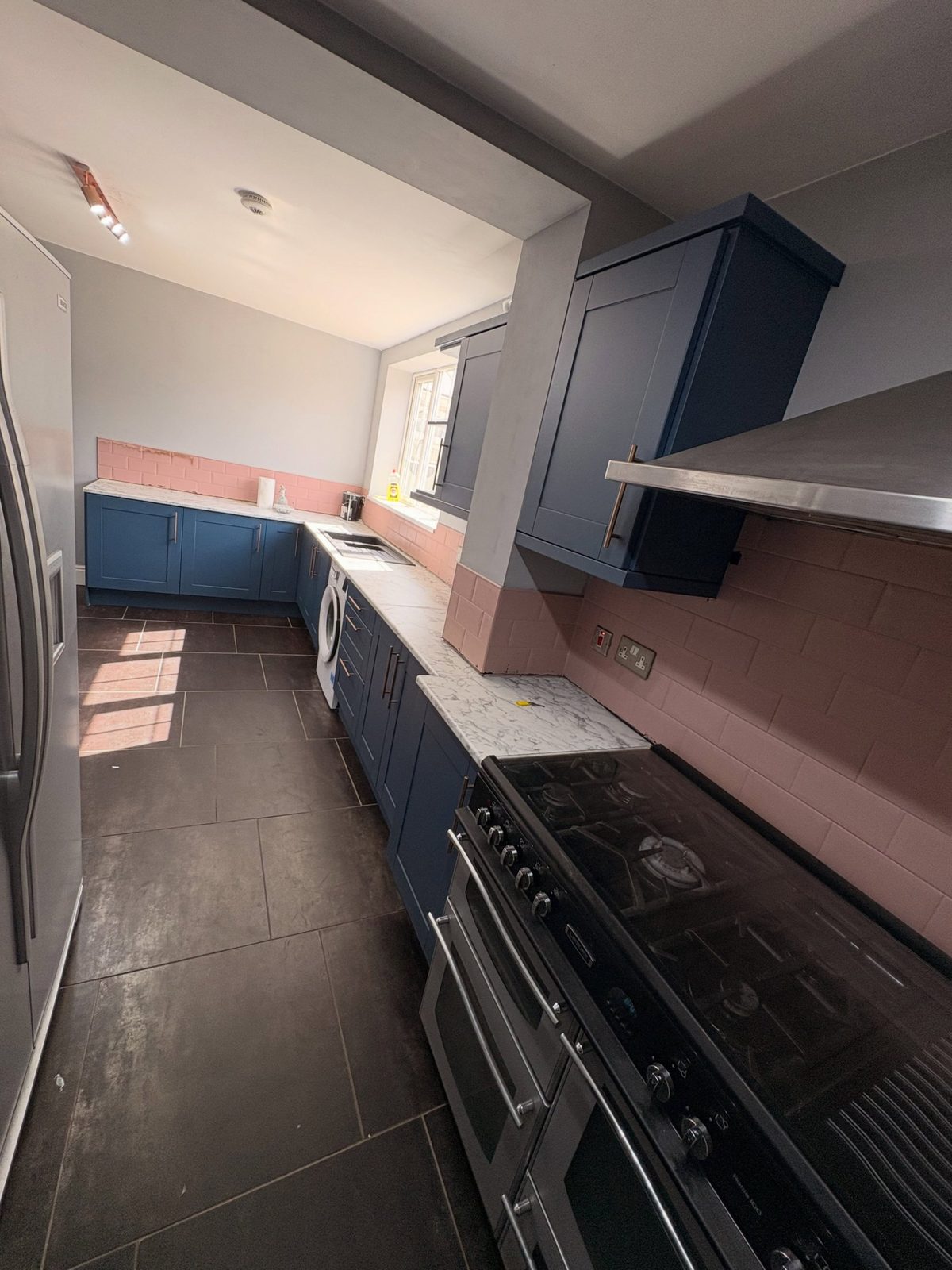
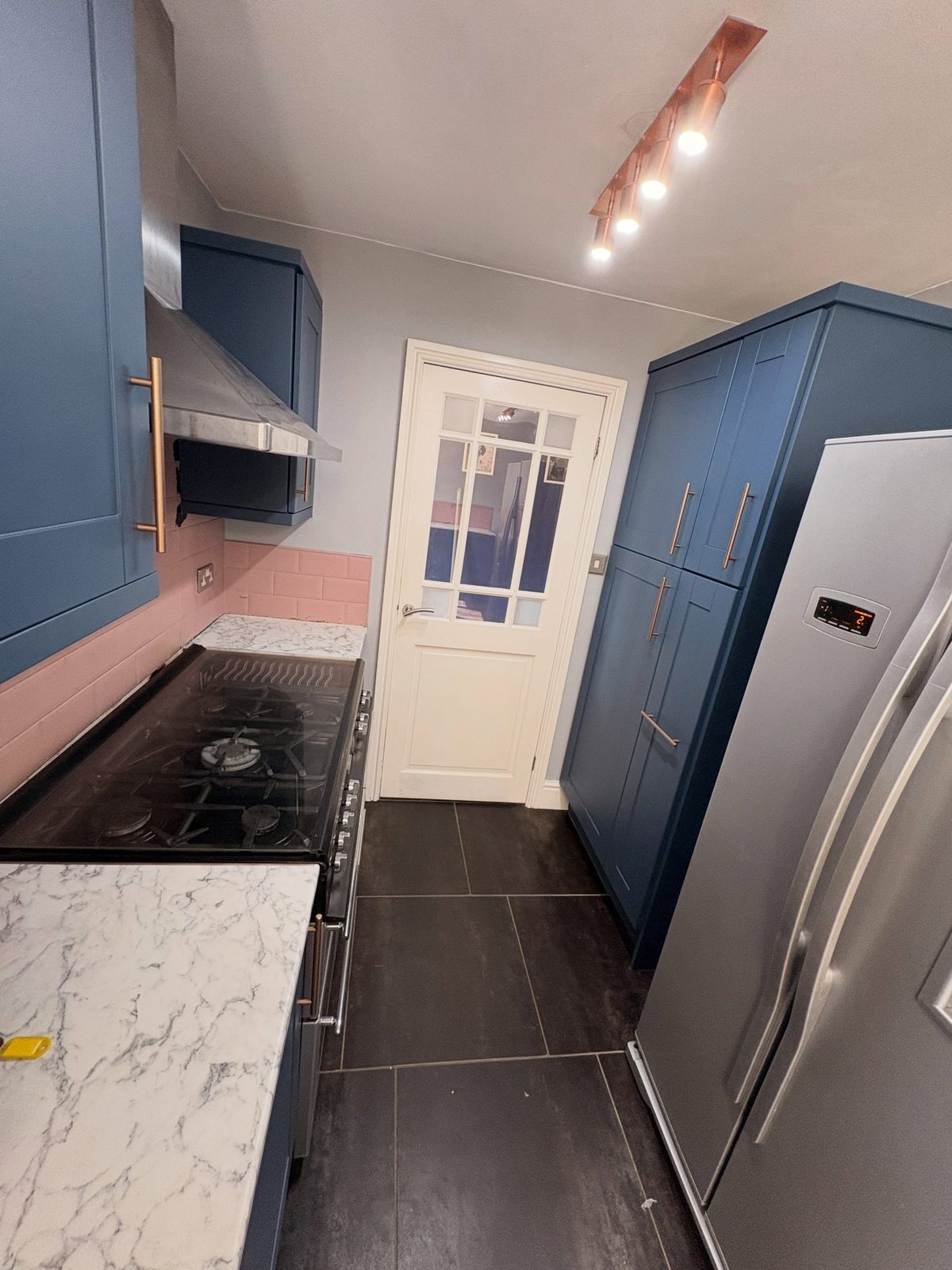
That copper spotlight track in the ceiling finally has something to answer to. The whole room ties together through warm metal.
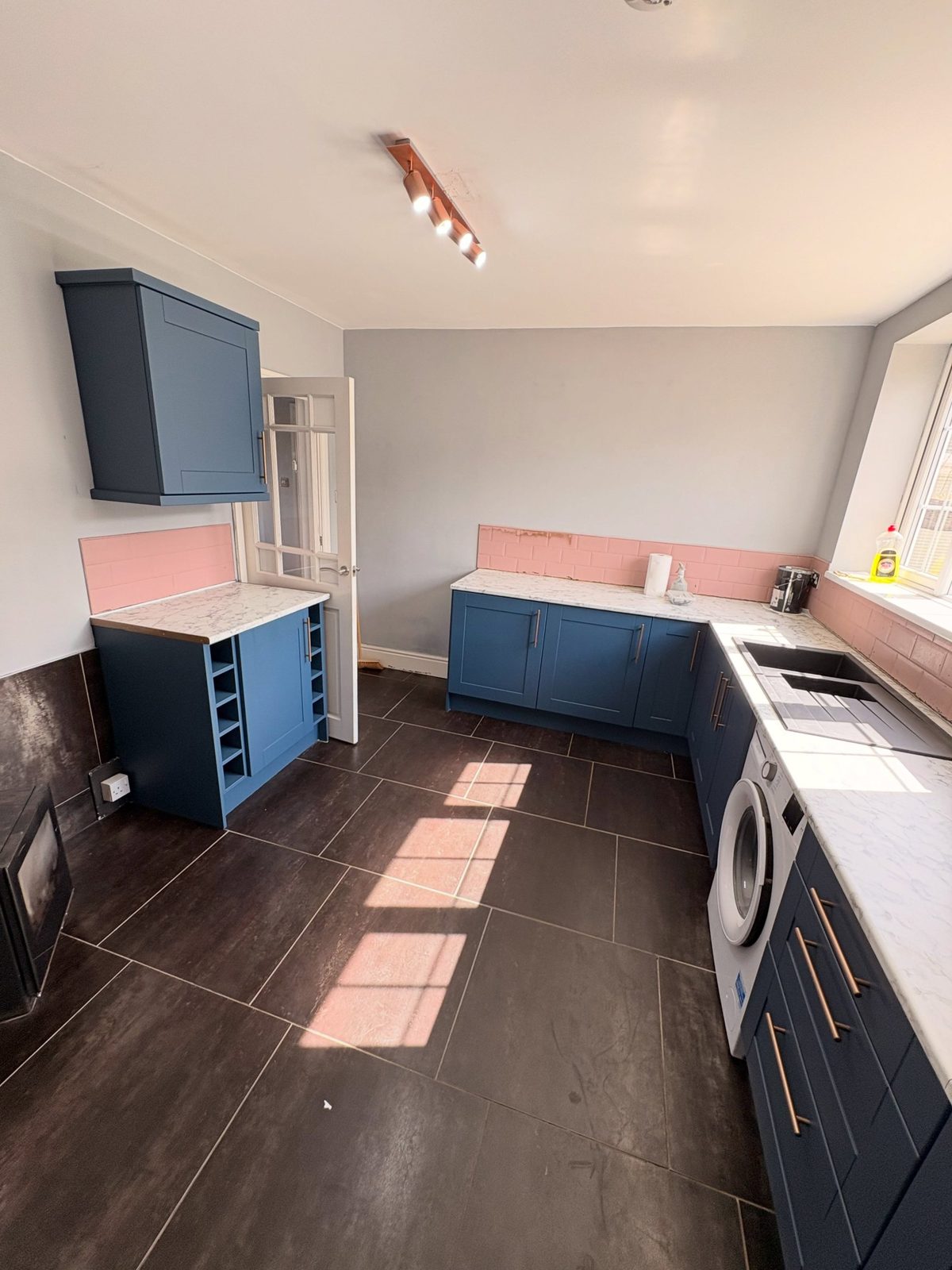
The wide view that sold the whole decision
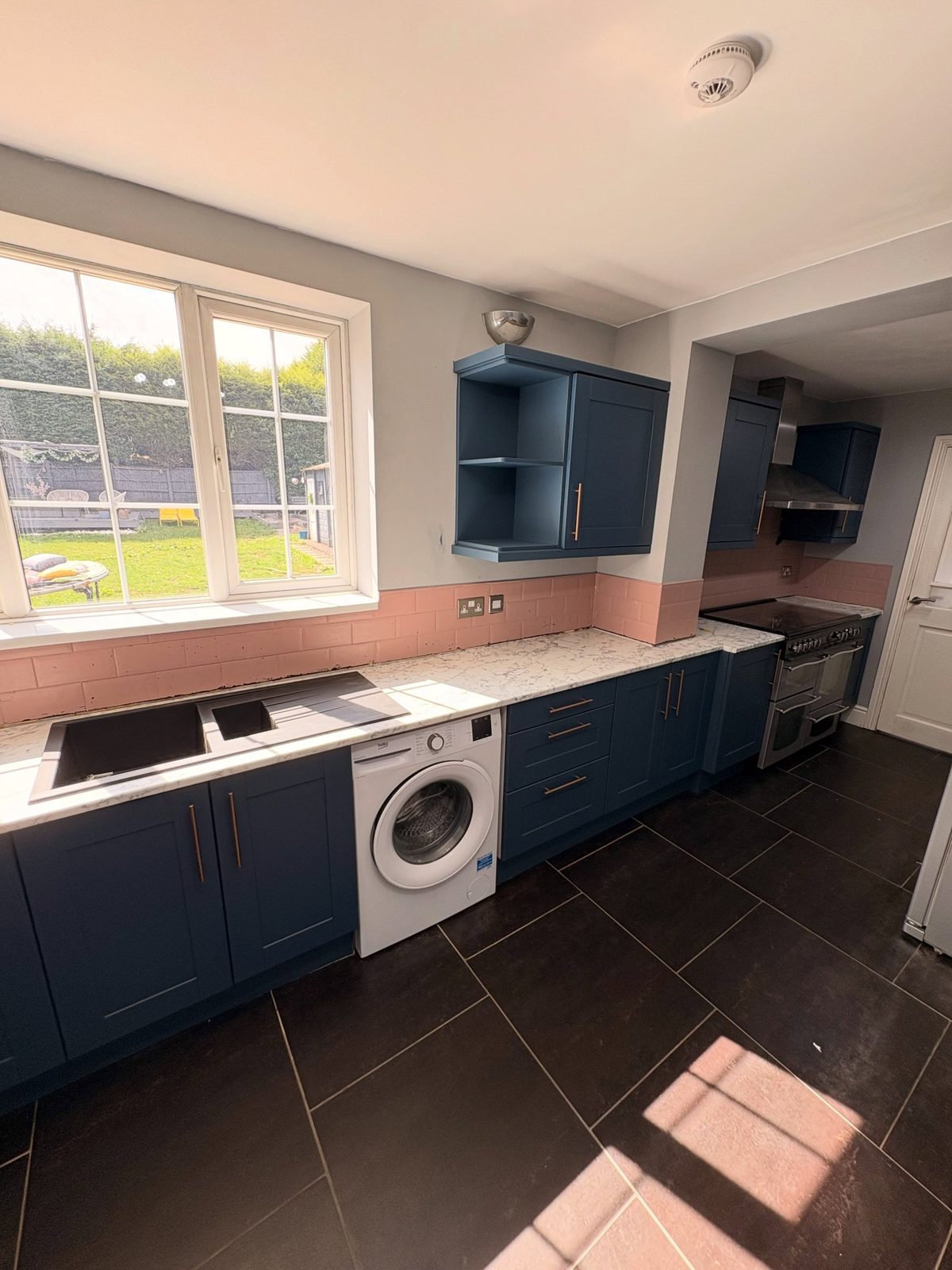
Same bones. Same tile. Same floor. A different kitchen.
The real takeaway isn’t Stiffkey Blue, and it isn’t copper handles. It’s that most kitchens don’t need to be rebuilt. They need to be committed to. She had the color. She had the handles. She had the pink tile she thought was a problem. What she didn’t have was the nerve to make the call in person.
The holiday was the hack. The painter was the hero. The kitchen was there the whole time.
Would you ever paint over pink tile instead of ripping it out?



I agree wallpaper would help…it looks to color blocked.
I don’t agree that the pink tile goes better with the new cabinet color. Maybe a wallpaper that brought all the colors together would work, but it doesn’t work for me as it is.