

The granite was the first thing she wanted gone. Dark, veined, green-and-gray stone that cost thousands to install about a decade ago, now reading as the most dated piece in the room. The quote to replace all of it came back high enough to pause the whole kitchen plan.
So she tried something else first. One color. One finish. Everything else stayed.
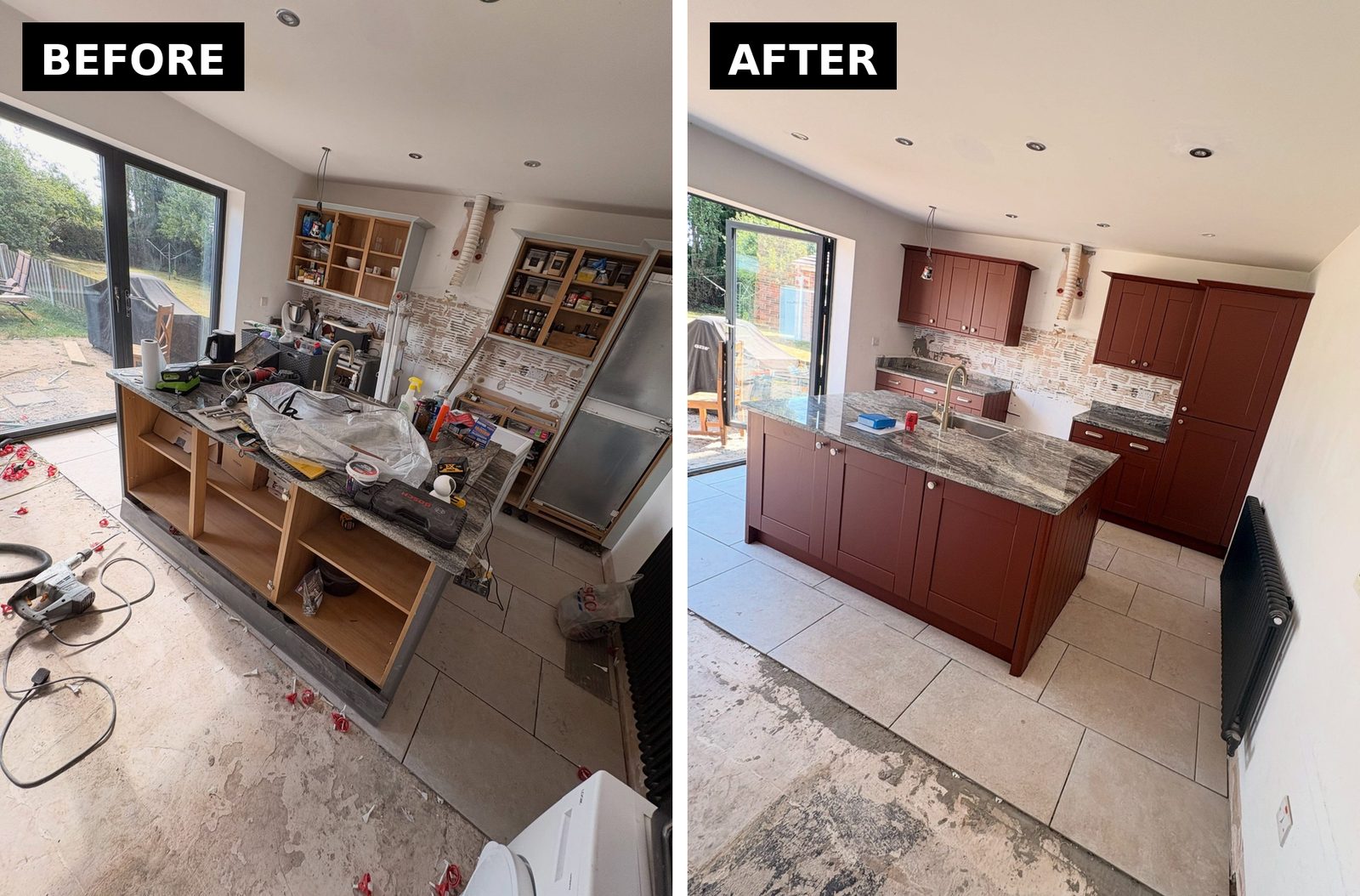
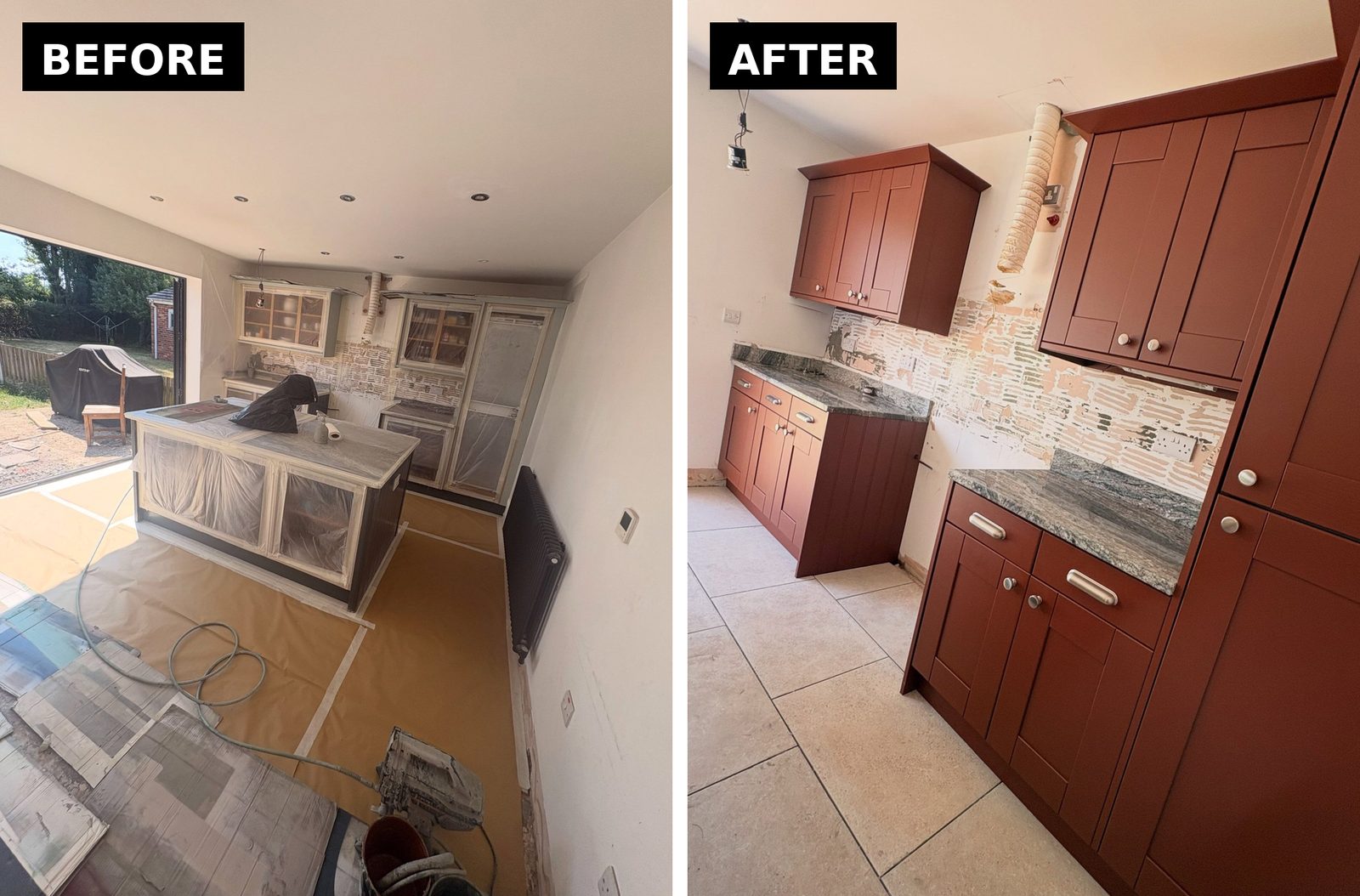
What the kitchen looked like before
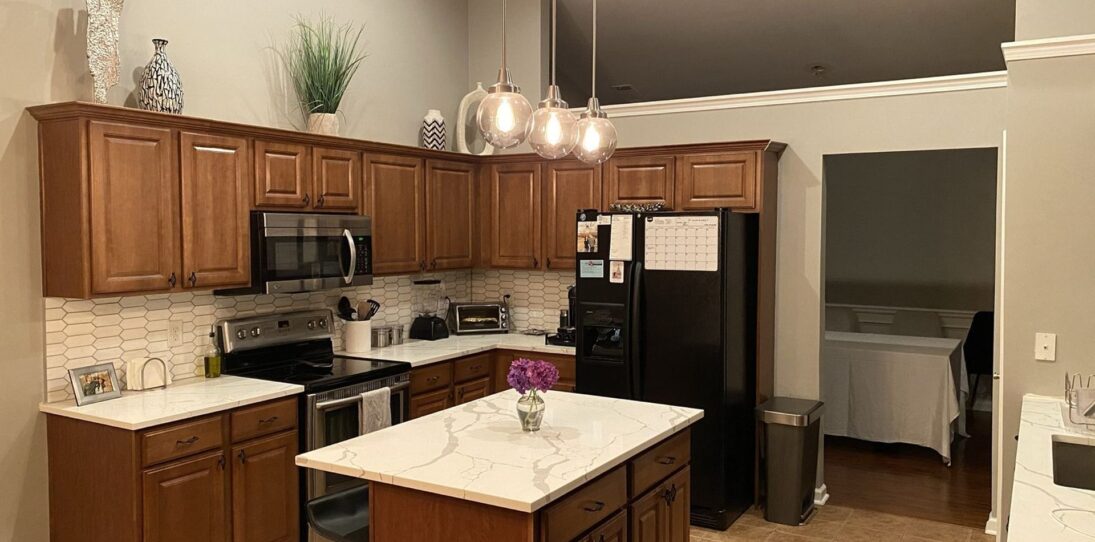
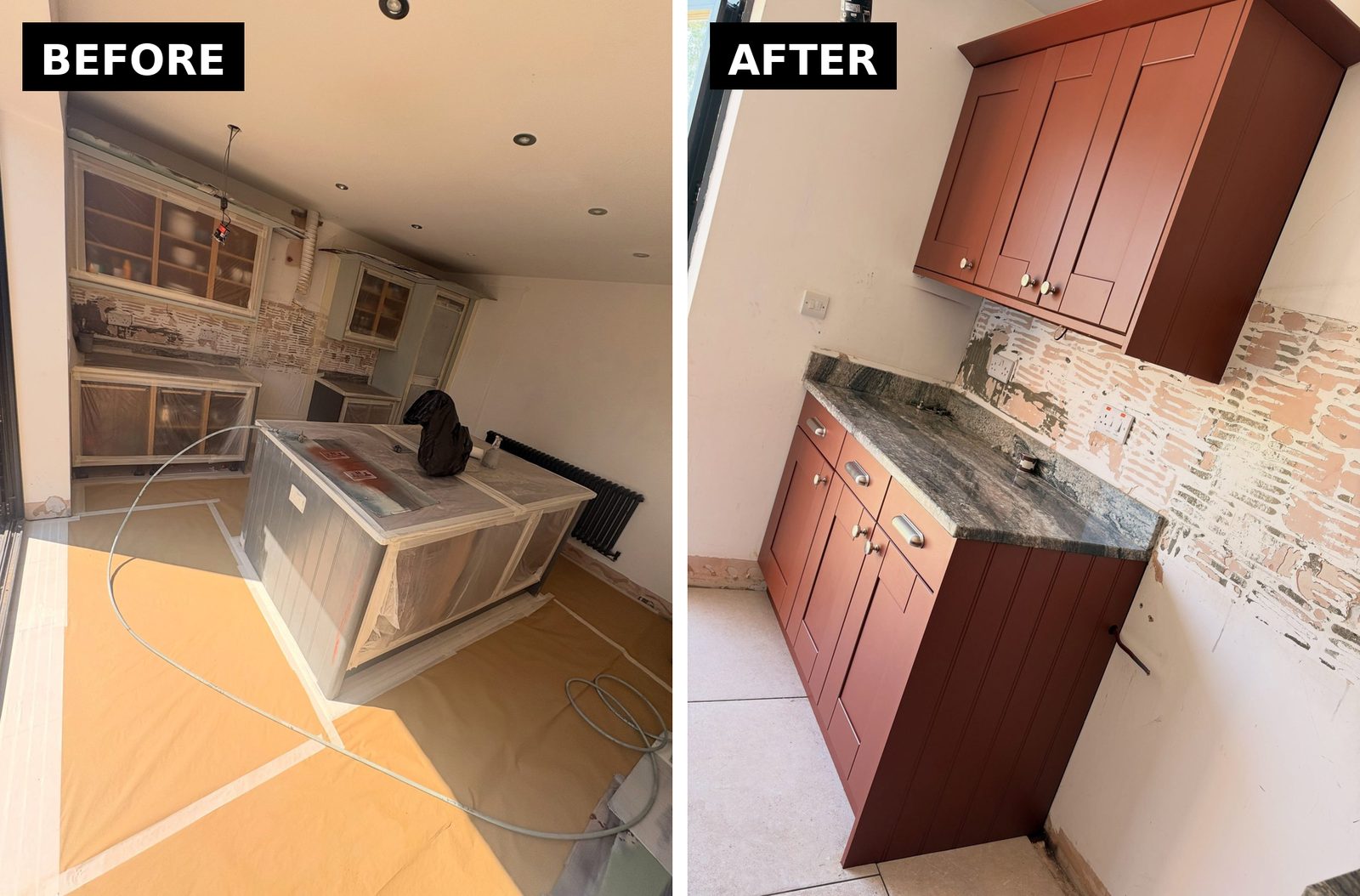
Here is where it started. Pale sage-gray shaker cabinets with glass-fronted uppers, the kind of “safe” color almost every mid-2010s kitchen landed on. Against the busy green-and-gray granite, the cabinets looked washed out and the stone looked loud.
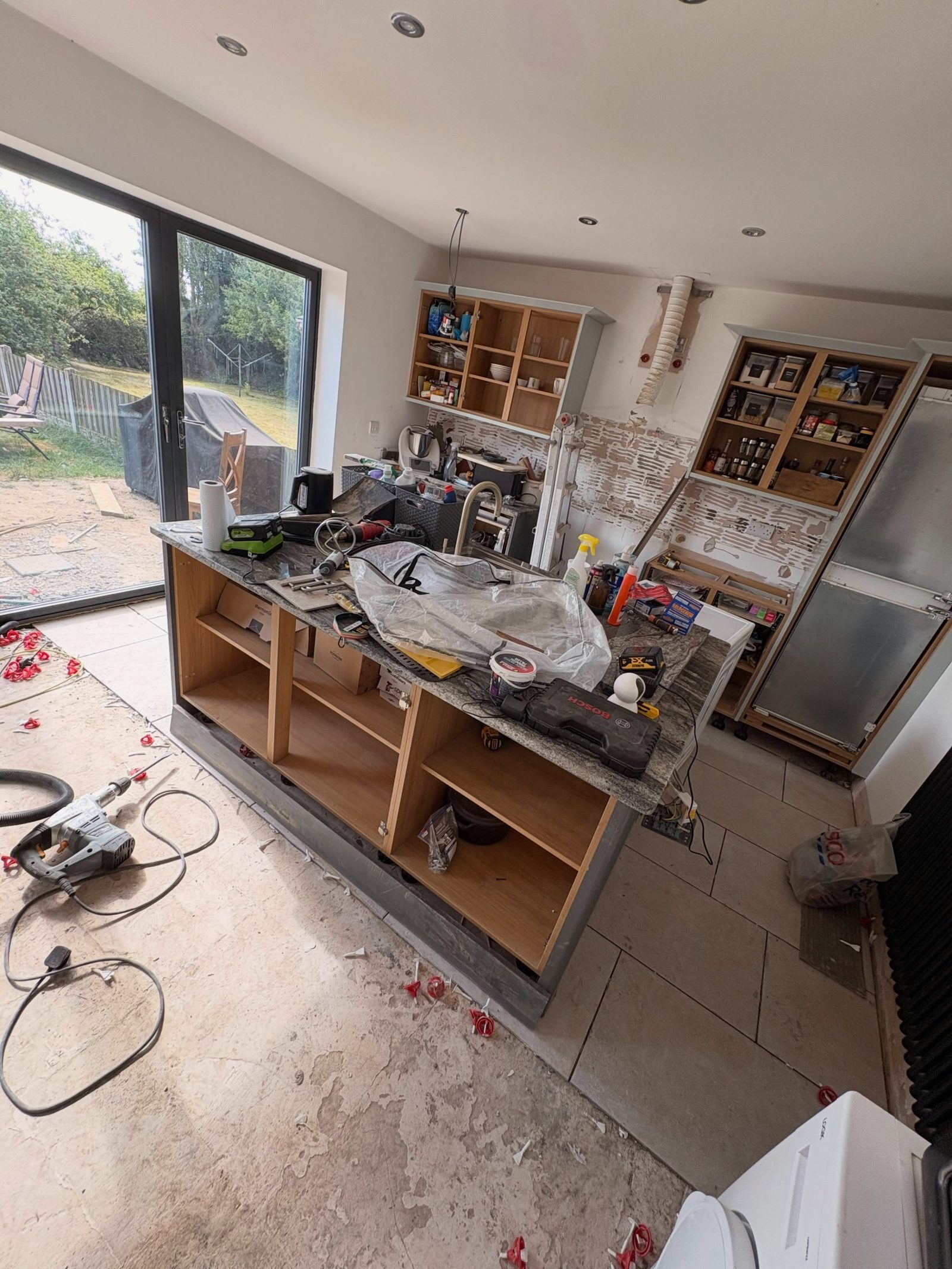
Warm oak shelves behind glass doors, chrome cup-pulls and round knobs on every cabinet, a travertine-look floor, and a chunky painted island that was starting to chip. Nothing was broken. Everything was tired.
The quote that changed the plan
Full kitchen rip-and-replace in the UK runs between twenty and forty thousand pounds for a space this size. The cabinets were solid oak carcasses in good shape. The layout worked. The appliances were fine. She was about to spend a lot to fix a color problem.
The respray team at The Mobile Spray Painting Company quoted a fraction of that to spray every door, drawer front, panel, and plinth in place.
Masked, sprayed, done in days
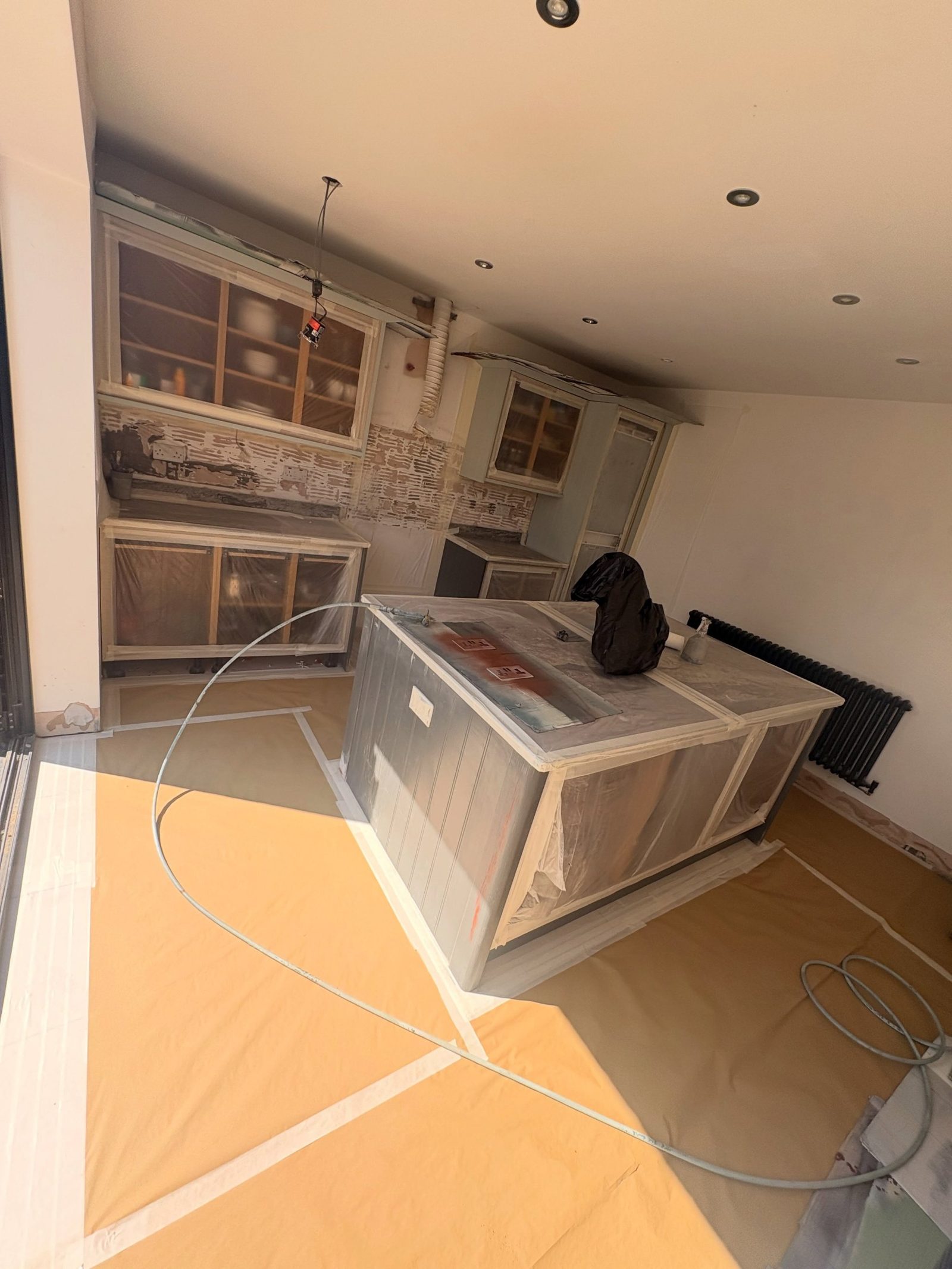
Everything stayed where it was. The team sheeted the floors, bagged the worktops, taped the glass, and set up a spray booth around the island.
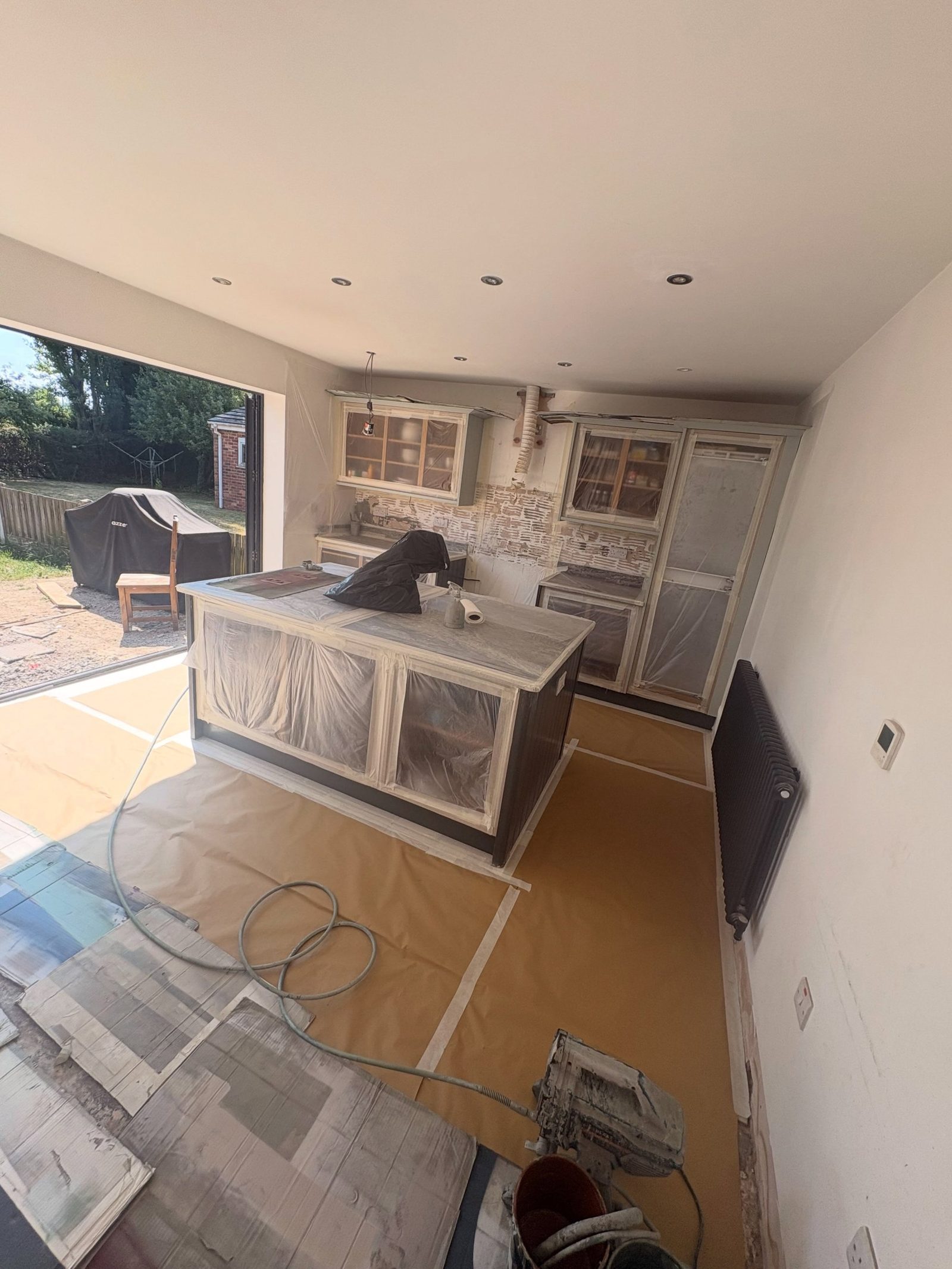
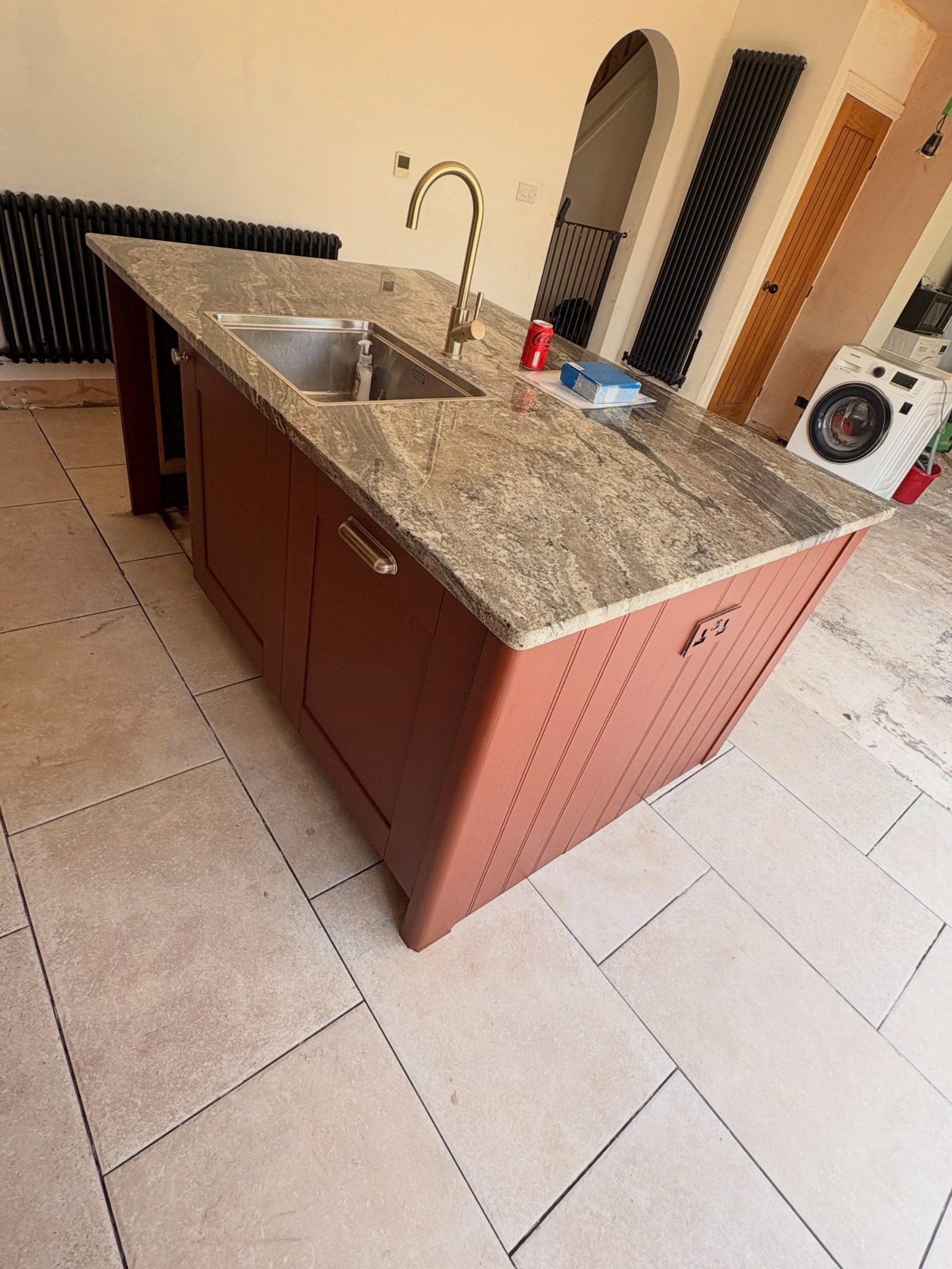
The color was Farrow & Ball Etruscan Red in a matte finish. A deep, warm, slightly dusty terracotta that reads more like a soft brick than a bright red.

The finished kitchen
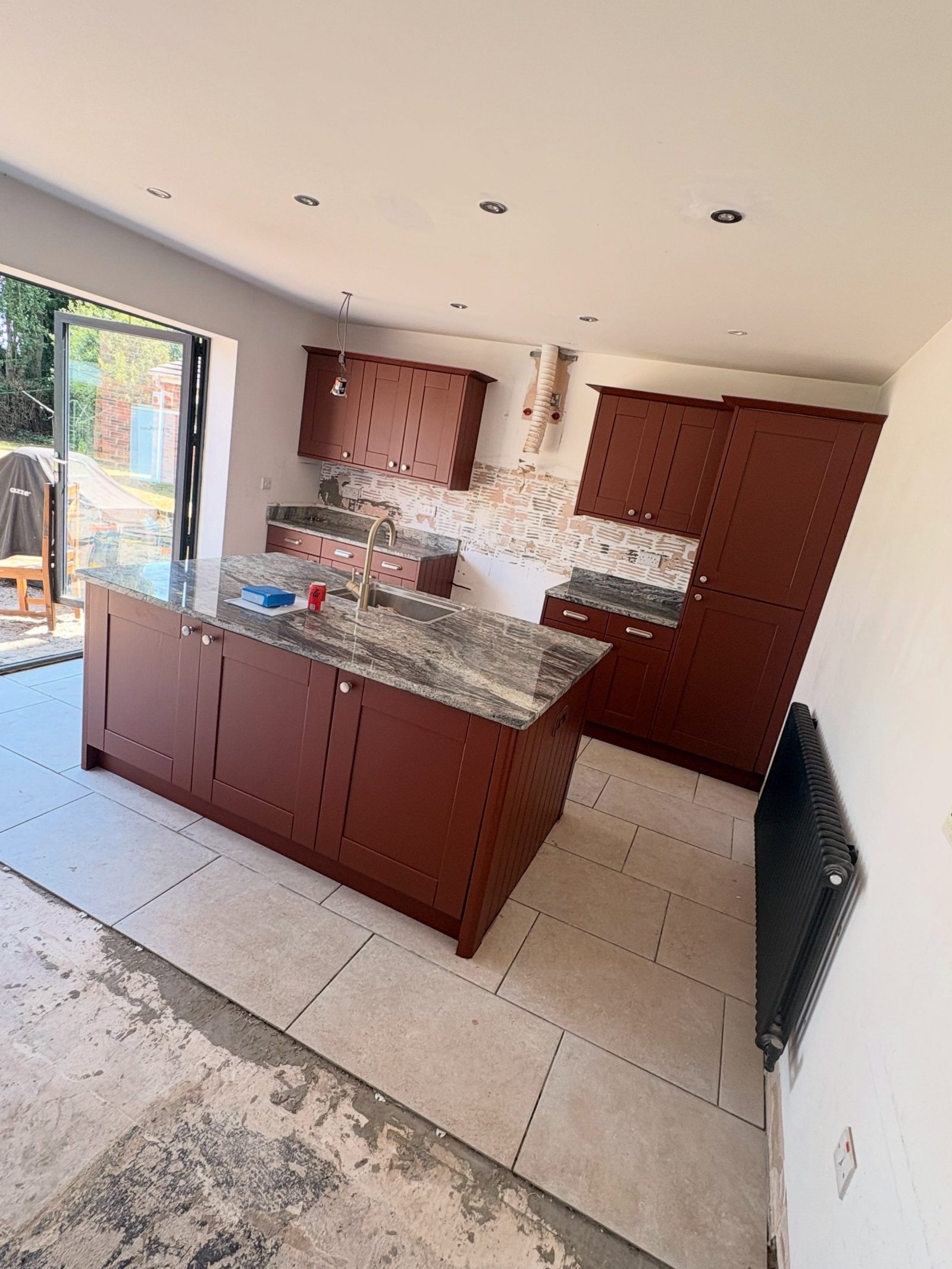
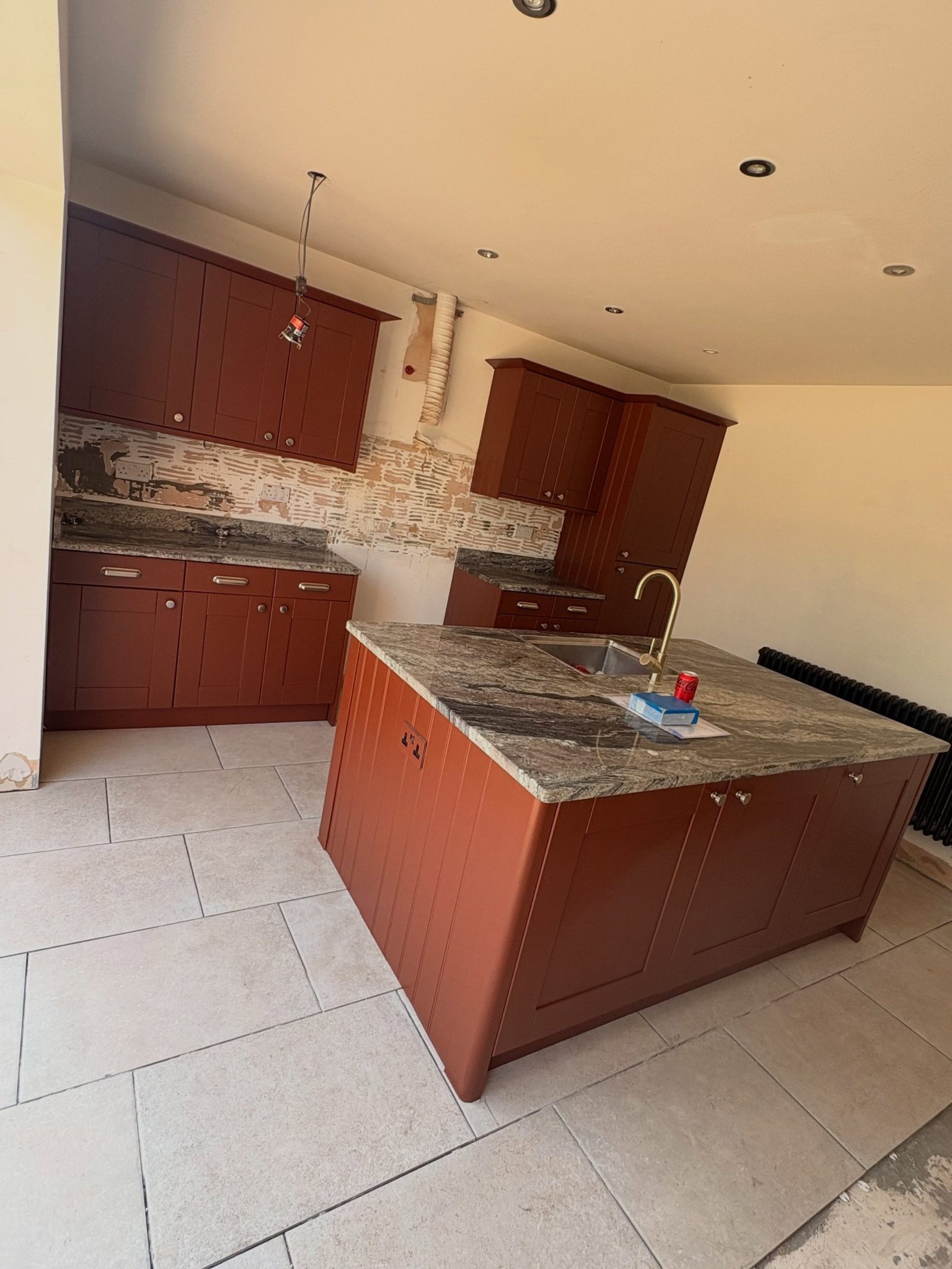
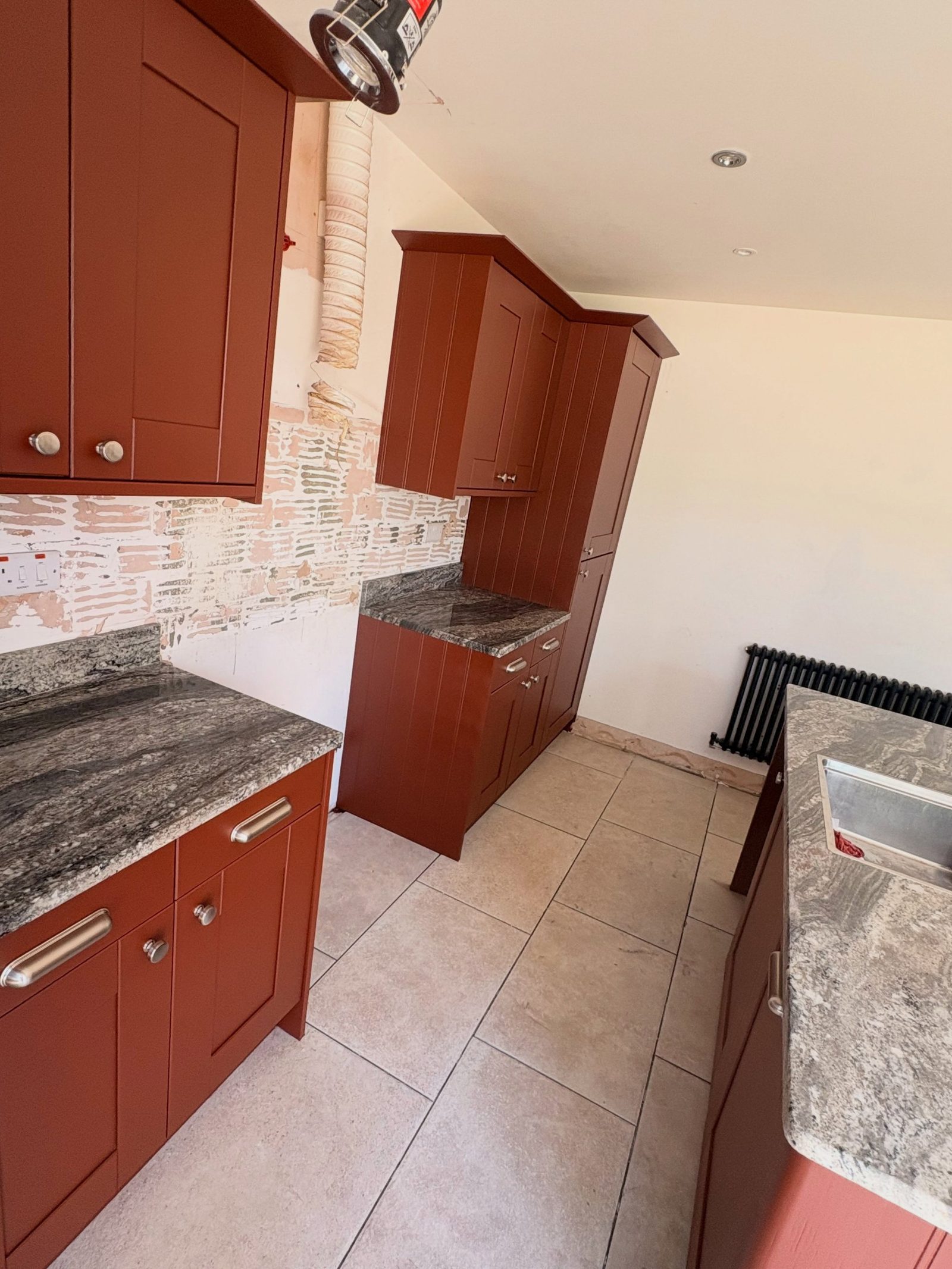
Here is the result. Same granite. Same chrome. Same floor. Different kitchen.
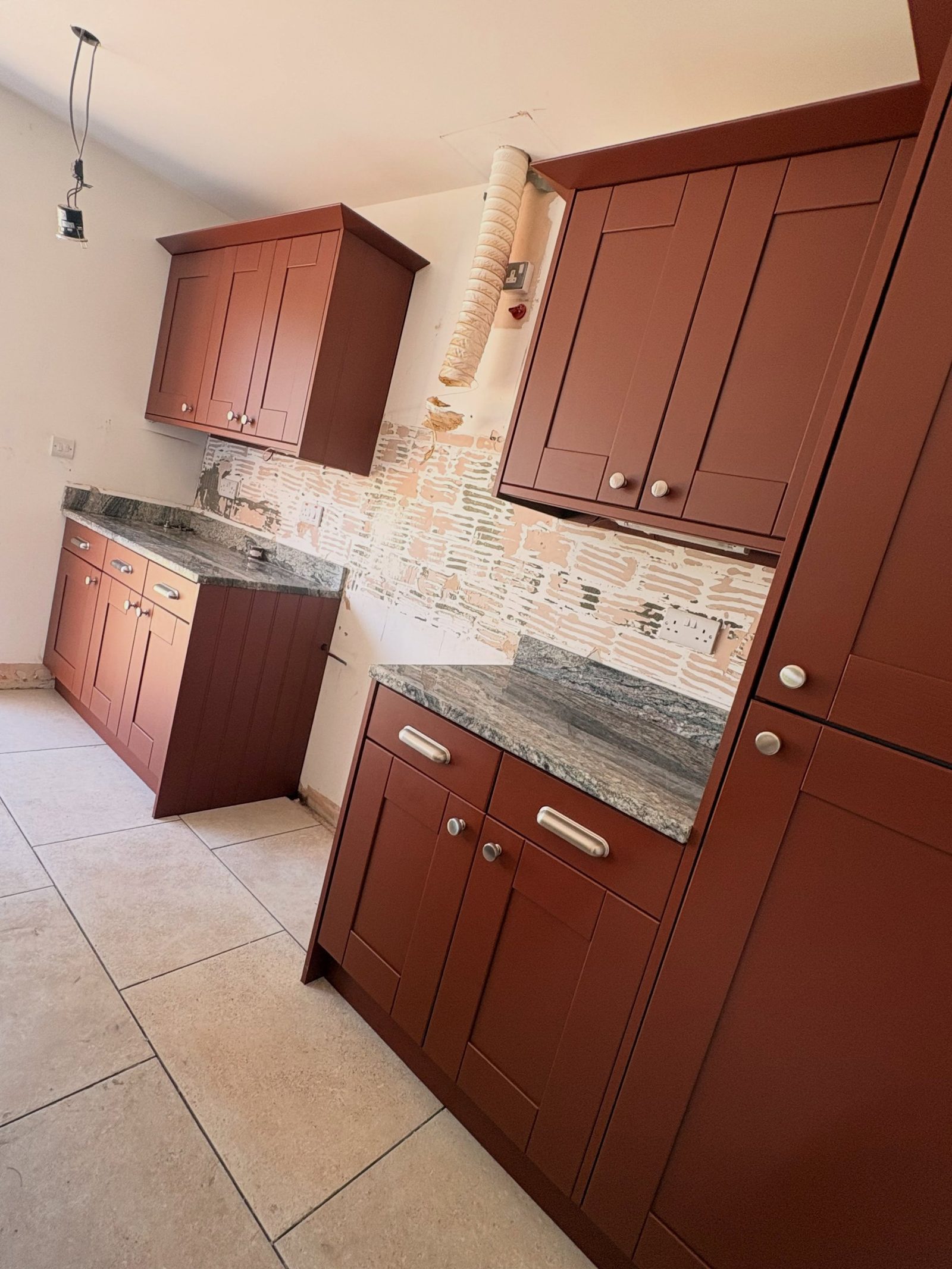
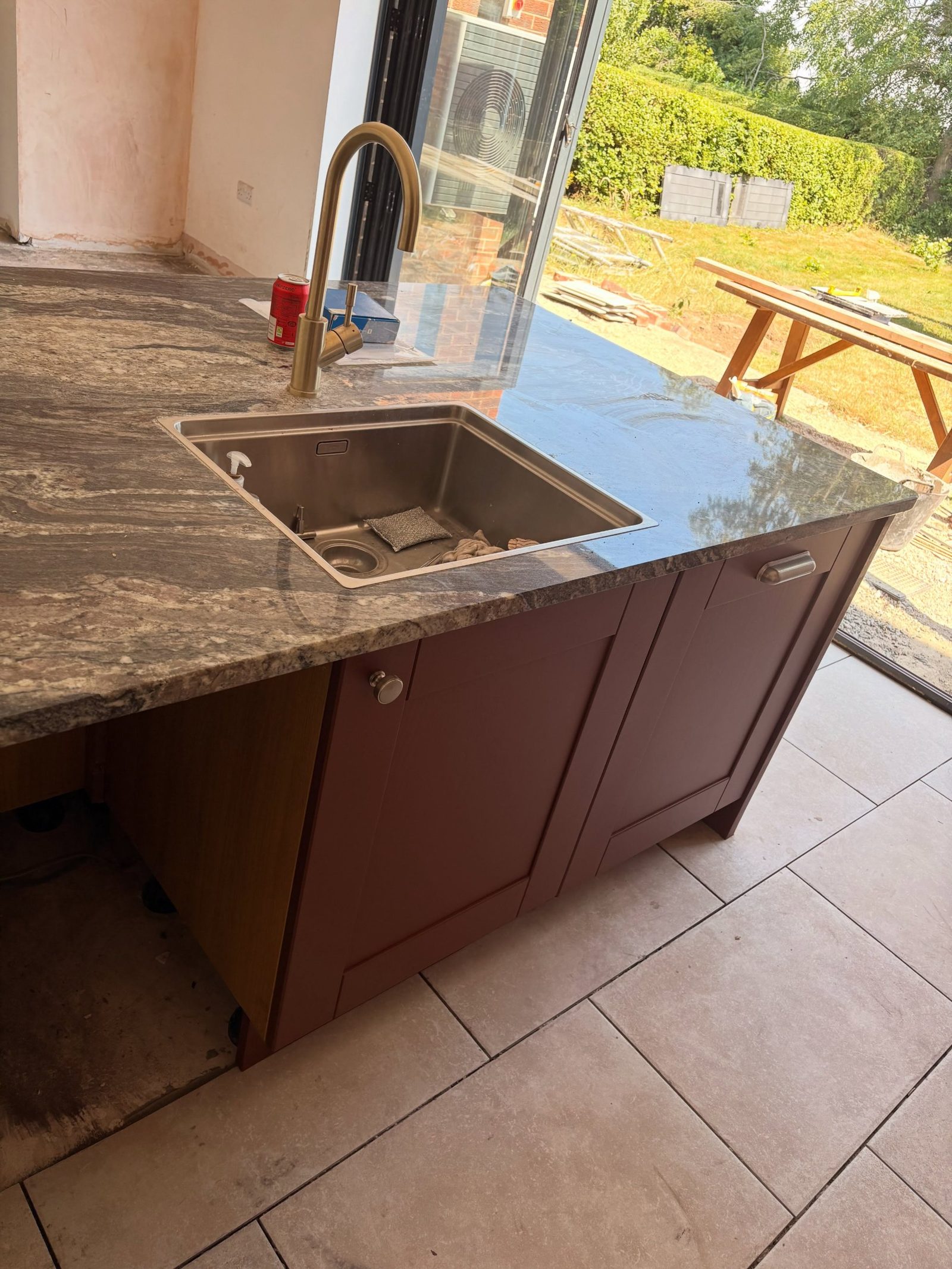
The deep red lets the busy stone finally sit back and act like a counterpoint instead of the loudest thing in the room.
Why the granite suddenly works
Pale cabinets and busy stone fight each other because they are both calling for attention. A deep, saturated cabinet color changes the pecking order. The cabinets carry the room. The granite becomes texture. The greens and grays in the stone now read as a planned cool-tone contrast to a warm red wall of cabinets.
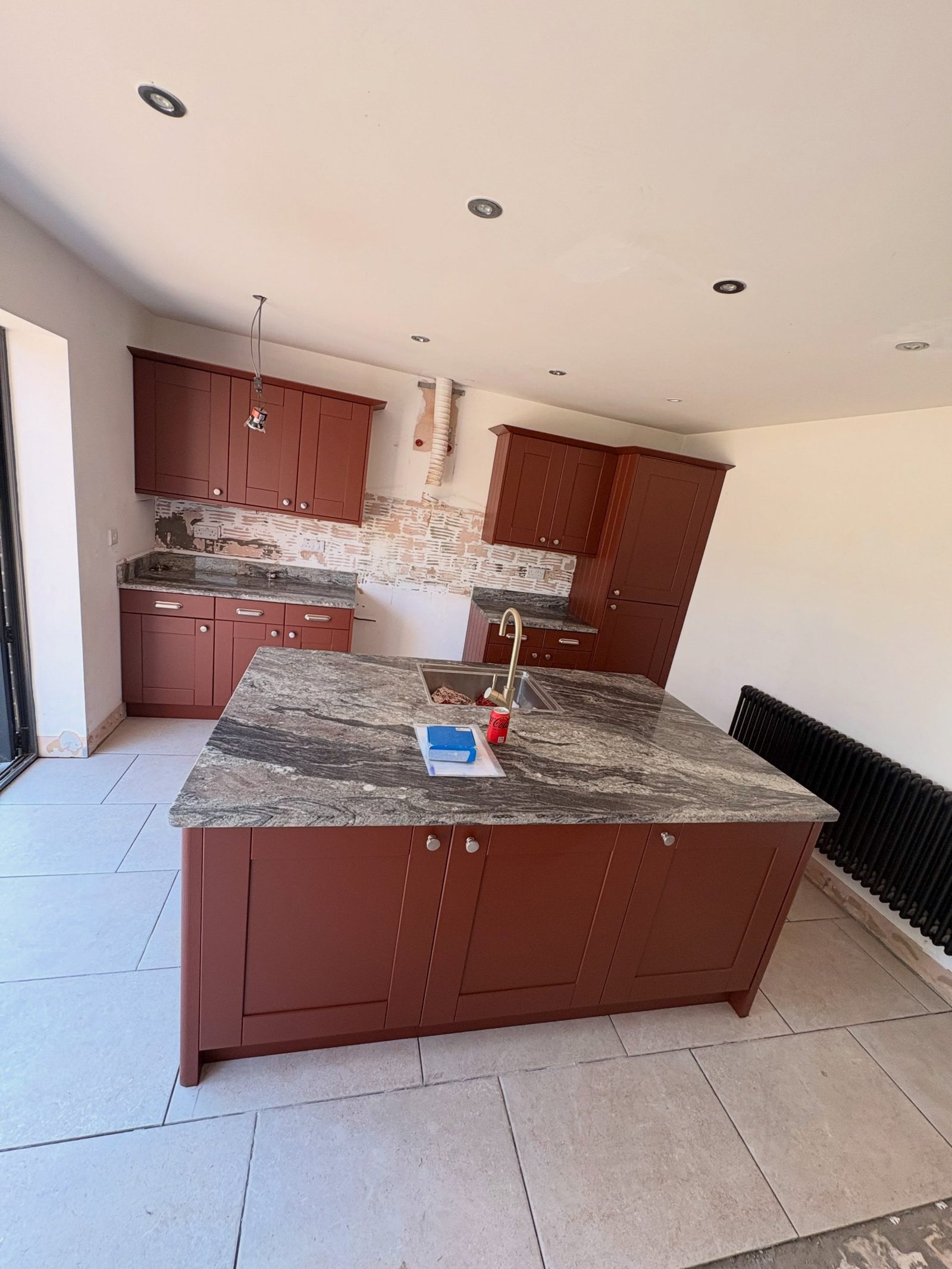
The brass tap she already had on the island now reads as a warm, intentional accent instead of a mismatched afterthought.
The chrome did not need swapping
Chrome cup-pulls and round knobs are often the first thing homeowners replace in a respray. She kept hers.
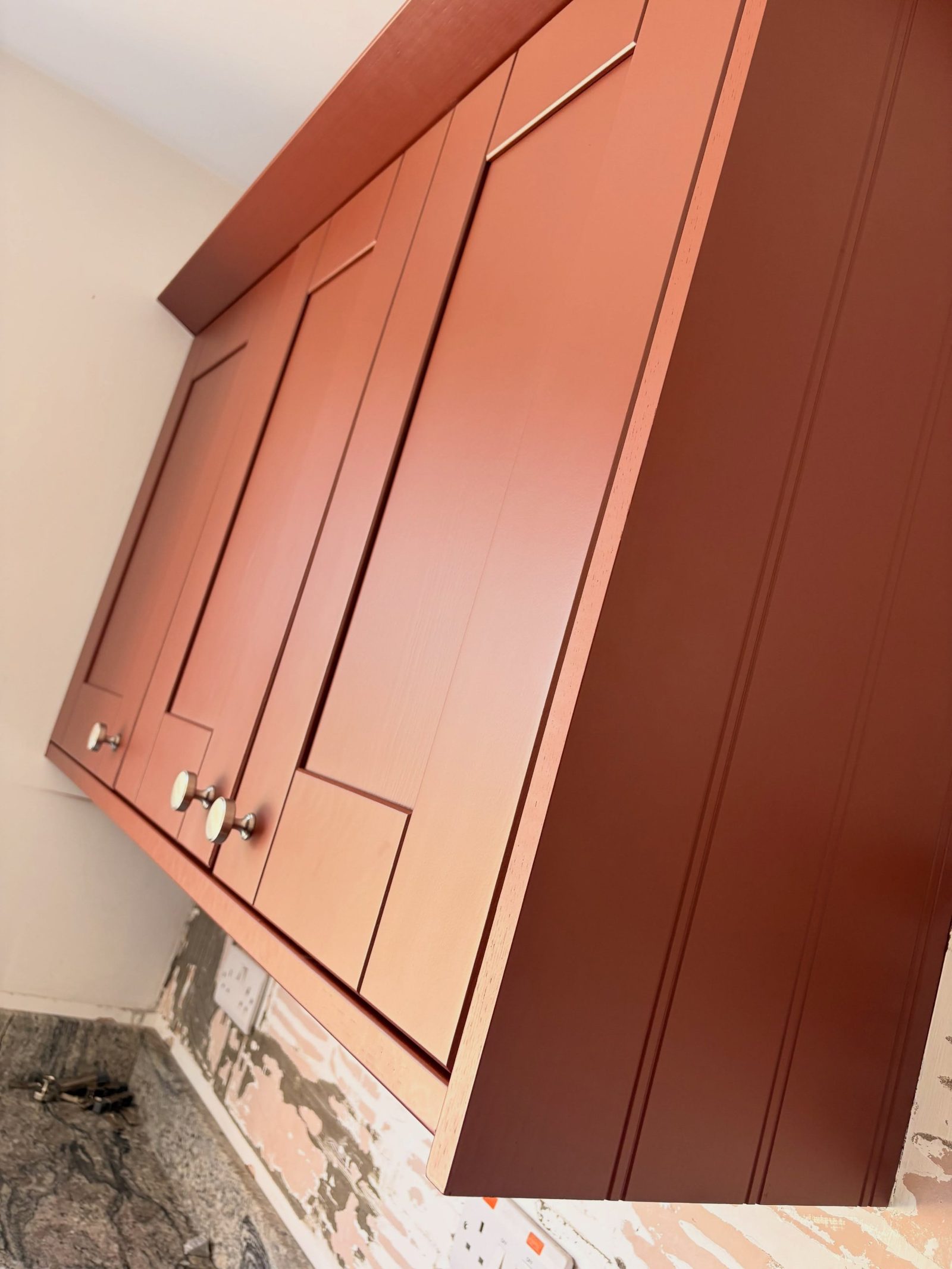
Against pale sage, chrome looked a little cheap. Against deep red, chrome reads as a cool-metal contrast, the same way designers pair chrome with oxblood or brass with navy.
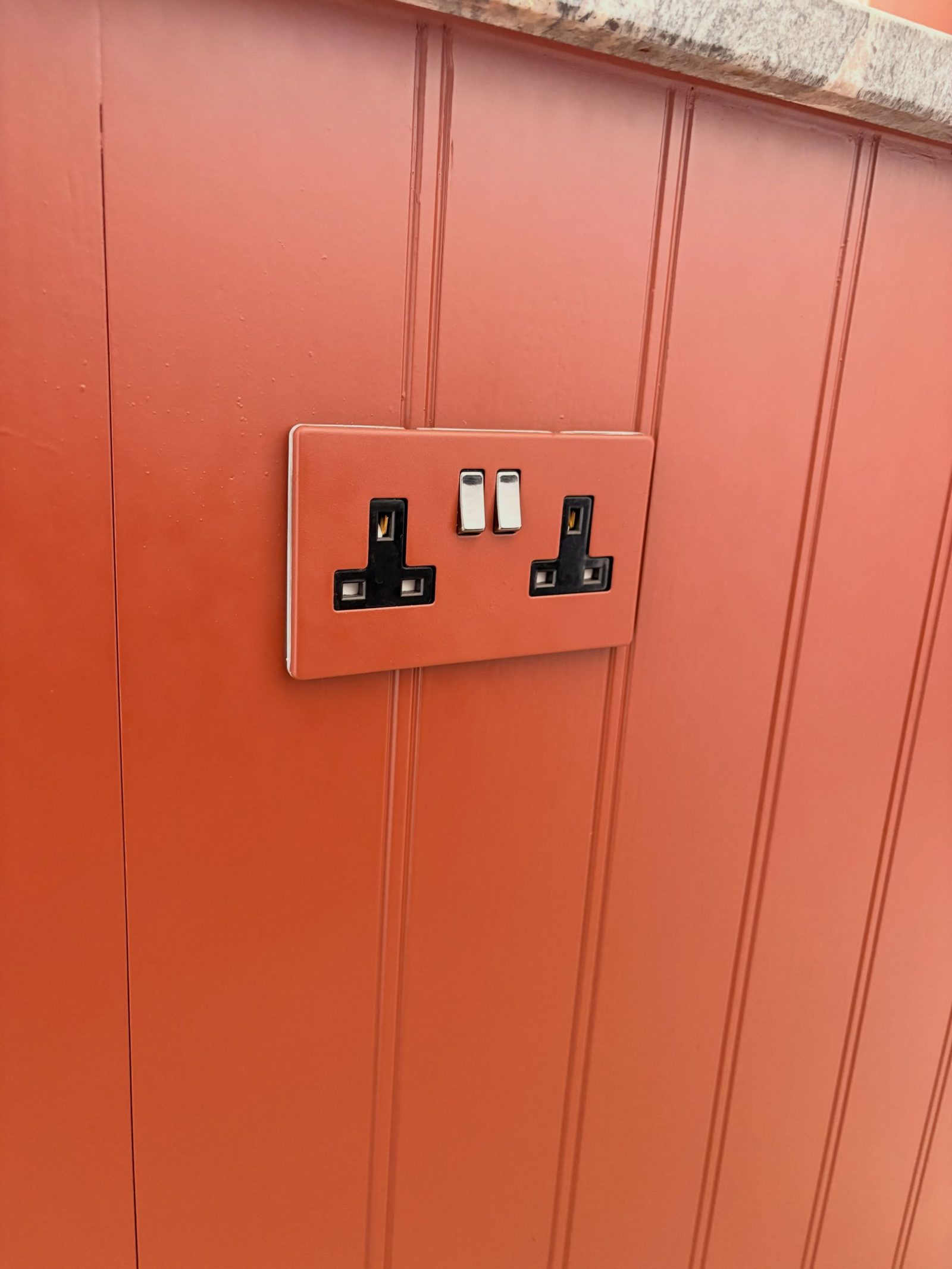
Even the plastic sockets got sprayed the same red so they disappear into the beadboard panel.
The tall units in the corner
The dated glass-front larders at the back of the kitchen were the biggest “feature” piece. Painted red, they stop being larder units and start reading as a built-in pantry wall.
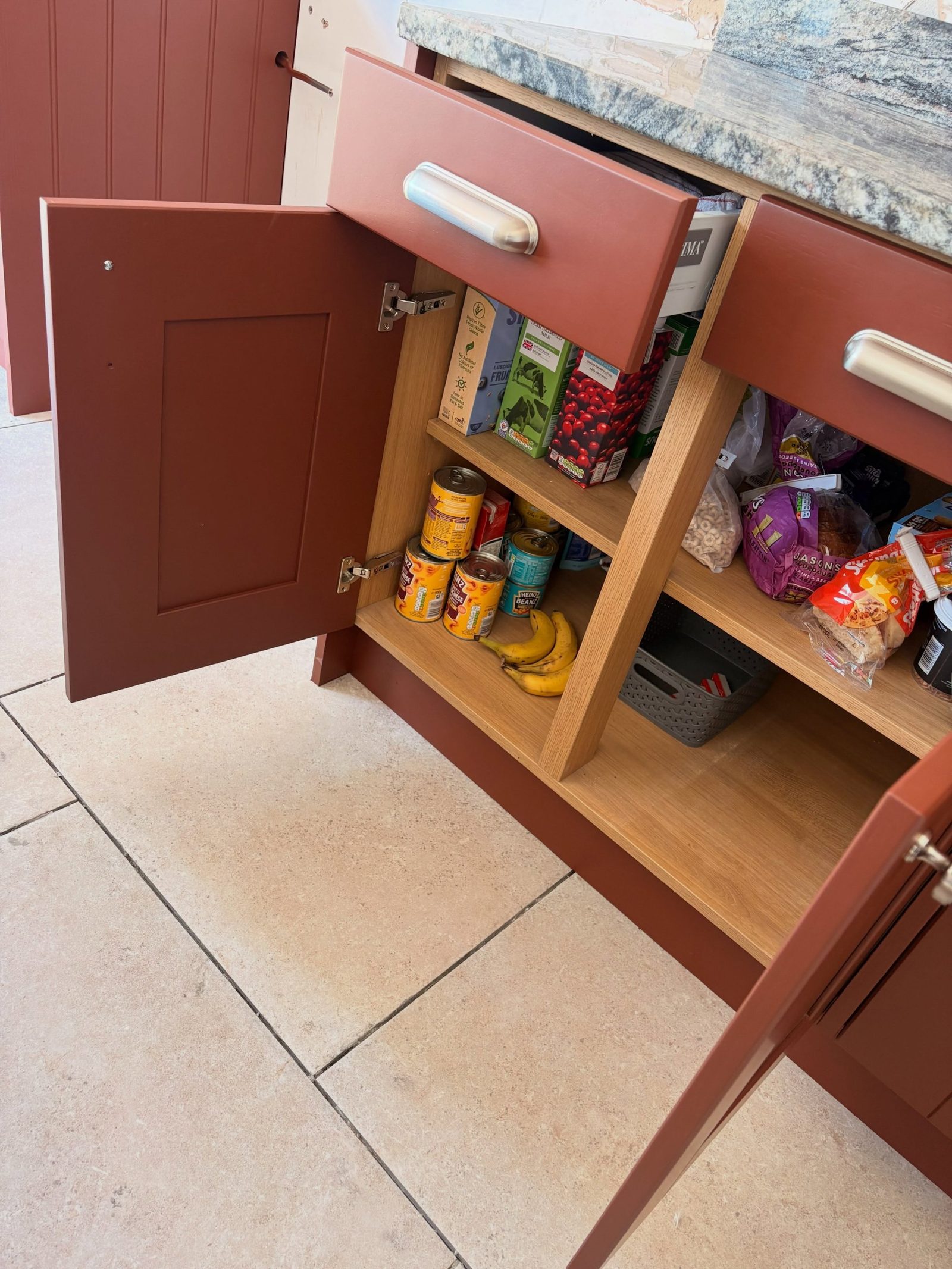
Inside, the warm oak shelves she already had look richer against the red doors than they did behind pale sage.
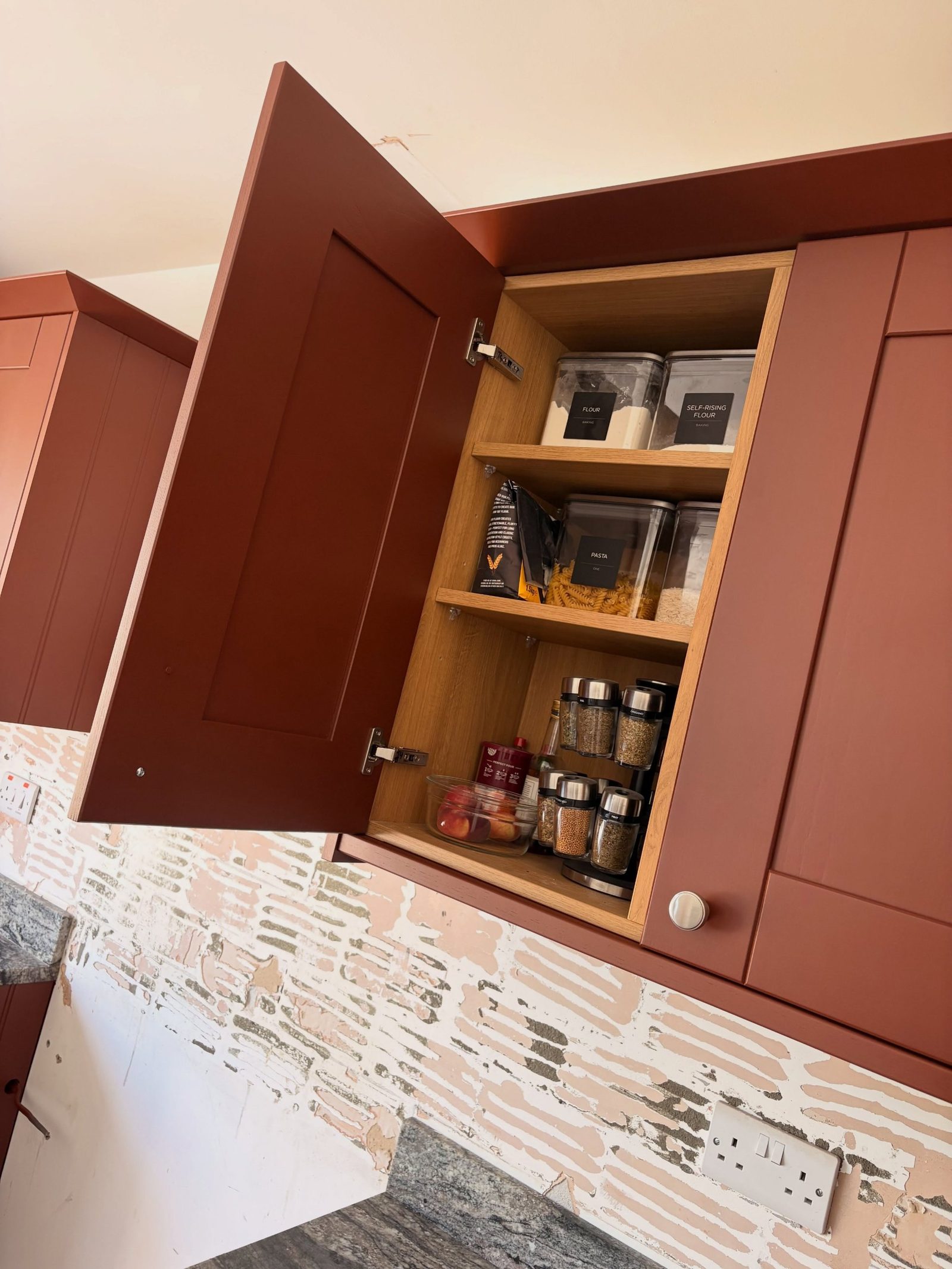
The second galley wall
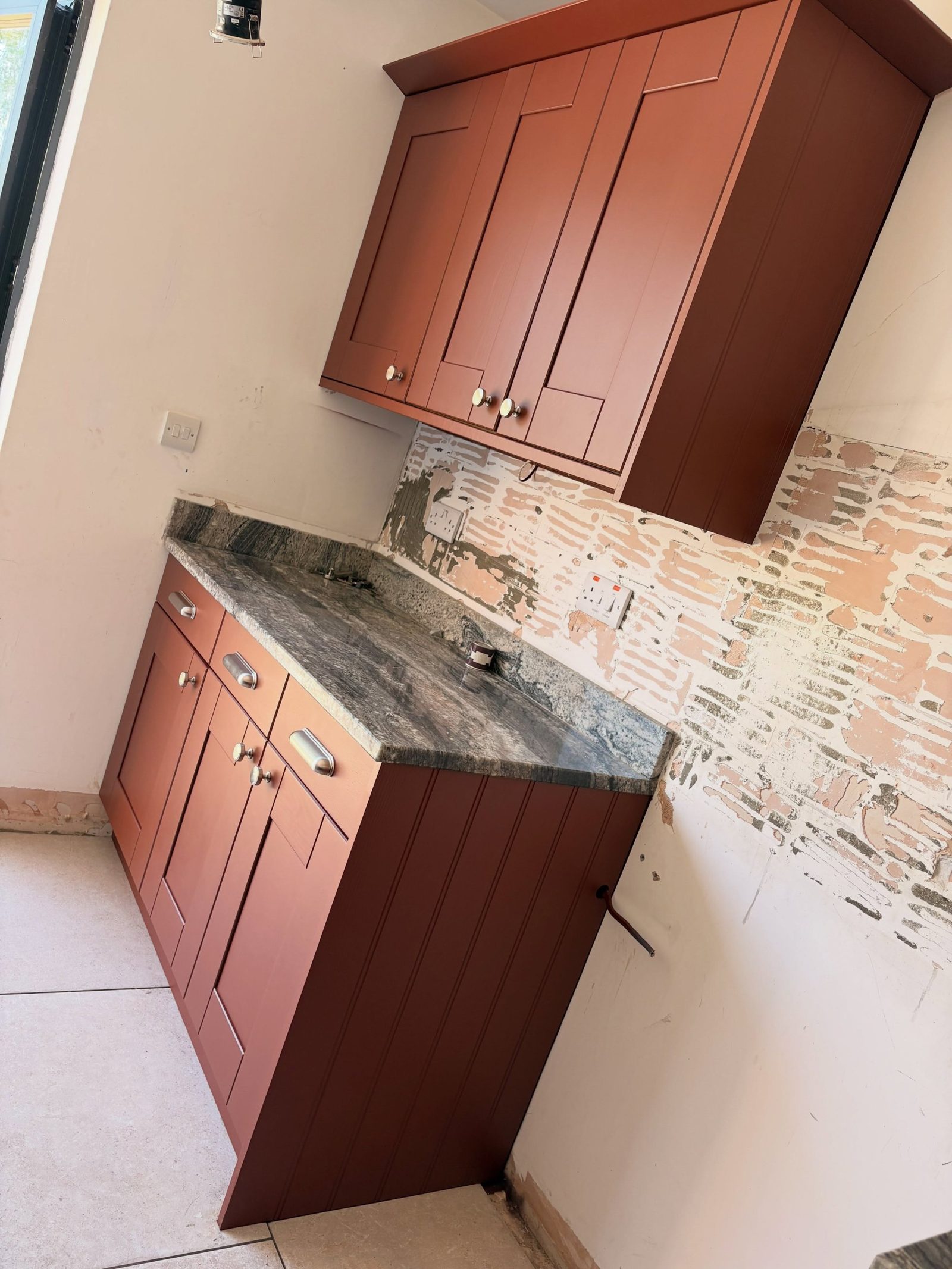
Along the second wall, the same treatment. Red cabinets, same granite, same chrome, same floor. Nothing about this kitchen matches the white-plus-oak look flooding Pinterest right now. That is the point.
What it cost her, roughly
Cabinet respray on a kitchen this size runs around one to three thousand pounds in the UK, depending on door count, prep, and finish. The alternative, a full replacement kitchen with new worktops, was somewhere between twenty and forty thousand.
She kept the stone she thought she hated. She kept the handles she was going to toss. She changed one thing, and the kitchen stopped looking old.
Credit for the work: @themobilespray on Instagram.



The granite finally works because now it isn t the ugliest thing in the room.
Hate the red looks like a barn. IMO it took a step back in design.