The coffee maker, the toaster, the air fryer: one by one, they’ve built a small skyline across your counter. Put them away, and you’re hauling heavy machines back out before breakfast. What if the counter itself continued behind a cabinet front, so the coffee maker never had to move?
The morning crowd on the counter
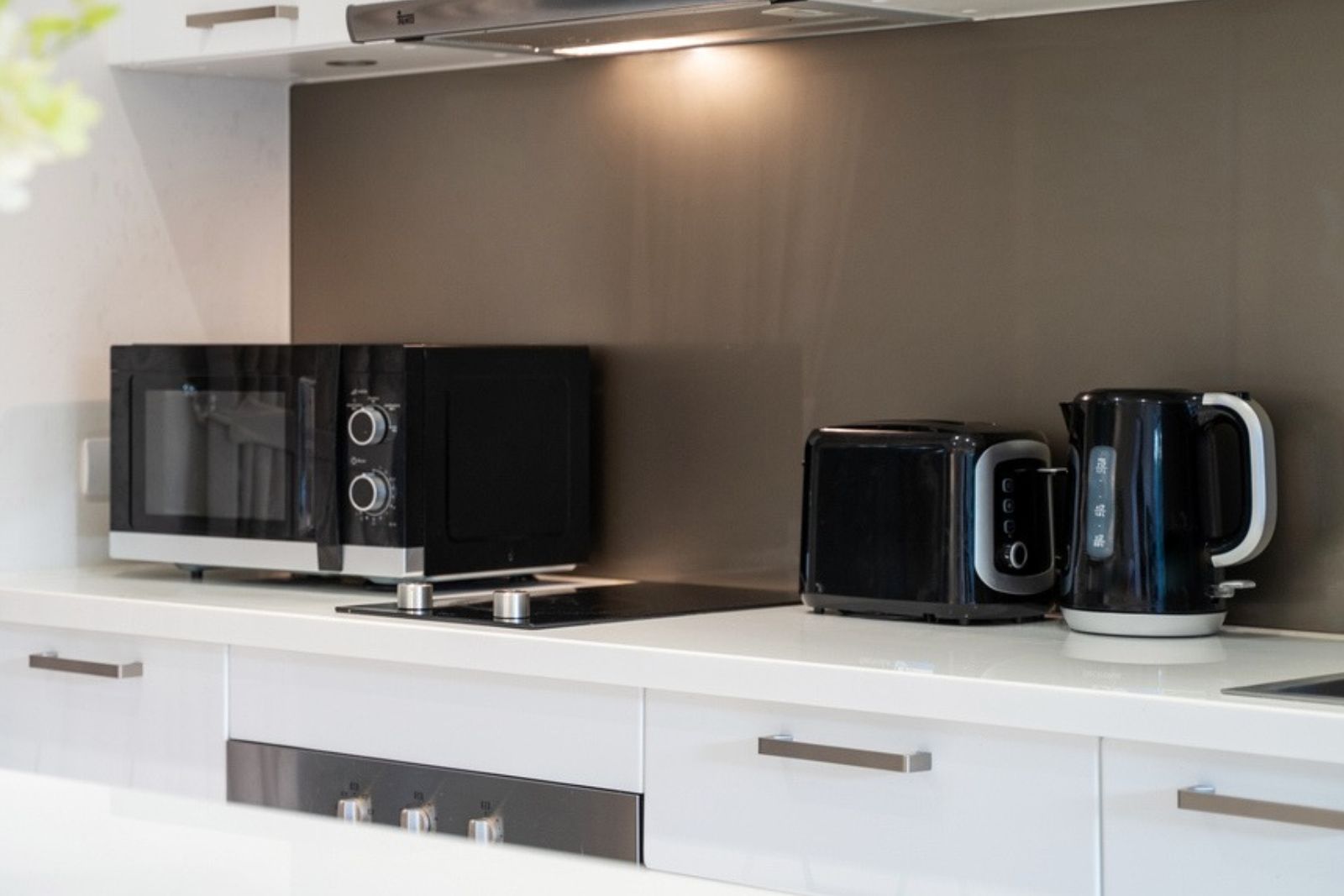
Picture the counter at breakfast time. Every machine has claimed its spot, and the space left for chopping or setting down a hot pan keeps shrinking. The answer designers are reaching for isn’t owning fewer gadgets. It’s giving each one its own work zone, out of sight.
Cabinetry is where designers now hide appliances and functional elements, an approach the National Kitchen & Bath Association links to 85% of designers. A closed cabinet traps the heat and steam a toaster or coffee maker releases. Coffee makers, toasters and mixers move into an appliance garage, a powered pantry station or a separate back kitchen. They stay ready to use without becoming permanent scenery.
A counter that keeps going behind the doors
An appliance garage is simply a stretch of countertop that continues behind cabinet fronts. Pocket doors slide into narrow side cavities, bifold doors fold away, and lift-up fronts rise above the opening.
The machine stays at working height, so nothing gets carried in and out. The coffee maker sits beside the mugs and beans. The mixer rests on a pull-out shelf rated for its weight. When breakfast ends, the doors close, and one broad cabinet face replaces the jumble of appliance shapes and cords.
Watch your counter for a week, then sort the machines by use: daily tools get counter-height storage, heavy weekly machines go on low pull-outs or lift shelves, and occasional pieces can live higher or farther away. Next, measure each appliance with every lid, basket and tank open. For a wide bay, choose pocket or bifold doors; for a narrow one, choose a lift-up front. Finally, reserve an open landing spot beside the station so the garage doesn’t eat all your prep space.
When the pantry takes over breakfast
If the floor plan allows, the station can leave the main kitchen altogether. A butler’s pantry can give small appliances their own place. Add a counter, task lighting, drawers and outlets, and food storage becomes a working room. The breakfast mess and baking gear stay nearby, while the island remains open for cooking and conversation.
One tall pantry cabinet can do the job without a full room, holding a worktop-height shelf with mugs above and ingredients below. The best arrangement simply follows your routine: coffee near the cups, the blender near dry goods, the mixer near flour and pans.
When the cabinet door has to stay open
Never run a toaster, air fryer, oven or steaming coffee maker behind closed doors. Open them, follow the manual’s clearance and ventilation rules, keep paper and towels away, and let the machine cool before closing it in. It’s safest to unplug appliances when idle and keep cords away from heat and sinks.