You fill your cat’s bowl, step around a stray toy, and wonder what your pet makes of life under your roof. Veterinarian Carlos Gutiérrez says the moments worth noticing may come when you’re busy with the dishes and your cat isn’t asking you for anything.
In short
- A cat that naps in different places around your home feels safe there.
- A slow blink tells you your cat trusts you.
- Kneading and rubbing against you show comfort and connection.
- Confident movement and a relaxed belly-up pose are signs of trust.
Your cat makes the whole house its bed
View in gallery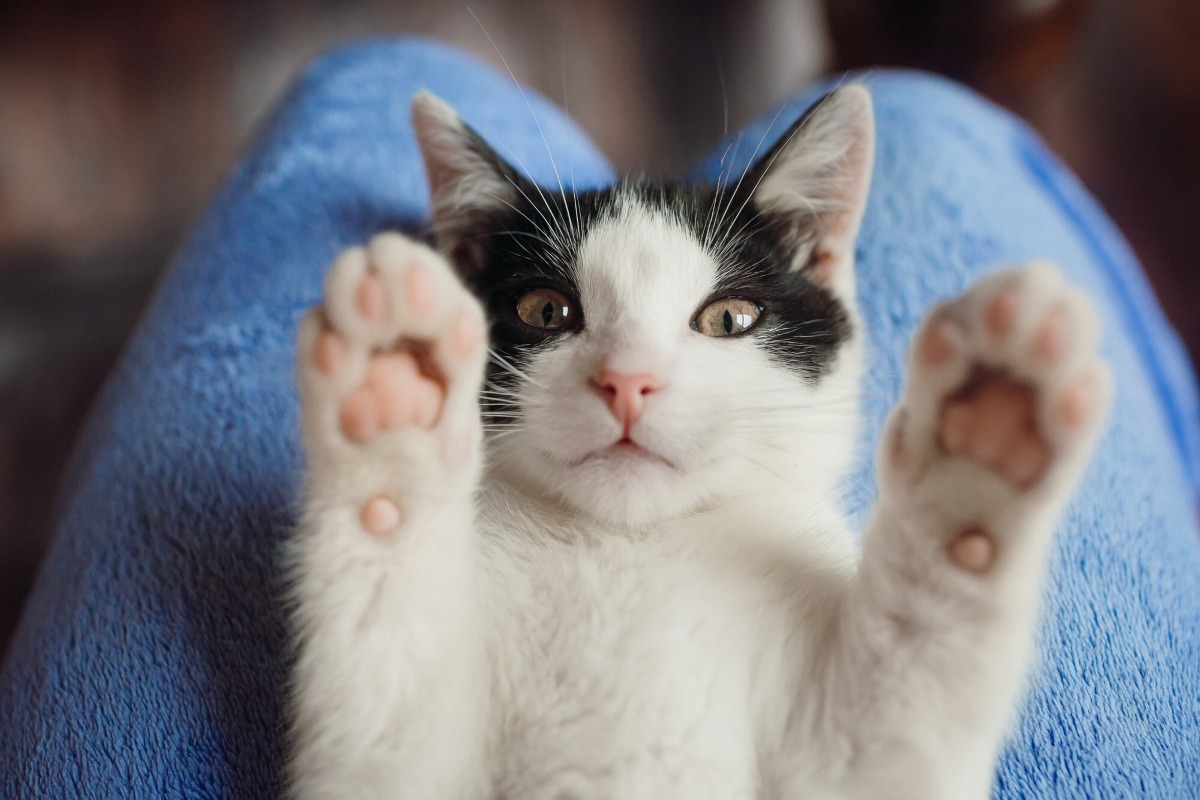
You find your cat asleep on a kitchen chair. Later, it has claimed a spot on the sofa. Veterinarian Carlos Gutiérrez says a cat that naps on surfaces throughout the house knows it is among people it can trust.
That quiet habit is easy to overlook. Cats spend roughly 16 hours a day sleeping, so a nap alone might not catch your attention. Notice the places your cat chooses. When it settles wherever it pleases, it is treating your home as a place to rest.
Gutiérrez describes these ordinary behaviors as signs that a cat “has found in you and in your home a safe environment.” You see that trust in the spaces it uses every day, from the room where you sit together to the spot it picks when it wants to sleep.
Little gestures bring you closer
From the sofa, your cat looks toward you and slowly closes its eyes. Gutiérrez identifies that slow blink as a sign of trust. It is a small movement, the sort you could miss while folding laundry, that says something about how comfortable your cat feels with you.
Then come the paws. When your cat presses its front paws one after the other into a cushion or your lap, it is kneading. The motion begins in kittenhood, when kittens use it while nursing. In an adult cat, kneading is associated with well-being and trust.
Gutiérrez also points to rubbing against you and grooming as signs of trust and social connection. A cat that settles on your belly and starts kneading is showing comfort with you. These are everyday ways your cat draws close and makes you part of its familiar company.
Confidence shows up in the way it moves
Watch your cat cross the living room. Gutiérrez says walking or running confidently through the house shows joy and a sense of safety. Your cat moves through the space as though it belongs there, because it knows the rooms and the people in them.
A cat rolling onto its back offers another glimpse of trust. Showing its belly puts a vulnerable part of its body on display. When it stretches out that way in your presence, it feels safe enough to relax.
Put those moments together: a nap wherever it chooses, an easy walk across the room, a slow blink from the sofa. None asks for much attention. That is why they can mean so much when you finally notice them.
The limit
Look at your own cat’s habits rather than expecting every sign at once. Gutiérrez notes that even direct eye contact depends on a cat’s socialization and trust in the person looking at it. A cat that rarely kneads or rolls onto its back is not, by that absence alone, telling you it feels unsafe.