There’s a room in your house you don’t really think about. The tiny one with just a toilet, maybe a small sink, nothing else. Builder white walls. A spare roll of paper on the tank. Years go by and you never really look at it.
Then somebody on Instagram turns theirs into the best spot in the whole floor plan, and you realize you’ve been ignoring the easiest win in your whole house.
She didn’t start from scratch
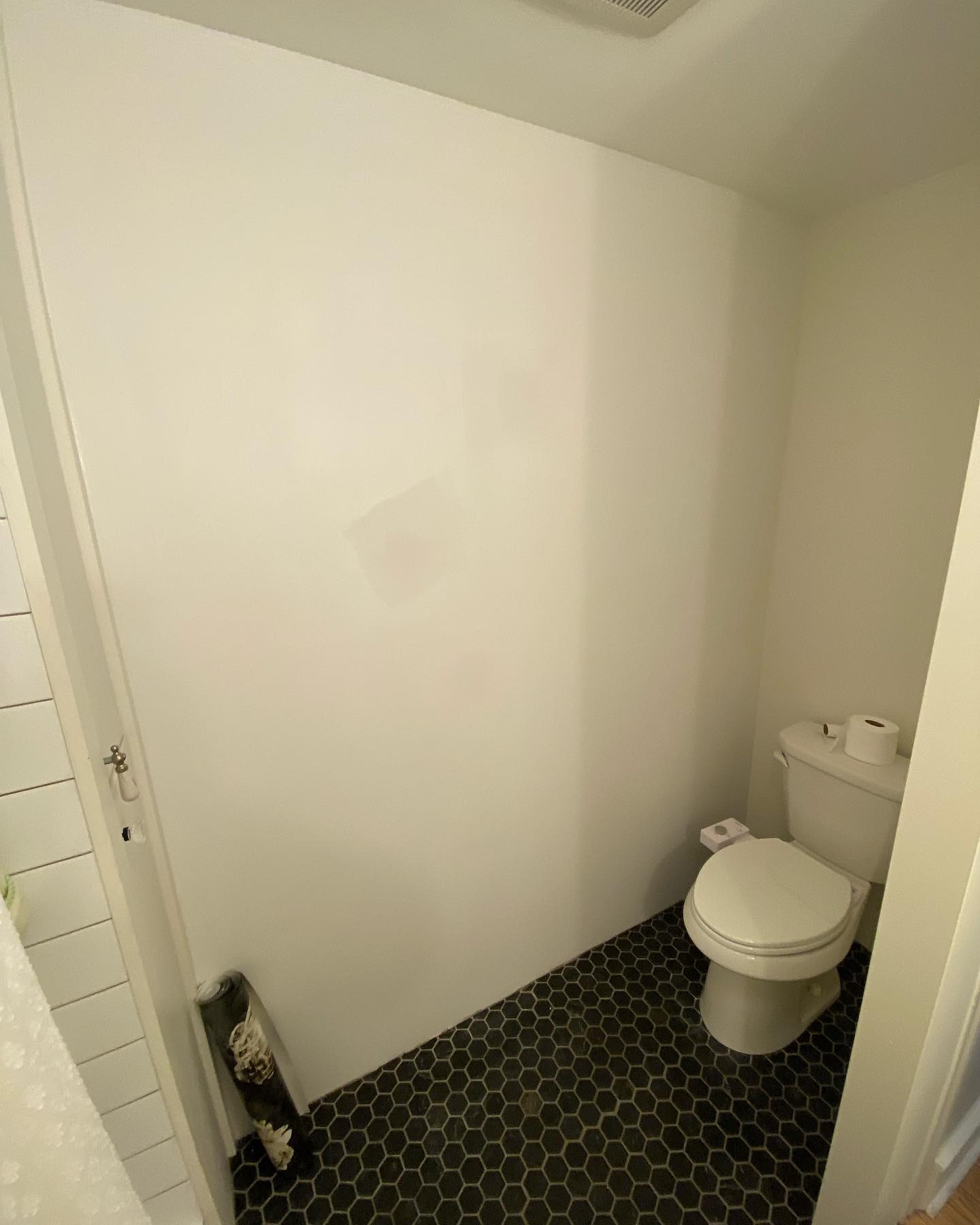
Look at the before shot and the good stuff is already there. Black hexagon tile on the floor. Crisp white shiplap running up the side wall. A clean white toilet. Nothing in that room actually needed to be ripped out.
The problem was the back wall. Big, blank, builder-white, totally dead. It just sat there while the floor and the shiplap carried the room. You’ve got a wall like this somewhere in your own place. You know the one. It just stares at you.
The one wall that was killing the room
Here’s what’s wild. This whole makeover is a one-wall job. The side walls stayed. The ceiling stayed. The trim stayed. She painted nothing, ripped out nothing, called no plumber. She covered the back wall and only the back wall, and the room changed completely.
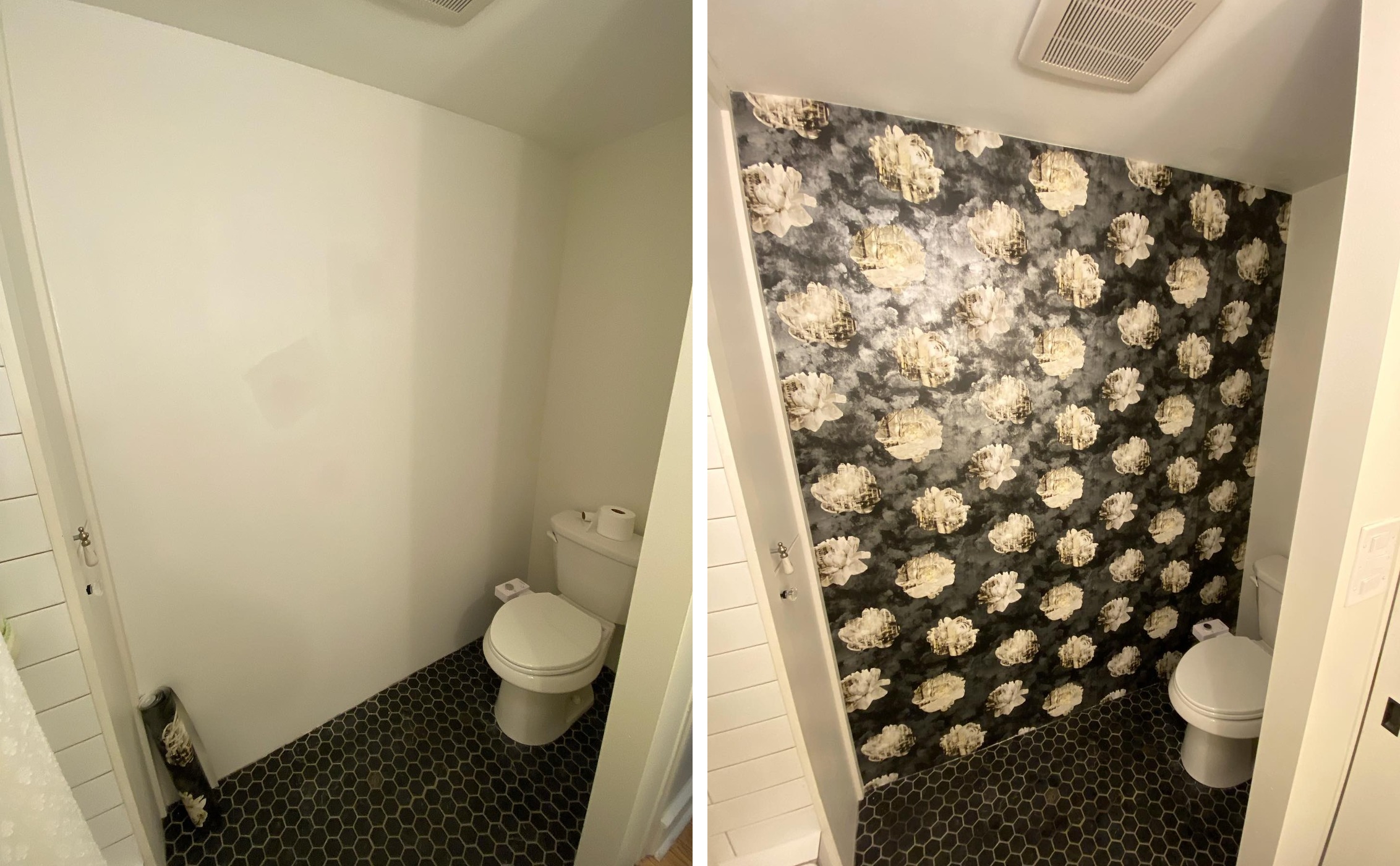
Set the two shots side by side and the “wait, that’s the same room?” reaction is instant. Same hex tile. Same toilet. Same shiplap. Just one wall swapped out. And suddenly a room nobody noticed is a room you want to show people.
She broke the small-space rule
Every piece of small-room advice you’ve ever read says the same thing. Light colors. Bright paint. Keep it airy so the walls feel further apart.
She went the other way, hard. The back wall is almost black. Dark, moody, cloudy, scattered with big soft cream peony shapes. In a windowless half bath the size of a closet, on paper, this should have felt like climbing into a shoebox.
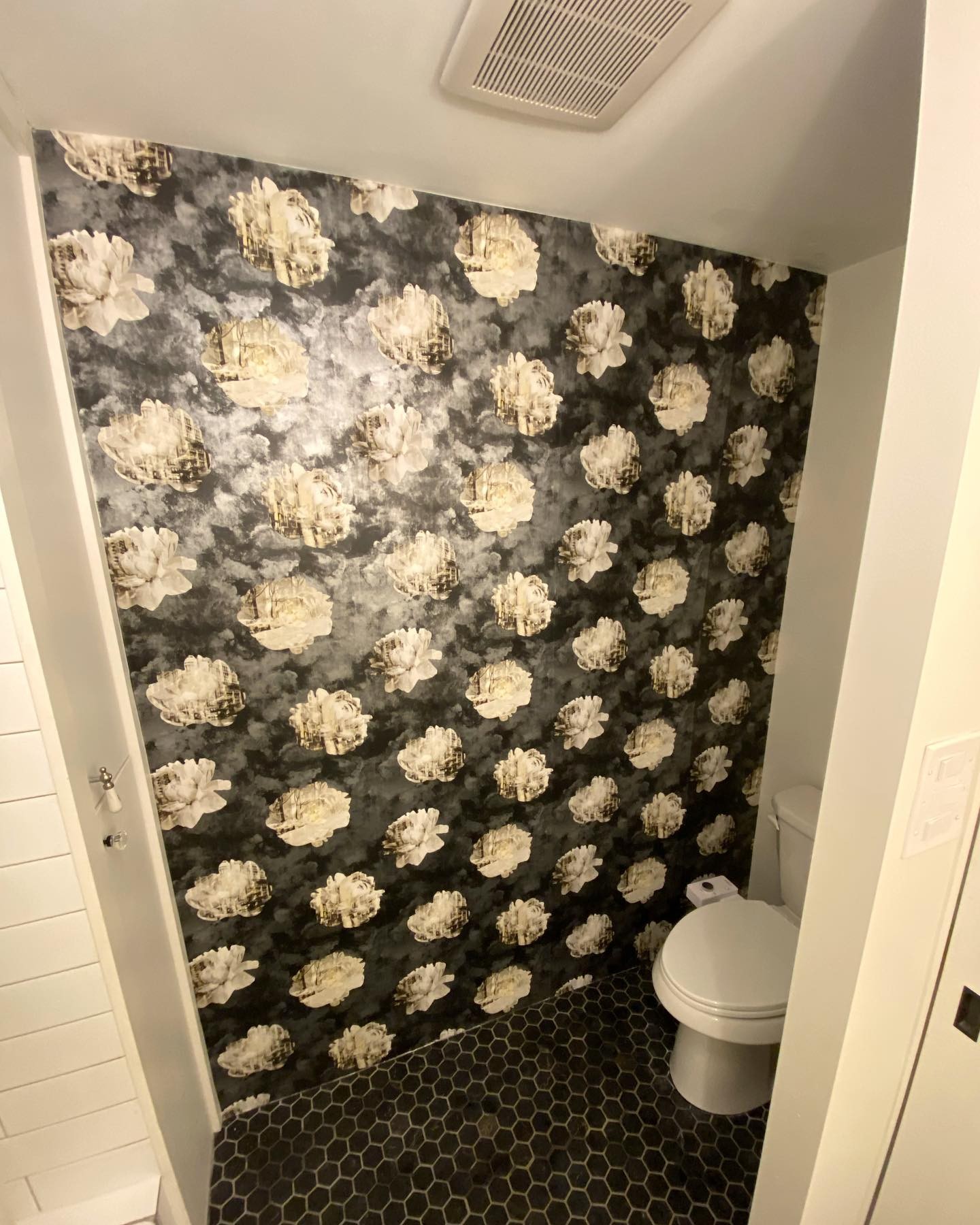
It doesn’t. It feels deliberate. Dark walls in a small space push the edges back at night instead of pressing in on you, because your eye can’t find a clean boundary to lock onto. The “small room has to be white” rule gets repeated for so long nobody questions it. Half the best-looking tiny bathrooms online are proof it’s just wrong.
A dark wall earns its keep another way too. It hides scuffs, splashes, the outlet cover, the toilet paper holder screws, all the little ugly stuff a white wall shows off like a receipt.
The flowers aren’t really flowers
From the doorway, this reads as a normal pretty black-and-cream floral. You clock it, you keep moving.
Then you lean in.
Each “flower” is actually a tiny sepia cityscape tucked inside a petal outline. Old walk-up buildings. Bare winter trees. Little street scenes with people, cars, umbrellas. The pattern pays you back for stepping closer, which is the exact opposite of how most wallpaper behaves. Most wallpaper looks best across the room and falls apart up close. This one is built the other way around on purpose.
That’s why a guest who ducks in there comes back out five minutes later asking where you got it. There’s something to find.
It also plays nicely with what she already had. The black hex floor gives the dark wall somewhere to land, so the color weight at the bottom and on the back wall match up. If her floor had been honey oak or beige porcelain, the dark wall would float and feel disconnected. That tile-to-wall handshake is the quiet reason this works, and the reason a lot of copycat attempts don’t.
Why only one wall, not four
This is the move that makes the whole thing doable, and it’s the part most people get wrong.
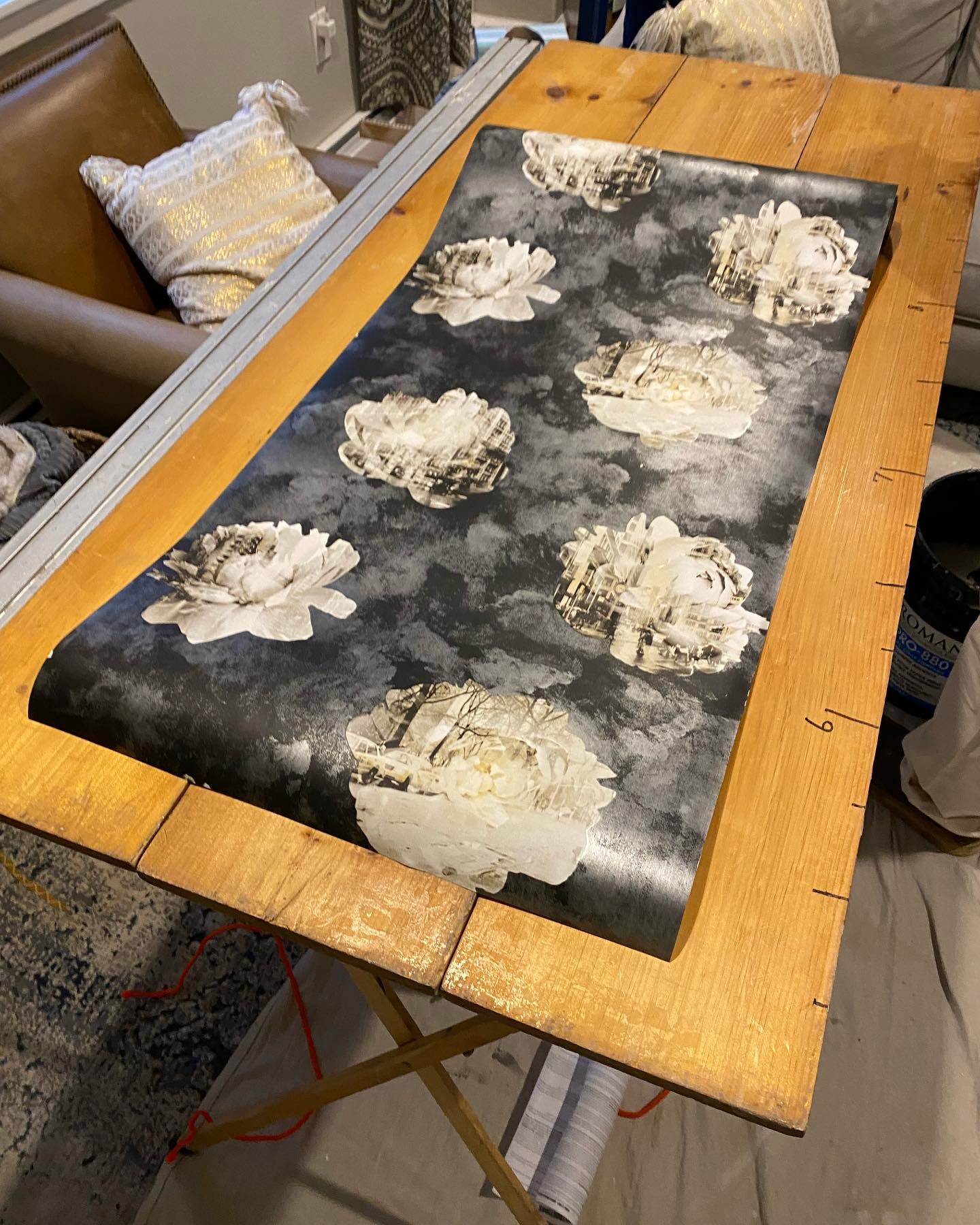
Wrap all four walls of a room this small and you really do get a cave. One wall gives you all the drama with none of the weight. The side walls stay bright, so your eye has somewhere to rest before it comes back to the main event.
And the logistics of a one-wall job are hard to beat. One standard roll of a paper like this runs about $60 to $120 (around €55 to €110). A pro installer finishes a wall this size in a couple of hours. A patient DIYer handles it over a Saturday with a smoothing tool, a sharp blade, and a level. If the next buyer hates it, one wall peels off a lot faster than four.
What to copy, and what to skip
If you’ve got a tiny bath sitting white and unloved, you’re holding the easiest upgrade in the whole house. Pick the wall you face when the door swings open. That’s the one doing the heavy lifting. Leave the other three alone.
Go for a pattern with a soft, washy ground instead of a sharp geometric grid, since softer grounds hide seams and uneven walls that every older bathroom has. Keep the floor and the fixtures you already have if they’re nice enough to build around. If your floor is light, pick a lighter paper, otherwise the wall will feel like it’s floating in midair.
One roll. One wall. One afternoon.
The smallest room in the house is the cheapest one to turn into the best one. Almost nobody tries. The ones who do never regret it.