Walk into this kitchen a month ago and you would have sworn it needed a full rip-out. New layout, new worktops, maybe even a new floor. The quote would have landed somewhere north of twenty grand, and the owners probably would have winced and put it off another year.
They didn’t do any of that. They kept the granite. They kept the tile. They kept the floor, every cabinet box, every door, every drawer front, every handle, every appliance. They changed exactly one thing, and the kitchen now reads like a different house.
Here is where it started.
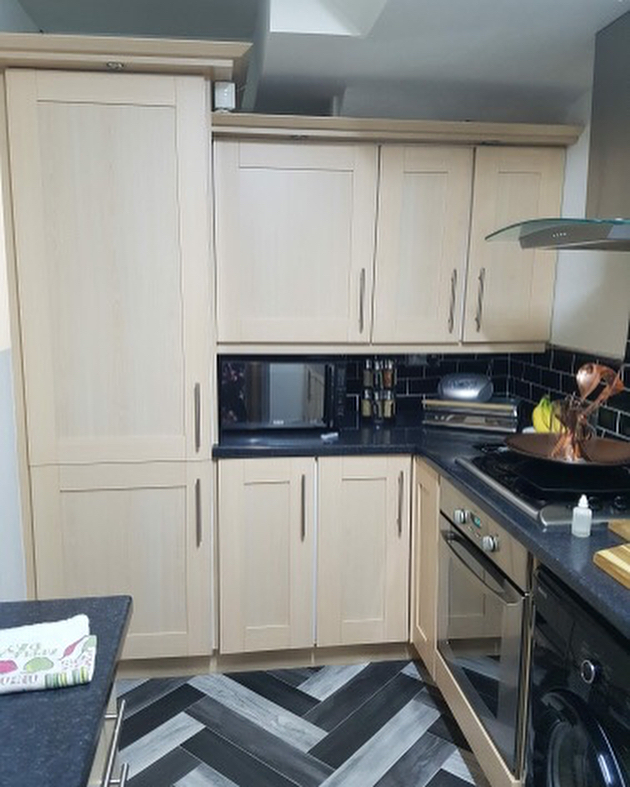
A kitchen fighting itself
Everything in that photo is actually good. Heavy black granite. Glossy black subway tile with clean white grout. A grey herringbone floor that would cost a small fortune to lay today. Built-in oven, gas hob, modern glass chimney, a tall larder, real storage. On paper, most people would be happy to inherit this room.
So why does it look fifteen years old?
Because every surface here is cool black and grey, and the cabinets are warm honey-wood. The eye reads that as a mismatch before you can put words to it. The cabinets fight the tile, the tile fights the floor, and the whole room pulls in two directions. Nothing in it is wrong, but nothing agrees either.
That is the single biggest reason older kitchens feel tired. Not the layout. Not the appliances. The cabinet color.
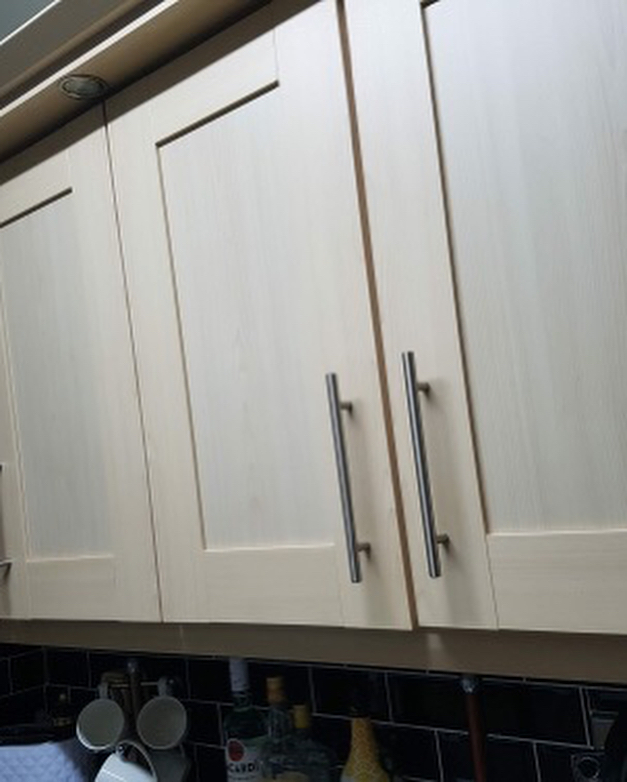
That grain was everywhere in UK kitchens between the late 1990s and the early 2010s. Whole housing estates got it. Today it is the number one signal that a kitchen hasn’t been touched in a decade, even when the cabinetry underneath is still solid.
Why replacing was the wrong instinct
A new kitchen in the UK right now runs anywhere from £8,000 for a budget rebuild to £25,000-plus for soft-close everything. Add a week of microwave meals. Add skip hire. Add the quiet guilt of binning cabinet carcasses that are perfectly fine, just because the doors look old.
The owners were headed down that road. Then they called a spray team instead.
What a respray actually looks like
This is not a Saturday paint job. It is closer to automotive bodywork, scaled to interior joinery.
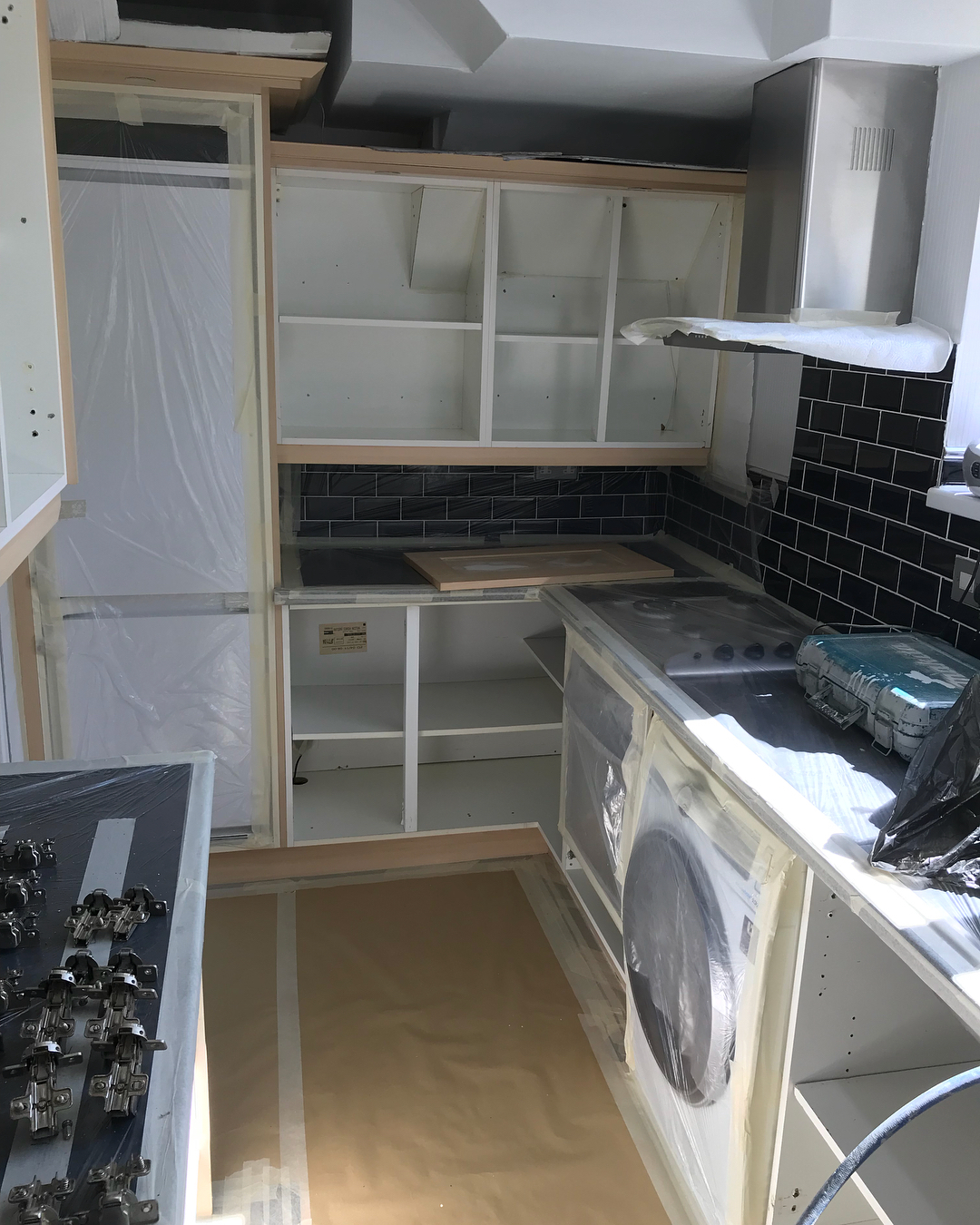
Every door comes off. Every drawer front comes off. Every hinge gets unscrewed and laid out in order so it goes back exactly where it belongs. The carcasses stay in place but get wrapped. The tile gets taped at every grout line that meets a cabinet.
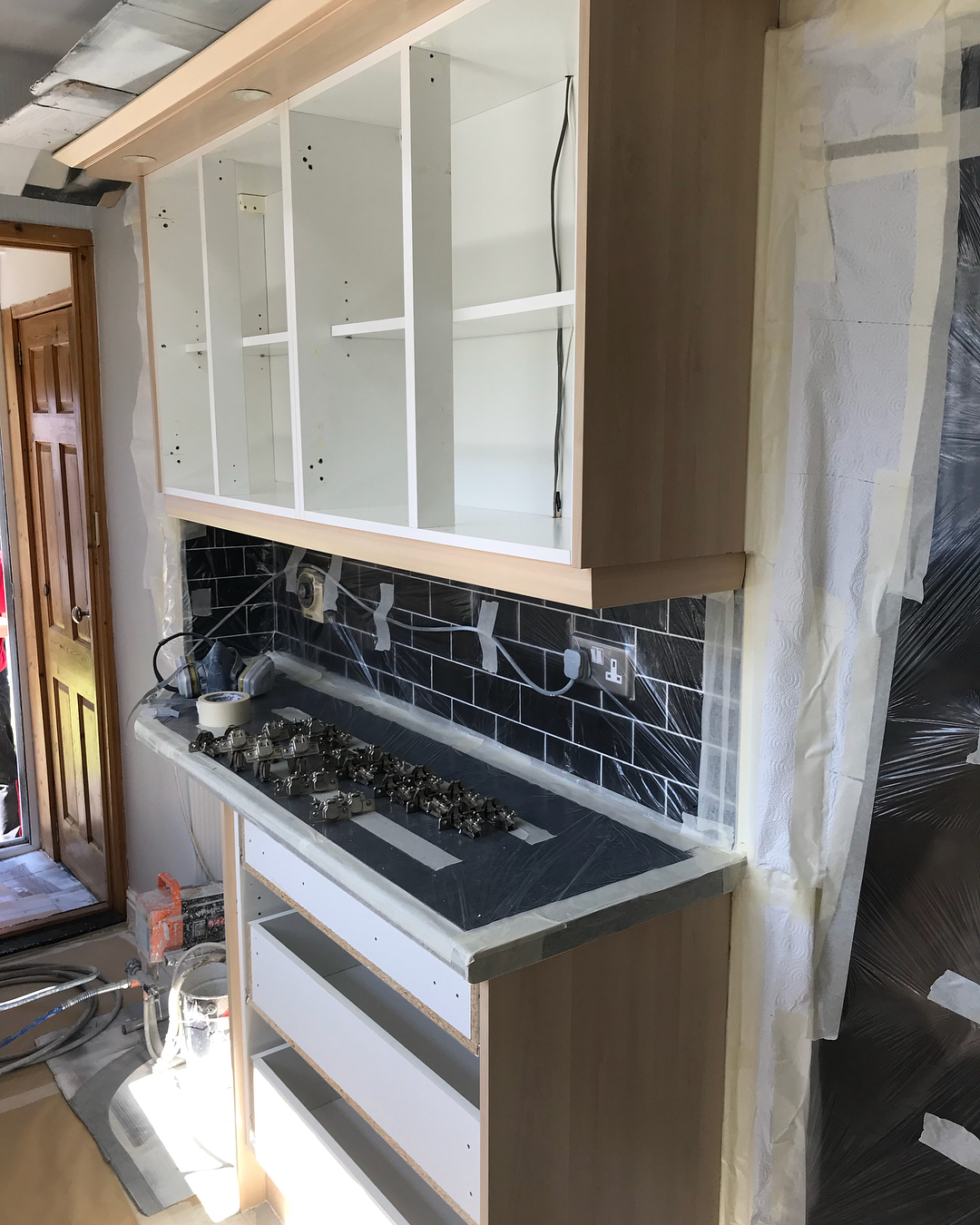
That row of hinges is what careful work looks like. Nothing gets lost. Nothing goes back in the wrong place. This kind of discipline before any lacquer leaves the gun is the reason a respray can rival a factory finish.
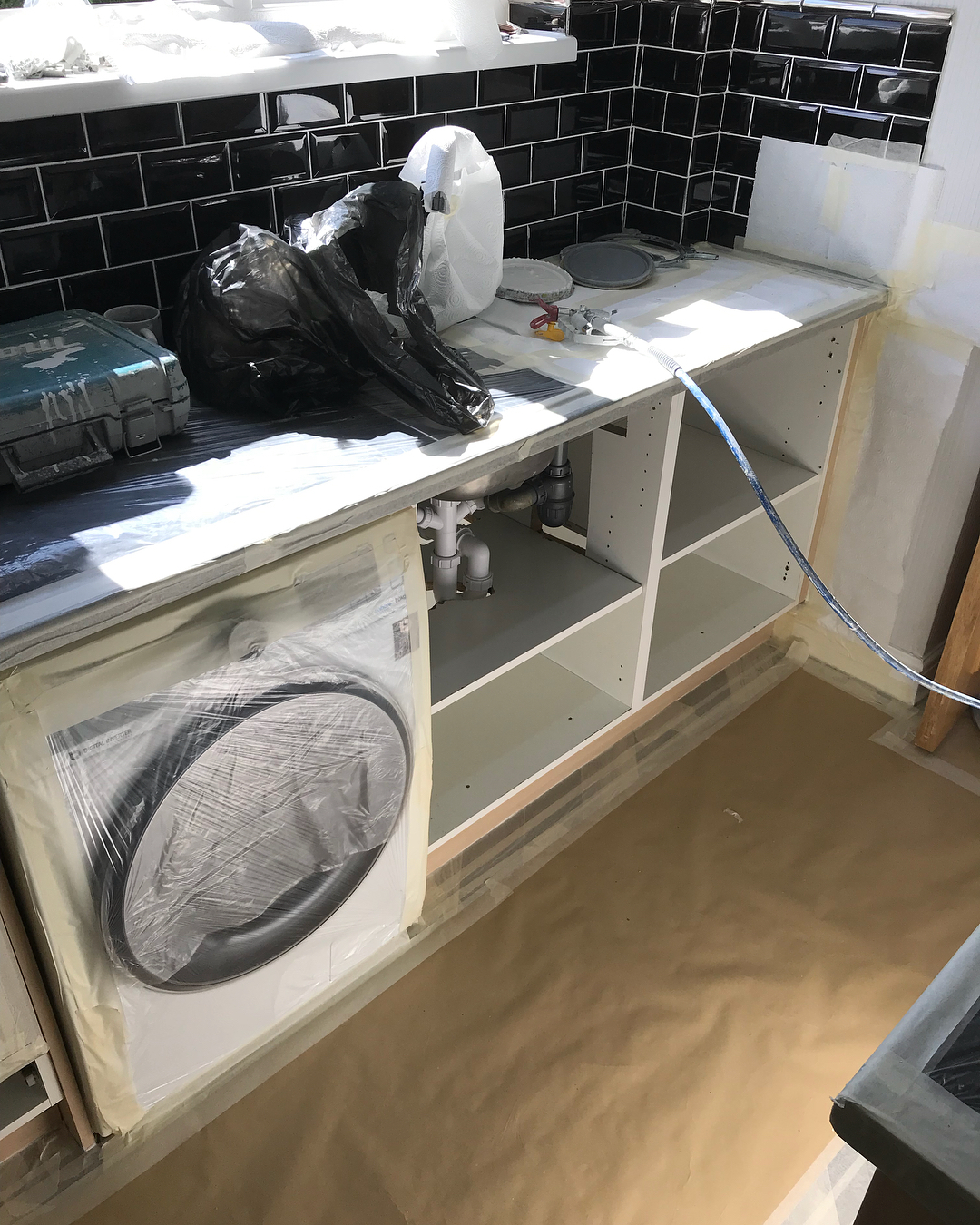
That blue hose is an airless sprayer. This is the whole reason a respray looks like a replacement and not a paint job. No brush marks, no roller stipple, no drips. The lacquer lays down as flat as the day a factory shipped the cabinet. For the finish, pros use two-pack satin that cures hard enough to shrug off cleaning spray and years of door slams.
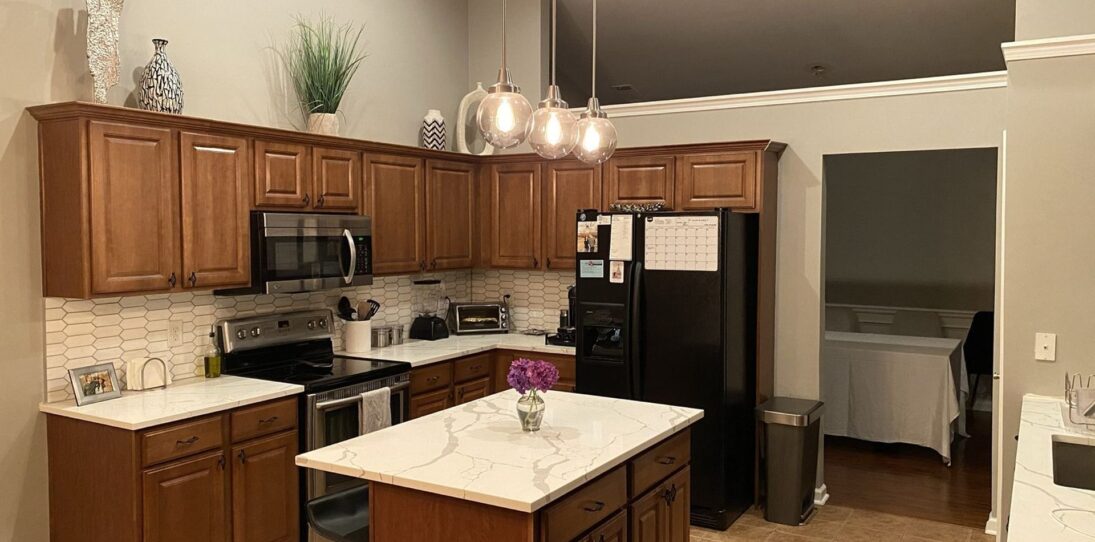

The reveal
Here is the same corner once the doors are back on.
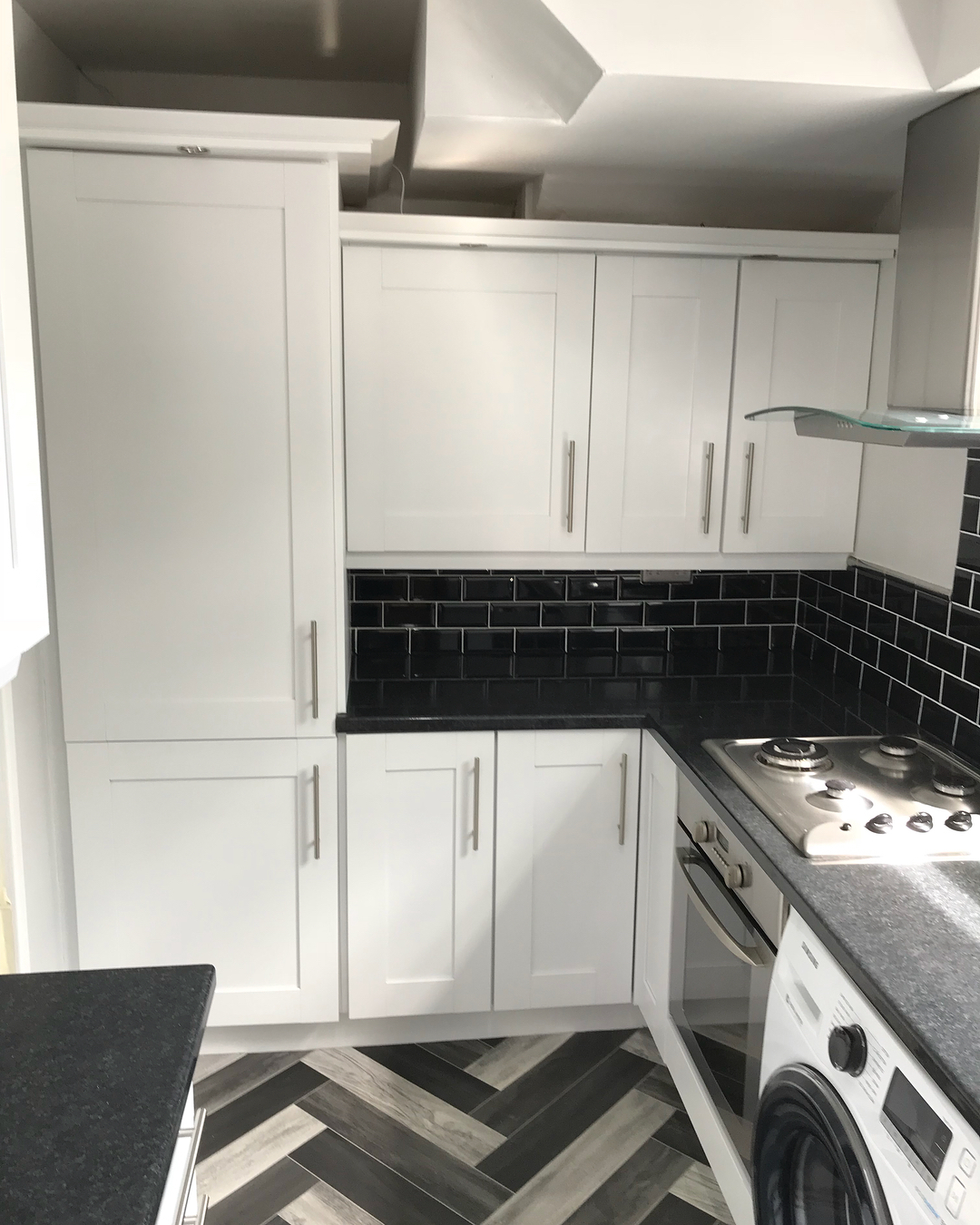
Nothing in that room moved. Nothing was replaced. But look what the eye does now. The black tile stops fighting and starts framing. The herringbone floor stops looking busy and starts looking designed. The brushed steel handles finally read like hardware. The glass extractor becomes a feature. The whole room reorganizes around one color change.
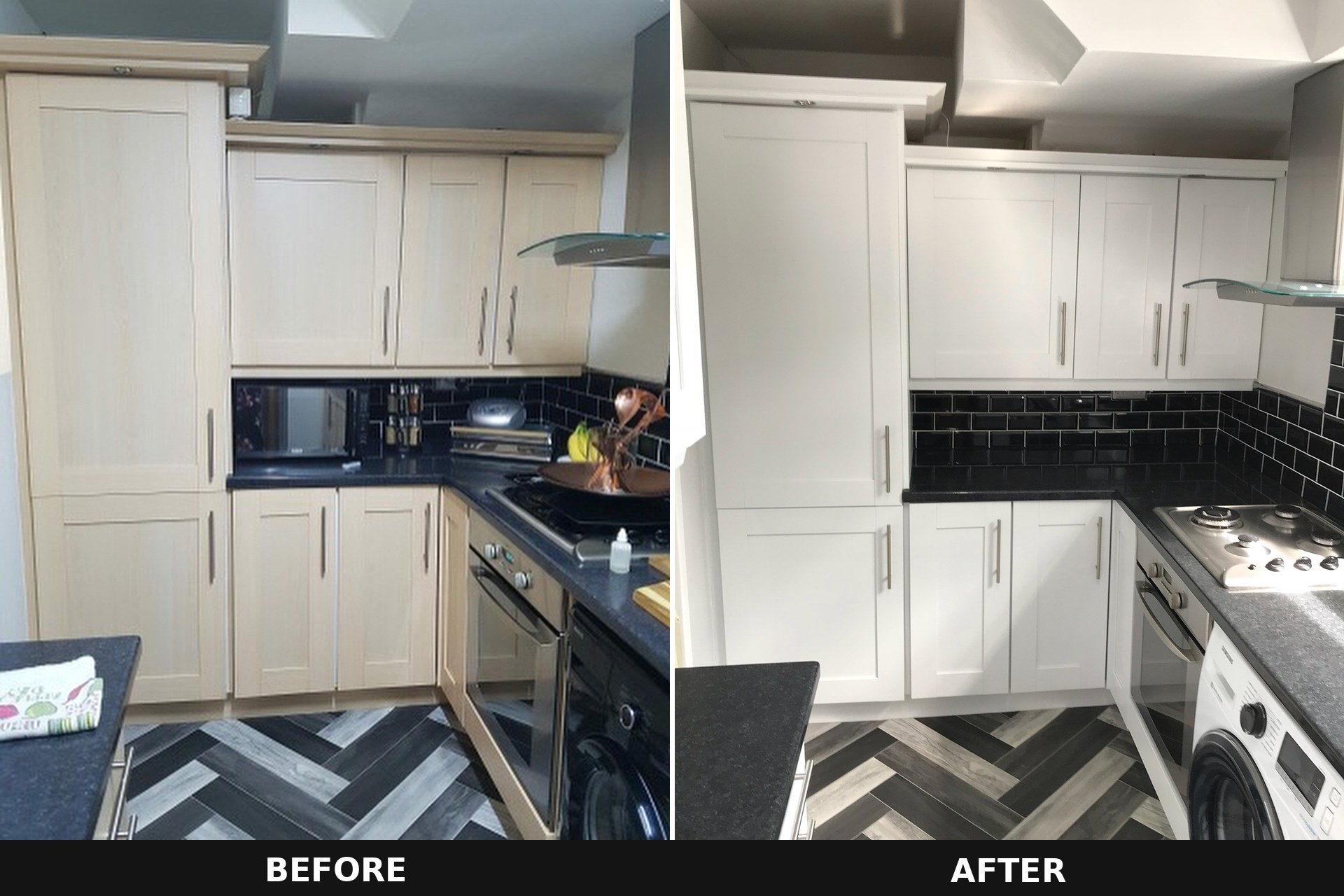
One variable. That is the whole trick.
The rest of the room
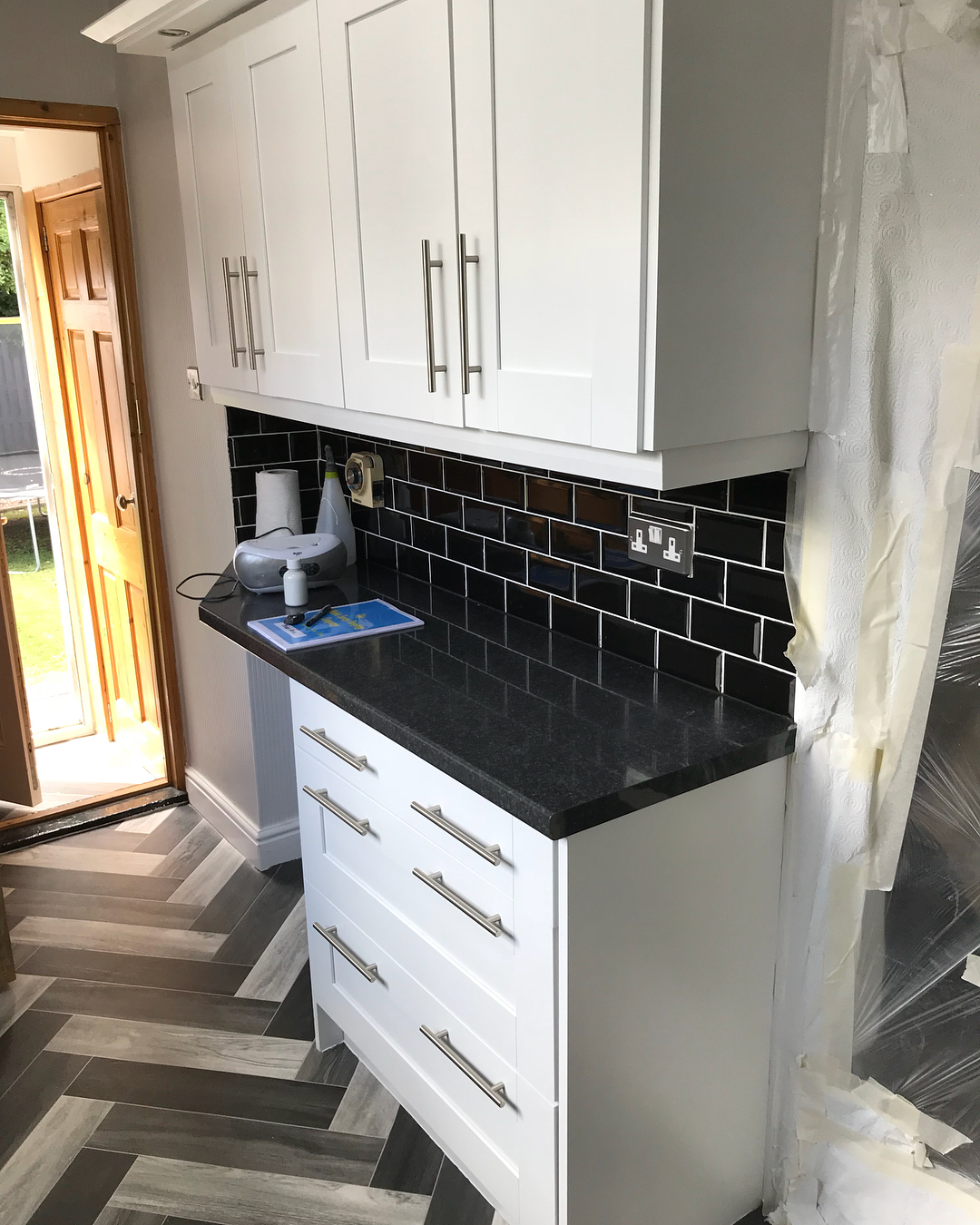
Same drawers from the masked in-progress photo. Same boxes, same fronts, same hardware. Only the color changed.
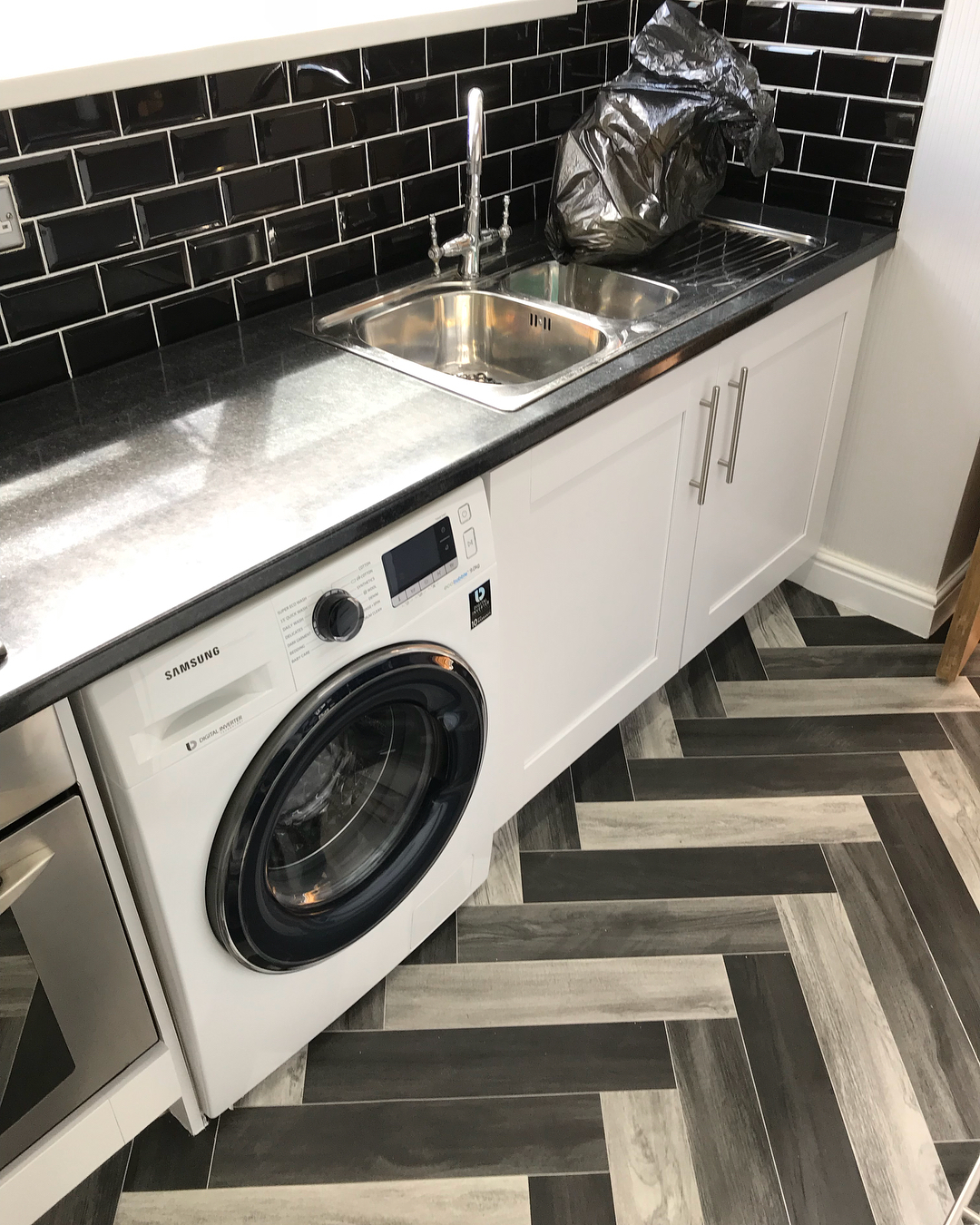
Same sink. Same washer. Same tile. The whole run went from “working kitchen” to “nice kitchen” on a single finish change.
What this actually costs
A professional cabinet respray in the UK usually runs between £900 and £2,500, depending on how many doors you have, the color, and whether you want the carcasses sprayed too. Most teams turn it in four to seven days, and your kitchen stays mostly usable because the appliances and worktops never leave.
Compare that to £8,000 to £25,000 for a full rebuild and the math stops being an argument.
One thing worth remembering
If your kitchen feels dated and you can’t say why, try this. Hold a sheet of white printer paper against a cabinet door and squint. If the room suddenly looks fine, you don’t need a new kitchen. You need a new cabinet color. The boxes were never the problem. The granite was never the problem. The tile was never the problem. One finish stamped a date on the whole room, and a spray team took it off in a week.