The honest reaction to a built-in powder room vanity is usually a sigh. You find one wedged into a nook, with a glass-top counter you’ll never sit at, dated wallpaper behind it, and a little metal stool that never left the room because nobody knew where else to put it. The usual move is to call the handyman right there. She didn’t. She kept every single piece of this one and gave it a transformation that cost almost nothing and now looks like a designer walked through with a blank check.
The nook everyone else rips out
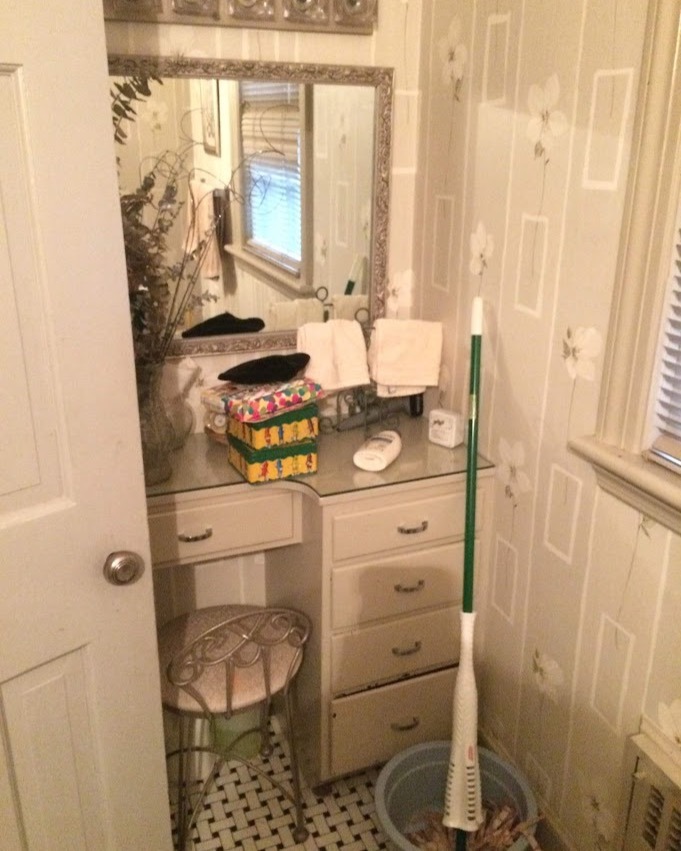
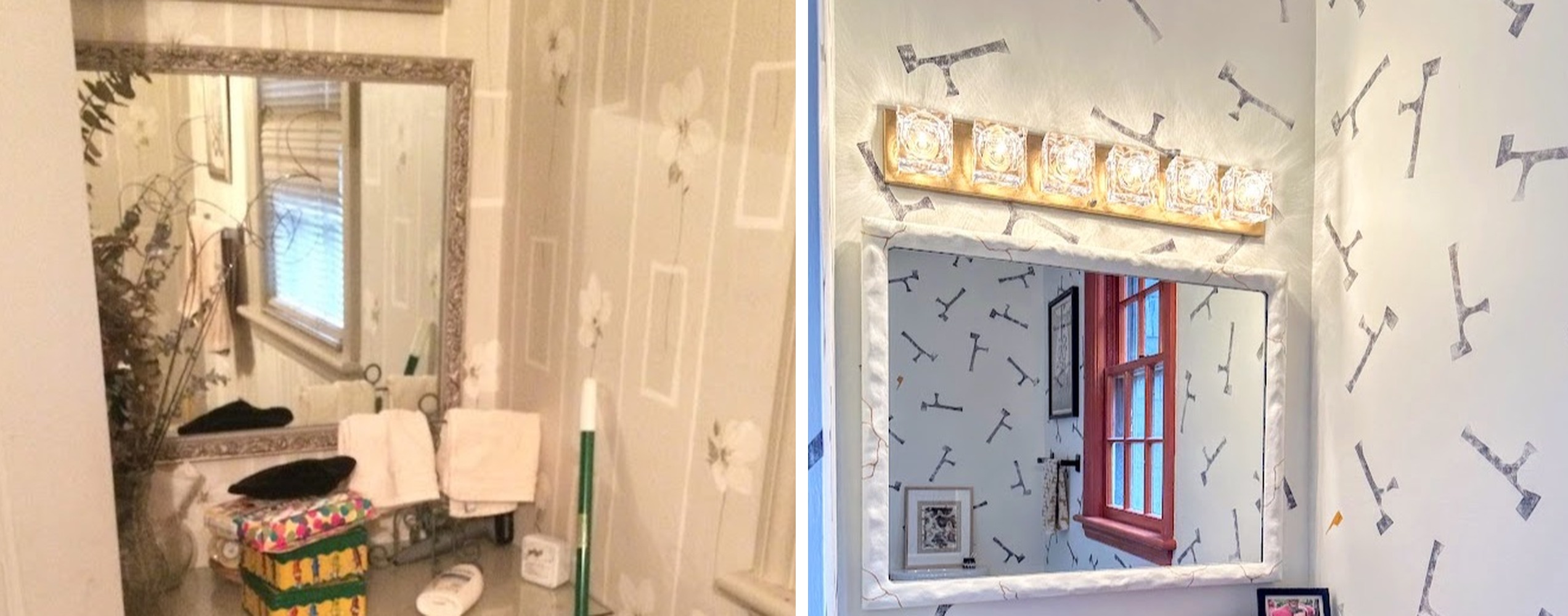
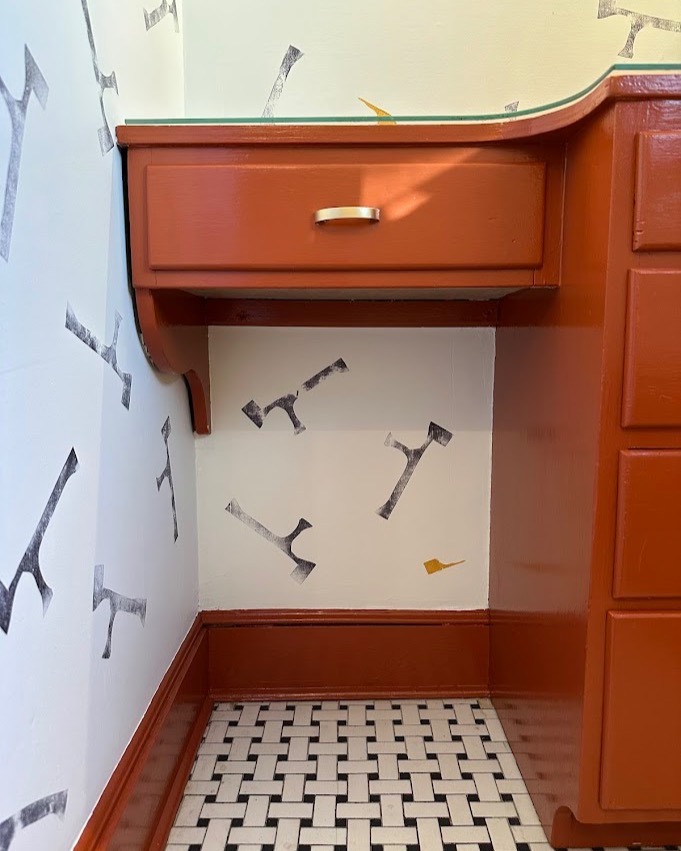
Look at the before and it’s easy to see why this kind of built-in gets ripped out during a bathroom reno. The vanity is a kneehole piece with one shallow drawer across the front and a four-drawer tower on the right. It was built, decades ago, for a daily sit-down makeup or hair-setting ritual that almost nobody does anymore. There’s a mop leaning in the corner because the room doesn’t really know what it’s for now. The wallpaper has gone that soft, sad beige that old homes drift into when nobody intervenes.
In her post she said it plain: she will probably never sit here to do her makeup. But she has cut hair there. One sentence, and the whole justification for keeping the piece shows up. A vanity doesn’t have to be a makeup vanity. It just has to be useful once in a while, and good to look at the rest of the time.
What she kept, what she tossed
The list of what she kept is long. The vanity itself. The glass top. All five original drawer pulls. The six-bulb Hollywood light bar above the mirror. The basketweave black-and-white tile floor. The louvered closet door. The radiator cover. Even the wavy white mirror came out of another room in her own house instead of a store.
What she threw out is almost nothing. The wallpaper. The old mirror frame. That’s basically the whole trash pile. Everything else was reworked, not replaced.
The ugliest middle step of any flip
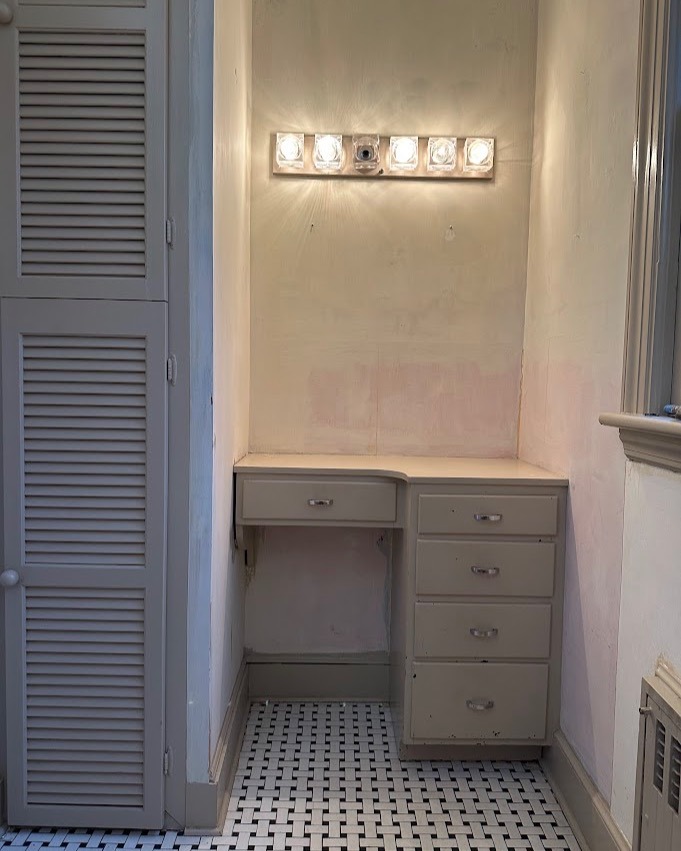
This is the picture most DIY posts skip. The wallpaper has been peeled off, the wall is patched and pink, and the vanity has been sanded and primed in a flat neutral. The bulbs are naked. The whole room looks worse than it did before she started. It’s the stage where most first-time renovators quietly panic. Anyone who has repainted a room knows this moment. Nothing reads finished. Everything reads like a mistake. Keep going.
One color, used without mercy
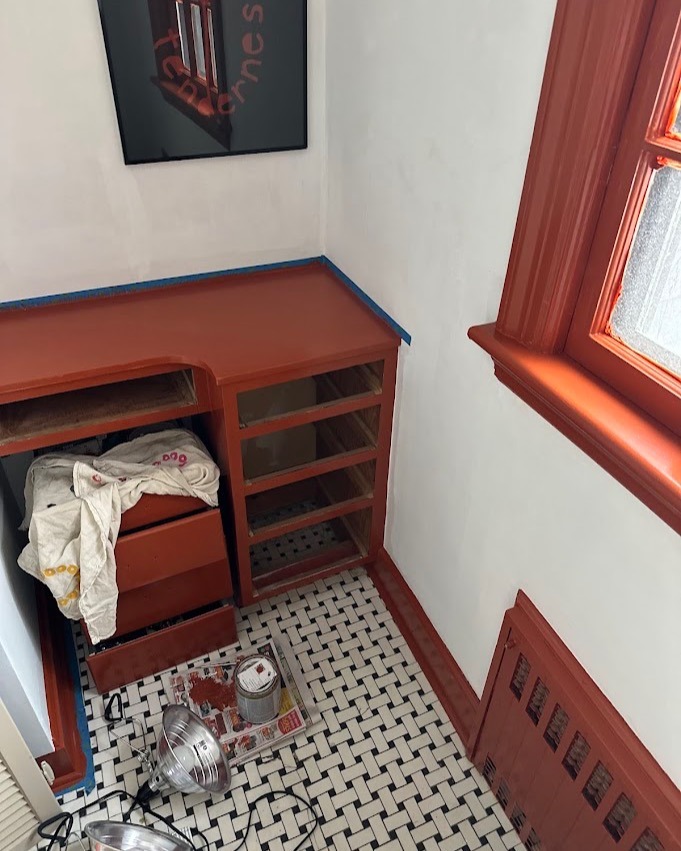
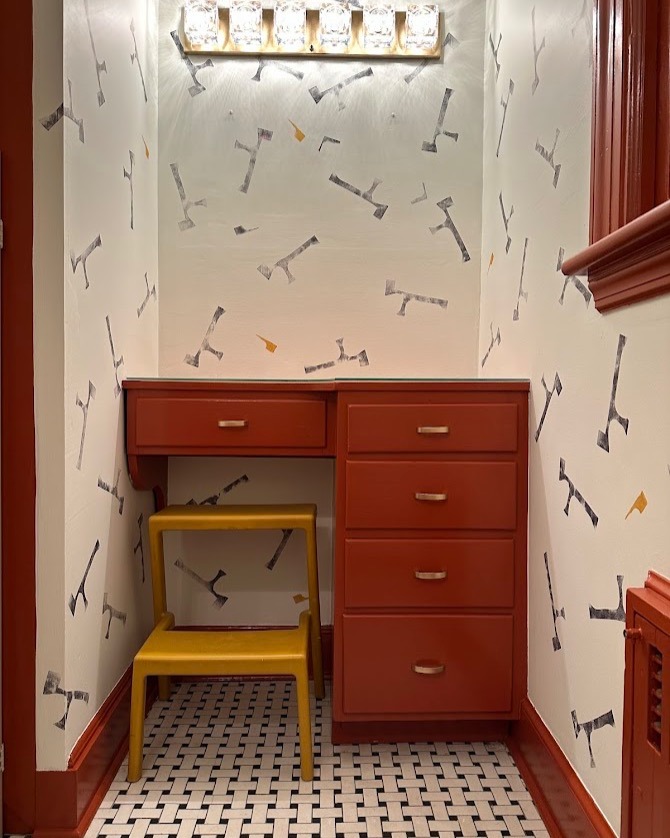
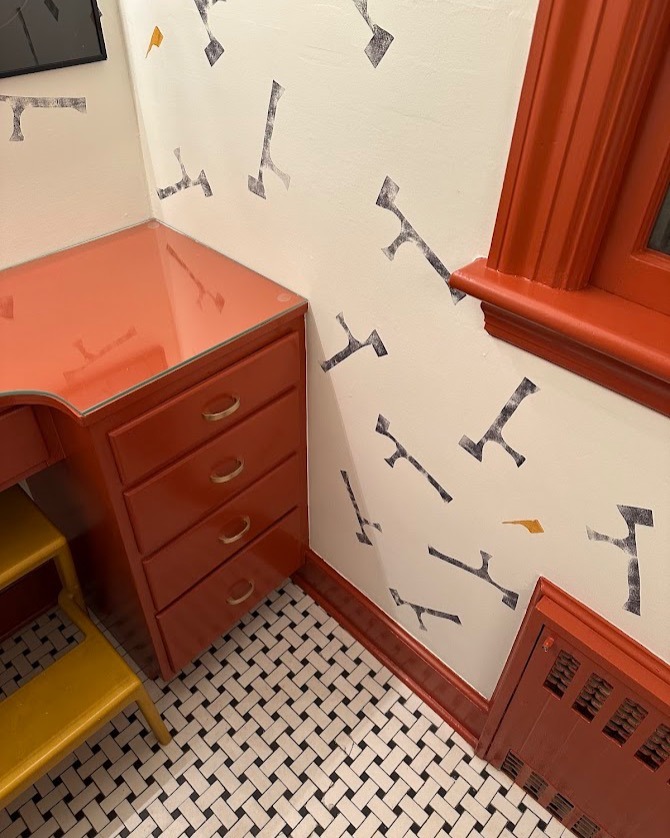
Here’s the first big decision. She picked a deep rust terracotta and painted it on everything near the vanity. Drawer fronts. Window trim. Radiator cover. Later on, the louvered closet door too. One color, used hard, on every piece of trim and millwork in the little room.
This is the move that trips up almost every first-timer with a bold color in a small space. They pick it, lose nerve, and spot it on one accent wall or a single piece of furniture. That reads as hesitation. Here, terracotta shows up on four separate surfaces in a space smaller than a parking spot. Past a certain point the color stops looking like a choice and starts reading as the room itself.
Hours of stamping, not rolls of wallpaper
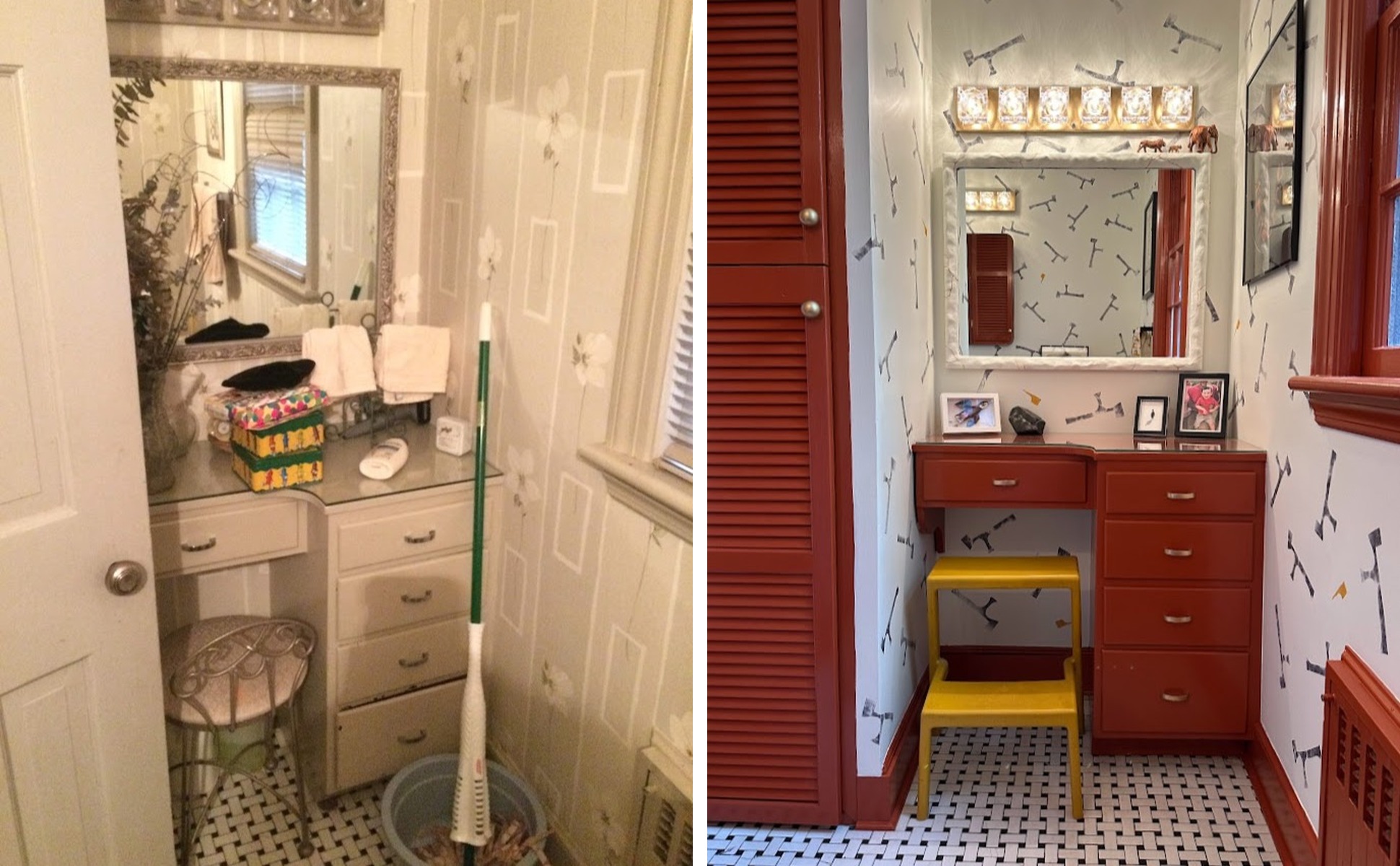
She didn’t hang wallpaper. She hand-stamped the walls with a loose abstract glyph in dark gray, with occasional yellow flecks scattered in. Anyone who has stamped a wall knows this is slow, patient work. In her own words, hours and hours. The pattern never repeats perfectly, which is the whole point. Up close you can see brush loading and pressure differences in the ink. That tiny bit of handmade roughness is what stops the terracotta from feeling like a paint chip blown up to room size.
The cheap swap doing all the work
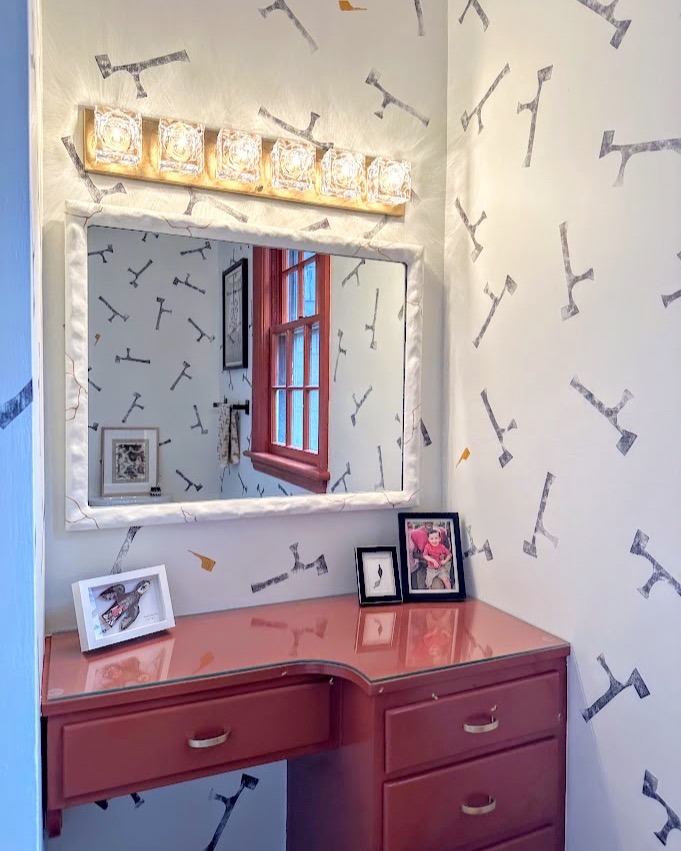
Look at the light bar now. Same bar. Same six sockets. All she did was swap the plain covers for little faceted crystal cubes. They throw sharp patterns across the stamped wall whenever they’re on, and from across the room they read as the most expensive thing in the house. They were not. The small, cheap swap you finish in an afternoon is often the one that lifts the ceiling on how a whole room reads.
Nothing matches, but everything agrees
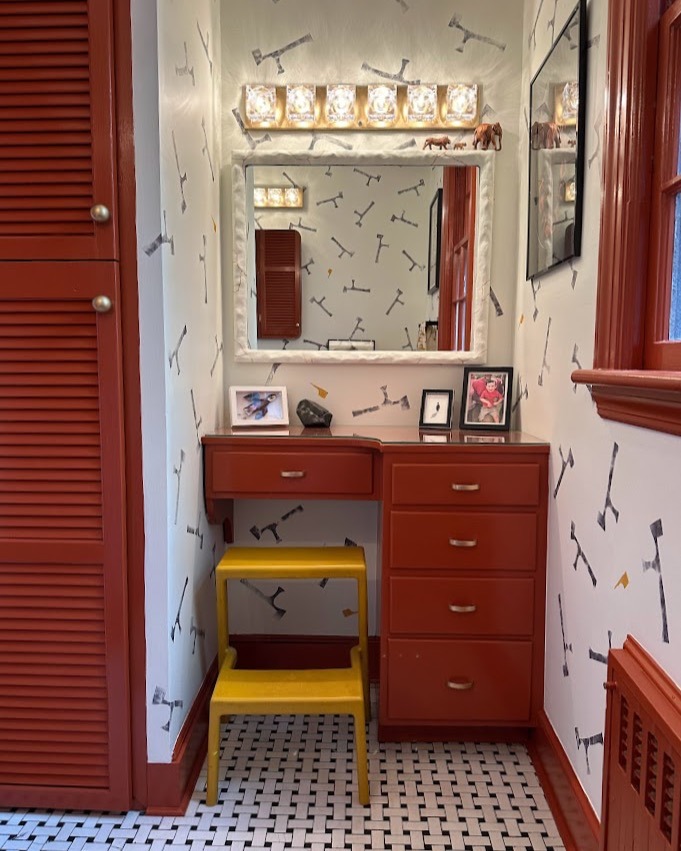
Look wide and you can see the real logic. The louvered closet door, the radiator cover, and the window frame all wear the same terracotta as the vanity. A bright yellow step stool pulls the yellow flecks out of the wall stamp. Nothing in here matches by brand, by era, or by material. Everything matches by palette. That’s the quiet rule behind the whole room.
Why this one worked
Count the new things. A wavy mirror that was already in the house. A yellow step stool. A set of crystal cube bulb covers. That’s it. No new tile, no new vanity, no new fixtures, no demo, no plumber, no drywaller. The whole transformation runs on a can of terracotta paint, a handmade stamp, and the nerve to use both without flinching. If you have a built-in vanity in your bathroom you’ve been quietly hating, this is proof the piece is not the problem. The finish is.